A frame home kits represent one of the most accessible paths to building a vacation home, rental property, or compact primary residence in 2024–2026. These prefabricated components arrive on-site pre-cut and ready for assembly, enabling construction costs that run 50–70% lower than traditional homes when you factor in reduced labor and material waste.
The popularity of A-frame home kits has surged in recent years, with increasing adoption among homeowners, investors, and enthusiasts who are drawn to their stylish, efficient, and affordable living options.
Whether you’re seeking an affordable weekend retreat, an Airbnb investment, or a tiny house lifestyle, a frame homes deliver iconic charm combined with practical energy efficiency. In this guide, you’ll learn about current price ranges ($10,000–$150,000+ for kits), realistic timelines (as fast as 7 days to enclose a shell), and how to match a kit to your land and budget.
What this article covers:
- Kit types and price tiers by size
- Complete cost breakdown including site prep, labor, and finishes
- Quick-build options and realistic assembly timelines
- Design features that make A-frames ideal for various climates
- Step-by-step buying and building process
- What Is an A-Frame Home Kit?
- Types of A-Frame Home Kits for Sale (Size & Budget Guide)
- Cost Breakdown: What You Really Pay For
- 7-Day A-Frame Cabin & Quick-Build Options
- Design Features & Benefits of A-Frame Home Kits
- Shell Kits, SIP Kits & Prefab Packages: What’s the Difference?
- Traditional Homes Comparison: How A-Frames Stack Up
- Customization Options for Your A-Frame Kit
- Sustainability: Eco-Friendly Aspects of A-Frame Kits
- Popular Uses: Vacation Getaway, Rental, or Primary Home
- How to Choose the Right A-Frame Kit for Your Land
- Step-by-Step Buying & Building Process
- Maintenance, Durability & Long-Term Value
- A Frame Home Financing: What to Know
- A Frame Home Insurance & Warranties
- Conclusion: Is an A-Frame Home Kit Right for You?
What Is an A-Frame Home Kit?
An a frame structure uses steeply angled rooflines that form both the roof and exterior walls, meeting at a central ridge. This triangular design eliminates interior walls that bear load, creating open floor plans with vaulted ceilings and natural loft space spanning 30–50% of the footprint.
A-frame kits come in three main categories:
- Plans-only packages ($500–$5,000): Digital PDF drawings for custom lumber sourcing; requires full carpentry skills
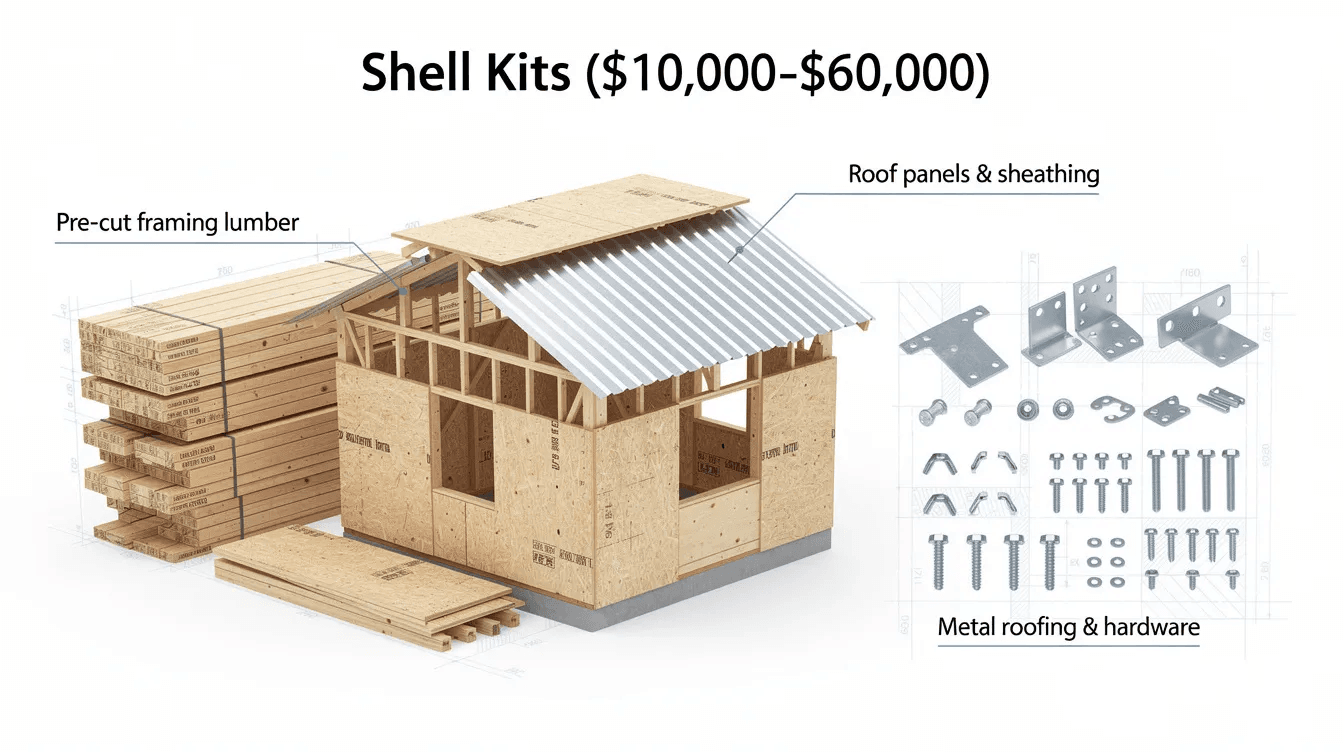
- Shell kits ($10,000–$60,000): Pre-cut framing lumber, roof panels, sheathing, metal roofing, and hardware for the weatherproof envelope
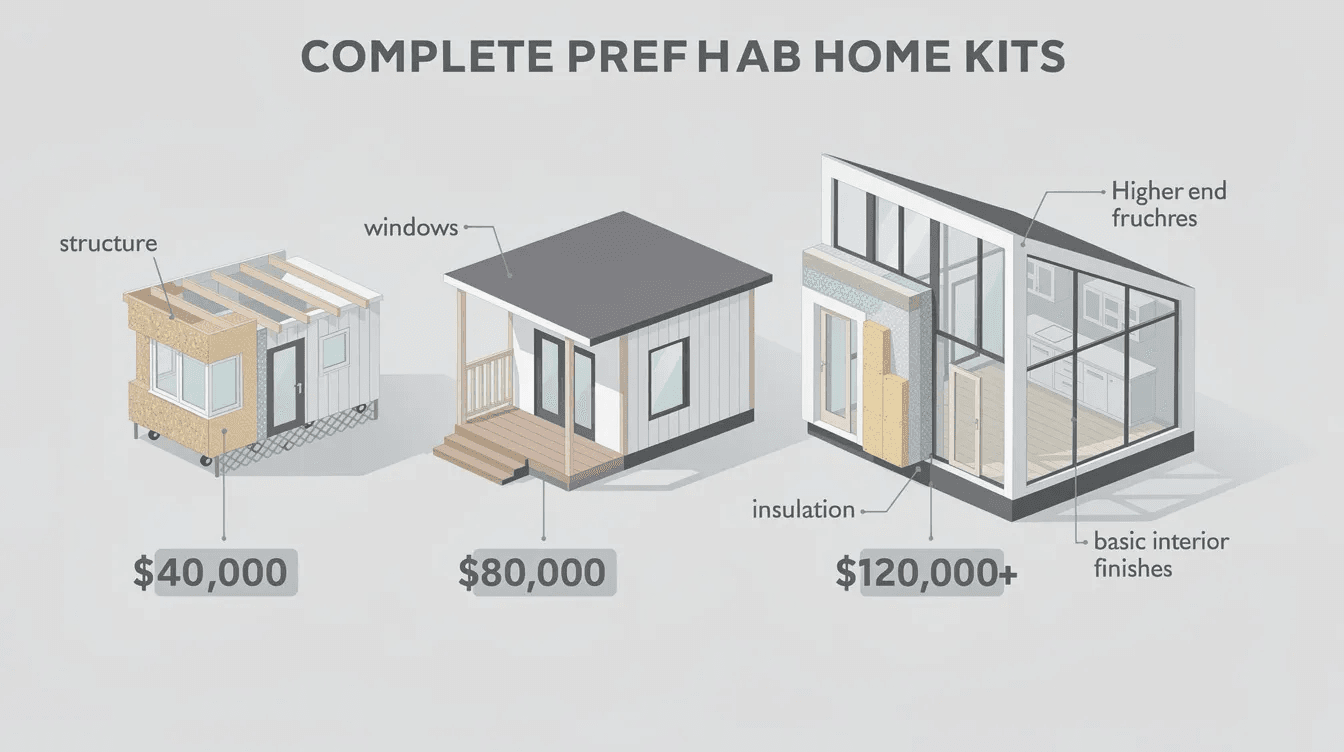
- Complete prefab kits ($40,000–$150,000+): Structure plus windows, doors, insulation, and sometimes basic interior finishes
Typically included: CNC-cut lumber or engineered timbers, galvanized fasteners, OSB sheathing, roofing materials, and detailed assembly manuals with 3D visuals. These kits are designed for ease of assembly, featuring user-friendly instructions, minimal required tools, and straightforward construction that appeals to DIYers seeking convenience.
Usually excluded: Foundation, plumbing and electrical rough-ins, drywall, cabinets, appliances, and engineering stamps for permits.
Kits are manufactured off-site with 1/32-inch tolerances and shipped flat-packed on pallets or in containers, with lead times of 6–12 weeks from deposit.
Types of A-Frame Home Kits for Sale (Size & Budget Guide)
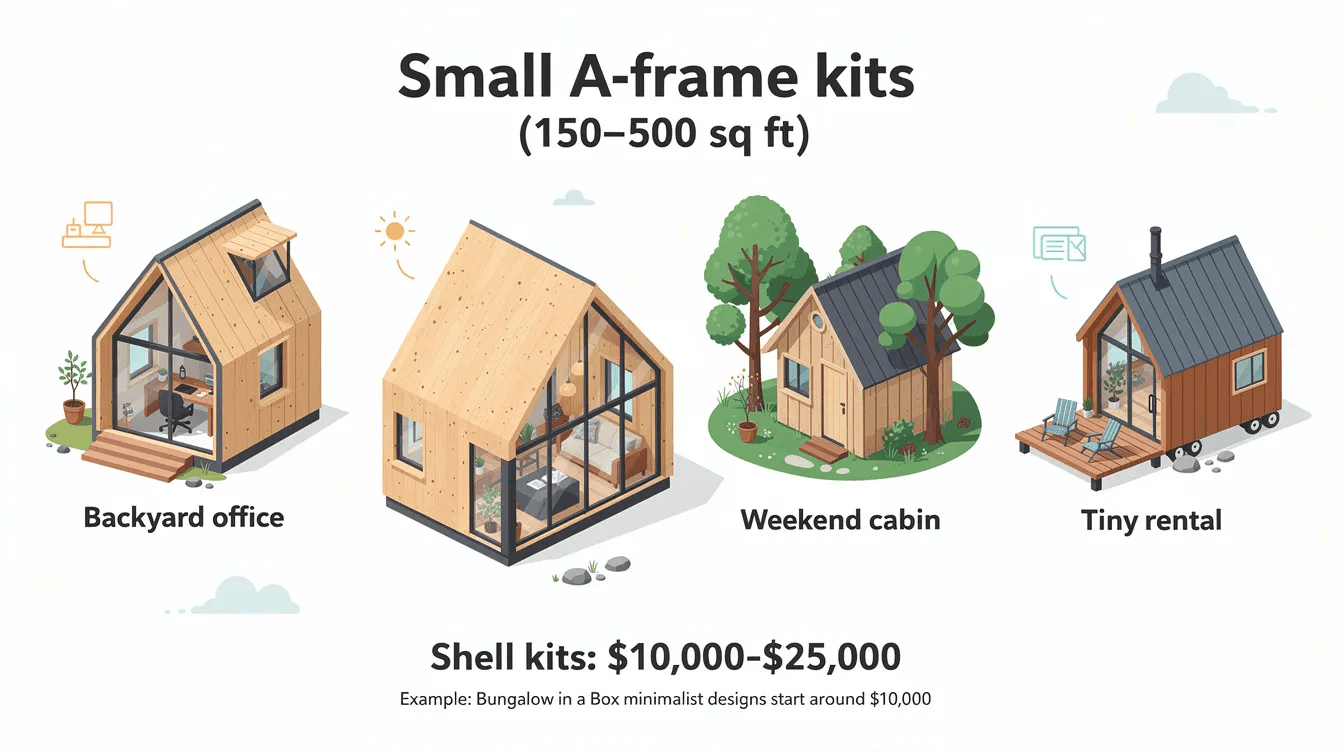
A-frame kits group naturally by footprint and price tier. Here’s what to expect in 2024–2026:
- Small A-frame kits (150–500 sq ft): Shell kits run $10,000–$25,000. Think backyard offices, weekend cabins, or tiny rentals, comparable in scale to Home Depot tiny house kits. Example: Bungalow in a Box minimalist designs start around $10,000.
- Medium A-frame kits (500–1,000 sq ft): Expect $25,000–$60,000 for shell packages. These suit 1–2 bedroom vacation homes or compact primary residences. Viking Structures offers options in the $20,000–$70,000 range.
- Large and luxury A-frame kits (1,000–2,000+ sq ft): Priced $60,000–$150,000+, these feature upgraded glazing and finishes. DC Structures’ Mazama model at 495 sq ft starts at $117,551 with premium features.
- Custom or architect-designed A-frames: Complex layouts or multi-module designs range $60,000–$250,000+ depending on materials and customization level.
These prices cover the kit only. Total build cost per square foot—including labor and finishes—typically lands between $125–$200 depending on location and interior specifications.
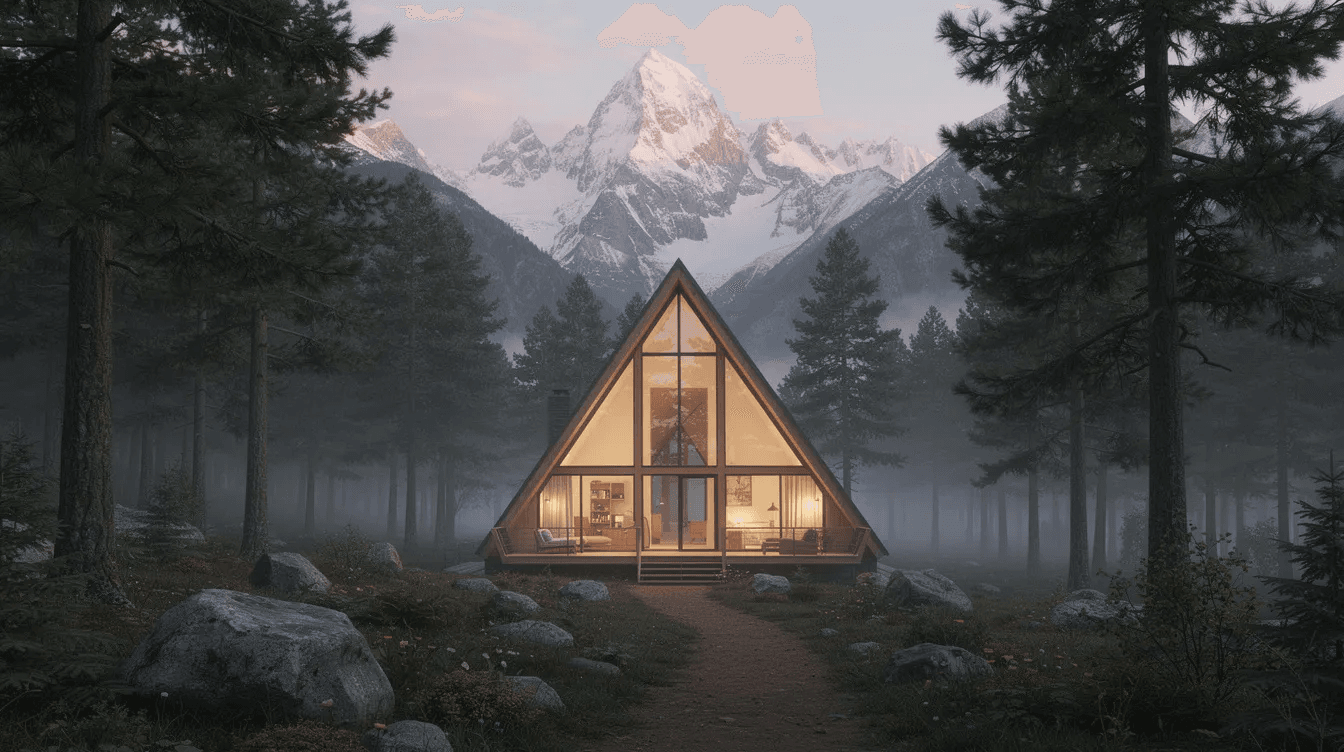
Cost Breakdown: What You Really Pay For
The kit price represents only 40–60% of your total project budget. Understanding all cost components prevents surprises:
- Kit price: Structure, panels, roofing, and windows/doors if included. Range: $10,000–$150,000+ depending on size and completion level, with the most budget-conscious buyers sometimes comparing tiny homes under $20K for sale.
- Site preparation and foundation: Grading, piers or slab, drainage. Budget $5,000–$40,000 depending on soil conditions and access roads.
- Labor: DIY saves money but demands proper tools and experience. Professional framing runs $40–$100/hour or roughly $40–$80 per square foot for enclosure.
- Utilities: Well or municipal water, septic or sewer, power hookup or solar, internet. Remote sites often hit $10,000–$50,000+.
- Interior finishes: Insulation, wiring, plumbing, drywall, kitchen, bath, flooring. Basic finishes run $25,000–$50,000; high-end specs reach $75,000–$150,000+, and thoughtful choices inspired by affordable tiny house designs and tips can help keep these costs under control.
Example scenario: A 700 square foot medium shell kit at $40,000 + $15,000 foundation + $8,000 labor + $20,000 utilities + $40,000 finishes = approximately $123,000 total. Manufacturers often advise multiplying kit cost by 3–5x for finished project budgets.
7-Day A-Frame Cabin & Quick-Build Options
The “7-day a frame” concept refers to enclosing the shell—not completing a finished home. Quick-build kits use panelized structures or bolt-together trusses that a crew of 4 can erect without heavy equipment.
What quick-build kits typically include:
- Pre-cut or panelized framing components
- Integrated fastening systems
- Step-by-step assembly manuals with video guides
- Stackable panels designed for speed
Realistic timelines:
- 5–7 days: Weather-tight shell with experienced crew
- 2–4 weeks: MEP (mechanical, electrical, plumbing) rough-ins
- 4–8 weeks: Interior finishes and inspections
Prime use cases: Instant vacation homes, short-term rentals near ski resorts or lakes, off-grid cabins on rural land that compete with curated mountain tiny house getaways. These quick-build options suit investors targeting $150–$350 nightly rental rates in scenic U.S. locations.
Even fast-assembly kits require permits and inspections in 90%+ of U.S. jurisdictions. Don’t skip foundation engineering or you risk structural failures under snow loads.
Design Features & Benefits of A-Frame Home Kits
The iconic mid-century aesthetic draws many homeowners, but practical advantages drive the building decision:
- Open floor plans: No interior load-bearing walls means flexible layouts. Create studio living or 1–2 bedroom configurations with loft sleeping areas above.
- Large windows and natural light: Floor-to-ceiling glazing on gable ends maximizes views and floods the interior with light—ideal for mountain, forest, or lakefront sites. These expansive windows, along with features like wrap-around porches and open floor plans, help connect the indoor living space with the outdoors and the surrounding environment.
- Snow and weather performance: The steep pitch (45°–60°) sheds snow and rain efficiently. A-frames excel in Vermont winters and Rocky Mountain alpine zones.
- Energy efficiency: Pair with SIPs (Structural Insulated Panels) achieving R-40+ values for 60–70% better insulation than conventional framing. South-facing glass enables passive solar heating in cold climates.
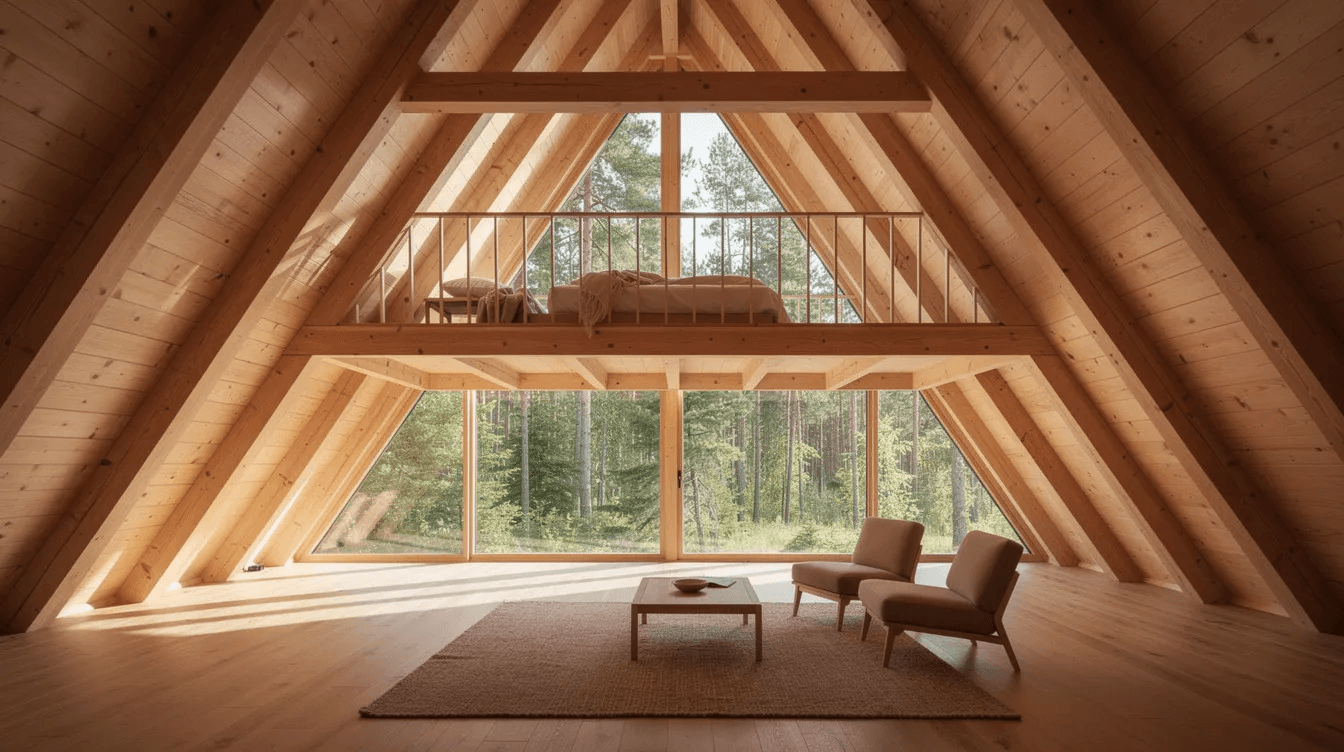
- Volume and comfort: Vaulted ceilings reaching 20 feet make a 400 square foot frame cabin feel like 600 square feet of living space. This efficient use of space creates cozy retreats with surprising openness.
Shell Kits, SIP Kits & Prefab Packages: What’s the Difference?
Choosing between kit types affects your speed, efficiency, and total costs:
Shell/framing kits:
- Traditional dimensional lumber cut to length with rafters, ridge beams, and hardware
- Lower kit cost but requires more on-site labor and cutting
- Best for experienced DIY builders or local contractors seeking flexibility
SIP-based A-frame kits:
- Structural Insulated Panels for walls and roof deliver R-24–40 values
- Airtight construction with 60–70% energy savings over stick framing
- Faster assembly with fewer thermal bridges; favored in cold climates for energy efficient primary homes
Prefab or semi-modular packages:
- Larger components or partially built modules from factory
- Higher upfront kit cost but reduced labor and predictable completion timelines
- Quality control happens in controlled factory environment, reducing on-site errors
For eco friendly materials and maximum efficiency, SIPs lead. For lowest initial outlay with custom flexibility, shell kits work. For speed and turnkey simplicity, contemporary prefab home designs deliver.
Traditional Homes Comparison: How A-Frames Stack Up
A-frame homes stand out as a smart alternative to traditional homes, especially for homeowners seeking a blend of affordability, efficiency, and distinctive style. Unlike conventional houses, A-frame homes feature a steeply pitched roof that not only adds architectural charm but also enhances energy efficiency by allowing snow and rain to slide off easily. This design reduces the risk of weather-related damage and helps maintain comfortable indoor temperatures year-round.
Construction costs for A-frame homes are typically lower than those of traditional homes, often ranging from $125 to $200 per square foot. This affordability is due in part to the simplified structure and fewer interior walls, which create an open, airy living space filled with natural light from large windows. The result is a home that feels spacious and connected to the outdoors, making it an ideal choice for a vacation home or a primary residence.
Many homeowners are drawn to A-frame homes for their efficient use of materials and labor, as well as their customizable design. Whether you’re seeking a cozy retreat or a full-time living solution, A-frame homes offer a unique combination of aesthetic appeal, practical features, and cost savings that traditional homes often can’t match.
Customization Options for Your A-Frame Kit
One of the greatest advantages of choosing an A-frame kit is the ability to tailor your home to your exact needs and style preferences. Homeowners can select from a variety of materials, such as durable metal roofing or modern roof panels, to create an exterior that’s both attractive and long-lasting. Inside, the layout is highly flexible—add interior walls for privacy, expand loft areas for extra sleeping space, or install large windows to flood your living space with natural light.
Many A-frame kits come with prefabricated components, streamlining the building process and minimizing the risk of errors during assembly. This approach not only speeds up construction but also ensures a higher level of quality and efficiency. For those interested in sustainability, eco-friendly materials and energy-efficient features like passive solar heating can be incorporated into the design, reducing your home’s environmental impact while enhancing comfort.
Whether you’re seeking a minimalist retreat or a spacious family getaway, A-frame kits offer accessible and affordable customization options similar to custom tiny homes for small-space living. With the right combination of features, materials, and layout, you can create a living space that perfectly matches your lifestyle and priorities.
Sustainability: Eco-Friendly Aspects of A-Frame Kits
A-frame kits are an excellent choice for homeowners who prioritize sustainability and energy efficiency. The use of prefabricated components not only streamlines the building process but also significantly reduces material waste and labor costs compared to traditional homes. Many manufacturers offer eco-friendly materials, such as recycled metal roofing and sustainably sourced wood, helping to lower the overall carbon footprint of your project.
A-frame homes are designed to maximize energy efficiency, with features like passive solar heating and abundant natural light from large windows. These elements reduce reliance on artificial lighting and heating, making your living space more energy efficient and comfortable year-round. The steeply pitched roof and compact design further enhance thermal performance, keeping your home cozy in winter and cool in summer.
By choosing an A-frame kit, you’re investing in a home that’s not only stylish and functional but also environmentally responsible. For homeowners seeking a balance between comfort, efficiency, and eco-friendly living, A-frame homes offer a compelling solution.
Popular Uses: Vacation Getaway, Rental, or Primary Home
Buyers in 2024–2026 use a frame home kits far beyond simple weekend cabins, often comparing them with other micro house builders and designs:
Vacation or second home: A typical 400–800 square foot a frame near mountains or lakes features loft sleeping plus open living space, similar in feel to curated tiny house cabin retreats. Quick builds combined with low maintenance make these ideal seasonal retreats.
Short-term rental (Airbnb, VRBO): The distinctive style photographs beautifully, improving listing performance. Well-finished units in scenic areas command $150–$350/night. Manufacturers report 40% of sales going to rental investors targeting these returns.
Primary residence: Scale to 600–1,200 square foot designs with 1–3 bedrooms for full-time living. Plan storage carefully since sloped walls reduce full-height areas to 60–70% of the footprint. SIP construction ensures year-round comfort.
Backyard ADU: Small 200–400 square foot A-frames serve as home offices, in-law suites, or rental units where Accessory Dwelling Units (ADUs) are permitted. Many West Coast cities now allow these, with potential $1,500–$3,000 monthly rental income.
How to Choose the Right A-Frame Kit for Your Land
The right kit depends on site conditions, climate, and regulations—not just aesthetic preferences:
Site and climate considerations:
- Orient south-facing glazing for solar gain in northern climates
- Verify snow load requirements (50 psf common in Rockies)
- Check wind exposure and seismic factors affecting structural specs
Local codes and permits:
- Confirm minimum house square footage requirements (400+ square feet in 30 states)
- Determine if stamped engineering is required ($1,000–$5,000 additional)
- Contact local building departments early in the planning process
Budget and DIY skill level:
- Choose simpler designs with smaller spans if maintaining a DIY approach
- Consider prefab packages if you’re interested in faster, turnkey completion
- Factor total project budget, not just kit cost
Long-term use: Ask whether your frame cabin might become a primary residence later or if an alternative like yurt prefab options might suit your lifestyle better. This affects size, insulation choices, and layout priorities from the start.
Step-by-Step Buying & Building Process
The typical timeline runs 3–12+ months from research to move-in. Here’s your roadmap:
- Research and shortlist manufacturers: Compare 3–5 kit providers on reviews, sample projects, and warranty terms (typically 10–25 years)
- Preliminary design and budgeting: Select floor plan, request kit quote, build complete project budget including site work and finishes
- Permits and approvals: Submit plans to local building department; expect 4–12 weeks review in most U.S. jurisdictions
- Order and production: Sign contract, pay deposit, wait 6–12 weeks for manufacturing and shipping
- Site prep and foundation: Complete excavation and footings while kit is being manufactured to save time
- Delivery and assembly: Receive kit, verify inventory against manifest, erect shell with DIY crew or professionals
- Utility hook-ups and finishes: Complete mechanicals, insulation, interior walls, kitchen, bath, and final inspections
This process rewards those who pair careful planning with realistic timelines. Access to your site and builder availability in your region heavily influence speed.
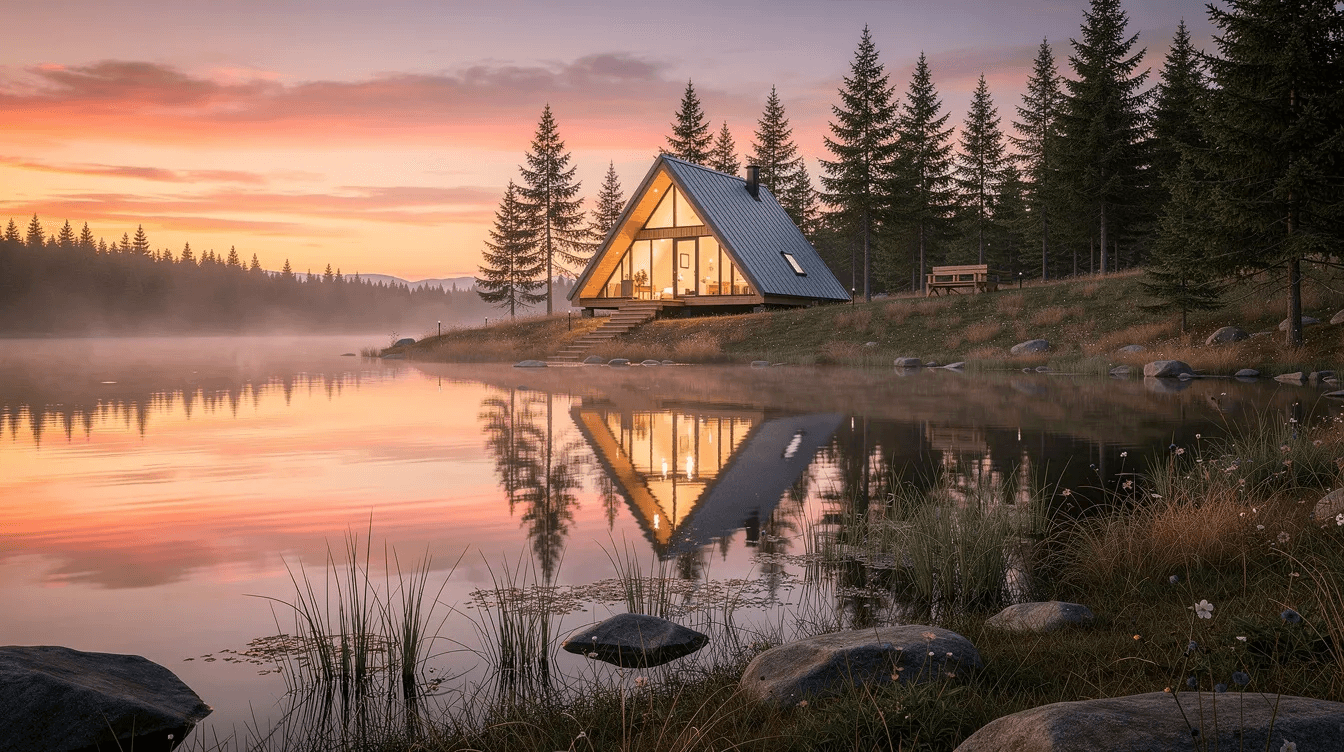
Maintenance, Durability & Long-Term Value
A-frame structures last decades with appropriate care and offer strong long-term value:
Exterior durability:
- Metal roofing lasts 40–50 years; asphalt shingles need replacement at 25 years
- Fiber cement siding offers 30+ year lifespan
- Wood finishes require repainting or staining every 5–10 years
Energy and operating costs: High-performance SIP shells reduce heating and cooling bills by 60–70% compared to conventional framing—real money savings in cold regions.
Resale and rental value: Distinctive A-frames command 10–20% resale premiums in vacation markets. Strong short-term rental performance can recoup build costs over 5–10 years at 60%+ occupancy.
A Frame Home Financing: What to Know
Financing your A-frame home is a straightforward process, with several options available to fit a range of budgets and project sizes. Many manufacturers partner with lenders to offer competitive financing packages, making it easier for homeowners to manage construction costs, materials, and labor expenses. Traditional mortgage products, such as construction loans or home equity loans, are also viable options for funding your A-frame project.
When planning your financing, it’s important to consider the total costs involved—including the kit, site preparation, and interior finishes—to ensure your budget aligns with your vision for the living space. Comparing different financing options and understanding the terms will help you make the best decision for your needs.
With careful planning and the right financing in place, many homeowners find that building an A-frame home is an affordable and rewarding way to create a comfortable, efficient living space tailored to their lifestyle.
A Frame Home Insurance & Warranties
Protecting your investment in an A-frame home starts with understanding your insurance and warranty options. Most reputable manufacturers offer warranties on their kits and materials, covering defects and certain types of damage to give homeowners added peace of mind. It’s important to review these warranties carefully to know exactly what is covered and for how long.
In addition to manufacturer warranties, securing a comprehensive insurance policy for your A-frame home is essential. Look for coverage that protects both the structure and its contents, including liability and natural disaster protection. Regular maintenance and prompt attention to any issues can help prevent errors and extend the life of your home, ensuring it remains efficient and comfortable for years to come.
By prioritizing insurance and warranties, homeowners can enjoy the unique benefits of their A-frame home with confidence, knowing their investment is well-protected against unexpected events.
Conclusion: Is an A-Frame Home Kit Right for You?
A-frame home kits offer a compelling combination of affordable materials, faster construction timelines, and strong aesthetic appeal. They work best for buyers with view lots, DIY ambitions, rental investment goals, or those seeking efficient, character-rich housing that connects with nature.
The key advantages—kit costs starting at $10,000, enclosure in as little as 7 days, and 60–70% energy savings with SIP construction—make these structures accessible to many homeowners. However, realistic budgeting means planning for total project costs of $125–$200 per square foot once foundation, labor, utilities, and finishes are combined.
Ready to move forward? Make a shortlist of 3–5 manufacturers offering A-frame home kits for sale in your size and budget range. Contact your local building department to verify zoning and permit requirements. Then request quotes and start comparing your options for 2026 delivery.