
That empty space behind your house could become a fully independent home. In 2026, more homeowners are discovering that backyard housing offers a practical solution to some of the toughest housing challenges facing American families.
- Start here: What is backyard housing and why it matters in 2026
- Unlock the potential of your yard
- Backyard housing types: Tiny homes, ADUs, and cottages
- Five popular backyard home sizes and what they can do
- Designing for performance: Energy-efficient backyard homes
- Safety and durability: Building a resilient backyard home
- Making backyard housing affordable
- Planning your own backyard home: Steps, permits, and next moves
Start here: What is backyard housing and why it matters in 2026
Use the space you already own to create real housing.
Backyard housing refers to fully independent, self-contained living spaces built on the same property as an existing home—typically in the rear yard. These structures go by several names: accessory dwelling units, backyard cottages, tiny homes, and secondary suites. What they share in common is that each includes a kitchen, bathroom, and sleeping area, making them genuine homes rather than sheds or converted garages.
The pressures driving interest in backyard housing are real and persistent. Median U.S. home prices reached approximately $412,000 in late 2025, while mortgage rates continue hovering around 6.5-7% due to ongoing inflation concerns. In high-demand states like California, Oregon, and Washington, housing shortages remain acute. California alone faces a deficit of nearly 3.5 million housing units according to 2025 state reports.
For homeowners, backyard housing creates options that didn’t exist a decade ago. You can generate rental income averaging $2,000-$3,500 monthly in markets like Los Angeles and Seattle. You can create multigenerational living arrangements for aging parents or adult children—Census Bureau data shows 20% of U.S. households now include three generations. Or you can downsize into a smaller backyard home while keeping your main property in the family. This guide will walk you through the types, sizes, costs, energy performance, and key decisions involved in determining whether a backyard home fits your property.
Unlock the potential of your yard
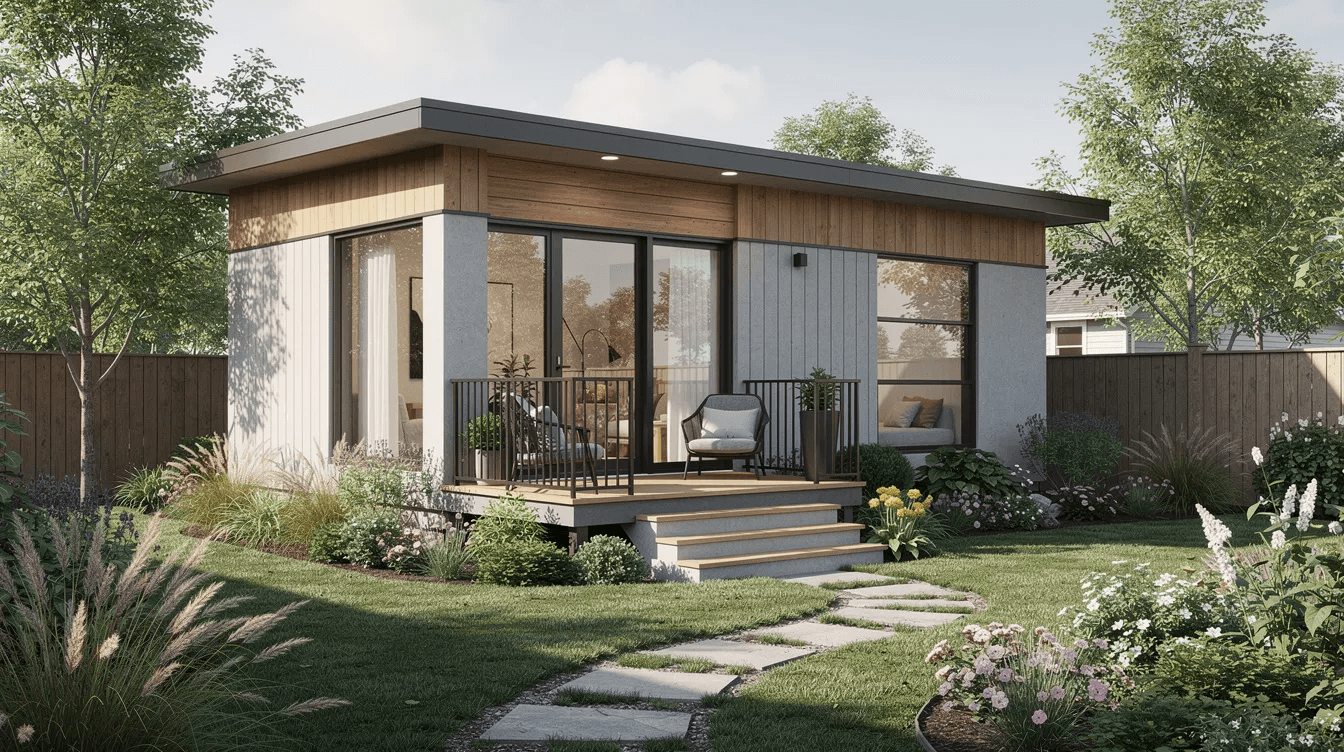
A typical suburban lot in cities like Portland, Sacramento, or Denver runs between 5,000 and 7,000 square feet. On many of these properties, 800 to 1,200 square feet of backyard space sits essentially unused—perfect for a small home that serves real needs.
Consider the concrete ways homeowners are putting this space to work:
- A 450 square foot backyard home in Los Angeles leased at below-market rent of $1,800 monthly through the city’s ADU Accelerator Initiative, housing a local teacher who couldn’t otherwise afford the neighborhood
- A 600 square foot cottage in Austin converted into a full-time remote office and guest suite, with appraisers estimating it added $150,000 to the property value
- A Portland family adding a 400 square foot unit behind their main home for aging parents who wanted independence without moving across town
The financial benefits extend beyond monthly rent checks. Studies from the Urban Institute indicate that ADU-enhanced properties in Seattle and Bay Area markets see average value increases of 15-20%. On an $800,000+ home, that translates to six-figure gains in equity.
Key benefits of unlocking your backyard:
- Generate income from space that currently costs you money to maintain
- Keep family close while preserving independence for everyone
- Add flexibility to your property without selling or relocating
- Create dedicated studio or workspace separate from your main home
- Build housing that your community genuinely needs
- Increase property value through added rentable square footage
Backyard housing types: Tiny homes, ADUs, and cottages
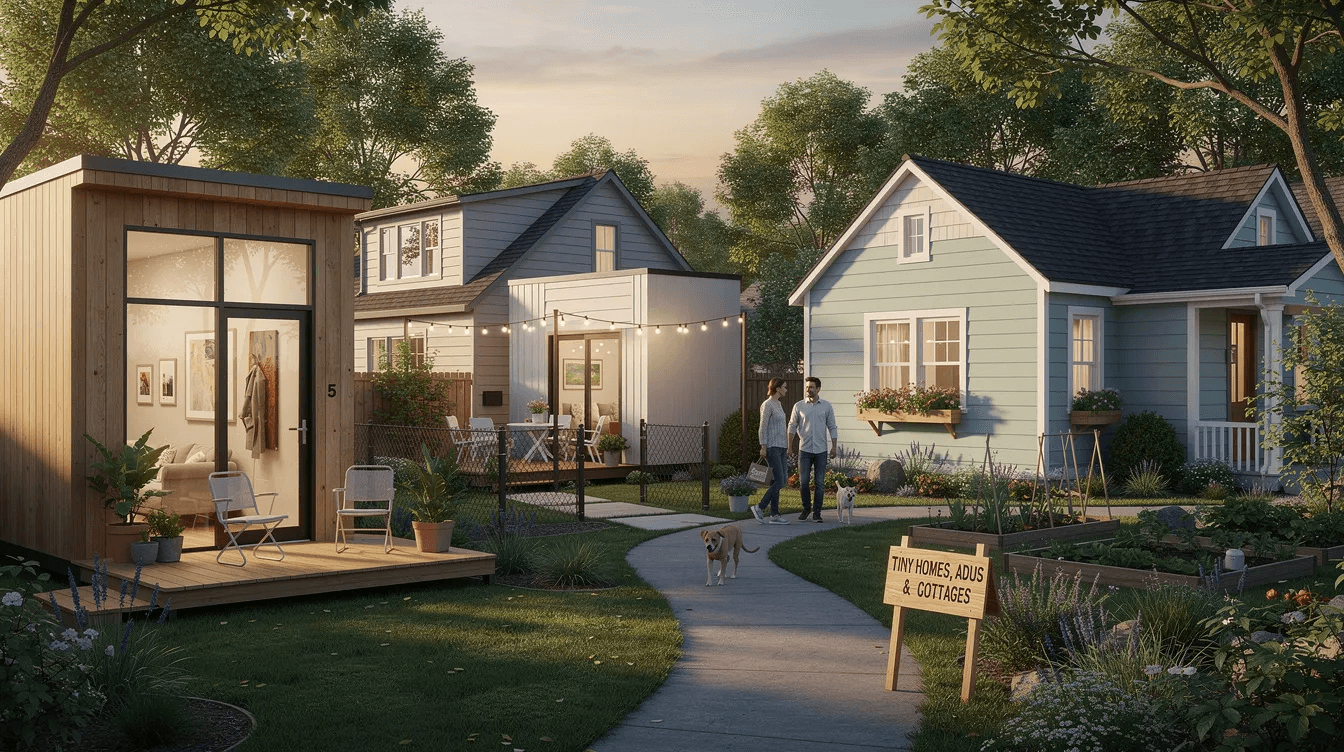
“Backyard housing” works as a general term, but your local building department uses specific legal categories. Understanding these distinctions matters because they determine what you can build, how you can use it, and what permits you’ll need.
Tiny homes typically measure under 400 square feet, per International Residential Code Appendix Q adopted in over 30 states by 2026. Some tiny homes sit on trailers (often called THOWs—tiny homes on wheels) and are classified as RVs, which limits where they can be parked for permanent living. Others are built on permanent foundations and treated as standard structures requiring full building permits and utility hookups.
Accessory dwelling units are permanent, code-compliant secondary dwellings ranging from roughly 350 to 1,200 square feet. They include full kitchens, bathrooms, and sleeping areas. ADUs can be positioned in backyards, built above garages, or attached to the main home. California’s HCD guidelines and similar laws in Oregon and Washington establish clear standards for these units.
Backyard cottages are essentially freestanding ADUs designed to look like small houses, often featuring pitched roofs, front porches, and traditional residential styling. They typically range from 450 to 800 square feet and cannot be sold separately from the primary property.
When each option makes the most sense:
- Tiny homes on wheels: Best for temporary or mobile needs, or testing backyard living before committing to permanent construction
- Foundation-based tiny homes: Suit very small lots where even 400 square feet represents the maximum allowed
- Standard ADUs: Ideal when you want rental income, long-term family housing, or maximum flexibility with financing
- Backyard cottages: Perfect when neighborhood aesthetics matter and you want the unit to feel like a proper small house
Five popular backyard home sizes and what they can do
Most homeowners gravitate toward a handful of common footprints rather than custom dimensions. These sizes balance livability requirements with typical zoning constraints on setbacks and lot coverage.
250 square foot micro studio: This layout fits a loft bed, compact kitchenette with two-burner cooktop, and a small bathroom. There’s no room for a dining table, but a fold-down desk works for occasional use. Best suited for very narrow city lots around 3,000 square feet or as junior ADUs attached to the main house.
350 square foot compact suite: A full kitchen becomes possible here, along with a Murphy bed or small bedroom alcove and a proper bathroom. You can fit a small desk for remote work. This size works well on lots of 4,000 square feet and suits single occupants who want genuine independence.
450 square foot one-bedroom: Now you get a separate bedroom, full kitchen with standard appliances, a dining nook, and space for a stackable washer/dryer. This size handles most daily living needs comfortably and fits mid-sized yards. Many city programs target this size for affordable housing units.
600 square foot family-friendly one-bedroom: This layout adds a second sleeping loft or den, dedicated office space, and a more generous living area. You can include a full-size refrigerator and dishwasher. Properties of 5,000+ square feet in most jurisdictions can accommodate this size with standard setbacks.
800 square foot two-bedroom: Two proper bedrooms, a full bathroom, kitchen with island, and meaningful storage. This size functions as a complete small house suitable for couples, small families, or roommate arrangements. Requires lots of at least 5,000-7,000 square feet depending on local rules.
Cities like Los Angeles cap detached ADUs at 800 square feet, San Diego allows up to 1,000 square feet, and Seattle permits up to 1,000 square feet for detached units. Right-sizing your plans to local rules prevents permit denials and wasted design costs.
Designing for performance: Energy-efficient backyard homes
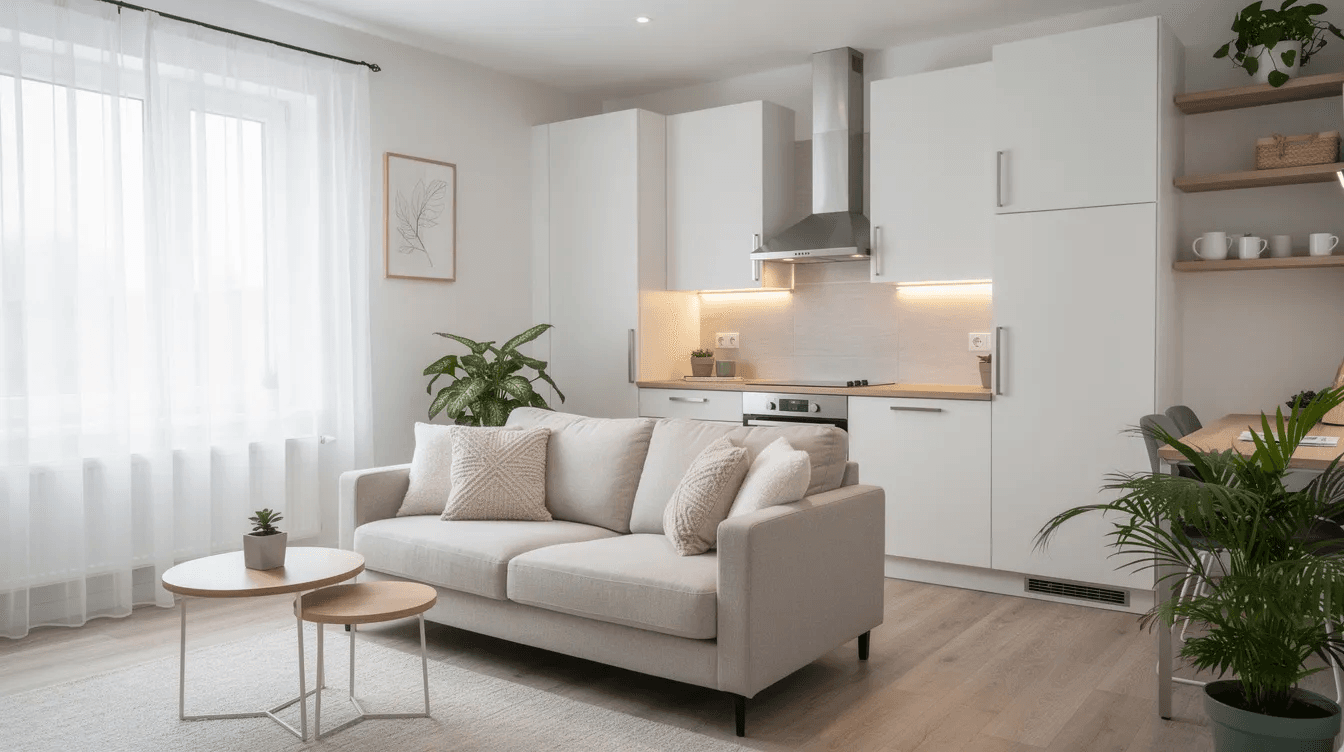
Backyard homes built since 2020 must meet stricter energy codes than most existing main houses. California’s Title 24-2022 requirements, for example, demand 40-50% better efficiency than homes built before 2010. This isn’t optional—it’s part of getting your construction approved.
The good news: small footprints and modern building science combine to create homes that cost remarkably little to heat, cool, and power. Many backyard homes can be designed to use less than half the energy of older homes of similar size.
Core strategies for high-performance backyard homes:
- Advanced insulation (R-30 walls) combined with airtight construction achieving 0.25 ACH50 or better on blower door tests
- Heat pump HVAC systems with SEER 16+ ratings that heat and cool efficiently without natural gas
- Heat pump water heaters with COP ratings of 3.5+ delivering roughly 75% energy savings over conventional electric tanks
- Induction cooktops running at 90% efficiency compared to 40% for gas burners
- Energy recovery ventilators (ERVs) that provide fresh air while retaining 80% of conditioned air—critical in tight small spaces prone to moisture buildup
- All-electric design that prepares for future code changes and gas bans already in effect in cities like Berkeley
Solar integration makes particular sense on backyard homes. A 5-10 kW system on a 600 square foot roof can generate 7,000-14,000 kWh annually in Southern California, Arizona, or Central Texas—often enough to achieve net-zero energy bills. Even without solar, the combination of efficient systems and small size can keep annual operating costs under $500 in many climates.
Safety and durability: Building a resilient backyard home
Small doesn’t mean fragile. Code-built backyard homes must meet the same structural and safety standards as new primary houses in your jurisdiction. In practice, this creates structures designed to last 30+ years with minimal maintenance—important whether you’re housing family or long-term tenants.
Fire resistance receives particular attention in California, Colorado, and Oregon, where wildfire risk shapes building requirements. Non-combustible exterior cladding like fiber-cement siding (such as James Hardie products) and metal roofing with 50-70 year lifespans are standard in Wildfire Urban Interface zones. Code also requires tempered glass near property lines and 5-foot defensible space around structures.
Seismic design matters on the West Coast. ASCE 7-22 standards guide requirements for shear walls and anchor bolts that keep structures stable during earthquakes. Coastal builds in Florida and Texas face different challenges—uplift-resistant connectors and impact-rated windows handle 150 mph winds where hurricane codes apply.
Key safety and durability features:
- NFPA 72-interconnected smoke and CO detectors throughout
- Egress windows of at least 5.7 square feet in every bedroom
- Minimum 10-foot separation from garages or workshops
- Rainscreen siding systems that prevent moisture intrusion and rot
- EPDM or TPO roofing membranes rated for 40+ years
- Low-maintenance exteriors that handle rental turnover without constant attention
Building to current code means your backyard home will handle what your region throws at it—whether that’s earthquakes, hurricanes, wildfires, or just decades of regular use.
Making backyard housing affordable
Backyard homes can range from relatively simple studio builds under $100,000 (before site work) to fully finished cottages exceeding $400,000, depending on your location, specifications, and site conditions. Understanding where money goes helps you make informed trade-offs.
In markets like Los Angeles, Seattle, and Austin, expect rough ballpark costs of $250-$400 per square foot for code-built ADUs in 2025-2026. These figures include design, permitting, construction, and basic finishes—but exact bids vary widely based on site access, soil conditions, utility distances, and finish levels.
Major cost categories:
- Design and architecture: $10,000-$25,000 for custom plans, less with pre-approved city designs
- Permits and fees: $15,000-$30,000 including impact fees (waived in some California cities under recent law changes)
- Foundation and utilities: $40,000-$80,000 for slab foundation and separate utility meter hookups (selecting the right tiny house foundation can improve both durability and cost-efficiency)
- Structure: $100,000+ for prefab or site-built framing, roofing, and exterior
- Interior finishes: $50-$100 per square foot for flooring, cabinets, fixtures, and appliances
Strategies that actually reduce costs:
- Choose smaller footprints—a 450 square foot unit costs roughly half what an 800 square foot unit costs
- Use standardized pre-approved plans from cities like San Jose’s ADU library, saving 30-50% on design time
- Select prefab or modular construction, which can cut timelines by 3-6 months and reduce costs 20-30%, or explore park-model style tiny homes designed for small backyards where local codes allow them, drawing inspiration from charming tiny house designs that balance aesthetics and function
- Phase in upgrades: rough-in plumbing for a future dishwasher or washer/dryer rather than installing everything on day one
- Research local incentives—LA’s backyard homes programs offer $40,000-$150,000 in forgivable loans, and similar support exists in San Jose and other California cities
Financing options include cash-out refinancing at 80% LTV, home equity lines of credit (rates around 8-9% in 2026), FHA 203k loans up to $75,000, and specialized ADU programs like Oregon’s caloans offering 0% interest deferred payments.
Planning your own backyard home: Steps, permits, and next moves
The process from initial research to move-in typically runs 9-18 months, depending on your city’s permitting speed, whether you choose prefab or site-built construction, and how quickly contractors are available in your area.
Step-by-step overview:
- Check zoning rules and setbacks. Pull your parcel information from your city or county GIS portal. Verify that your zoning allows ADUs (most single-family zones now do), and note required side and rear setbacks—typically 4-5 feet in California-model codes.
- Assess utility capacity. Determine whether your electrical panel can support a 200A service split, whether sewer/septic has capacity, and how far utilities must run to your backyard site.
- Select size and layout. Match your budget and goals to one of the common footprints. Consider who will live there—seniors need different layouts than young professionals or families.
- Choose prefab vs. site-built. Prefab modular units cut construction time to 3-6 months and often reduce costs. Site-built offers more customization but typically takes 6-12 months.
- Submit plans for review. Most cities require building permits, plan review, and multiple inspections. Some jurisdictions offer pre-approved ADU plans that can speed approval by 30-50%.
- Complete construction. Work with licensed contractors familiar with local codes. Schedule inspections at required milestones—foundation, framing, electrical, plumbing, final.
- Obtain occupancy certification. Pass final inspection and receive your certificate of occupancy before anyone moves in or you begin collecting rent.
The permitting process varies dramatically by city. Seattle and Portland have streamlined systems; smaller jurisdictions may take longer. Budget 30-90 days for plan review in most markets.
Your next moves:
- Measure your backyard this weekend—sketch the available space and note any obstacles
- Visit your city’s planning department website and search for “ADU” or “accessory dwelling unit” regulations
- Pull your property’s parcel information and check current zoning designation
- Contact a local ADU specialist, architect, or designer familiar with 2026 codes in your jurisdiction
- Request 2-3 preliminary estimates to understand realistic budget ranges for your property, and review tiny house plans that fit your life and budget to clarify your program before meeting designers
Building a backyard home represents a significant investment of money and time, but the process becomes manageable when you break it into clear steps. Whether your goal is rental income, housing for parents, a suite for adult children, or simply making better use of space you already own, backyard housing offers a practical path forward in a challenging housing market.