
Planning a bathroom for your van conversion, sailboat, or tiny home starts with one critical question: will the toilet actually fit? This guide is for van converters, boat owners, and tiny home builders who need precise C-Head composting toilet dimensions for their projects. Accurate measurements are crucial to ensure a hassle-free installation and long-term comfort in small spaces. The c head composting toilet has earned a strong reputation among off-grid builders for its compact design and non-electric operation, but getting the exact measurements right before you cut cabinetry or frame walls can save hours of frustration down the road.
- What is a C-Head Composting Toilet?
- Quick Answer: Standard C-Head Composting Toilet Dimensions
- Understanding the C-Head Composting Toilet Footprint
- Height, Seating Comfort, and Ergonomics
- Clearances Needed Around a C-Head Toilet
- Vent, Urine Diverter, and Container Space Requirements
- Comparing C-Head Dimensions With Other Compact Composting Toilets
- Planning an Installation: Vans, RVs, Boats, and Tiny Homes
- Dimension-Related Maintenance and Access Considerations
- Summary: Working With C-Head Composting Toilet Dimensions
What is a C-Head Composting Toilet?
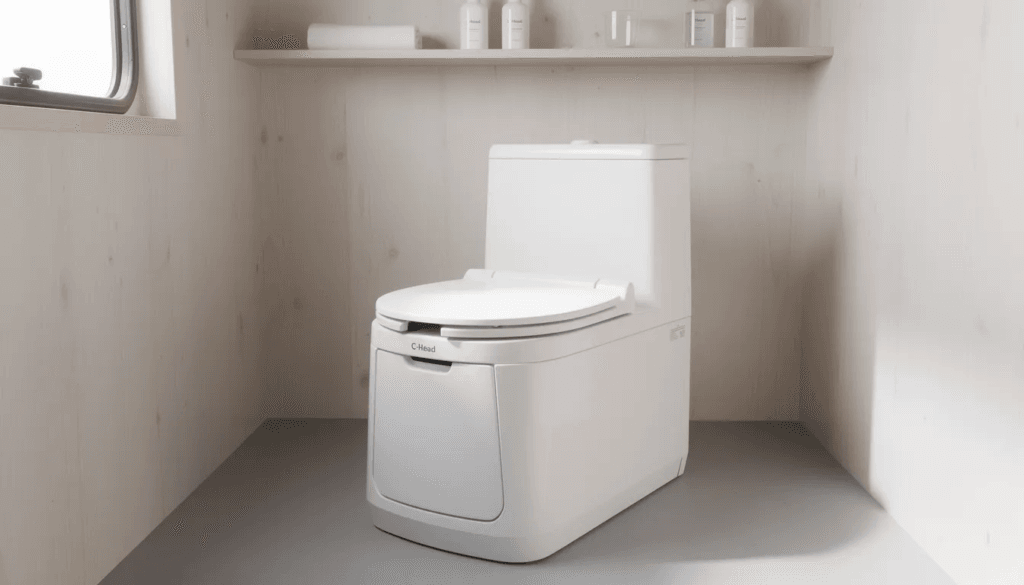
The C-Head composting toilet is designed for compact and restricted spaces, making it one of the smallest composting toilets available. It is commonly used in off-grid, tiny home, and mobile applications, and is 8–12 inches shallower than standard toilets, allowing it to fit in confined areas. Its unique design and small footprint make it a top choice for those seeking efficient waste management solutions in limited spaces.
Quick Answer: Standard C-Head Composting Toilet Dimensions
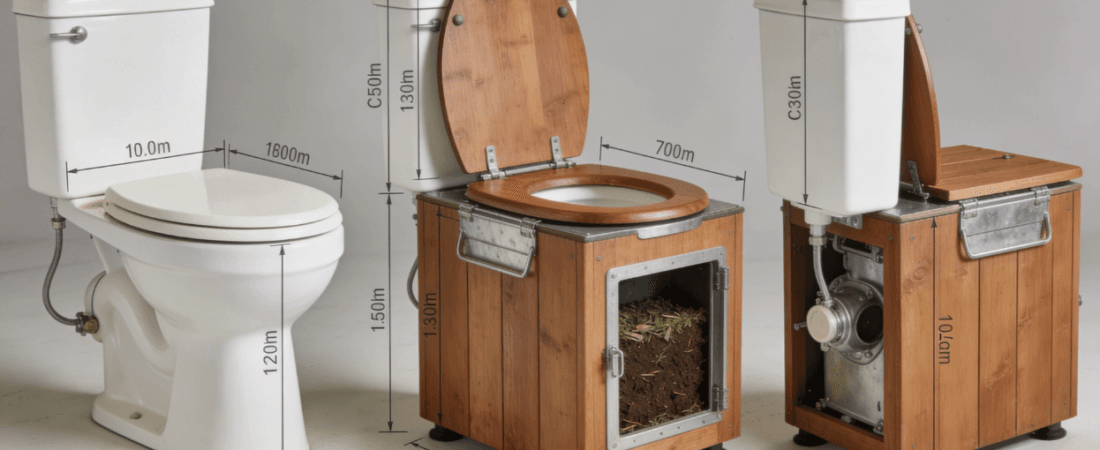
If you’re in a hurry, here are the key numbers you need. Most C-Head units occupy an approximate footprint of 19 inches by 19 inches and a height of 20 to 21 inches. C-head composting toilets typically measure around 13–17 inches wide, 17–21 inches deep, and 16–21 inches high. The C Head composting toilet has a height of 15 inches (Shorty model). The standard C-Head unit measures approximately 20 inches high, 16 inches wide, and 18 inches deep, making it a compact choice for most mobile and off-grid installations.
Measurement | Standard C-Head | Shorty Model |
|---|---|---|
Height | ~20” (50.8 cm) | ~15” (38.1 cm) |
Width | ~16” (40.6 cm) | ~16” (40.6 cm) |
Depth | ~18” (45.7 cm) | ~18” (45.7 cm) |
These dimensions make the unit compact enough for most vans, small RV bathrooms, custom tiny homes, and boat heads while still remaining comfortable for adults. The Shorty model, marketed as the smallest composting toilet available, drops the height to just 15 inches—ideal for low-clearance situations like Sprinter van builds or storage compartment installations. | ||
Keep in mind that actual production units may vary by about ±0.5 inches since each C-Head is handcrafted. Always confirm with current manufacturer specs on their website before building custom cabinetry. The rest of this article will detail footprint considerations, clearances, installation tips, and how C-Head stacks up against other compact composting toilets on the market. |
Understanding the C-Head Composting Toilet Footprint
The footprint is the first constraint to check when planning a marine head, van wet bath, or tiny home bathroom. Getting this wrong means doors that won’t swing, walls you can’t build, and a problem you’ll live with for years.
The base length (front-to-back) measures roughly 18 inches, measured from the front-most point of the base to the rear mounting surface. The base width sits around 16 inches at the widest point of the housing—not just the seat. This footprint is mostly rectangular with slightly rounded corners, making it easy to cut floor templates or plan around shower pans.
This size allows installation in spaces originally designed for a cassette toilet or small marine head from older boats built in the 1990s and 2000s. For practical reference, the C-Head fits comfortably in a 24” x 30” shower stall common in camper van conversions, leaving adequate walking and door-swing room.
Height, Seating Comfort, and Ergonomics
Height determines comfort, especially for long-term liveaboard or full-time vanlife use. Nobody wants to purchase a toilet that becomes uncomfortable after a few days of traveling.
The standard sitting height lands at about 20 inches from finished floor to top of seat, which is close to many residential toilets but lower than ADA-compliant heights. If you order the Shorty model, that drops to approximately 15 inches—comparable to a low camp toilet or child’s training seat.
The hinged lid and seat add minimal extra thickness beyond the main body, so total closed-lid height remains within the stated range. Users over 6 feet typically still find the C-Head comfortable, though those with mobility issues might add a 1–2 inch riser platform.
The lower profile helps significantly in low-ceiling vans like the Ford Transit, Mercedes Sprinter, or Ram ProMaster, as well as under sloping decks on sailboats. For legroom, allow at least 21–24 inches clear in front of the unit for comfortable sitting and standing up—this is where many first-time builders run into fit issues.
Clearances Needed Around a C-Head Toilet
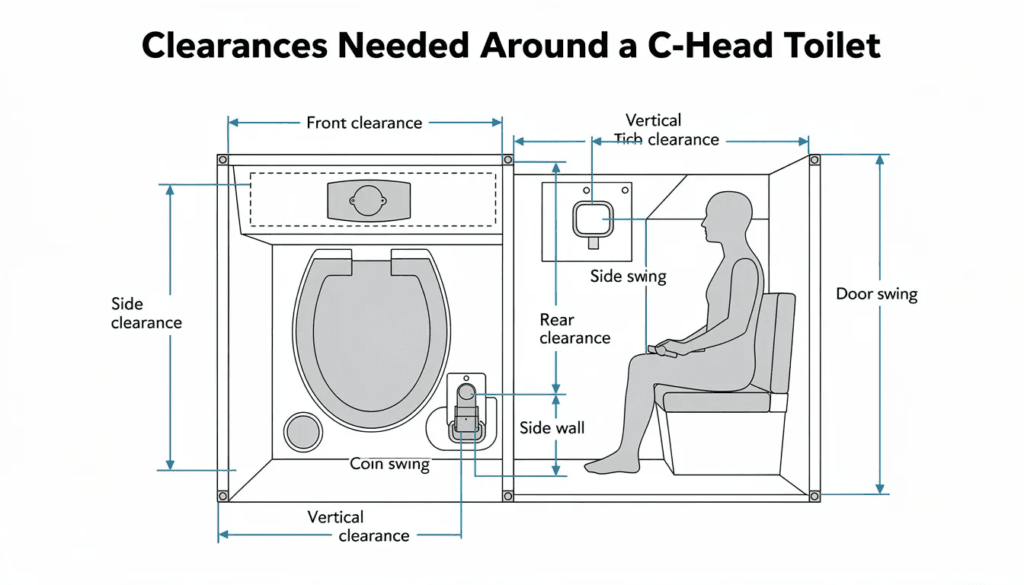
Clearances are just as important as raw dimensions for real-world usability and maintenance. A toilet that technically fits but can’t be serviced becomes a long-term issue.
Side-to-side clearance: Allow at least 2 inches of free space on each side, with 3–4 inches preferred for tiny homes or full-time RV setups where you’ll use the toilet daily.
Front clearance: A minimum of 18–21 inches works for very tight builds, but 24 inches or more is suggested for comfort in cabins and larger campers. This is the space where your knees go.
Rear clearance: The C-Head typically mounts close to a wall or bulkhead. A 0.5–1 inch gap allows airflow and prevents scuffing surfaces when the unit shifts during travel.
Top clearance: Ensure at least 5–6 inches above the closed-lid height to fully open the seat and lid. This means planning for about 24–25 inches total from floor to any shelf or countertop above.
For maintenance access—emptying solids and liquids, checking vent connections—you may need to pull the unit slightly forward. Design with an extra 2–3 inches of “service slack” if possible. This makes the difference between a quick clean and a frustrating ordeal.
Vent, Urine Diverter, and Container Space Requirements
The external components—vent hoses and urine bottles or tanks—need extra room beyond the core toilet dimensions. Understanding how the urine diverter works helps you plan these spaces correctly.
The vent outlet is usually positioned on the rear or side of the C-Head housing. Reserve a 2–3 inch vertical strip of wall space for a 1–1.5 inch vent hose or PVC run. Standard hose routing options include:
- Straight out through a bulkhead on a sailboat
- Up into a van wall cavity and out through the roof
- Through a tiny home exterior wall above the floor line
The typical urine bottle used with C-Head-style units holds around 1–1.5 gallons, requiring approximately 5–7 inches of depth behind or beside the toilet to slide the container out when it needs to be emptied. Some users integrate the urine line into a larger remote tank—a 5–6 gallon jerry can placed in a cabinet or locker within 2–3 feet of the toilet works well for extended use without daily emptying.
Any remote tank or bottle must remain accessible. Plan a door or removable panel at least 9–12 inches wide so you can reach everything without disassembling your build.
Comparing C-Head Dimensions With Other Compact Composting Toilets
For broader planning in small spaces, it also helps to think about tiny house septic options and other sustainable waste management systems alongside your choice of composting toilet.
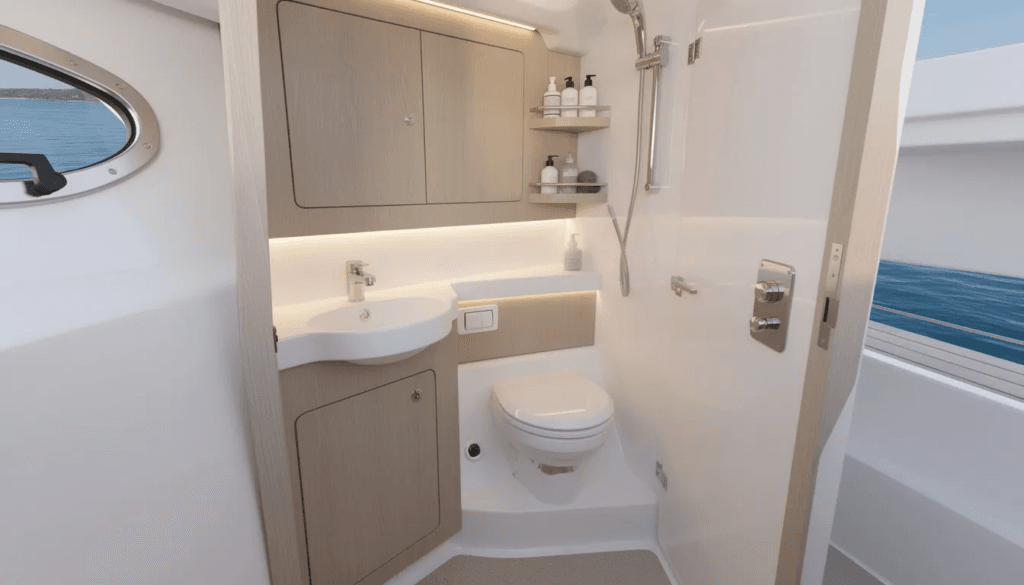
Buyers often compare the C-Head against other small units like OGO, Nature’s Head toilet, and Air Head before committing to a purchase. Understanding where they differ helps you make the right choice for your specific build.
The OGO Origin measures 18.375” H x 16” W x 15” D, making it similar in footprint to the C-Head but about 3 inches shallower front-to-back. That shallower depth can ease door clearance in tight coupes or van layouts, though it means different internal container sizing. The nature’s head toilet comes in at approximately 19” x 19” x 20”—a more square-like footprint that demands more floor space than C-Head’s slimmer 16-inch width.
When comparing all three in approximate terms:
- Height: C-Head standard at 20”, Shorty at 15”; Nature’s Head at 20”; OGO at 18.375”
- Footprint: C-Head at 16” x 18”; Nature’s Head at 19” x 19”; OGO at 16” x 15”
- Weight class: All fall between 25–30 lbs empty
Compared with many older marine heads, the C-Head is usually shorter front-to-back, making it easier to fit into narrow sailboat heads built before 2010. Some all-in-one units are taller (20–21+ inches) to accommodate larger internal containers, but C-Head’s lower height options benefit low windowsills and sloped ceilings.
Any of these compact composting toilets can usually drop into the same 20” x 20” planning envelope, with the C-Head fitting comfortably inside that box.
Planning an Installation: Vans, RVs, Boats, and Tiny Homes
If you’re still designing the structure itself, especially using Home Depot tiny house kits, be sure to block in the C-Head’s footprint and clearances on your floor plan early so the bathroom layout works with the kit’s wall and window placements.
Real-world installations differ by vehicle or building type, even though the core C-Head dimensions stay the same. Here’s how to handle each platform.
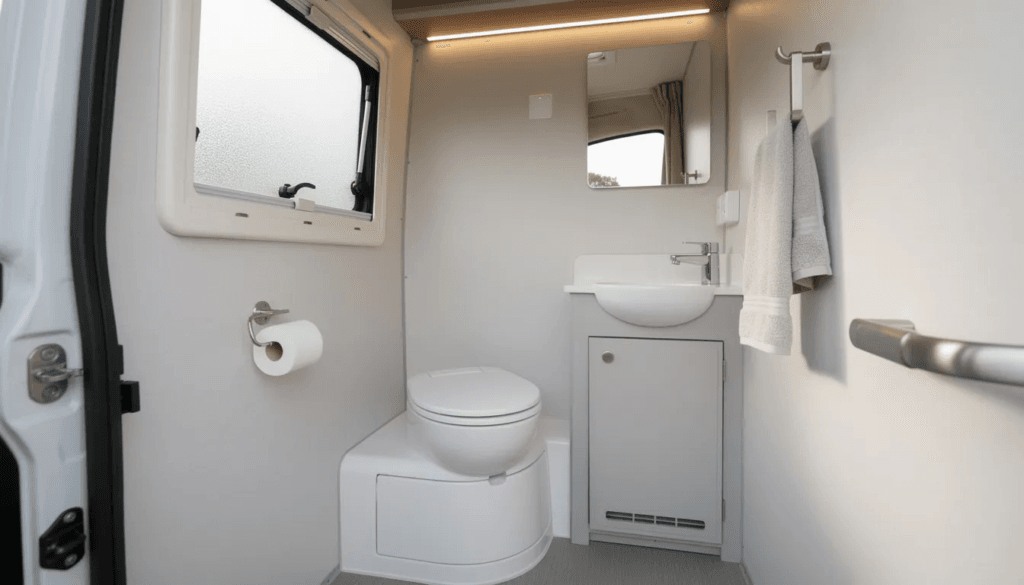
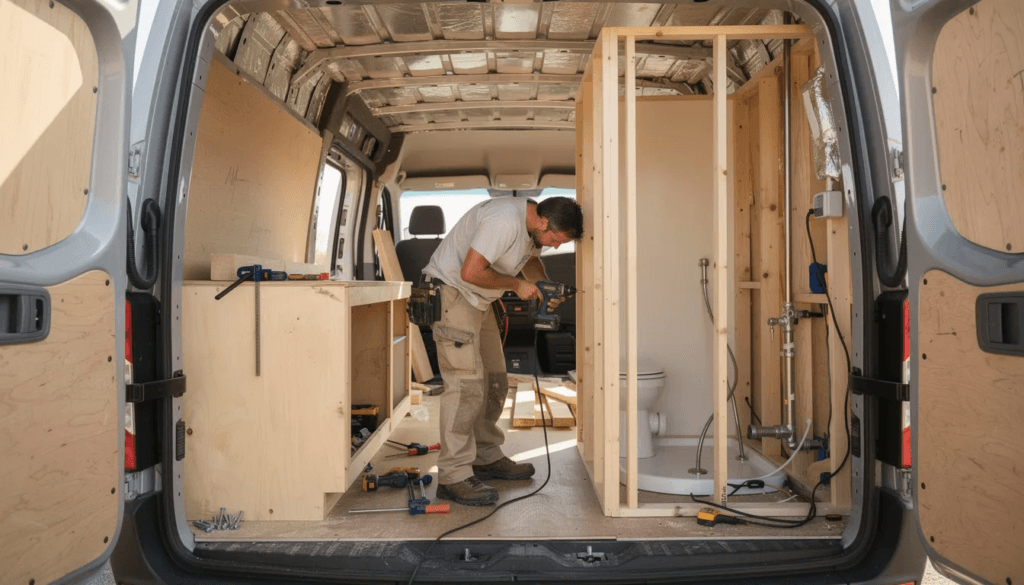
Vans and small RVs: Position the unit in a 24–30 inch wide wet bath, allowing door swing and knee room. Popular platforms like the Sprinter 144, Transit 148, and ProMaster 136 all accommodate the C-Head with proper planning. The Shorty model earned praise from Sprinter builders specifically because its 15-inch height fits where standard models fail.
Sailboats and trawlers: Working with curved hulls and sloping cabin sides requires creativity. Build a plywood plinth to create a level 18–19 inch deep platform for the C-Head. Users retrofitting boats like the Albin A25 report the Shorty model fits where full-height options simply don’t, especially after removing old macerating heads. In C-242 Coupe tugs, check the bulkhead space behind existing toilets carefully to avoid door interference.
Tiny houses: Integrate the toilet into a 30” x 36” bathroom with a small sink and shower, using the compact footprint to leave at least 24 inches of standing space. If you’re still in the inspiration phase, browsing cute tiny house designs can help you visualize how to hide or showcase the toilet within your overall interior. The handcrafted wood finishes—Dark Mahogany, Red Mahogany, or Golden Teak—currently in stock help match interior aesthetics.
For all installations, pre-drill mounting holes in the base and ensure at least 0.75 inches of solid subfloor or backing under the footprint area. Although the C-Head is relatively light empty, plan support for a combined load of adult user plus full solids bucket plus urine container—roughly 250–300 pounds total.
Dimension-Related Maintenance and Access Considerations
Correct sizing includes thinking about how you’ll open, empty, and clean the toilet for years to come. The solid waste container and composting medium need regular attention, and your build should make this easy rather than a struggle.
The solids container typically lifts straight up and out. Ensure vertical clearance to raise it at least 10–12 inches above the rim before tilting. Eliminating this clearance during the design phase creates a problem you’ll curse weekly.
Side or front access doors in van or boat cabinetry should be at least 16–18 inches wide so the entire C-Head can slide forward if needed for deeper maintenance. This access also helps when adding fresh composting medium or addressing any smell issues that might arise in humid conditions.
Plan space for small tools and supplies—coco coir, sawdust, or other bulking agents—within 12–24 inches of the unit. Users love having these materials within easy reach during routine use. Any removable service panels should have simple latches and enough clearance so they can fully open without hitting the lid or seat when raised.
Building in just 1–2 extra inches of space around the standard C-Head dimensions can dramatically improve long-term usability. Watch how you handle the toilet during the first few weeks and adjust if needed.
Summary: Working With C-Head Composting Toilet Dimensions
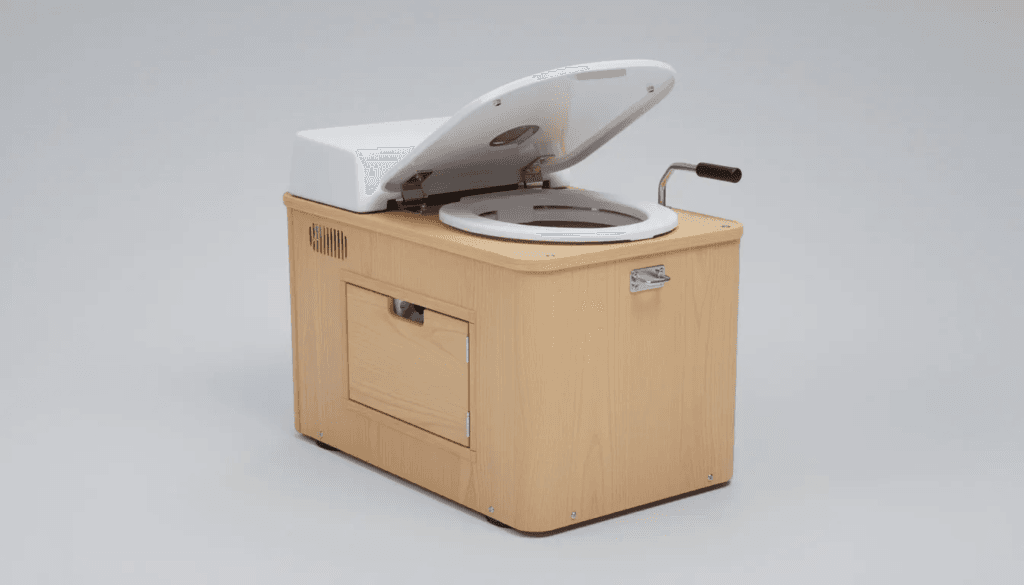
The key numbers to remember: roughly 18 inches deep, 16 inches wide, and either 15 inches (Shorty) or 20 inches (Standard) high. These dimensions make the head composting toilet a strong solution for space-constrained builds without sacrificing comfort.
Main clearance recommendations include 2–3 inches on each side, at least 18–24 inches in front for knee room, and enough height above for easy lid opening and solids removal. The C-Head’s compact but comfortable size makes it fit naturally in off-grid cabins, boats, vans, and tiny houses where every inch matters.
Before drilling or framing, sketch the footprint on your floor with painter’s tape or cardboard at full scale using these dimensions as your template. This simple step takes ten minutes and can save you from expensive mistakes. For current specifications and to place an order, reach out to the manufacturer directly—lead times currently run around five weeks for custom builds, so plan accordingly.