Finding the right granny pod for your property starts with visual research—and the right images can make all the difference. This guide is for homeowners, caregivers, and families considering a backyard granny pod for aging relatives. High-quality images are essential for understanding design options, accessibility features, and real-world layouts. Whether you’re planning a backyard cottage for aging parents or exploring multi-generational living possibilities, the right granny pod images help you understand what’s actually achievable on your land and ensure you make informed decisions.
This page is your complete guide to granny pod images—showing you what to look for, how to interpret real-life layouts, and where to find the best visual inspiration for your project. We’ll walk you through exactly what to look for in granny pod photos, how to evaluate real-world layouts, and where to find inspiration that matches your budget, style, and accessibility needs.
Quick Answer: What “Granny Pod Images” Should Show
Readers searching for granny pod images need more than generic tiny home stock photos. The most helpful visuals fall into three categories: exterior photos showing how pods sit in real backyards, interior shots revealing how compact spaces function, and labeled floor plan diagrams from actual 2020–2025 projects.
What to Look for in Granny Pod Images:
- Exterior Photos: Show the pod’s relationship to the main house, including distance, landscaping, and entry paths.
- Interior Images: Capture the living area, kitchen or kitchenette, bathroom, and any bedroom space in natural light.
- Floor Plan Diagrams: Work best when they include room labels, total square footage, and key dimensions.
- Real-World Examples: Focus on actual ADUs and tiny homes used as granny pods rather than aspirational renderings.
- Variety: Images should cover a range of sizes (150–500 sq ft), budgets ($20,000–$125,000), and styles (modern, farmhouse, rustic cabin, charming cottage).
- Descriptive Captions: Every image benefits from a caption, e.g., “384 sq ft backyard cottage in Oregon with ramp and covered porch, completed in 2022.”
Next, let’s define exactly what a granny pod is and why these images matter for your planning.
- What Is a Granny Pod? (With Visual Examples)
- Types of Granny Pod Images to Collect
- Real-Life Granny Pod Layout Ideas (Image-Based Inspiration)
- Design Styles You’ll See in Granny Pod Photos
- Accessibility & Safety Features to Highlight in Photos
- Backyard Placement & Site Planning (What the Images Should Reveal)
- Cost, Size & Floor Plan Images: What to Label
- How to Find & Evaluate Granny Pod Images Online
What Is a Granny Pod? (With Visual Examples)
Granny Pod Essentials: Quick Reference
Granny pods are small, standalone living spaces built close to a main house, also known as ADUs or backyard cottages. They typically include a living area, kitchen, bathroom, and bedroom, and are designed for safety and accessibility.
(Fact references: 1, 2, 3, 4, 10, 12, 18, 26)
A granny pod is a small, typically detached home built in a backyard or on the same property as a family’s main house. Granny pods are small, standalone living spaces built close to a main house (Fact 1, 10, 26), also known as auxiliary dwelling units (ADUs) (Fact 2). They typically include a living area, kitchen, bathroom, and bedroom (Fact 3, 12), and are designed with safety and accessibility in mind (Fact 4, 18). These compact structures range from 150 to 600 square feet and provide independent living space for aging relatives who want privacy while staying close to family support.
Key Terms Defined:
- Granny Pod: A small, standalone living space built close to a main house, designed for aging relatives or multi-generational living. Also called a backyard cottage, in-law suite, or mother-in-law apartment.
- ADU (Accessory Dwelling Unit): Another term for a granny pod; refers to a secondary, self-contained residential unit on a single-family lot.
- Accessibility Features: Design elements that make a space safer and easier to use for people with mobility challenges, such as slip-resistant floors, wide doorways, step-free entries, grab bars, and lever handles (Fact 4, 7, 18, 21).
Common synonyms you’ll encounter when searching for images include “granny flat,” “backyard cottage,” “in-law suite,” “mother-in-law apartment,” and Accessory Dwelling Unit (ADU). All these terms describe essentially the same concept—a secondary dwelling that allows seniors to maintain independence while living near loved ones.
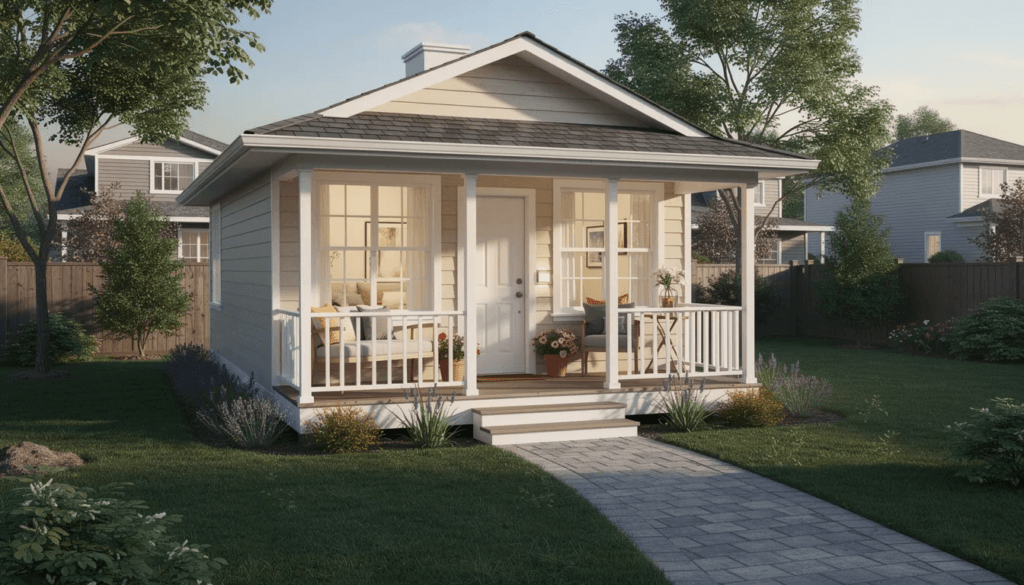
When evaluating visual examples, look for these recognizable features that distinguish granny pods from standard guest houses:
- Single-level layouts with no stairs to navigate
- Wide doors (32–36 inches) visible in exterior and interior shots
- Step-free entries, often with gentle ramps instead of stairs
- Small covered porch areas for sitting outdoors and enjoying fresh air
- Compact footprints that fit standard suburban backyards
A helpful visual comparison might include a 400 sq ft cottage from 2021 showing traditional siding and a front porch with rocking chairs, a modern prefab pod from 2023 featuring large glass doors and clean lines, and a converted garage suite from 2020 demonstrating adaptive reuse of existing structures.
Now that you know what a granny pod is, let’s explore the types of images you should collect for inspiration.
Types of Granny Pod Images to Collect
Before you start your search, know exactly which photo angles and subjects will give you the most useful information. Building a complete visual library requires several distinct image types.
Exterior Image Types:
- Full front view: Entry, windows, and overall style
- Side view: Distance from the main house and lot placement
- Night-time shots: Pathway lighting and safety features
- Bird’s-eye or overhead views: Complete backyard layout
Interior Image Types:
(For more examples of space-efficient layouts, see tiny house interiors that maximize every square foot)
- Living and sleeping combo spaces: Furniture arrangement
- Accessible bathrooms: Grab bars, walk-in showers, wide doorways
- Compact kitchens or kitchenettes: Appliances and storage solutions
- Creative storage: Built-in cabinets, loft areas, under-bed drawers
Floor Plan Images:
(See also tiny house floor plans that work well in small spaces)
- Simple layouts: Black-and-white or color, with room labels
- Square footage: Clearly noted (e.g., 280 sq ft studio, 420 sq ft 1-bed)
- Key dimensions: Doorways, hallways, room sizes
Detail Close-Ups Worth Collecting:
- Ramps and handrails at entries
- Non-slip flooring in bathrooms and kitchens
- Lever door handles and faucets
- Pocket doors that save floor space
- Emergency call buttons or alert systems
Images should clearly show scale—look for photos that include furniture, people, or standard-size items like a queen bed or sofa to help you understand actual dimensions.
With these image types in mind, let’s look at real-life granny pod layout ideas and how images can help you compare options.
Real-Life Granny Pod Layout Ideas (Image-Based Inspiration)
This section mirrors what competitors do well: walking through specific layout types, each deserving its own photo set with detailed captions. When researching, collect images for these proven configurations.
Layout Type | Best For | Images to Collect | Space-Maximizing Features/Notes |
|---|---|---|---|
Single-Room Studio (200–300 sq ft) | Seniors who need minimal space and prefer wide open floor plans | Exterior showing compact footprint, interior showing combined sleeping/living area, floor plan with bathroom and kitchenette placement | Murphy beds, fold-out tables, wall-mounted storage |
One-Bedroom with Separate Living Area (350–450 sq ft) | Seniors who want a dedicated bedroom with privacy | Exterior with covered entry, interior shots of both rooms, floor plan showing circulation between spaces | Pocket doors between rooms, built-in benches, under-stair storage if applicable |
Studio with Loft Sleeping Space (250–350 sq ft) | More mobile seniors comfortable with ladder or stair access, or for guest overflow | Exterior showing height/roofline, interior looking up at loft, main floor plan with living and kitchen areas | May not suit all aging residents due to accessibility concerns |
Pod Connected by Breezeway (400–600 sq ft) | Families wanting physical connection to the main house while maintaining separate living space | Both structures from outside, the breezeway or covered walkway, interior of the pod showing complete independence | How utilities connect, covered outdoor sitting areas, visual privacy from main house |
Vaulted-Ceiling Cottage with Front Porch (450–500 sq ft) | Seniors who want a cozy, home-like feel rather than a minimal pod aesthetic | Exterior showing roofline and porch with chairs, interior showing ceiling height and natural light, floor plan with bedroom, full bathroom, and kitchen | How vaulted ceilings make small spaces feel larger |
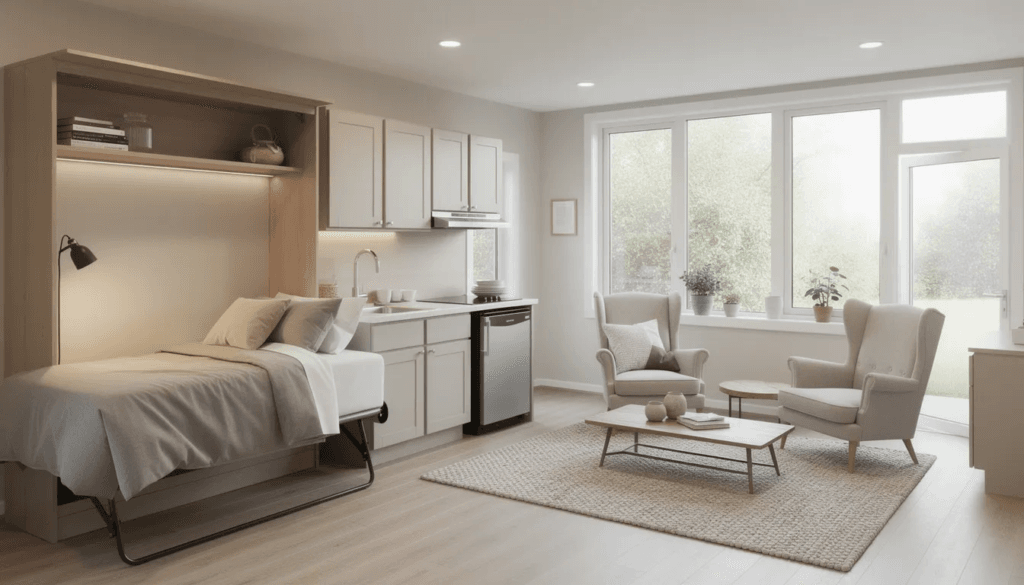
Once you’ve identified your preferred layout, the next step is to choose a design style that fits your taste and neighborhood.
Design Styles You’ll See in Granny Pod Photos
Online granny pod images typically fall into a few recognizable style categories. Understanding these helps you communicate preferences to designers and builders, and ensures you’re collecting consistent inspiration.
Style Category | Visual Cues | Color Palette & Details | Interior Features |
|---|---|---|---|
Modern Minimal | Flat or low-slope roofs, large glass sliding doors, black window frames | Neutral grays, whites, natural wood tones; clean lines, simple decks, minimal plantings | Open shelving, streamlined kitchens, abundant natural light |
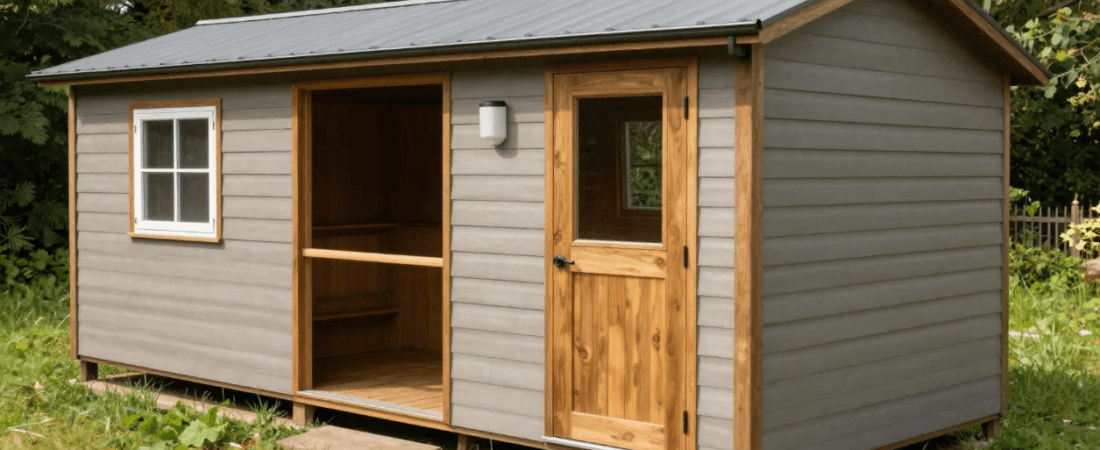
Rustic Cabin | Wood siding (cedar, pine), metal roofing, compact covered porch | Warm, inviting, 2020s “tiny cabin” aesthetic | Exposed beams, wood paneling, cozy textiles, Adirondack/rocking chairs |
Classic Cottage | Gable roofs, dormers, flower boxes, light-colored siding | Shutters, window trim, welcoming entry | Painted wood trim, Shaker-style cabinets, warm textiles |
Farmhouse-Inspired | Board-and-batten siding, simple rectangular forms | White exteriors with black windows, sometimes dark accent trim; barn-style exterior fixtures | Open floor plans, practical layouts, mixed materials |
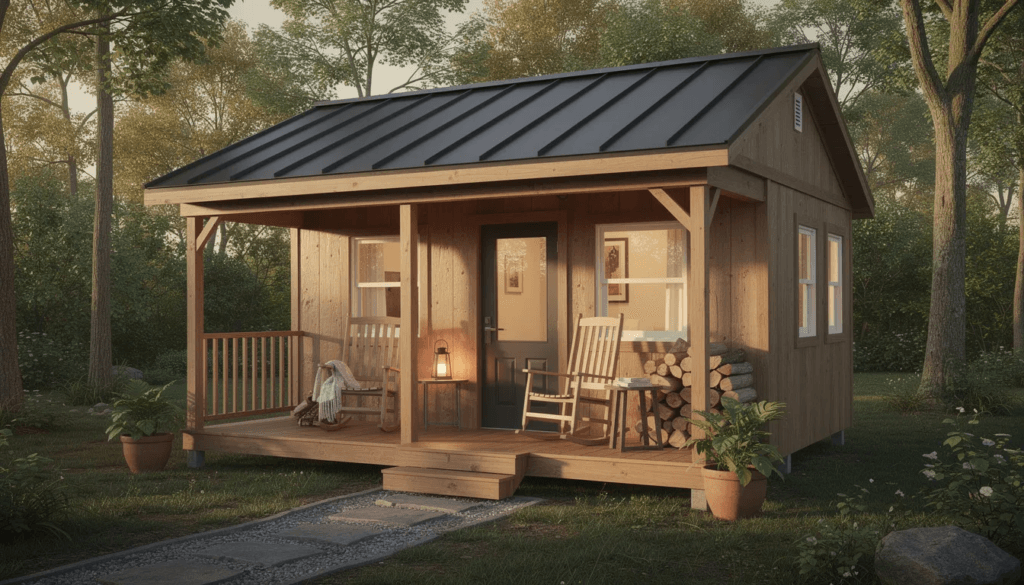
After you’ve narrowed down your style, it’s important to focus on accessibility and safety features that should be visible in the best granny pod images.
Accessibility & Safety Features to Highlight in Photos
Many families search specifically for granny pod images showing aging-in-place details. These features matter more than aesthetics when the pod will house someone with mobility challenges.
Entry-Related Visuals:
- Step-free thresholds (zero-step entries)
- Ramps with sturdy handrails on both sides
- Covered entries protecting from weather
- Wider exterior doors (36 inch preferred—look for scale references)
- Non-slip porch surfaces
Interior Mobility Images:
- Wide hallways allowing walkers or wheelchairs to pass
- Open main floor spaces with room for mobility devices to turn
- Lever-style handles on all doors (not round knobs)
- Lever faucets in kitchen and bathroom
Bathroom Accessibility Images:
- Walk-in or roll-in showers with built-in benches
- Grab bars installed near toilet and inside shower
- Handheld showerheads on adjustable mounts
- Contrasting tile colors to improve visibility for those with vision issues
- Comfort-height toilets
Safety and Technology Features:
- Emergency pull cords or call buttons (often near bed and bathroom)
- Motion-sensor lighting in corridors and entries
- Visible smoke and CO detectors
- Smart-home controls mounted at accessible heights
When saving images with these features, write captions explaining why each visible element matters. For example: “Low-profile shower curb (under 1 inch) reduces tripping risk” is more helpful than simply noting “accessible shower.”
With accessibility in mind, let’s look at how granny pods are placed in the backyard and what site planning images should reveal.
Backyard Placement & Site Planning (What the Images Should Reveal)
Good granny pod images show more than just the building—they reveal how the structure sits in the yard relative to the main house, paths, and landscaping.
Perspective Shots to Collect:
- View from the main house looking toward the pod (shows proximity and visual connection)
- View from the pod looking back toward the main house (shows what residents will see daily)
- Views showing privacy—trees, fencing, or strategic placement that creates separation
Landscaping and Path Images:
- Pathways with smooth, even surfaces (no tripping hazards)
- Low garden lighting along walkways for nighttime navigation
- Simple plantings that won’t require extensive maintenance or create obstacles
Diagram-Style Images:
- Annotated photos or site plans showing distances (typical range: 20–40 feet from main house)
- Orientation diagrams showing how windows capture natural light
- Access routes to parking and the main house entry
Complex Setup Examples:
- Second-story breezeway connectors between structures
- Pods built over existing garages
- Pods on sloped lots with creative foundation solutions
All site-planning images should clearly show circulation routes—the actual paths an older adult would use to move between the pod, the main house, and any outdoor sitting areas.
Once you understand placement, it’s time to focus on labeling images for cost, size, and floor plan clarity.
Cost, Size & Floor Plan Images: What to Label
Readers studying granny pod images want quick context on cost and square footage. Proper labeling transforms a pretty photo into actionable research.
Essential Labels for Every Floor Plan:
- Total square footage (e.g., “378 sq ft”)
- Number of sleeping spaces (“1 bedroom” or “studio with sleeping alcove”)
- Basic room list (“1 bed, 1 bath, kitchenette, living area”)
- Key dimensions for critical spaces (bedroom dimensions, bathroom size)
Cost Information in Captions:
- Include approximate build or prefab price ranges when possible
- Example caption: “Shell-only prefab model photographed here priced around $70,000 in 2024; complete installation typically $85,000–$100,000”
- Note whether costs include site prep, permits, and utility installation
Size Range Examples to Collect:
- Very small studios: 150–200 sq ft (ideal for minimal needs)
- Mid-size pods: 350–450 sq ft (room for separate bedroom)
- Larger ADU-style units: 500–600 sq ft (full home function with extra room)
Comparison Images:
- Side-by-side floor plans showing two different layouts with the same square footage
- Before/after images of the same lot showing placement planning
- Photos comparing furnished versus unfurnished to demonstrate how space can be arranged differently
With your labeling strategy in place, let’s move on to finding and evaluating the best granny pod images online.
How to Find & Evaluate Granny Pod Images Online
Searching smarter across image sources—search engines, house plans sites, prefab builders, and social media—saves hours of frustration and delivers more relevant results.
Effective Search Phrases:
- “granny pod floor plan 2023”
- “backyard in-law suite photos”
- “400 sq ft ADU interior”
- “accessible tiny home bathroom ideas”
- “prefab granny flat exterior”
- “mother in law cottage with covered porch”
Evaluating Image Quality:
- Check for clear scale references (furniture, people, standard items)
- Look for realistic furnishings rather than obviously staged minimalism
- Determine whether the image shows a rendering or completed project
- Verify the image is recent (2020–2025) for current building standards
Platform-Specific Tips:
- Pinterest: Great for collecting style inspiration, but verify sources before assuming images are buildable designs—for example, when saving chalet-style tiny house models or tiny house cabin retreat ideas
- Instagram: Real homeowners often share lived-in conditions versus staged builder photos—search hashtags like #grannyflat or #backyardADU
- Builder websites: Best for accurate cost and specification data alongside photos
- Architectural firm portfolios: Excellent for custom designs with professional photography
What Well-Captioned Images Include:
- Location (state or region)
- Year completed
- Square footage
- Key features (accessibility elements, style notes)
- Approximate cost range if known
As you explore other options and research possibilities, save or bookmark specific images and plans that match your yard size, accessibility needs, and style preferences. Building a focused collection before you hire an architect or purchase a prefab model helps ensure you can clearly communicate your vision. The perfect granny pod for your family exists somewhere between the images you love and the practical constraints of your property—let visual research guide you toward that ideal intersection.