
If you’re searching for granny pods for sale in NY, this comprehensive guide is designed specifically for New York families considering granny pods for aging relatives. The guide covers everything you need to know about pricing, suppliers, zoning, installation, and design for 2025–2026. With the rising costs of elder care and a growing need for independent living solutions, more families are exploring granny pods as a practical and compassionate alternative to traditional nursing homes or assisted living facilities. This resource will help you navigate the process, understand your options, and make informed decisions that keep your loved ones close while preserving their independence.
Here’s the reality check that gets many families excited about granny pods: nursing homes in New York frequently cost $11,000 to $16,000 per month in 2025, while assisted living runs $4,500 to $8,000 monthly. A well-planned granny pod can pay for itself within a few years while keeping your loved one on your own land.
- Independence with proximity: Your parent has their own front door, kitchen, and bathroom
- Lower long-term costs: One-time investment versus ongoing monthly care facility bills
- Peace of mind: You’re steps away if something goes wrong
- Comfort and familiarity: Your relative stays connected to family life instead of institutional living
- What Is a Granny Pod (and Why They’re Popular in New York)?
- Granny Pods for Sale in New York: Current Options (2025–2026)
- Inside a Modern Granny Pod: Features New York Buyers Want
- Cost of a Granny Pod in New York in 2025–2026
- Where Can You Place a Granny Pod in New York? (Zoning & Legal Basics)
- Granny Pod Installation Process in New York
- Designing a New York-Ready Granny Pod
- Is a Granny Pod Right for Your New York Family?
- Frequently Asked Questions About Granny Pods for Sale in NY
What Is a Granny Pod (and Why They’re Popular in New York)?
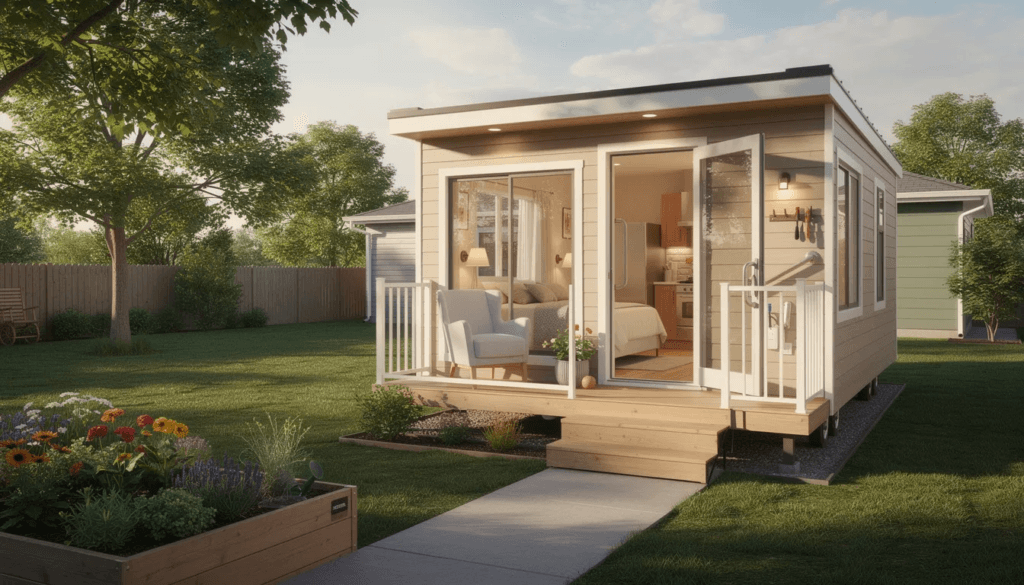
A granny pod—also known as an accessory dwelling unit (ADU) or elder cottage—is a small, detached dwelling unit designed to house aging relatives on the same property as their family members. These units typically range from 300 to 800 square feet and are equipped with everything an elderly person needs to live comfortably and independently. Granny pods are specifically designed with the needs of elderly residents in mind, incorporating features that promote safety, accessibility, and comfort, such as wider doorways, zero-step entries, and accessible bathroom layouts.
You’ll hear several alternate terms used across New York: accessory dwelling unit (or ADU), in-law suite, elder cottage, and backyard cottage all describe essentially the same concept. The key distinction is that granny pods are specifically designed with aging-in-place features like wider doorways, zero-step entries, and accessible bathroom layouts that standard tiny houses or guest cottages typically lack.
The typical granny pod layout includes one bedroom, one bathroom, a kitchenette with essential appliances, and a flexible living area that can host visitors or serve as a reading nook, similar to well-planned tiny house floor plans. This arrangement preserves privacy for your aging parent while keeping them just a short walk from your back door. Many families discover this setup creates the ideal balance—close enough for daily check-ins and shared meals, but separate enough that everyone maintains their own routines.
Why are granny pods gaining traction in New York specifically? Several factors are converging: the high cost of long-term care facilities, a growing preference for multigenerational living arrangements, and tight housing markets in NYC suburbs, Long Island, and the Hudson Valley that make traditional housing unaffordable for many seniors on fixed incomes.
Typical granny pod specifications:
- Size range: 300–800 sq ft
- Rooms: 1 bedroom, 1 bathroom, kitchenette, living area
- Foundation: Permanent (frost-protected for NY climate)
- Features: ADA-inspired accessibility elements standard
Granny Pods for Sale in New York: Current Options (2025–2026)
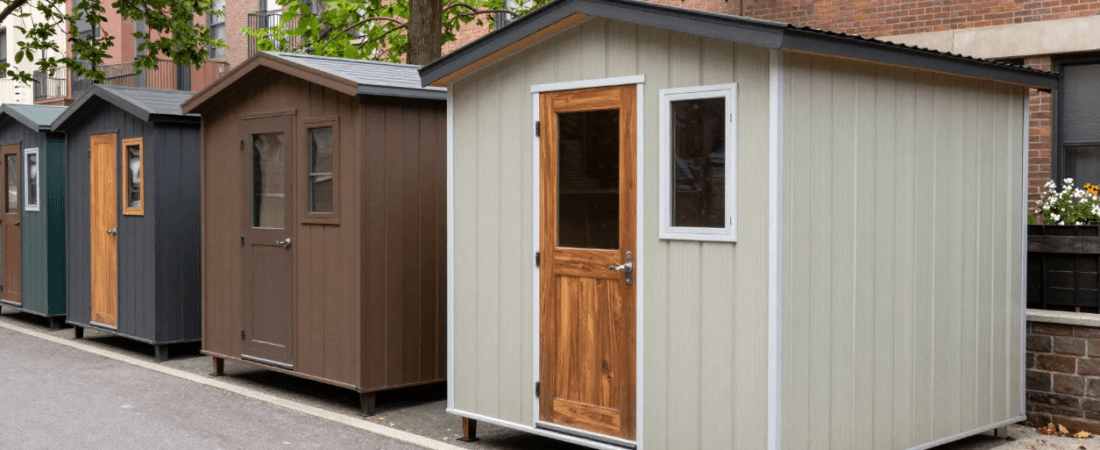
Yes, you can buy granny pods in New York right now. The most common purchase paths are prefab or modular units delivered to your property, panelized kits assembled on-site, tiny house kits, and custom ADU builds crafted by local builders to your exact specifications. Some families also explore tiny homes on permanent foundations adapted for senior living, though these require careful attention to accessibility features.
Popular Granny Pod Suppliers in New York:
- Great Lakes Tiny Homes – Offers a range of customizable ADUs and granny pods built for New York’s climate.
- Amish Built Cabins – Known for durable, handcrafted modular cabins and cottages suitable for use as granny pods.
- Other regional builders – Many local contractors and modular home companies in New York now offer ADU and granny pod solutions tailored to local codes and weather.
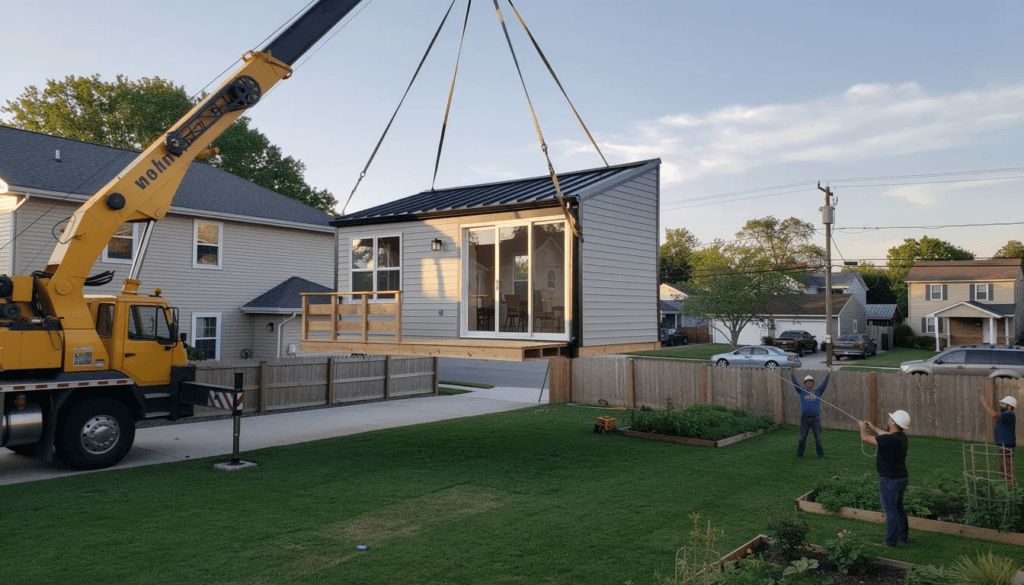
The construction process varies significantly depending on which path you choose. Prefab granny pods arrive nearly complete—sometimes installation takes just a single day once the foundation is ready. Custom builds involve on-site construction over several weeks or months but allow you to create something that perfectly matches your main home’s style and your relative’s specific needs.
Realistic price bands for New York in 2025–2026:
- Basic prefab cottage (250–350 sq ft): $65,000–$90,000 for the unit
- Mid-range finished granny pod (300–600 sq ft): $95,000–$160,000 with quality finishes and full accessibility features
- Larger or highly customized ADU (600–900 sq ft): $170,000–$240,000+ before site work
What catches many New York buyers by surprise is the total project cost. When you factor in the foundation, utility connections, and permits, the all-in budget for most NY backyards lands between $120,000 and $260,000 depending on your county and site complexity. A straightforward suburban lot with easy utility access sits at the lower end; a sloped property requiring extensive grading and longer utility runs pushes toward the higher figure.
The good news is that units built for the New York market are engineered to handle our winters. Expect insulated walls and roofs rated for cold climates, frost-line foundations that prevent heaving, and efficient heating systems like mini-splits or hydronic baseboards. These aren’t flimsy structures—they’re built to provide comfortable living through January snowstorms and August heat waves alike.
Inside a Modern Granny Pod: Features New York Buyers Want
A typical 2025–2026 granny pod built for New York combines practical accessibility with genuine comfort. Step inside and you’ll find a thoughtfully designed space that doesn’t feel cramped despite its smaller footprint.
The core interior layout prioritizes daily function. The bedroom is sized to fit at least a full or queen bed with room for a nightstand and dresser. The accessible bathroom features a walk-in shower with a built-in seat—no tub to step over. A compact kitchenette includes a refrigerator, microwave, two-burner cooktop, and enough counter space to prepare simple meals. The flexible living area accommodates a comfortable chair or loveseat and can easily host family visitors for coffee or a movie night.
Senior-friendly and ADA-inspired features come standard in quality granny pods:
- Zero-step entry with covered porch
- 36-inch doorways throughout (standard doors are 32 inches)
- Wide hallway clearances for walkers or wheelchairs
- Lever handles on all doors and faucets
- Walk-in shower with fold-down seat and grab bars backed by blocking
- Non-slip luxury vinyl plank flooring
- Abundant LED lighting with rocker switches at accessible heights
- Open floor plan minimizing tight corners
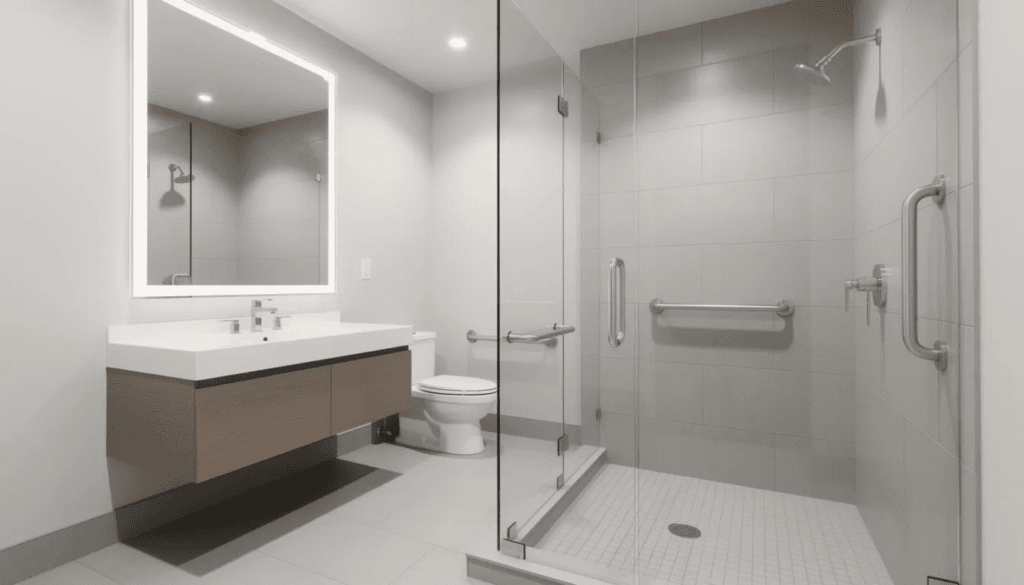
Climate features matter enormously in New York. Look for R-21 or higher wall insulation, R-38 to R-49 roof insulation, and double or triple-pane windows. Mini-split heat pumps have become the go-to heating and cooling solution—modern units perform effectively down to around -5°F, with supplemental electric baseboards providing backup during the coldest stretches. Monthly heating costs for a well-insulated 400 sq ft unit typically run $100–$200 in winter and $50–$100 for cooling in summer.
Must-have vs. Nice-to-have Features
Must-Have Features:
- Zero-step entry
- 36” doorways
- Walk-in shower with seat
- Grab bars
- Mini-split HVAC
- High insulation values
Nice-to-Have Features:
- Smart thermostat with remote monitoring
- Video doorbell
- Motion-sensing interior lights
- Emergency call button system
- Covered entry porch
- Matching exterior to main house
Optional tech integrations are increasingly popular: smart thermostats that let you check the temperature remotely, video doorbells, motion-sensing lights that prevent fumbling for switches at night, and even remote health-monitoring devices. Some families install emergency call buttons as a simple peace of mind solution.
Cost of a Granny Pod in New York in 2025–2026
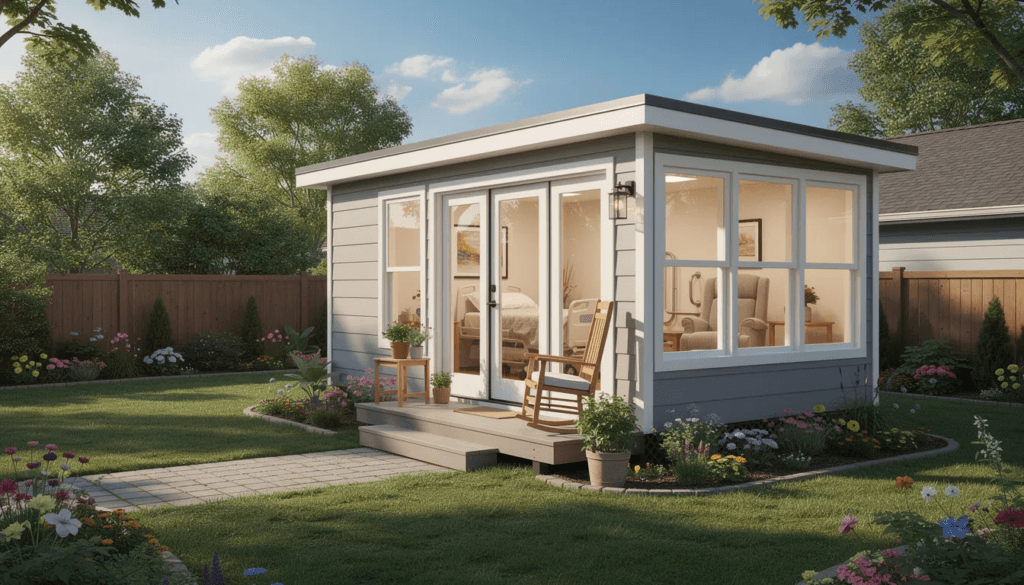
New York conditions—labor rates, permitting requirements, and weather-appropriate construction—push granny pod costs higher than you might see quoted for warmer or less regulated states. Understanding the full picture helps you budget realistically.
Structure costs:
- Prefab/modular granny pods: $50,000–$150,000 for the unit alone, depending on size and finishes. Basic models from manufacturers like Great Lakes Tiny Homes start around $50,000, while mid-range options with enhanced materials run $100,000–$150,000.
- Custom stick-built ADU granny pods: $90,000–$220,000+ for the structure. These take longer but allow complete personalization.
Site work costs (often underestimated):
- Frost-protected foundation or helical piers: $8,000–$25,000 depending on soil conditions and equipment access
- Utility trenching and connections (water, sewer or septic, electric, gas): $12,000–$35,000 in most NY locations
- Site preparation including grading and tree removal: $5,000–$15,000
Soft costs:
- Permits, engineering, and impact fees: $2,000–$10,000+ depending on municipality
- Architectural or design services: $2,000–$8,000 for custom plans
The full project cost for a typical New York granny pod installation commonly lands between $120,000 and $260,000 when everything is tallied. Metro areas and Long Island tend toward the higher end; upstate communities often come in lower.
How does this compare to elder care alternatives? Consider the math: assisted living in New York averages $4,500–$8,000 per month in 2025. At $6,000 monthly, that’s $72,000 per year. A $180,000 granny pod pays for itself in roughly 2.5 years compared to assisted living—and your family keeps the asset.
Financing options NY buyers commonly explore include home equity loans or HELOCs (often the simplest path), cash-out refinance of the primary mortgage, dedicated construction loans, and occasionally funds earmarked through long-term care planning. Financial advisors familiar with elder care planning can help structure the approach that works for your situation.
Where Can You Place a Granny Pod in New York? (Zoning & Legal Basics)
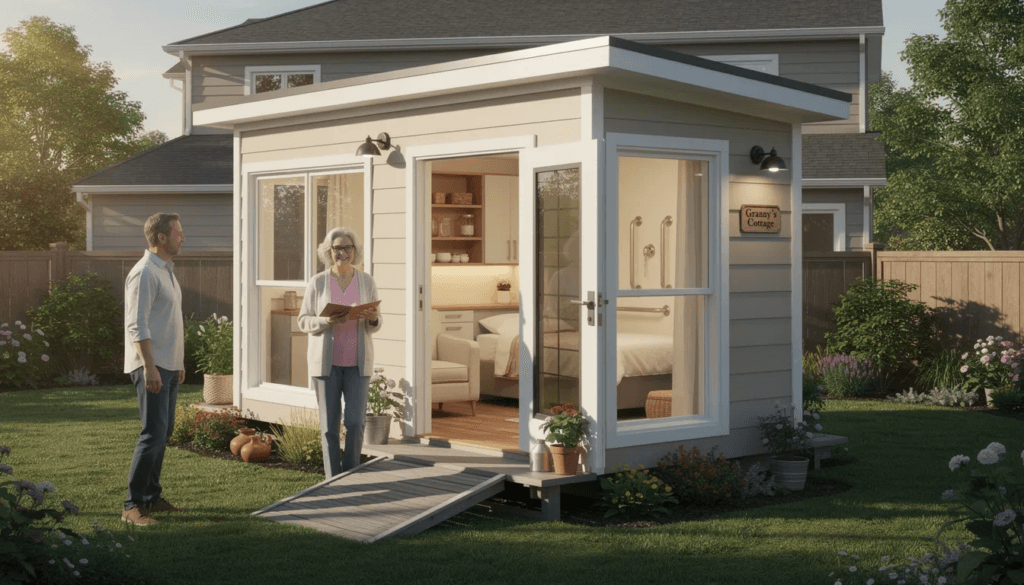
New York State is gradually becoming more ADU-friendly, but rules still vary dramatically by city, town, and county as of 2025–2026. What’s perfectly legal in one community might require a variance or be prohibited entirely in the town next door.
Permitting and Zoning Overview
Permitting and zoning regulations for granny pods vary widely across New York municipalities. Some areas require special use permits or variances for accessory dwelling units, which can involve public hearings and extend the timeline for approval. Granny pods are subject to local zoning regulations that differ significantly by county and municipality, and permit requirements can include building permits as well as additional permits for electrical, plumbing, and mechanical work. Building codes in New York are based on the New York State Uniform Fire Prevention and Building Code, but local jurisdictions may adopt amendments or additional requirements. It is essential to contact your local building department and zoning office to understand the specific regulations and requirements for granny pods in your area.
As of 2026, New York laws are evolving to simplify the installation of granny pods, including initiatives like the ‘City of Yes’ in New York City and the New York State Plus One ADU Program, which offers grants of up to $125,000 to eligible homeowners for granny pod construction costs. These programs are designed to make it easier for families to add ADUs and support multigenerational living.
The first distinction to understand: a permanent ADU or granny pod on a foundation is treated as part of your property and subject to building permits and inspections. A tiny home on wheels parked in your yard is typically classified as an RV and faces stricter limitations in many NY municipalities—often banned for permanent occupancy or limited to short stays.
Common zoning requirements you’ll encounter:
- Minimum lot size: Many towns require half an acre or more for an ADU; some suburban areas allow them on smaller lots
- Maximum lot coverage: Your combined structures (house + ADU + garage) can’t exceed a percentage of total lot area
- Owner-occupancy rules: Either the main house or the ADU must be owner-occupied in many jurisdictions
- Setbacks: Typically 5–20 feet from property lines and other structures
- Height limits: Usually one story or a specific height cap (often 15–20 feet)
- Maximum ADU size: Frequently capped at 600–1,000 sq ft or a percentage of the main home’s size
Where are granny pods more feasible? Many Hudson Valley towns in Ulster, Dutchess, and Columbia counties have adopted ADU ordinances in recent years. Upstate communities in Onondaga, Saratoga, and Tompkins counties explicitly address accessory dwellings in their codes. Even some suburban areas of Long Island and Westchester allow ADUs, though regulations tend to be tighter with more oversight.
Building codes based on the New York State Residential Code govern structural integrity, electrical, plumbing, and fire safety. Your granny pod will generally need to be permitted and inspected like a small house. This isn’t a bad thing—it ensures the structure is safe and built to last.
Before you get too far, confirm with your local building or planning department:
- [ ] ADU/granny pod allowances for your specific zoning district
- [ ] Required setbacks from property lines and the main house
- [ ] Maximum size and height restrictions
- [ ] Owner-occupancy requirements
- [ ] Whether rental to non-family is permitted
- [ ] Utility capacity concerns (especially septic systems)
Obtaining this information early—before you fall in love with a particular granny pod model—saves significant time and potential heartache.
Granny Pod Installation Process in New York
From initial idea to move-in day, a typical New York granny pod project follows a predictable path. Understanding each phase helps you plan realistic timelines and avoid surprises.
Step 1: Initial feasibility check. Contact your local planning or zoning office with your specific address. Ask whether ADUs are permitted, what setbacks apply, and if any special approvals are needed. This conversation often takes 15 minutes but can save months of wasted effort.
Step 2: Budget and financing. Once you confirm the project is feasible, sketch out a realistic total budget including site work and soft costs. Explore HELOC options, refinancing, or construction loans. Many families find HELOCs offer the most flexibility and lowest closing costs.
Step 3: Design phase. Choose between a prefab model and a custom design. Finalize the size—whether 320, 480, or 640 sq ft works best—along with layout preferences and accessibility features. This is where you bring your vision to life. Discuss preferences with your aging parent; small details about bathroom layout or kitchen configuration matter enormously for daily comfort.
Step 4: Permitting. Submit architectural plans, structural details, a site plan, and energy code worksheets to the building department. Review times vary wildly across NY municipalities—some process permits in a few weeks, others take several months. Factor this wait into your timeline.
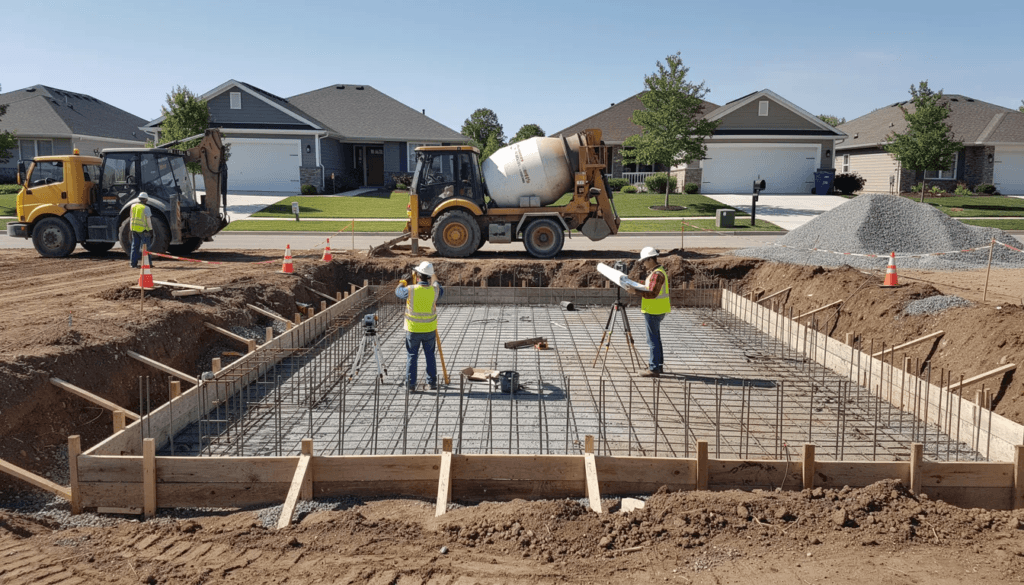
Step 5: Site preparation. Clear any trees, grade the area, install the frost-line foundation or helical piers, and trench utilities from the main house to the new pod location. This phase typically takes 1–3 weeks depending on complexity.
Step 6: Delivery and construction. For prefab units, a crane sets the module in place—sometimes completing delivery in a single day. Panelized or stick-built granny pods go up over several weeks on site. Either approach requires subsequent work to connect utilities and complete interior finishes.
Step 7: Inspections and final approvals. Rough inspections cover framing, electrical, and plumbing before walls are closed. Final inspections lead to a certificate of occupancy—the document that permits your relative to legally move in.
Seasonal planning matters in New York. Digging and concrete work for foundations proceed most smoothly from late April through October. Winter builds are possible but may require specialized foundation systems and typically add time to the schedule. If you’re starting the process in fall, expect construction to begin the following spring.
A well-planned prefab granny pod project often completes in 3–6 months from design to move-in. Custom builds typically run 6–12 months depending on permitting delays and weather.
Designing a New York-Ready Granny Pod
This is the creative stage where families turn specifications into a home tailored to their loved one’s daily routines and New York’s demanding climate. The choices you make here affect everything from energy bills to daily comfort.
Structural and exterior choices for NY climate:
Start with durable siding—fiber-cement, engineered wood, or vinyl rated for freeze-thaw cycles all perform well—and consider affordable tiny house designs that balance cost with durability. Roof pitches should be steep enough to shed snow (often 6:12 or greater), with architectural shingles or standing-seam metal as common material choices. Proper insulation, air sealing, and high-performance windows handle the swing from sub-zero winters to summer heatwaves. Craftsmanship matters here; cut corners on weather protection and you’ll pay in comfort and utility bills for years.
Interior layout decisions:
Design wide, open pathways with minimal doors where possible. Single-level living means no interior steps—even a single stair becomes a barrier as mobility declines. Position the bedroom for quiet sleep and easy nighttime bathroom access; many layouts place them adjacent with a pocket door between. Allow space for mobility aids like walkers or wheelchairs, and think ahead about where medical equipment might go if needs change.
Aesthetic and comfort touches:
Match the exterior style and color palette to the primary home. This satisfies HOA requirements where they exist and simply looks better—the granny pod feels like an intentional part of the property rather than an afterthought. Large windows bring in natural light but should be oriented with privacy from neighbors in mind. Built-in storage, window seats, or closets help reduce clutter in the smaller space.
Top 5 design priorities for New York granny pods:
- Weather-tight envelope with high R-value insulation
- Efficient heating system rated for cold climate performance
- Wide doorways and zero-step entries throughout
- Accessible bathroom with walk-in shower and grab bars
- Exterior that complements the main house
Energy-efficient systems make daily life easier. Mini-split heating and cooling offers quiet, zone-controlled comfort. On-demand water heaters eliminate tank standby losses. LED lighting throughout reduces both energy use and bulb replacement hassles. Where roof orientation and local incentives align, rooftop solar can offset significant utility costs.
Is a Granny Pod Right for Your New York Family?
Before committing to a granny pod project, families benefit from honest discussion about whether this arrangement suits their situation. It’s not the right choice for everyone—but for many, it represents the ideal balance of care and independence.
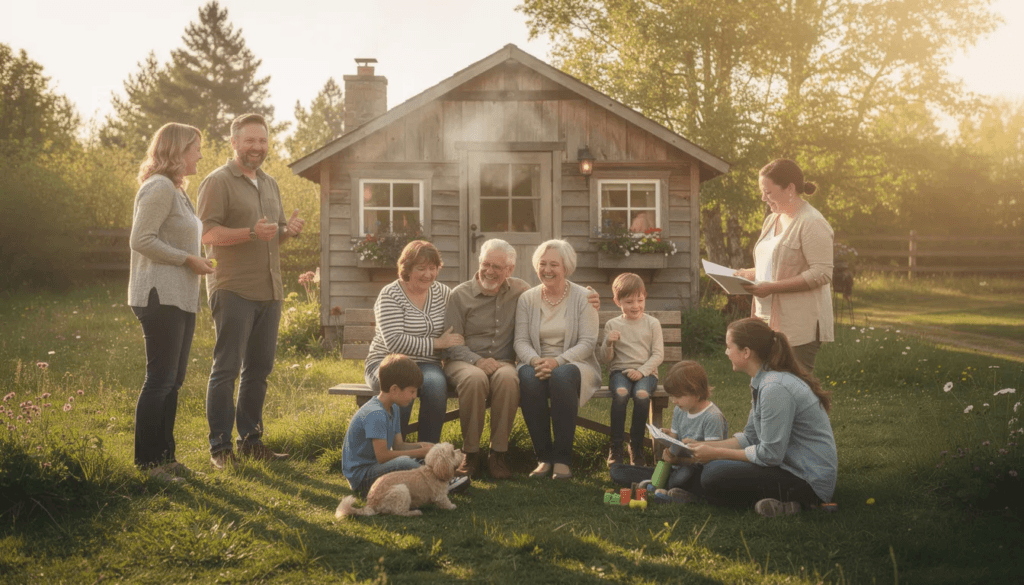
Benefits that make granny pods compelling:
- Daily in-person contact and quick response during emergencies
- Preserved independence for your aging relative—their own kitchen, bathroom, and front door
- Potential long-term cost savings compared to institutional care facilities
- Possible increase in property value by adding a legal accessory dwelling unit
- Your loved one stays connected to family life, grandchildren, and familiar surroundings
- Flexibility to adapt the space if care needs change over time
Things to think through first:
- Substantial upfront cost requiring financing for most families
- Zoning limitations or potential neighbor/HOA pushback
- Need to plan for future health changes—what happens if care needs exceed what family can provide?
- Clear expectations about caregiving roles and boundaries when living on the same property
- Impact on your own household’s privacy and daily routines
- What happens to the granny pod after it’s no longer needed for elder care?
Many families find that candid conversations about these challenges early—before breaking ground—prevent friction later. Discuss caregiving responsibilities openly. Talk about shared expenses. Address what happens if the pod eventually becomes a guest space, housing for adult children, or a rental unit where local codes permit.
A granny pod works best when everyone involved enters with realistic expectations about both the rewards and the responsibilities of multigenerational living on shared land.
Frequently Asked Questions About Granny Pods for Sale in NY
Are granny pods legal on my property in New York?
It depends entirely on your specific municipality. New York State doesn’t have uniform ADU rules—each city, town, and village sets its own zoning regulations. Some communities explicitly permit ADUs in residential zones; others ban them or require special permits. The only reliable way to know is to contact your local building or planning department with your exact address. Don’t assume what’s allowed in a neighboring town applies to yours.
How much does a small granny pod cost in New York in 2026?
The smallest finished units—around 250–350 sq ft—typically start at $65,000–$90,000 for the structure alone. Add foundation work, utility connections, and permits, and most families budget $100,000–$150,000 total for a basic but comfortable granny pod installation in New York.
Can I rent out a granny pod in New York?
Policies vary significantly. Some municipalities allow ADUs for long-term rentals, which can help offset costs after a relative no longer needs the space. Others require that only family members live in an ADU. Some ban separate rentals entirely to preserve single-family neighborhood character. Check your local zoning ordinance before planning to rent.
Do granny pods need their own utilities?
Granny pods typically tie into existing water, sewer (or septic), and electric service from the main house. Your home’s systems need sufficient capacity to handle the additional load—something the permit process usually verifies. In some cases, septic systems require upgrade or expansion. Utility connections typically run $12,000–$35,000 in New York, depending on distance and complexity.
Will a granny pod increase my property taxes?
Adding a legal ADU generally increases your property’s assessed value, which typically raises property taxes. The amount varies by location and assessment practices. Before finalizing your project, contact your local assessor’s office for a rough estimate of the tax impact. Many families find the increase modest compared to the ongoing cost of elder care alternatives.
How long does granny pod installation take in New York?
For a well-planned prefab granny pod, expect 3–6 months from design to move-in, assuming permits proceed smoothly. Custom builds typically run 6–12 months depending on design complexity, permitting timelines, and weather. Projects started in late fall often wait until spring for foundation work, adding to the overall timeline.
Do I need to match my main house’s exterior?
Most zoning codes don’t require an exact match, but many encourage or require that ADUs be compatible with the primary residence. Practically speaking, a granny pod that complements your home’s siding, roofline, and trim looks better, may satisfy HOA requirements, and can improve your property’s overall value.
What’s the difference between a granny pod and a tiny house?
While both are small dwellings, granny pods are specifically designed for senior living with accessibility features like wider doorways, zero-step entries, and grab bars. They’re typically placed on permanent foundations rather than wheels. Tiny houses often prioritize mobility and may lack the accessibility elements that make daily living comfortable for older adults.
A granny pod can bring your family closer together while giving your aging parent the independence and comfort they deserve. Whether you’re drawn to the speed of a prefab modular home or the customization of a custom build, New York has options available in 2025–2026 that work.
Start by contacting your local building department to learn what’s possible on your land. Then explore builders who specialize in granny pods and ADUs for the New York climate. The process takes planning and patience, but families across the state are discovering that keeping loved ones close—in their own comfortable space—is worth the effort.
If you’re ready to turn this dream into reality, the first step is simply picking up the phone and asking your local officials what’s allowed. Everything else follows from there.