
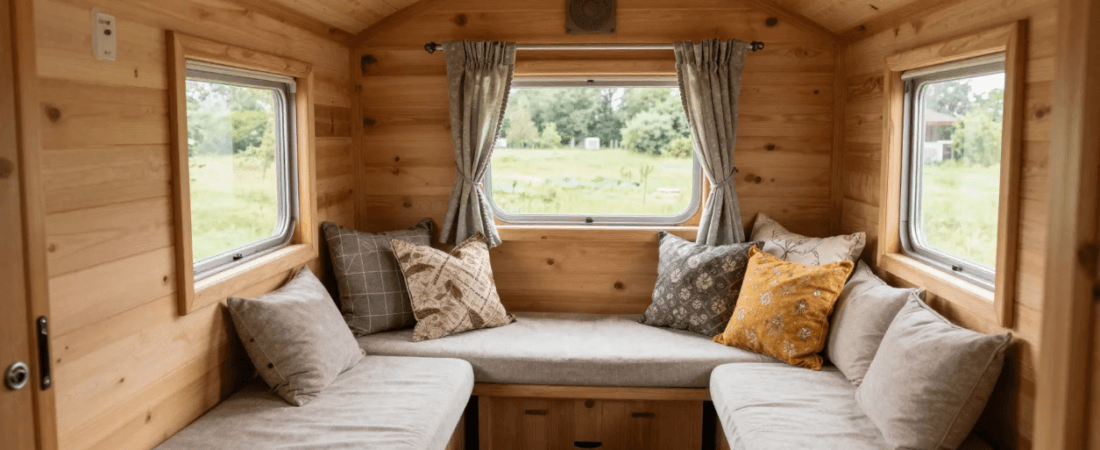
If you’ve been researching housing options for aging parents, you’ve probably stumbled across the term granny pod. But what does the inside of one actually look like? Beyond the charming cottage exterior, these backyard structures pack a surprising amount of functionality into a compact footprint—and the interior design choices make all the difference between a cramped shed and a genuine home. This guide is for families, caregivers, and homeowners considering a granny pod for an aging loved one, and explains what to expect from the interior design and features that support independent senior living.
Quick Answer: What You’ll Find Inside a Modern Granny Pod
Inside a granny pod, you’ll typically find a self-contained mini home featuring a private bedroom or sleeping zone, a full bathroom, and a compact living area—all within roughly 250 to 450 square feet. These tiny homes are specifically designed to give aging family members independence while keeping them in close proximity to loved ones on the same lot.
Here’s what most granny pod interiors include—features similar to many of the great tiny homes that redefine small space living:
- Private bedroom with space for a queen or full-size bed
- Full bathroom with accessibility features like grab bars and a walk-in shower
- Kitchenette with under-counter refrigerator, cooktop, and sink
- Sitting area for a loveseat or armchairs
- Heating and cooling (usually a mini-split HVAC system)
- Built-in storage solutions to maximize limited space
- Safety modifications like wide doorways and non-slip flooring
For example, a 384 square foot backyard pod installed in 2024 might include a curbless walk-in shower with grab bars, a single-wall kitchen with quartz-look countertops, and a separate bedroom with enough clearance for a wheelchair to navigate comfortably. The idea is to provide all the comforts of a traditional home in a fraction of the footprint.
- What Is a Granny Pod (From the Inside Out)?
- Typical Interior Layout: Room-by-Room Walkthrough
- Safety and Accessibility Features Inside a Granny Pod
- Comfort and Design: Making the Inside Feel Like Home
- Kitchen and Dining Inside a Granny Pod
- Bathroom and Bedroom Details: Where Accessibility Matters Most
- Hidden Systems: Utilities, Storage, and Smart Tech Inside
- Real-World Examples: Inside Popular Granny Pod Designs
- Daily Life Inside a Granny Pod: How It Actually Feels
- Planning Your Own Granny Pod Interior
What Is a Granny Pod (From the Inside Out)?
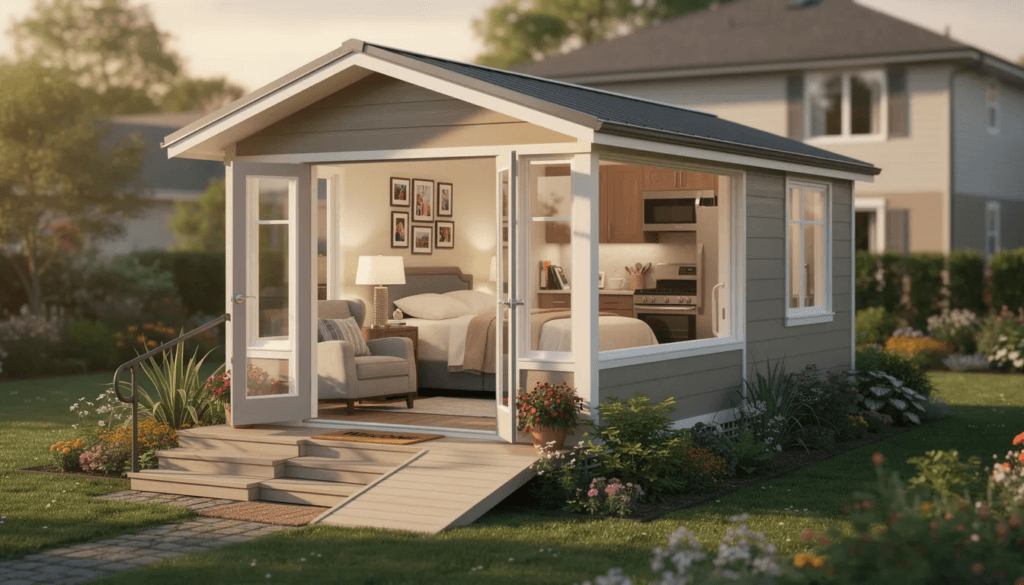
A granny pod is a backyard accessory dwelling unit specifically fitted out inside for senior-friendly living. Granny pods are also referred to as granny flats or MEDcottages, and are classified as accessory dwelling units (ADUs). They are detached tiny homes that can be built or installed in a backyard or elsewhere on a property close to a larger home. While the technical term for these structures is “accessory dwelling units” or ADUs, what sets a true granny pod apart from a basic backyard studio shed is what’s happening behind the walls and under the floors.
The difference comes down to infrastructure and intentional design. A standard backyard structure might have electricity and basic insulation. A granny pod interior, by contrast, includes full plumbing for a bathroom and kitchenette, proper insulation rated for year-round habitation, and accessibility upgrades that comply with universal design principles.
You might hear these structures called granny flats, in-law suites, MEDCottages, or simply guest houses. The name varies by region and style, but the interior purpose remains consistent: creating a safe, comfortable, private space where seniors can age in place—much like many great tiny homes and other tiny house designs for modern living are optimized for comfort in a small footprint.
Key characteristics of a granny pod interior:
- Size range typically falls between 250 and 440 square feet
- Open floor plans maximize usable space and wheelchair navigation
- No-step entries eliminate tripping hazards
- Wide clearances (36 inches minimum for doorways) accommodate mobility aids
- Simple, low-clutter layouts reduce confusion and fall risks
These design choices transform what could feel like a tiny house into a genuine home tailored for an aging parent or family member who values their independence, much like the best tiny house interiors that maximize every square foot do for compact modern homes.
Typical Interior Layout: Room-by-Room Walkthrough
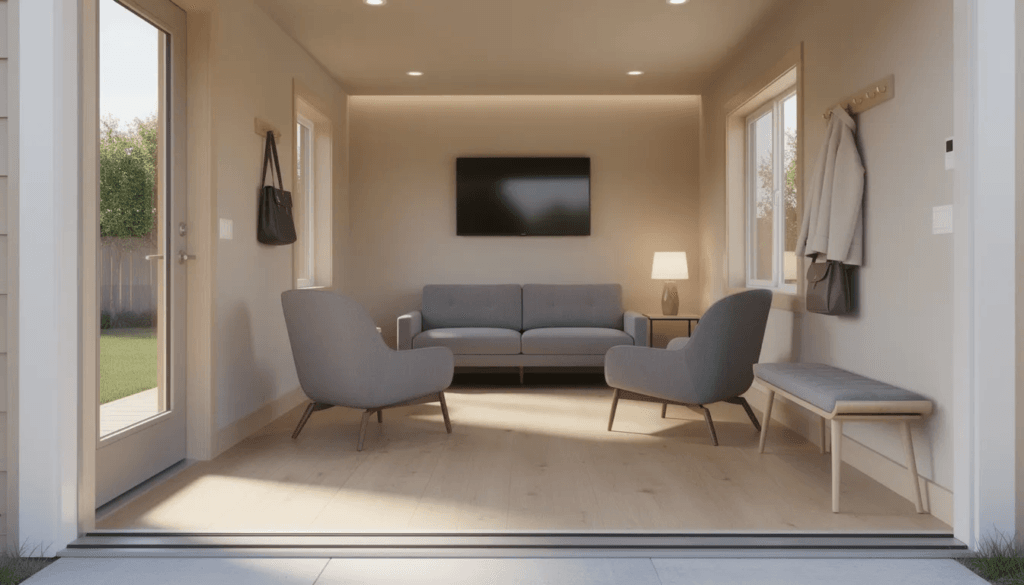
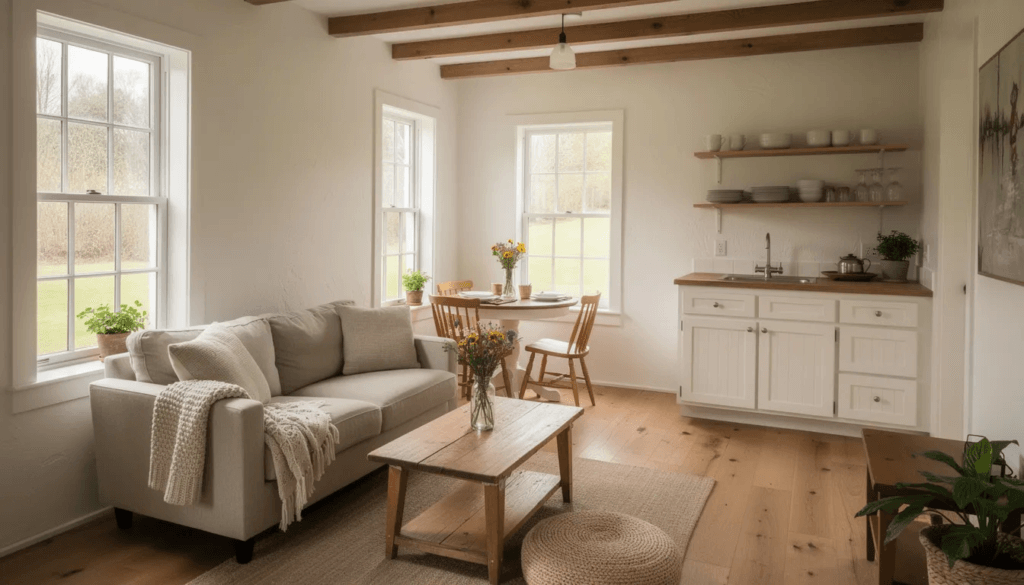
Let’s walk through a sample 320 to 400 square foot granny pod—the kind you might find installed behind a single-family home built between 2023 and 2025. This will give you a sense of how the interior flows from one zone to the next, similar to how well-thought-out tiny house floor plans are designed to make every square foot count.
Entry Area
The main entry features a level threshold with zero steps, making it easy for someone using a walker or wheelchair to move in and out, and often incorporates thoughtfully chosen doors for tiny houses that balance accessibility with style. Just inside, you’ll typically find motion-sensor lights that illuminate automatically, a small bench for sitting while removing shoes, and hooks for a coat or bag. This area serves as a transition zone between the exterior and the living spaces inside.
Living and Sitting Area
Most granny pod interiors dedicate roughly 80 to 100 square feet to a sitting area. This space usually accommodates a loveseat or small sofa, one or two armchairs (though probably not the rocking chairs you’d find on a country porch), a wall-mounted TV, and a side table with a lamp. The layout keeps pathways clear and furniture positioned to allow easy movement.
Sleeping Area
Depending on the floor plan, you’ll find either a separate bedroom with a standard or queen bed, or a studio-style layout where the sleeping zone is partially screened with a bookcase, curtain, or sliding panel. Dedicated bedrooms typically measure around 10 by 9 feet, providing enough room for the bed, nightstands, and clearance on at least one side for a wheelchair or walker.
Kitchenette
The kitchen in a granny pod is compact but fully functional. Most feature a single-wall or L-shaped layout with:
- Under-counter or apartment-sized refrigerator
- 24-inch range or 2-burner induction cooktop
- Microwave or combination microwave-convection oven
- Single-basin sink with lever-style faucet
- Six to eight feet of counter space
This setup handles simple meal prep—heating soup, making sandwiches, brewing coffee—without the complexity of a full kitchen.
Bathroom
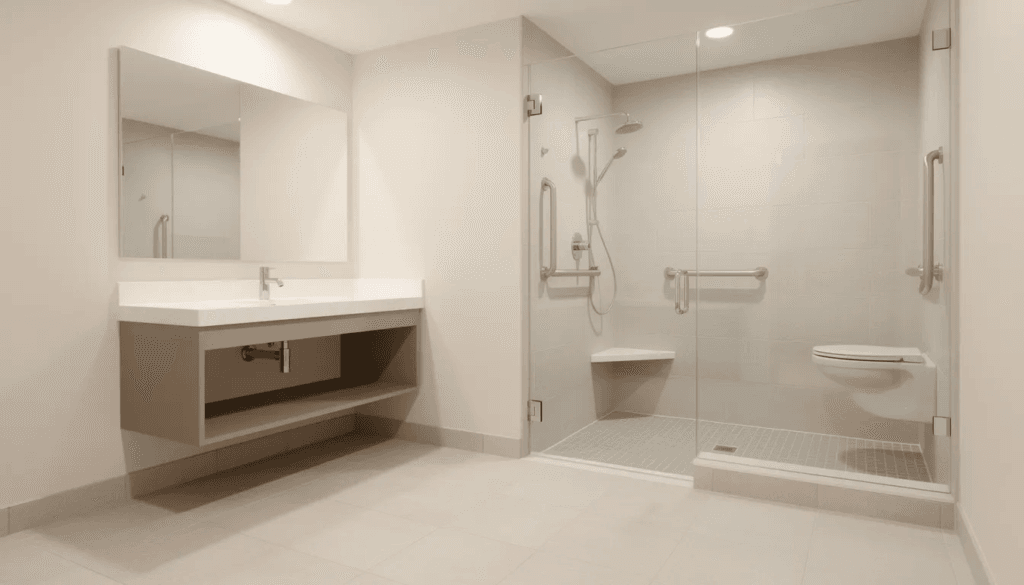
Granny pod bathrooms prioritize safety and accessibility above all else. Standard features include a walk-in or roll-in shower with no tub, strategically placed grab bars, a comfort-height toilet, and a wall-mounted or pedestal sink that provides wheelchair clearance underneath.
Storage Solutions
With limited square footage, storage must be intentional. You’ll find built-in wardrobes, shallow cabinets along walls, and overhead storage to keep floors clear. Many designs incorporate a loft area for seasonal storage, keeping the main floor uncluttered and easy to navigate.
Safety and Accessibility Features Inside a Granny Pod
Interior safety is the core difference between generic tiny homes and true granny pods. While a standard tiny house might appeal to a minimalist twenty-something, a granny pod’s interior is engineered around the reality that over 25% of seniors experience falls annually—and most of those falls happen at home.
Flooring and Surfaces
Non-slip vinyl or rubber flooring covers the entire interior, eliminating the trip hazards that come with transitions between carpet, tile, and wood. Countertop edges are rounded rather than squared, reducing injury risk from accidental bumps. Easy-clean materials mean less bending and scrubbing for maintenance.
Hardware and Controls
Every handle and switch is selected for ease of use:
- Lever-style door handles instead of round knobs
- Rocker light switches installed at wheelchair-accessible heights (around 48 inches)
- Backlit switch plates for nighttime visibility
- Outlets positioned between 15 and 48 inches from the floor
Accessibility Dimensions
The interior layout follows universal design standards:
- 36-inch wide doorways throughout
- 5-foot turning radius in the bathroom for wheelchair maneuverability
- Roll-under sink option in kitchen and bathroom
- Zero-threshold shower entry
Technology and Medical Integrations
Modern granny pods often come pre-wired for health monitoring and safety technology:
- Wall-mounted emergency call buttons
- Medical alert system integration
- Bed sensors and fall-detection systems
- Remote monitoring cameras (with occupant consent)
- Pre-wired outlets for oxygen concentrators and other medical equipment
A 2024 prefabricated pod model, for example, might ship with integrated grab bars, reinforced walls designed to support additional grab bar installation, and dedicated circuits for medical devices.
Lighting Design
Lighting plays a critical safety role. Night lights run along the floor between bedroom and bathroom, illuminated switches glow in darkness, and abundant ambient lighting reduces fall risk during evening hours. Many designs incorporate internet-connected smart lighting that can be voice-controlled.
Comfort and Design: Making the Inside Feel Like Home
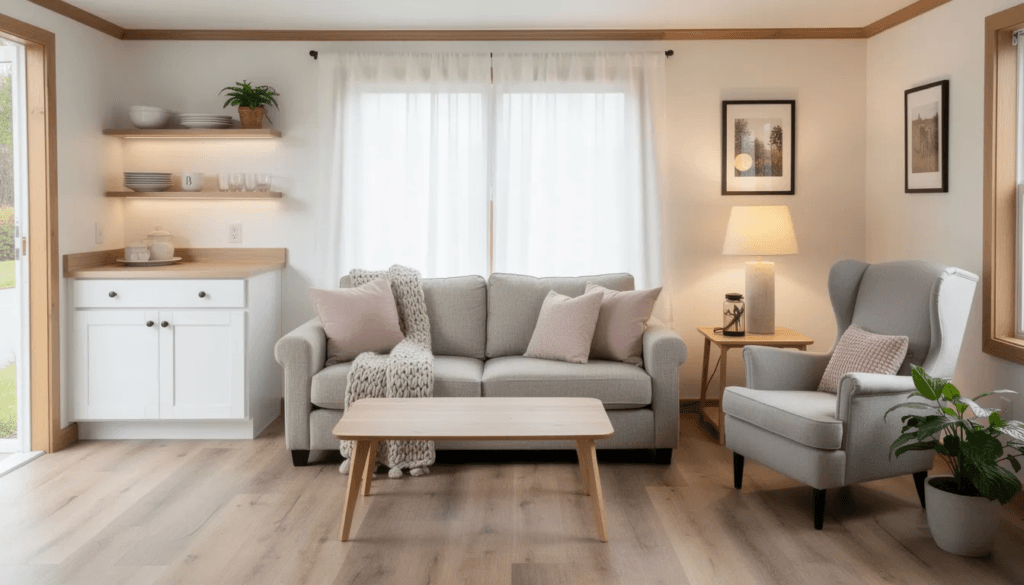
Beyond safety, the best granny pod interiors feel warm and familiar rather than clinical. The goal is creating a space that feels like home—not a hospital room or institutional setting.
Popular Interior Styles
Current design trends for granny pods in 2024-2025 lean toward styles similar to many elegant tiny homes that redefine modern living:
- Cozy cottage aesthetics with soft textiles and warm wood tones
- Light modern farmhouse with clean lines and neutral palettes
- Simple Scandinavian style emphasizing natural materials and minimal clutter
These approaches create inviting living spaces that aging parents actually want to spend time in, echoing the comfort and style showcased in many elegant tiny homes and thoughtfully designed tiny house interiors.
Material Choices
Practical materials dominate without sacrificing aesthetics:
- Easy-clean vinyl plank flooring that mimics hardwood appearance
- Washable paint in light, calming colors
- Upholstered furniture with firm but comfortable cushions
- Stain-resistant fabrics that handle spills gracefully
Personal Touches
Good interior design accommodates sentimental items that make a space feel personal:
- Wall space for family photos and artwork
- Shelving for books, keepsakes, and hobby supplies
- A small table for puzzles, sewing, or card games
- Display areas for meaningful objects from a previous home
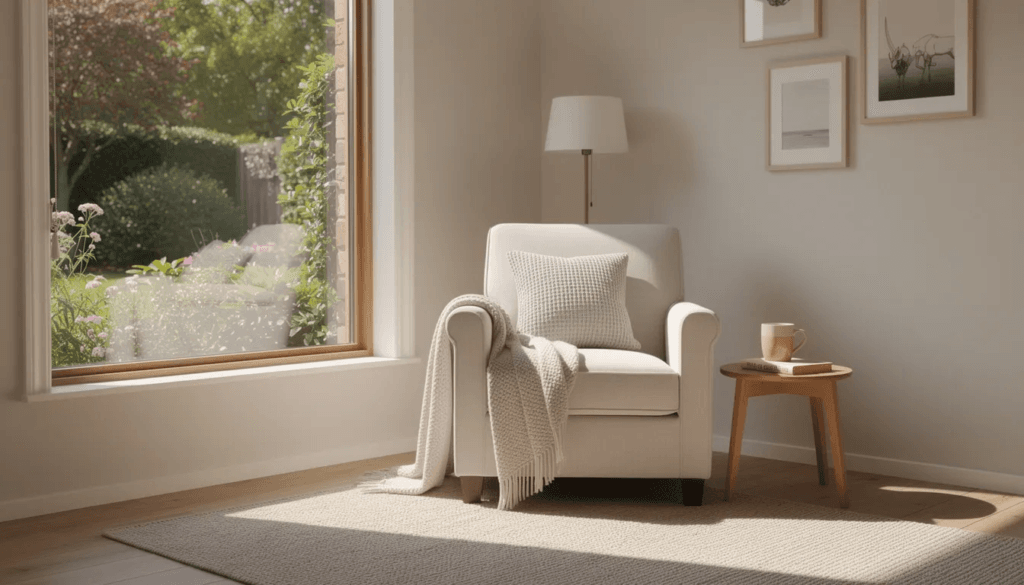
Windows and Natural Light
Window placement receives careful attention. Large windows provide natural light and views of the backyard where grandchildren might play. French doors or sliding glass doors often open to a small porch or deck, extending the living area and maintaining a connection to the outdoor environment.
Climate Comfort
Seniors are often more sensitive to temperature fluctuations, making climate control essential:
- Mini-split HVAC unit for efficient heating and cooling
- Ceiling fan for air circulation
- Well-insulated walls (R-19 or higher in most climates)
- Programmable thermostat at easy-to-reach height
Kitchen and Dining Inside a Granny Pod
Many granny pod interiors include a compact but fully functional kitchenette tailored to simple, safe meal prep. This isn’t about preparing elaborate dinner parties—it’s about maintaining independence through the ability to make breakfast, heat lunch, and brew an afternoon cup of tea.
Typical Appliance Package
Appliance | Common Specifications |
|---|---|
Refrigerator | Under-counter or apartment-sized (4-10 cu ft) |
Cooktop | 2-burner induction or electric |
Microwave | Countertop or built-in convection combo |
Sink | Single basin with lever faucet |
Dishwasher | Compact 18-inch (optional) |
Cabinet and Counter Layout | |
Kitchen cabinetry follows accessibility principles: |
- Upper cabinets with pull-down inserts for reachability
- Deep drawers instead of low cabinets to minimize bending
- 34-inch counter height if wheelchair use is anticipated
- Pull-out garbage cans integrated into cabinetry
Storage Strategies
Limited space demands smart storage solutions:
- Pull-out pantries only 12 to 18 inches deep
- Lazy Susans in corner cabinets
- Clearly labeled drawers to reduce searching
- Recirculating pumps for instant hot water at the sink
Eating Areas
Dining in a granny pod typically means a two-person café table positioned near a window, or an extended counter with two counter-height chairs for compact spaces. The goal is creating a pleasant spot for meals without consuming precious floor space.
For example, a 280 square foot granny pod in Florida completed in 2023 features a 6-foot single-wall kitchen with quartz-look laminate countertops, under-cabinet LED lighting, and enough room for mom to prepare her morning coffee and toast without feeling cramped—very similar in spirit to some of the best tiny house designs for modern living.
Bathroom and Bedroom Details: Where Accessibility Matters Most
The bathroom and bedroom interiors are where accessibility matters most. These spaces support nighttime routines when vision is reduced and balance may be compromised—making thoughtful design decisions potentially life-saving.
Bathroom Specifications
The bathroom in a granny pod typically includes:
- 36-inch wide outward-swinging door (or pocket door for space savings)
- Curbless shower with fold-down seat
- Handheld showerhead on an adjustable slide bar
- At least two grab bars—one by toilet, one in shower
- Comfort-height toilet (17-19 inches)
- Wall-mounted or pedestal sink with wheelchair clearance underneath
Bathroom Finishes
Material selection serves both safety and aesthetics:
- Slip-resistant shower floor tile (matte 2×2 inch format)
- Bright but non-glare lighting
- Contrasting colors between floor, walls, and fixtures to aid depth perception
- Easy-clean surfaces throughout
Bedroom Layout
The bedroom accommodates mobility aids and nighttime needs:
- Clearance on at least one side of bed for walker or wheelchair
- Nightstand with lamp within arm’s reach
- Accessible outlets for phone charging, hearing aids, and medical devices
- Bed height of 20-23 inches from floor to top of mattress
Bedroom Storage
Storage solutions maximize the limited bedroom footprint:
- Under-bed drawers for extra linens or off-season clothing
- Wardrobe or closet with low hanging rods (approximately 48 inches high)
- Shallow shelves for folded items at reachable heights
A typical 2022-2024 granny pod floor plan dedicates roughly 70 to 90 square feet to the bedroom and 35 to 45 square feet to an accessible bath. This allocation prioritizes the spaces where safety concerns are highest.
Hidden Systems: Utilities, Storage, and Smart Tech Inside
Much of what makes a granny pod livable is hidden behind the walls: utilities, insulation, and smart home technology that keep everything running smoothly without cluttering the visible interior.
Utility Connections
The pod’s plumbing and electrical systems tie into the main house’s infrastructure:
- Water supply line from main house with dedicated shut-off valve
- Sewer connection (or septic tie-in) routed underground
- Electrical subpanel fed from main house electrical service
- Shut-off controls accessible inside a utility closet
The cost of these utility connections typically runs $5,000 to $20,000 depending on distance from the main house and local requirements.
Heating and Cooling Systems
Climate control in most granny pods relies on:
- Ductless mini-split unit mounted on living area wall
- Programmable thermostat at wheelchair-accessible height
- Electric baseboard backup heat in colder climates
- Ceiling fan for air circulation
Soundproofing and Privacy
Interior comfort depends on acoustic separation:
- Insulated interior walls between bathroom and sleeping area
- Solid-core doors for bedroom and bathroom
- Double-pane windows for exterior sound reduction
Smart Technology Options
Modern granny pods increasingly incorporate smart home features:
- Voice-controlled lighting (“turn off bedroom lights”)
- Smart thermostat with remote adjustment capability
- Doorbell camera facing exterior entry
- Medication reminder devices in kitchen or bedroom
- Smoke and CO detectors interconnected with main house via radio frequency
Utility Storage
Interior space for equipment includes:
- Tall utility cabinet concealing cleaning supplies
- Stacked washer-dryer closet in pods over 350 square feet
- Water heater (tankless or small tank) in utility closet
- Breaker panel accessible but hidden from main living areas
Real-World Examples: Inside Popular Granny Pod Designs
Understanding how actual floor plans work helps translate square footage numbers into livable reality, just as thoughtful tiny house plans that fit your life do for other small-space builds. Here are three common granny pod configurations and how their interiors function.
Example 1: The One-Bedroom Pod (440 sq ft)
This larger layout, popular in suburban builds since around 2020, includes:
- Separate bedroom with queen bed and walk-in closet
- Full galley kitchen with range, refrigerator, and dishwasher
- Accessible bathroom with roll-in shower
- Living area accommodating sofa, two chairs, and entertainment center
- Small dining table for two near kitchen
The interior flows logically from entry through living area to private bedroom at the rear. A covered porch extends the usable living space in good weather.
Example 2: The Compact Studio (260-280 sq ft)
This efficient layout combines functions in creative ways:
- Combined living and sleeping area with Murphy bed or daybed
- Corner kitchenette with under-counter appliances
- Three-quarter bath with shower (no tub)
- Fold-down table that serves as desk and dining surface
- Built-in window seat with storage underneath
This structure works well for a parent who spends significant time in the main house but needs private space for sleeping and personal care.
Example 3: The Loft-Style Pod (320-380 sq ft)
This design uses vertical space strategically and mirrors some of the open, airy layouts found in ranch tiny house designs:
- Main floor fully accessible with bedroom, bath, and kitchen
- Loft area accessed by sturdy stair with handrail
- Loft serves as storage or extra room for visiting grandkids
- Open ceiling creates sense of spaciousness on main floor
Models introduced in 2022-2023 often emphasize larger bathrooms by borrowing square footage from the living area—recognizing that bathroom safety trumps extra seating space for most aging residents.
Daily Life Inside a Granny Pod: How It Actually Feels
The true test of a granny pod interior isn’t how it photographs—it’s how it supports daily routines. The layout should feel natural from morning to night, accommodating both independence and connection to family in the main house.
A Typical Day
Imagine a 78-year-old mother who moved into a backyard pod in 2024. Her morning begins with walking from bed to bathroom along a clear, open pathway. Motion-sensor lights guide the way in pre-dawn hours. After a shower in the curbless walk-in with grab bars, she makes tea in the kitchenette and settles into an armchair by the window.
Through that window, she can see the grandchildren’s swing set in the yard. When they visit after school, the space accommodates two kids sprawled on the floor with a board game while grandma supervises from her comfortable chair. The interior doesn’t feel cramped because circulation paths remain clear and furniture scales appropriately.
Privacy and Connection
The interior design balances independence with family proximity:
- Solid-core doors and insulated walls provide acoustic privacy
- Large windows maintain visual connection to the property
- The main house remains visible from the living area
- A phone or tablet on the counter connects to family via video call
Reducing Confusion
For seniors who benefit from simplicity, the interior minimizes cognitive load:
- Labeled cabinets indicate contents
- Consistent color schemes reduce visual confusion
- Limited furniture pieces prevent overcrowding
- Simple décor avoids overwhelming stimulation
The sense of having one’s own space—a private bedroom, a personal kitchenette, a bathroom not shared with grandchildren—preserves dignity while proximity to the main house provides security.
Planning Your Own Granny Pod Interior
Once you’ve addressed local zoning requirements and established your budget, interior planning is where families can truly customize for their specific loved one. This is where the structure transforms from a generic accessory dwelling into a home tailored for your mother or parent—similar to how custom tiny homes for small-space living are personalized around an owner’s routines and preferences.
Step-by-Step Interior Planning
- List needs and preferences: Consider mobility level, vision, hobbies, and daily routines
- Choose a base floor plan: Decide between 288 square feet versus 384 square feet layouts based on required features
- Prioritize bathroom and circulation: These determine safety; design everything else around them
- Select accessibility upgrades: Grab bars, lighting, flooring, and hardware
- Choose finishes and furniture: Colors, materials, and pieces that feel like home
Timeline Considerations
Schedule interior design decisions at least 2-3 months before installation. This allows time to:
- Select flooring, paint colors, and fixtures
- Order accessibility equipment
- Plan furniture placement
- Coordinate delivery of appliances
Involving the Future Resident
Perhaps most importantly, involve your aging parent in the process. Let them pick wall colors, fabric patterns, and where to hang family photos. Decide together which keepsakes make the move and which stay behind. Talk through daily routines and how the space will support them.
The upfront costs of a granny pod represent a significant investment—anywhere from $40,000 for basic models to $250,000 for fully custom builds with advanced features. But the return isn’t just financial. It’s the peace of mind that comes from keeping family close while honoring a parent’s need for independence.
Whether you’re exploring other options like traditional in-law suites, considering the benefits of keeping mom nearby, or simply investigating what a unique solution like a granny pod might offer for your future—the interior is worth exploring in detail, just as it is when comparing different tiny house floor plans or evaluating tiny house plans that fit your life. After all, the inside of a granny pod should feel like their home, not an afterthought accessory to your property.
If this idea resonates with your family’s situation, the next step is simple: talk to your loved ones about what they actually need from their living space, then work backward from there to find the floor plan that makes it possible—whether that means a fully custom build or an accessible option like Home Depot tiny house kits.