
In tokyo and osaka, where land costs soar and households now average just 2.3 people, architects have turned necessity into art. Japan small house design attracts global attention in 2026 because it proves that life in under 80 square meters can feel spacious, calm, and deeply functional. This article explores practical design ideas alongside real built examples like House in Horinouchi (2011) and Seven by APOLLO Architects (2019), both completed projects, providing inspiration for anyone creating compact living spaces.
- Key Principles of Japanese Small House Design
- Planning a Japanese-Style Small House (Layouts & Room Ideas)
- Materials, Finishes, and Exterior Expressions
- Real Japanese Small House Case Studies
- Small House Plans and Cost Considerations
- Design Strategies for Different Japanese Contexts
- Integrating Nature, Light, and Everyday Life
- Conclusion: Applying Japanese Small House Ideas Anywhere
Key Principles of Japanese Small House Design
Traditional concepts like “ma” (negative space) and “shakkei” (borrowed scenery) shape how modern architects approach small homes. These principles transform constraints into features that enhance everyday comfort.
- Minimal program: Only essential rooms remain. MIZUISHI’s House in Horinouchi demonstrates this by fitting a young family of three into a triangular 52m² site with two bedrooms, using built-in furniture and split levels to eliminate hallways.
- Flexible interiors: Walls become movable. ICADA’s Live Sawn House uses sliding partitions to reconfigure a combined living area into distinct zones—a single space doubles as dining room, bedroom, and office, mirroring tiny house interiors that maximize every square foot.
- Light and shadow control: Shoji screens diffuse natural light while high-set windows (as in House in Saidera, 2023) pull daylight deep into plans. Interior courtyards make 65m² houses feel vast.
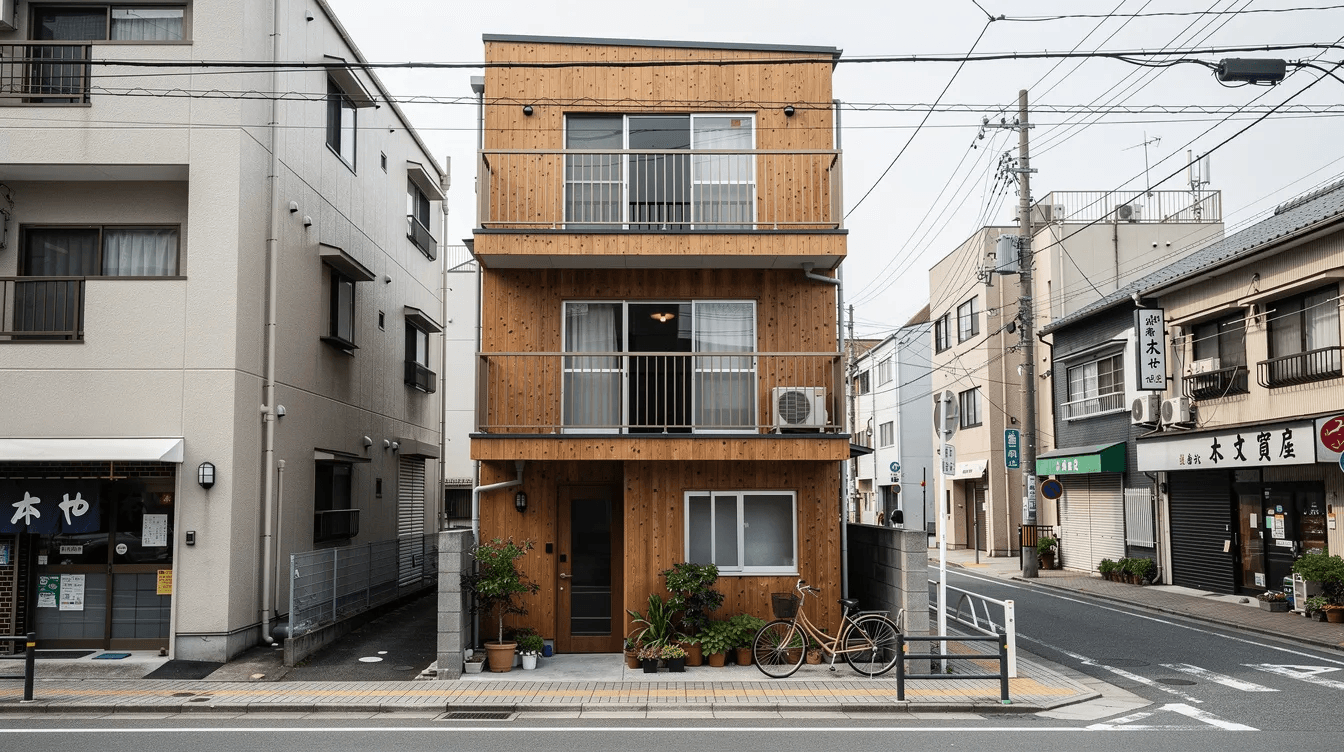
- Vertical stacking: On urban footprints under 30m², houses rise 3-4 storeys. Seven by APOLLO sits on a 23.1m² former parking lot, using a light well and roof terrace to expand usable area, similar to many of the best tiny house designs for modern living.
- Honest materials: Wood like hinoki cypress and yakisugi charred cedar age gracefully. Concrete provides thermal mass. These choices keep small volumes visually calm.
Planning a Japanese-Style Small House (Layouts & Room Ideas)
Careful planning matters intensely in 40-80m² homes. In crowded prefectures like Kanagawa, careless layouts amplify claustrophobia rather than creating sanctuary.
Size bands and needs differ:
- Under 50m² micro-houses suit singles with mezzanine lofts above open LDKs
- 50-80m² family homes accommodate four through transformable rooms
Common patterns include long narrow “machiya-like” plans (Kraft Architects’ An Unfinished House stretches across a 4x15m lot), L-shaped courtyard houses in rural areas, and vertical stacks on tiny urban sites that echo broader tiny house inspiration and resources.
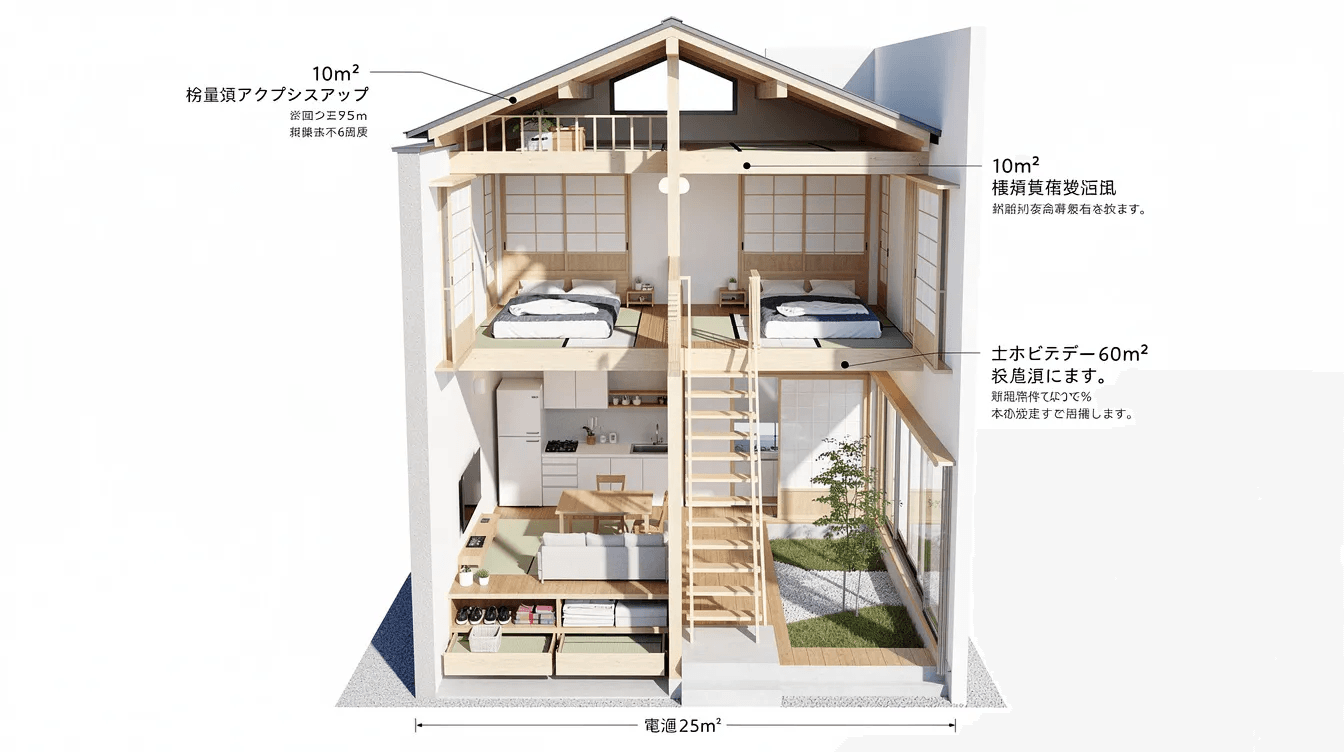
Sample 65m² layout: Ground floor features open-plan LDK (25m²) flowing from genkan entry. Upstairs holds two 10m² bedrooms plus tatami loft for guests and storage. Stair treads contain pull-out drawers; raised floor sections hide futons.
Open stair cores pull light vertically through the residence, keeping circulation under 5% of total floor area while supporting the kind of minimalist tiny houses for sustainable living that prioritize efficiency and light.
Materials, Finishes, and Exterior Expressions
Exterior choices must balance privacy, durability, and street context in dense neighborhoods.
Natural wood: Hinoki pillars and yakisugi charred cedar cladding (House in Saidera, 2023) resist humidity while aging into beautiful patina. These suit the Japanese climate and tight site conditions.
Metal and steel: Corrugated steel roofs, as in Amami House (2020), offer cost-effective durability. Combined with hardwood, they create minimalist exteriors that blend industrial and natural aesthetics.
Concrete shells: Pyramid Hut in Okinawa (2021) shows how cast-in furniture and niches eliminate bulky furniture, freeing precious area and enabling elegant tiny homes that redefine modern living through carefully integrated storage.
Controlled openings: Slim windows and wooden louvres (House in Aoyama, 2017) ensure privacy while blank walls with light wells maintain calm facades. Many architects favor 70:30 solid-to-glazed ratios.
Color strategies: Earth-toned plasters reference ceramic glazes, while bold options like Octa House’s red panels on Shikoku prove greenery and neutral contexts can support dramatic choices.
Real Japanese Small House Case Studies
These projects from 2005-2024 demonstrate how different sites demand different responses:
Project | Location | Size | Key Lesson |
|---|---|---|---|
Seven (APOLLO, 2019) | Tokyo | 23.1m² footprint | Vertical porosity with light wells |
House in Horinouchi (MIZUISHI, 2011) | West Tokyo | 52m² triangular | Built-ins eliminate clutter |
Shiga House (ALTS, mid-2010s) | Shiga | 71.3m² | Garden views through full-height glazing |
Habuka Retreat (mid-2010s) | Near Hakuba | Compact | Wedge form sheds snow |
Hillside Arc (ON Design) | Various | Variable | Rooms rotate 15° to follow terrain |
What readers can copy: stacked sections maximize volume, integrated storage halves furniture needs, borrowed views expand perceived space, and climate-responsive envelopes cut energy use by 25-35%—all common themes in great tiny homes that redefine small space living. |
Small House Plans and Cost Considerations
Build costs in 2024-2026 range from 250,000-400,000 yen per square meter ($1,700-$2,700 USD). Rural sites run cheaper (200,000 yen/m²) while central Tokyo reaches 450,000+ yen/m² due to seismic requirements.
Typical plan contents:
- Floor plans, elevations, sections
- Construction details and structural notes
- Material schedules (often PDF delivery)
Cost reduction tactics: Box-shaped volumes like Danchi Hutch reduce structural steel by 15-20% through standard 3-meter spans, aligning with many affordable tiny house buildings and designs that prioritize simple, efficient structures.
Ongoing costs: All-electric insulated envelopes with potential solar facades (like Hokkaido’s 2020 “solar barn”) achieve 30-50% energy savings. Many small houses use shower-toilet combos and compact fixtures to minimize plumbing runs, similar to solutions offered by leading micro house builders for modern living.
Realistic budgets must account for land (Tokyo infill sites: 50-100 million yen) and high-quality finishes—this isn’t about cheap construction but about maximizing value per square meter.
Design Strategies for Different Japanese Contexts
Small house design shifts dramatically between urban and rural japan:
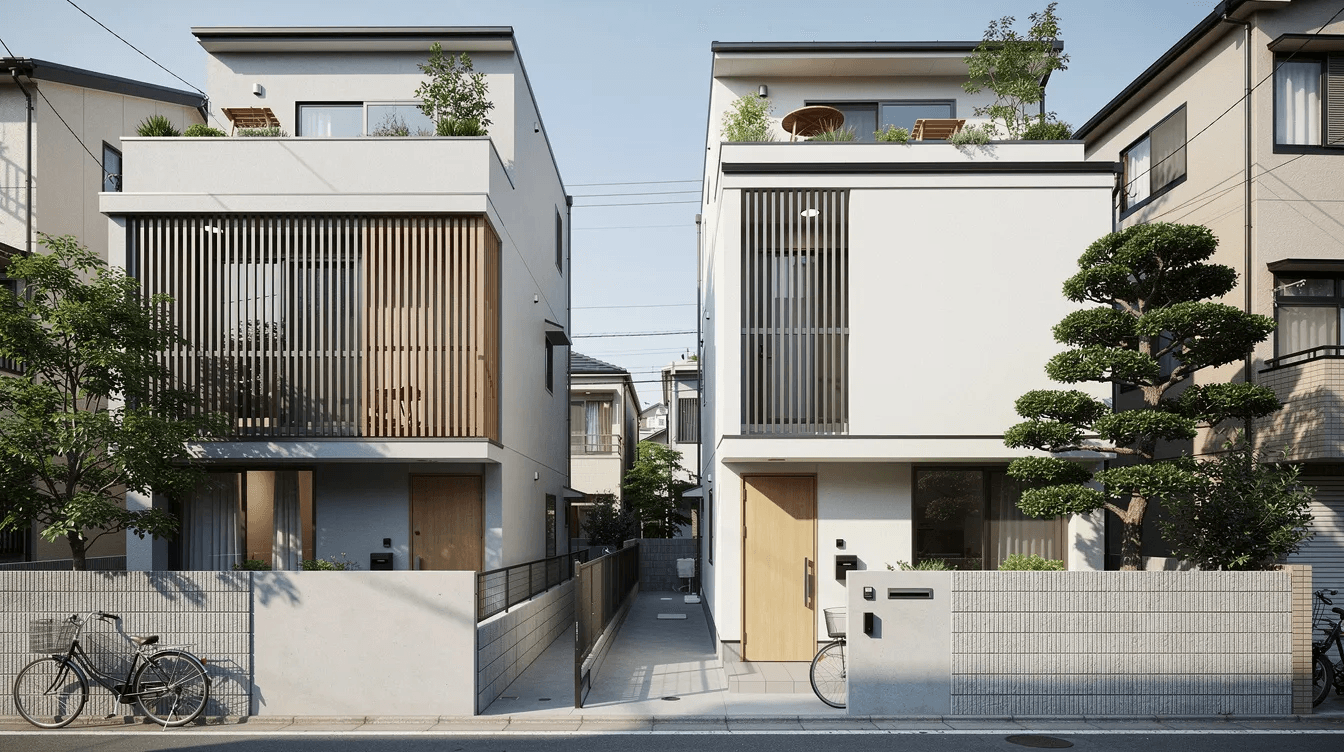
Urban infill (Tokyo, Osaka): Vertical stacking, rooftop terraces, louvred facades. Cross House and House in Setagawa demonstrate how architects work within 1.5-2m setbacks and 10-13m height limits.
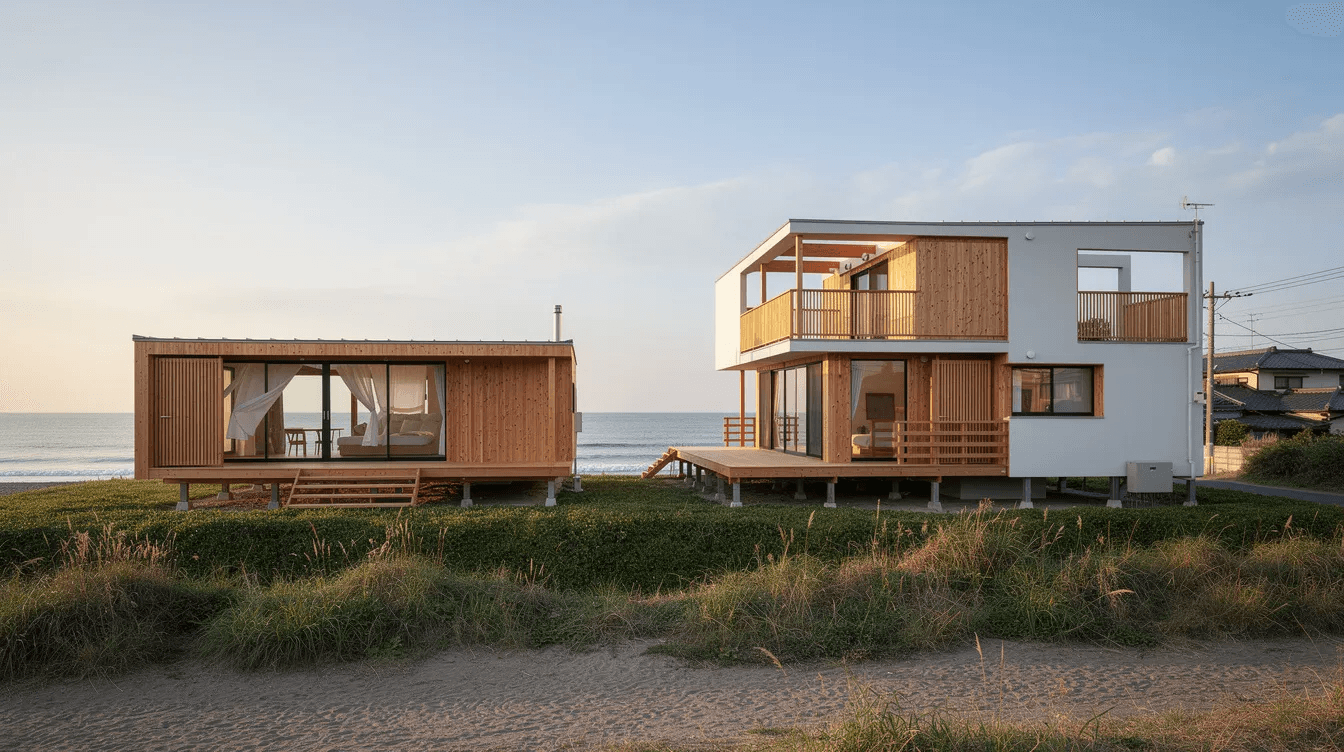
Coastal sites (Kamakura, Chiba): Elevated floors for flood resilience, breeze-oriented plans, salt-resistant cedar. Lulla House and House C show how orientation to water views shapes design.
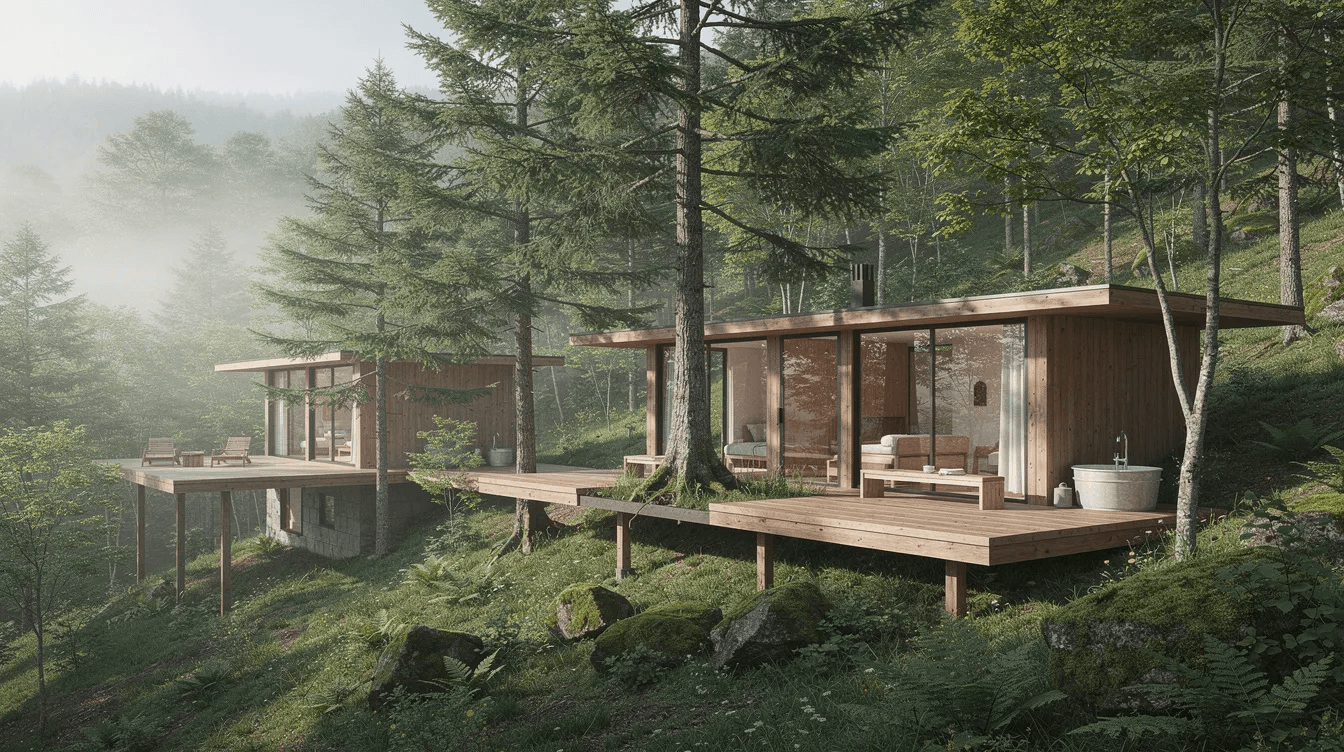
Rural forest (Mount Daisen, Habuka): Larger footprints on sloped terrain, deck connections enabling “forest bath” wellness. Nature becomes integral to the architecture.
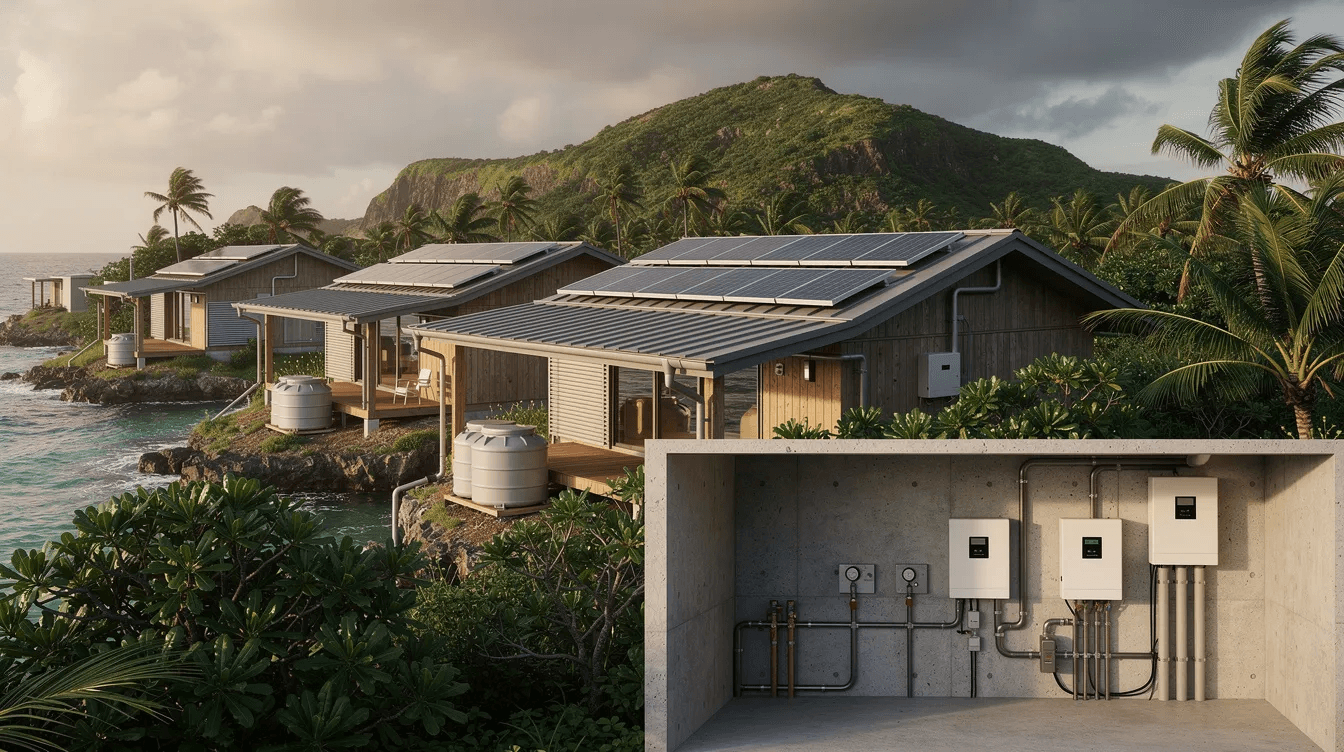
Off-grid islands (Amami, Ishigaki): Metal roofs for rainwater harvesting and solar collection, robust structures against typhoons. Minimal mechanical systems accessed through simple controls, echoing many custom tiny homes for perfect small-space living designed for remote or flexible sites.
Early consultation with local authorities shapes what’s buildable—zoning rules in japan directly determine small house envelopes.
Integrating Nature, Light, and Everyday Life
Even 50m² houses feel expansive when connected to garden, sky, and seasonal change.
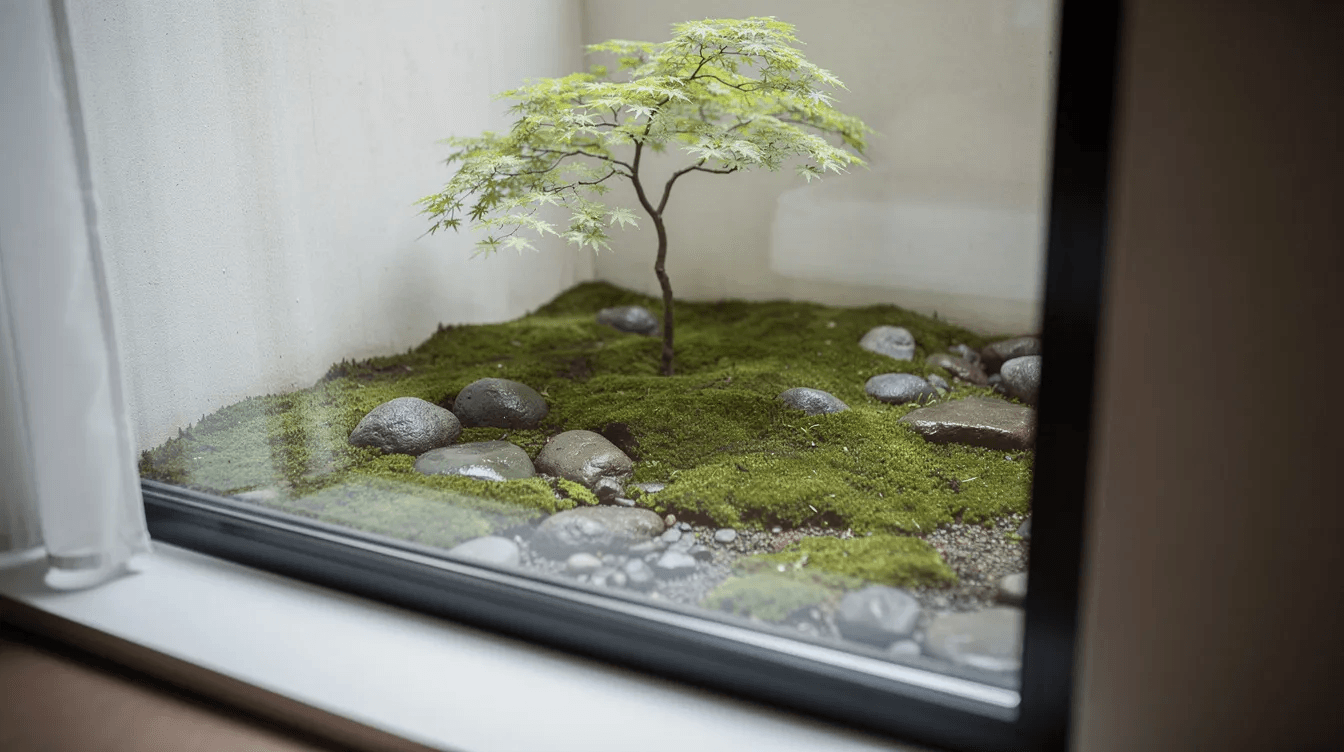
Courtyard strategies: Small tsubo-niwa courtyards (3-5m²) bring greenery inside. Necklace Villa on Awaji Island uses a ring layout that pets and family circle through daily.
Roofscapes: Sloping green roofs (Sou Fujimoto’s Ishigaki home), terraces for potted plants (House in Nakano), and rooftop decks extend living outside.
Daylight tactics: Top lights, corner windows, and interior voids like Kumagaya House’s cruciform atrium (2021) distribute light evenly while creating beauty through shadow play.
Everyday rituals: Genkan entry spaces for shoes, compact tea corners, built-in desks for remote work—these features acknowledge that love of home comes from daily use patterns, not square footage alone.
Framed views toward a single tree or distant skyline substitute for area, providing psychological spaciousness without waiting for larger budgets, and can pair well with tiny house kits that turn small dreams into big possibilities on modest plots.
Conclusion: Applying Japanese Small House Ideas Anywhere
Japan small house design offers lessons for any site facing land pressure or environmental constraints: compact footprints with careful light control, multifunctional rooms, honest materials, and integration with landscape.
Start by auditing essential functions. Study precedents like Moriyama House (2005). Sketch vertical massing, then refine light and storage details. The Japanese approach isn’t about copying a style—it’s adopting a mindset of restraint and precision.
These strategies adapt to suburban Europe, narrow North American infills, or tropical hillsides. Visit the website of firms like APOLLO or ALTS Design Office for deeper research. Small houses represent a realistic response to rising land costs and changing family structures—a series of constraints transformed into long-term comfort and time-tested beauty.