
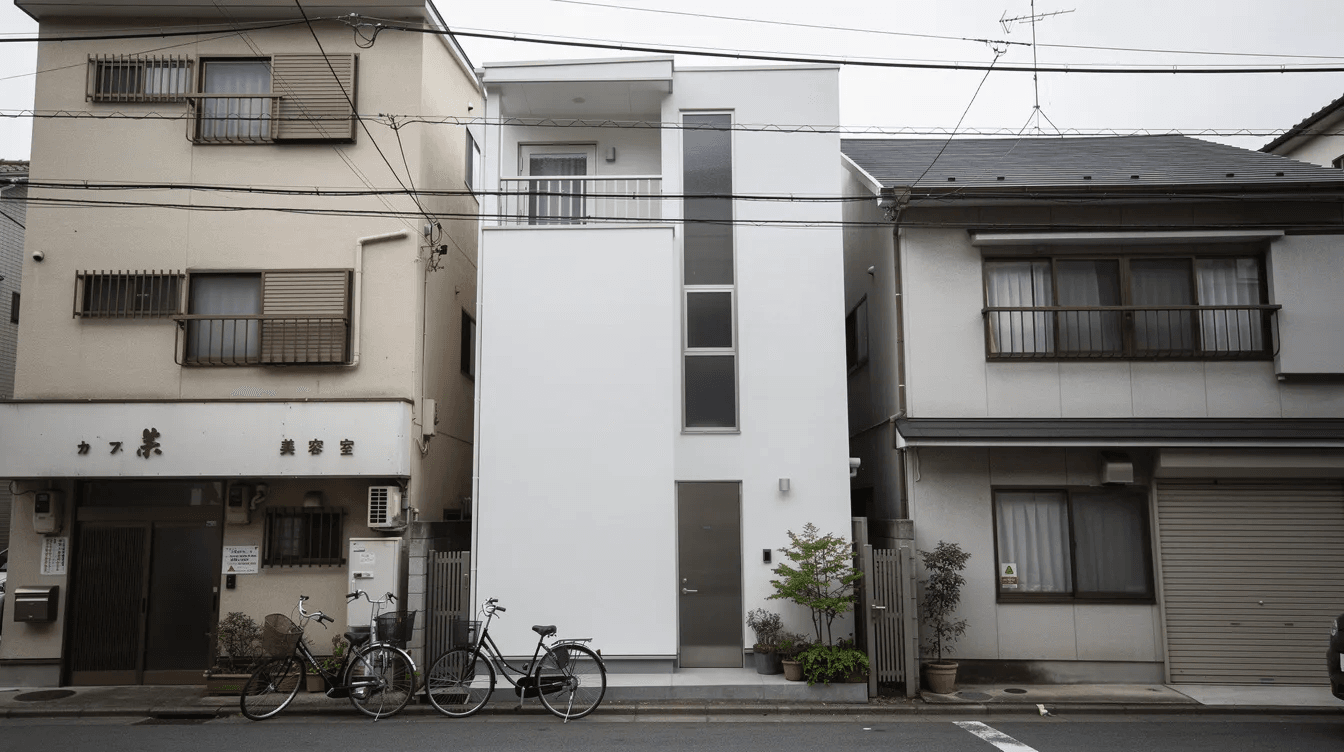
A narrow house in japan typically sits on a plot under 4 meters wide, as architects find innovative ways to squeeze homes into tight urban plots between neighbours in cities like Tokyo, Osaka, and Kobe. These micro homes emerged from post-war land subdivision, soaring land prices since the 1980s bubble economy, and strict zoning rules that pushed architects to build upward rather than outward. These homes are particularly common in densely populated urban areas like Tokyo and Kyoto due to high land costs and limited space. In Japan, skinny houses are referred to as ‘eel’s beds’ due to their long and thin shape. This article explores real Japanese narrow houses, their design strategies, and what vertical living actually feels like day to day. Japanese culture values land more than the buildings that occupy it, which has led to the trend of narrow homes in dense cities.
- What Counts as a “Narrow House” in Japan?
- Iconic Narrow Houses in Japan (Real Examples)
- Design Strategies That Make Narrow Houses Feel Spacious
- Light, Privacy, and Windows in Ultra-Dense Neighborhoods
- Living Inside a Narrow House: Vertical Everyday Life
- Minimalism, Materials, and the Japanese Aesthetic
- Regulations, Land Prices, and the Economics of Skinny Plots
- Lessons from Japan’s Narrow Houses for Global Cities
- Conclusion: The Future of the Narrow House in Japan
What Counts as a “Narrow House” in Japan?
In dense Japanese cities, narrow houses typically occupy plots of 50–80 square meters with widths ranging from 2 to 4 meters. Locals call them kyōshō jutaku (micro houses), a response to fragmented urban land that turned leftover parcels into building sites. Unlike traditional nagaya row houses that shared walls, modern narrow homes are standalone vertical structures.
Most span 3 to 4 storeys, yielding 70–110 square meters of total floor space despite their skinny shape. Zoning allows floor-area ratios of 200–300%, meaning architects can create sufficient space by stacking rooms upward.
Key constraints defining narrow houses:
- Width: Often 1.8–4 meters
- Depth: 15–20 meters
- Building coverage ratio: 50–60% maximum
- North-side slant plane rules that taper upper floors
Iconic Narrow Houses in Japan (Real Examples)
Several projects have turned these limitations into architectural inspiration worldwide.
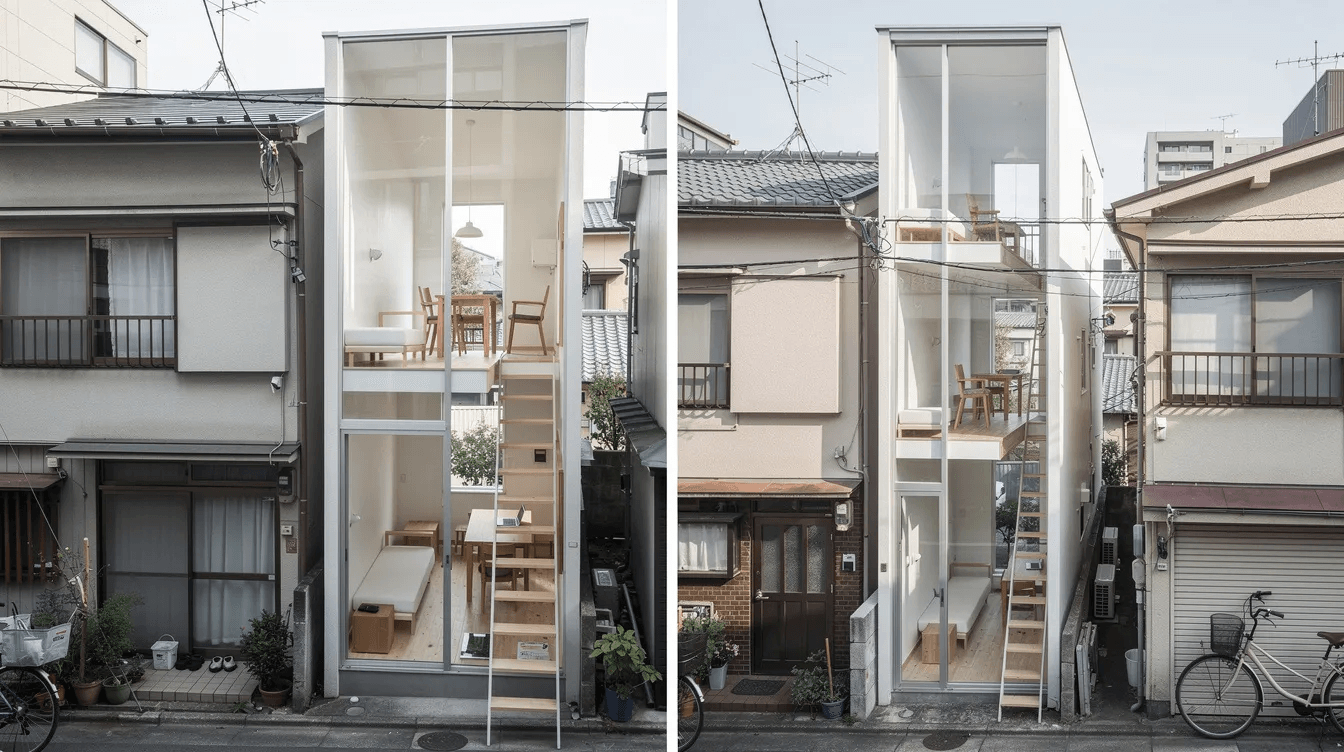
YUUA Architects & Associates completed the “1.8 m Width House” project in Tokyo’s Toshima ward around 2012. With an ultra-narrow 1.8-meter frontage, this home uses multi-split levels and eliminates conventional internal walls entirely. The interior extends across four floors with floating floors and half-height platforms, allowing a family to inhabit 90 square meters without feeling confined. Skylights draw sunlight deep into the plan.
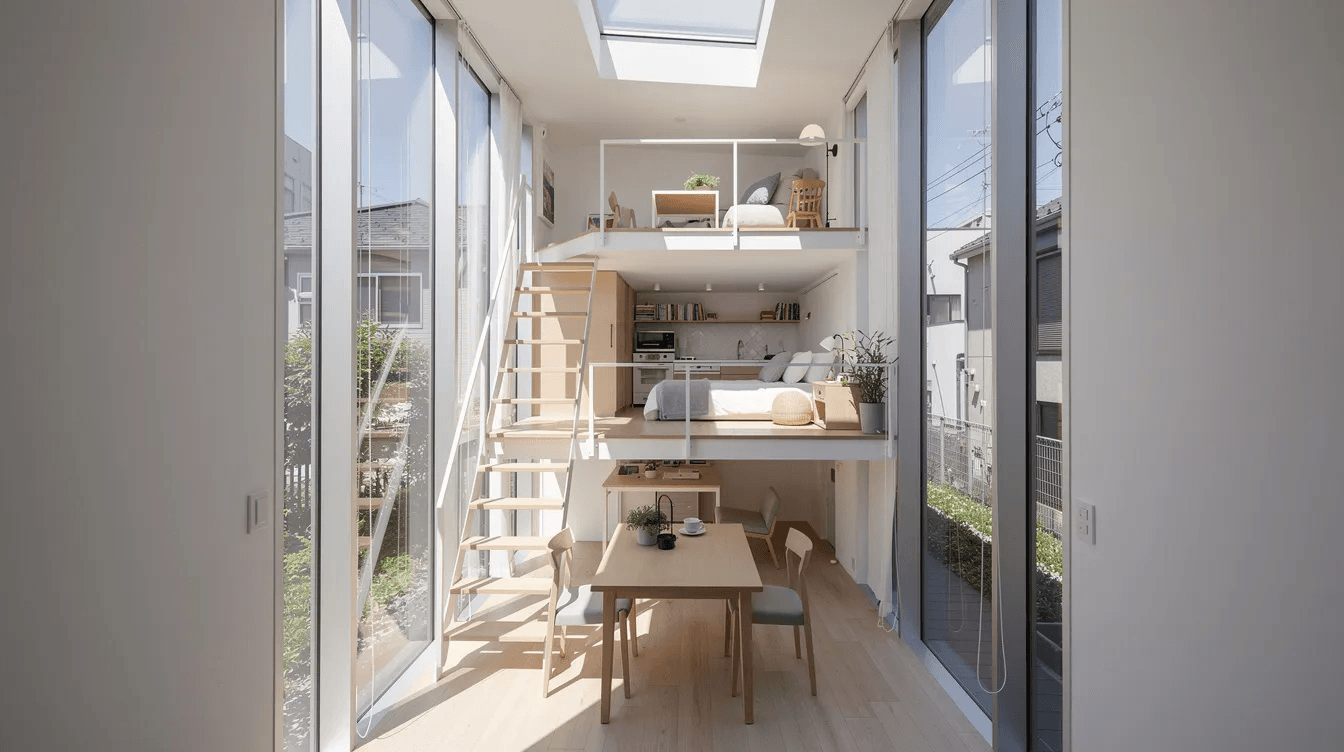
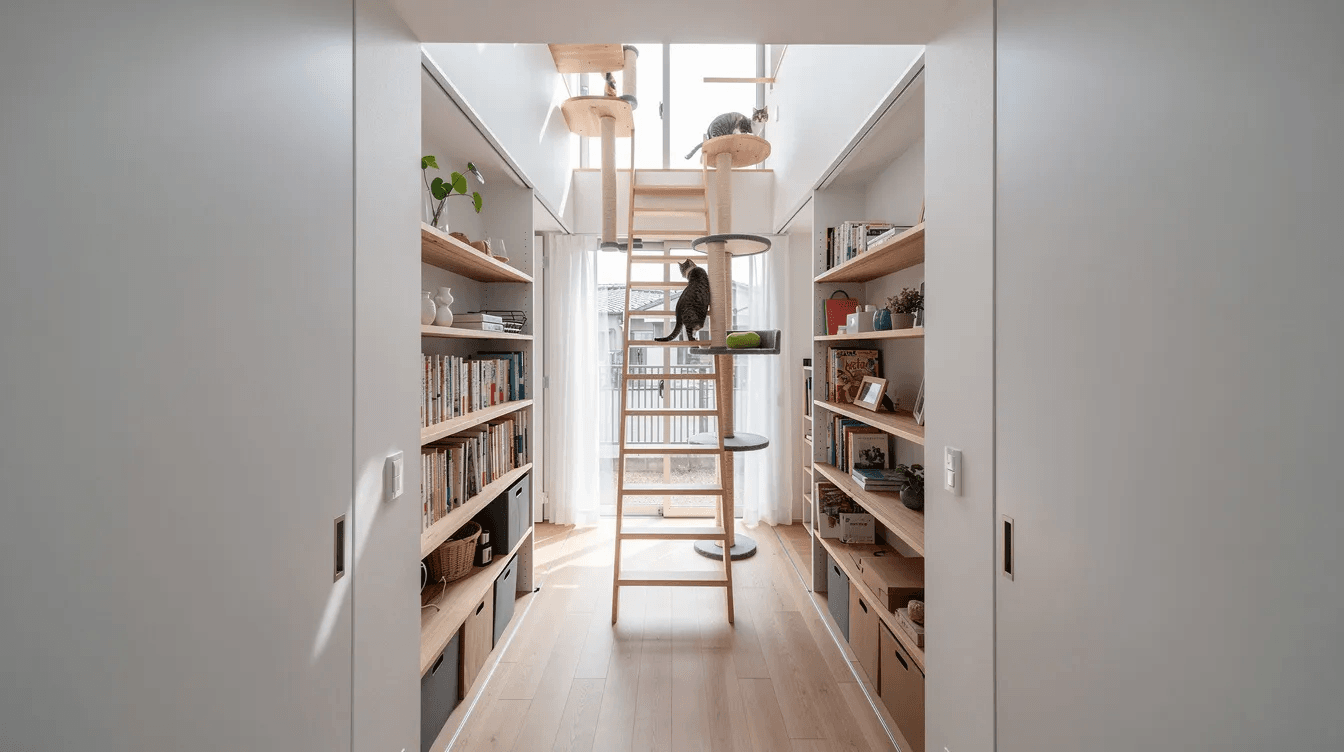
Fujiwaramuro architects designed the “House in Nada” project in Kobe (circa 2013) on a 60.94 square meter site with a 3.4-meter width. A central shelf-staircase integrates passages, storage, and even a cat tower. The triple-height atrium brings natural light through the building’s full depth, creating a sense of open space despite the narrow footprint.
Atelier Bow-Wow’s “Mini House” project in Tokyo (late 1990s) demonstrates how stacked functions work on a 3-meter by 21-meter plot. Adjusted ceiling heights make communal areas feel generous, while compact alternating-tread stairs minimize the staircase footprint. Rooms serve interchangeably as office, dining room, or relaxation zones.
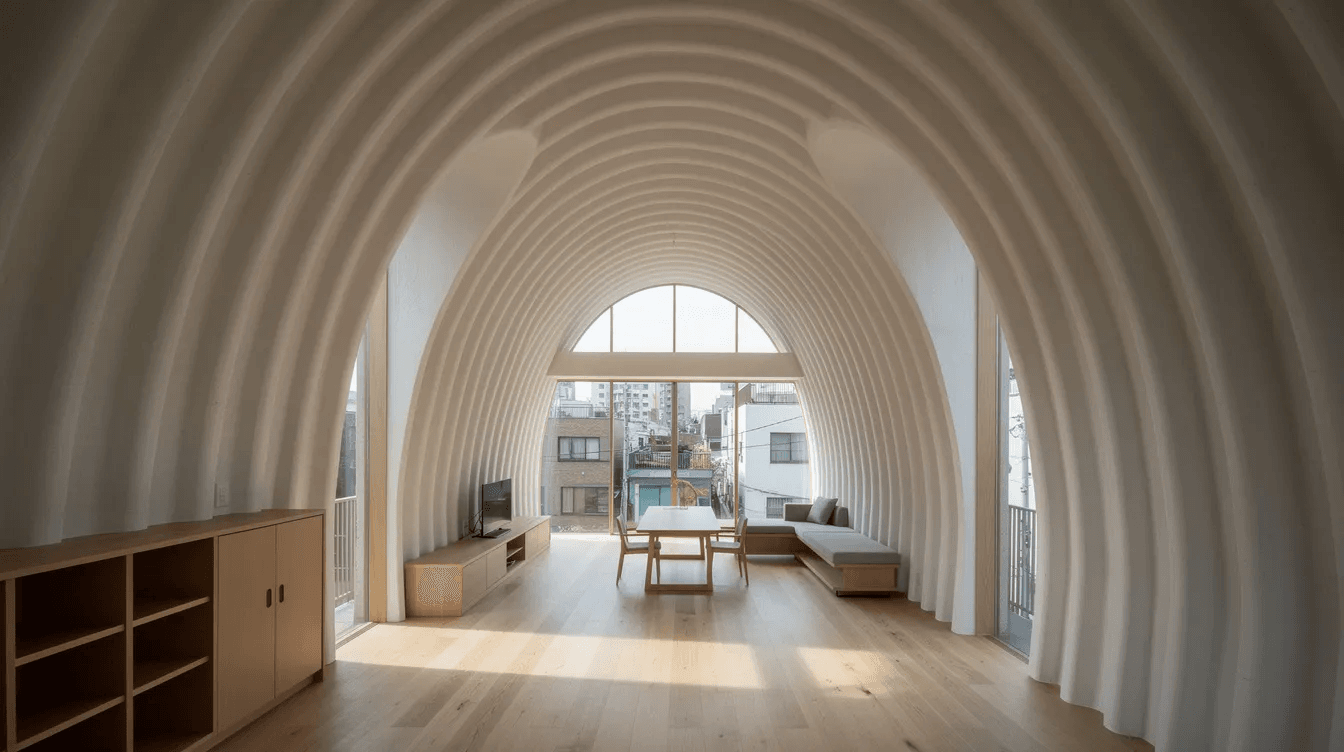
The Nami-Nami House project in Tokyo features undulating barrel vault ceilings, which help expand the interior space and create a unique spatial experience within a narrow lot.
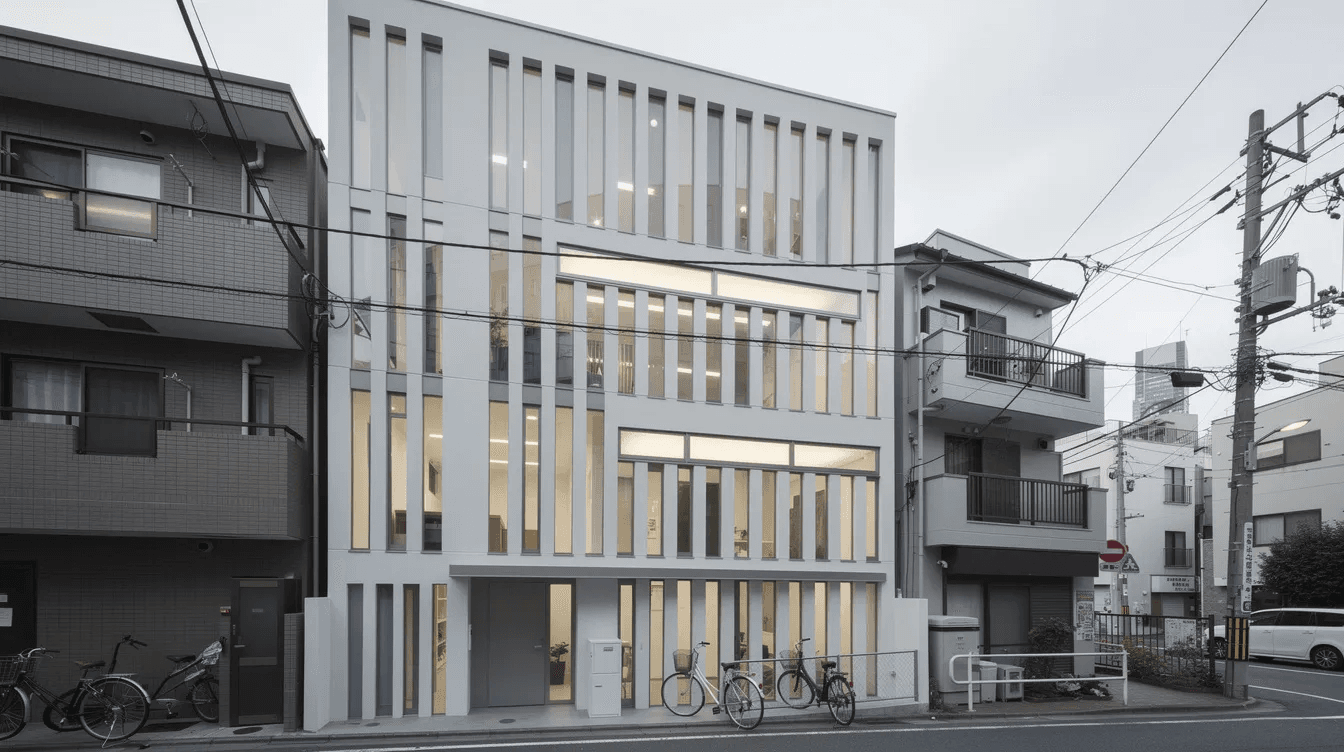
The ST-House project in Tokyo uses vertical and horizontal slits of windows to provide privacy and natural light, addressing the challenges of dense urban surroundings.
The House and Garden project by Ryue Nishizawa is wedged between two larger apartment buildings, showcasing how narrow house in Japan design can creatively utilize extremely limited space.
Design Strategies That Make Narrow Houses Feel Spacious
Japanese designers turn limited space into advantage through specific moves that create perceived spaciousness.
Split-level floors and floating platforms define zones without full walls. In the 1.8-meter house, spaces shift via half-height platforms, allowing the interior to feel continuous while providing privacy between areas. This approach extends sightlines and makes small rooms feel connected.
Double- and triple-height voids function as light wells, pulling sunlight 10–15 meters deep into the plan. High ceilings in key areas amplify the sense of volume. Large windows, skylights, and light-permeable spaces are also used to bring natural light into the interiors of narrow houses. Long sightlines directed along the building’s length or into small courtyards borrow space visually.
Key strategies that work:
- Split levels instead of full-height walls
- Atriums and light wells for deep daylight
- Built-in furniture to eliminate clutter
- Slim staircases with alternating treads
- Multifunctional rooms that adapt throughout the day
Modular or custom-built furniture and built-in storage solutions are frequently incorporated to maximize space efficiency and allow spaces to serve multiple purposes, echoing the importance of carefully planned tiny house floor plans that work for you.
The design of narrow houses in Japan often incorporates features that maximize natural light and create a sense of spaciousness despite limited floor area. Architects have developed techniques to execute big ideas in small spaces, such as dropping corridors and arranging rooms in a sequence to delineate functional layouts, much like the strategies seen in tiny house interiors that maximize every square foot. Floating stairs and floors are common in narrow homes to provide more room and higher ceilings. Architects also use staggered and stepped circulation spaces to encourage movement and exploration. The use of different colors and materials can create separation between rooms. In some Japanese small houses, rounded or curved elements are used to enhance spatial comfort and light flow, contrasting with more angular or linear designs.
Light, Privacy, and Windows in Ultra-Dense Neighborhoods
Balancing indoor light with privacy from neighbours requires creative window placement. With homes located just 1–2 meters apart, designers avoid standard windows on side elevations.
High clerestory windows, narrow vertical slits, and frosted ribbed glass on street facades provide light while blocking sightlines. Internal courtyards serve as light courts when exterior windows aren’t possible. Japanese building codes mandate at least 10% window area per room, pushing architects toward inventive solutions.
How light and privacy balance:
- Clerestory windows above eye level
- Slit windows along side elevations
- Frosted glass on street-facing openings
Living Inside a Narrow House: Vertical Everyday Life
Daily routines become vertical journeys. The entrance hall often occupies the ground floor alongside parking or a small shop, extending deep into the building. Living, dining area, and kitchen typically occupy upper floors as open-plan spaces, similar to many tiny homes that redefine small space living.
A dedicated bedroom is usually located at the top, designed for privacy and comfort, and separated from street noise. Sliding doors and partial partitions allow rooms to blend or separate as needed, and multifunctional furniture is often used to help save space in these narrow homes, paralleling many top tiny house designs for modern living. Upstairs spaces connect via compact stairs that demand adaptation—carrying groceries up steep pitches becomes routine.
Challenges include limited storage and sound transmission between lightweight timber floors. Yet advantages balance these drawbacks: rooftop terraces provide outdoor space for laundry or al fresco dining, and incorporating outdoor spaces such as courtyards or balconies can further enhance the living experience in narrow houses. The vertical layout creates strong privacy from the street. Occupant reports describe a “forest-like” serenity from dappled light patterns. Additionally, living in a narrow house in Japan often allows for reduced commute times due to their prime locations in urban centers.
Pros and cons of narrow living:
- Pro: Strong privacy, cozy defined zones, rooftop outdoors access
- Con: Steep stairs, limited storage, inter-level noise
Minimalism, Materials, and the Japanese Aesthetic
Narrow houses embrace minimalist materials to reduce visual noise inside tight spaces, aligning closely with minimalist tiny houses for sustainable living. Light woods like cedar and cypress provide warmth, while white plaster walls diffuse light. Exposed concrete adds texture, and black steel frames offer structural precision without bulk.
These choices connect to Japanese principles of ma (negative space) and shibui (understated colours and elegance). Built-in cabinetry, hidden storage in stair treads, and low-profile furniture keep floors visually open, akin to many Scandinavian tiny home designs for modern living. The wife and family can love the calm feel these materials create.
Regulations, Land Prices, and the Economics of Skinny Plots
Policy and economics produce narrow houses as much as design culture does. Central Tokyo residential plots average over 500,000 yen per square meter, making small leftover parcels the only affordable entry for young families, similar to the cost pressures driving interest in affordable tiny house buildings and designs.
Floor-area ratio (FAR) rules allowing 200% mean a 50 square meter site can yield 100 square meters of living space across multiple floors. Building coverage ratio (BCR) caps at 50–60%, forcing structures upward. North-side slant plane rules shape roofs to prevent shadowing neighbours.
Economic and regulatory pressures:
- Land prices: 20–50 million yen for narrow plots vs. 100+ million for standard sites
- FAR: 200–300% encourages vertical building
- BCR: 50–60% limits footprint
- Slant plane rules taper upper storeys
- Construction premiums: 20–30% higher for custom engineering
Lessons from Japan’s Narrow Houses for Global Cities
Cities worldwide facing density challenges can learn from Japan’s approach. London’s infill sites, New York’s micro-apartments, and Hong Kong’s compressed lots share similar constraints, which has helped popularize top micro house builders for modern living.
The world can take advantage of these strategies: building up instead of out, prioritizing functionality through multifunctional rooms, using every centimeter of wall for storage, and designing atriums that pull light deep into plans—ideas that also shape many cute tiny house designs for your dream home. International designers have already adapted these principles.
Transferable design principles:
- Vertical aggregation of functions
- Light wells and double-height voids
- Wall-integrated storage
- Rooms designed for multiple uses, as seen in many Swedish tiny houses for cozy living
Conclusion: The Future of the Narrow House in Japan
Japan’s narrow houses have evolved from necessity into a distinctive architecture genre admired globally. Future trends point toward smart-home technologies, superior insulation, and flexible layouts accommodating remote work and aging residents.
Key takeaways:
- Constraints breed innovative design solutions
- Vertical living offers privacy and defined zones
- These principles apply to dense cities everywhere