

Japanese cities have produced something remarkable from extreme constraint. In Tokyo, Osaka, and Kyoto, architects routinely design homes on plots just 2–4 meters wide—buildings so narrow they’ve earned the nickname “eel’s beds.” This isn’t a compromise. It’s a sophisticated architectural response to some of the world’s most expensive urban land. These narrow dwellings are also part of a broader trend toward micro-living and micro-houses, where innovative design turns tiny footprints into comfortable, efficient homes within dense city environments.
The post-1990s land price surge in central Tokyo pushed designers like FujiwaraMuro Architects to embrace these slim plots as creative opportunities. When a site measures barely wider than a parking space, the lot’s small size becomes a key challenge, making every architectural decision matter. This article explores what defines a narrow house in Japan, how architects squeeze functionality into limited space, and what real built examples reveal about this distinctive typology within the broader small house movement.
- What Is a Narrow House in Japan?
- Key Design Strategies in Japanese Narrow Houses
- Case Study: House in Tezukayama by FujiwaraMuro Architects
- Seven Notable Narrow Houses in Japanese Cities
- Interior Design and Furniture Solutions for Narrow Japanese Homes
- Urban Context: Land Prices, Zoning, and the Logic of Narrow Plots
- Conclusion: Lessons from Japan’s Narrow Houses
What Is a Narrow House in Japan?
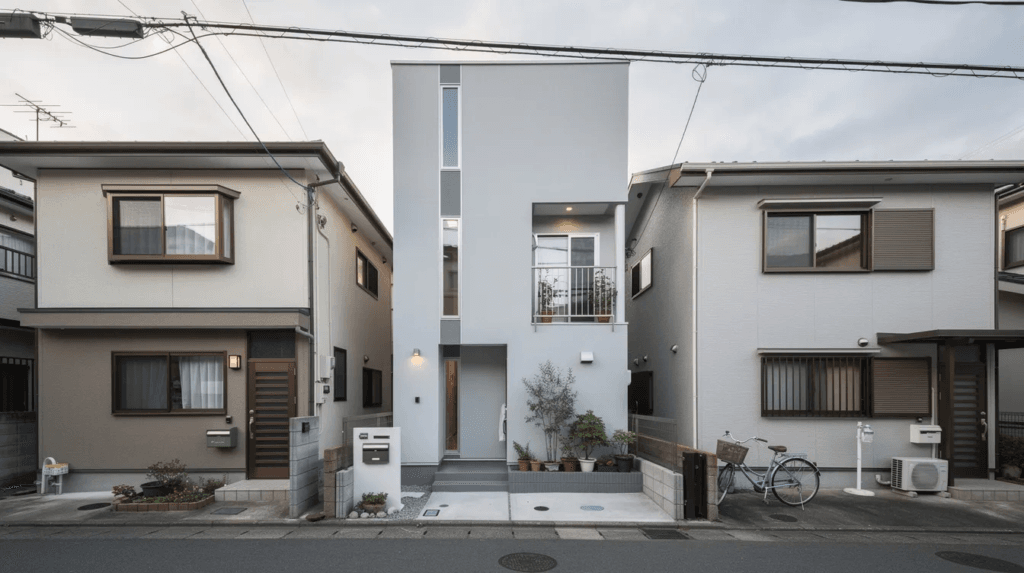
A narrow house in Japan typically occupies plots measuring 2–4 meters wide and 10–20 meters deep, located in dense neighborhoods of cities like Tokyo, Osaka, Yokohama, and Kobe. Locally called kyōsō jutaku, these residences often sit on “flagpole plots”—buildable areas accessed via a narrow strip from the street.
Total floor space generally ranges between 70–110 square meters, distributed across three to four floors. A typical example might feature a 3-meter frontage, 15-meter depth, and vertical stacking that serves to maximize living area and functionality within the limited lot size.
Key Design Strategies in Japanese Narrow Houses
Architects transform spatial constraints into design opportunities through several key strategies. Rather than viewing narrowness as a deficit, designers create surprisingly livable environments within extreme confines that echo many elegant tiny homes that exemplify modern living.
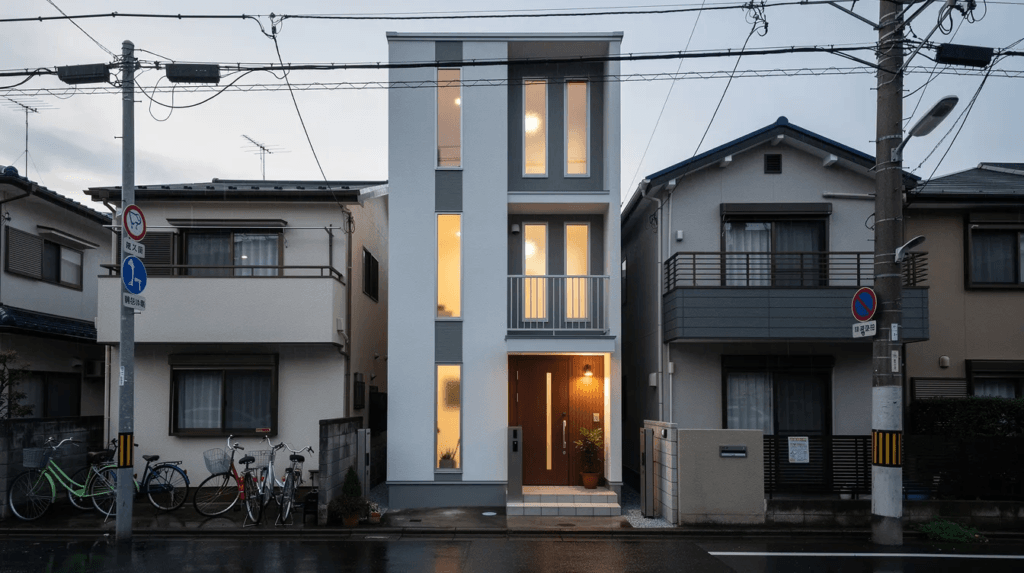
Split level floors and floating floors generate spatial variety without full-height walls. By staggering levels at half-meter increments, rooms gain distinct zones while maintaining visual continuity. High ceilings—often reaching 3.5 meters—counter the sense of confinement by emphasizing verticality.
Skylights and full-height light wells pull natural light deep into the plan where side windows cannot reach. These vertical voids extend from roof to ground floor, creating open space that transforms interior atmosphere. The use of different colours and materials helps to define zones and assign unique ambiances to various areas, further enhancing the design and functionality of a narrow house in Japan. Courtyards measuring 1–1.5 meters wide serve as outdoor space extensions, particularly in Kyoto and Osaka districts.
Multi-functional furniture completes the strategy: stair-storage hybrids, fold-down desks, and loft sleeping spaces maximize functionality within every square meter, similar to the strategies seen in many tiny house interiors that maximize every square foot.
Case Study: House in Tezukayama by FujiwaraMuro Architects
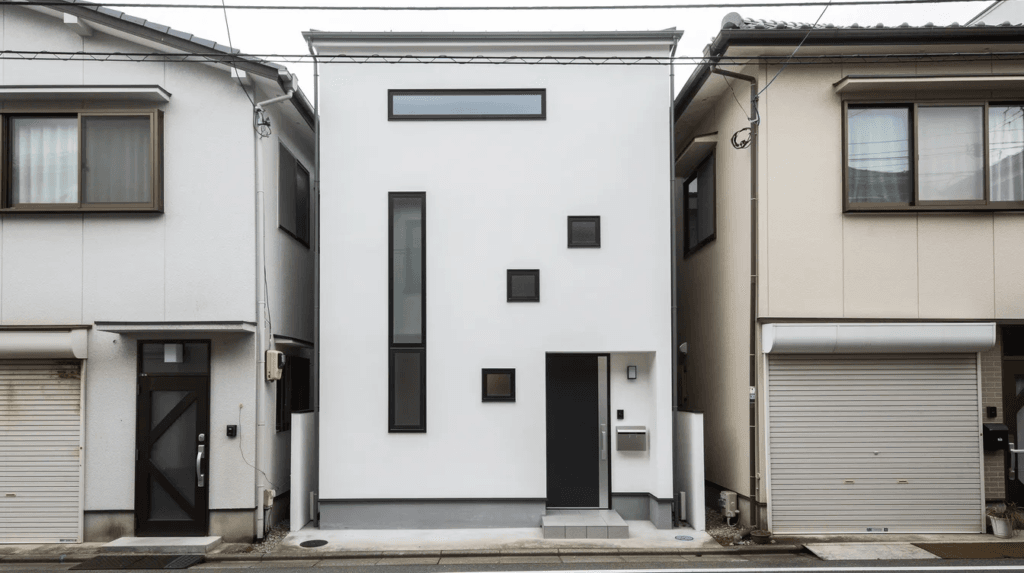
Located in the Tezukayama district of Sumiyoshi-ku, Osaka, this project by FujiwaraMuro Architects demonstrates how a residence can thrive on minimal dimensions. The site measures precisely 3.74 meters wide by 16.31 meters deep—a typical flagpole configuration fronting a narrow street.
The central design concept revolves around a “shelf-staircase” that fuses circulation, storage, and display into one vertical element. This staircase runs through the building’s center, serving as both the primary spatial feature and an atrium pulling sunlight into the interior. From the project starting phase, both the client and architects were actively involved in the thorough search for potential sites. They visited multiple locations together, carefully evaluating each option before selecting this lot, much like clients commissioning custom tiny homes for personalized small-space living, emphasizing the importance of collaboration and site selection in shaping the design of a narrow house in Japan.
Spatial Experience and Daily Life in the Tezukayama House
Moving from the entrance hall upward, residents experience evolving ceiling heights and framed views at each level. The shelf-staircase supports daily activities: shelving for books, display surfaces for family photos, pictures, and decorations, and reading spots along the stairs.
Narrowness becomes an advantage—the wife and family members encounter each other frequently across levels, maintaining visual connection despite spatial separation. Light woods and white plaster enhance the sense of brightness, while the continuous vertical space creates good exterior views through strategic window placement.
Seven Notable Narrow Houses in Japanese Cities
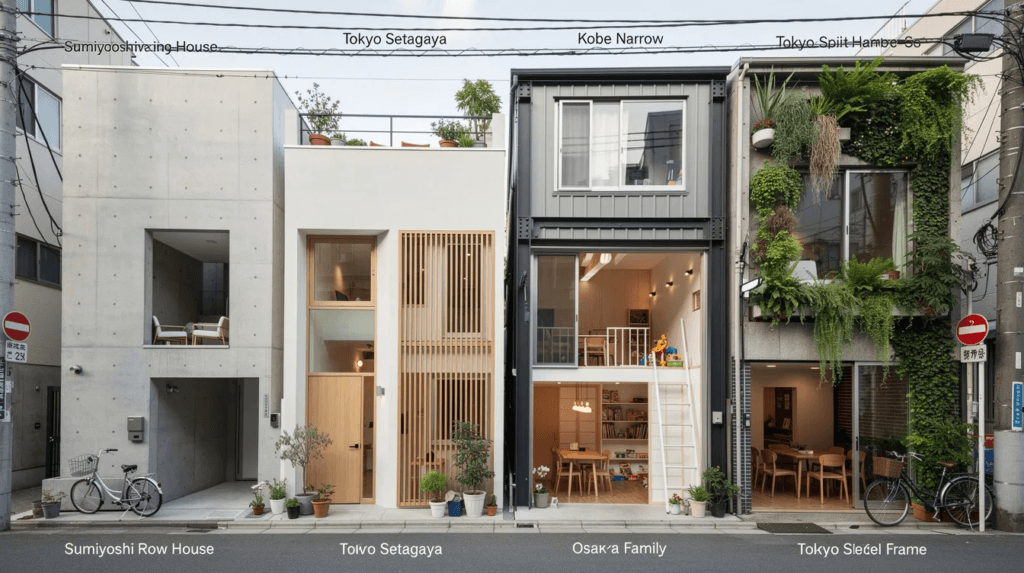
Tadao Andō’s Row House in Sumiyoshi (1973) established the paradigm at just over three meters wide, spawning hundreds of replicas across Japan. A Tokyo project in Setagaya ward (circa 2015) demonstrates split-level living with rooftop terrace access, while a Kyoto residence reinterprets traditional machiya layouts using inner courtyards and shoji-inspired partitions, echoing many of the great tiny homes that redefine small-space living.
In Kobe, one project emphasizes full-height light wells with minimal interior walls. An Osaka building prioritizes family life with kid-friendly mezzanines. A Tokyo steel-frame residence features exposed concrete, and another Osaka project integrates vertical gardens throughout its interior dining and living areas. Some narrow house projects also incorporate rounded forms or features, using smooth, curved elements to enhance both architectural appeal and functionality reminiscent of cute tiny house designs for dream homes.
How These Seven Houses Use Light, Levels, and Outdoor Space
Across these examples, vertical stacking and interlocking half-levels create sufficient space for daily life. Tokyo projects rely on skylights and side setbacks, while Kansai-region homes often utilize courtyards due to different block patterns, paralleling many of the best tiny house designs for modern living.
Where traditional gardens prove impossible, roof decks substitute—a 1.2-meter-deep balcony running along the living space extends the usable area outdoors, providing essential outdoor connection despite minimal dimensions. These outdoor spaces also foster interaction with neighbours and help integrate the narrow house in Japan into the surrounding community.
Interior Design and Furniture Solutions for Narrow Japanese Homes
Interior design in narrow Japanese homes integrates with architecture, often handled by the same office. Built-in storage uses every centimeter: stairs incorporate shelving, wall niches exploit otherwise wasted space, and under-floor boxes hide seasonal items.
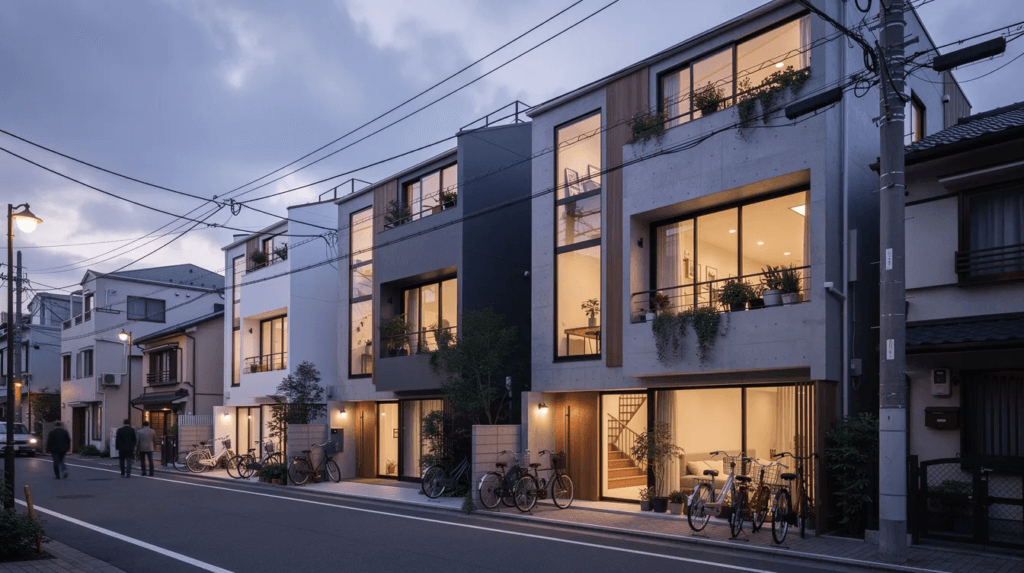
Images like the one above are essential for documenting and showcasing the innovative interior design solutions found in a narrow house in Japan.
Sliding doors and pocket doors replace swinging versions to free circulation space in 2–3 meter-wide areas. Dining tables double as office workstations, platforms hide futon mattresses, and fold-down counters line walls. Light woods like hinoki, white-painted surfaces, and strategic mirrors enhance brightness and perceived width, and these strategies readily adapt to tiny smart homes that prioritize efficient living.
Minimalism, Storage, and the Japanese Approach to Clutter
Japanese minimalism—ideas popularized by figures like Marie Kondo—shapes how residents organize narrow homes. Off-site storage, attic lofts, and efficiently zoned closets manage seasonal items and hobbies. Corridors lined with concealed cabinets keep surfaces visually clean while acknowledging storage needs.
Urban Context: Land Prices, Zoning, and the Logic of Narrow Plots
Japan’s urban land fragmentation emerged from postwar land reform, creating countless small lots unsuitable for large-scale development. Central Tokyo land prices reach ¥10–20 million per square meter, making large plots economically prohibitive, which in turn makes affordable tiny house buildings and designs an attractive reference point for understanding cost-conscious small-space solutions.
Zoning rules require small side yards and height limits, while the common 4-meter road-width requirement for fire access creates flagpole access strips. By the 1980s, 40 percent of homes in the country looked onto streets narrower than modern standards required. Despite these dense urban conditions, narrow houses in Japan are often designed to integrate with the surrounding community, using features like large glass doors or open facades to foster a sense of connection and interaction with neighbors and the neighborhood environment, and their modest footprints align closely with kit-based options such as Home Depot tiny house kits for small functional spaces.
Narrow Houses and the Future of Dense Cities
Japan’s experience offers models for cities like Hong Kong, Seoul, and parts of Europe facing housing shortages. Smaller footprints mean reduced energy use and walkable neighbourhoods, though concerns about trees, greenery, and privacy persist.
Digital work and smaller households in the 2020s make compact, carefully designed houses increasingly viable for occupant lifestyles worldwide.
Conclusion: Lessons from Japan’s Narrow Houses
Japan’s narrow houses demonstrate that comfort and beauty remain achievable within extreme compression. The House in Tezukayama and similar projects across Tokyo and Osaka prove that skilled designers can create rich living spaces where others see only constraint.
These buildings challenge conventional ideas about how much space we truly need—not by romanticizing hardship, but by showing that thoughtful architecture transforms limitations into opportunities the whole world can learn from.