
Introduction to New Ranch-Style Homes
New homes ranch style represent one of the most sought-after architectural choices in today’s housing market. These single-story designs combine the casual, accessible living that made mid-century ranchers popular with contemporary features like energy-efficient windows, smart home technology, and flexible open-concept layouts. The appeal is straightforward: everything you need on one level, with generous connections to the outdoors.
Buyers in fast-growing markets like Texas, Colorado, and North Carolina are increasingly gravitating toward new ranch construction. The reasons range from practical concerns about aging in place to simple preferences for easier cleaning and maintenance. This guide walks you through what defines a new ranch-style home, how to evaluate floor plans and square footage, and what to expect when comparing costs to other architectural styles.
- What Makes a New Home “Ranch Style”?
- New Ranch-Style Floor Plans and Layout Options
- Advantages of Choosing a New Ranch-Style Home
- Potential Drawbacks and Design Trade-Offs
- Comparing New Ranch Homes to Other Styles
- Costs, Financing, and Building vs. Buying a New Ranch Home
- How to Choose the Right New Ranch-Style Home
What Makes a New Home “Ranch Style”?
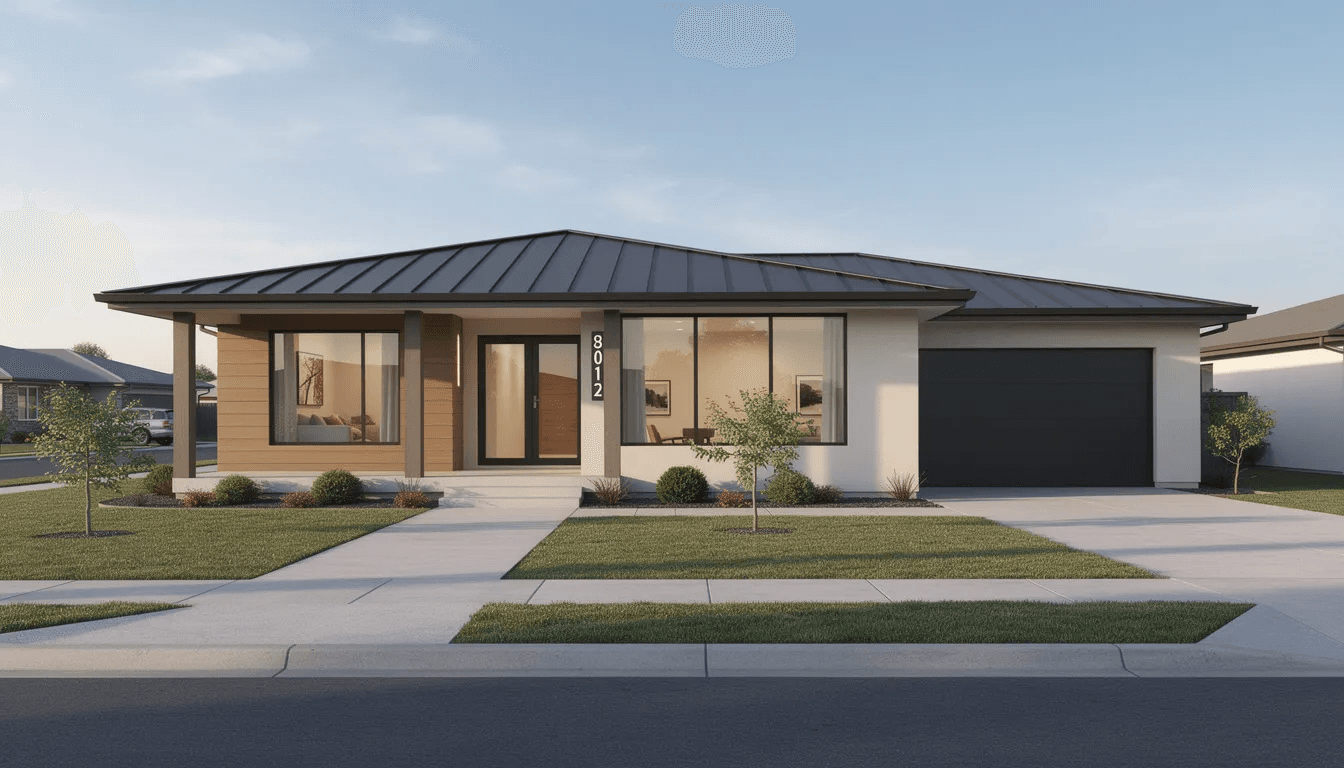
A new ranch-style house preserves the core traits that defined classic ranchers from the 1950s and 1960s. The single-story layout remains the defining feature, with all bedrooms, bathrooms, and living space located on one level. Horizontal lines dominate the exterior profile, creating that distinctive low, ground-hugging appearance that sets ranch homes apart from two-story colonials or split-levels.
Common architectural characteristics include open floor plans that merge kitchen, dining, and living areas into a cohesive great room. Attached garages (typically two or three cars) integrate seamlessly into the footprint. Sliding glass doors open directly to patios or backyards, promoting seamless indoor outdoor living. Rooflines stay low pitched, usually with gable or hip configurations that resist wind and shed water efficiently.
Consider a typical 2024 ranch new build in Phoenix: a 1,900 sq ft L-shaped floor plan featuring a covered rear patio, large windows flooding the main floor with natural light, and an open layout connecting the kitchen island to the family room. The primary suite sits on one side of the home, separated from the secondary bedrooms for privacy.
Terminology varies by region. You might see these homes marketed as “ranch,” “rambler,” or “single-level living,” but they all fit the same core design elements. The simple design philosophy—one level, open layouts, and strong outdoor connections—remains consistent regardless of what builders call them.
New Ranch-Style Floor Plans and Layout Options
Modern ranch house plans come in three primary shapes: rectangular, L-shaped, and U-shaped. Rectangular plans work well on narrow lot configurations, maximizing interior space while keeping the footprint compact. L-shaped designs wrap around a backyard patio, creating sheltered outdoor spaces perfect for entertaining. U-shaped plans feature interior courtyards, a nod to the California ranch tradition inspired by Spanish Colonial architecture.
Popular interior arrangements in new construction typically follow one of two approaches. Split-bedroom plans position the primary suite on one side of the home with secondary bedrooms located on the opposite end. This creates natural separation between parents and children or between homeowners and guests. Clustered bedroom plans group all sleeping areas together, which some families prefer for keeping young families closer at night.
A 1,600 sq ft starter ranch might include 3 beds, 2 baths, and a combined kitchen-dining-living area anchored by a spacious kitchen island. Step up to a 2,400 sq ft plan, and you’ll often find a dedicated home office, mudroom entry from the attached garages, and a larger dining area that accommodates extended family gatherings.
Walking through these different house plans helps buyers visualize daily routines. Where will the kids do homework? Is there space for a home gym? Can you see the backyard from the kitchen? These practical questions matter more than abstract square footage numbers.
Square Footage and Room Counts in New Ranch Builds
New ranch style homes built since 2020 span a wide range, from compact 1,200 square feet designs up to 3,000+ sq ft luxury layouts. Understanding how many square feet you actually need starts with matching floor space to your lifestyle, much like choosing tiny house floor plans that work for you.
Here’s how typical size bands break down:
Square Footage | Bedrooms | Bathrooms | Common Features |
|---|---|---|---|
1,400–1,700 sq ft | 3 | 2 | Combined living/dining, single great room |
1,800–2,200 sq ft | 3–4 | 2–3 | Larger kitchen island, flex room or office |
2,300–2,800 sq ft | 4 | 3+ | Dedicated office, bonus room, covered patio |
A concrete example: a 2,050 sq ft ranch plan designed for a 60-foot-wide suburban lot might include 4 bedrooms, 2.5 bathrooms, an open kitchen with seating for six at the island, and a primary suite with a large bathroom featuring dual vanities and a walk-in closet. |
Growing families often prefer the 1,800–2,200 range for flexibility. Downsizers moving from larger two-story homes frequently find that 1,600–1,800 sq ft delivers all the living space they need without excess maintenance. Buyers drawn to single-level living on a smaller footprint may even explore ranch tiny house designs for a dream retreat. Multigenerational households looking to accommodate aging parents might target 2,400+ ft with an en-suite bedroom for in-law accommodations.
Advantages of Choosing a New Ranch-Style Home
Step-free living ranks as the primary advantage of ranch homes. No stairs means easier mobility for everyone—from parents carrying toddlers to adults recovering from surgery to retirees planning to age in place. Emergency access becomes simpler too, with all exits at ground level and no upper floors to evacuate.
Accessibility features in 2023–2024 plans go beyond eliminating stairs. Many builders now offer wide hallways (42 inches or more), curbless showers in primary bathrooms, and reinforced walls for future grab bar installation. These design elements support buyers with mobility issues today and protect resale value for tomorrow’s accessibility-conscious market.
Open layouts and large windows improve natural light compared to compartmentalized two-story homes from the 1980s and 1990s. When the kitchen, dining, and living areas flow together under one roofline, light penetrates deeper into the home. Design principles similar to those used in tiny house interiors that maximize every square foot apply here too. Picture windows and sliding glass doors facing the backyard create a visual connection to outdoor spaces that makes modest interiors feel more spacious.
New ranch homes can still include full basements or walkout basements in regions like the Midwest and Rocky Mountains. This provides extra storage, recreational space, or potential rental income while keeping everyday life on one level. The main floor handles daily routines; the basement serves as overflow space for hobbies, guests, or future needs.
Modern Features in 2020s Ranch-Style New Construction
Contemporary ranch new builds incorporate energy-efficient systems that meet or exceed 2021 and 2024 energy codes. High R-value insulation in walls and attic spaces, double- or triple-pane windows, and properly sealed building envelopes reduce heating and cooling costs significantly compared to older ranch homes from the 1960s, echoing the minimalist, eco-conscious priorities found in many modernist tiny house designs.
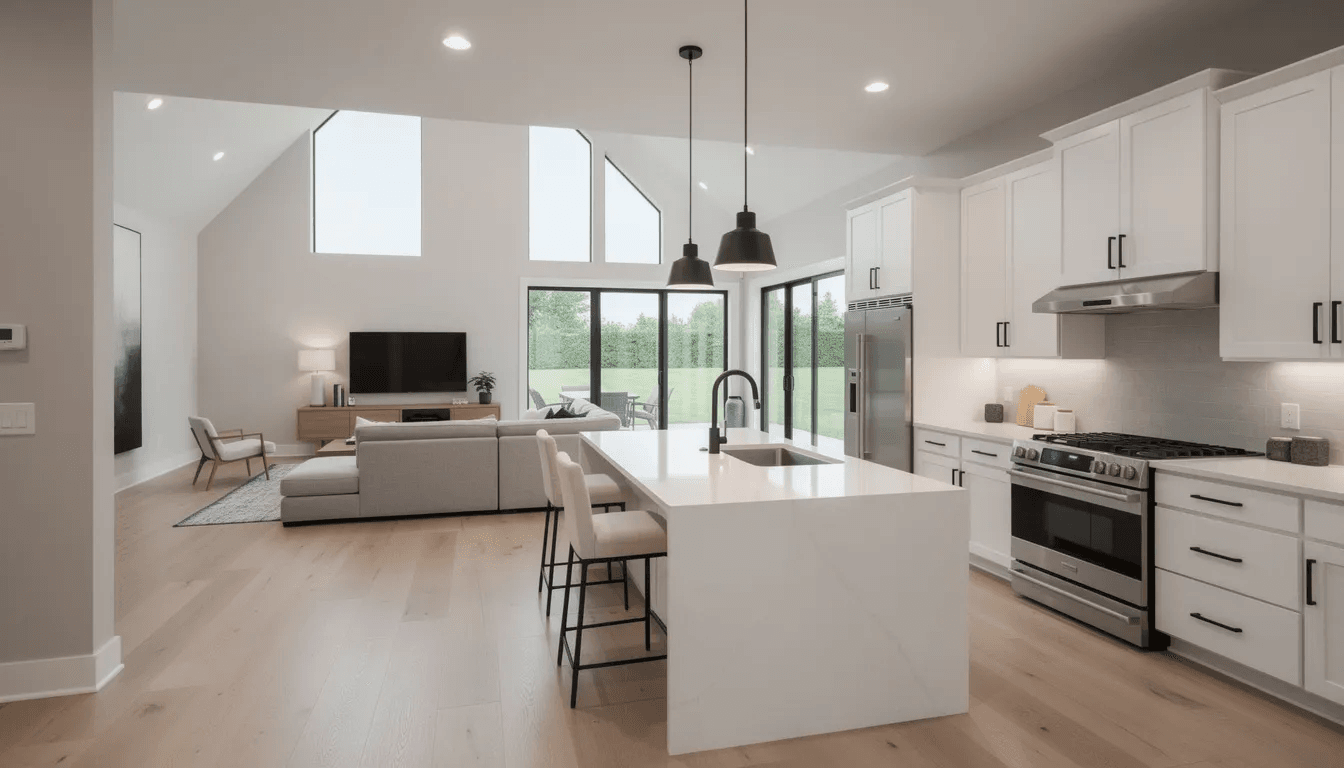
Interior feature lists have evolved considerably. Expect quartz or granite countertops, large kitchen islands with seating for four or more, dedicated mudrooms connecting to attached garages, and primary suites with generous walk-in closets. The great room concept—combining kitchen, dining area, and living room—remains standard, often anchored by a feature wall or large picture windows.
Smart home packages come standard or as affordable upgrades in most 2024 new construction. This typically includes smart thermostats, video doorbells, smart locks on main entries, and pre-wiring for EV chargers in garages. Some builders offer integrated security service packages with monitoring options.
These aren’t luxury add-ons anymore. They’re baseline expectations for buyers who want turnkey convenience and long-term cost savings. A new ranch built today arrives ready for current technology and adaptable for whatever comes next, just as many custom tiny homes for small-space living are designed to be future-ready and highly personalized.
Potential Drawbacks and Design Trade-Offs
The single story layout that makes ranch homes accessible also demands more land. A 2,000 sq ft ranch requires a wider, deeper foundation than a 2,000 sq ft two-story home with the same interior space stacked vertically. This means larger lots, which can limit options in established neighborhoods or drive up land costs in competitive markets.
Bigger foundations and expansive roofs increase construction cost per square foot. A ranch spreading across a 50-foot-wide foundation needs more concrete, more roofing material, and more exterior siding than a two-story with a 30-foot-wide footprint. These material costs add up, even when framing and mechanical systems run more efficiently in single level designs, which is why some buyers look instead to tiny homes that redefine small-space living for a lower-cost, lower-impact alternative.
Some buyers prefer more separation between living and sleeping areas than open-concept ranch layouts typically provide. Sound travels easily across open floor plans—a teenager’s video games in the living room can drift into the primary suite at the opposite end. Thoughtful furniture placement and area rugs help, but walls remain the most effective sound barrier.
Challenges multiply on narrow urban lots, particularly 40-foot infill parcels common in older cities. Specialized narrow-lot ranch house plans exist, but they often require attached garages placed at the front (reducing curb appeal) or creative L-shaped designs that sacrifice some interior efficiency. Not every lot suits a ranch-style house.
Are New Ranch-Style Homes Cheaper or More Expensive?
Cost comparisons between ranch and two-story new construction depend heavily on region, builder, and finish level. Many new ranch builds fall around $175–$275 per sq ft as of the mid-2020s, though local markets in high-demand areas like Austin or Denver can push significantly higher.
The foundation and roof typically cost more for a ranch of equivalent square feet compared to a two-story. You’re covering more ground with concrete and more area with roofing shingles. However, savings emerge in other areas: simpler framing without second-floor load calculations, shorter mechanical runs for plumbing and HVAC, and efficient construction timelines on slab foundation builds in warmer climates.
Total construction cost often ends up comparable when you factor in all variables. The bigger financial consideration involves land: ranch homes need bigger lots, and land costs can dwarf construction expenses in desirable locations.
Think in terms of long-term value and maintenance cost rather than just upfront price. Single story ranch homes cost less to re-roof (scaffolding is simpler), easier to paint and maintain, and more marketable to aging buyers when you eventually sell. These lifecycle savings deserve weight in your calculations.
Comparing New Ranch Homes to Other Styles
New ranch style homes differ from modern farmhouse designs primarily in their commitment to single-story living. While both architectural styles might feature board-and-batten siding, covered porches, and open-concept interiors, modern farmhouse plans often include second stories or bonus rooms above garages. Ranch homes maintain horizontal lines throughout, staying true to their ground-hugging heritage.
Craftsman plans emphasize vertical elements—tapered columns, multi-level rooflines, and prominent front porches with decorative brackets. Ranchers keep things simpler and lower, trading Craftsman detail work for clean horizontal emphasis and easy indoor-outdoor flow.
Consider a concrete comparison: a 2,100 sq ft ranch versus a 2,100 sq ft two-story home on the same 70×120 foot lot. The ranch might occupy a 70×50 foot footprint, leaving side yards of about 10 feet and a backyard of roughly 70 feet. The two-story could sit on a 35×40 foot footprint, opening up significantly more rear yard space but requiring daily stair navigation and limiting accessibility for aging residents.
The choice comes down to priorities. If you value large backyards and don’t mind stairs, a two-story might work better. If accessibility, maintenance convenience, and that signature low profile matter more, ranch style homes deserve serious consideration.
Costs, Financing, and Building vs. Buying a New Ranch Home
The main financial fork in the road: purchase a move-in-ready ranch in a new development, or custom-build on your own lot. Move-in-ready options in production builder subdivisions offer simpler financing through conventional mortgages, similar in some ways to purchasing tiny house park model homes where pricing, standards, and placement rules are clearly defined. You know the final price upfront (or close to it), and timelines run predictably.
Custom ranch homes involve separate transactions—land purchase, construction loan, and builder contract—that add complexity and months to the process. Construction loans convert to permanent mortgages upon completion, requiring two closings in many cases. You gain complete control over floor plans, finishes, and lot selection, but you also absorb more risk and uncertainty, much like choosing tiny house plans that fit your life where personalization and careful planning are critical.
Typical timelines for production-built new ranch homes in subdivisions run 6–10 months from contract to closing, depending on builder backlog and permit processing. Full custom builds on private land often stretch to 10–16 months or longer when design phases, permitting delays, and subcontractor scheduling enter the equation.
Account for extras beyond the base price. Landscaping, fencing, patio upgrades, and window treatments add up quickly. These matter especially in ranch homes where outdoor living connects so directly to interior spaces. A bare concrete patio surrounded by construction dirt undermines the whole indoor-outdoor concept that makes ranch living appealing.
New Construction Ranch vs. Renovating an Older Ranch
Buying a 1950s–1970s ranch and renovating it offers lower upfront purchase prices in many markets. Older ranches in established neighborhoods come with mature trees, larger lots (often), and character that new construction can’t replicate. However, hidden costs lurk beneath the surface, which is why some buyers instead downshift to tiny house designs for modern living where total project budgets and scope are easier to control.
Many older ranch homes need substantial upgrades to meet 2020s standards: electrical panel replacements (older 100-amp panels can’t handle modern loads), replumbing with copper or PEX to replace galvanized steel, complete roof replacement, blown-in insulation to address minimal original coverage, and window upgrades from single-pane to double-pane units. Each of these projects runs thousands to tens of thousands of dollars.
Older ranches may also contain hazards that new construction avoids entirely: lead paint in pre-1978 homes, asbestos in floor tiles or insulation, and outdated wiring that creates fire risks. Remediation adds cost and complexity before you even begin cosmetic updates, leading some buyers to consider simpler new-build options like chalet tiny house models for modern living.
A new ranch-style home arrives with modern systems, current code compliance, builder warranties, and predictable maintenance needs for the first decade. The upfront cost runs higher than a fixer-upper, but the predictability has value. Weigh renovation budgets—easily reaching $50,000–$100,000 for comprehensive updates—against the all-in cost of new construction.
How to Choose the Right New Ranch-Style Home
Start with non-negotiables: how many bedrooms do you need today, and how many might you need in five years? Guest rooms for visiting family, home office space for remote work, and potential in-law accommodations all factor into bedroom counts. Plan for bathrooms accordingly—most buyers prefer at least one full bath beyond the primary suite.
Lot size determines what’s possible. A 2,200 sq ft ranch won’t fit comfortably on a 50-foot-wide lot with setback requirements. Garage orientation matters too: front-loaded garages dominate views from the street, while side-entry garages preserve curb appeal but require wider lots. Consider outdoor spaces—covered patios, room for a porch or future pool, and setbacks from neighbors.
Walk through model homes whenever possible. Open-concept ranch layouts look great in floor plans but feel different when you’re standing in them. Assess natural light at different times of day. Notice how sound travels from the kitchen to the primary bedroom. Test furniture placement mentally—where does the sectional go? The dining table?
Pay attention to future needs. Will this home support aging in place if your knees give out in fifteen years? Can you add a ramp to the front porch if necessary? Does the primary bath have blocking for future grab bars? Is the layout appealing enough for resale in 7–10 years when your circumstances might change?
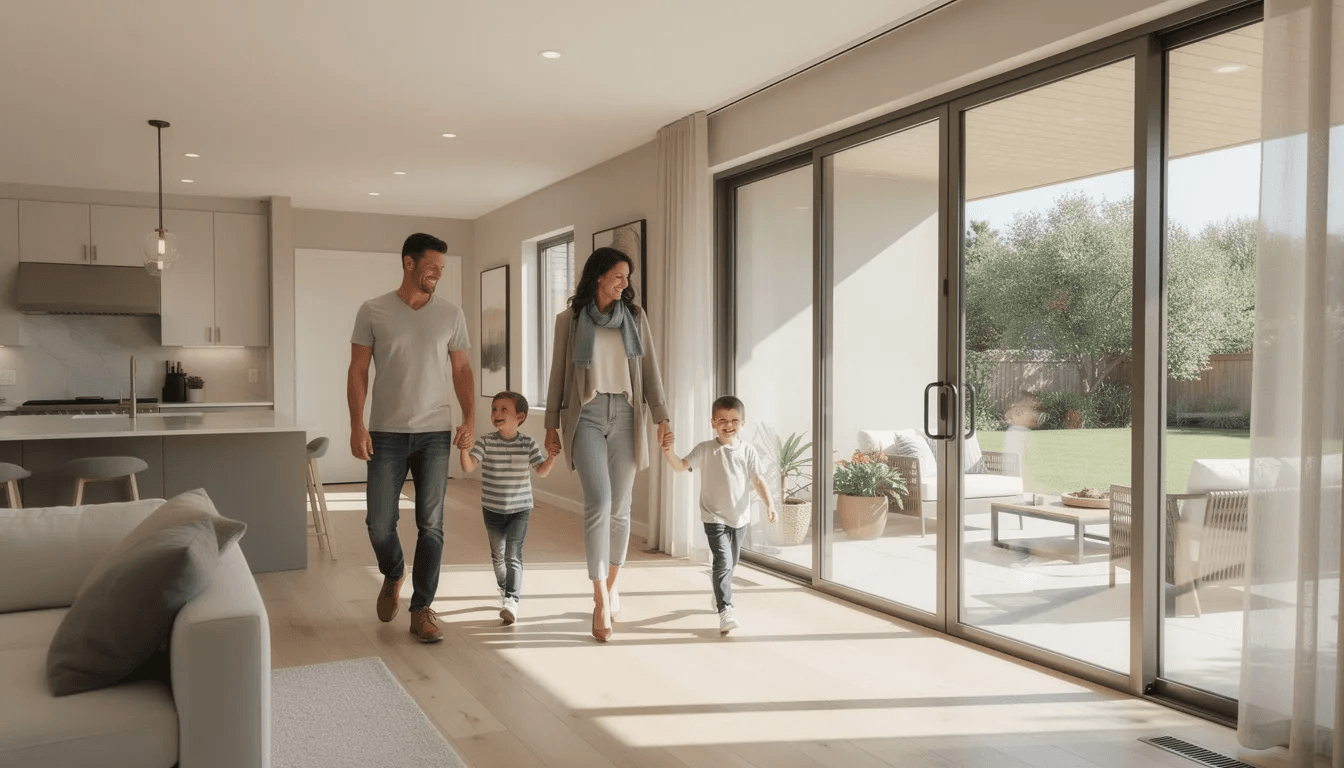
Ranch-style new homes remain a flexible, future-friendly choice for many different households. Whether you’re a young family seeking room to grow, a couple planning to downsize without sacrificing style, or anyone who simply prefers the convenience of single-level living, today’s new ranch construction delivers on timeless appeal with modern functionality. The key is matching the right floor plan to your specific needs—then enjoying the simplicity of life on one level.