By mid-2026, tiny houses have emerged as a practical answer to Portugal’s housing crisis and the surge in rural tourism. Between 2020 and 2025, apartment prices in Lisbon rose 40-50% to reach €5,000-€7,000 per square meter, while Porto climbed to €3,500-€5,000 per m² and Algarve coastal areas like Lagos jumped 50% to €4,000-€6,000 per m². The influx of remote workers, digital nomads, and relocating expats has only intensified demand for affordable alternatives.
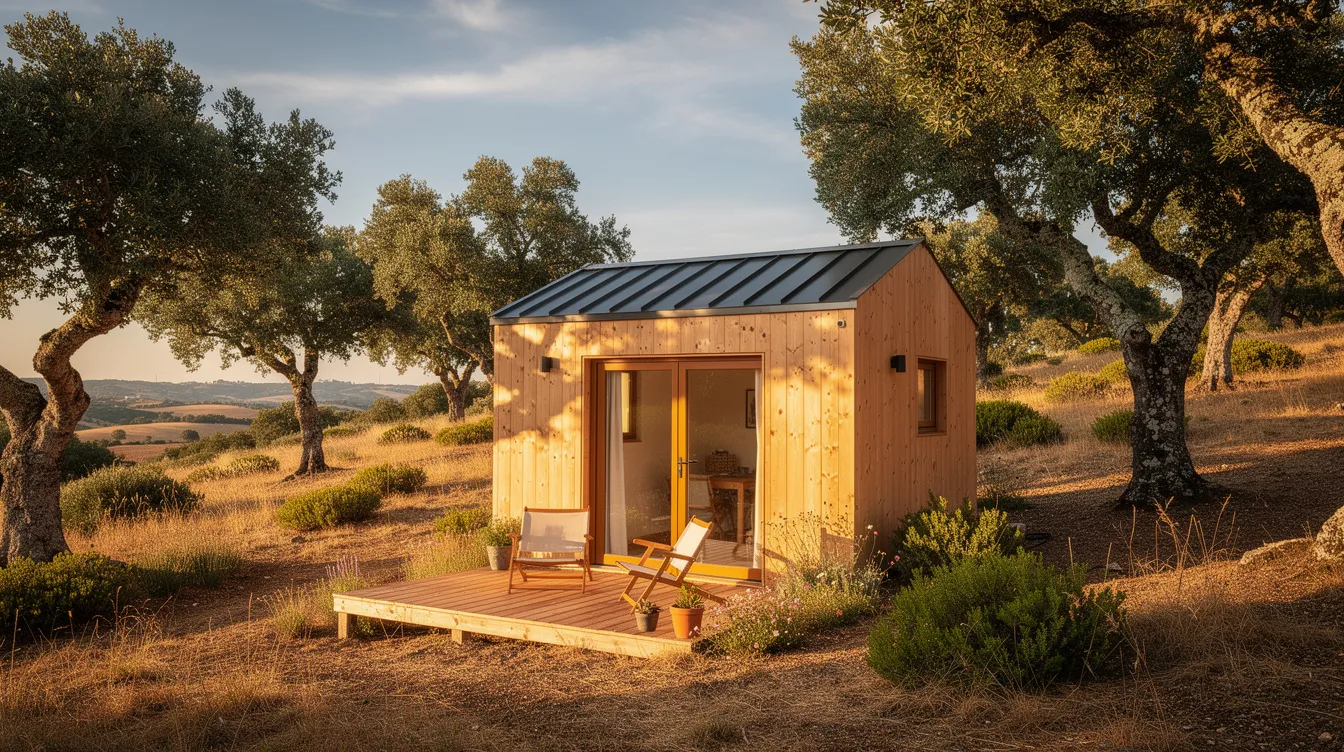
A tiny house in Portugal typically means a compact dwelling of 20-45 m², often built on a galvanized trailer or as a modular unit. Most are manufactured domestically in regions like Leiria, Aveiro, Porto, and Torres Vedras, using natural materials such as FSC-certified timber and cork insulation.
- This guide covers popular models made in Portugal, example prices in euros for 2026, where these tiny homes are manufactured, and key legal points for placing a tiny house on Portuguese land
- Why Tiny Houses Are Booming in Portugal
- Tiny House Portugal: Real-World Examples & Inspirations
- Portuguese Tiny House Builders & Popular Models
- How Much Does a Tiny House Cost in Portugal?
- Legal Considerations: Can You Put a Tiny House on Any Plot in Portugal?
- How to Choose the Right Tiny House in Portugal
Why Tiny Houses Are Booming in Portugal
The tiny house trend in Portugal connects directly to concrete economic pressures: urban rents increased 30-60% between 2021 and 2025, rural tourism bookings rose 25%, and demand for weekend countryside escapes exploded among city dwellers seeking relief from cramped apartments.
- Affordability: A factory-built 30-40 m² tiny house costs roughly €40,000-€90,000 in 2026—a fraction of traditional property. Compare this to Lisbon apartments averaging €450,000+ for 60 m², and the appeal becomes obvious. For many, portugal find such savings impossible to ignore.
- Lifestyle appeal: Tiny living attracts retirees ready to downsize, digital nomads seeking flexibility, and young couples prioritizing experiences over square meters. The idea of owning your space without a 30-year mortgage creates a sense of freedom that resonates across demographics.
- Sustainability: Most Portuguese tiny homes use eco friendly materials like timber frames, cork or sheep wool insulation, and options for solar panels. Energy efficiency improvements can reduce bills by up to 70% compared to traditional construction, naturally aligning with environmental values.
- Tourism and rental income: Since around 2022, investors have deployed tiny house clusters as alojamento local units in regions like Alentejo, Serra da Estrela, and the Silver Coast. Yields can exceed 8-10% annually versus 4-6% for urban apartments, making tiny houses a viable budget investment.
Tiny House Portugal: Real-World Examples & Inspirations
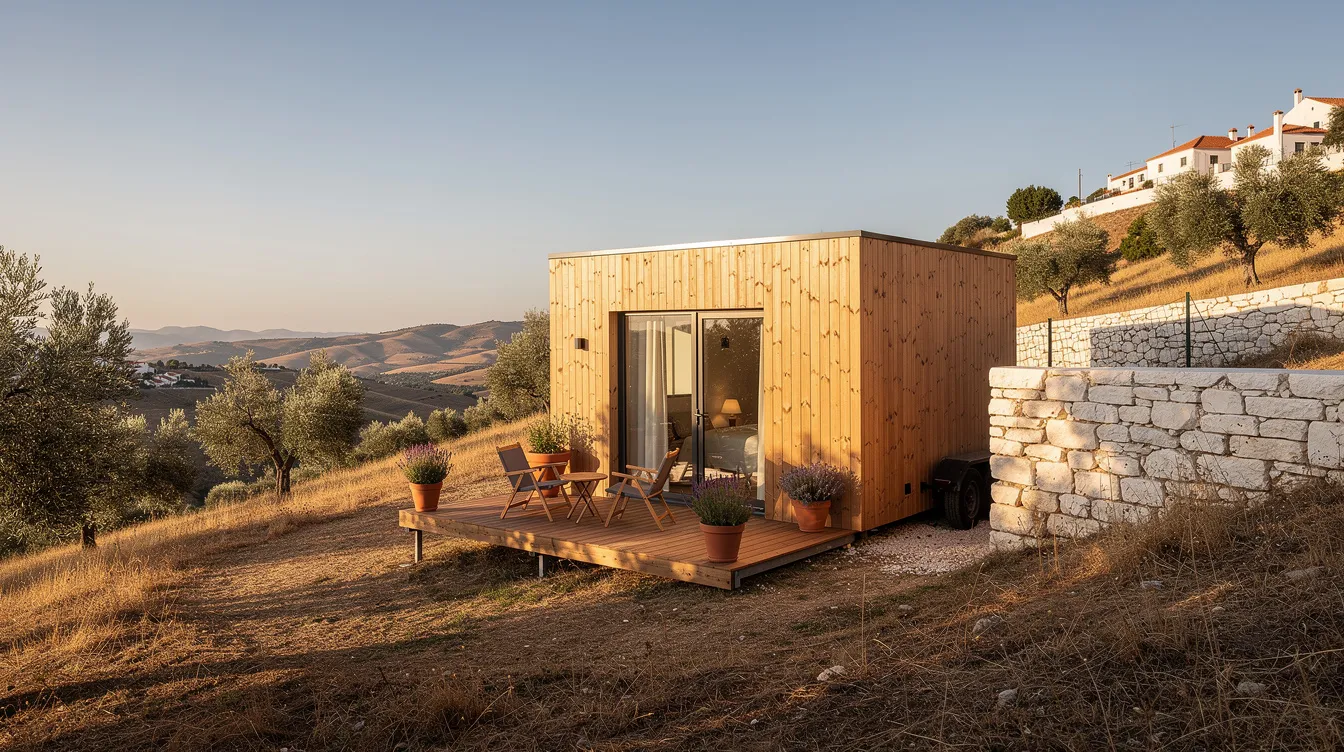
To ground this discussion, let’s explore specific examples of tiny homes currently thriving in Portugal.
- A 28 m² custom tiny house near Coimbra serves as the full-time residence for a German couple who relocated to Portugal. The house features a mezzanine bedroom, full kitchen, compost toilet, and clever built-in storage. Outside, a small vegetable garden connects the family to nature while maintaining self-sufficiency.
- These houses often combine Portuguese aesthetics—wood cladding, tiled roofs, light colors—with Scandinavian-style tiny home interiors emphasizing open plan layouts, large windows that flood the room with natural light, and multipurpose furniture that maximizes every centimeter.
- A typical interior layout includes a mezzanine sleeping area accessed by ladder or compact stairs, a ground floor kitchen with standard appliances, a shower room, and a terrace for outdoor dining with friends or guests, reflecting many tiny house interiors that maximize every square foot.
- Such examples demonstrate that you can live legally and comfortably in a tiny house without compromising on modern amenities. High-performance insulation keeps residents comfortable year-round, and many locations now support high-speed internet for remote work—allowing residents to maintain their careers while enjoying the Portuguese lifestyle.
Portuguese Tiny House Builders & Popular Models
Portugal has developed its own ecosystem of tiny house manufacturers, from trailer-based micro units to larger modular structures that blur the line between tiny and small house living.
- Most builders operate in industrial regions like Leiria, Aveiro, Porto, Torres Vedras, and West Algarve (near Lagos), producing models from approximately 20 m² to 80+ m²
- The country’s builders focus on various factors: full-time residential use, guest annexes, eco-resorts, and tourism rentals—each requiring different features and specifications
- Factory production means faster delivery timelines (typically 6 weeks to 6 months) compared to traditional masonry construction
- Portuguese craftsmanship emphasizes sustainability, with many company options using FSC/PEFC-certified timber, 100% cork insulation, and off-grid capabilities
40 m² Rooftop Models: Comfortable Living in a Tiny Footprint
Many Portuguese builders now offer approximately 40 m² tiny houses featuring mezzanine bedrooms and rooftop terraces. These models target full-time residents seeking near-apartment comfort or investors creating premium rental units.
A typical 40 m² layout includes an open-plan living room flowing into a full kitchen with standard-size appliances, a bathroom with shower, a mezzanine bedroom above, and an outdoor rooftop terrace for sunbathing or al fresco dining. The ability to step outside onto your private terrace while surrounded by Portuguese countryside creates an experience no urban apartment can match.
- Materials: Timber frame construction with high-performance insulation suitable for both hot Algarve summers and cooler northern winters. Double-glazed windows maintain energy efficiency across seasons.
- Price range: In 2026, expect approximately €70,000-€110,000 depending on finishings, off-grid options (solar, greywater systems), and transport costs within Portugal.
- Ideal buyers: Couples or small families wanting apartment-level comfort, expats relocating from abroad, and investors establishing 2-4 unit clusters for rural tourism on a single plot of land.
Eco-Friendly Compact Models Around 25-30 m²
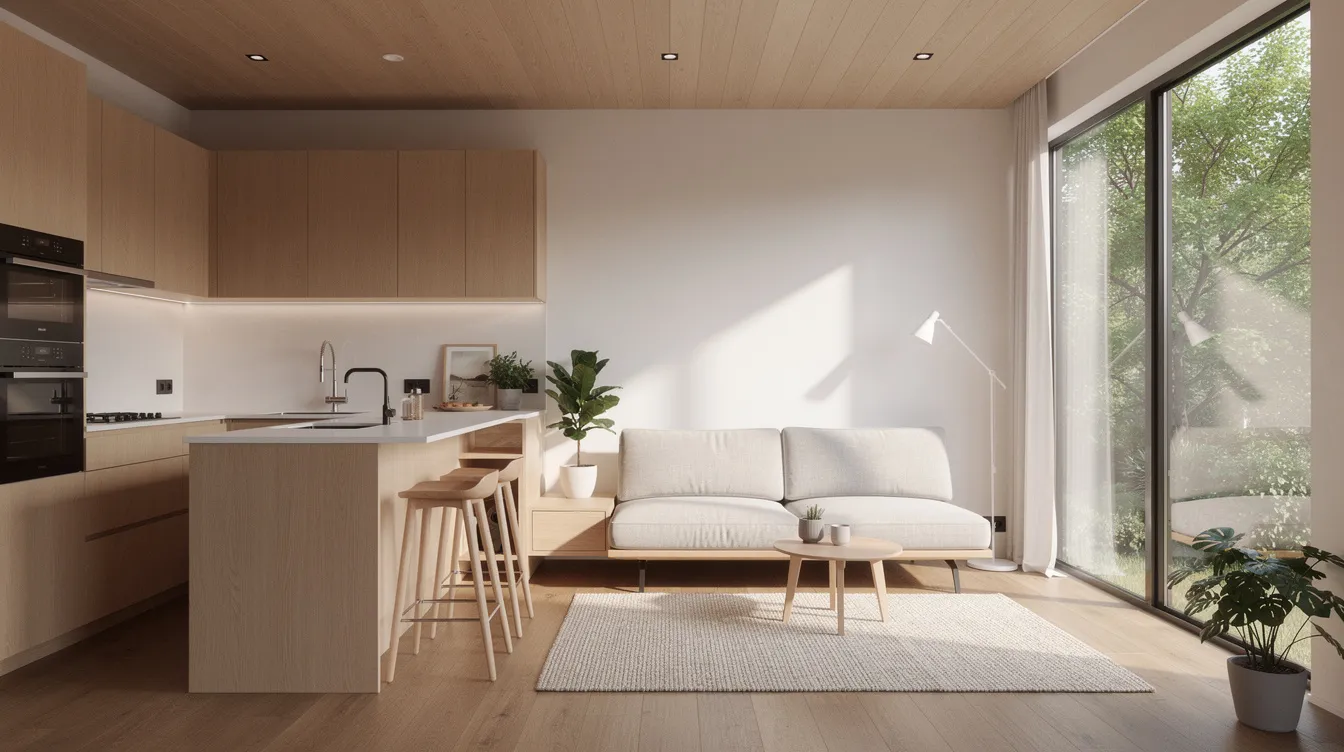
Smaller eco models around 25-30 m² focus intensely on efficiency and sustainability, much like minimalist tiny houses for sustainable living. These compact units typically include one bedroom area, a compact kitchen, and a bathroom—everything needed for comfortable living without excess.
- Bio-based insulation: Cork, wood fiber, or sheep wool provide excellent thermal performance while maintaining the mission of minimal environmental impact. FSC-certified timber frames and options for solar panels and grey-water systems support off-grid living.
- Target use: Single occupants, weekend retreats for city dwellers, garden annexes for visiting guests, or small rental units on farms and vineyards seeking additional income streams.
- 2026 prices: Often starting around €40,000-€70,000 depending on equipment level, off-grid readiness, and transport distance. A basic 27 m² model with compost toilet might cost €45,000, while a fully equipped version reaches €65,000.
- Clever design: Despite the reduced footprint, these models create a surprising sense of space through large windows, high ceilings where possible, and multipurpose furniture, echoing many principles from exploring the world of tiny houses. Built-in storage under stairs, beds, and seating means no wasted space.
Larger A-Frame & Modular Microhouses up to ~80 m²
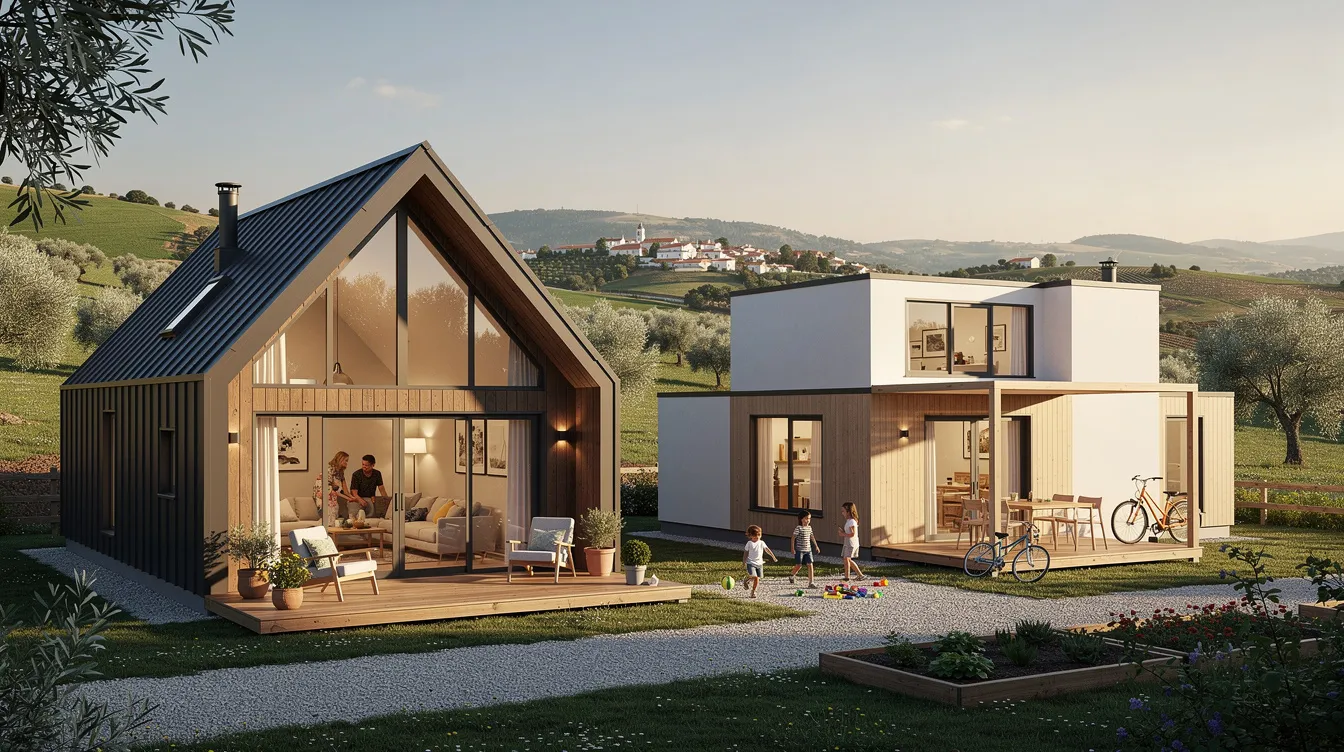
A-frame and larger modular microhouses represent the upper end of Portugal’s tiny house market. At 60-80+ m², these structures accommodate families while maintaining the benefits of factory construction: speed, quality control, and cost efficiency, similar to many great tiny homes that redefine small space living.
- Typical layout: Two ground-floor bedrooms, an open living and kitchen area with high ceilings, one bathroom, and a mezzanine for a home office or extra sleeping space. Glass walls and A-frame designs maximize natural light and create dramatic interior volumes.
- Who chooses these: Families with children needing separate bedrooms, multi-generational households, or remote workers requiring dedicated office space without compromising on family living areas.
- Still “tiny” thinking: These models blur the line between tiny and small house, but remain relevant because they’re modular, quick to install (often craned into place as pre-assembled sections), and 40-60% cheaper than equivalent masonry construction, aligning with many tiny house designs for modern living.
- 2026 prices: Starting around €90,000 for a 60 m² base model, rising to €120,000+ for fully finished units including foundations. A thriving vision for families might be an 80 m² A-frame in Serra da Lousã serving as a year-round holiday home and potential rental property.
How Much Does a Tiny House Cost in Portugal?
Most factory-built tiny houses in Portugal range from approximately €35,000 to €120,000+ in 2026, excluding land purchase.
Main cost drivers include:
Factor | Impact on Price |
|---|---|
Size (m²) | 20 m² from €35-50k, 40 m² from €70-100k, 80 m² from €100-150k |
Materials & insulation | Premium options add 20-30% |
Off-grid technology | Solar, rainwater, greywater adds ~15% |
Transport & installation | €2,000-8,000 depending on location and site access |
Customization level | Variable based on creativity and requirements |
Example configurations: |
- 25 m² basic eco model: €45,000-55,000 with compost toilet and solar readiness
- 40 m² fully equipped rooftop model: €85,000-100,000 with off-grid systems, full appliances, and quality finishings
- 70 m² modular A-frame: €110,000-130,000 with two bedrooms and foundations included
Recurring costs to plan for include IMI property tax (0.3-0.8% of assessed value on classified land if licensed), utilities ranging €50-150/month (lower for off-grid setups), and potential alojamento local licensing fees of €200-500 plus inspections.
Comparative savings: Against 2025/2026 averages of €450,000+ for a 60 m² Lisbon apartment, €300,000 in Porto, or €350,000 in Faro, tiny houses deliver 70-85% upfront cost savings—a new way to own property in Portugal.
Legal Considerations: Can You Put a Tiny House on Any Plot in Portugal?
In Portugal, the legality of placing a tiny house depends on land classification and intended use—not simply whether the unit has wheels. Understanding local regulations before purchasing is advisable to avoid costly mistakes.
Key land classifications:
Land Type | Typical Restrictions |
|---|---|
Solo urbano (urban) | Permits dwellings with relatively straightforward approvals |
Solo rústico (rural/agricultural) | Restricts permanent structures; may allow temporary, mobile, or tourism uses |
Protected zones (Natura 2000, etc.) | Generally prohibits most construction |
A tiny house used as a primary residence is treated as a dwelling under Portuguese law and usually requires municipal approval—even if the unit is mobile and lacks permanent foundations. The mobile home classification doesn’t automatically exempt you from permits. |
Licensing differs by intended use:
- Primary residence: Requires full municipal licensing, architect-stamped projects, and environmental checks. Process typically takes 6-12 months with €1,000-5,000 in fees.
- Tourism accommodation (AL or TER): More feasible on rustic land, requiring SIRP registration, fire safety compliance, and wastewater plans. Approvals in 3-6 months with €500-2,000 in fees.
- Temporary/mobile use: Placing a unit on private property for under 90 days/year may avoid full permits, but risks fines of €500-10,000 if authorities deem it permanent.
Local councils (câmaras municipais) hold significant discretion. A council in interior regions like Serra da Estrela may prove more flexible than one in the Lisbon metro area. Always check specific municipality rules before committing to purchase.
Practical checklist (in prose): First, verify land classification through the local câmara or via Portugal’s online property registry. Second, visit the local planning office to discuss your plan and fix any misunderstandings early. Third, clarify your intended use—residence, tourism, or temporary—and understand which process applies. Finally, get written confirmation of feasibility before ordering your tiny house. This support from authorities protects your investment.
How to Choose the Right Tiny House in Portugal
Selecting the right tiny house means matching your lifestyle, budget, and location to a specific Portuguese solution, just as when evaluating tiny houses for sale and whether they’re right for you. Here’s how to explore your options systematically.
Profile-based recommendations:
Profile | Recommended Size | Model Style | Key Features |
|---|---|---|---|
Full-time resident | 35-45 m² | Rooftop or modular | High insulation, full kitchen, parking for car |
Digital nomad | 25-30 m² | Mobile eco unit | Office nook, road-accessible, flexible location |
Family with children | 60-80 m² | A-frame modular | 2+ bedrooms, dedicated office, outdoor space |
Tourism investor | 25-35 m² (×2-4 units) | Cluster-ready | AL licensing support, beach or countryside location, terrace |
Key decision factors: |
- Mobility: Units on wheels offer flexibility on rustic land; modular fixed units may suit urban plots better
- Regional insulation: Northern Portugal and Serra da Estrela need higher thermal performance than sunny Algarve
- Site access: Verify that delivery trucks can reach your plot; narrow country roads can create challenges
- Proximity to community and services: Consider distance to shops, healthcare, and the ability to connect with neighbors
Energy efficiency matters long-term: Double glazing, heat pumps, and solar readiness reduce ongoing bills significantly and pair well with modernist tiny house designs that prioritize sustainability. Over a decade, these features can save tens of thousands of euros while supporting a sustainable life.
Timelines to account for: From order to delivery typically takes 3-6 months, though kit-based builds such as Home Depot tiny house kits can sometimes shorten the construction phase. Add 3-9 months for permits and site preparation depending on council efficiency and land classification. The process rewards patience and thorough preparation.
Taking the next step: Visit show units at builders like Tinyhouse Portugal, A Thomie.pt, or Casagaea. Walk through actual models to understand scale and quality. Talk to current owners if possible—they’re often curious to share their experience and thrilled to connect with others on the same path. Verify all legal aspects and get written council confirmation before signing any sale contract.
The dream of tiny living in Portugal is achievable, but it requires focusing on detail, researching your specific location, and working with reputable builders who understand Portuguese requirements, while taking inspiration from elegant tiny homes that redefine modern living. Whether you’re seeking an affordable beach retreat, a flexible countryside escape, or a sustainable family home surrounded by trees, Portugal’s tiny house market in 2026 offers real options worth exploring. The path forward starts with research—and the resources to make it happen are more accessible than ever.