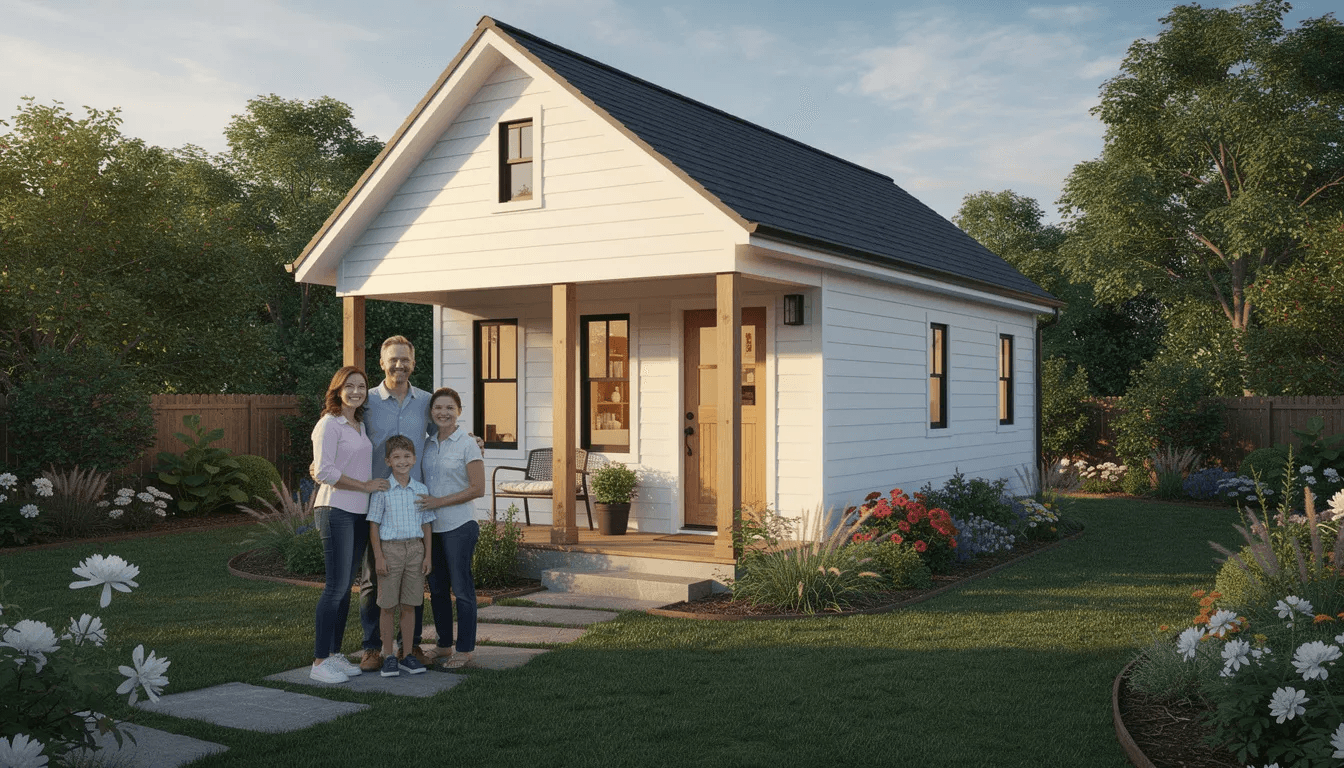
The backyard housing revolution is here, and prefab ADUs are leading the charge. These factory-built accessory dwelling units offer homeowners a faster, more predictable path to adding living space—whether you’re looking to generate rental income, house aging parents, or create a private retreat for adult children. In this guide, you’ll learn exactly what prefab ADUs cost in 2024-2025, how long they take to install, and whether this approach makes sense for your property.
- Fast Answers: Is a Prefab ADU Right for You?
- What Is a Prefab ADU?
- Types of Prefab ADUs
- Are Prefab ADUs Legal Dwelling Units?
- Prefab ADU Costs in 2024-2025
- Financing and Incentives for Prefab ADUs
- Design Options: From Micro Studios to 2-Bedroom Backyard Homes
- Customization: How Much Can You Change on a Prefab ADU?
- Timeline: How Long Does a Prefab ADU Take?
- Choosing the Right Lot and Location for a Prefab ADU
- Comfort, Efficiency, and Durability in Modern Prefab ADUs
- Prefab ADU vs. Custom ADU: Pros and Cons
- Maximizing Return: How a Prefab ADU Can Pay for Itself
- Next Steps to Start Your Prefab ADU Project
Fast Answers: Is a Prefab ADU Right for You?
Prefab ADUs are factory-manufactured secondary units that arrive at your property largely complete, ready for installation in days rather than months. They offer cost predictability, minimal on-site disruption, and a streamlined path from concept to occupancy.
Prefab ADUs work best for:
- Homeowners wanting rental income in 2024-2025 without enduring a year-long construction project
- Families housing elderly parents or adult children who need independent space nearby
- Property owners in competitive markets looking to add value quickly
- Anyone who prefers avoiding the noise, dust, and uncertainty of traditional construction
Real payoff examples: Adding a 400 sq ft prefab ADU in 2025 for long-term rental in cities like Los Angeles, San Diego, Portland, or Austin can generate $1,600-$2,500 monthly. In San Jose and other Bay Area cities, rents often climb higher.
The bottom line comparison: A prefab ADU typically completes in 3-5 months versus 7-12 months for a custom stick-built unit. You’ll experience weeks of site work instead of many months of framing, and your neighbors will thank you for the reduced noise and construction traffic.
What Is a Prefab ADU?
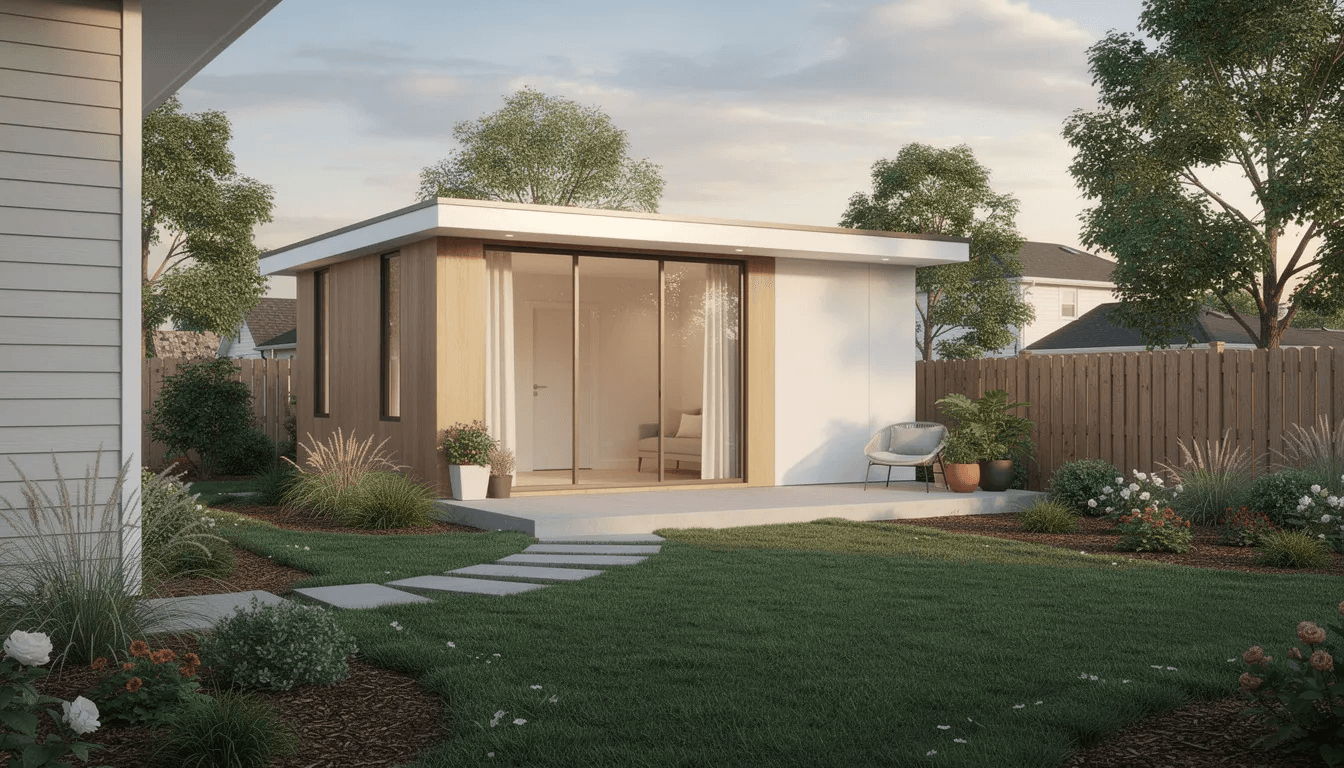
A prefab ADU is a factory-built accessory dwelling unit that’s transported to your lot and installed on a permanent foundation. Unlike traditional site-built construction where every wall is framed on your property, prefab units are 80-90% complete when they arrive—walls, windows, doors, plumbing, and electrical systems already in place.
These aren’t sheds, RVs, or temporary structures. Prefab ADUs are permanent, code-compliant houses with their own kitchen, bathroom, and sleeping area. They’re set on a real foundation, connected to utilities, and count as legitimate housing stock that can be rented legally where zoning allows.
Concrete examples:
- A 350 sq ft studio unit craned into a San Jose backyard in 2023, fully occupied within 4 months of contract signing
- A 600 sq ft 2-bedroom installed in a Seattle suburb, providing space for a homeowner’s parents while maintaining everyone’s privacy
Key characteristics of a legitimate prefab ADU:
- Permanent foundation (concrete slab or engineered piers)
- Full utility connections (water, sewer, electrical)
- Meets local building code requirements
- Inspected and permitted like any residential structure
- Financeable through home equity loans and ADU-specific programs
- Adds appraised value to your property
Types of Prefab ADUs
Most prefab ADUs fall into three categories: modular, panelized, or kit/flat-pack. Understanding the differences helps you choose the right approach for your site and budget.
Modular Prefab ADUs
Modular units are 80-90% finished at the factory and delivered as one or more complete boxes. A typical module might measure 24’ x 40’, arriving with interior finishes, fixtures, and even appliances already installed. A crane sets the unit on your prepared foundation, and local crews complete the utility connections and any remaining exterior work.
Best for: Standard suburban lots with good access, homeowners who want minimal on-site construction time.
Panelized Prefab ADUs
Panelized systems ship wall, floor, and roof panels flat to your site, where local builders assemble them. The panels arrive pre-insulated and often pre-wired, but the assembly happens on your property over several weeks.
Best for: Lots with tight access where a crane can’t reach, properties with challenging terrain, homeowners who want more on-site customization.
Kit/Flat-Pack ADUs
Kit homes arrive as structural shell kits—often using structural insulated panels or engineered panels—that homeowners or local builders finish. You’re essentially buying the bones of the building and handling interior completion yourself or with local contractors, much like broader contemporary prefab home designs that emphasize efficient factory construction with on-site finishing.
Best for: DIY-minded homeowners, those with contractor relationships, budget-conscious projects where sweat equity can reduce costs.
When to choose which:
Type | Site Access Needed | Design Flexibility | Installation Time |
|---|---|---|---|
Modular | Wide (10-12 ft clear path) | Lower | 1-2 weeks on-site |
Panelized | Moderate | Medium | 4-8 weeks on-site |
Kit/Flat-Pack | Minimal | Highest | 8-16 weeks on-site |
Are Prefab ADUs Legal Dwelling Units?
Prefab ADUs must meet the same local residential building codes as site-built homes to qualify as legal dwellings. This means compliance with IRC (International Residential Code), state codes like California’s CBC, and local zoning regulations.
Legal prefab ADUs vs. non-permitted structures:
A legal prefab ADU is fundamentally different from shipping container offices, park model RVs, or backyard sheds. Those structures typically lack proper foundations, utility connections, or the inspections required for permanent occupancy.
Inspections for prefab ADUs typically happen in two stages:
- Factory inspections: Structural, energy, and fire-safety compliance verified during manufacturing
- Local inspections: Foundation, utility hookups, and final placement verified by your city or county
State acceptance examples: California, Oregon, and Washington widely accept factory-built ADUs if they carry state approval labels. In California, look for HCD (Housing and Community Development) certification. These labels indicate the unit was built to residential code standards under state supervision.
Legal prefab ADUs can be used for:
- Long-term rental (generating rental income)
- Family housing (parents, adult children, caregivers)
- Home offices or studios
- Guest accommodations
Most importantly, legal secondary units increase the appraised value of your property—something a shed or unpermitted structure cannot do.
Prefab ADU Costs in 2024-2025
The “sticker price” for a prefab unit rarely tells the whole story. That base price covers the manufactured unit itself, but your total project cost includes site work, foundation, utility connections, and permits.
Realistic Turnkey Price Ranges (Unit + Standard Installation)
Size | Square Footage | Installed Cost Range |
|---|---|---|
Studio | 300-400 sq ft | $170,000-$260,000 |
1-Bedroom | 400-500 sq ft | $190,000-$290,000 |
2-Bedroom | 600-800 sq ft | $240,000-$360,000 |
These ranges reflect regional variation. A 450 sq ft unit in Phoenix will cost less than the same unit in the Bay Area due to differences in labor rates, permitting fees, and site work complexity. |
What Affects Final Price
- Location: Bay Area projects run 20-40% higher than Sacramento or Phoenix
- Site access: Difficult access requiring smaller equipment or hand-carrying materials adds cost
- Foundation type: Engineered piers are often cheaper than full slabs but depend on soil conditions
- Finish level: Basic, mid-range, and premium packages can shift costs by $20,000-$50,000
- Utility distance: Long trenching runs to connect water, sewer, and electrical increase site work costs
Major Cost Buckets
- Prefab unit (base price from manufacturer)
- Foundation (concrete slab or engineered pier system)
- Crane and transportation
- Utility trenching and tie-ins
- Building permits and impact fees
- Site prep (grading, tree removal, driveway repair)
- Landscaping and exterior improvements
Pro tip: Insist on an itemized quote dated to the current year (2024 or 2025) that clearly separates factory costs from on-site work. This transparency helps you compare prefab companies accurately and avoid surprises.
Financing and Incentives for Prefab ADUs
Funding a prefab ADU project is increasingly straightforward as lenders become familiar with these structures. Common financing tools include:
- Home equity loans: Fixed-rate loans using your existing home equity
- HELOCs: Flexible credit lines drawn against equity as needed during construction
- Cash-out refinance: Replacing your mortgage with a larger loan and taking the difference as cash
- Renovation loans: FHA 203(k) or conventional renovation loans that roll construction costs into your mortgage
- Specialized ADU loan programs: Offered by some credit unions and community banks
Civic Programs Worth Researching
Several cities have launched programs to encourage ADU construction as part of their affordable housing strategies:
- San Jose: ADU loan program announced May 12, 2021, offering financing assistance for qualifying homeowners
- Los Angeles: Various ADU assistance programs through the LA ADU Accelerator
- Portland: ADU incentive programs and waived system development charges in some cases
Many lenders now treat prefab ADUs like traditional home additions if they’re on a permanent foundation and properly permitted. This means standard underwriting and competitive interest rates.
What lenders and cities look for:
- Stamped architectural and engineering plans
- Fixed-price construction contract
- Proof of prefab factory certifications
- Appraiser’s ADU rent and value assumptions
- Clear property title and adequate equity
Some utilities and states offer energy-efficiency rebates or low-interest financing when the prefab ADU meets specific standards—for example, all-electric units with heat pump systems and solar-ready roof designs. These incentives support sustainable housing goals while reducing your project costs, and they pair well with thoughtful tiny house plans that fit your life when you’re aiming for long-term flexibility and efficiency in a compact dwelling.
Design Options: From Micro Studios to 2-Bedroom Backyard Homes
Today’s prefab ADUs span multiple architectural styles and sizes. You’ll find modern flat-roof designs, traditional gable cottages, and adu models specifically designed to match existing homes.
Size Categories
Category | Square Footage | Typical Use |
|---|---|---|
Micro units | 150-250 sq ft | Home office, guest suite |
Compact studios | 250-350 sq ft | Single occupant, short-term rental |
1-Bedroom | 350-550 sq ft | Long-term rental, in-law suite |
2-Bedroom | 600-1,000 sq ft | Family housing, premium rental |
For inspiration within these size ranges, many homeowners look to top tiny house designs for modern living that show how much function and style can fit into a compact footprint.
Common Design Series
Most prefab companies offer floor plans organized into families or series, similar to how broader accessory dwelling unit guides categorize ADU types and use cases:
- Mini units: Designed for tight urban lots with minimal setback clearance
- Suite-style units: Standard suburban backyard configurations with covered entries
- Villa-type ADUs: Larger units for estate parcels with room for 2 bedrooms and full-size amenities
Design Elements to Consider
- Roof type: Flat, shed, or gable (affects height limits and aesthetics)
- Window packages: Standard, upgraded, or custom configurations
- Entry features: Covered porches, decks, or simple stoops
- Storage solutions: Built-in closets, exterior sheds, or creative interior storage
- Accessibility features: Single-level layouts, wide doorways, grab bars for aging-in-place
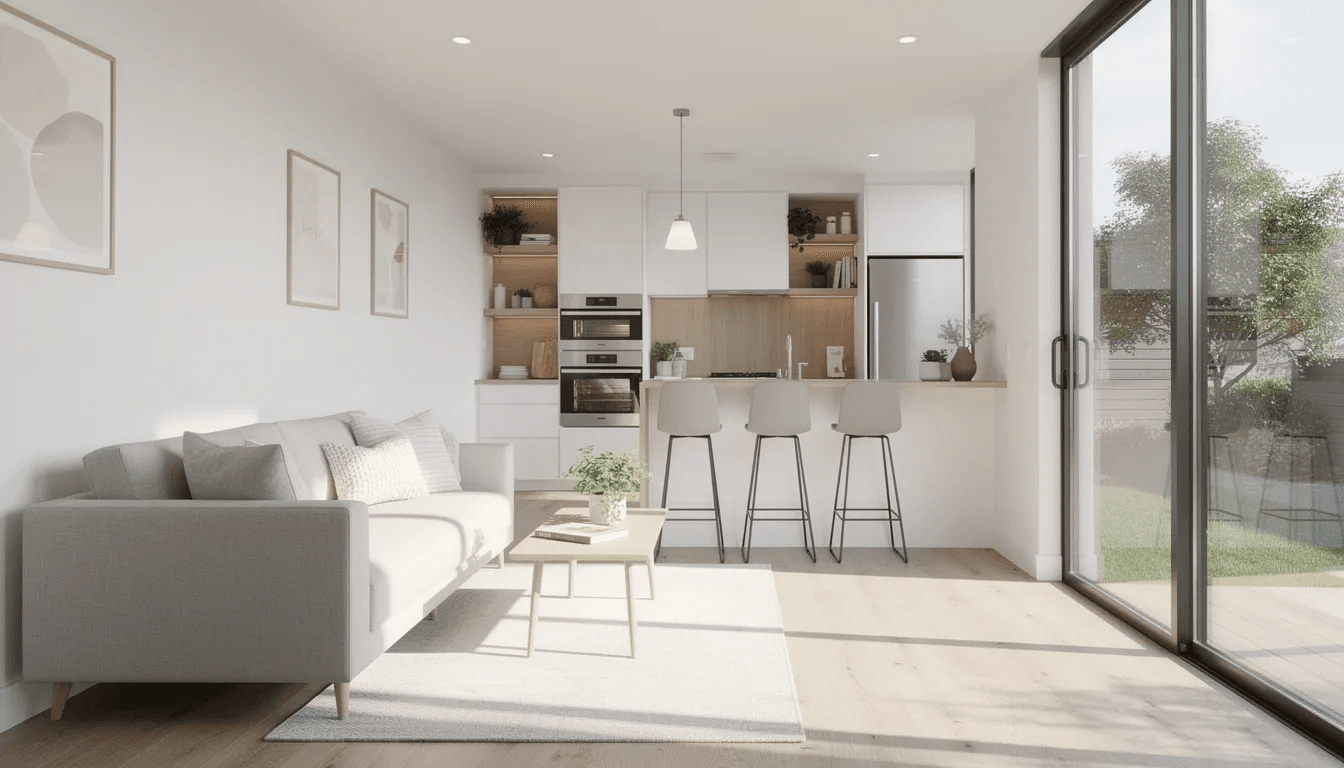
Example layout: A 450 sq ft 1-bedroom unit with open kitchen and living area, compact bathroom with stacked washer/dryer closet, bedroom with walk-in closet, and covered entry deck. This configuration works for both rental tenants and family members who need more space but want to live large in a compact footprint, especially when you borrow strategies from tiny house floor plans that maximize functionality.
Customization: How Much Can You Change on a Prefab ADU?
Most manufacturers offer pre-engineered floor plans with a menu of options rather than fully custom adu designs. This approach keeps costs predictable and maintains the efficiency advantages of factory construction.
Commonly Customizable Items
- Exterior siding and color: Multiple material and finish options
- Window and door configurations: Within structural limits
- Interior finishes: Flooring, cabinets, countertops, fixtures
- Optional additions: Lofts, decks, extended porches
- Appliance packages: Basic to premium selections
Finish Tiers
Most prefab companies offer upgrade tiers that affect both quality and cost:
Tier | Typical Features | Cost Impact |
|---|---|---|
Basic | Builder-grade finishes, laminate surfaces | Base price |
Mid-range | Upgraded flooring, better fixtures | +$10,000-$20,000 |
Premium | Custom cabinets, stone counters, high-end appliances | +$25,000-$50,000 |
Panelized and kit-based prefab ADUs typically allow more interior customization because finishing is done by local crews or the homeowner. You’re essentially buying the shell and walls, then completing the interior to your specifications, which opens the door to applying ideas from inspiring tiny house interiors that maximize every square foot. |
Important limitation: Significant structural changes—moving load-bearing walls, altering roof spans, or changing the building footprint—often require re-engineering. These modifications can erase the time and cost advantages that make prefab attractive in the first place.
Timeline: How Long Does a Prefab ADU Take?
A typical prefab ADU project timeline runs 3-5 months from contract to occupancy. Compare that to 7-12 months for fully custom site-built ADUs, depending on local permitting backlogs.
Project Timeline Phases
Phase | Duration | Notes |
|---|---|---|
Design and contract | 3-8 weeks | Selecting unit, customizing options, finalizing specs |
Permitting process | 2-6 months | Highly city-dependent; California cities often 2-4 months |
Factory fabrication | 4-10 weeks | Begins after permits approved |
Site work and foundation | 2-4 weeks | Can overlap with factory production |
Delivery and installation | 3-10 days | Crane set and utility connections |
Example Schedule
- January 2024: Contract signed, design finalized
- February 2024: Building permits submitted
- April 2024: Permits approved, factory fabrication begins
- May 2024: Site prep and foundation work (while unit is built)
- June 2024: Unit delivered and installed
- July 2024: Final inspections, occupancy
The key insight: On-site disruption in your backyard is usually measured in weeks, not the many months of framing and noisy construction that come with traditional builds. Your neighbors will notice the crane for a day, not a revolving cast of trades for six months.
Schedule risks: Permitting backlog and utility coordination are usually the biggest schedule risks, not factory build time. Cities like Los Angeles have improved ADU permitting dramatically, but timelines still vary.
Choosing the Right Lot and Location for a Prefab ADU
Many urban and suburban lots can host prefab ADUs, but three factors determine feasibility: setbacks, access, and utility locations.
Key Site Factors
- Access path: At least 10-12 feet wide and free of low wires or trees for modular units
- Slope and grading: Steep sites add foundation costs and may require retaining walls
- Setback compliance: Most cities require 4-5 foot side setbacks and rear setbacks varying from 3-20 feet
- Height limits: Many West Coast cities cap ADU height at 16-20 feet
Solutions for Challenging Sites
For narrow or irregular lots where a crane can’t reach, panelized or kit-style ADUs offer an alternative. Components can be carried in piece by piece and assembled on-site—more labor-intensive but workable on constrained properties, similar to many prefab yurt options designed for flexible sites.
Utility Considerations
Proximity to existing sewer, water, and electrical service substantially affects utility connections costs. A unit placed near the main house’s existing connections might need only 20-30 feet of trenching. A unit at the far corner of a large property could require 100+ feet of trenches and significantly higher costs.
Zoning Changes That Help
Since approximately 2020, California statewide ADU law changes have made more lots eligible by reducing setback requirements and eliminating parking mandates near transit. Oregon’s middle-housing reforms and similar changes in Washington have expanded options. Even cities in Texas, Colorado, and other states are loosening local regulations to allow backyard homes where they were previously prohibited.
If you’re on a single family home lot in California, there’s a good chance you can now construct an ADU that wasn’t permitted five years ago.
Comfort, Efficiency, and Durability in Modern Prefab ADUs
Current prefab ADUs often outperform older houses for comfort and energy use. Factory-controlled construction allows for tighter building envelopes and more consistent quality than many site-built alternatives.
High-Performance Features
- Structural insulated panels (SIPs) or advanced-framed walls with minimal thermal bridging
- High-R insulation: R-21 to R-38 walls, R-38 to R-60 roofs depending on climate zone
- Efficient windows: Double or triple-pane, low-E coatings, proper orientation for natural light
- Tight building envelope: Air sealing tested and verified before leaving factory
Standard Mechanical Systems
- Ductless mini-split heat pumps: Efficient heating and cooling without ductwork
- Heat-pump water heaters: 2-3x more efficient than standard electric water heaters
- Balanced ventilation: HRVs or ERVs in colder climates for fresh air without energy loss
Regional Hazard Resistance
Prefab ADUs can be designed to withstand regional hazards, just as many innovative tiny homes for small-space living demonstrate how compact structures can still be robust and resilient:
- Seismic detailing: Engineered connections and hold-downs for West Coast earthquakes
- Wind resistance: Impact-resistant assemblies rated for hurricane and tornado zones
- Fire resistance: Class A roof assemblies, fire-resistant siding, and ember-resistant vents for wildfire-prone areas in California and Colorado
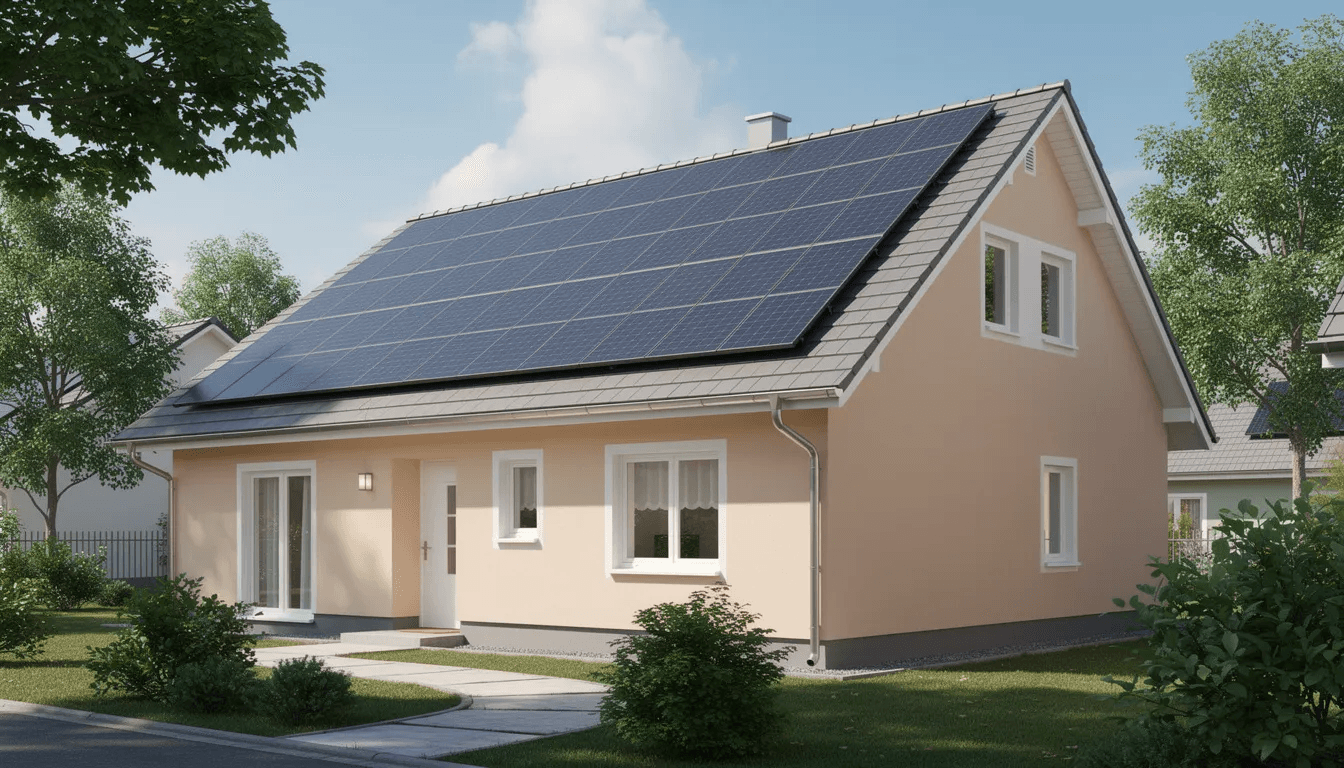
Example: A SIP-based modular ADU with R-30 walls, triple-pane windows, and a heat pump system can achieve near net-zero energy performance. Add a 4 kW solar array on the roof, and the unit may produce as much energy as it consumes annually—significant energy savings over the life of the building.
Prefab ADU vs. Custom ADU: Pros and Cons
Both approaches can produce beautiful, long-lasting ADUs. The right choice depends on your priorities, timeline, and site conditions, much like deciding between standard models and top custom tiny homes for personalized small-space living.
Prefab Advantages
- More predictable pricing with fewer change orders
- Shorter on-site construction time (weeks vs. months)
- Higher factory-controlled quality and fewer weather delays
- Less disruption to your daily life and neighborhood
- Often faster permitting with pre-approved plans
Prefab Trade-offs
- Less flexibility in floor plan and exterior form
- Site constraints for crane access may require expensive solutions
- At the same finish level in high-cost metros, total cost can approach custom builds
- Standard materials may not match your existing house aesthetic perfectly
Scenario Comparison
450 sq ft ADU in Sacramento, 2024:
Factor | Custom ADU | Prefab ADU |
|---|---|---|
Design control | High—any layout possible | Medium—menu of options |
Total cost | $250,000-$320,000 | $200,000-$280,000 |
Timeline | 8-12 months | 4-6 months |
On-site construction | 5-7 months of work | 2-3 weeks of work |
When prefab is often the better choice: Tight timelines, limited appetite for managing multiple trades, standard backyard configurations, and homeowners who prioritize predictability over maximum customization. |
Maximizing Return: How a Prefab ADU Can Pay for Itself
A prefab ADU generates value through multiple channels: rental income, property appreciation, and lifestyle flexibility.
Rental Income Potential (2024)
Market | 400-500 sq ft 1-Bed Monthly Rent |
|---|---|
Sacramento | $1,600-$2,200 |
Denver | $1,700-$2,300 |
Seattle | $1,800-$2,500 |
Portland | $1,500-$2,100 |
Los Angeles | $2,000-$2,800 |
Simple Payback Math
If your total adu project cost is $240,000 and net rent (after vacancy, maintenance, and utilities) is $1,800/month, gross payback is approximately 11-12 years. This excludes property appreciation, tax benefits from depreciation, and the option value of the space.
Property Value Impact
Multiple studies and brokerage data from Pacific states show primary homes with legal ADUs selling for noticeably higher prices than similar homes without ADUs. The premium varies by market but often exceeds $100,000 in high-demand areas—sometimes approaching the ADU construction cost itself.
Non-Financial Returns
Beyond save money calculations and income generation:
- Multigenerational flexibility: Keep aging parents nearby while maintaining everyone’s privacy
- Caregiving space: House a live-in caregiver without sacrificing your main house bedrooms
- Adult children transition: Provide affordable housing for grown kids building savings
- Future optionality: Use as guest space now, convert to rental later as needs change
A prefab ADU isn’t just an investment—it’s a lifestyle asset that adapts as your family’s needs evolve.
Next Steps to Start Your Prefab ADU Project
The window for ADU-friendly conditions remains open through 2024-2025. Low housing inventory, favorable zoning laws, and strong rental demand make this an opportune time to add value to your property.
Your Action Checklist
- Confirm local ADU zoning rules and utility capacity
- Visit your city’s planning department website or call for current requirements
- Verify your lot meets setback, height, and size limits
- Check if your electrical panel can support additional load
- Measure your lot and sketch a rough placement
- Note access paths, trees, slopes, and utility connection points
- Consider where the unit should face for privacy, light, and entry
- Request itemized quotes from 2-3 prefab ADU providers
- Ensure quotes include site work, foundation, and installation—not just the unit
- Compare apples to apples on finish levels and included features
- Ask about project manager assignment and communication during the entire process
- Consult a lender or financial planner about funding options
- Get pre-approval or pre-qualification before signing contracts
- Understand how the ADU affects your property taxes and insurance
- Create a basic timeline from permitting to move-in
- Account for permit processing times in your specific city
- Plan site prep to overlap with factory fabrication when possible
Research Tips
Gather recent examples from your area—neighboring ADUs permitted since 2021—to understand realistic budgets and timelines in your country and region. Local Facebook groups, Nextdoor, and city permit databases can reveal what’s actually being built nearby.
Before signing with any company, verify licensing and insurance. Ask for references from 2022-2024 projects and, if possible, visit a completed unit to assess quality firsthand.
Your backyard could be generating rental income or housing family within months, not years. The prefab approach puts that future within reach.