

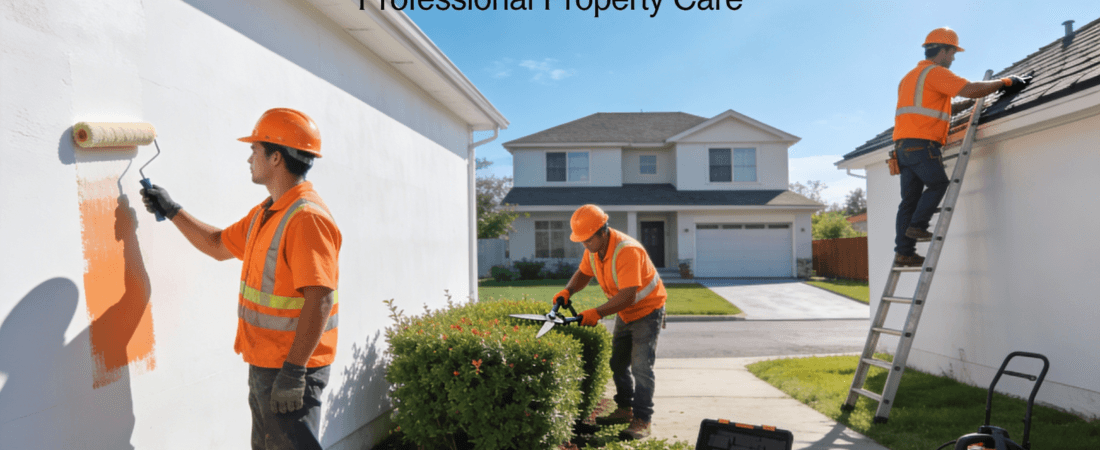
Property maintenance is a crucial aspect of managing any residential or commercial property. It encompasses a wide range of tasks aimed at preserving the functionality, safety, and aesthetic appeal of a property. This guide is intended for property managers, landlords, and real estate investors seeking to optimize their property maintenance strategies. This comprehensive guide will explore the scope and goals of property maintenance, its benefits for tenants and property owners, the types of services involved, common maintenance tasks and issues, the roles of maintenance workers, management strategies, costs, and best practices to ensure a well-maintained property.
- Why Property Maintenance Is Essential
- What Is Property Maintenance?
- Property Maintenance Services
- Maintenance Tasks
- Maintenance Issues
- Types Of Maintenance
- Property Maintenance Workers
- Maintenance Team And Contractors
- Maintenance Requests
- Maintenance Management
- Maintenance Costs
- International Property Maintenance Code (IPMC)
- Property Management
- Metrics And Performance
- Best Practices For Maintenance Management
- Next Steps And Resources
Why Property Maintenance Is Essential
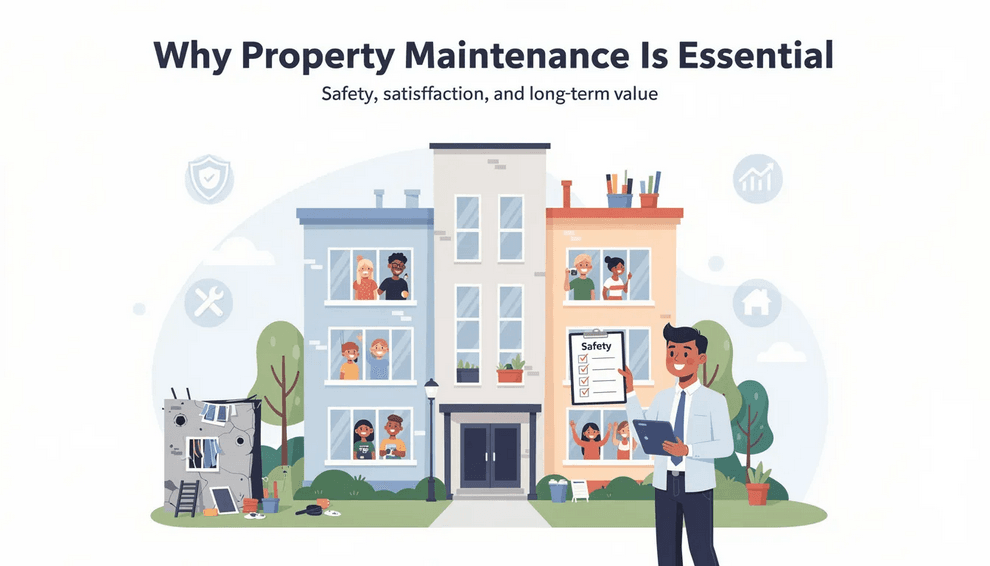
Proper property maintenance keeps tenants happy and protects your investment long-term. The main goal of property maintenance is primarily about occupant safety and satisfaction. Property maintenance is a huge responsibility, and it’s essential to do it right.
What Is Property Maintenance?
Property maintenance is the application of cleaning, safety checks, and repairs throughout residential buildings. Property maintenance includes a number of proactive and reactive maintenance tasks. Property maintenance refers to the ongoing process of inspecting, repairing, and servicing a property to keep it in optimal condition. This includes both proactive actions, such as routine inspections and preventive repairs, and reactive measures, such as fixing issues as they arise.
Tenant-Focused Benefits
Effective property maintenance ensures that tenants enjoy a safe, comfortable, and functional living or working environment. Prompt repairs and regular upkeep contribute to tenant satisfaction, reduce complaints, and foster long-term tenant retention.
Owner-Focused Benefits
For property owners, maintenance protects their investment by prolonging asset life, preventing costly emergency repairs, and enhancing property value. Well-maintained properties also attract quality tenants and can increase rental income.
Property Maintenance Services
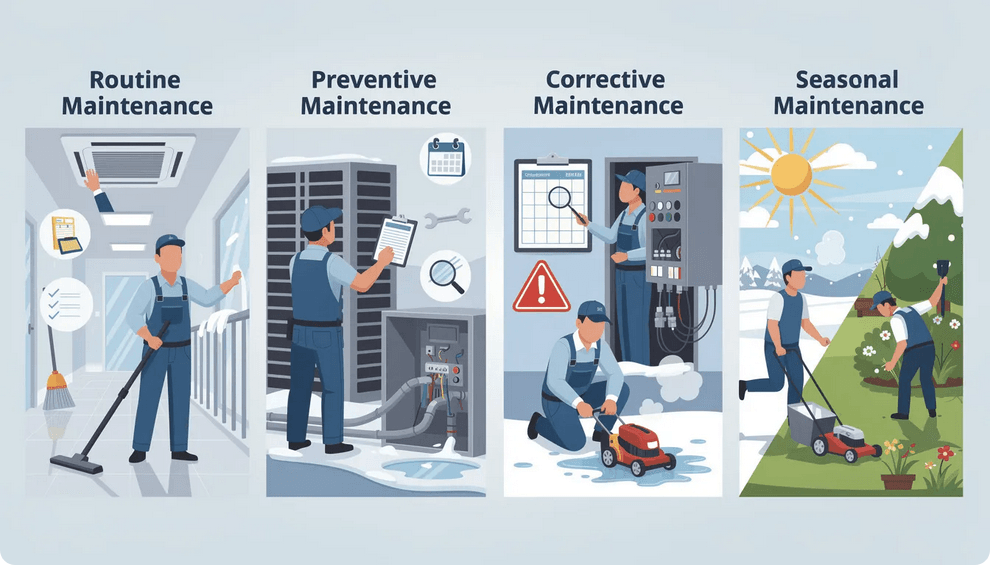
Property maintenance services can be divided into several categories, often handled either in-house by maintenance technicians or outsourced to specialized contractors.
- Routine Maintenance: Regular tasks such as cleaning common areas, replacing HVAC filters, and inspecting safety systems.
- Preventive Maintenance: Scheduled inspections and servicing designed to detect and address potential issues before they result in equipment failure.
- Corrective Maintenance: Repairs carried out in response to identified problems or emergency situations.
- Seasonal Maintenance: Tasks that vary depending on the season, such as snow removal in winter or landscaping in spring and summer.
In-House vs Outsourced Services
Some property management companies maintain internal teams of maintenance technicians to handle routine and minor repairs, while outsourcing specialized tasks—such as HVAC repairs, plumbing, or roofing—to outside contractors. Bundling services can offer cost savings and streamlined communication.
Seasonal Property Maintenance Services
Fall-Specific Tasks
- Inspect and roof gutters to prevent water intrusion.
- Prepare HVAC systems for winter use.
- Perform landscaping cleanup and leaf removal.
- Check fire alarms and carbon monoxide detectors.
Winter-Specific Tasks
- Conduct snow removal in parking lots and walkways to ensure tenant safety.
- Monitor heating systems and air conditioning units.
- Perform safety checks to prevent hazards during winter storms.
Spring and Summer Tasks
- Inspect plumbing for water damage or leaks.
- Service HVAC systems for cooling efficiency.
- Maintain landscaping and common areas.
- Conduct proactive inspections to identify any winter-related damages.
Maintenance Tasks
Property maintenance involves a broad range of tasks categorized as interior, exterior, and safety and compliance related.
Interior Maintenance Tasks
- Plumbing repairs and inspections.
- HVAC system servicing and filter replacements.
- Electrical system checks.
- Smoke and carbon monoxide detector testing.
- Cleaning and upkeep of common areas such as hallways and mail rooms.
Exterior Maintenance Tasks
- Roof and gutter cleaning.
- Landscaping and gardening.
- Snow removal.
- Parking lot maintenance.
- Graffiti removal.
Safety and Compliance Tasks
- Regular testing of fire alarms and safety systems.
- Inspections to comply with the International Property Maintenance Code (IPMC).
- Pest control and rodent prevention.
- Monitoring for water intrusion and structural integrity.
Daily Maintenance Checklist
- [ ] Check and respond to maintenance requests.
- [ ] Inspect common areas for cleanliness and damage.
- [ ] Test smoke and carbon monoxide detectors.
- [ ] Perform minor repairs as needed.
- [ ] Communicate with tenants regarding scheduled maintenance.
Maintenance Issues
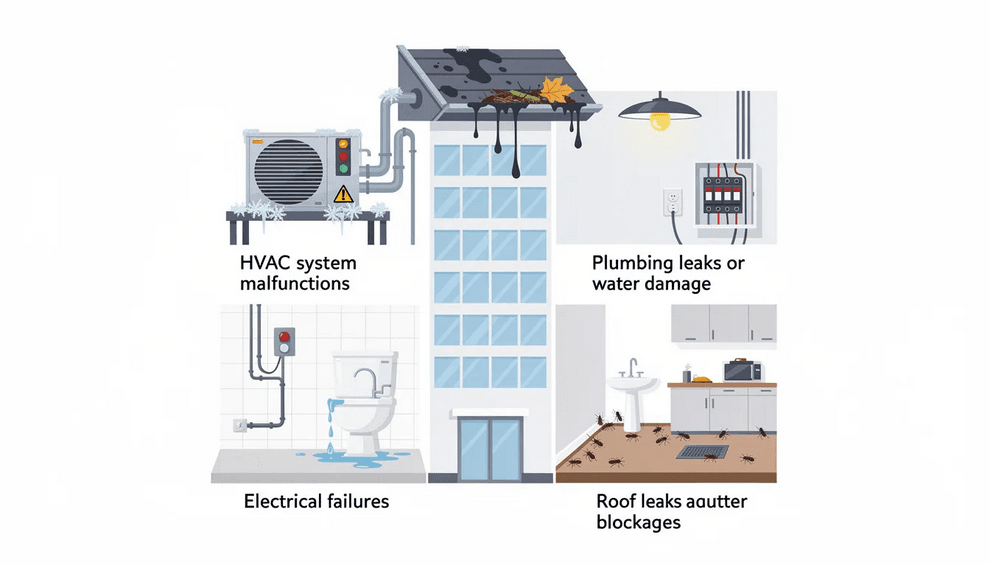
Common maintenance issues frequently encountered include:
- HVAC system malfunctions.
- Plumbing leaks or water damage.
- Electrical failures.
- Pest infestations.
- Roof leaks and gutter blockages.
Example Scenarios and Triage Steps
For instance, if a tenant reports a leaking ceiling, the maintenance team should quickly assess the severity, implement a temporary fix to prevent further damage, and schedule a permanent repair with appropriate contractors.
Types Of Maintenance
Understanding the main types of maintenance helps in planning and resource allocation.
Reactive Maintenance
Performed in response to equipment failure or tenant-reported issues. It is often urgent and may involve emergency calls to address problems quickly.
Planned Maintenance
Scheduled maintenance activities designed to prevent breakdowns, such as routine checks and servicing.
Condition-Based Maintenance
Maintenance triggered by monitoring equipment indicators that suggest impending failure, allowing timely intervention.
Risk-Based Maintenance
Prioritization of maintenance resources towards assets whose failure would have the greatest impact on tenant satisfaction and property operation.
Corrective Maintenance
This involves the procedures to address issues after detection, including escalation steps for urgent repairs to minimize downtime.
Preventive Maintenance
Scheduled activities aimed at reducing the risk of equipment failure, with checklists for critical systems such as HVAC units, plumbing, and safety detectors.
Preventative Maintenance Benefits
Regular inspections and servicing extend equipment life, reduce costly emergency repairs, and improve tenant satisfaction.
Condition-Based and Risk-Based Maintenance
These approaches use data and risk assessments to optimize maintenance schedules and resource allocation, focusing on early detection and prioritization.
Property Maintenance Workers
Typical roles include:
- Property Manager: Oversees maintenance operations and coordinates between tenants, maintenance teams, and property owners.
- Maintenance Technicians: Handle routine repairs, inspections, and minor emergencies.
- Janitors: Responsible for cleaning and upkeep of common areas.
- Outside Contractors: Specialists for complex or licensed work such as HVAC repairs, plumbing, or roofing.
Certifications and Training
Maintenance workers often require certifications relevant to their trade, such as HVAC technician licenses or safety training in compliance with local regulations.
Job Descriptions for Key Roles
Clear job descriptions help define responsibilities, expectations, and required skills for each maintenance role.
Maintenance Team And Contractors
Internal Team Structure Options
Depending on property size, teams may vary from a single technician to multiple specialists.
Contractor Selection Criteria
Choose contractors based on licensing, reputation, response time, and cost-effectiveness.
Hand-Off Rules Between Team and Contractors
Establish clear guidelines for when issues are handled internally versus outsourced, such as cost thresholds or task complexity.
Maintenance Requests
Preferred Submission Channels
Tenants should be able to submit maintenance requests easily via online portals, phone, or email.
Triage and Priority Rules
Requests are prioritized based on urgency, with emergency calls addressed immediately.
SLA Targets for Common Request Types
Set service level agreements to ensure timely responses and repairs.
Communication Templates for Residents
Use standardized messages to keep tenants informed throughout the maintenance process, enhancing customer satisfaction.
Maintenance Management
Objectives
Efficiently manage maintenance tasks to minimize costs, ensure tenant satisfaction, and preserve property value.
Standard Operating Procedures (SOPs)
Adopt SOPs for common workflows to standardize processes and reduce errors.
Integrating CMMS for Tracking
Computerized Maintenance Management Systems (CMMS) streamline work order tracking, scheduling, and reporting.
Audit Cadence for Processes
Regular audits ensure compliance with maintenance standards and identify areas for improvement.
Maintenance Management Tools
Key CMMS features include mobile access, automated notifications, vendor management, and performance analytics.
Mobile-First Tool Capabilities
Enable technicians to access and update work orders on-site via smartphones or tablets.
Pilot Rollout Steps for New Software
Start with a small team or property to test the system before full implementation.
Maintenance Costs
Recurring vs Capital Costs
Distinguish between routine maintenance expenses and major capital investments like roof replacement.
Calculating ROI for Preventive Work
Evaluate cost savings from reduced emergency repairs and prolonged asset life.
Budgeting Templates for Owners
Provide clear templates to help property owners plan and monitor maintenance expenditures.
International Property Maintenance Code (IPMC)
Scope and Relevance
The IPMC sets minimum maintenance standards for existing buildings to ensure safety and habitability.
Key Compliance Areas
Include structural integrity, plumbing, electrical systems, mechanical systems, and fire safety equipment.
Steps to Document Compliance
Maintain records of inspections, repairs, and safety tests to demonstrate adherence.
Property Management
How Maintenance Fits Into Property Management
Maintenance is a core function of successful property management, directly impacting tenant satisfaction and property value.
Benefits of Outsourcing Maintenance
Outsourcing can save time, reduce costs, and provide access to specialized expertise.
Questions to Ask Prospective Managers
Inquire about their maintenance processes, vendor networks, and communication strategies.
Metrics And Performance
Key Performance Indicators (KPIs)
- Utilization Rate: Percentage of time maintenance technicians spend on productive tasks.
- Billable Rate: Portion of work hours that generate revenue.
- Response Time: Speed of addressing maintenance requests.
Monthly Reporting Format
Regular reports help track performance, identify trends, and guide decision-making.
Best Practices For Maintenance Management
- Prioritize preventive maintenance to reduce costly emergency repairs.
- Standardize workflows and SOPs to improve efficiency.
- Train staff on safety protocols and diagnostic skills.
- Maintain a preferred vendor list for reliable contractor access.
Next Steps And Resources
- Provide downloadable templates for maintenance checklists.
- Suggest further reading on IPMC and maintenance strategies.
- Propose an implementation roadmap for property maintenance programs.
By following this comprehensive approach to property maintenance, property managers and owners can ensure well-maintained properties that keep tenants happy, reduce costs, and protect their real estate investments over the long term.