
Looking for an RV rental with bunk beds for your 2025–2026 family road trip or group adventure? This guide is for families, groups, and first-time RV renters seeking the best options for RV rentals with bunk beds. We’ll cover the main types of RVs, essential features to look for, and planning tips for a successful trip. Bunk beds in RVs provide extra sleeping space for families or groups, maximizing sleeping capacity and comfort, making them a top choice for group travel. Whether you’re planning a cross-country journey, a weekend at a state park, or a multi-family vacation, this guide will help you find the perfect RV rental with bunk beds to suit your needs.
You can find a wide variety of travel trailers and fifth wheels with dedicated bunk rooms on Go RV Rentals, and RVshare features custom bunkhouse trailers and specialized family Sprinter vans. The RVshare platform connects users to a large selection of trusted RV rentals across the country.
Comfortable Family RVs with Bunk Beds
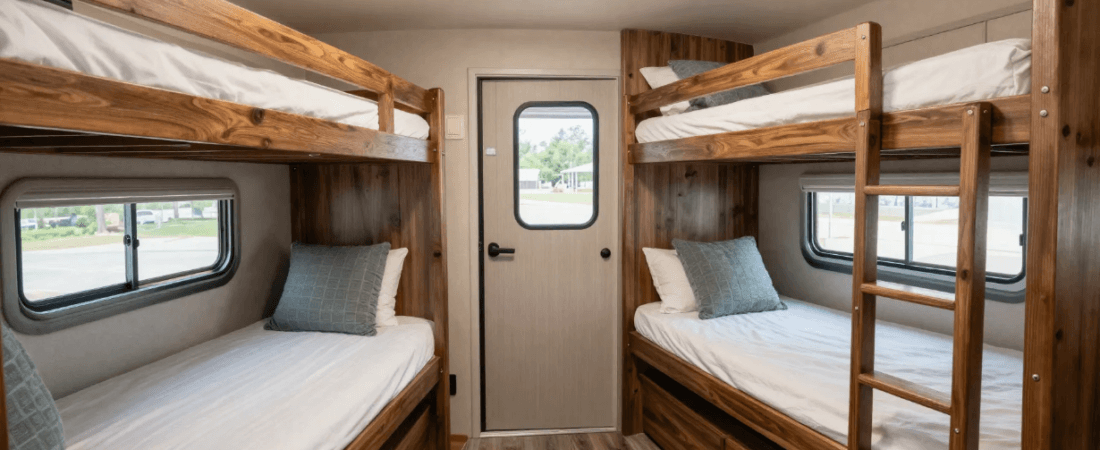
Modern RVs equipped with bunk beds are designed to sleep 5–8 people comfortably, making them ideal for parents with kids, multi-generation trips, or friends sharing one rental. The layouts vary, but most follow a practical formula that maximizes sleeping capacity without sacrificing living space. Bunkhouse models provide dedicated sleeping quarters, eliminating the need to convert living spaces into beds nightly.
Typical Sleeping Arrangements
- A queen size bed in the master bedroom area for parents or the primary adults
- 2–4 fixed bunks positioned in a dedicated hallway or rear section for children
- A convertible dinette or jackknife sofa that folds into an additional bed for overflow guests
- A cab over bed in Class C motorhomes, adding 1–2 more sleeping spots above the driver’s area
Bunk beds allow everyone to have their own designated space without converting beds every night. Unlike sofa sleepers or dinette conversions, fixed bunks stay ready for bedtime with minimal effort.
Kid-Friendly Features
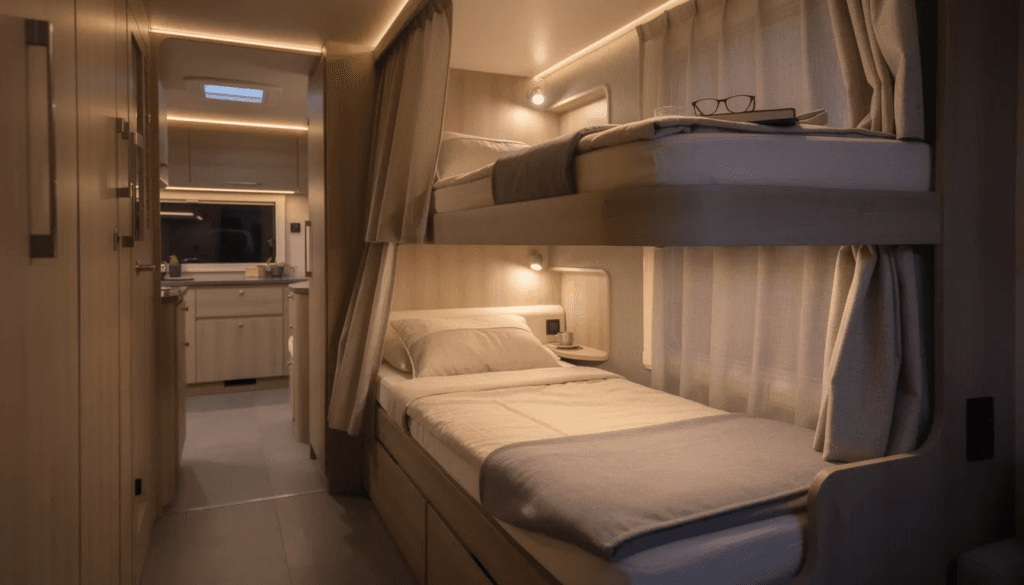
Many family-oriented RVs also include child-friendly features like privacy curtains on each bunk, USB charging ports within arm’s reach, and small night lights so kids can read or find their way to the bathroom without waking everyone else.
The Great Indoors: Family-Friendly Living Space
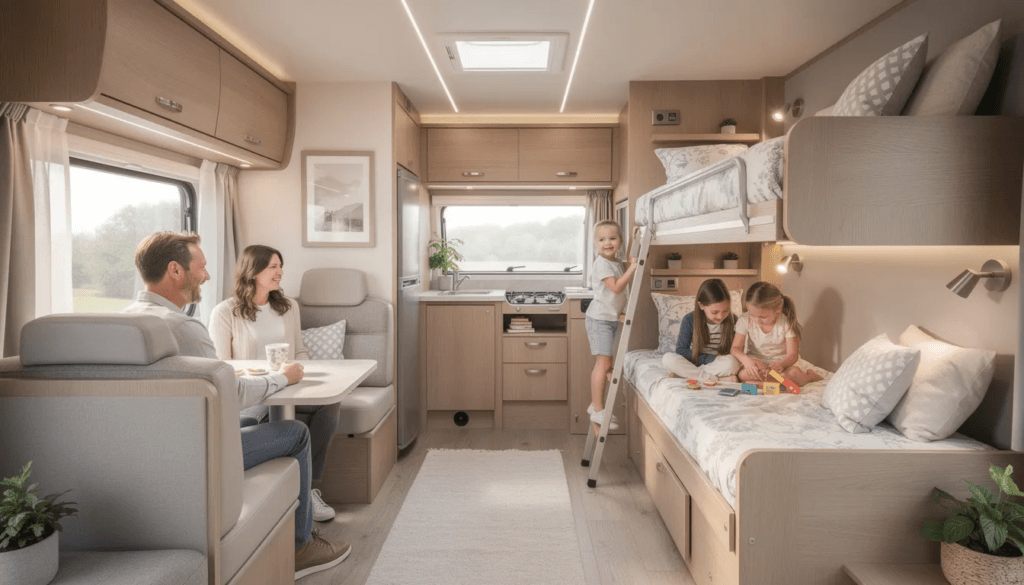
Step inside a bunk-bed RV and you’ll discover a “great indoors” feel that rivals many hotel rooms. These units are climate-controlled, self-contained, and comfortable in any weather—from scorching summer days at desert campgrounds to chilly autumn nights in the mountains.
The typical interior offers walk-through access from front to back, so kids can move easily between bunks, kitchen, and bathroom without going outside. This layout proves especially valuable during rainstorms or when parked at a rest stop overnight.
Entertainment and Living Space
Most bunk-bed RVs include a spacious living area with a dinette table, sofa or lounge seating, and overhead storage compartments that keep gear organized. Entertainment options like a flat-screen TV, Bluetooth stereo, or DVD player help pass the time during downpours or quiet evenings at camp.
Many units feature a slide out section that expands the living space when parked. These extensions can add 2–3 feet of extra room, giving families more space to play board games, spread out homework, or simply relax after a long driving day. Some RVs have multiple slides—one in the living area and another near the bunks.
Year-round usability sets these RVs apart from tent camping. Insulated walls, a propane furnace, and air conditioning mean you can plan summer national park trips and cooler-season getaways with equal confidence. No more shivering in sleeping bags or sweating through humid nights.
Next, let’s look at specific RV types that maximize sleeping space for families.
Class C Family Sleeper RVs with Bunk Beds
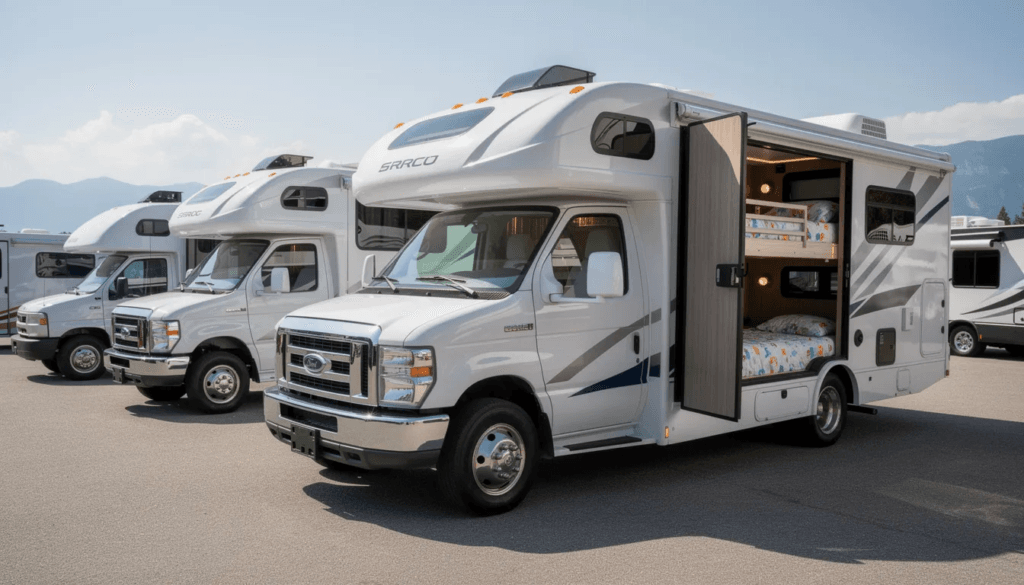
Class C bunk-bed RVs, typically ranging from 24–32 feet in length, represent the most popular choice for families that want easy driving combined with generous sleeping capacity. These motorhomes sit on a truck or van chassis with a distinctive cab over bed section that adds extra sleeping room without extending the overall length.
Picture a typical 30–31’ Class C “Family Sleeper” that sleeps 7–8 people. The floor plan usually includes a rear queen bed in a semi-private master bedroom, two hallway bunks built into the sidewall, a cab over bed above the cockpit, and a convertible dinette in the main living area. This configuration gives adults their own space while keeping kids close enough for supervision.
Key features in these models include a slide out in the living or bunk area that creates extra floor space when parked. Large windows positioned near the bunks let natural light flood in during the day and provide views of the surrounding campground. Privacy curtains or a pocket door often separate the bunk zone from the main bedroom, so early risers don’t disturb sleepers.
Essential amenities come standard in most Class C rentals:
Area | Features |
|---|---|
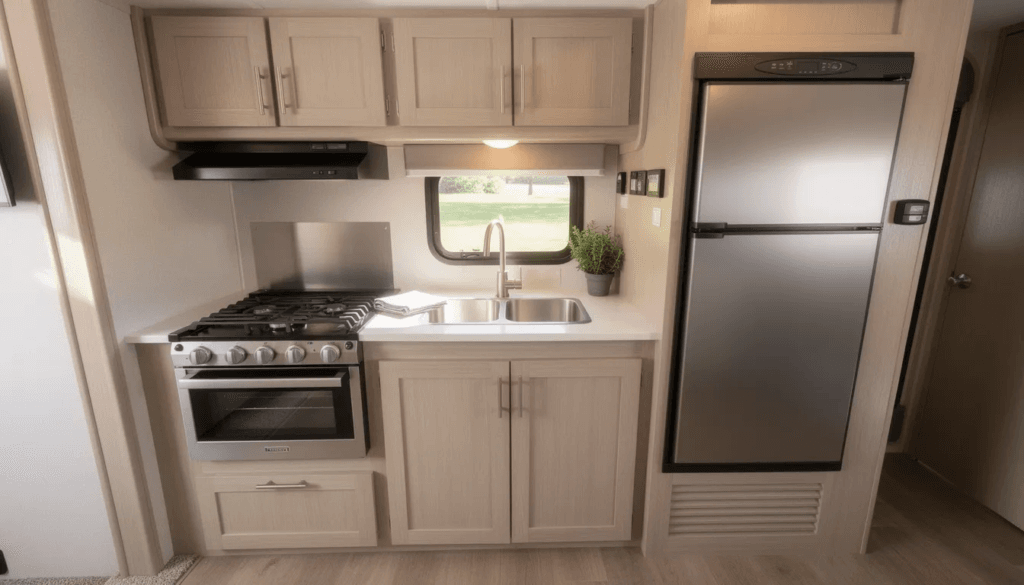
Full kitchen | 3-burner stove, oven or convection microwave, full size fridge with freezer compartment, sink with running water |
Bathroom | Toilet, shower with skylight, sink, medicine cabinet |
Power | Onboard generator, shore power hookup, house batteries |
Climate | Furnace for heat, roof-mounted air conditioning |
These RVs drive similarly to a large SUV or van, and many 2022–2025 models come equipped with backup cameras and side-view cameras to help new drivers feel ready for the road. The steering wheel feels familiar, and most renters adapt within the first hour of driving. |
Ideal Trips for a Class C Bunk-Bed RV
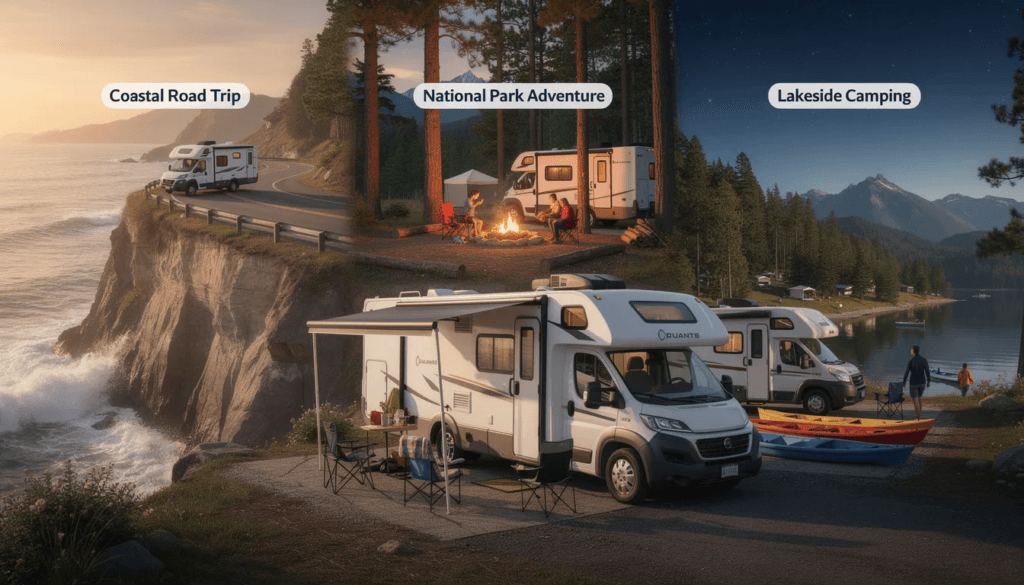
Class C bunk-bed RVs excel on extended adventures where the whole crew travels together. These vehicles work especially well for one-vehicle group journeys where everyone sleeps under one roof, eliminating the need for multiple hotel rooms or separate cars.
Consider these trip ideas:
- A 10-day summer road trip to Yellowstone and Grand Teton National Parks, with overnight stops at campgrounds along the way
- A Pacific Coast Highway journey from Los Angeles to San Francisco, parking oceanside and waking up to coastal views
- A long weekend at a nearby state park, giving the family a chance to test RV camping before committing to a bigger adventure
- A multi-state tour hitting national monuments, quirky roadside attractions, and small-town diners at your own pace
Families can easily hit the road and stop at viewpoints, visitor centers, and local restaurants without needing extra lodging reservations. The RV serves as transportation, accommodation, and dining room all in one.
Travel Trailers with Bunk Beds (Easy Tow Options)
Bunkhouse travel trailers offer a great choice for travelers who already have a capable tow vehicle and want the RV to stay parked at camp while they explore by car. This setup provides maximum flexibility—drive the trailer to your destination, unhitch, and use your truck or SUV for day trips.
A typical 26–29’ bunkhouse trailer sleeps 5–8 with a front queen bed for adults, rear double-over-double bunks for kids, and a convertible dinette that handles overflow guests. The dedicated bunk room often includes a privacy door, giving children their own space that feels like a bedroom rather than a converted living area.
Many family bunk trailers weigh around 4,000–6,000 lbs dry, making them towable by properly equipped half-ton pickups like the Ford F-150 or Chevy Silverado 1500, as well as many full-size SUVs with adequate tow ratings. Always verify specifications before booking.
Standard Amenities in Bunkhouse Trailers
Standard amenities in bunkhouse trailers include:
- Mid-kitchen with a large sink and 8–10 cubic foot refrigerator with freezer section
- Propane stove and oven for preparing hot meals at camp
- Microwave for quick reheating and snacks
- Ample storage throughout, including pantry cabinets and under-bunk compartments
Outdoor Upgrades
Newer models from 2021–2025 often feature outdoor kitchens with secondary burners, power awnings with LED lighting, and solar prep or factory-installed solar panels for off-grid camping. These upgrades let families cook outside on nice days and extend their stay at primitive sites without electrical hookups.
The key advantage of a towable trailer over a motorhome comes down to flexibility. Once you reach your campground and set up, you can disconnect the trailer and drive your tow vehicle into town for groceries, out to trailheads, or across winding park roads that might be challenging with a 30-foot rig attached.
Lightweight Bunk Trailers for Smaller Tow Vehicles
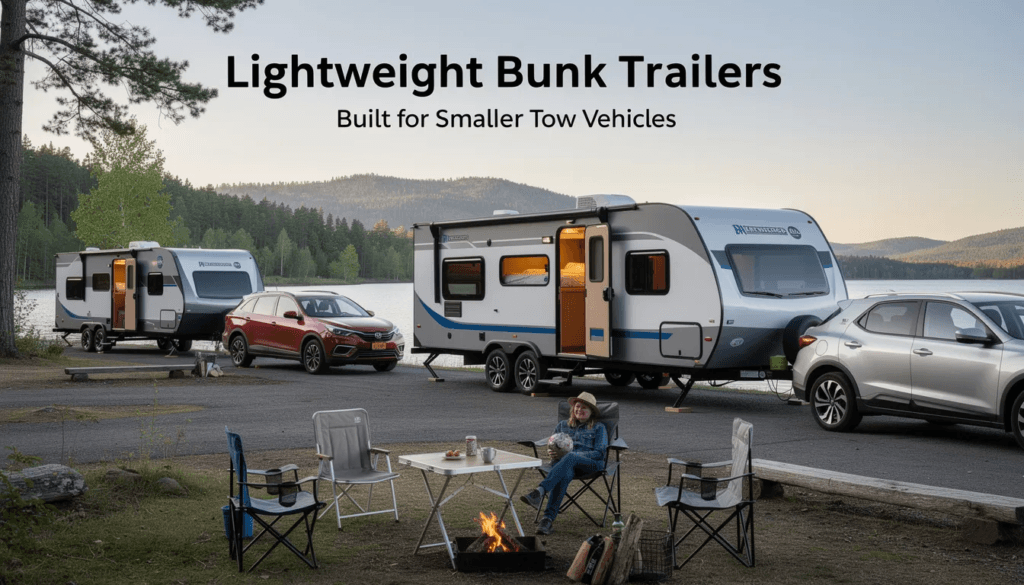
Ultra-light bunk trailers in the 3,500–4,500 lb range open RV camping to owners of mid-size trucks, crossovers, and SUVs with the right tow package. These compact units sacrifice some space but deliver surprising functionality for smaller crews.
Common layouts feature rear single bunks or compact double bunks, a combined shower/toilet “wet bath” that saves floor space, a streamlined kitchen with two-burner stove and smaller fridge, and a convertible dinette or murphy bed for the adults. Some models even include a dinette bed that folds up to create daytime seating.
These trailers work perfectly for couples with 1–2 kids or friends seeking a simple, budget-friendly way to camp with bunks. RV rental pricing on lightweight models typically runs lower than full-size bunkhouses, and fuel costs stay manageable since you’re not hauling 7,000+ pounds.
Before booking, verify your vehicle’s tow rating, hitch class, and payload capacity. Confirm with the rental owner whether a brake controller and weight-distribution hitch are required or included. Taking these steps prevents unpleasant surprises at pickup.
Now that you know the main RV types, let’s review the key features to look for before booking your rental.
Key Features to Look For in a Bunk-Bed RV Rental
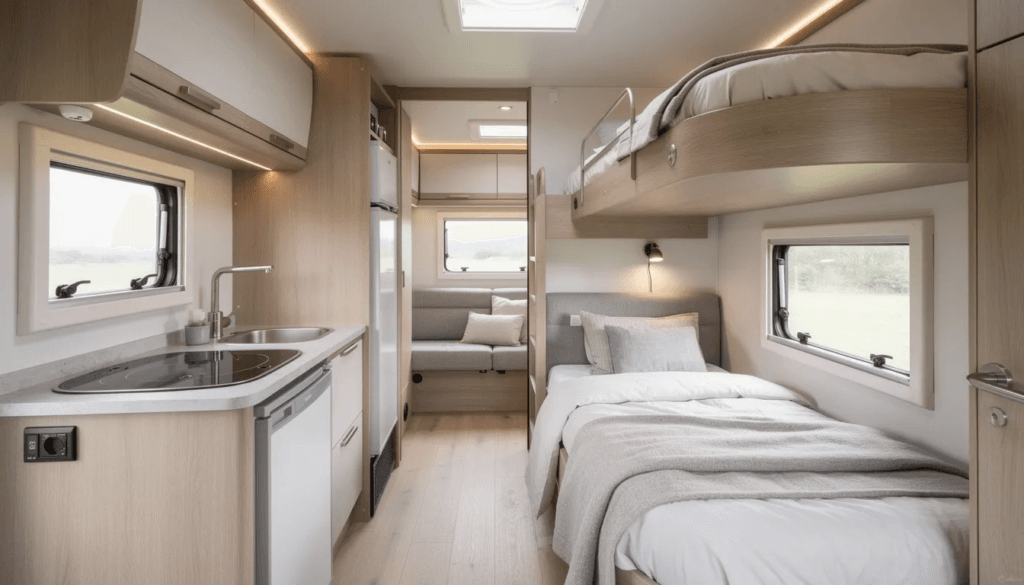
Before clicking “Book Now” on any bunk-bed RV, take time to evaluate the listing carefully. Not all bunkhouses are created equal, and the right features can make or break your trip.
Sleeping Capacity and Configuration
Clarify exactly how many people the unit sleeps and where. Check whether bunks are twin-sized or larger double bunks. Ask about weight limits—some bunks support only children, while models like Jayco Jay Flight SLX bunks handle 300–600 pounds, suitable for adults. Confirm the bed sizes, including whether the master bedroom has a true queen or a smaller RV queen.
Storage Options
Look for under-bunk storage compartments where kids can stash toys and books. Exterior pass-through compartments hold camping chairs, outdoor gear, and sports equipment. Interior wardrobes and closets near the bunks give children a place to hang clothes and keep the space organized.
Safety Features
For motorhomes, verify that proper seatbelts exist for all passengers—this matters for Class C units where everyone needs to buckle in during travel. Check that the RV includes smoke detectors, carbon monoxide detectors, a fire extinguisher, and child-safe latches on cabinets containing cleaning supplies or sharp objects.
Climate and Power
Air conditioning keeps the crew comfortable during summer trips, while a furnace handles cold nights. Understand the shore-power requirements (30-amp vs. 50-amp service) and whether a generator comes included for off-grid camping. Some newer units feature solar panels that can recharge batteries during the day.
Connectivity Conveniences
Kids will want to charge tablets and phones. Look for USB ports or outlets positioned near the bunks so devices stay powered overnight. Small LED reading lights at each bunk add convenience without disturbing other sleepers.
Popular Bunk-Bed RV Models
Popular bunk-bed RV models include:
- Jayco Jay Flight SLX 8 264BH – Sleeps up to 10, double-sized bunks, family-friendly travel trailer.
- Coachmen Pursuit 31BH – Master bedroom, dedicated bunkhouse area, drop-down overhead bunk.
- Grand Design Reflection 312BHTS – Separate rear bunkhouse, often includes two bathrooms, ideal for larger families.
- Keystone Passport 3400QD – Sleeps up to 14, dedicated rear bunkhouse with up to four double-size bunks.
- Coleman Light LX 1925BH – Under 24 feet, double bunks, Murphy bed, suitable for families of 5-6.
Questions to Ask Before You Book
Prepare a list of questions before finalizing your RV rental to avoid misunderstandings:
- Are linens, pillows, and blankets for all bunks included, or should we bring our own bedding?
- What’s the daily mileage limit, and what does each additional mile cost?
- How many generator hours are included, and what’s the overage rate?
- Is there a pet policy, and does bringing a dog incur extra fees?
- Will we be charged separately for dumping tanks or professional cleaning?
- What’s the maximum length allowed at most campgrounds, and do we need 30-amp or 50-amp hookups?
- Can this unit work off-grid, or does it require constant electrical access?
- Can we schedule a walkthrough at pickup to learn the slide outs, awning operation, bunk ladder safety, and emergency equipment locations?
Getting clear answers upfront builds confidence and helps you plan meals, packing lists, and campground reservations more effectively.
Planning Your RV Trip with Bunk Beds
A little planning transforms a bunk-bed RV trip from chaotic to unforgettable. With multiple sleeping arrangements and a crew of various ages, some forethought pays dividends.
Choosing Destinations
- Select campgrounds that work well for families traveling with children. Look for sites with playgrounds, swimming pools, easy access to lakes, or proximity to hiking trails with manageable distances.
- You can also consider unique stays like yurt prefab options at campgrounds or private properties if you want a different style of glamping before or after your RV leg.
- National park campgrounds often fill months in advance, so check availability early.
- Keep daily distances reasonable—200–300 miles per day works well for most families. This pace allows time for roadside attractions, rest stops, and arriving at your destination before dark. Rushed driving days lead to cranky kids and stressed adults.
- Peak seasons like June through August and holiday weekends see heavy demand. Reservations at popular locations near Yellowstone, Grand Canyon, or coastal parks can fill 3–6 months ahead. Even less famous campgrounds book up during summer, so plan your route and reserve spots early.
Smart Packing for Bunks
- Skip the hard suitcases—soft duffel bags fit into under-bunk storage much easier.
- Consider small clip-on fans for each bunk to improve airflow.
- Individual storage bins or hanging organizers give each child a designated spot for books, flashlights, and personal items.
Establishing Routines on the Road
- Assign bunks on day one. Let each child claim a bunk with their own bedding, favorite stuffed animal, and personal storage pocket. Clear assignments reduce nightly arguments about who sleeps where. Some families let kids decorate their bunk area with removable stickers or photos.
- Create bedtime routines. Campgrounds can be noisy with neighboring generators, late-night arrivals, and unfamiliar sounds. Establish a calm bedtime ritual: dim the lights, allow quiet reading time, or use white-noise apps on a phone or tablet. Consistency helps kids settle even in a new location each night.
- Prioritize safety. Remind kids that top bunks are for sleeping, not gymnastics. Always use the ladder to climb up and down. Keep heavy bags and hard objects off upper bunks while the RV is in motion—sudden stops can send items flying.
- Use bunks as retreat spaces. During the day, bunks serve as personal reading nooks or quiet zones when someone needs downtime. Long trips benefit from having a designated spot where kids (or adults) can escape for a nap or some alone time with a book.
Staying Connected and Informed
Staying informed about RV tips, destination ideas, and campground updates improves each bunk-bed trip you take. The RV travel community shares valuable knowledge that can help you discover hidden gem campgrounds, learn about latest deals on rentals, and stay current on road conditions.
Sign up for RV travel newsletters from reputable sources. Follow family RV travel blogs that post reviews of bunkhouse floor plans, campground recommendations, and packing lists tailored to kids. Join online groups where experienced RV families share answers to common questions and post real-world reviews of specific rental units.
Look for up-to-date information on new bunk-bed floor plans, lightweight models hitting the market in 2024–2026, and changing campground regulations that might affect your trip. Many rental platforms update their page listings regularly with specifications, photos, and renter reviews.
After each trip, keep a running list of favorite campgrounds, scenic routes, and lessons learned. Note which destination exceeded expectations and which spots you’d skip next time. This personalized log becomes invaluable when planning bigger adventures in future years.
Your family’s perfect bunk-bed RV adventure awaits. Start by browsing available rentals in your location, comparing floor plans and amenities, and booking early for peak travel seasons. The road is calling—time to answer with confidence and hit the highway for some serious fun.