
If you’ve been eyeing that unused corner of your backyard and wondering what to do with it, a small ADU might be exactly what you need. These compact secondary housing units pack complete living functionality into surprisingly tight footprints, typically ranging from 150 to 600 square feet.
A small ADU represents one of the smartest ways to add living space to your property without the complexity of a major home addition or the commitment of buying a second property. Whether you’re looking to generate rental income, house aging parents, or create a dedicated home office, these efficient structures deliver serious value in a smaller footprint.
- Introduction to Small ADUs
- What Counts as a “Small” ADU?
- Main Types of Small ADUs
- Designing a Small ADU Floor Plan
- Small ADU vs. Tiny House on Wheels
- Legal Minimum and Maximum Sizes for Small ADUs
- What a Small ADU Must Include (Code Basics)
- Popular Uses for Small ADUs
- Cost of Building a Small ADU
- Financing a Small ADU
- On-Site Built vs. Prefab Small ADUs
- Adding a Loft to a Small ADU
- Planning, Permits, and Zoning for Small ADUs
- Real-World Small ADU Examples
- Is a Small ADU Right for Your Property?
Introduction to Small ADUs
Compared with other housing upgrades, accessory dwelling units as a broader category offer homeowners a flexible way to add living space, generate income, and support changing household needs without leaving their neighborhood.
A small ADU, or accessory dwelling unit, is a fully functional secondary home built on the same lot as your primary residence. Think of it as a miniature house complete with its own kitchen, bathroom, and sleeping area, all designed to operate independently from your main dwelling. These aren’t converted sheds or glorified storage rooms. They’re permanent structures that meet building codes and function as legitimate housing stock.
What distinguishes a small ADU from other compact living spaces is its legal status as a dwelling unit. Unlike a tiny house on wheels or an RV parked in your driveway, a small ADU sits on a foundation, connects to utilities, and requires permits just like any traditional housing project. This permanence matters because it affects everything from your property value to your ability to legally rent the space.
The core benefits of building a small ADU show up quickly on most homeowners’ priority lists. Rental income potential stands out immediately, with urban markets often seeing monthly rents between $1,500 and $2,500 for well-designed units. Beyond the financial upside, these units provide flexible living arrangements for adult children returning home, aging parents who want proximity without losing independence, or simply a quiet space to work away from household chaos.
Since around 2017, the regulatory landscape for accessory dwelling units has shifted dramatically in favor of homeowners. California led the charge with a series of ADU bills that streamlined permitting and limited local governments’ ability to block these projects. Oregon, Washington, and dozens of other states followed with similar reforms, recognizing that small ADUs offer a practical path toward affordable housing without requiring new land development.
The timing couldn’t be better for homeowners considering this route. Cities that once required special variances, neighborhood approval, or excessive parking now often allow small ADUs by right on most residential lots. This means the building process that might have taken years of bureaucratic wrangling a decade ago can now move forward in months.
Property value increases represent another compelling reason to explore small ADUs. Well-executed projects typically boost assessed values by 20 to 30 percent, reflecting both the additional rental yields and the raw square footage added to the property. Even if you never rent the unit, you’re building equity in a structure that future buyers will value.
What Counts as a “Small” ADU?
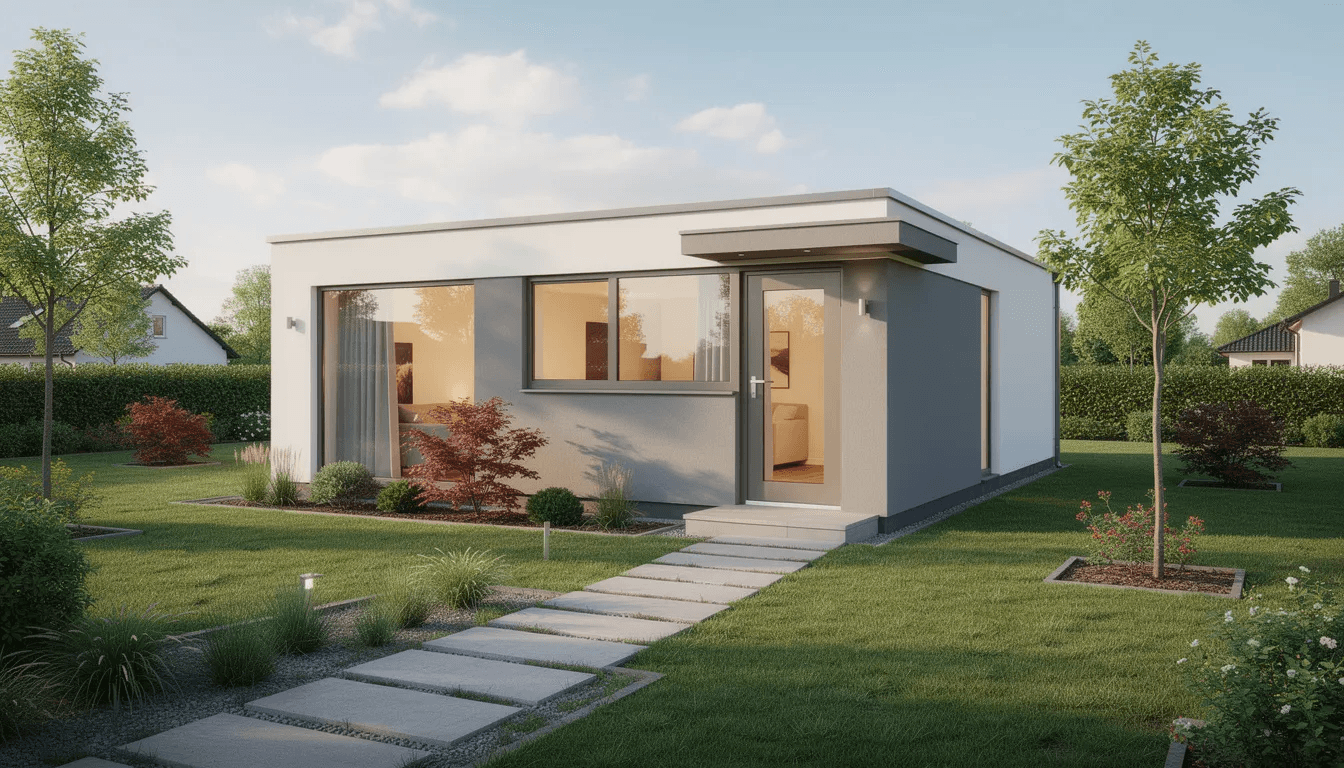
The term small ADU generally refers to units on the compact end of the accessory dwelling spectrum, typically ranging from about 150 to 600 square feet. Within this range, you’ll find two common categories: micro-ADUs running from approximately 150 to 400 square feet, and compact one-bedroom layouts filling out the 400 to 600 square foot range.
What makes these units legitimate dwellings rather than just bonus rooms or studios is the presence of complete independent living facilities. A proper small ADU must include its own kitchen or kitchenette with permanent cooking equipment, a full bathroom with shower or tub, and dedicated sleeping space. This requirement for both functionality and independence separates ADUs from guest houses that share facilities with the main home.
Larger accessory dwelling units can stretch up to 800 or even 1,200 square feet in many jurisdictions, offering two-bedroom layouts and more spacious floor plans. But small ADUs appeal to homeowners working with limited lot space, tighter budgets, or a minimalist lifestyle preference. The smaller the unit, the lower the total construction costs and the quicker the building process typically moves.
Consider a 220 square foot detached studio built in Portland, featuring an efficient kitchenette, compact bathroom, and clever storage solutions that make every square inch count. Or picture a 480 square foot one-bedroom backyard cottage completed in Los Angeles in 2023, offering enough room for a proper bedroom separated from the living area plus a full kitchen suitable for serious cooking. Both qualify as small ADUs, but they serve different needs and accommodate different lifestyles.
The beauty of small house plans in this size range is their flexibility. A 350 square foot unit might function perfectly as a rental unit for a single tenant, then convert to an art studio, then become a caregiver suite as your family’s needs evolve over two decades, much like tiny house plans tailored to different lifestyles.
Main Types of Small ADUs
Small ADUs come in three primary forms: detached structures built separately in your yard, attached additions sharing a wall with your main house, and conversions carved out of existing space like a garage or basement. Each type affects your construction costs, permit requirements, and design possibilities differently, but all share core principles with tiny homes that redefine small-space living.
Detached Backyard Cottages
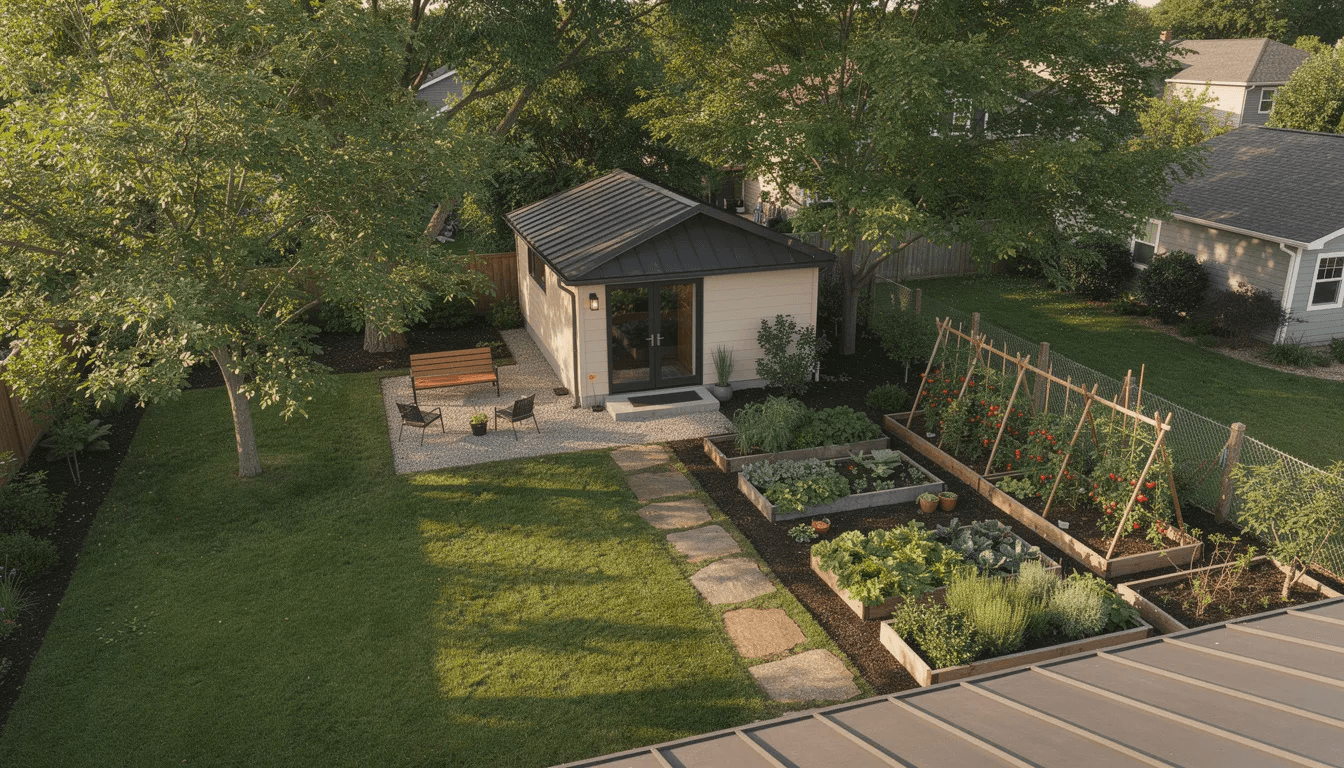
Detached small ADUs, sometimes called casitas, laneway houses, granny flats, or backyard cottages, stand as independent structures typically positioned behind the main residence. These units ranging from 300 to 600 square feet offer maximum privacy for both the primary homeowners and ADU occupants. A detached carriage house style ADU placed at the back of your lot creates a genuine sense of separation that many renters and family members appreciate, while often overlapping with affordable tiny house styles used as ADUs.
Detached construction makes sense when you have adequate yard space and want to maintain clear boundaries between living spaces. The trade-off involves higher costs for running utilities across your property and potentially more complex foundation work depending on your lot’s topography.
Garage Conversions
Converting an existing attached garage or detached garage into a small ADU represents one of the most cost-effective paths to creating secondary units, similar in spirit to using tiny house kits as a starting shell. A single-car garage typically yields 200 to 300 square feet of living space, while a two-car garage conversion can produce a more spacious 400 to 500 square foot unit.
The advantage here is that you’re working with an existing structure, foundation, and potentially some electrical service already in place. The building process focuses on adding insulation, finishing interior walls, installing a bathroom, and creating a kitchen area. However, you’ll need to address rough in plumbing and ensure the space meets habitable room standards for ceiling height, ventilation, and egress.
Internal and Basement ADUs
Some homeowners create small ADUs within their primary home’s existing footprint, converting basements, attics, or unused wings into independent units typically ranging from 250 to 450 square feet. These internal conversions work well when your home has underutilized space and you prefer not to alter your property’s exterior appearance.
Internal ADUs require careful attention to providing independent access, meaning the unit’s occupant shouldn’t need to walk through your main living area to reach their space. They also need proper separation for fire safety and sound isolation for both parties’ comfort.
Many cities now allow homeowners to build ADUs on a single lot, permitting both a small internal ADU and a detached small ADU. This approach maximizes flexibility, allowing homeowners to accommodate different needs simultaneously.
Designing a Small ADU Floor Plan
When you’re working with 200 to 550 square feet, smart design matters far more than raw square footage. Every decision about layout, storage, and circulation determines whether your small ADU feels like a functional home or a cramped afterthought, just as with custom tiny homes that maximize every inch. Great design transforms limitations into opportunities.
Common Small ADU Layouts
The open studio layout works best for micro-ADUs in the 200 to 350 square foot range. This plan combines kitchen, living, and sleeping zones in a single flowing space, with only the bathroom walled off for privacy. A well-designed 280 square foot studio can feel surprisingly spacious when you use visual tricks like consistent flooring, strategic window placement, and built-in furniture that serves multiple purposes.
One-bedroom layouts typically start around 350 square feet and extend to 550 square feet in the small ADU category. These plans provide a separate sleeping area, offering privacy that studio layouts cannot match. Even a modest 400 square foot one-bedroom can include a proper bedroom with a door, a combined living and kitchen area, a full bathroom, and meaningful storage.
The micro one-bedroom with loft represents a clever middle ground, using vertical space to create separation without expanding the building footprint. A 260 square foot ground floor with a sleeping loft above can function like a one-bedroom while occupying the same land area as a tiny studio, especially when you borrow layout ideas from tiny house floor plans that prioritize efficiency.
Essential Rooms and Features
Every small ADU needs four core elements regardless of size: a kitchen or kitchenette with permanent cooking facilities, a bathroom with toilet, sink, and shower, a dedicated sleeping area whether open or enclosed, and adequate storage to make daily life manageable.
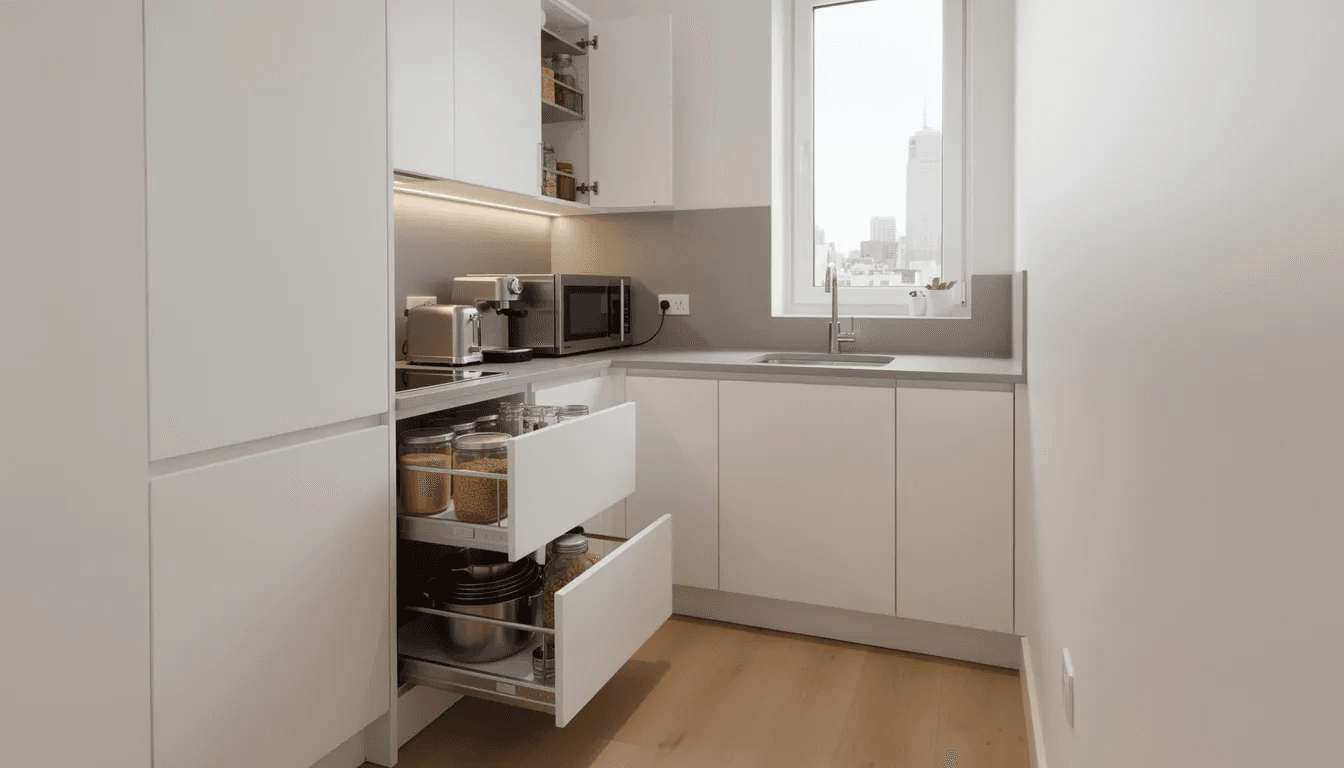
In the kitchen, 24-inch appliances designed for compact spaces let you maintain full cooking functionality while saving precious floor area. A two-burner cooktop, apartment-size refrigerator, and under-counter dishwasher drawer can fit into a galley kitchen as narrow as six feet while still serving serious home cooks.
The bathroom in a small ADU often consumes 35 to 45 square feet, including a 32 to 36 inch shower stall, compact vanity, and standard toilet. Corner sinks and wall-mounted toilets can shave additional inches when every bit of space counts.
Vertical Space and Storage
Using vertical space effectively separates great design from merely adequate small ADU layouts. Lofted sleeping areas reclaim volume that would otherwise sit empty near high ceilings. Built-in shelving running to the ceiling provides storage without consuming floor area. Tall windows draw the eye upward and make 10 to 12 foot ceilings feel genuinely airy.
Murphy beds that fold into the wall transform a sleeping area into a living room during daytime hours. Built-in benches with storage underneath serve as seating, guest beds, and organizational solutions simultaneously. Pocket doors eliminate the swing radius that standard doors require, freeing up several square feet in tight floor plans, echoing strategies seen in elegant tiny homes with sophisticated layouts.
Consider a 400 square foot ADU with 10-foot ceilings, a sleeping loft accessed by a ship’s ladder, and a great design that incorporates built-in window seating with deep storage below. This layout might feel roomier than a conventional 500 square foot apartment with standard 8-foot ceilings and freestanding furniture.
Small ADU vs. Tiny House on Wheels
Homeowners drawn to compact living often compare small ADUs with top tiny house designs for modern living, weighing the appeal of mobility and minimalist aesthetics against the stability and legal advantages of a permanent structure.
Both small ADUs and tiny homes on wheels offer compact living spaces, but the two are treated very differently by law, lenders, and local jurisdictions. Understanding these key differences helps homeowners choose the right path for their specific needs and dreams.
A small ADU is a permanent structure built on a foundation, tied into the same utility connections as your main house, and permitted as a legitimate dwelling unit. Your local building department inspects it, your county assessor includes it in your property value, and conventional lenders treat it as real property. A permanent ADU becomes part of your land and stays with the property when you sell.
Most tiny houses on wheels, by contrast, fall under RV or trailer classifications rather than building codes. They’re designed for mobility, which provides flexibility but creates significant limitations for everyday living. Many cities restrict where you can park an RV for extended periods, and few allow them as primary residences. Banks typically won’t finance tiny homes on wheels with standard mortgages, and their value depreciates like vehicles rather than appreciating like real estate.
The practical implications extend beyond paperwork. A 380 square foot backyard ADU in Sacramento can legally house long-term tenants, generating consistent rental income while increasing the owner’s assessed property value. A similar-sized tiny house on wheels might serve beautifully for seasonal stays or weekend getaways, but using it as a permanent rental could violate local codes and leave both owner and tenant legally exposed.
For homeowners comparing tiny homes to ADUs, the stylish appeal of mobile tiny living often conflicts with the practical benefits of fixed construction. If your goal involves rental income, housing family members long-term, or building equity, a permanent ADU delivers advantages that wheels simply cannot match.
Legal Minimum and Maximum Sizes for Small ADUs
There is no single national rule governing ADU sizes. Each city, county, and state sets its own minimum and maximum dimensions, creating a patchwork of regulations that homeowners must navigate based on their specific local jurisdiction.
Many U.S. building codes reference 150 square feet as a common minimum for habitable living space, and this often becomes the floor for micro-ADUs. Some municipalities set higher minimums, requiring 200 or 220 square feet to ensure units remain practical for occupants. On the other end, maximums typically range from 800 to 1,200 square feet, though small ADUs by definition fall well below these ceilings.
California’s state law provides a useful reference point, allowing ADUs up to 800 square feet by right regardless of lot size, with local zoning potentially permitting units up to 1,200 square feet where conditions allow. This approach removed barriers that previously prevented homeowners from adding modest backyard cottages on smaller lots.
Cities like Portland, Austin, and Seattle have actively encouraged small ADU construction through policy reforms over the past decade. Portland’s 2010 to 2016 reforms eliminated minimum lot sizes for ADUs and reduced parking requirements, making previously unbuildable lots viable for compact secondary units. San Francisco has similarly relaxed requirements, though local codes still govern specific setbacks and coverage limits.
When researching your property’s potential, look for terms like accessory dwelling unit, secondary suite, backyard cottage, or in-law unit in your local zoning laws. The exact language varies, but these terms typically lead you to the size limits, setback requirements, and permit procedures that govern your project. Henderson, Nevada, for example, caps attached ADUs at 50 percent of the primary dwelling’s floor area with an absolute maximum of 1,200 square feet, while detached units hit the same ceiling.
What a Small ADU Must Include (Code Basics)
Building codes differ across jurisdictions, but most U.S. communities require four fundamental elements for a structure to qualify as an ADU: a place to cook, a place to bathe, a place to sleep, and independent access from the outside. Missing any of these elements typically means your project won’t receive permits as a dwelling unit.
Kitchen Requirements
A legitimate ADU must include a kitchen or kitchenette with permanent cooking facilities. This means built-in equipment connected to appropriate utility hookups, not portable appliances you can unplug and carry away. Most codes require at minimum a cooktop or range, a sink with running water, and refrigeration capability. A microwave alone doesn’t qualify, nor does a hot plate sitting on a counter.
Bathroom Standards
Typical bathroom code requirements include a flushing toilet, a sink, and either a shower or bathtub. Proper ventilation through a window or exhaust fan is mandatory, as are safe plumbing connections that meet local standards. The bathroom needs adequate space for use, typically around 35 to 45 square feet minimum, though creative layouts can satisfy codes in slightly less area.
Safety and Egress
Small ADUs must meet minimum ceiling height requirements, typically 7 feet in habitable rooms and sometimes lower in bathrooms and hallways. Emergency egress windows or doors allow occupants to escape during fires, with specific minimum sizes detailed in the International Residential Code. Every ADU needs smoke and carbon monoxide alarms, and all electrical work must meet current codes for safe wiring.
Accessibility Considerations
Even in the smallest footprints, accessibility features add value and flexibility. No-step entries make units usable for people with mobility challenges. Wider doors of 32 to 36 inches allow wheelchair access. Blocking installed in bathroom walls during construction makes future grab bar installation simple. These universal design details cost little during initial construction but can dramatically expand who can comfortably use the space over your ADU’s life.
Popular Uses for Small ADUs
Small ADUs prove remarkably flexible over time, often changing roles multiple times during a 10 to 20 year period as families evolve and needs shift. The compact space that serves as a rental unit today might house your aging parents next year and become your home office the year after that.
Long-Term Rental Housing
Renting a small ADU provides steady monthly income that can offset mortgage payments, fund renovations, or supplement retirement. In mid-sized U.S. cities, a well-maintained 350 to 500 square foot ADU might command $1,200 to $1,800 monthly, while high-cost markets like San Francisco or Seattle often see rents of $2,000 to $2,800 for similar units. This rental income potential makes small ADUs attractive investments even after accounting for construction costs.
Multigenerational Living
Small ADUs excel at supporting families who want proximity without sacrificing independence. A 400 square foot in-law studio allows aging parents to live steps away while maintaining their own kitchen, bathroom, and daily routines. Adult children returning after college appreciate the separation and dignity of their own space. Caregiver suites provide live-in help with professional boundaries that benefit everyone involved.
Home Office and Flex Space
The shift toward remote work has made dedicated office space increasingly valuable. A backyard small ADU with full bathroom and kitchenette creates a genuine workplace separation from home life, improving both focus and work-life balance. The beauty of this use lies in its reversibility. When work patterns change, that same space converts readily to guest houses, rental units, or family housing without structural modifications.
Short-Term Rentals
Where local codes permit, short-term rentals through platforms like Airbnb can generate higher per-night rates than traditional leasing. However, many cities restrict or ban short-term rentals in ADUs, especially those seeking to preserve affordable housing stock for local residents. Before planning around STR income, verify that your local jurisdiction allows this use and understand any licensing, tax, or occupancy requirements.
Cost of Building a Small ADU
Small ADUs often cost more per square foot than larger homes simply because fixed costs like permits, utility connections, and site work spread across fewer square feet. However, total project cost runs lower because you’re building less overall structure. This trade-off makes small ADUs accessible to homeowners who couldn’t afford larger construction projects.
For 2024, expect ballpark costs ranging from $150,000 to $250,000 for a 350 to 500 square foot detached small ADU in most U.S. metro areas. These figures vary significantly by region, with high-cost markets like coastal California often running 30 to 50 percent higher and lower-cost areas potentially coming in below these ranges.
Major Cost Categories
Breaking down a typical small ADU budget reveals where money actually goes. Design and permits typically consume around 10 percent of the total, covering architectural drawings, engineering, and municipal fees. Site work and utility connections often represent 20 to 25 percent, including foundation work, trenching for utilities, and potential upgrades to your property’s electrical panel or sewer connection.
The structure itself, including framing, roofing, windows, and doors, accounts for roughly 25 to 30 percent. Interior finishes covering flooring, cabinets, fixtures, and appliances take another 25 to 30 percent. Smart homeowners budget 10 to 15 percent contingency for unexpected issues that inevitably arise during construction.
Why Site Work Costs Disproportionately
Utility connections and site preparation can feel disproportionately expensive for small units because these costs don’t scale linearly with building size. Trenching from your main house to a detached ADU 40 feet away costs roughly the same whether you’re building 300 or 600 square feet. Upgrading an electrical panel to support a new structure carries fixed costs regardless of the structure’s size. In areas requiring separate wells or septic systems, like rural Nevada counties, these infrastructure costs can rival the building itself.
Example Budget Breakdown
A 400 square foot detached ADU with total construction costs of $180,000 might break down approximately as follows: $18,000 for design, engineering, and permits; $40,000 for site work, foundation, and utility connections; $55,000 for structure including framing, roofing, and exterior; $50,000 for interior finishes, fixtures, and appliances; and $17,000 held as contingency. These proportions shift based on site conditions, finish levels, and regional labor costs, but they illustrate the relative weight of each category.
Financing a Small ADU
Small ADUs are typically financed through tools tied to your primary home rather than stand-alone home loans. This connection to your existing property simplifies lending but requires understanding how different financing options work.
Common Financing Options
A cash-out refinance replaces your existing mortgage with a new, larger loan and gives you the difference in cash for construction. This approach works well when interest rates are favorable and you have substantial equity built up. A home equity line of credit, or HELOC, lets you borrow against your equity as needed during construction, paying interest only on drawn funds.
Renovation loans like FHA 203(k) or Fannie Mae HomeStyle roll construction costs into your mortgage based on the property’s projected value after the ADU is complete. Some cities offer ADU-specific subsidy programs providing low-interest loans or grants for homeowners who commit to renting units at affordable rates.
Preparing for Lender Conversations
When approaching a lender, prepare a simple project budget showing estimated construction costs, timeline, and potential rental income. Lenders familiar with ADUs understand that completed units boost property value, often by more than the construction cost. This projected value increase can help you qualify for financing even if your current equity is modest.
Some lenders still lack experience with ADU financing and may not understand how to appraise properties with secondary units. Seek out banks, credit unions, or mortgage brokers who have closed ADU loans before and understand the specific appraisal and underwriting considerations involved.
Subsidy and Grant Programs
Municipal programs and nonprofit organizations in some areas offer favorable financing for small ADUs used as affordable housing. These programs typically require income-restricted rents and may involve occupancy requirements, but they can significantly reduce your financing costs. Check with your city’s housing department or local community development organizations to identify programs serving your area.
On-Site Built vs. Prefab Small ADUs
Two primary delivery methods dominate small ADU construction: traditional site-built approaches where workers construct everything on your property, and prefabricated options where companies manufacture components in a factory for assembly on-site. Each method offers distinct advantages depending on your priorities.
Site-Built Advantages
Traditional construction provides maximum customization, allowing your design to match existing house architecture perfectly. Site-built ADUs often appraise higher because they integrate seamlessly with the property. For properties with challenging access, steep slopes, or irregular lot shapes, site-built construction adapts more readily than prefab units requiring crane placement.
The trade-off involves longer timelines, typically 4 to 6 months for a small ADU, and greater variability in costs and schedules. Weather delays, subcontractor availability, and inspection timing can all extend projects beyond initial estimates.
Prefab Kit Advantages
Prefabricated and panelized small ADUs offer faster construction timelines, more predictable costs, and factory-level quality control. When your floor plan matches available prefab kit designs, these units can go from order to occupancy in 8 to 12 weeks. Companies specializing in prefab ADUs have refined their processes to minimize waste and reduce labor hours.
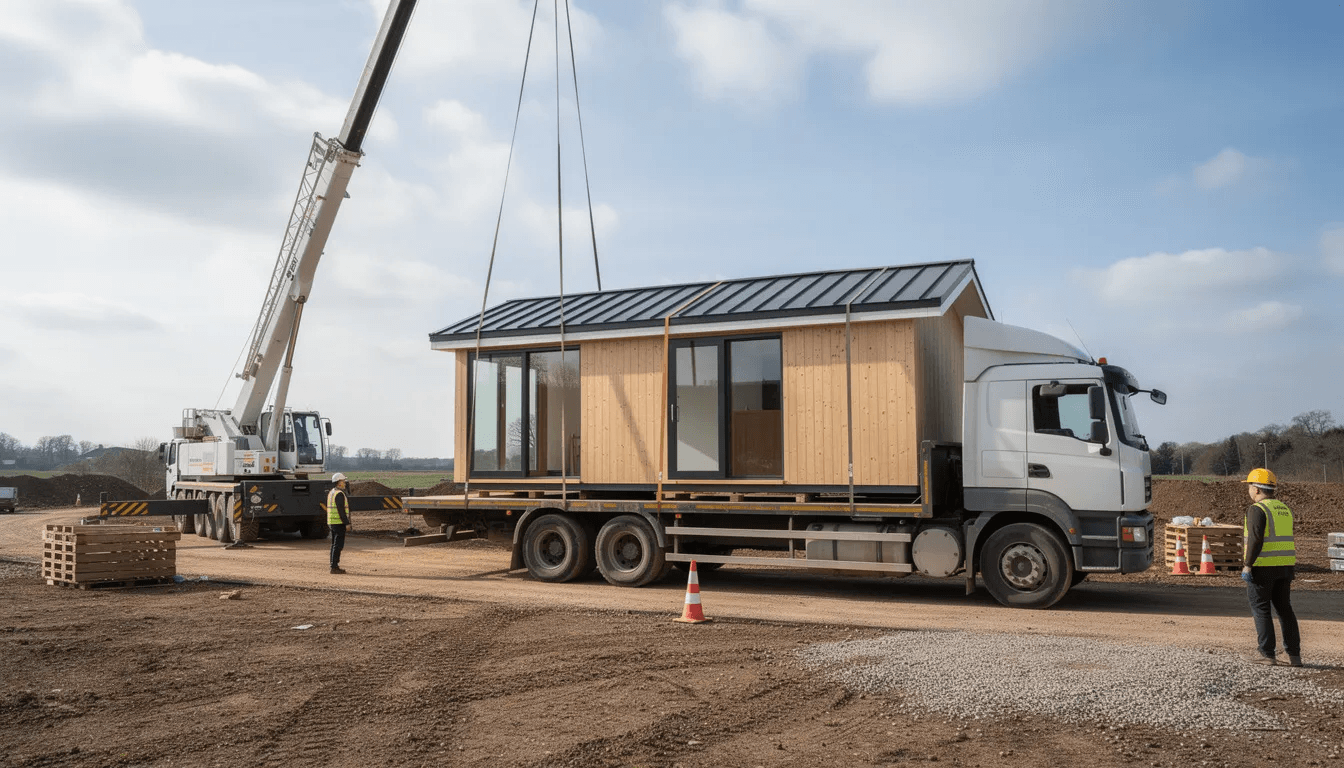
Practical constraints limit prefab suitability for some properties. Units must be transported to your site, requiring adequate street access for delivery trucks. Larger prefab sections need crane placement, adding costs and requiring clear overhead access. Your site still needs foundation work completed before delivery, and final utility connections happen on-site regardless of construction method.
Comparing Approaches
Consider a homeowner choosing between a 320 square foot prefab backyard unit completed in 8 to 10 weeks versus a 450 square foot site-built studio taking 4 to 6 months. The prefab option minimizes disruption and delivers faster rental income. The site-built option offers more space and allows architectural details matching a craftsman-style main house. Neither choice is universally superior; the right answer depends on your specific needs, lot conditions, and budget priorities.
Adding a Loft to a Small ADU
Lofts provide a practical solution for units under about 400 square feet, reclaiming vertical volume without increasing the building footprint or lot coverage. This vertical expansion can transform a tight studio into a functional one-bedroom equivalent.
Common Loft Uses
The most popular loft application creates a sleeping area elevated above the main living space, freeing the ground floor entirely for daytime activities. A typical sleeping loft of 8 by 10 feet provides room for a queen mattress plus a bit of clearance for sitting up in bed. Some homeowners use lofts for storage, keeping seasonal items or luggage accessible but out of sight. Others create cozy reading nooks or compact work areas that feel separate from the main space below.
Structural and Comfort Considerations
Successful loft design requires adequate headroom at the loft itself, typically 4 to 5 feet minimum at the peak for sleeping lofts. Access matters significantly for daily use. Ship’s ladders work for occasional use but become tiring if climbed multiple times daily. Alternating tread stairs or compact spiral stairs improve accessibility with modest additional footprint.
Safety codes require guardrails along open loft edges, typically 36 to 42 inches high. Ventilation near the ceiling prevents heat buildup in loft spaces, which naturally run warmer than the floor below. Ceiling fans or operable skylights help manage temperatures and air circulation.
Structural Systems That Support Lofts
Construction methods like Structural Insulated Panels, known as SIPs, or advanced framing techniques create open interior volumes well-suited to loft configurations. These systems reduce interior posts and beams that might otherwise interrupt loft space or block sight lines from below.
Layout Example
Imagine a 260 square foot ground floor featuring a galley kitchen along one wall, a compact bathroom tucked in a corner, and an open living area beneath a 100 square foot sleeping loft accessed by a stylish alternating tread stair. The ground floor alone would feel cramped as a complete dwelling, but the loft transforms it into a practical one-bedroom small ADU with clear separation between sleeping and living functions.
Planning, Permits, and Zoning for Small ADUs
Permits are almost always required for habitable small ADUs, regardless of how compact your plans might be. Even a 180 square foot structure with a kitchen and bathroom needs full permit review in most jurisdictions. Understanding the process before you begin helps avoid costly surprises and delays.
The Typical Process
Start by researching zoning requirements for your specific property. Many cities offer online GIS maps showing zoning designations, or you can visit your planning department for guidance. Look for rules governing lot coverage, setbacks, height limits, and any owner-occupancy requirements that might apply.
A pre-application meeting, where available, lets you discuss your concept with planning staff before investing in detailed designs. These meetings often reveal potential issues early, saving redesign costs later. Once you understand the basic requirements, work with a designer or architect to develop schematic plans that comply with local regulations.
Permit submission involves completing applications, paying fees, and providing detailed plans for review. Review timelines vary dramatically, from a few weeks in streamlined jurisdictions to several months in areas with heavy backlogs. California’s ADU laws cap local approval timelines at 60 days, but not all states provide similar protections.
Regulatory Examples
California’s state ADU laws eliminated parking requirements for ADUs near transit and limited cities’ ability to impose impact fees on units under certain sizes. These reforms dramatically accelerated ADU construction statewide. Portland’s earlier reforms from 2010 to 2016 similarly removed barriers by eliminating minimum lot sizes and owner-occupancy requirements, allowing homeowners flexibility that previous regulations had denied.
Important Distinctions
A key distinction exists between habitable ADUs and non-habitable accessory structures. A 200 square foot shed without plumbing or cooking facilities might not require permits in many areas. But the moment you add a bathroom and kitchenette, creating actual living space, full permit review becomes mandatory. Don’t assume that small size exempts you from permits when your plans include dwelling functionality.
Before moving forward, verify specific rules for setbacks, height limits, maximum lot coverage, and any owner-occupancy requirements in your city. Contact your local planning department directly to confirm current regulations, as ADU rules continue evolving rapidly across the country.
Real-World Small ADU Examples
Seeing what other homeowners have accomplished helps illustrate what’s possible in your own backyard. These brief examples from recent years show the range of small ADU projects across different contexts and can complement inspiration from cute tiny house designs for dream small homes.
Portland Garage Conversion
A homeowner in Portland converted a detached two-car garage into a 380 square foot one-bedroom rental ADU in 2021. Total project cost came to approximately $145,000, including new foundation work beneath the existing structure, full insulation, a compact but functional kitchen, and stylish finishes that attracted quality tenants quickly. The main challenge involved bringing the electrical service up to code, requiring a panel upgrade. The benefit realized was $1,600 monthly rental income that covered the construction loan payments with room to spare.
Los Angeles Backyard Cottage
A 480 square foot detached cottage completed in Los Angeles in 2023 serves as housing for the homeowner’s adult child while maintaining independence for both generations. Built at the back of a 6,500 square foot lot, the cottage includes a bedroom, full bathroom, complete kitchen, and small covered porch. Construction costs totaled around $225,000, reflecting high regional labor costs. The primary challenge was navigating a lengthy permit process that extended the project timeline. The realized benefit involves keeping family close while respecting everyone’s need for private space.
Seattle Basement ADU
A 320 square foot basement ADU carved from an underutilized Seattle home basement in 2022 demonstrates how existing space can transform into rental units. The project cost approximately $95,000, significantly less than new construction, by leveraging existing structure and some existing plumbing. Adding proper egress windows and creating a separate entrance required creative solutions given the sloped lot. The homeowner now generates $1,350 monthly while maintaining the main home’s original footprint.
Austin Prefab Studio
A 280 square foot prefab studio ADU installed in Austin in 2023 shows the speed advantage of factory-built construction. From order to occupancy took just 10 weeks, with the primary structure arriving mostly complete and requiring only foundation connection and final utility hookups. Total cost of approximately $165,000 included design, permits, site prep, the prefab unit, and all installation. The homeowner uses the space as a home office with plans to convert to rental housing upon retirement.
Is a Small ADU Right for Your Property?
Deciding whether to build a small ADU involves weighing several factors specific to your situation. Available yard or interior space sets the physical constraints. Budget determines what’s feasible. Long-term plans shape whether the investment makes sense. Local regulations dictate what’s permissible. And your tolerance for managing a construction project affects whether you’re ready to proceed.
Self-Assessment Questions
Start by asking what problem you’re trying to solve. Do you need rental income to offset housing costs? Space for family members who need proximity but independence? A dedicated workspace separated from household activity? The answer shapes both whether an ADU makes sense and what size and configuration serve you best.
Consider your timeline. If you need the space within six months, a prefab kit option or simple garage conversion might work better than a fully custom site-built cottage that could take a year from design to occupancy. If you have flexibility, you can optimize for exactly what you want rather than what’s fastest.
Think about the next 5 to 10 years. Families change. Work situations evolve. Parents age. Adult children leave and return. A small ADU that can adapt from rental to family housing to home office provides value across multiple life stages, especially those with flexible living configurations.
Visualizing Different Sizes
Sketch rough layouts of 250, 400, and 550 square feet on graph paper to understand how each size level changes usability. A 250 square foot unit might accommodate a solo occupant comfortably but feel cramped for two. A 400 square foot layout supports a couple and offers a separate bedroom. A 550 square foot plan approaches one-bedroom apartment territory with room for modest entertaining.
These exercises help you understand whether your dreams align with practical constraints. They also reveal whether your property can physically accommodate different sizes given setback requirements and existing structures.
Moving Forward
With thoughtful design and careful planning, even a 250 square foot ADU can function like a complete home, providing all the essential elements of comfortable living in a compact and efficient package. The key lies in treating small size as a design challenge rather than a limitation.
Start by researching your local zoning laws to understand what’s possible on your specific property. Visit your planning department’s website or call to discuss your situation. Then talk to design and building professionals experienced in small ADUs, as they bring practical knowledge about what works and what doesn’t in your area.
The path from idea to completed small ADU involves many steps, but homeowners across the country are successfully adding these compact homes to their properties every day. With the right approach, you can join them in creating more space, generating rental income, and building a structure that serves your family’s different needs for decades to come.