
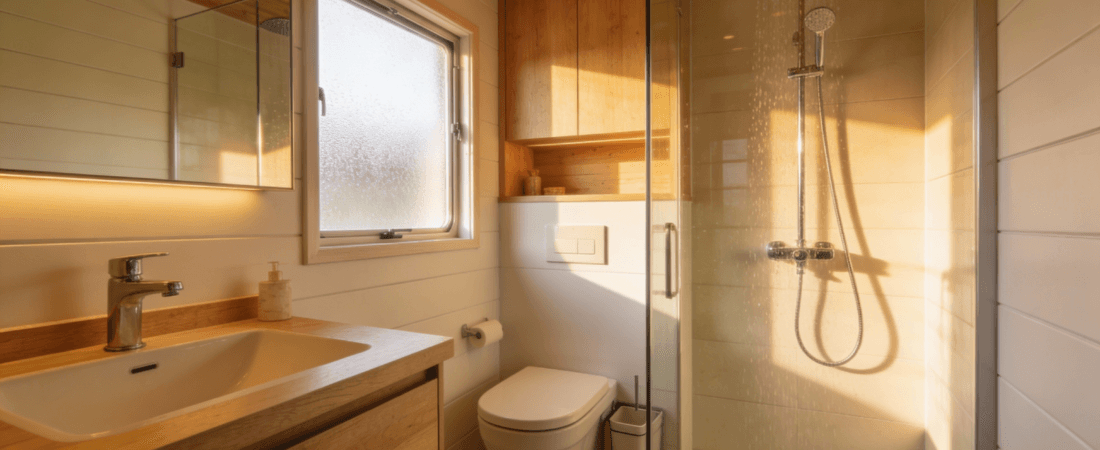
A tiny house bathroom can feel like a puzzle, but with the right ideas, it becomes the best room in the house. When I first started planning my own tiny home, the bathroom was my biggest headache. How do you fit a shower, toilet, and sink into a space that’s smaller than most closets? It seemed impossible. But after a lot of trial and error—and a few funny mistakes I’ll share later—I figured out some fantastic ways to make it work. It turns out, you don’t need a huge space to have a comfortable and functional bathroom.
TL;DR: Quick Bathroom Wins
- Go Vertical: Use wall space for shelves and cabinets to keep the floor clear.
- Wet Bath Wonder: Combine the shower and bathroom area to save a ton of space.
- Smart Toilets: Composting or incinerating toilets are your best friends. No plumbing needed!
- Let There Be Light: A small window or a skylight makes the room feel twice as big.
- Pocket Doors: They slide into the wall, so you don’t lose any floor space to a swinging door.
Making the Most of Every Inch
When you’re dealing with a small footprint, every single inch matters. I learned this the hard way when I bought a vanity that was just two inches too wide. Whoops. Back to the store I went. The key is to think differently about the layout and what you really need.
The Wet Bath vs. Dry Bath Debate
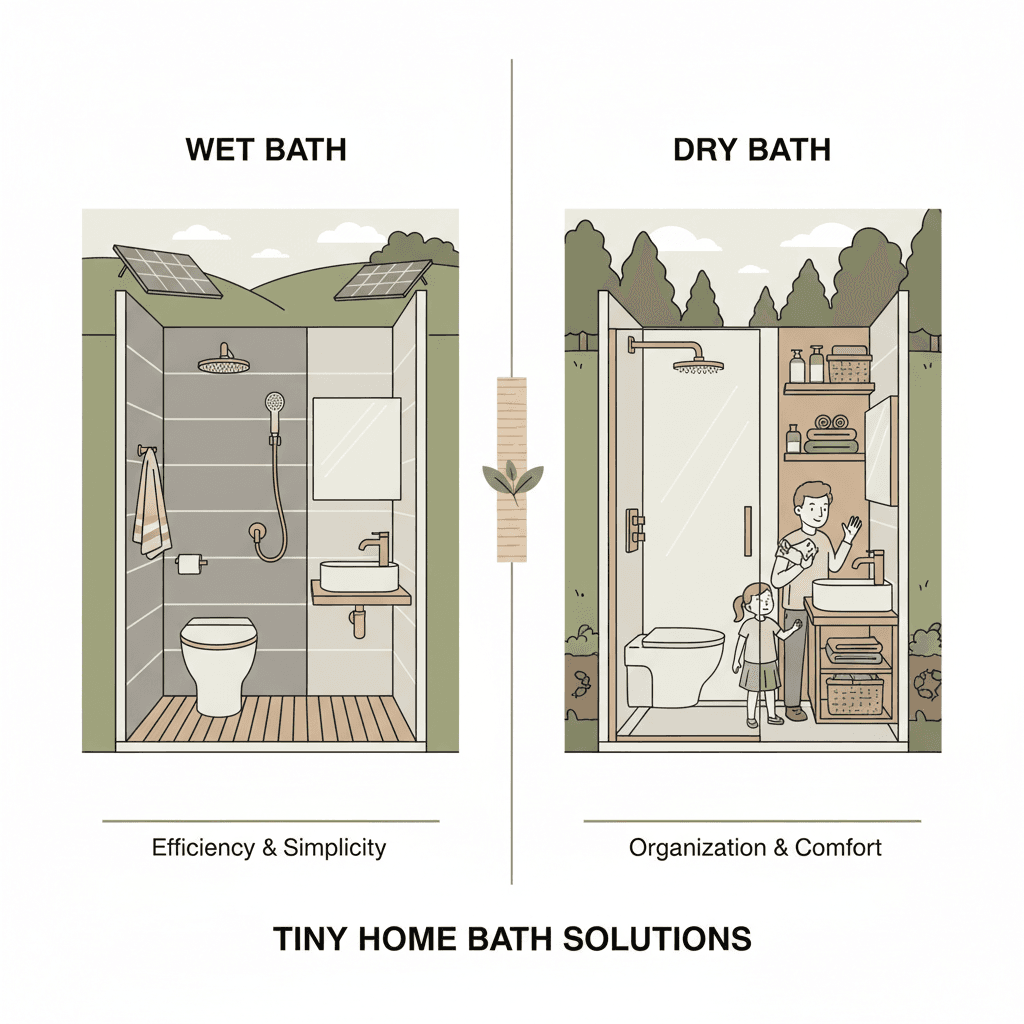
This is a big decision for any tiny home builder. A dry bath is what you’re used to: a separate shower stall, a toilet, and a sink. A wet bath, on the other hand, is a fully waterproofed room where the shower, toilet, and sink all share one space.
| Feature | Wet Bath | Dry Bath |
|---|---|---|
| Space | Extremely efficient, saves a lot of room. | Requires more space for separate areas. |
| Cleaning | Super easy. You can just spray the whole room down. | More corners and fixtures to clean. |
| Convenience | Everything gets wet when you shower. | Toilet and sink stay dry during showers. |
| Cost | Generally cheaper to build. | Can be more expensive due to more fixtures. |
I went with a wet bath. At first, I was worried about everything getting soaked, but it’s been a game-changer. I just keep a small squeegee handy to wipe down the walls and floor after a shower. It takes about 30 seconds. Plus, cleaning day is a breeze.
“I thought a wet bath would feel strange, but it’s the smartest decision I made for my tiny home. It’s so practical and makes the space feel way more open.” – A fellow tiny-homer I met at a festival.
Vertical Storage is Your Secret Weapon
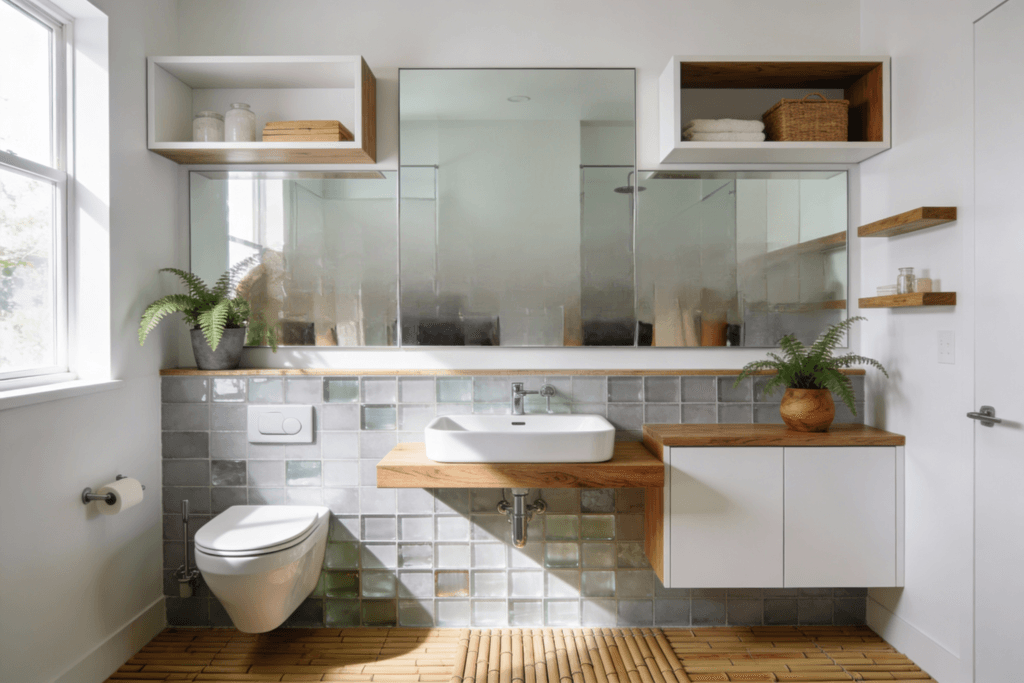
You can’t build outwards, so you have to build upwards. I installed simple open shelving above the toilet to hold towels, toiletries, and some small plants. It adds a nice touch without taking up valuable floor space.
Here are a few ideas:
- Floating Shelves: Easy to install and look great.
- Over-the-Door Organizers: Perfect for holding small bottles and soaps.
- Magnetic Strips: I put one on the wall to hold my tweezers, nail clippers, and other metal items. It’s one of my favorite little hacks.
- Recessed Medicine Cabinet: If you can build it into the wall, you get storage without anything sticking out.
Choosing the Right Fixtures
The fixtures you choose can make or break your tiny bathroom experience. You need things that are compact, efficient, and built for a small space.
The Toilet Situation
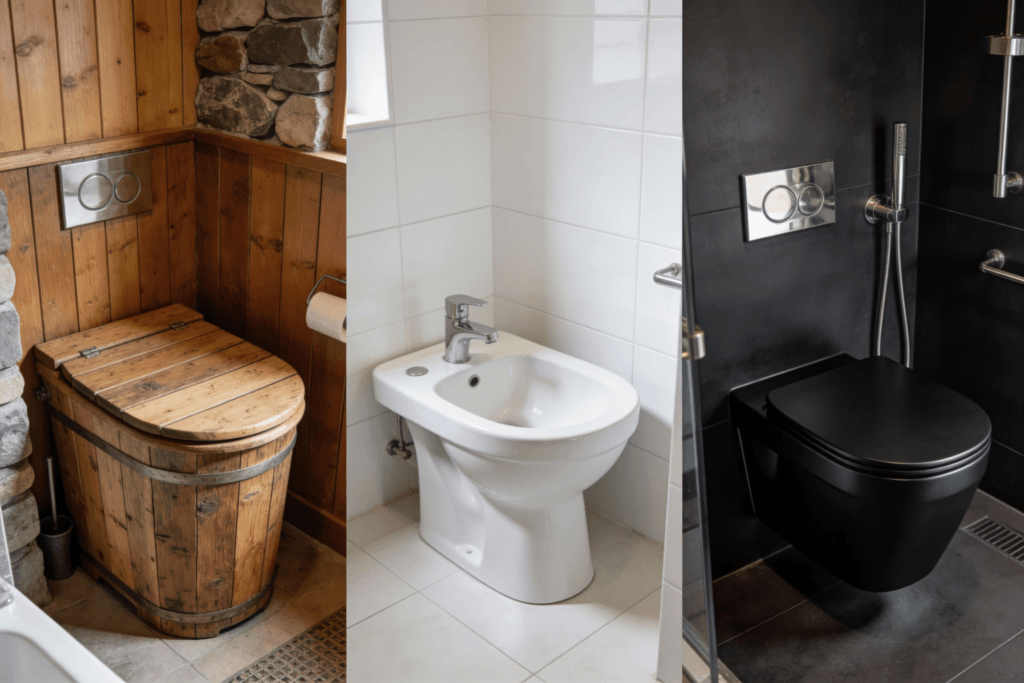
Let’s talk toilets. In a tiny house, you probably won’t have a standard flushing toilet connected to a city sewer. Your main options are composting, incinerating, or a dry flush toilet.
- Composting Toilets: These are the most popular choice. They separate liquids from solids and use natural materials like sawdust or coconut coir to break down waste. They don’t smell (I promise!) and are very eco-friendly.
- Incinerating Toilets: These use heat to burn waste into a small amount of sterile ash. They are clean and simple but require electricity or propane to run.
- Dry Flush Toilets: These use a liner system that bags the waste after each use. You just press a button, and it’s sealed away. The cartridges need to be replaced, but there’s no plumbing or venting needed.
I opted for a composting toilet and have been really happy with it. It’s simple, off-grid friendly, and I feel good about the low environmental impact.
Sinks and Showers That Fit
You don’t need a massive sink. A small corner sink or a narrow basin-style sink works perfectly. Some people even install a sink that fits right on top of the toilet tank to save space and reuse water.
For showers, a low-profile shower pan is a good choice. You can also get creative with the shower head. A handheld shower wand gives you more flexibility, especially in a wet bath. I even saw one guy who used a galvanized steel tub as his shower base. It looked awesome and gave his bathroom a rustic, farmhouse vibe.
Design Tricks to Create an Illusion of Space
A few clever design choices can make your tiny bathroom feel much larger than it is. It’s all about tricking the eye.
Use Light and Color
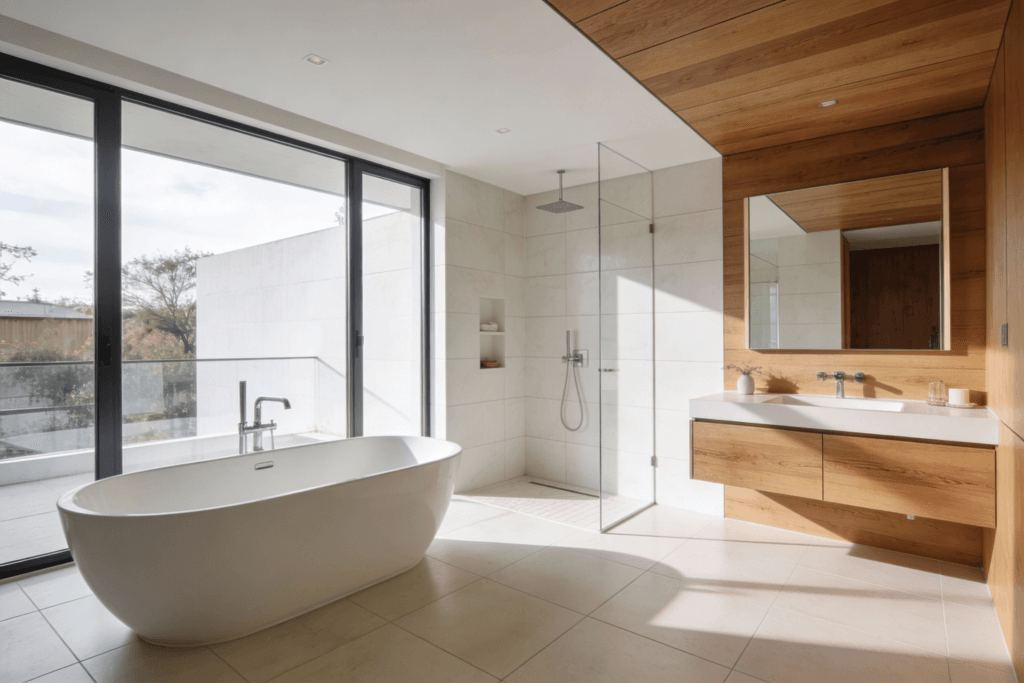
Dark colors can make a small room feel like a cave. I painted my bathroom walls a bright white, and it made an instant difference. Lighter colors reflect light and make the space feel open and airy.
A small window or even a skylight can be a huge plus. Natural light is your best friend in a tiny home. If a window isn’t possible, good lighting is key. I used a couple of bright, low-profile LED lights that don’t take up much headroom.
Mirrors, Mirrors, Everywhere
A large mirror is a classic trick for a reason—it works! It reflects light and creates a sense of depth. I installed a mirror that covers almost one entire wall of my bathroom. It makes the room feel twice as big and is super practical.
Keep It Simple
Finally, don’t over-clutter the space. A minimalist approach is the way to go. Only keep the essentials in the bathroom. The less stuff you have sitting out, the bigger and cleaner the space will feel. I have a small basket for my daily items, and everything else is tucked away on the shelves. It keeps the counters clear and my mind clearer, too.
Living tiny is all about being intentional, and your bathroom is no exception. With a little planning and creativity, you can create a space that’s not just functional, but also a place you enjoy being in.