
If you dream of spa-level relaxation in your tiny home, you’ll be happy to know that a japanese soaking tub fits beautifully in spaces under 250 square feet. The secret lies in thoughtful planning around weight, dimensions, and ventilation from day one.
- Quick Answer: Can You Have a Japanese Soaking Tub in a Tiny House?
- What Is a Japanese Soaking Tub (Ofuro)?
- Why a Japanese Soaking Tub Works Beautifully in a Tiny House
- Planning Your Tiny House Bathroom Around an Ofuro Tub
- Weight, Water Volume, and Structural Considerations
- Choosing the Right Japanese Soaking Tub for a Tiny House
- Integrating a Shower and Ofuro in One Tiny Bathroom
- Real-World Tiny House Ofuro Inspirations
- Maintenance, Safety, and Daily Use Tips
- Budgeting for a Soaking Tub in a Tiny House
- Conclusion: Designing a Tiny House Retreat with a Japanese Soaking Tub
Quick Answer: Can You Have a Japanese Soaking Tub in a Tiny House?
Yes, a Japanese-style soaking tub (ofuro) is absolutely achievable in a tiny house, even one built on a trailer. Modern compact ofuro tubs range from 38–48 inches long, 24–32 inches wide, and 27–35 inches deep—smaller footprints than standard 60-inch bathtubs while delivering deeper immersion. Compared to a typical bathtub, these compact tubs are specifically designed to fit tiny house bathrooms, making them an ideal choice when space is limited but a relaxing soak is desired.
The key constraints you’ll notice during planning are water weight (40–60 gallons means 333–500 pounds of water alone), trailer load capacity, and plumbing layout. Get these details right, and you’ll enjoy full-body, seated soaking in a space that most people would miss as a potential spa retreat.
What Is a Japanese Soaking Tub (Ofuro)?
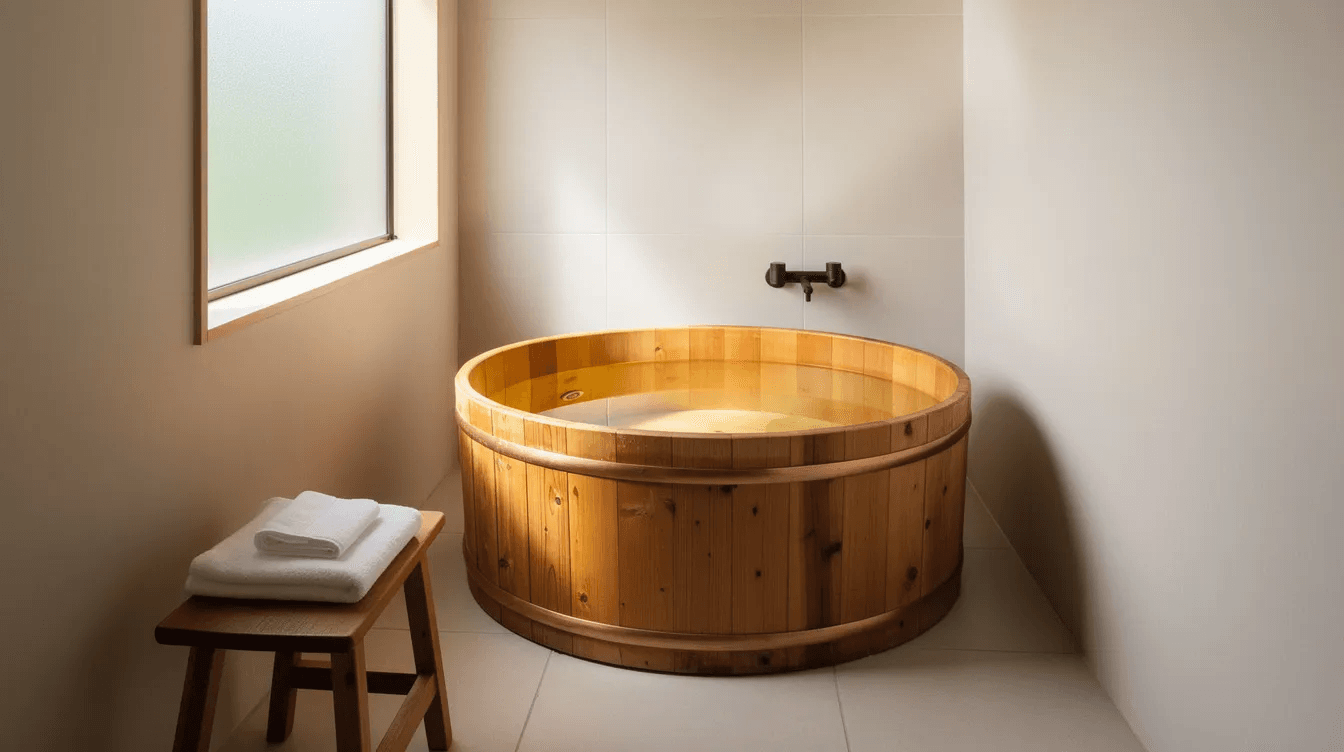
A japanese soaking tub, called ofuro, is a deep, compact tub designed for seated immersion. Unlike Western bathtubs created for reclining, the ofuro prioritizes vertical depth over horizontal length. Users traditionally wash and rinse outside the tub first, then enter the hot water purely for relaxation.
Traditional ofuro tubs use wood like hinoki cypress or cedar, prized for antimicrobial properties and subtle aroma. Modern tiny-house-friendly alternatives include acrylic, fiberglass, enamel steel, and stone composites—materials that address mobility and maintenance concerns in small spaces.
Typical dimensions hover around 42 inches long × 28 inches wide × 30 inches high, with water depth reaching 24–30 inches. This configuration accommodates users up to 6 feet tall in a comfortable seated position, making them ideal for tiny living where every inch counts.
Why a Japanese Soaking Tub Works Beautifully in a Tiny House
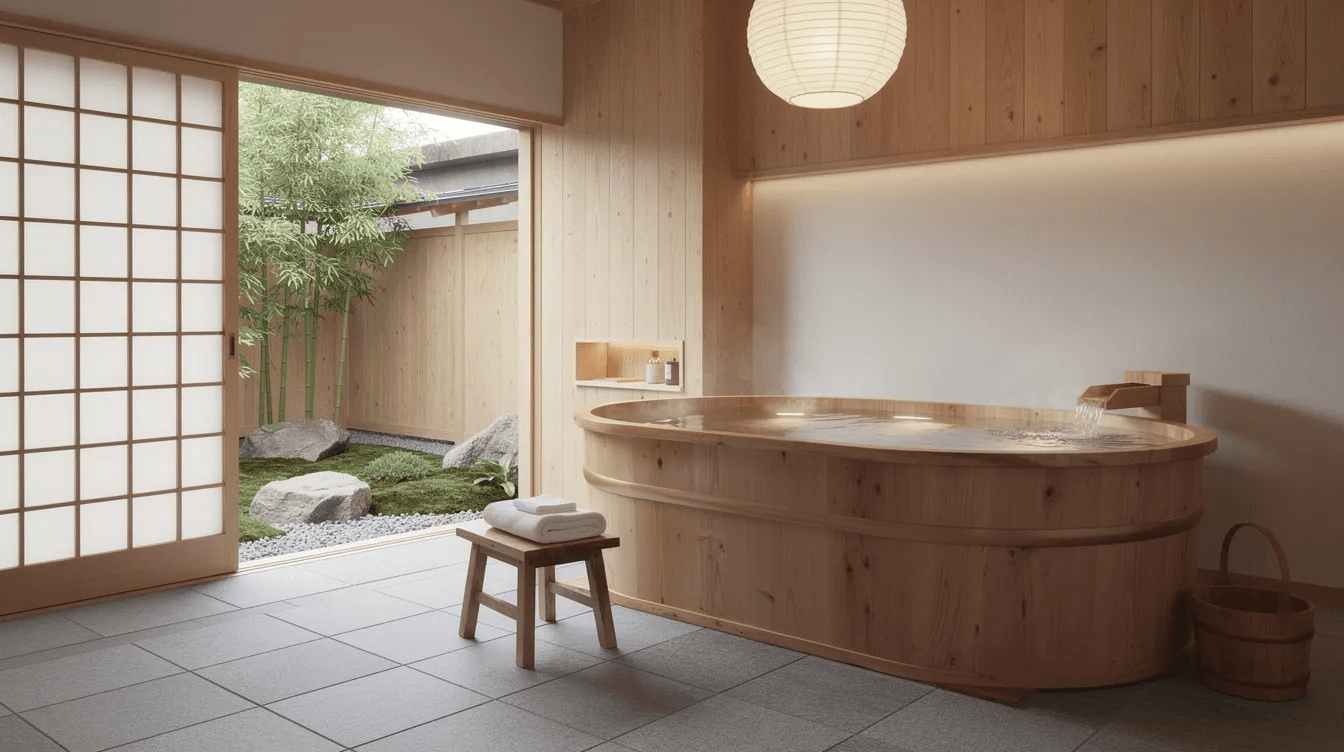
The ofuro’s compact footprint and vertical depth align perfectly with tiny house design constraints. You’re working with limited floor space but can build upward—exactly what these tubs demand.
Core advantages include:
- Space efficiency: roughly half the floor area of a standard tub
- Water efficiency: 35–50 gallons versus 80+ for conventional bathtubs
- Therapeutic depth supporting seated postures
- Design focal point with warm wood or minimalist white curves
A deep soaking tub can fit into common layouts: at the end of a galley bathroom, beneath a window, or spanning the full 80-inch trailer width with a small step-up. A 24-foot tiny house on wheels built in 2023 successfully integrated a 44” × 30” × 28” deep soaking tub along the rear wall with a shower wand above—proof that compact luxury is achievable when you apply tiny house interior designs that maximize every square foot.
Planning Your Tiny House Bathroom Around an Ofuro Tub
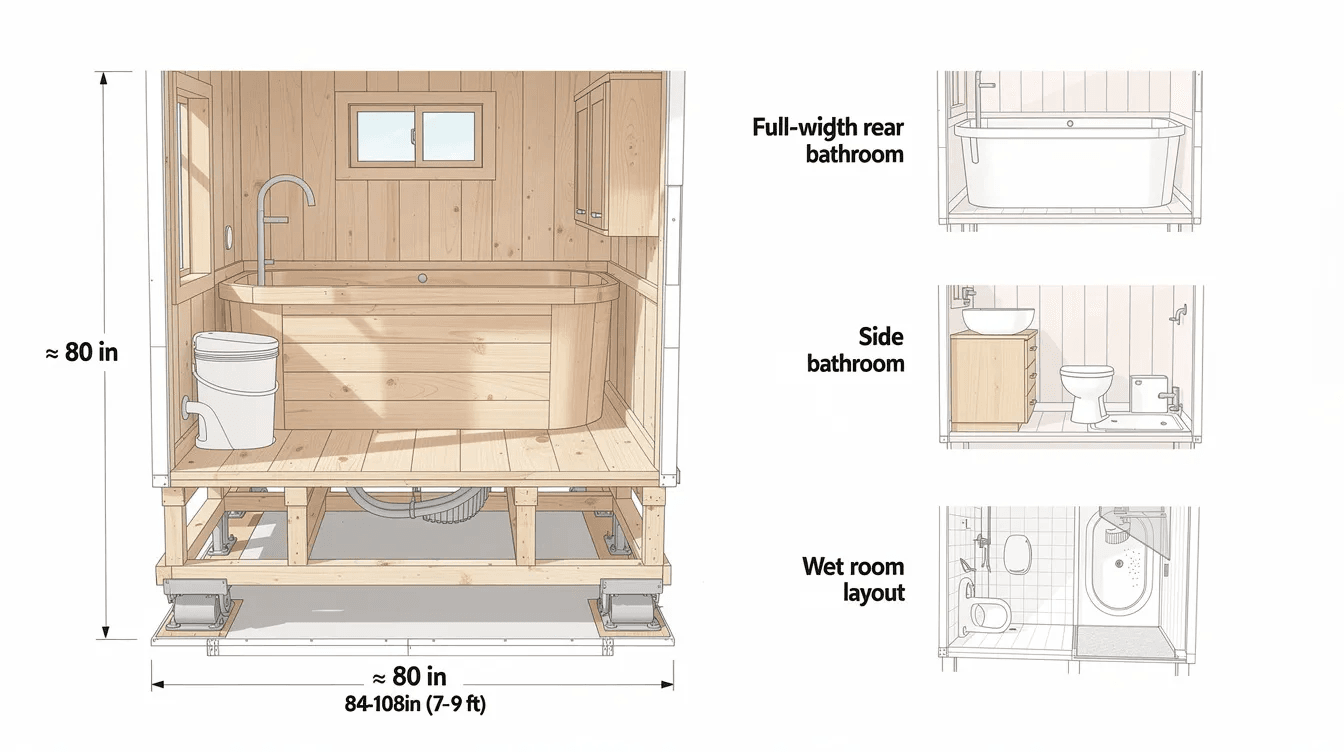
You must design the bathroom around the tub from the early planning stage. Treating it as an afterthought means making compromises that leave nobody happy. When planning, consider the significant role that water weight and structural capacity play in the design process to ensure your tiny house can safely support a filled soaking tub.
Ideal bathroom dimensions:
- Width: anchored to typical interior trailer width (about 80 inches)
- Length: 84–108 inches (7–9 feet) for tub, toilet, and storage
- Some layouts may require a longer bathroom to accommodate both the tub and other fixtures, providing flexibility in design that pairs well with custom tiny homes tailored to your lifestyle.
Three common layouts:
- Full-width rear bathroom with tub across the back wall
- Side bathroom with tub at one end, composting toilet opposite
- Wet room layout with tub and shower sharing one drain area
Some owners skip a separate bathroom sink and use the kitchen sink to save 18–24 inches of width, applying the same mindset used in exploring the world of tiny houses and minimalist space optimization. This thought requires careful consideration of your daily routine.
Size & Placement Guidelines
A 44-inch long tub needs at least 48–52 inches of wall length for framing and clearances. Plan for these minimums:
- 24 inches of standing space in front of the tub
- 15 inches from tub edge to toilet centerline
- 6–12 inches between tub and walls for cleaning freestanding units
Placing the tub over or near an axle line helps keep load balanced. Avoid clustering the tub, water heater, and water tank in a single corner. In a 26-foot tiny house, a 36” × 36” cedar ofuro centered over the rear axle with a composting toilet offset 18 inches to one side creates excellent balance.
Weight, Water Volume, and Structural Considerations
Water weight is your main constraint. At 8.33 pounds per gallon, the numbers add up fast:
Tub Volume | Water Weight | + Tub (acrylic) | + Person | Total Load |
|---|---|---|---|---|
37 gallons | 308 lbs | ~130 lbs | ~180 lbs | ~618 lbs |
50 gallons | 416 lbs | ~130 lbs | ~180 lbs | ~726 lbs |
This 550–800 pound load concentrates in 4–6 square feet. Recommendations for structural upgrades: |
- Upgrade to 10,000–14,000 lb GVWR trailer for 24–28 foot homes
- Double joists under bathroom area at 12–16 inch on-center spacing
- Add blocking and continuous plywood sheathing under the tub
Drainage, Waterproofing, and Ventilation
An ofuro behaves like a small indoor pool. Treat surrounding surfaces as a wet zone.
Waterproofing best practices:
- Cement board plus liquid or sheet membrane behind tile
- Tiled wet room floor with gentle slope and linear drain
- Annual resealing of wood tub exteriors with marine varnish or penetrating oil
Drainage planning:
- Position drain for straight run to greywater tank
- Include floor drain for overflow or splash
- Use flexible P-trap assemblies for road vibration in THOWs
Condensation control:
- Install 80–110 CFM exhaust fan vented directly outside
- Add at least one operable window
- Apply mold-resistant paint on walls and ceiling
Choosing the Right Japanese Soaking Tub for a Tiny House
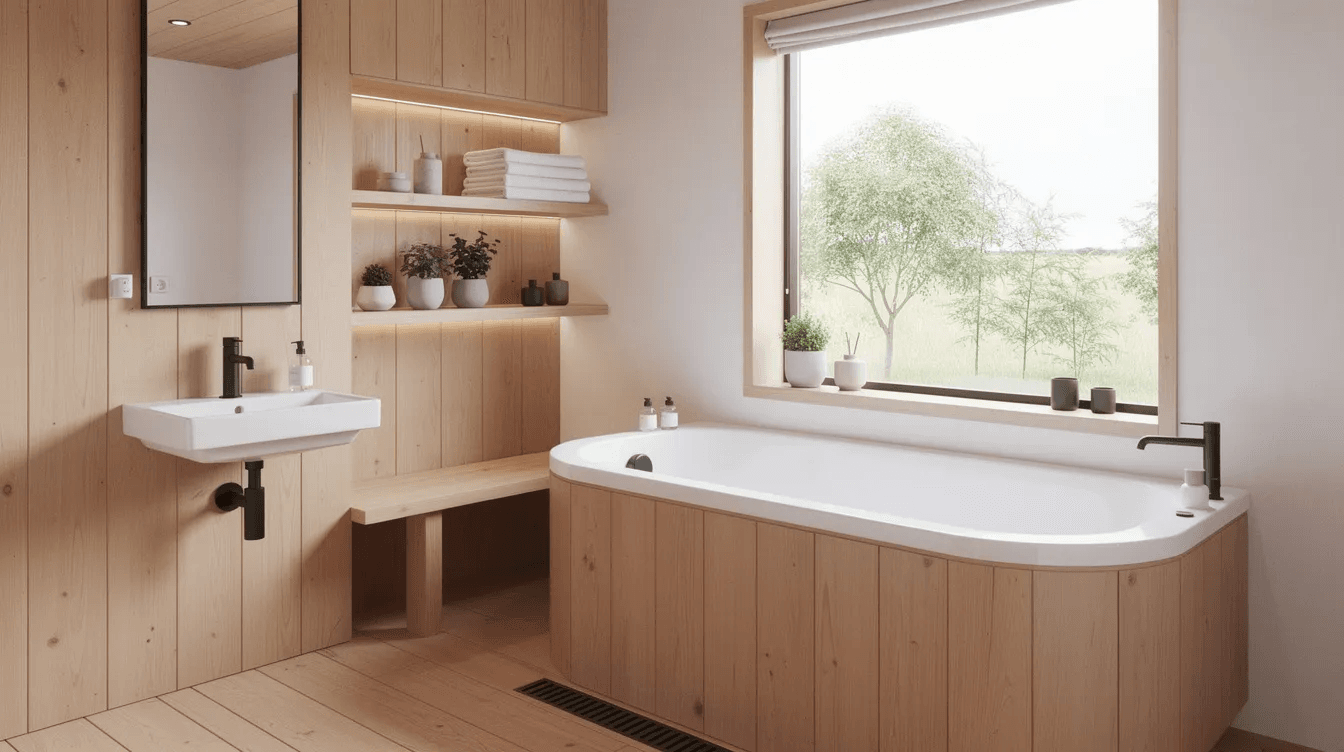
Your decisions center on material, size, shape, and shower integration. Each choice involves trade-offs.
Materials comparison:
Material | Weight | Pros | Cons |
|---|---|---|---|
Cedar/Hinoki | Medium | Warm, aromatic, classic, designed to withstand the tests of time | Requires humidity control, annual maintenance |
Acrylic | Light (111–131 lbs) | Affordable, bacteria-resistant | Less heat retention |
Stone composite | Heavy (269+ lbs) | Luxurious, excellent heat retention—keeps water warm for a longer period, built to withstand the tests of time | Best for stationary tiny homes only |
Size by user height: |
- Under 5’4”: 38–42” long × 24–28” wide × 26–30” deep
- Average height: 42–46” × 26–30” × 28–32”
- Over 6’: 46–52” long or 36–40” diameter rounds
Round vs Rectangular Ofuro in a Tiny House
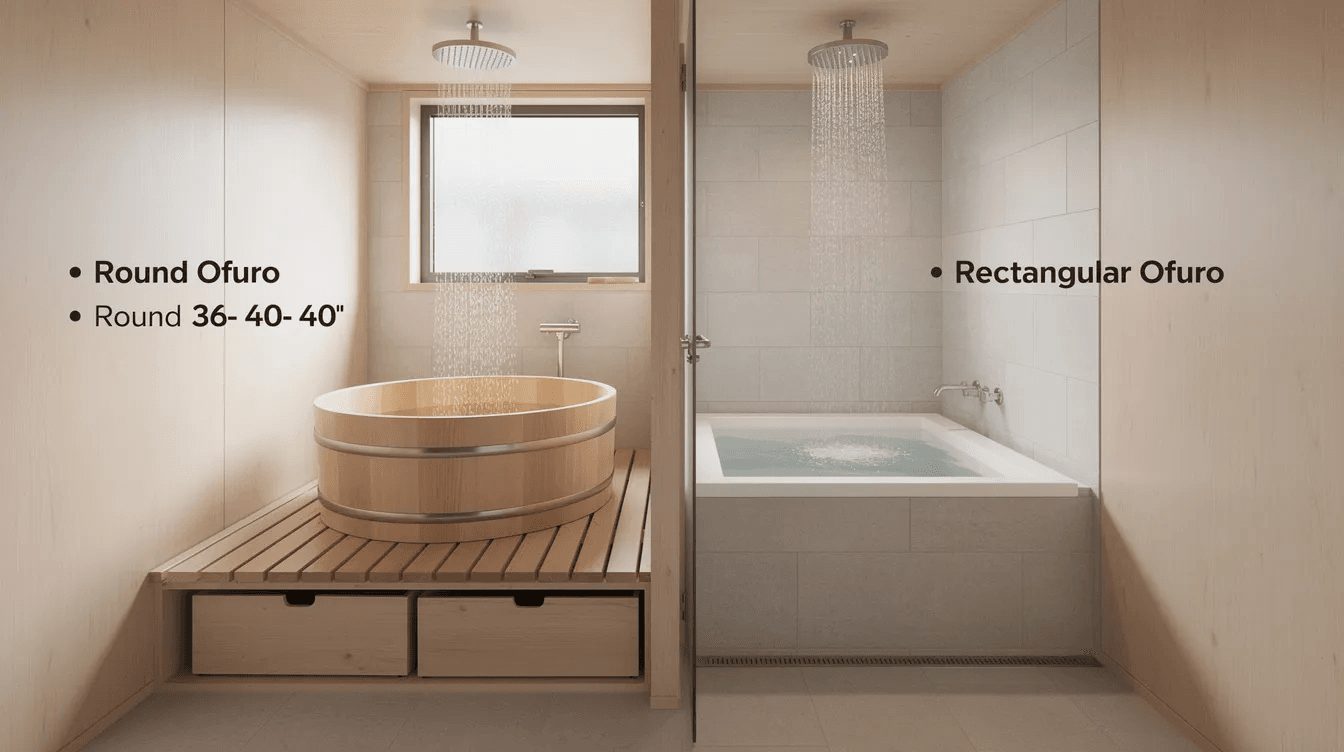
Round tubs (36–40” diameter) feel spacious and sculptural but waste corner space. Rectangular tubs fit flush against walls, conserving precious inches in linear bathrooms.
Square tubs around 32” × 36” offer an excellent compromise for wet rooms with ceiling-mounted rain showers. Building a timber platform around a round tub creates hidden storage beneath while making access easier.
Integrating a Shower and Ofuro in One Tiny Bathroom
Most tiny house owners want both a tub and quick shower, leading to hybrid designs.
Simple configurations:
- Wall-mounted handheld shower on vertical bar above tub corner
- Ceiling rain shower centered over square ofuro in tiled wet room
- Folding glass panel or curtain for splash control
Tile walls at least 6’8” high around the tub area. Use a thermostatic mixing valve capped at 120°F for safety—important since traditional japanese soaking temperatures reach 104–108°F.
Water Heating and Energy Use
Deep tubs demand more hot water than quick showers, which becomes especially important in affordable tiny house designs where utilities must be carefully planned. Size your heater accordingly:
- 6–10 gallon tank: works if you don’t fill completely and can wait between fills
- 40,000–80,000 BTU tankless propane: delivers 2.5–4.0 GPM at 70°F rise for frequent soaking
To fill a 45-gallon tub at 2.5 GPM takes about 18 minutes of continuous flow. Off-grid homes often pair tankless systems with 30–40 gallon insulated storage tanks to pre-warm water when solar surplus is available.
Real-World Tiny House Ofuro Inspirations
Concrete examples help visualize what’s possible in under 300 square feet. Stories from great tiny homes that redefine small-space living show how owners integrate high-end features like soaking tubs while managing space and structure. Some owners have mentioned their experiences with installing a Japanese soaking tub in their tiny house, highlighting both the challenges and rewards of fitting such a feature into a compact space.
Example 1: A 24-foot craftsman-style THOW (2024) features a rear bathroom with emerald green tile and a 42” × 28” × 28” deep cedar tub under a skylight. The tub sits on a 6-inch platform with side-access storage, weight balanced over the axle.
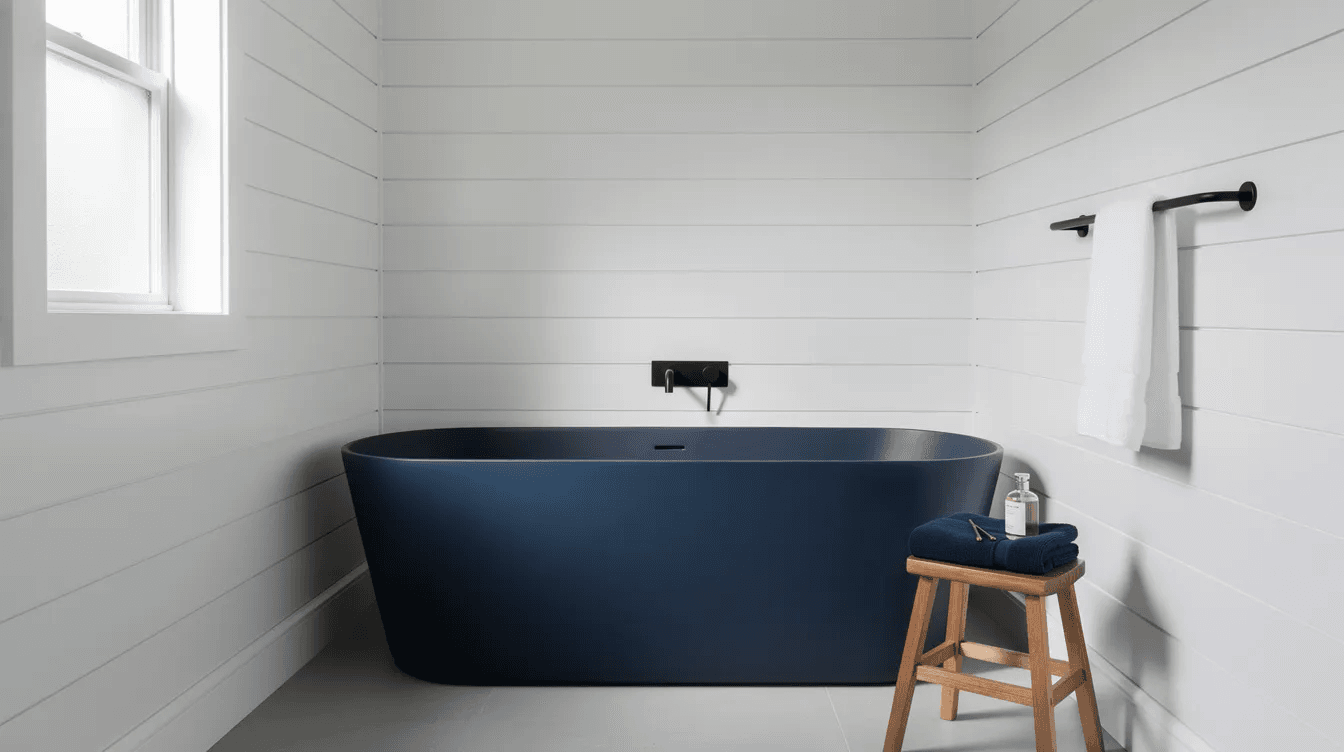
Example 2: A modern 26-foot tiny house uses shiplap walls and a bold blue 40-inch acrylic sit tub in an all-tile wet room. A linear drain handles both shower and tub water while a ceiling rain shower makes the compact space feel luxurious.
For more tiny house bathroom inspiration, check out our related post on creative small space bath designs and explore elegant tiny homes that redefine modern living for additional layout and finish ideas.
Maintenance, Safety, and Daily Use Tips
Tiny house conditions—limited ventilation, occasional road movement—demand intentional maintenance.
Wood tub care:
- Keep humidity moderated; don’t let the tub dry completely for long periods
- Use mild, non-abrasive cleaners; avoid bleach
- Reseal or oil once or twice annually
Safety essentials:
- Install non-slip strips or cedar floor grate inside tub
- Add grab bar near entry side for the higher step-in
- Test water temperature with thermometer before soaking
Tiny house-specific concerns:
- Secure tub with brackets or blocking for travel in THOWs
- Check plumbing connections after long tows for leaks
- Keep a small dehumidifier handy for cold climates
Budgeting for a Soaking Tub in a Tiny House
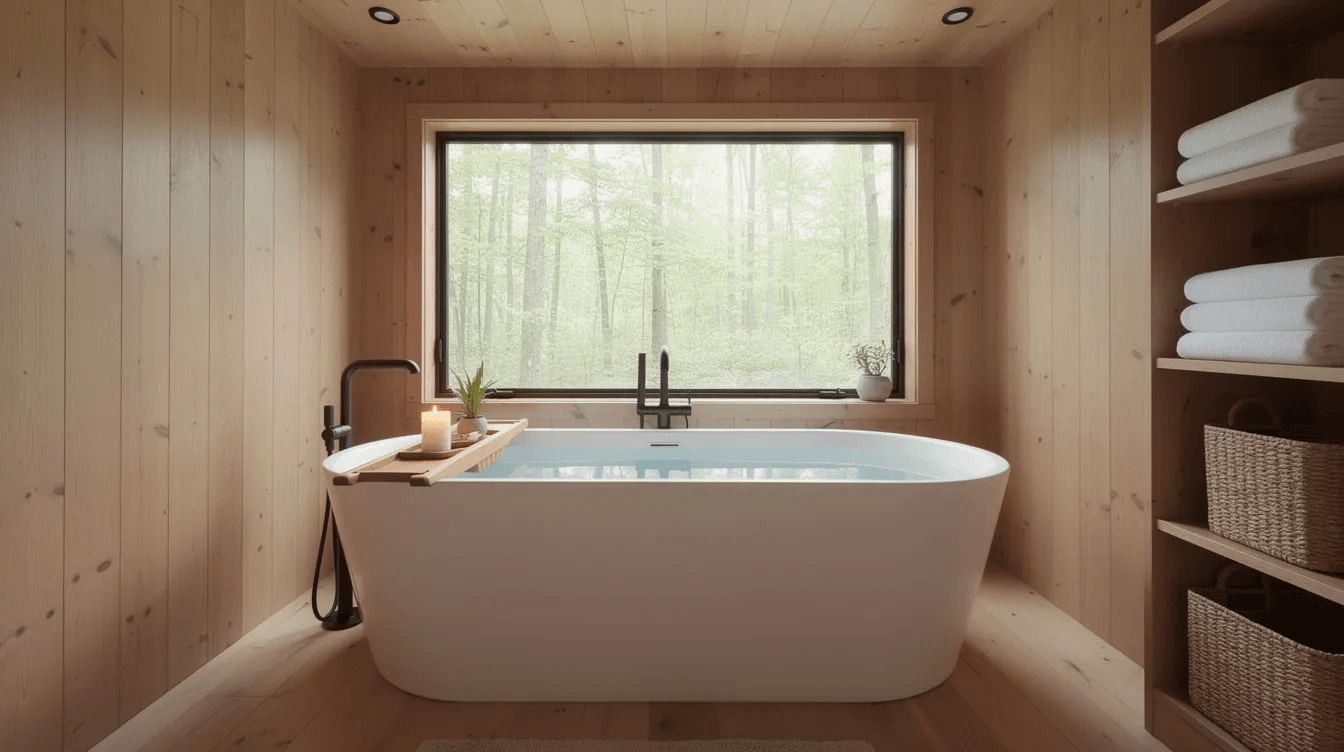
When you’re designing your dream tiny house, every dollar and every inch counts—especially in the bathroom. Adding a Japanese soaking tub to your tiny home is a luxurious upgrade, but it’s important to plan your budget carefully to make sure your investment brings maximum comfort without breaking the bank.
Start by setting a clear budget for your tiny house bathroom that fits within your overall affordable tiny house building plans and costs. Remember, the cost of a soaking tub goes beyond just the price tag on the tub itself. You’ll need to factor in installation, plumbing, and any electrical work—especially if you’re adding hidden outlets for electronics or heated towel racks. Clever storage solutions, like built-in benches or under-tub drawers, can help you make the most of your compact space and keep your bathroom organized, much like the strategies used in inspiring tiny house interiors that maximize every square foot.
Soaking tubs for tiny homes come in a wide range of prices. Classic acrylic tubs are often the most budget-friendly, while modern stone composite or traditional wood tubs can be more of an investment. A compact Japanese soaking tub made from cedar or hinoki wood offers timeless style and comfort, but may require a higher upfront cost and ongoing maintenance. On the other hand, a sleek acrylic or fiberglass tub can deliver the same deep-soak experience at a lower price and with less upkeep.
Don’t forget to include the cost of any modifications needed to fit your chosen tub. This might mean rerouting plumbing, upgrading electrical systems, or building a custom bench for seating and storage. These details can add up, but they’re essential for making your tiny house bathroom both functional and beautiful.
To get the best value, research different tub materials and features, read reviews, and compare prices from multiple suppliers. Think about what matters most to you: Is it the warmth of natural wood, the easy care of acrylic, or the modern look of stone? Prioritize features that will make your daily routine more comfortable and enjoyable.
Here are some key tips for budgeting your tiny house soaking tub, whether you’re inspired by top tiny house designs for modern living or planning a completely custom build:
- Research a variety of Japanese soaking tubs and compact soaking tubs to find the best fit for your space and budget.
- Factor in installation, plumbing, and electrical costs—including hidden outlets and any upgrades needed for safe, efficient use.
- Maximize your bathroom’s storage with built-in benches or creative shelving to keep the space clutter-free.
- Decide which features are must-haves for your comfort and which are nice-to-have extras.
- Explore different materials—wood, acrylic, stone composite—to balance style, durability, and cost.
- Read reviews and gather information from tiny house websites and forums to find the best tub for your needs.
With thoughtful planning and a clear budget, you can create a tiny house bathroom that feels like a spa retreat—without overspending. Whether you choose a classic wooden ofuro or a modern acrylic soaking tub, the right choice will help you love your tiny living experience every day, especially when paired with cute tiny house designs for your dream home. Careful budgeting means you won’t have to compromise on comfort, making your tiny home truly feel like a dream come true.
Conclusion: Designing a Tiny House Retreat with a Japanese Soaking Tub
A japanese soaking tub transforms a 6–8 foot bathroom into a personal spa, even in a 20–28 foot tiny house. The key numbers to remember: 38–48 inches long, 24–32 inches wide, 28–32 inches deep, with 37–50 gallon capacity in bathrooms roughly 80 inches wide and 84–108 inches long.
Decide early in your design process whether a deep soaking tub is non-negotiable. This means your trailer rating, framing, plumbing, and window placement can all optimize around it, whether you’re starting from a Home Depot tiny house kit with big possibilities or a fully custom build. Read through your options, share your plans with your builder, and agree on structural requirements before framing begins—especially if you’re evaluating tiny houses for sale to decide if the lifestyle is right for you.
A well-designed tiny house ofuro transforms daily bathing into a ritual—making small-space living feel more luxurious rather than like a compromise. Choosing a Japanese soaking tub helps you live a more intentional and relaxing tiny house lifestyle, embracing comfort and mindfulness in your everyday routine. That’s the real comfort of good design.