

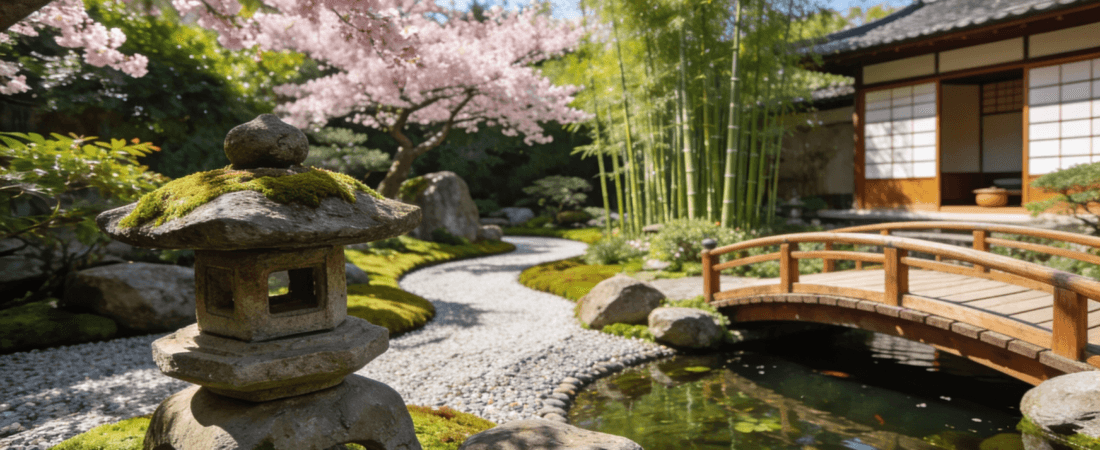
Japanese gardens are serene outdoor spaces that inspire calm and quiet contemplation, rooted in ancient Japanese culture and emphasizing natural elements like rocks, water, and plants.
Cultural Significance
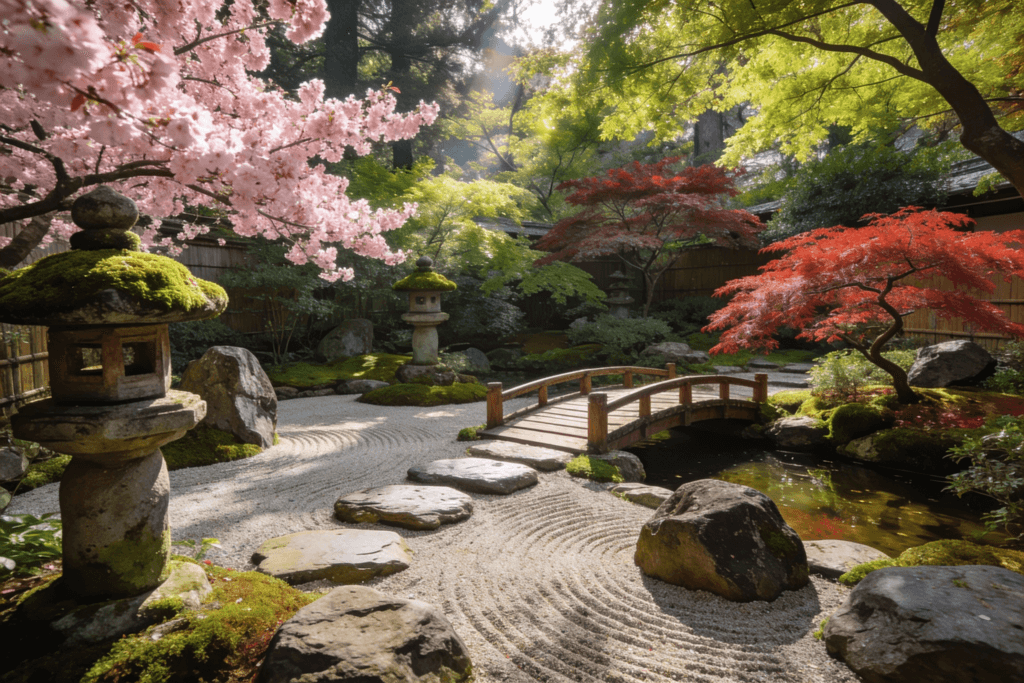
Japanese gardens have a rich history in Japan, evolving over hundreds of years and reflecting deep cultural traditions. Traditional gardens, with their historical roots and cultural significance, use natural materials and classical styles such as courtyard and tea gardens to maintain authentic elements that reflect Japanese heritage.
Key Elements
Small Japanese gardens can transform an entire yard or a dedicated garden area, incorporating traditional Japanese garden design principles for a peaceful atmosphere. These gardens often emphasize a limited color palette and minimalist style, focusing on simplicity and subtle beauty. The principle of Wabi-sabi in Japanese gardens embraces imperfection and transience, creating a harmonious and peaceful setting. Japanese gardens also incorporate the principle of Shakkei, or ‘borrowed scenery’, to connect the garden with the surrounding landscape and enhance the sense of space. These gardens balance natural elements with human order and discipline, creating tranquil and meditative outdoor spaces. Moss is a predominant ground cover in Japanese gardens, evoking tranquility and representing simplicity and refinement.
Understanding Japanese culture and tradition is key to shaping the design and elements of these gardens, including the use of cherry blossoms, Japanese maples, moss, and bamboo. Japanese homes often feature courtyard gardens (tsubo-niwa) designed to be viewed from inside, enhancing the harmony and aesthetic of the living space.
Types of Japanese Gardens
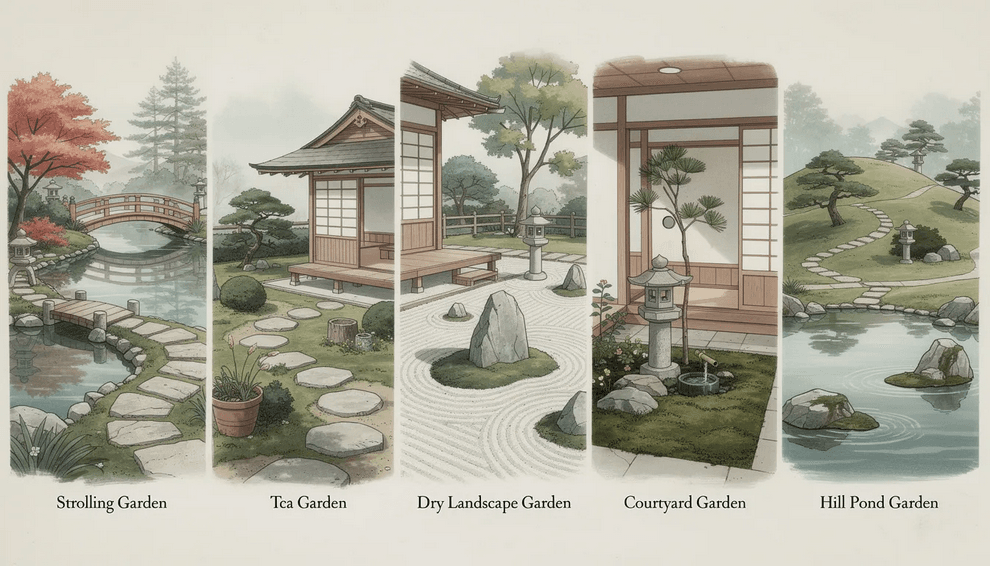
There are various types of Japanese gardens, each with unique attributes and functions:
- Strolling Gardens: Characterized by winding pathways, scenic views, and a leisurely walking experience. These gardens often feature bridges, water elements, and naturalistic plantings, designed for quiet contemplation and exploration.
- Tea Gardens: Reflect Buddhist harmony and simplicity, serving as tranquil settings for meditation and tea ceremonies.
- Dry Landscape Gardens: Also known as Japanese rock gardens or zen gardens, these use stones, rocks, and minimal plants or water to create a peaceful atmosphere. Key features include raked sand or gravel representing water ripples and large stones denoting islands or mountains.
- Courtyard Gardens (tsubo-niwa): Compact private gardens designed to be viewed from inside the house, often featuring miniature landscapes.
- Hill and Pond Gardens: Include artificial rolling hills and water features representing stability and permanence.
Small gardens can incorporate elements from these traditional styles, focusing on design principles, plant choices, and features suitable for limited spaces. The formal style of Japanese gardens includes natural elements such as rocks, stone, gravel, water, and plants. Japanese garden design typically incorporates 70% structural elements (like rocks and trees) and 30% seasonal plants. Stones and rocks are carefully selected and placed to symbolize islands, mountains, or animals. Japanese gardens often utilize a limited color palette and focus on foliage and structure rather than colorful flowers.
Design Principles
Japanese garden design is guided by cultural and philosophical principles, including:
- Wabi-sabi: Embracing imperfection and simplicity.
- Shizen: Arranging elements to feel spontaneous and natural.
- Fukinsei: Emphasizing asymmetry over symmetry.
- Shakkei: Incorporating borrowed scenery from surrounding landscapes.
- Ma: Valuing negative space to create flow and harmony.
To maintain authenticity, prioritize natural materials like wood, stone, and sand in your garden design. Pruning is essential for shaping plants and creating the refined look typical of Japanese gardens. Evergreen trees and shrubs are staples, providing year-round structure and greenery. Remember, the principle of wabi-sabi encourages you to appreciate the beauty of imperfection and the natural passage of time.
These principles help create gardens that are balanced, natural, and meditative. Here are some practical tips to help you achieve an authentic and polished Japanese garden:
- Focus on using natural materials
- Practice regular pruning
- Select evergreen plants to maintain structure throughout the seasons
Creating a Garden
Designing a small Japanese garden is a thoughtful process that blends artistry with nature.
Planning Your Space
To create a tranquil outdoor space inspired by traditional Japanese style, begin by observing your available space and considering how natural elements can be harmoniously arranged. Choose a location that offers the right balance of sunlight and shade, as this will influence the types of plants and features you can include.
Envisioning the Atmosphere
Start by envisioning how you want your garden to feel—peaceful, secluded, and connected to nature. Incorporate natural elements such as rocks, gravel, and water to evoke the landscapes of Japan, even in a small Japanese garden. Select plants that thrive in your climate but reflect the spirit of Japanese gardens, such as moss, ferns, bamboo, or compact maples. Arrange these elements with care, allowing for open spaces that invite contemplation and movement.
Simplicity and Balance
When planning your garden, focus on simplicity and balance. Use natural materials like stone and wood for pathways or borders, and avoid overcrowding the space. Each plant and feature should have a purpose, contributing to the overall sense of harmony. By thoughtfully combining these elements, you can create a small Japanese garden that transforms any outdoor space into a serene retreat, celebrating the beauty of nature in every season.
Top 20 Small Japanese Garden Ideas
Pathways and Movement
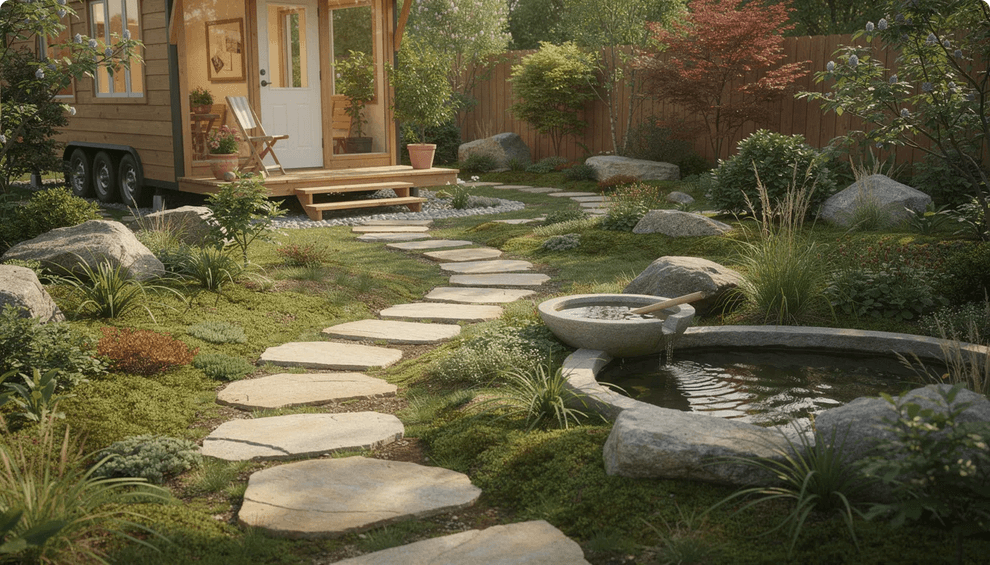
- Create a Miniature Stroll Garden:
- Use stepping stones to guide visitors through a small space with carefully placed plants, stones, and a small water feature to mimic larger stroll gardens.
- Discover the charm of tiny house nature retreats for more ideas on maximizing small outdoor spaces.
- Incorporate Stepping Stone Pathways:
- Create winding or straight paths with natural stone stepping stones set into gravel, moss, or grass to encourage mindful movement.
- Inspect stone pathways regularly to ensure they are stable and repair or replace damaged elements as needed.
Water Features
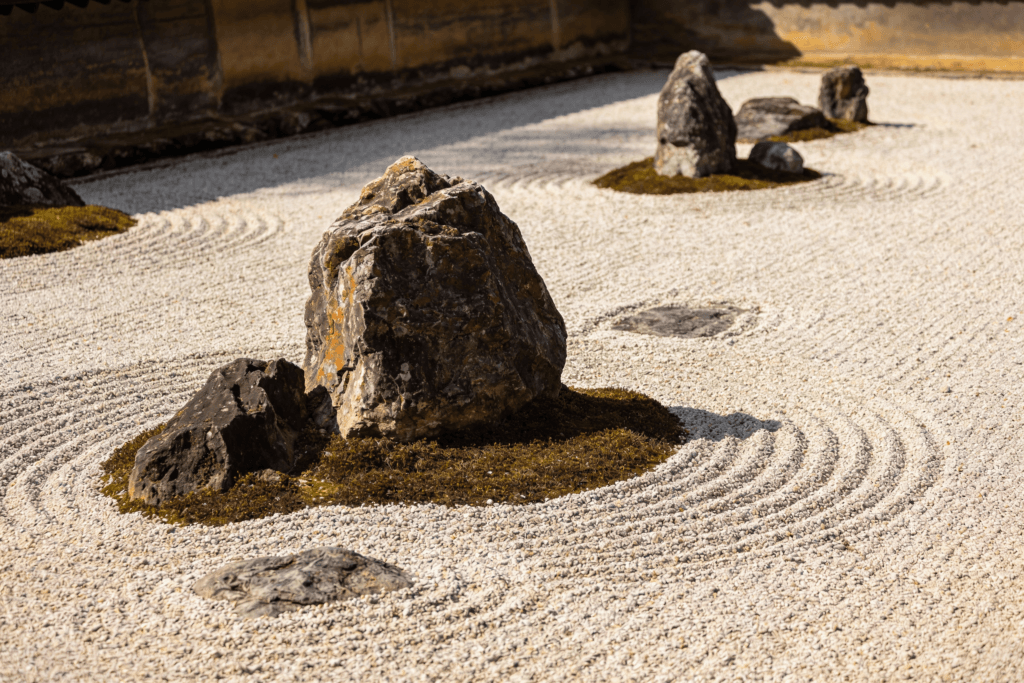
- Design a Zen Rock Garden:
- Incorporate raked gravel to represent water ripples and place larger rocks to symbolize mountains or islands, creating a peaceful dry landscape.
- Raking gravel or sand regularly maintains patterns and keeps them looking their best.
- Install a Shishi Odoshi Water Feature:
- This bamboo water fountain creates soothing sounds and adds a traditional Japanese garden element that also deters pests.
- Build a Small Pond or Fish Bowl:
- Even a small water feature with goldfish can add life and calmness, reminiscent of larger Japanese pond gardens.
- Clean ponds, waterfalls, fountains, and basins periodically to keep water clear and fresh.
- Add a Small Waterfall or Stream:
- Even a modest water feature can create soothing sounds and visual interest, reinforcing the garden’s tranquil atmosphere.
- Clean water features regularly to maintain clarity and freshness.
Plant Selection
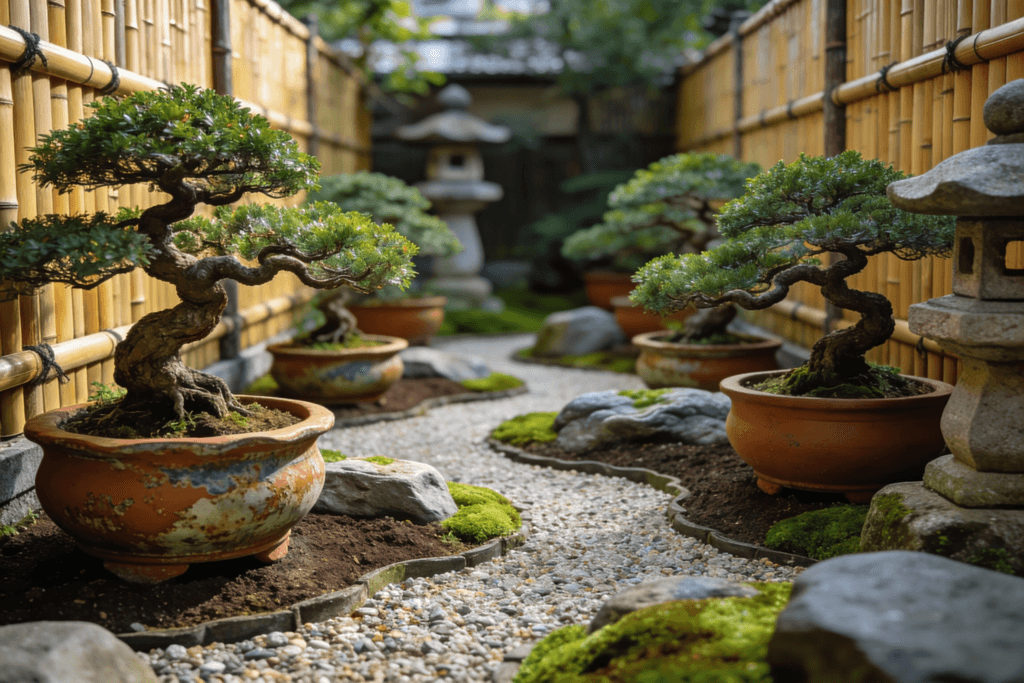
- Use Bonsai and Niwaki Trees:
- Feature bonsai trees in pots and niwaki (cloud-pruned) trees in the soil to add structure and traditional Japanese garden aesthetics.
- Cloud pruning is a popular technique that creates soft, sweeping forms resembling clouds, enhancing visual harmony.
- Using pots for bonsai and other plants is especially practical for small spaces or patios.
- Incorporate Moss Ground Cover:
- Adding moss creates a lush, green carpet that evokes tranquility and requires minimal maintenance, especially in shaded or moist areas.
- Moss is a common ground cover in Japanese gardens, and a lush green garden can focus almost exclusively on various moss species.
- Plant Japanese Maples:
- Choose compact varieties with striking fall color to provide seasonal interest and a focal point in your garden.
- Consider the maximum height of acers when selecting varieties for small gardens.
- Include Cherry Blossoms:
- Small cherry trees add delicate spring blossoms that symbolize renewal and beauty.
- Be mindful of how tall cherry blossom varieties can grow, as this affects their suitability for compact spaces.
- Add Bamboo Screening:
- Use clumping bamboo in pots or containers to provide privacy and a natural backdrop without overwhelming the space.
- Add Perennials and Evergreen Shrubs:
- Select plants like azaleas and pine that maintain their foliage year-round, providing structure and greenery through all seasons.
- Incorporate Ornamental Grasses:
- Use grasses with interesting foliage to add texture and movement, complementing the garden’s natural elements.
- Plant Seasonal Flowers for Four-Season Interest:
- Combine plants like wisteria in spring, acers in summer and fall, and camellias in winter for ongoing seasonal beauty.
- Consider the importance of sun and shade for moss and plant selection, as many Japanese gardens rely on shade-tolerant species due to limited sunlight.
Garden Structures
- Add a Tea Garden Corner:
- Include a small stone basin (tsukubai) and a rustic pathway leading to a seating area for tea ceremonies or quiet meditation.
- Cloud Prune Shrubs and Trees:
- Shape shrubs and small trees into soft, cloud-like forms to add airiness and artistic flair.
- Cloud pruning mimics the rounded, gentle shapes of clouds, contributing to the tranquil and harmonious look of Japanese gardens.
- Use Lanterns and Stone Statues:
- Place traditional stone lanterns or statues strategically to serve as focal points and enhance the garden’s spiritual ambiance.
- Use Weathered Wood and Stone Elements:
- Include rustic benches, fences, or bridges made from natural materials to blend seamlessly with the surroundings.
- The weathering of wood and stone elements over time adds authenticity and a sense of age to the garden.
- Create Miniature Mountain Scenes:
- Arrange stones and moss to suggest mountain landscapes, enhancing the garden’s depth and symbolism.
- Dedicate One Area to a Specific Feature or Style:
- Consider focusing one area of your garden on a particular design element, such as a Japanese courtyard, moss garden, or water feature.
- This approach creates a cohesive and purposeful space, even in small gardens.
Maintenance and Care
- Maintain Neat and Minimalistic Landscaping:
- Keep the garden uncluttered with well-pruned plants, clean pathways, and balanced negative space to embody Japanese garden philosophy.
- Keep garden areas free of weeds to avoid an unkempt look, and ensure other elements such as rocks, furniture, and ornaments are kept clean for a tidy and appealing outdoor space.
Tip: Visit local gardens for inspiration and ideas on features, plant choices, and layouts that you can adapt to your own top 20 small Japanese garden project.
Maintaining a Garden
Maintaining a Japanese garden requires regular care. Key maintenance tasks include:
- Pruning branches and shrubs to keep shapes neat
- Watering plants appropriately
- Cleaning fallen leaves
- Maintaining water features (ponds, waterfalls, fountains, and basins) to keep water clear and fresh
- Inspecting stone pathways to ensure stability; repair or replace damaged elements as needed
- Raking gravel or sand to maintain patterns and keep them looking their best
- Keeping garden areas free of weeds to avoid an unkempt look
- Regularly maintaining and cleaning other elements in the garden, such as rocks, stones, and furniture, to keep the outdoor space tidy and appealing
- Adding moss and allowing natural weathering of wood and stone elements to enhance the garden’s authentic feel, as exposure to weather gives materials a rustic and aged appearance
- Embracing the natural cycle of the seasons, including spring blooms and fall color, to keep the garden dynamic and connected to nature
Screening and Structures
Use walls, fences, bamboo screens, and hedges to create privacy and enclosure. Structures such as bridges, lanterns, and statues provide visual interest and focal points. These elements should harmonize with the garden’s natural surroundings and design principles.
Pathways and Walkways
Incorporate stepping stones, gravel, and wood pathways to guide movement and create a sense of flow. Pathways can connect different areas like tea gardens, ponds, or seating spaces, enhancing the garden’s usability and contemplative quality.
Seasonal Interest
Plan for seasonal changes by including plants and trees that provide color and texture through spring, summer, fall, and winter. Cherry blossoms, Japanese maples, moss, and pine are excellent choices to ensure your garden remains beautiful and engaging year-round.
By integrating these top 20 small Japanese garden ideas and following traditional design principles, you can create a tranquil, beautiful outdoor space that brings the serenity of Japanese gardens to your own home. Whether you have a small yard, courtyard, or patio, these ideas offer inspiration and practical guidance to design a garden that fosters relaxation, mindfulness, and a deep connection with nature.