
If you’ve been exploring the idea of downsizing or escaping Virginia’s rising housing costs, a VA tiny house might be exactly what you’re looking for. Tiny homes in the Commonwealth offer a path to affordable, flexible living—whether you want a permanent foundation in the Blue Ridge foothills or a mobile setup near Virginia Beach.
Virginia officially recognizes tiny houses under Appendix Q of the 2018 Virginia Residential Code, defining them as dwellings with 400 square feet or less of floor area (excluding lofts). This puts the state ahead of many others in providing a clear regulatory framework. The USBC (Virginia Uniform Statewide Building Code) adopts the IRC (International Residential Code), giving tiny house enthusiasts a real path to legal, permitted living spaces.
From 2018 to 2024, tiny home interest has surged in places like Richmond, Virginia Beach, Roanoke, and Charlottesville as people seek alternatives to traditional housing. This article will walk you through legality, county rules, costs, communities, and the practical steps to get your tiny house legally placed in Virginia, while also pointing you toward broader resources for exploring the world of tiny houses. Consider this your comprehensive guide to making tiny home living work in the Commonwealth.
- Are Tiny Houses Legal in Virginia?
- Park Models vs VA Tiny Homes (On Wheels vs On Foundations)
- VA Tiny House Zoning & County-Level Rules
- VA Tiny House Regulations by City
- Costs of Building or Buying a Tiny House in Virginia
- Tiny House Communities & Where to Park in Virginia
- How to Get a VA Tiny House Legally Approved
- Living Comfortably in a Virginia Tiny House
- Frequently Asked Questions About VA Tiny Homes
Are Tiny Houses Legal in Virginia?
Here’s the direct answer: yes, tiny houses are legal in VA if they meet state building code requirements and local zoning. There is no statewide ban on tiny homes as of 2024, and Virginia has actually been forward-thinking in codifying standards for these small dwellings.
The key is understanding how Virginia classifies your tiny house:
- Tiny house on a permanent foundation – Treated as a dwelling unit under the IRC. Must meet all building code requirements including footings, framing, and egress windows. This is the route for true residential status.
- Tiny house on wheels (THOW) – Often classified as an RV or “park model.” These fall under different regulations and may have restrictions on where you can live full-time.
Virginia’s state-level rules establish that habitable rooms must have a minimum of 120 square feet, with at least one room meeting this threshold. The typical maximum for “tiny house” classification is 400 square feet. Ceiling heights must be at least 6 feet 8 inches in habitable spaces, though Appendix Q allows 6 feet 4 inches in bathrooms and kitchens.
The IRC and USBC might sound intimidating, but they’re simply the construction standards Virginia has adopted to ensure homes are safe and livable. Think of them as the rulebook your builder follows.
One thing every tiny house owner needs to understand is the Certificate of Occupancy (CO):
- A CO is issued by your local building department after final inspections pass
- It confirms the structure meets all code requirements for residential occupancy
- Without a CO, you cannot legally live in your tiny house as a primary residence
- The inspection process typically covers framing, electrical, plumbing, and final walkthrough
Park Models vs VA Tiny Homes (On Wheels vs On Foundations)
Park model RVs and tiny homes often look nearly identical—both typically fall under 400 square feet—but Virginia regulates them very differently. Understanding this distinction will save you time and ensure you choose the right path for your situation, especially if you’re comparing different tiny house park model homes for seasonal or full-time use.
Park Model RVs are built to ANSI A119.5 standards (the Recreation Vehicle Industry Association guidelines). They’re titled and registered like vehicles through the Virginia DMV, not recorded as real property. A park model parked seasonally at Bethpage Camp-Resort in Urbanna, VA operates under RV regulations, which means different rules for long-term occupancy.
Tiny homes on permanent foundations go through the full building permit process under IRC/USBC standards. A 320 square foot tiny house on a foundation in Floyd County requires building permits, inspections, and ultimately a Certificate of Occupancy—just like any other home.
Here’s what this means practically:
- Titling: Park models are titled as vehicles; foundation tiny homes are deeded as real estate
- Parking/placement: Park models often restricted to RV parks or short-term use; foundation homes can be primary residences where zoning allows
- Financing: Foundation tiny homes may qualify for traditional mortgages; park models typically require RV loans or personal loans
- Resale: Real property has different market dynamics than titled vehicles
- Property taxes: Foundation homes assessed as real estate; park models may face different tax treatment
If you plan to keep your tiny house on wheels, you’ll likely register it through the Virginia DMV as a travel trailer. This affects where you can legally occupy it—many localities restrict long-term RV living outside designated parks.
VA Tiny House Zoning & County-Level Rules
While the USBC applies across Virginia, each county and city controls its own zoning—meaning they decide where and how you can actually use a tiny house. You might have a perfectly code-compliant tiny home that can’t be placed in certain locations due to local zoning restrictions.
As of 2024, no Virginia county has an outright ban on code-compliant tiny homes. However, many impose minimum lot sizes, setback requirements, and sometimes minimum dwelling sizes that exceed 400 square feet for primary residences. This is where your research becomes critical.
Here’s how a few representative counties approach tiny houses:
- Fairfax County and Loudoun County – Stricter suburban regulations with minimum dwelling size requirements in many zones. Detached accessory dwelling units (ADUs) may be allowed under specific conditions, offering one pathway for tiny homes.
- Floyd County and Nelson County – Generally more flexible with rural, owner-built cabins and small homes. As long as you pass building inspections, there’s more room to work with on smaller structures.
- Arlington County – Urban infill context with potential for tiny houses as ADUs in single-family zones, though lots are typically small and setbacks are tight.
- Henrico County – Suburban setting requiring building permits, 6’8” minimum ceiling height compliance, and close oversight of septic or sewer connections.
- Augusta County and Roanoke County – Rural and semi-rural areas where tiny homes on acreage face fewer restrictions than suburban lots.
- York County – Coastal/suburban community following IRC/USBC that allows small dwellings when lot sizes and setbacks comply.
To verify rules for your specific location, contact the county zoning office directly. A sample call might go: “I’m interested in placing a tiny house as my primary residence on a parcel in [zone]. Can you tell me the minimum dwelling size requirements and any restrictions on accessory dwelling units?”
Ask specifically about detached ADUs, guest houses, and park model RVs—staff may know these terms better than “tiny house.”
Spotlight: Tiny Homes in Selected Virginia Counties
Arlington County, VA sits in the DC metro area where lots are small and land is expensive. Tiny houses here typically make sense as ADUs in single-family zones, requiring both zoning approval and full USBC compliance. The urban context means close attention to setbacks, lot coverage, and parking requirements.
Floyd County, VA has earned a reputation as one of Virginia’s more flexible areas for alternative housing. Off-grid cabins, tiny houses on rural acreage, and small owner-built homes can work here—provided you obtain proper permits and pass inspections. The rural character gives more breathing room than suburban localities.
Henrico County, VA represents typical suburban oversight. Building permits are required, and inspectors will check for 6’8” minimum ceiling heights, proper egress, and compliant utility connections. Septic or sewer hookup documentation is part of the process.
York County, VA follows standard IRC/USBC requirements in its coastal-suburban setting. Small dwellings are allowed if lot sizes and setbacks fit within zoning parameters. Building permits and inspections apply just as they would for any residential construction.
All these counties require building permits for foundation builds and will only issue a Certificate of Occupancy once inspections pass. Check each county’s official planning and zoning pages for current ordinance language.
VA Tiny House Regulations by City
Virginia’s independent cities—Richmond, Norfolk, Virginia Beach, Roanoke, Charlottesville—often have more detailed zoning codes than surrounding counties. These cities operate their own planning departments and may have specific provisions (or restrictions) for tiny homes.
Most Virginia cities follow IRC/USBC for construction standards (400 square feet maximum for tiny home classification, 6’8” minimum ceiling height). However, zoning codes may limit where tiny homes or park models can serve as primary residences—many single-family districts exclude RV-type units from long-term occupancy.
Richmond, VA recognizes small detached units in certain zoning districts. Tiny homes on permanent foundations must meet building code, and city staff have become familiar with questions about backyard cottages and ADUs. The city’s emerging interest in infill housing has opened some doors for creative small-home projects.
Charlottesville, VA sees growing interest in small homes and ADUs, driven partly by the college-town population seeking affordable options. Both zoning requirements (lot coverage, setbacks) and building codes must be satisfied. Contact the city’s planning department to discuss specific parcels.
Virginia Beach, VA is popular for tiny vacation rentals and park models near RV-friendly areas. Park models in designated parks face different rules than permanent tiny home dwellings, which still require full building permits. Coastal location makes this an attractive spot for part-time tiny living.
Norfolk, VA and Roanoke, VA both follow IRC standards. Tiny homes on urban lots are possible with permits and may work for long-term rentals if zoning allows. Each city’s Unified Development Ordinance or Zoning Ordinance contains the specific language—search by city name to find current provisions.
Costs of Building or Buying a Tiny House in Virginia
One of the many benefits of tiny home living is the dramatically lower price point compared to traditional housing. The average tiny home costs around $23,000 nationally, compared to significantly higher median prices for standard single-family homes. In Virginia, your actual costs depend on whether you’re building DIY, buying turnkey, or going custom, and using a detailed tiny home cost calculator can help you model these scenarios accurately.
Here are realistic 2024 cost ranges for Virginia tiny homes:
- Basic DIY shell – Roughly $25,000–$40,000 depending on materials and whether it’s on wheels or a slab foundation, though some tiny homes under $20K exist if you’re extremely budget-conscious and flexible on size and finishes
- Turnkey tiny home on wheels from a regional builder – Typically $60,000–$110,000 depending on finishes and systems
- High-end custom tiny house or park model – Can reach $120,000+ with luxury finishes and off-grid capabilities
Major cost categories break down like this, and your choices across them will shape which of the best tiny house designs for modern living you can realistically afford:
- Structure: Trailer or foundation, framing, roofing, insulation rated for Virginia’s humid summers and cold winters, all of which you can see executed differently in tiny homes that redefine small space living
- Systems: Electrical, plumbing, HVAC (mini-split heat pumps are popular), dehumidification for Chesapeake and Tidewater regions
- Site costs: Land purchase or long-term lease, utility hookups, septic or sewer tap fees, skirting, and deck construction
- Permits and inspections: Building permit fees vary by locality but typically run several hundred dollars
For ongoing expenses, a well-insulated 250–350 square foot VA tiny house typically sees monthly utilities in the $50–$120 range for electric, water, and sewer combined—though this varies by climate zone and efficiency measures.
Example scenario: A 320 square foot tiny home on wheels placed in an RV park near Virginia Beach might run around $850/month total including pad rent and utilities. Compare that to mortgage payments, property taxes, and utilities on a standard single-family home, and the savings become clear.
When budgeting, don’t forget insurance (homeowners policies for foundation homes; RV insurance for THOWs), property taxes, and any community fees if you’re joining a tiny house village.
Tiny House Communities & Where to Park in Virginia
Finding the right location for your tiny house often determines whether your dream becomes reality. Virginia tiny house owners typically choose among three main options:
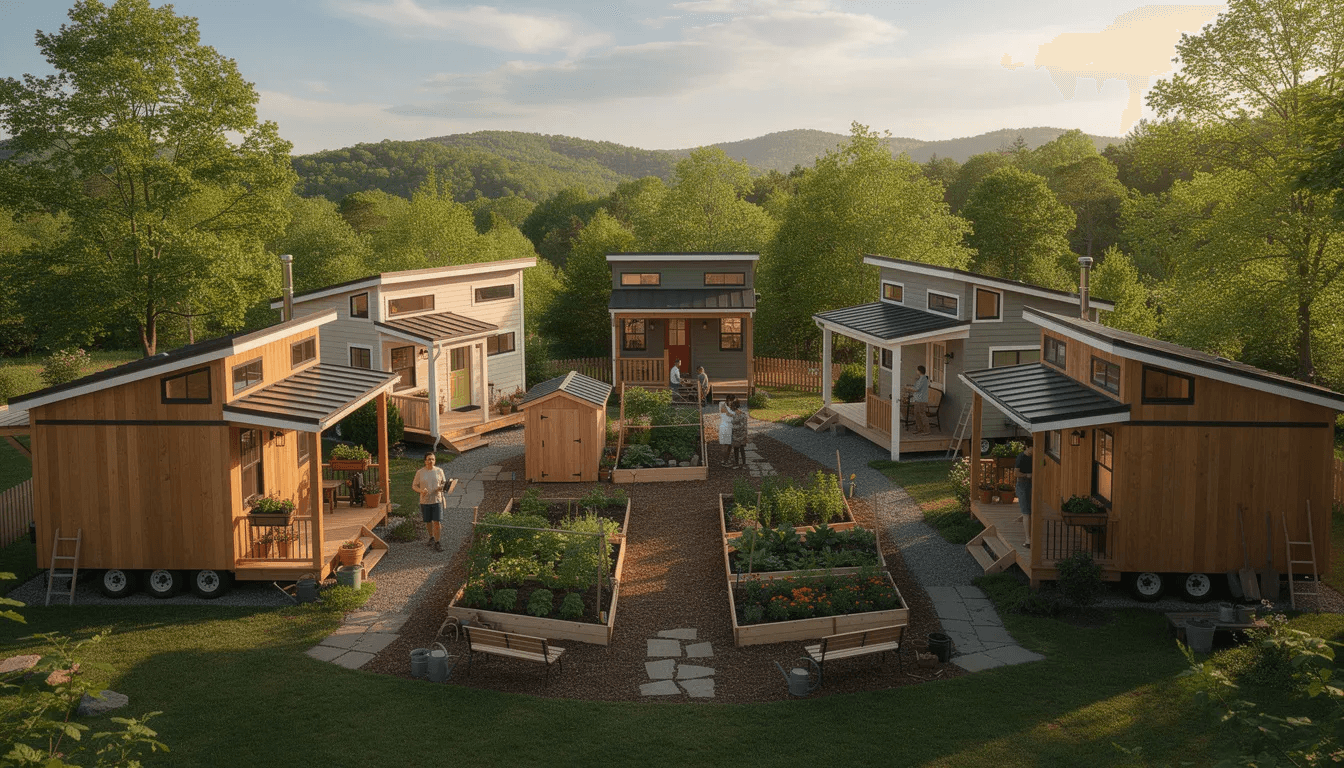
- Tiny house communities and eco-villages – Designed specifically for small homes with shared amenities
- RV and park model resorts – Accept tiny houses on wheels, often with utilities included
- Private rural land – Your own property or leased acreage, subject to zoning and septic requirements
The Richmond region has seen emerging interest in tiny house clusters with community-minded features like shared gardens and co-working spaces. Mountain-oriented communities around Floyd and the Blue Ridge welcome small cabins and tiny homes on acreage with varying levels of infrastructure.
For RV-park-style living, options like Bethpage Camp-Resort in Urbanna, Cherrystone Family Camping & RV Resort on the Eastern Shore, and similar facilities accept park models for seasonal or extended stays. These typically provide full hookups and amenities without the land ownership commitment.
Common amenities in VA tiny house communities include features similar to those found in many tiny house nature retreats:
- Free Wi-Fi and laundry facilities
- Shared kitchens and community gardens
- Pet-friendly policies and outdoor grills
- Bike storage and yoga/fitness spaces
- Fire pits and communal gathering areas
When choosing a site, verify these critical factors:
- Whether long-term residential occupancy is allowed year-round or only seasonally
- Hookup options (30-amp vs 50-amp electrical, water, sewer)
- Rules about skirting, decks, sheds, and exterior modifications
- Pet policies and size limits
- Guest policies if friends or family plan to visit
Examples of Tiny House-Friendly Areas in Virginia
The Richmond region is developing infill projects and community-minded tiny house clusters. Look for emerging developments featuring shared gardens, co-working spaces, and a focus on sustainability. The city’s urban-adjacent areas offer proximity to jobs while keeping costs lower than traditional real estate.
Norfolk and Virginia Beach provide coastal options for those drawn to beach-adjacent tiny living. RV parks and park model communities support part-time or full-time residents, though city codes still govern permanent tiny home dwellings. The vacation rental market here creates income potential for tiny home owners.
Roanoke and Lynchburg areas offer mountain-adjacent communities with access to hiking trails, outdoor recreation, and Blue Ridge scenery. Expect amenities like shared fire pits, fitness spaces, and pet-friendly policies. The lower cost of living compared to Northern Virginia makes these areas attractive.
Availability and rules change frequently, so call each community directly to confirm pet policies, long-term stay options, and parking requirements before committing.
How to Get a VA Tiny House Legally Approved
Getting your VA tiny house properly permitted doesn’t have to be overwhelming. Here’s a step-by-step plan based on how the process works in Virginia:
Step 1: Decide on wheels or foundation. This choice determines your regulatory path. Foundation builds go through building permits; THOWs often require DMV registration and face different placement restrictions.
Step 2: Pick your location and verify zoning. Contact the county or city zoning office for your target parcel. Ask specifically about minimum dwelling sizes, setback requirements, and whether tiny homes or ADUs are allowed in that zone.
Step 3: Work with the right team. Find a designer or builder who understands IRC/USBC requirements—and ANSI RV standards if you’re going the park model route. Experience matters here; a builder familiar with Virginia tiny house regulations will save you headaches.
Step 4: Apply for permits. Foundation builds require building permits from the local building department. Submit your design plans and expect review time. For THOWs being registered as travel trailers, work with the Virginia DMV.
Step 5: Schedule and pass inspections. Typical inspection stages include footing/foundation, framing, electrical rough-in, plumbing rough-in, insulation, and final inspection. Each must pass before proceeding.
Step 6: Obtain your Certificate of Occupancy. Once final inspection passes, you’ll receive your CO, which allows legal residential occupancy.
For ADUs in Virginia, check whether your locality has owner-occupancy requirements, maximum size limits, or rental restrictions. Many cities are updating their ADU ordinances, so search your city name plus “ADU ordinance” for current language.
Insurance and taxes: Tiny homes on permanent foundations typically need homeowners insurance and are assessed as real property for tax purposes. THOWs usually require RV insurance and may be taxed as personal property. Confirm with your insurance agent and local tax assessor based on your specific situation.
Living Comfortably in a Virginia Tiny House
Virginia’s climate—humid summers, occasional winter freezes, and everything in between—demands thoughtful design choices for tiny home living. Here’s how to stay comfortable year-round.
Climate-specific construction tips: Whether you lean toward cozy cottage aesthetics or coastal retreats, you can draw on ideas from cute tiny house designs for your dream home as well as tropical tiny homes for cozy beachfront living and adapt them to Virginia’s varied climate.
- Insulation matters enormously. Consider 2×6 framing with spray foam or high-density batts for superior R-value. Virginia’s humidity makes vapor barriers and proper ventilation essential.
- Ductless mini-split heat pumps are popular for their efficiency in heating and cooling small spaces. They handle Virginia’s temperature swings well.
- Dehumidifiers are nearly mandatory east of I-95, especially in the Tidewater and Chesapeake regions. Humidity control prevents mold and keeps you comfortable.
- Skirting around THOWs protects plumbing during cold snaps. Foam board or vented skirting materials work well.
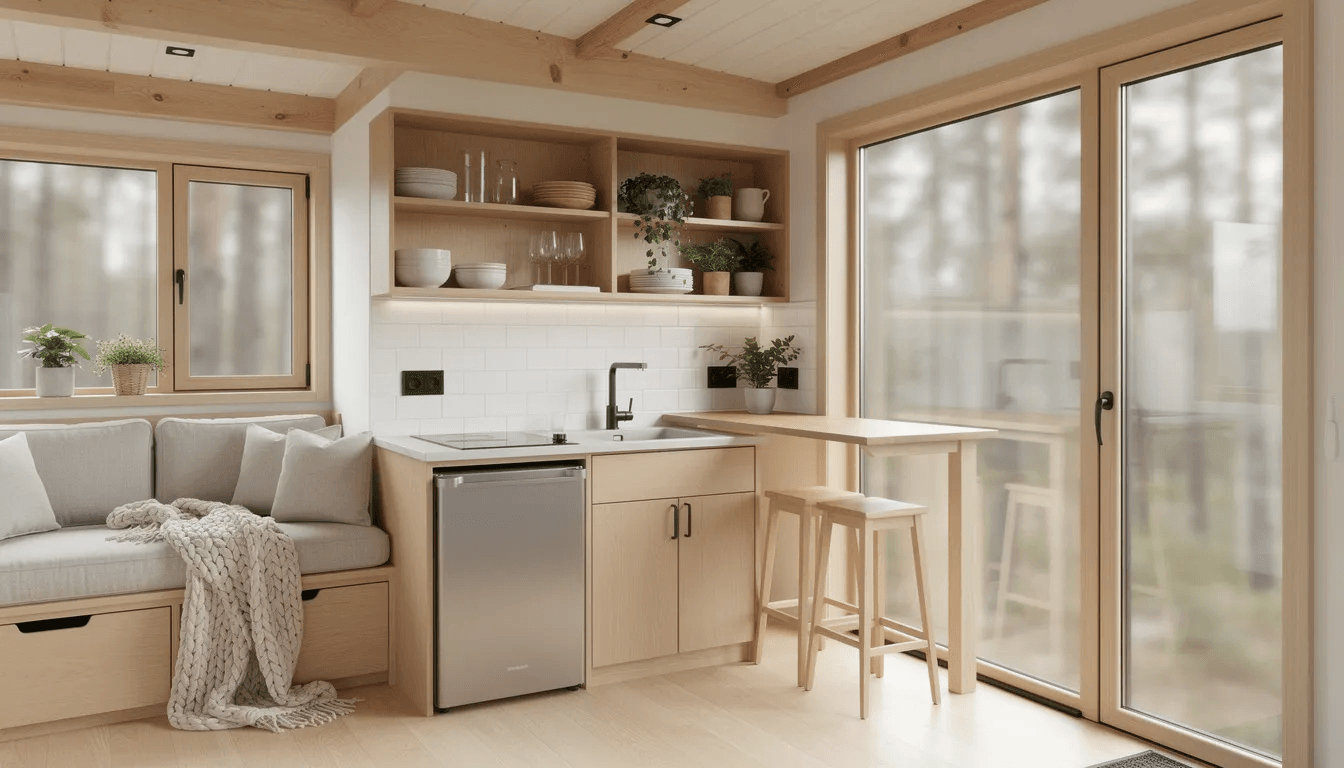
Interior design for small spaces: If you’re looking for visual inspiration, many inspiring tiny house interiors showcase how these principles work in real homes.
- High ceilings and large windows create an airier feel, making 250–350 square feet live larger than you’d expect
- Light colors on walls and built-in furniture maximize visual space
- Smart storage solutions include under-stair drawers, built-in seating with storage, sleeping lofts, and multi-use furniture
- Lofts for sleeping or storage can add 35+ square feet of usable space without counting toward your floor area under Virginia code
Utility considerations:
- Most VA tiny house communities offer 30-amp or 50-amp electrical service; know your system’s requirements
- Composting toilets work well for off-grid or rural setups; septic tie-ins are required in many localities
- Water heaters: tankless or point-of-use models save space and energy
- Propane vs all-electric: consider your site’s hookup options and energy costs
Frequently Asked Questions About VA Tiny Homes
What size does a house need to be to count as a tiny home in Virginia? Under Virginia’s Appendix Q, a tiny house is defined as 400 square feet or less of floor area, excluding lofts. At least one habitable room must be a minimum of 120 square feet, and ceiling heights must be at least 6’8” in living spaces (6’4” in bathrooms and kitchens). Lofts must have at least 3 feet of headroom at their lowest point.
Can I live full-time in a park model tiny home in Virginia? It depends entirely on local zoning. Park models in designated RV parks may allow long-term stays, but many localities restrict year-round residential occupancy outside approved areas. Check with your county or city zoning office before assuming you can make a park model your permanent home.
Can a Virginia tiny house have multiple bedrooms and bathrooms? Yes, within the 400 square foot limit. Many tiny homes fit one or two bedrooms (often with a loft sleeping area) and a full bathroom. The trade-off is reduced living space, so design matters. Common layouts include a main-floor bedroom with loft storage, or a loft bedroom with open living below.
How much do utilities typically cost in a VA tiny house? A well-insulated tiny home in Virginia typically runs $50–$120 monthly for electricity, water, and sewer combined. High-efficiency builds with mini-split HVAC, LED lighting, and Energy Star appliances can hit the lower end. Off-grid setups with solar may have different economics based on your upfront investment.
Is a tiny house in Virginia a good investment? Tiny homes can generate rental income in popular areas like Virginia Beach, the Shenandoah Valley, and Charlottesville through platforms like Airbnb. However, zoning restrictions may limit short-term rental use, and market conditions change. Tiny homes on foundations may appreciate like traditional real estate; THOWs typically depreciate like vehicles. Research your specific market and zoning before counting on investment returns.
Can I rent a tiny home in Virginia to try it before buying? Absolutely—and it’s a smart move. Airbnb and similar platforms list tiny home rentals in Richmond, Norfolk, mountain areas near Roanoke, and coastal spots near Virginia Beach. Recommend spending at least a weekend (ideally longer) to experience the realities of small-space living before committing to ownership.
Do I need to work with a specific builder for a Virginia tiny house? While you can build DIY or hire any qualified builder, working with a team experienced in Virginia’s code requirements streamlines the process. Look for builders familiar with Appendix Q provisions, IRC standards, and local inspection processes. Ask for references from previous Virginia tiny house projects.
Virginia codes and local zoning ordinances continue to evolve, so always confirm current rules with your local building and zoning officials before starting construction. Your county or city planning department can provide answers specific to your parcel and intended use. With proper planning and the right location, the tiny house dream is absolutely achievable in Virginia.