

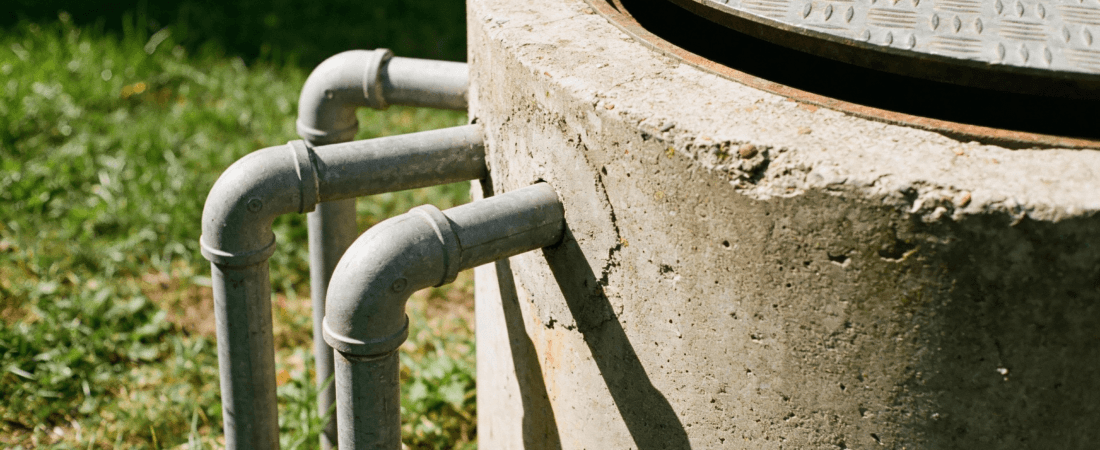
This article is intended for homeowners considering septic systems as a wastewater treatment option. It focuses specifically on the disadvantages of septic tanks, providing a clear understanding of the challenges and risks involved. Understanding these disadvantages is crucial for making informed decisions about wastewater treatment options, especially for those living in rural areas or properties without access to municipal sewer lines. This article explores the main disadvantages of septic tanks, including maintenance requirements, costs, environmental risks, and usage limitations.
A septic system is a self-sufficient wastewater treatment system commonly used in rural areas where homes lack access to municipal sewer lines. These systems treat and filter wastewater (also referred to as waste water) on-site through natural processes, making them an environmentally friendly alternative to public sewer connections. Septic tank systems separate solid waste from wastewater in three layers—solids at the bottom, a liquid middle layer, and scum on top—allowing bacteria to break down waste effectively.
Properly maintained septic systems offer a low-cost solution for wastewater treatment and can function effectively for many years. However, they require a significant amount of land for the tank and drain field, which can limit property development options and prohibit building structures or planting large trees over the drain field. Like any system, they have a few drawbacks that homeowners should consider before installation or purchase.
- Key Disadvantages of Septic Tanks
- Disadvantages of Septic Tanks
- Comparison with Public Sewer Systems
- Environmental Impact and Groundwater Contamination
- Maintenance Costs and Responsibilities
- Cost Effectiveness and Public Sewer System Alternative
- Self-Sufficient Septic Systems
- Pros and Cons Analysis
- Rural Properties and Septic Systems
- Drain Field Maintenance
- Troubleshooting Common Issues
- System Inspection and Testing
- Maintenance and Repair
- Long-Term Considerations
- Conclusion
Key Disadvantages of Septic Tanks
Before deciding on a septic system, it’s important to understand the major disadvantages associated with their use:
- Maintenance Requirements: Septic tanks need to be pumped out every few years to avoid issues and require regular inspections and maintenance to function properly. (Facts 1, 22)
- Homeowner Responsibility: Homeowners are responsible for all maintenance and repairs, unlike public sewer systems maintained by local authorities. (Facts 2, 13)
- High Repair/Replacement Costs: Repairing or replacing a septic system can be expensive, with costs ranging from $3,000 to over $20,000 depending on the system and site conditions. (Facts 3, 25)
- Risk of Odors: Malfunctioning septic systems can create foul odors around the tank and inside the home. (Fact 4)
- Water Usage Limitations: Septic systems have a limited capacity and can only handle a certain amount of wastewater each day. Excessive water use can result in system failure. (Facts 5, 14)
- Land Use Restrictions: Septic systems require a significant amount of land for the tank and drain field, limiting property development options and prohibiting building structures or planting large trees over the drain field. (Facts 7, 8)
- Soil Type Limitations: The effectiveness of septic systems depends on soil types; high water table or clay-heavy soils may impede functionality. (Fact 9)
- Risk of Groundwater Contamination: Failing or improperly maintained septic systems can leak untreated wastewater, contaminating groundwater and nearby wells. (Facts 10, 11, 15)
- Public Health Risks: Exposure to raw sewage from a failing system can pose serious public health risks. (Fact 12)
- Need for Regular Inspections: Septic systems need to be regularly inspected and maintained to avoid problems, with inspections recommended every three years. (Facts 22, 28, 23)
Understanding these disadvantages will help homeowners weigh the pros and cons and make the best choice for their property and lifestyle.
Disadvantages of Septic Tanks
Among the key disadvantages of septic tanks are the potential for sewage backups and contamination if the system becomes overloaded or damaged. Septic tanks have a limited capacity and can only handle a certain amount of wastewater each day. Excessive water use can result in system failure. Tree roots can infiltrate pipes, and garbage disposals can introduce solids that clog the system, leading to leaks and failures.
Flushing non-biodegradable items, like wipes and harsh chemicals, can kill beneficial bacteria and lead to system failure. Non-biodegradable items are materials that do not break down naturally in the environment, such as wipes, feminine hygiene products, and certain cleaning agents.
Septic systems have limited capacity and can only handle a certain volume of wastewater daily. Excess water usage from activities like long showers or frequent laundry can overload the system, causing pooling water around the drain field and backups inside the home.
Regular maintenance is essential but can be time-consuming and costly, and improper care can result in foul odors, slow drains, and environmental harm.
Transitioning from understanding the disadvantages, it’s helpful to compare septic systems with public sewer systems to see how they differ in terms of convenience, cost, and maintenance.
Comparison with Public Sewer Systems
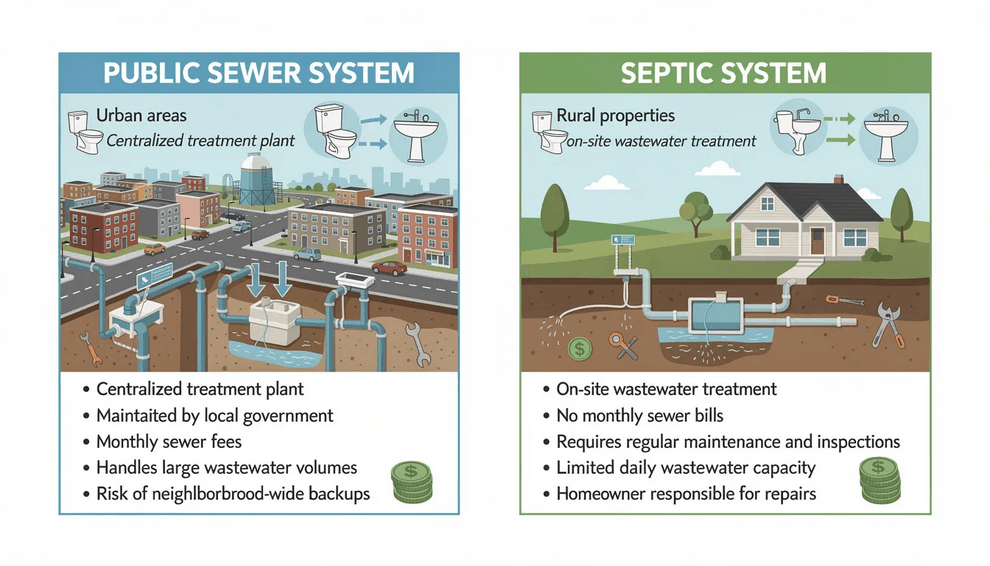
Public sewer systems, typically found in urban areas, direct wastewater to centralized treatment plants operated by local government authorities. Septic systems, on the other hand, treat wastewater on-site. Septic systems are more common in rural areas, while public sewer systems are typically found in urban areas. These systems require less maintenance from homeowners and offer convenience, but they come with monthly fees and potential risks such as sewage backups affecting entire neighborhoods.
In contrast, septic systems provide independence and cost savings by eliminating monthly sewer bills, making them attractive for rural properties. Homeowners can save money over time with septic systems by not paying monthly sewer fees. However, septic systems require regular maintenance and inspections to function properly, while public sewer systems are maintained by local governments. Public sewer systems are generally more reliable and less demanding than septic systems, especially in densely populated areas. Septic systems can handle a limited volume of wastewater each day, while public sewer systems can accommodate larger volumes. When using septic systems, as with sewage systems, it is important to avoid flushing debris like hair, soap remnants, and other items that can clog drains and impact system performance. The responsibility for maintenance and repairs lies entirely with the homeowner, which can be time-consuming and costly.
Next, let’s examine the environmental impact and risks associated with septic systems.
Environmental Impact and Groundwater Contamination
Groundwater Risks
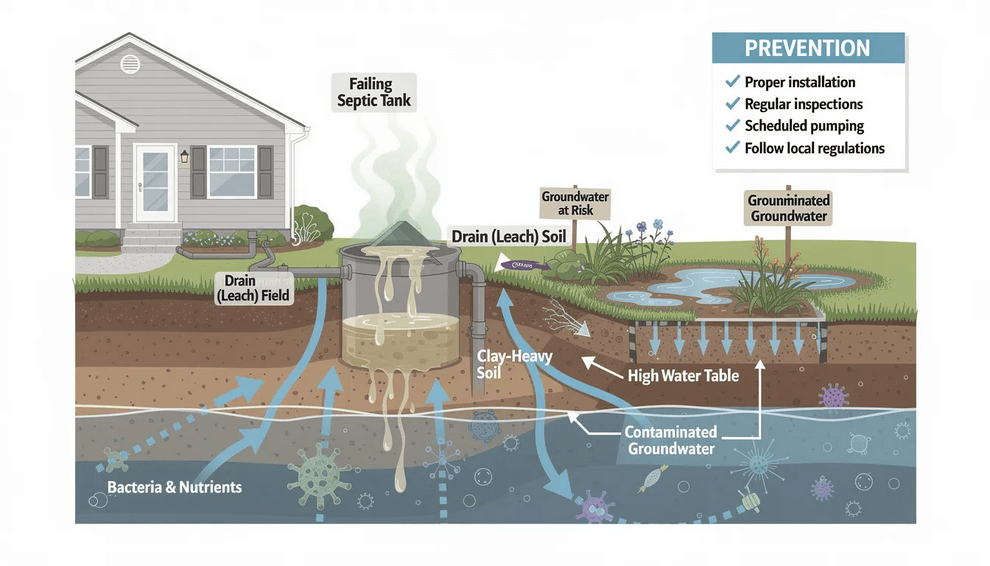
One of the potential drawbacks of septic systems is the risk of groundwater contamination if the system is not properly installed or maintained. Malfunctioning septic tanks can leak untreated wastewater containing harmful bacteria and nutrients into the surrounding soil and nearby water sources, posing risks to public health and the environment. Unlike some sewage lines, a failing septic system can contaminate groundwater, which can have significant environmental consequences.
Odor and Nuisance Issues
A malfunctioning septic system can create nuisances such as foul odors around the tank and in the home. Pooling water around the drain field or leach field is a common sign of system failure that can lead to environmental hazards.
Soil Type Limitations
The effectiveness of septic systems depends on soil types; high water table or clay-heavy soils may impede functionality. If the soil cannot properly absorb and filter wastewater, the risk of contamination and system failure increases.
Prevention Strategies
Following local regulations and guidelines for septic system installation, regular inspections, and maintenance are essential to minimize environmental impact and protect groundwater quality.
With environmental risks in mind, let’s look at the ongoing maintenance costs and homeowner responsibilities associated with septic systems.
Maintenance Costs and Responsibilities
Regular Pumping and Inspections
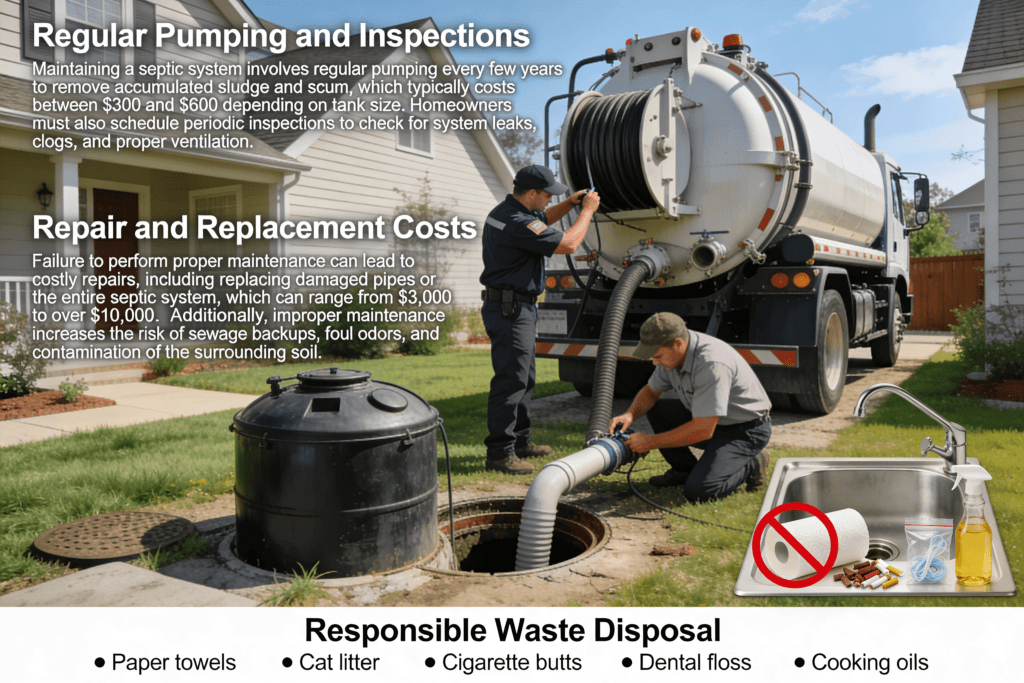
Maintaining a septic system involves regular pumping every few years to remove accumulated sludge and scum, which typically costs between $300 and $600 depending on tank size. Homeowners must also schedule periodic inspections to check for system leaks, clogs, and proper ventilation.
Repair and Replacement Costs
Failure to perform proper maintenance can lead to costly repairs, including replacing damaged pipes or the entire septic system, which can range from $3,000 to over $10,000. Additionally, improper maintenance increases the risk of sewage backups, foul odors, and contamination of the surrounding soil.
Responsible Waste Disposal
Homeowners need to be vigilant about what they put down their drains. Items that should not be flushed include:
- Paper towels
- Cat litter
- Cigarette butts
- Dental floss
- Cooking oils
Flushing these items can clog pipes and disrupt the bacterial balance necessary for wastewater treatment. Such items should be avoided to preserve the system’s functionality.
Beyond maintenance, it’s important to consider how septic systems compare to public sewer alternatives.
Cost Effectiveness and Public Sewer System Alternative
While the initial installation cost of a new septic system can be higher than connecting to a public sewer system, septic tanks offer long-term savings by eliminating monthly sewer fees. They also provide a self-sufficient wastewater treatment solution, reducing reliance on municipal infrastructure.
However, septic systems require more active involvement from homeowners in terms of maintenance and care. The cost-effectiveness depends largely on proper use and upkeep to avoid expensive repairs and environmental issues.
Next, let’s explore how septic systems function independently and what factors can affect their performance.
Self-Sufficient Septic Systems
Septic systems operate independently, using natural bacterial processes to filter wastewater into the soil through the drain field. When properly installed and maintained, these systems can function efficiently for decades.
However, factors such as excess water usage, soil type, and disposal of non-biodegradable waste can negatively affect system performance. Other factors, such as groundwater level, location, and compliance with local regulations, can also influence the suitability and installation of septic tank systems. Homeowners should adopt water conservation habits and be mindful of waste disposal to ensure optimal function and longevity.
Understanding the pros and cons of septic systems is essential for making the right choice for your property. Let’s analyze these factors in more detail.
Pros and Cons Analysis
Understanding both the advantages and disadvantages of septic systems is crucial for homeowners considering this wastewater treatment option. While septic tanks offer cost-effectiveness, environmental sustainability, and independence from municipal sewer lines, they also require diligent maintenance and responsible usage to avoid potential drawbacks.
Factors such as local regulations, soil conditions, water usage habits, property size, and the type of drainage systems available should influence the decision to install a septic system. Homeowners who are prepared to invest in regular maintenance and follow best practices can enjoy the benefits of a reliable and sustainable septic system.
For rural homeowners, septic systems are often the only viable option. Let’s look at the unique considerations for rural properties.
Rural Properties and Septic Systems
Necessity and Independence
For many rural properties, septic tank systems are not just a choice—they’re a necessity. In areas where public sewer systems and municipal sewer lines are unavailable, a septic system provides a self-sufficient and cost-effective solution for wastewater treatment. These systems allow rural homeowners to filter wastewater on-site, making them an environmentally friendly and viable option for properties that lack access to mains drainage.
Land Use and Environmental Impact
One of the main advantages of septic tank systems in rural areas is their independence from public sewer connections and monthly fees. This can result in significant long-term savings, especially for properties located far from municipal infrastructure. Septic systems also have a lower environmental impact when properly maintained, as they use natural processes to treat wastewater and return it safely to the surrounding soil.
Maintenance and Risk Factors
However, there are important cons of septic tank systems that rural property owners should consider. Maintenance costs can add up over time, especially if the system is not properly maintained. Issues such as system leaks, sewage backups, and groundwater contamination are potential drawbacks that can lead to costly repairs and environmental harm. Signs like slow drains, pooling water, or foul odors around the tank or drain field often indicate problems that require immediate attention.
Best Practices for Rural Homeowners
Proper maintenance is essential to prevent contamination and extend the life of a septic system. This includes:
- Regular inspections
- Pumping the tank every few years
- Being mindful of what goes down the drain
Items that should not be flushed include:
- Paper towels
- Cat litter
- Waste from garbage disposals
By avoiding such items and following best practices, rural homeowners can minimize the risk of system failure and groundwater contamination.
Regulatory Considerations
Local regulations often dictate how septic systems should be installed, maintained, and repaired. Rural property owners should familiarize themselves with these guidelines to ensure compliance and protect both their investment and the environment. While septic systems require more hands-on care compared to public sewer systems, the benefits—such as low cost, minimal maintenance when properly managed, and environmental sustainability—make them an attractive option for many rural areas.
In summary, septic tank systems offer rural properties a reliable and environmentally friendly way to manage wastewater. While there are potential drawbacks, including maintenance costs and the risk of contamination, these can be effectively managed with regular care and attention. By understanding the pros and cons of septic systems and committing to proper maintenance, rural homeowners can enjoy a self-sufficient and cost-effective wastewater treatment solution that protects both their property and the surrounding environment.
Next, let’s discuss the importance of maintaining the drain field for optimal septic system performance.
Drain Field Maintenance
The drain field, or leach field, is a vital part of the septic system where treated wastewater is dispersed into the soil. Maintaining this area is critical to prevent clogs, system leaks, and environmental contamination.
Homeowners should:
- Avoid driving or building structures over the drain field
- Refrain from planting large trees or other plants with invasive roots nearby, as these can damage the pipes
- Schedule regular inspections to identify early signs of damage or failure
Timely intervention can prevent costly repairs and protect the environment.
If issues arise, troubleshooting steps can help identify and resolve common problems.
Troubleshooting Common Issues
Common septic system problems include slow drains, foul odors, and sewage backups. These symptoms can indicate system leaks, clogs, or contamination.
To troubleshoot:
- Check for pooling water around the drain field
- Notice any unusual smells
- Observe slow drainage in sinks and toilets
When it comes to what should be flushed, toilet paper is a recommended item because it is safe, biodegradable, and compatible with septic systems, breaking down easily without causing clogs. Promptly addressing these issues through professional inspection and maintenance helps prevent costly repairs and protects the environment.
Regular inspections and testing are also essential for long-term system health.
System Inspection and Testing
Regular inspections and testing by qualified professionals are crucial to ensure the septic system’s proper function. Inspections can reveal leaks, damaged pipes, or blockages, while testing evaluates the system’s treatment effectiveness.
Most experts recommend septic system inspections every three years, although this may vary based on usage and local regulations. Keeping detailed records of inspections and maintenance helps homeowners track system health and plan for necessary repairs or replacements.
Routine maintenance and timely repairs are key to preventing system failure.
Maintenance and Repair
Routine maintenance tasks include:
- Pumping the tank every few years
- Avoiding flushing harmful items
- Monitoring water usage
Repairs might involve:
- Fixing leaks
- Unclogging pipes
- Replacing damaged components
While repairs can be costly, proactive maintenance significantly reduces the likelihood of system failure. Homeowners should work with licensed professionals to ensure repairs and maintenance comply with safety standards and local regulations.
Planning for the long term is also important for septic system owners.
Long-Term Considerations
Septic systems can last 20 to 40 years or more with proper care. Homeowners should consider long-term maintenance costs, potential environmental impacts, and the need for regular inspections when choosing a septic system.
Planning for eventual system replacement and understanding the responsibilities involved helps homeowners make informed decisions and avoid unexpected expenses.
Conclusion
Septic systems provide a reliable, cost-effective, and environmentally friendly solution for wastewater treatment, especially in rural areas without access to municipal sewer lines. However, they come with disadvantages such as maintenance costs, potential groundwater contamination, and the need for responsible usage.
By understanding the pros and cons of septic tanks, following best practices for maintenance, and complying with local regulations, homeowners can ensure their septic system operates effectively and sustainably. Regular inspections, proper waste disposal, and mindful water usage are key to maximizing the benefits of a septic system while minimizing its drawbacks.