
Rhode Island may be the smallest state, but it offers real options for tiny house parking if you know where to look. Whether you’re eyeing a backyard cottage or hoping to roll in with a house on wheels, the Ocean State’s regulations have shifted meaningfully in recent years. This guide breaks down exactly where you can park a tiny home in Rhode Island, from urban Providence lots to coastal Washington County campgrounds.
- Quick Answer: Your Main Tiny House Parking Options in Rhode Island
- Understanding Rhode Island Laws: Tiny Houses vs. Tiny Houses on Wheels
- Where Can I Park a Tiny House on Wheels in Rhode Island?
- Where Can I Build or Park a Tiny House on a Foundation (ADU)?
- County-by-County Overview: Where Tiny Houses Are Most Practical
- Practical Ways to Find a Legal Tiny House Parking Spot in Rhode Island
- Key Rules, Permits, and Inspections to Expect
- Costs to Consider When Choosing a Parking Location
- Is Rhode Island Right for Your Tiny House Parking Plans?
Quick Answer: Your Main Tiny House Parking Options in Rhode Island
If you’re searching for where you can park a tiny house in Rhode Island, the answer depends heavily on one question: does your tiny home sit on a permanent foundation or on wheels?
Rhode Island treats these two categories very differently. A tiny house on a foundation is typically regulated as an accessory dwelling unit (ADU) under state and local building codes. A tiny house on wheels (THOW) is classified more like a recreational vehicle, which limits where you can legally live in it full-time.
Here are your concrete options for 2024 and 2025:
Parking Type | Best For | Legal Status |
|---|---|---|
Backyard ADU on residential lot | Foundation-built tiny homes | Permitted as ADU under 2024 state law |
RV parks and campgrounds | THOWs and park models | Legal for extended stays; year-round varies by park |
State park campgrounds | THOWs | Seasonal only (14-21 day limits) |
Private rural land with owner permission | THOWs | Often limited to 180 days/year |
Permanent, full-time legal living is usually only possible when your unit meets the Rhode Island State Building Code and local zoning requirements. This almost always means treating your tiny house as an ADU. Wheels-based units are generally limited to RV zones or temporary use arrangements. |
The good news? Rhode Island’s 2024 statewide ADU law made it significantly easier to add small backyard homes across the state. Cities and towns must now generally allow at least one ADU on eligible single-family residential lots. However, each municipality still controls the specific rules about size, setbacks, and design.
The rest of this article walks through specific cities and counties, the differences between THOWs and foundation homes, and step-by-step ways to actually find a legal parking spot.
Understanding Rhode Island Laws: Tiny Houses vs. Tiny Houses on Wheels
Before you start shopping for land or contacting RV parks, you need to understand how Rhode Island classifies different types of tiny structures. This distinction determines everything about where you can park legally.
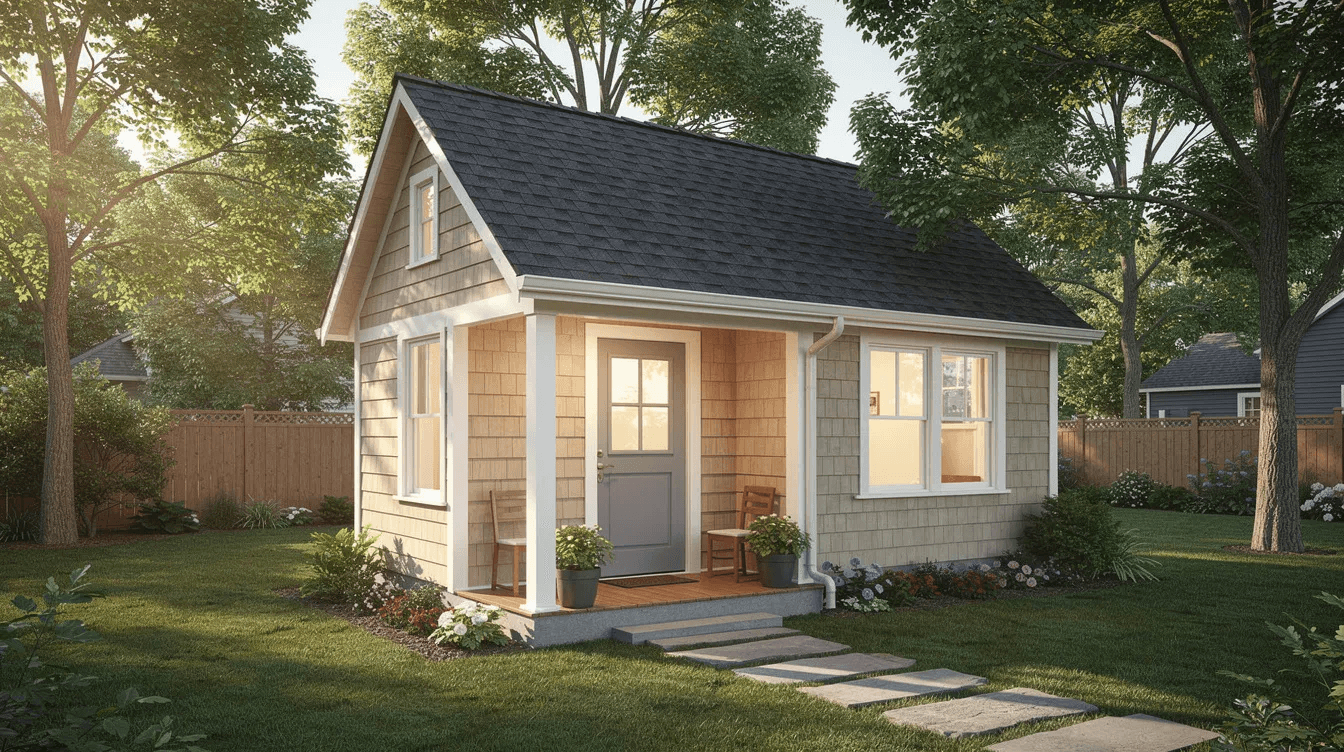
A tiny house on a foundation is a small dwelling built to comply with the Rhode Island State Building Code, which references the International Residential Code (IRC). In practice, these homes are almost always permitted as accessory dwelling units behind an existing primary residence. They require building permits, inspections, and full utility connections just like any conventional home.
A tiny house on wheels is generally classified as a recreational vehicle or park model RV. These units must meet RVIA (Recreation Vehicle Industry Association) certification standards rather than residential building codes. This classification subjects them to different zoning regulations and residency restrictions that prioritize temporary rather than permanent occupancy.
Here’s what you need to know about size requirements:
- Rhode Island has not adopted IRC Appendix Q statewide, which would explicitly accommodate tiny homes under 400 square feet as primary dwellings
- Most towns reference IRC standards through ADU ordinances
- Typical ADU maximums: approximately 900 square feet for studios/one-bedroom units and up to 1,200 square feet for two-bedroom configurations
- Many towns cap ADUs at 60% of the primary house’s floor area
- Standalone minimum size requirements often start around 900-1,000 square feet for primary dwellings
This is why true sub-400-square-foot tiny homes almost always have to be permitted as ADUs or classified as RVs. They simply don’t meet the minimum square footage requirements for primary dwellings in most Rhode Island municipalities.
Where Can I Park a Tiny House on Wheels in Rhode Island?
This section covers THOWs and park models that are built and registered as recreational vehicles. If your tiny home has wheels and doesn’t sit on a permanent foundation, these are your primary options.
Long-term legal parking for THOWs is usually limited to:
- Licensed RV parks
- Private campgrounds
- Some seasonal state park campgrounds (not year-round)
- Private land where zoning explicitly allows RV use
Specific locations to explore:
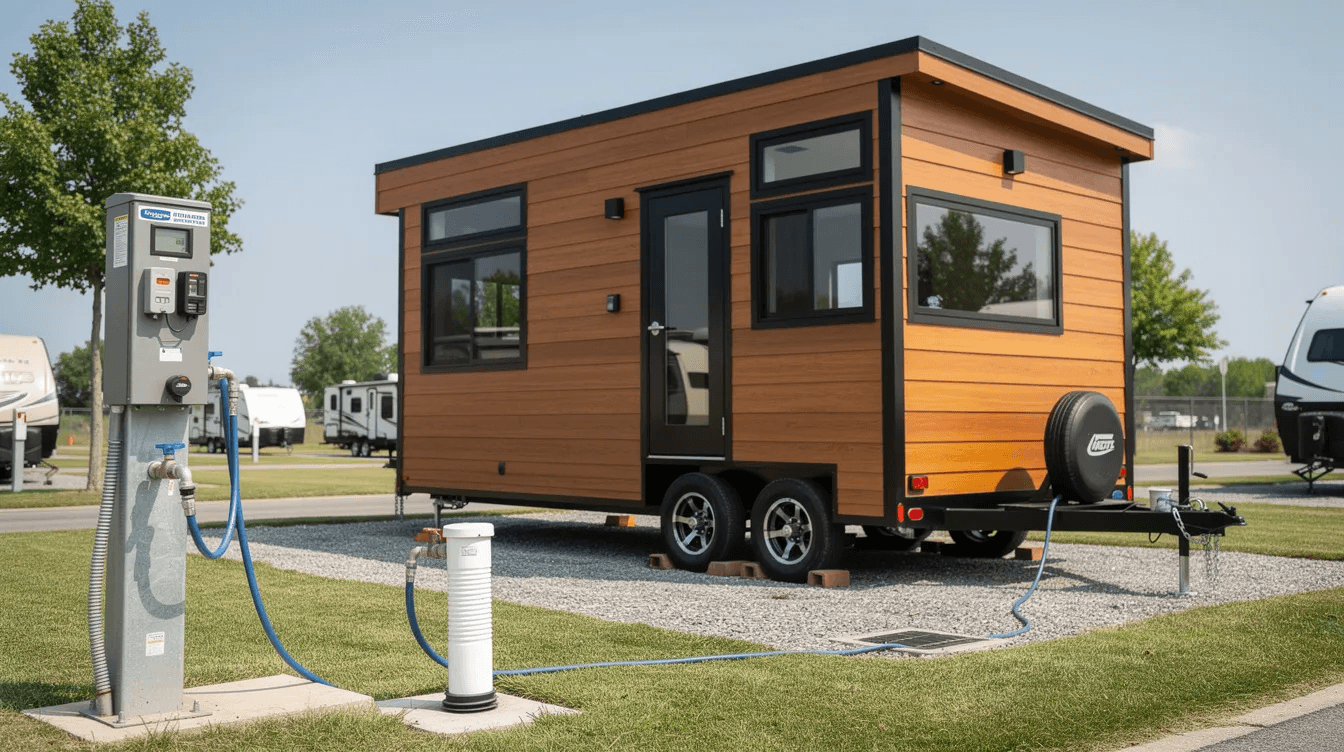
Washington County offers some of the best THOW parking options in the state. Coastal RV parks near Narragansett, South Kingstown, and Charlestown frequently accommodate tiny houses on wheels, especially during tourist season. Inland areas like Exeter and Hopkinton feature private campgrounds that may offer extended stays.
State-run campgrounds like Fishermen’s Memorial State Park in Narragansett and Burlingame State Campground in Charlestown have maximum stay limits, typically 14-21 days per season. These facilities are not intended for permanent residence and often prohibit modifications like skirting, decks, or other additions that imply permanence.
Before committing to any RV park, ask directly about:
- Year-round stays for tiny RVs
- Whether skirting and decks are permitted
- Extra fees for larger park model-style rigs (up to 400 square feet)
- Propane safety requirements
- Waste disposal rules
Be aware that most cities in Rhode Island explicitly prohibit using RVs as permanent dwellings on residential lots, even if you own the land. Living long-term in a driveway THOW is commonly against municipal code, and enforcement action can result in fines or required relocation.
Where Can I Build or Park a Tiny House on a Foundation (ADU)?
Most legal, full-time tiny living in Rhode Island happens through backyard ADUs on permanent foundations. Choosing the best foundation for a tiny house is critical for meeting code, managing costs, and ensuring long-term stability. This is the path of least resistance for anyone wanting to live in a tiny home year-round without worrying about enforcement.
The 2024 Statewide ADU Law
Rhode Island’s 2024 ADU legislation marked a pivotal shift toward liberalizing small dwelling construction. Under this state law, cities and towns must generally allow at least one ADU on eligible single-family residential lots. ADUs can also count toward municipal affordable housing goals if at least 20% of units are designated affordable.
The law also caps required parking at no more than one space per ADU and grandfathers existing setbacks and heights that exceed current zoning limits.
Common ADU rules across Rhode Island:
Requirement | Typical Standard |
|---|---|
Owner-occupancy | Required for either main house or ADU |
Maximum size | 900-1,200 sq ft or 60% of primary house |
Foundation | Permanent, code-compliant required |
Parking | One off-street space |
Utilities | Full connections to sewer/septic and power |
Setbacks | 10-20 feet rear, 5-10 feet side |
Height | 15-20 feet or one story |
Practical scenarios for ADU tiny house parking: |
- Your own backyard – The most straightforward option if you already own a single-family home
- Behind a family member’s home – Common for in-law units where family helps with housing
- On a lot you purchase – Must already have a primary dwelling; you can’t build an ADU without an existing main house
Can you convert a THOW to an ADU?
Converting a tiny house on wheels to an ADU is technically possible but rarely practical. The unit must be set on a code-compliant foundation and pass all inspections as a dwelling, which means losing its RV status. Most towns prefer conventional stick-built or modular ADUs and may require extensive modifications to approve a former THOW.
Pre-parking checklist for ADU tiny homes:
- Compliant engineered plans meeting 2021 Rhode Island Building Code
- Property survey
- Zoning pre-approval from your local zoning office
- Building permit (plus electrical, plumbing, mechanical permits)
- Scheduled inspections
- Final certificate of occupancy before move-in
County-by-County Overview: Where Tiny Houses Are Most Practical
Rhode Island has only five counties, but the actual rules are set by the cities and towns within each. What’s legal in Providence may not fly in Barrington, even though they’re just miles apart, so it helps to step back and explore the broader world of tiny houses to see how different regions approach zoning and design.
The following breakdown highlights where ADUs and RV-style tiny houses are most feasible based on typical zoning regulations as of 2024-2025. Always confirm details with the specific municipality’s planning or building department because ordinances change.
All five counties—Providence, Kent, Washington, Bristol, and Newport—permit tiny homes in some form, mainly as accessory dwelling units. Coastal areas add additional flood and hurricane standards that can complicate construction.
Providence County: Urban ADUs and Backyard Tiny Homes
Providence County encompasses the state’s densest urban areas, including Providence, Cranston, Pawtucket, Woonsocket, and Central Falls. This creates strong demand for ADUs and relatively clear pathways to building them.
Many municipalities here allow backyard ADUs by right on residential lots meeting minimum size and setback requirements. Foundation-built tiny homes represent the most realistic parking strategy in this county.
Providence specifics:
- ADUs up to approximately 1,200 square feet generally allowed in residential zones
- Owner-occupancy required for either the primary dwelling or the ADU
- Design review required in historic districts
- Short-term rentals under 30 days prohibited in most neighborhoods
Cranston and Pawtucket:
Both cities permit ADUs when lots meet size thresholds. Cranston typically requires a minimum 7,200 square feet, with ADUs capped at roughly 60% of the main home’s floor area.
Woonsocket:
ADU limits here often cap at around 900 square feet with owner-occupancy requirements. These constraints accommodate compact units but may exclude ultra-tiny designs under 300 square feet.
THOW parking in driveways or side yards throughout Providence County is usually restricted to temporary or non-residential use. Long-term living in a driveway RV is commonly prohibited by municipal code.
Kent County: Suburban Lots and Some RV Options
Kent County includes Warwick, West Warwick, Coventry, East Greenwich, and stretches of rural and suburban land where lot sizes tend to be larger than in Providence County.
Warwick has relatively clear ADU pathways for small backyard homes on permanent foundations. Size caps align with the 2024 state ADU law, with standard setbacks and lot coverage rules applying.
Coventry and rural areas:
More rural towns may offer larger parcels where a code-compliant ADU tiny house fits more easily. However, these properties often rely on private wells and septic systems that require health department approval before you can build.
RV options in Kent County:
Licensed RV parks and seasonal campgrounds in this county may accept tiny houses on wheels for extended stays. Always ask about winter operation and long-term residency limits before committing.
Mobile home parks in Kent County typically accept HUD-code manufactured homes rather than DIY tiny houses. Confirm park rules before assuming you can bring in a THOW.
Kent County works well for people wanting suburban access to Providence while parking a small ADU in their backyard, especially if they focus on affordable tiny house designs and building tips that keep total project costs manageable.
Washington County: Coastal RV Parks and Rural Land
Washington County combines touristy coastal areas with more rural inland territory. Towns include Narragansett, South Kingstown, North Kingstown, Charlestown, Hopkinton, and others.
Coastal ADU requirements:
Narragansett and South Kingstown allow ADUs but apply strict construction standards:
- Wind-load design for 120-130 mph winds
- Elevated foundations in flood zones
- Coastal setback rules
- Environmental review for properties near the shore
These requirements add cost and complexity but don’t make tiny homes impossible—just more expensive to build correctly.
THOW-friendly territory:
Washington County offers several private RV parks and campgrounds that can host tiny houses on wheels seasonally. This makes it one of the most practical places in Rhode Island to park a THOW legally, especially near beaches and lakes, or even to emulate tiny house nature retreat experiences in a more permanent way. Coastal parks see higher demand and prices during summer months.
Rural options:
Parts of Exeter and Hopkinton may accommodate ADU-style tiny homes on large lots with private septic, but contact local authorities early for guidance on specific parcels.
Short-term rental caution:
Popular beach towns often restrict short-term rentals, affecting whether a parked ADU tiny home can be used for Airbnb or must serve long-term tenants or family members.

Bristol County: Compact Towns and Foundation-Only Tiny Homes
Bristol County includes Bristol, Warren, and Barrington—small, historic, and mostly built-out communities with tight lot sizes and strong architectural controls.
Most areas here expect tiny houses to be built on permanent foundations as ADUs. Mobile tiny homes used as primary residences in driveways typically face prohibition.
Key constraints:
- Local rules often limit unit size relative to the primary dwelling
- Lot coverage limits can restrict what fits on smaller parcels
- Flood and coastal zoning regulations apply in waterfront neighborhoods
- Elevation and engineering requirements may add costs near Narragansett Bay
Bristol County suits homeowners who already have a house and want to add a legal, compact ADU. For some, Home Depot tiny house kits or similar packaged builds can make these small backyard cottages more predictable to design and permit. It’s less practical for someone hoping to arrive with a THOW and find a place to park long-term.
Short-term rentals may be tightly regulated here, so verify each town’s ordinance before planning to monetize a parked ADU through platforms like Airbnb.
Newport County: Historic Districts and Tight Rules
Newport County includes Newport, Middletown, Portsmouth, Tiverton, and Little Compton. Historic and coastal constraints dominate the regulatory landscape.
Newport specifics:
- ADUs generally allowed for family or long-term renters
- Compatibility with historic architecture required in designated districts
- Short-term rentals under 30 days restricted in many residential zones
- Maximum ADU sizes typically follow state guidelines (around 900-1,200 square feet)
This favors small cottages rather than ultra-tiny units under 300 square feet.
Coastal complications:
- Coastal setback rules
- Erosion controls
- Floodplain regulations
These factors can make building or parking a tiny ADU close to the water more complex and expensive.
Tiny houses on wheels usually cannot serve as permanent dwellings in Newport County towns outside of RV parks and campgrounds, which are limited in number.
Newport County works best for parking a tiny house if it’s a code-compliant ADU on property you already own. Bringing in a mobile tiny home faces significant restrictions.
Practical Ways to Find a Legal Tiny House Parking Spot in Rhode Island
Understanding the laws is one thing. Actually finding a spot to park is another, and many people pair their search with planning custom tiny homes tailored to their small-space needs. Here are concrete strategies for locating legal tiny house parking in Rhode Island.
Online platforms to search:
- Craigslist (search “tiny house parking” or “RV lot monthly” in Rhode Island)
- Facebook Marketplace
- Tiny House Hosting
- Tiny House Map (national tool with occasional RI listings)
Always verify zoning compliance before signing any agreement. A willing landowner doesn’t guarantee legal parking.
Direct outreach strategies:
- Contact RV parks directly – Parks in Washington and Kent Counties are most likely to accommodate THOWs. Ask specifically about year-round spaces, park model acceptance, and permanent residency rules.
- Talk to local planners – Before purchasing land or a house, contact the building department in your target town (Providence, Warwick, Newport, etc.) about ADU capacity on specific lots.
- Join tiny house communities online – Facebook groups focused on Rhode Island tiny homes or New England tiny living sometimes feature landowners advertising backyard or farm parking for THOWs.
- Explore farms and rural properties – Some agricultural property owners in Washington County and Kent County may rent space for tiny houses, though zoning verification remains essential.
Get everything in writing:
Any parking or land-use agreement should address your long-term goals for the structure, whether it’s a basic shelter or one of the great tiny homes that redefine small-space living.
- Monthly rent ($300-$1,000+ depending on location and season)
- Utility connections and costs
- Snow removal responsibilities
- What happens if local authorities order the tiny house moved
Key Rules, Permits, and Inspections to Expect
Parking a tiny house long-term almost always triggers review from building, zoning, and sometimes health departments. Here’s what to expect depending on your situation.
For foundation-built ADUs:
Process Step | What’s Required |
|---|---|
Zoning approval | Confirmation lot meets size, setback, coverage rules |
Building permit | Full application with engineered plans |
Trade permits | Electrical, plumbing, mechanical |
Inspections | Foundation, framing, systems, final |
Certificate of occupancy | Required before legal move-in |
For THOWs in RV parks: |
- Current RV registration and titling
- Fire and propane safety compliance
- Park-specific rules for hookups and waste disposal
- Structural integrity inspection (varies by park)
Common zoning constraints:
- Minimum lot size requirements
- Maximum lot coverage percentages
- Side and rear yard setbacks (typically 5-20 feet)
- Height limits (usually 15-20 feet or one story for ADUs)
- Off-street parking space requirements
Temporary use limitations:
Private land often restricts RVs and temporary tiny houses to a set number of days per year—commonly 180 days—after which the unit must be removed or converted to a fully permitted dwelling.
Hiring a local designer, engineer, or code-savvy builder can dramatically reduce the risk of being told to move or demolish a non-compliant tiny home. The upfront cost pays off in avoiding enforcement headaches.
Costs to Consider When Choosing a Parking Location
Beyond the cost of your tiny house itself, parking location significantly impacts your ongoing expenses.
RV park and campground costs:
Location Type | Monthly Range |
|---|---|
Rural off-season | $300-$800 |
Coastal summer | $800-$1,200+ |
Year-round with utilities | Varies widely |
ADU-related costs: If you’re planning a backyard build, budget not just for fees and utilities but also for the structure itself, whether you opt for one of the best tiny house designs for modern living or a more traditional cottage style. |
- Property tax increases (typically 1-2% of assessed value bump)
- Impact fees (varies by municipality)
- Utility connection charges
- Required off-street parking pad ($2,000-$5,000)
Rural infrastructure expenses: These line items stack on top of the cost of the structure, so many people gravitate toward cute tiny house designs for their dream home that balance charm with a footprint small enough to keep site work affordable.
Item | Estimated Cost |
|---|---|
Septic design and installation | $15,000-$50,000 |
Well drilling | $5,000-$15,000 |
Utility trenching (power, water) | $5,000-$20,000 |
Insurance differences: Beyond coverage details, think about the long-term character of the build—some owners lean into enchanting magic tiny homes with whimsical finishes, which can affect replacement-value calculations and customization costs. |
- ADUs typically require a homeowner’s policy endorsement
- THOWs need RV or specialty tiny-home policies ($500-$2,000/year)
- Coverage requirements may vary based on where the unit is parked
Risk costs:
Factor in potential fines or relocation expenses if you choose a borderline-legal parking spot and later face enforcement action. Non-compliance penalties can exceed $10,000, not counting the cost of moving your home.
Is Rhode Island Right for Your Tiny House Parking Plans?
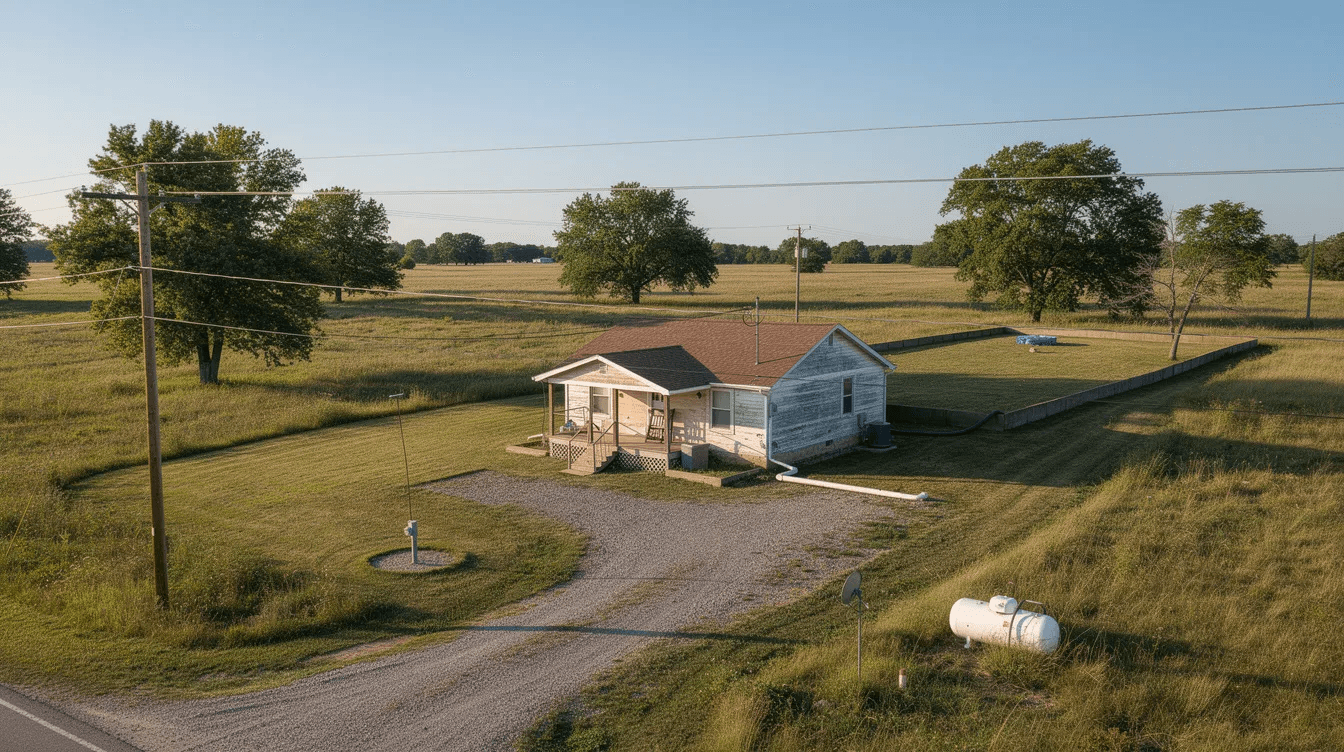
Rhode Island offers genuine pathways for tiny house parking, but success depends on matching your lifestyle to the right legal structure. ADUs on foundations in backyards represent the clearest route to permanent, legal tiny living. RV parks and campgrounds serve THOW owners well for extended or seasonal stays, particularly in Washington County’s coastal areas. Private rural land offers limited opportunities, usually constrained to temporary use.
No county in Rhode Island outright bans tiny homes. However, the path of least resistance is almost always treating your tiny house as an ADU that meets full building code requirements. The growing interest in tiny living has influenced recent policy changes, and the 2024 ADU reforms signal continued movement toward accommodating smaller dwellings.
Before committing to a specific parking site, decide whether you want a mobile lifestyle with a THOW in RV parks or a permanent backyard cottage as an ADU. Then choose the Rhode Island city or county whose zoning rules best fit that choice.
Your next step? Contact the local planning department in your target area or consult with a code-savvy builder who knows Rhode Island tiny home regulations. A thirty-minute conversation can save months of frustration and thousands in potential fines. The dream of tiny living in Rhode Island is achievable—you just need to park in the right spot.