
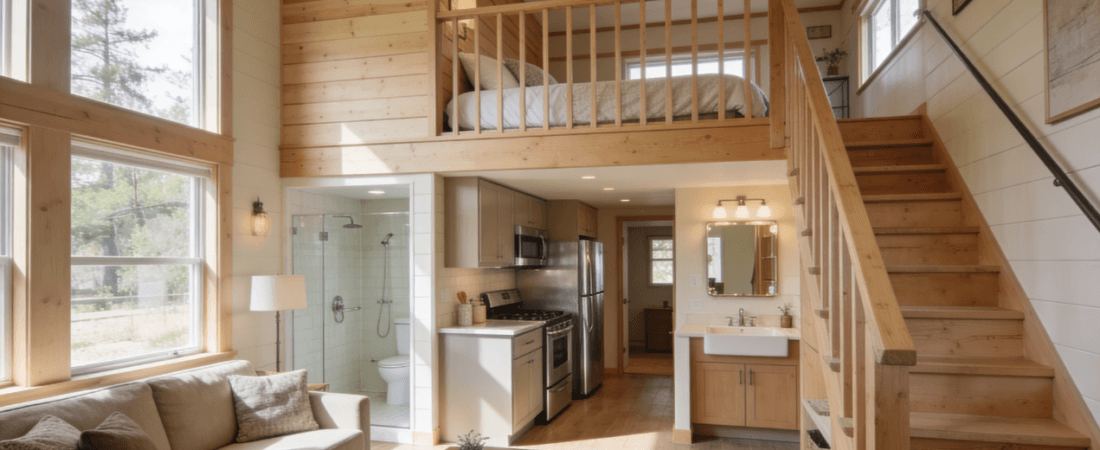
Building upward is the smartest way to make a small house feel like a real home. Adding a second level gives you separate spaces for sleeping and living, but it can be hard to get the layout right. These 15 must-see ideas for double story tiny home interiors show you how to use every inch. You will see clever ways to handle stairs and loft storage.
- 1. Minimalist Floating Staircase Design
- 2. Clever Under-Stair Storage Drawers
- 3. Space-Saving Retractable Ladder Access
- 4. Vertical Shiplap Wall Panels
- 5. Tall Narrow Windows Everywhere
- 6. Maximizing Light with Large Skylights
- 7. Open-Concept Sleeping Loft
- 8. Loft Railing Bookcase Combo
- 9. Integrated Home Office Nook
- 10. Installing a Visual Connection Glass Floor
- 11. Multi-Use Built-In Seating
- 12. Fold-Down Dining Table Solution
- 13. Bright Corner Kitchen Layout
- 14. Using Mirrors to Expand Height
- 15. Downstairs Murphy Bed for Guests
- Wrapping Up
1. Minimalist Floating Staircase Design
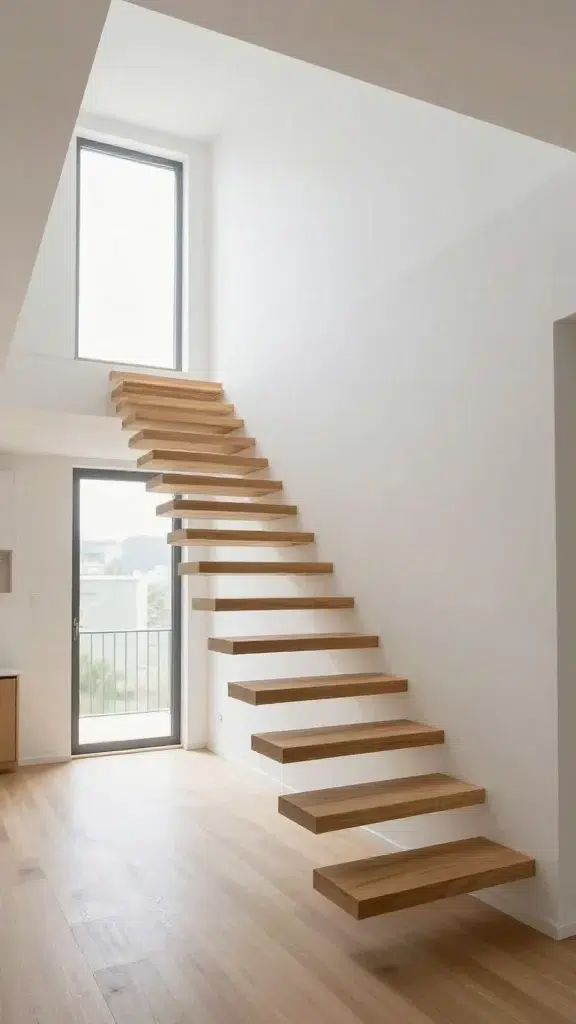
Traditional stairs are bulky space killers that make a small footprint feel cramped and dark. When you’re working with a double story tiny home, every inch of visual real estate counts toward keeping the room airy. Floating stairs solve this by stripping away the risers and bulky under-stair storage, letting light pass through the gaps.
These designs usually involve thick wooden treads or steel plates anchored directly into a reinforced wall. Because there is no solid structure underneath, you maintain a clear line of sight from one end of the house to the other. It stops the staircase from acting like a wall that cuts your living area in half.
To keep it safe without ruining the look, try using thin aircraft cables or glass panels for the railing. You can even tuck a small desk or a reading chair right underneath the bottom steps. This turns a functional necessity into a piece of art that actually makes your home feel larger than it is.
2. Clever Under-Stair Storage Drawers
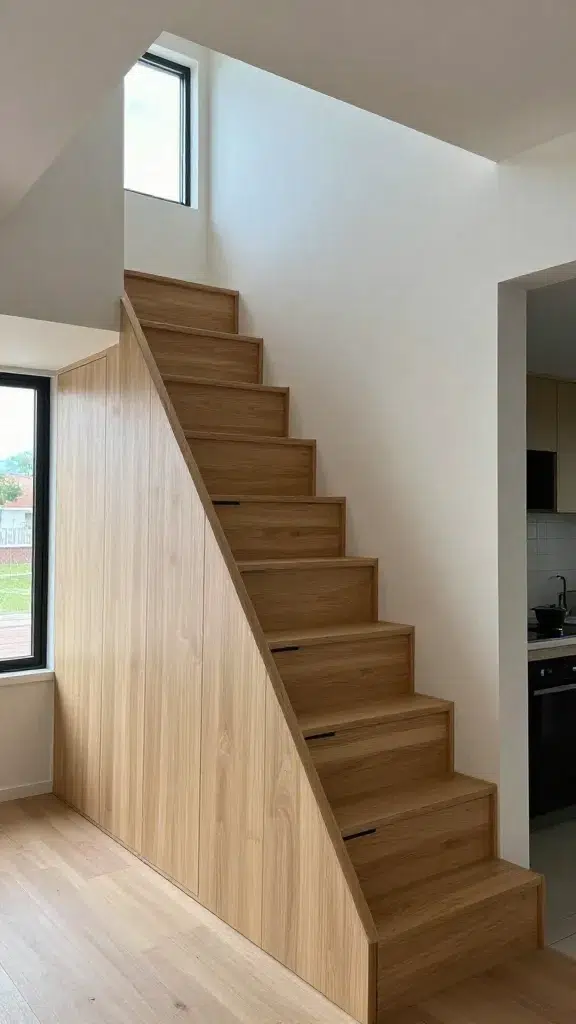
Imagine trying to find a spot for your winter coats and bulky kitchen appliances in a house that is only twelve feet wide. Most people just shove boxes into a dark closet under the steps, but that makes it impossible to reach anything at the back.
By installing deep pull out drawers, you turn that awkward triangular cavity into a functional dresser. Each drawer can be sized differently to fit specific items like shoes, tools, or even a hidden pantry for dry goods.
| Storage Type | Best Use | Main Benefit |
|---|---|---|
| Shallow Drawers | Shoes and sandals | Quick daily access |
| Full Depth Bins | Small appliances | Uses every inch of depth |
| Tall Cabinets | Cleaning supplies | Fits brooms and vacuums |
Heavy duty drawer slides are the secret to making this work without the wood dragging on your floors. You can use touch latches for a clean look that doesn’t need bulky handles sticking out into your hallway.
This setup stops the dreaded clutter pile that usually happens at the base of the stairs. It keeps your living area open while giving everything you own a dedicated home.
3. Space-Saving Retractable Ladder Access
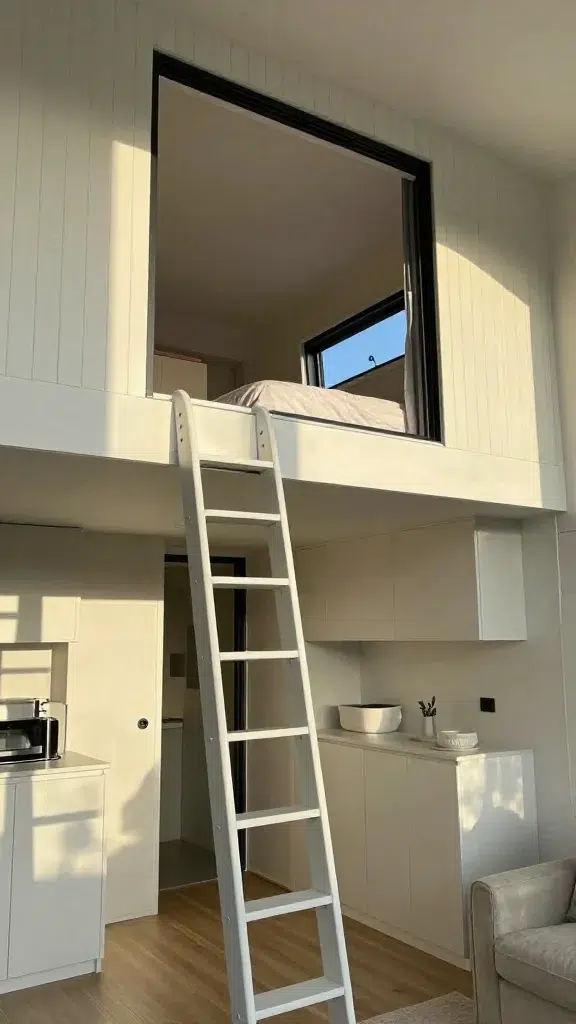
A fixed staircase is a total space killer in a home under 400 square feet. You’re essentially sacrificing three feet of floor width for something you only use twice a day, which makes a retractable ladder the smarter move.
These systems tuck away into the ceiling or flat against the wall using a heavy duty spring mechanism. When you’re ready for bed, you just pull a cord and the steps glide down without blocking your kitchen or living area.
Look for models with wide wooden treads rather than thin metal rungs to save your feet from middle of the night pain. You can even find telescoping versions that disappear completely into a decorative ceiling hatch, keeping your main floor feeling open and airy during the day.
4. Vertical Shiplap Wall Panels
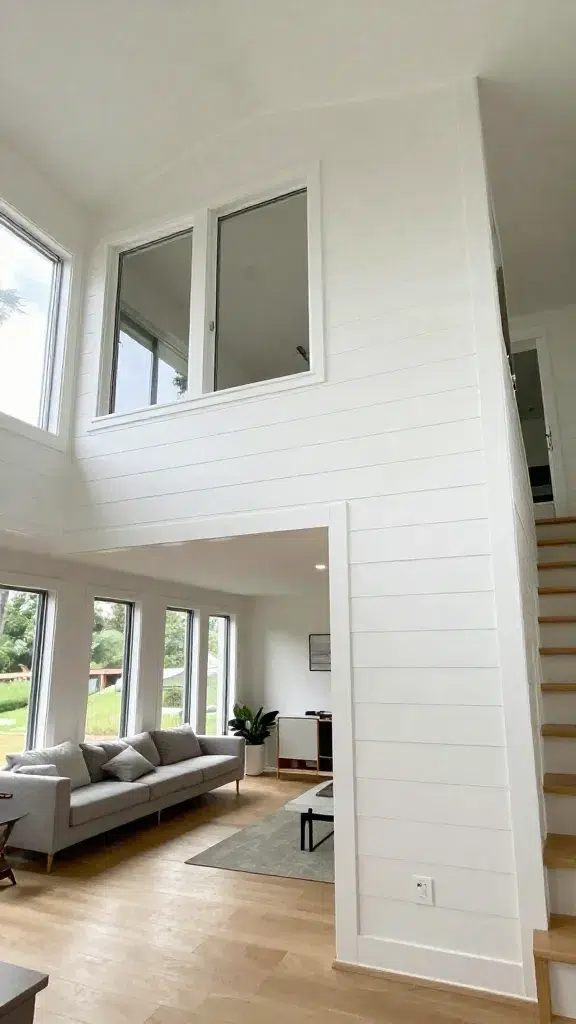
Installing boards vertically instead of horizontally draws the eye straight to the ceiling. This trick makes the most of your double height ceilings by emphasizing the distance between the floor and the loft rafters.
White or light wood tones work best to keep the space from feeling like a narrow chimney. You can use standard tongue and groove planks from a local lumber yard to save money on materials.
- Use narrow planks about four inches wide to create more lines that lead the eye upward.
- Run the panels all the way from the baseboard to the highest point of the roofline.
- Paint the grooves the same color as the boards to keep the texture subtle rather than distracting.
This simple layout change turns a standard wall into a tool that makes your small footprint feel twice as large.
5. Tall Narrow Windows Everywhere
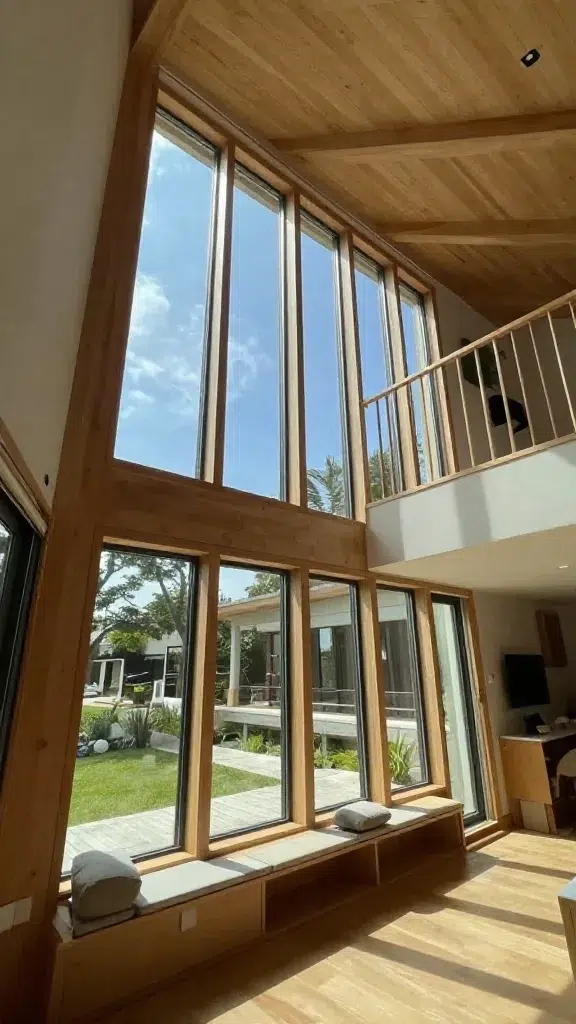
You might think a tiny home would feel like a dark box, but stacking vertical glass panes changes everything. I’ve seen builds where they line up four or five narrow windows side by side instead of one big picture window.
It creates this rhythmic look that draws your eye straight up to the second floor ceiling. Because these windows are skinny, you can tuck them into corners or between structural studs without losing wall strength.
It’s a smart way to get privacy from neighbors while still letting in tons of natural light. You get these slivers of the outdoors that act like living wallpaper throughout the day.
I really like how they look in a stairwell or right next to a lofted bed. They catch the morning sun perfectly but don’t turn your living room into a literal greenhouse.
Since they don’t take up much horizontal space, you still have plenty of room for bookshelves or kitchen cabinets. It’s a clever trick to make a small footprint feel twice as wide as it actually is.
6. Maximizing Light with Large Skylights
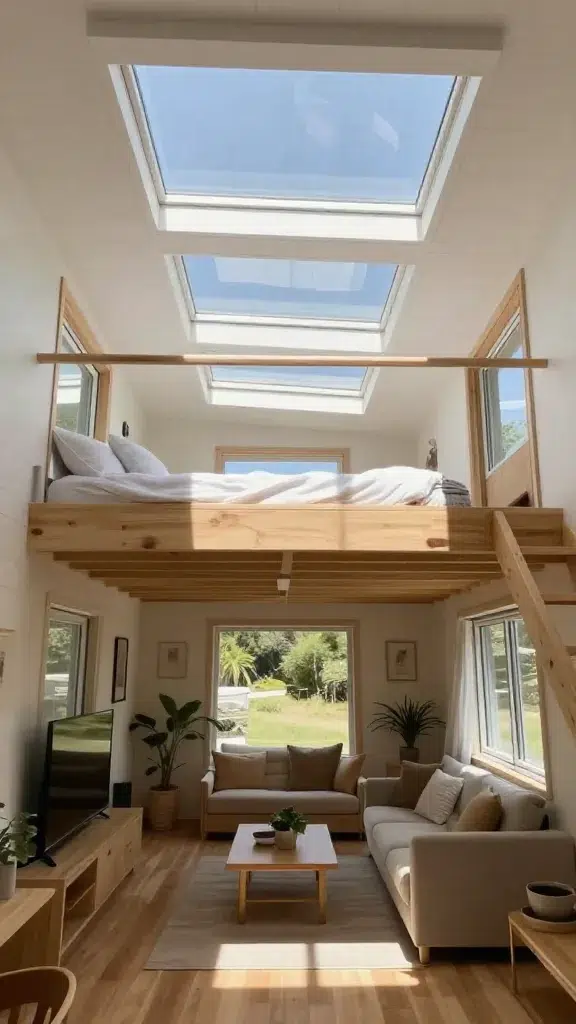
Small spaces can feel like a cramped box if you don’t find a way to break through the ceiling. Adding massive glass panels to your roof pulls the eye upward and makes that second floor loft feel twice as big as it actually is.
The real magic happens when you place these windows directly over your bed or the main living area. You get to watch the clouds during the day and track the stars at night without leaving your blankets.
- Vented models help pull hot air out of the top floor during the summer months.
- Motorized shades are a lifesaver for blocking out the harsh midday sun when you need a nap.
- Tempered glass ensures the panels can handle heavy snow loads or fallen branches without cracking.
- Strategic placement near the peak of the roof spreads natural light deep into the ground floor kitchen.
You’ll save a lot on your electric bill since you won’t need lamps until the sun completely sets. Just make sure you invest in high quality flashing to prevent any leaks during heavy rainstorms.
7. Open-Concept Sleeping Loft
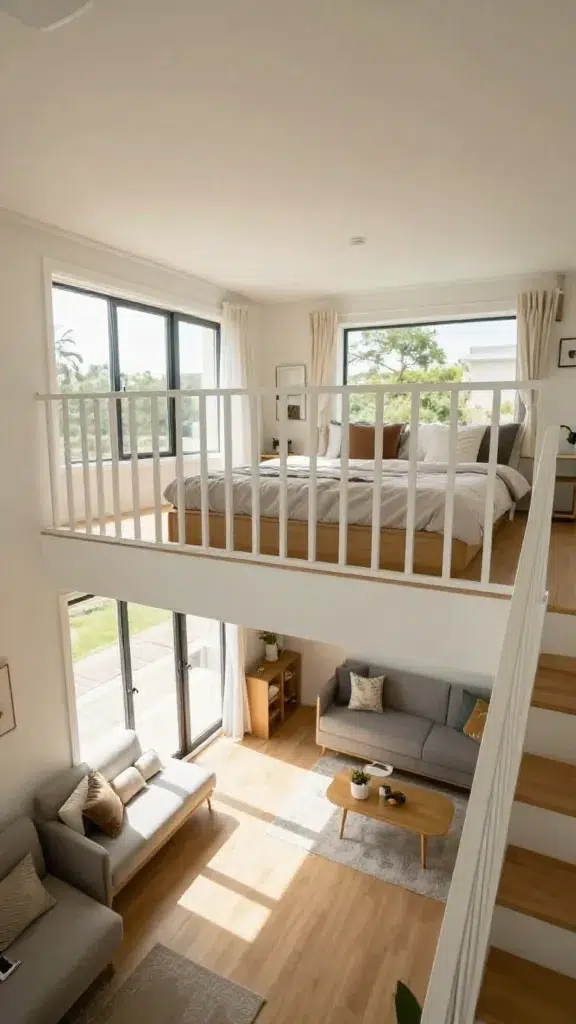
You can choose between a fully enclosed bedroom or an open-concept loft that looks down over the main living space. Enclosed rooms offer total privacy and sound dampening, but they often make a tiny home feel like a series of cramped boxes.
An open loft uses a low railing or a glass partition instead of a solid wall. This allows natural light from the downstairs windows to reach your bed, making the entire house feel twice as large.
I always recommend the open approach if you live alone or with a partner. You’ll appreciate the increased airflow during hot summer nights since heat rises and gets trapped in walled-off lofts. Just make sure to use a sturdy wooden railing to keep the space feeling cozy rather than exposed.
8. Loft Railing Bookcase Combo
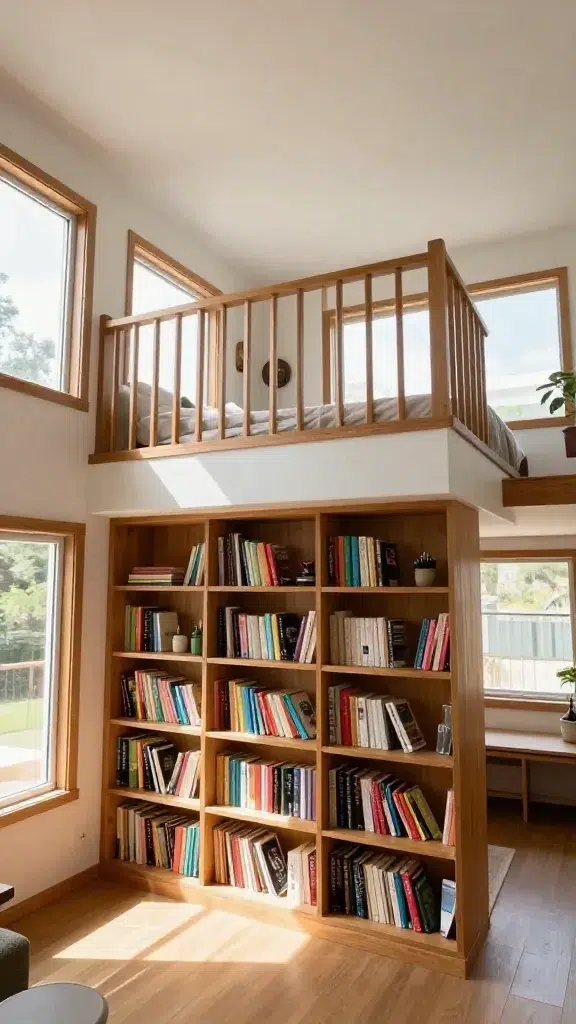
Traditional railings in a tiny home often feel like wasted space because they serve only one safety purpose. When you’re working with limited square footage, every vertical surface needs to work twice as hard to keep the room from feeling cluttered. Replacing a standard banister with a custom bookcase creates a functional barrier that doubles as a massive storage unit for your library.
This setup usually involves building a waist high shelving unit that runs the entire length of the loft edge. You can face the books toward the sleeping area for a cozy library vibe or turn them outward to show off decor to the living room below. It provides the same security as a wall but keeps the space feeling open and airy since light can still pass through the gaps between books.
To make this work, ensure the back of the unit is finished properly or left open for a see through effect. You might even include a few hidden compartments with flip down doors to hide messy charging cables or electronics. It turns a boring safety requirement into the main focal point of your upper floor while freeing up valuable floor space downstairs.
9. Integrated Home Office Nook
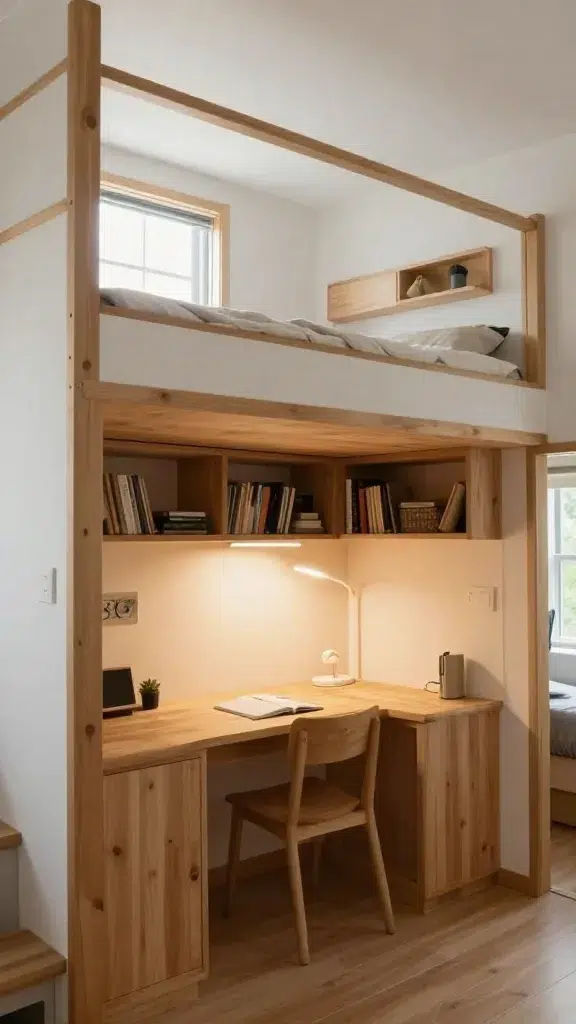
Imagine trying to finish a project on your laptop while sitting on your bed or the kitchen counter. It usually ends with a sore back and a messy living space, which is why a dedicated workspace under the stairs is a life saver.
| Feature | Standard Desk | Integrated Nook |
|---|---|---|
| Footprint | 4 to 6 square feet | Zero extra floor space |
| Storage | External drawers | Built-in wall shelving |
| Visual Clutter | High visibility | Tucked out of sight |
By using the dead space beneath your staircase, you can fit a full-depth butcher block desk and overhead LED lighting. This setup keeps your work life separate from your relaxation zones without sacrificing any actual square footage.
I recommend adding a swivel stool that tucks completely under the desk when you aren’t using it. This keeps the main walkway clear and makes the tiny home feel much larger during your off hours.
10. Installing a Visual Connection Glass Floor
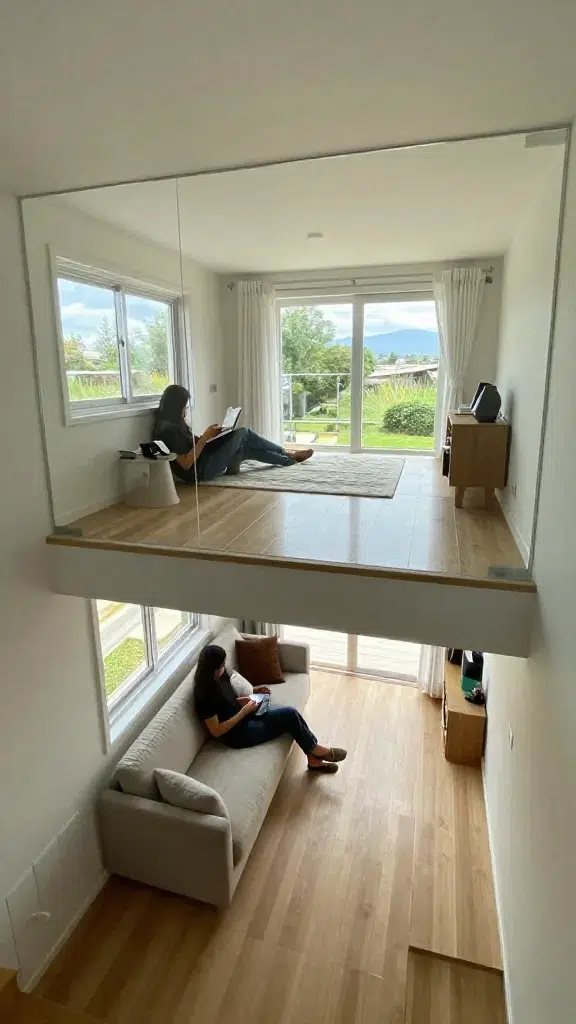
A structural glass floor panel in your loft is the smartest way to stop a tiny house from feeling like a cramped wooden box. By replacing just a small section of the upstairs flooring with tempered glass, you allow light to flow between levels without losing any actual square footage.
You can see who is cooking dinner while you’re hanging out in the loft, which makes the whole home feel much more social. It effectively doubles the perceived height of the downstairs living area by opening up the ceiling to the sky or the upper windows.
Most builders use laminated architectural glass that is about an inch thick to ensure it is completely safe to walk on. You should choose a slip resistant coating or a frosted border if you’re worried about scuffs or privacy from below.
Positioning the panel directly under a skylight creates a light well that reaches all the way to the ground floor. This setup works particularly well in narrow homes where side windows are small or non existent.
11. Multi-Use Built-In Seating
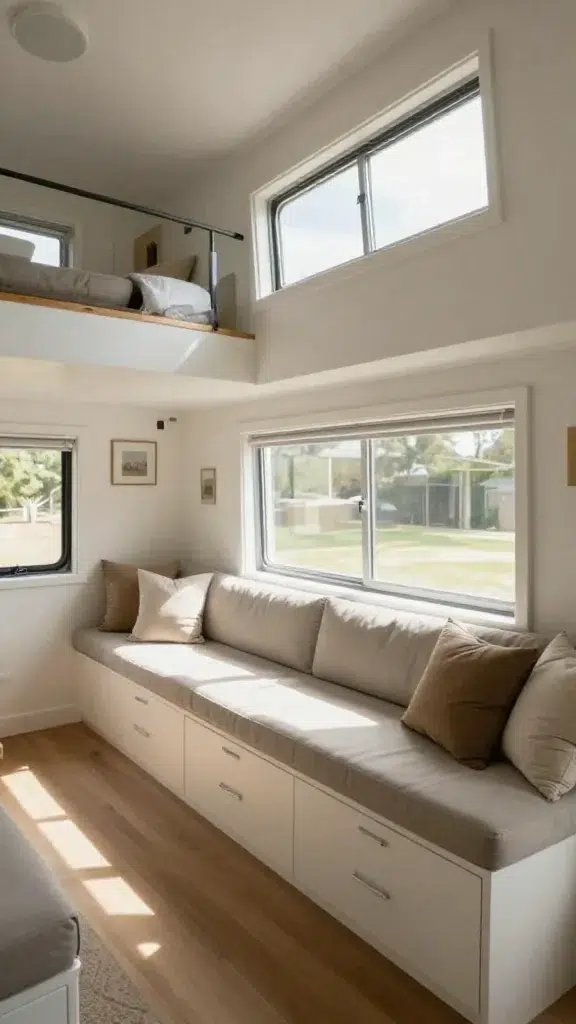
Building a custom bench along your living room wall solves two problems at once. You get a comfortable place to hang out while hiding your bulky items like winter coats or extra bedding inside the base cabinets.
In a tiny home, every inch under your butt should be working for you. It’s much smarter than buying a freestanding sofa that just collects dust bunnies underneath and offers zero storage.
- Install deep drawers instead of flip up lids so you don’t have to move the cushions to grab your gear.
- Add a slide-out table segment that hides inside the bench frame to create an instant workspace.
- Use high density foam for the pads to ensure they don’t flatten out after a few months of heavy use.
You can even extend the woodwork to create a small side table or a charging station for your phone. It turns a simple sitting area into the most functional hub of your main floor.
12. Fold-Down Dining Table Solution
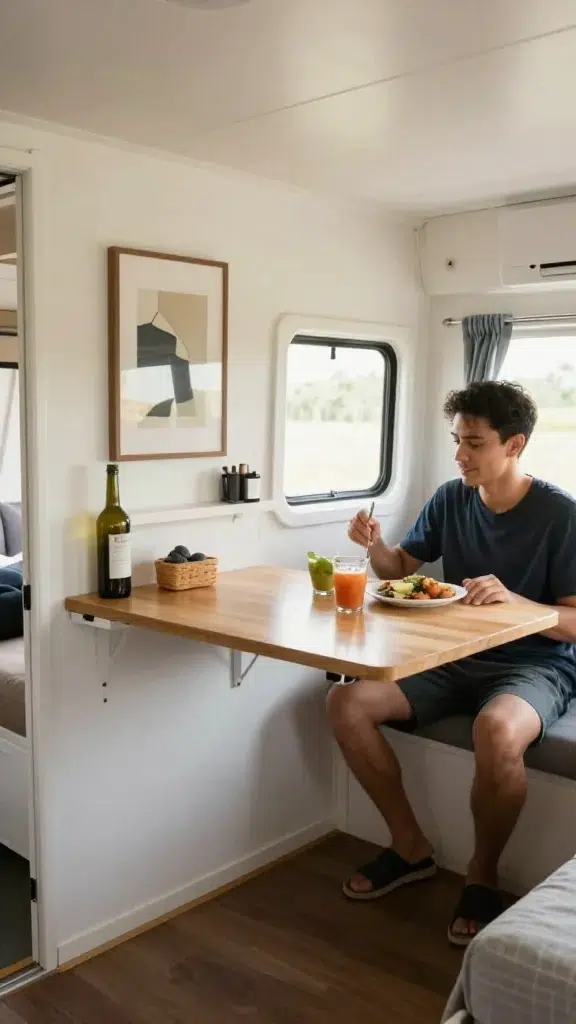
You really don’t need a massive oak table taking up floor space when you’re only eating for twenty minutes a day. A wall-mounted fold-down table acts like a Murphy bed for your kitchen area, snapping flat against the wall when the meal is over.
I’ve seen some clever setups where the underside of the table features a framed piece of art or a mirror. When you tuck the table away, it looks like a decorative wall hanging instead of furniture, which keeps the room feeling open.
If you choose a model with a sturdy piano hinge, it can double as a heavy-duty desk for remote work. Just make sure you install it at the right height for your favorite stools so your knees don’t hit the bottom of the ledge.
For a double-story layout, placing this near the stairs helps keep the main walkway clear for moving between levels. It turns a high-traffic zone into a functional dining nook without any permanent bulk.
13. Bright Corner Kitchen Layout
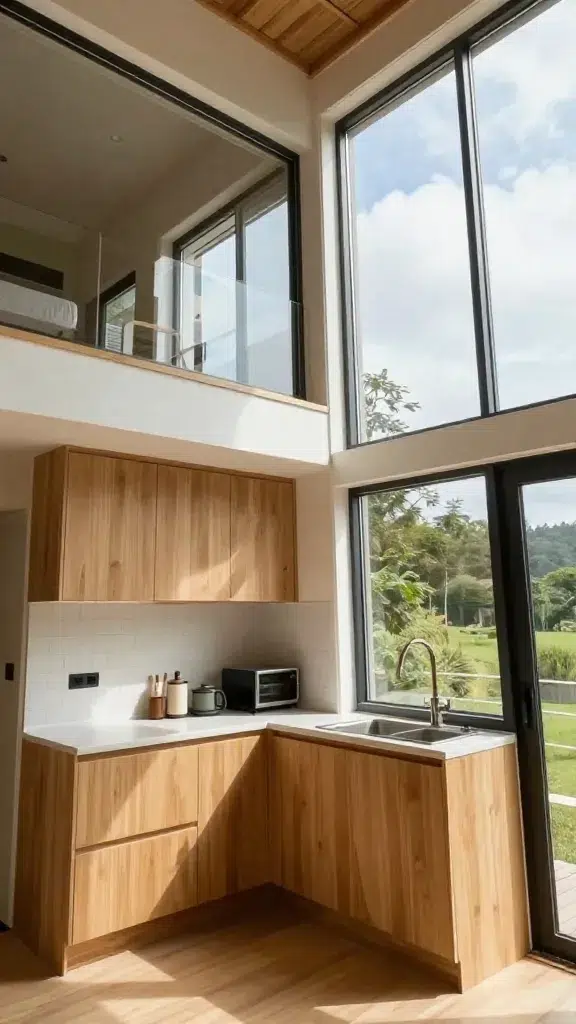
Tucking the kitchen into a corner with floor to ceiling windows completely changes how a small space feels. It stops the cooking area from feeling like a dark hallway and lets you watch the weather while you prep meals.
The real secret here is using the vertical space of a double story build to pull in natural light from above. When you have high ceilings, you can place windows above the cabinets to keep the room bright even on cloudy afternoons.
- Install white quartz countertops to bounce sunlight back into the rest of the living area.
- Use open shelving made of light oak instead of heavy upper cabinets to keep the sightlines clear.
- Place the sink directly under a window so you aren’t staring at a wall while doing dishes.
- Add a small breakfast bar that extends from the counter to create a natural transition between the kitchen and the lounge.
This setup works best when you stick to a minimalist color palette. It keeps the corner from looking cluttered and makes the transition to the outdoors feel much more natural.
14. Using Mirrors to Expand Height
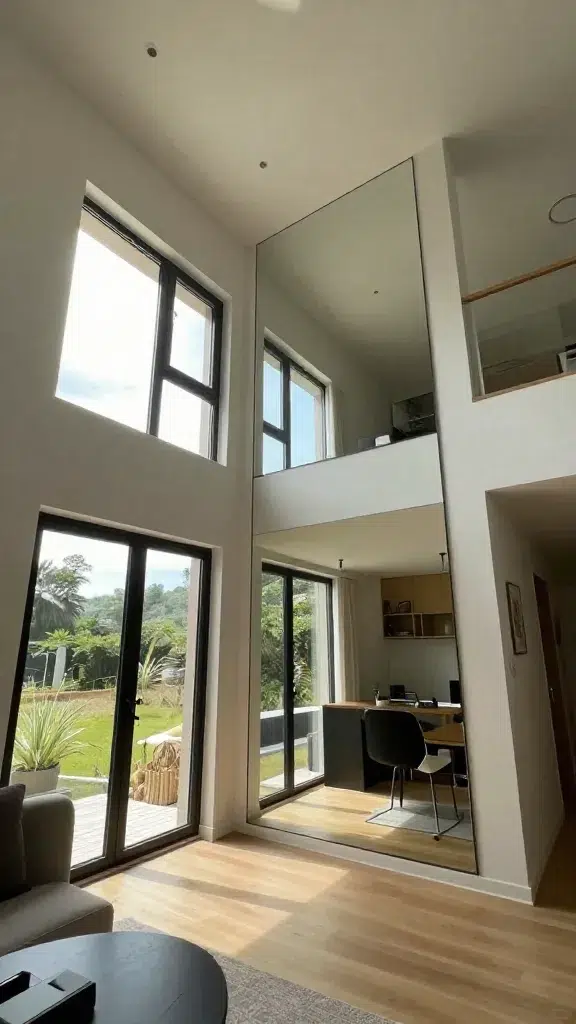
You might be tempted to hang a few small, decorative mirrors at eye level to break up your wall space. While this looks nice, it usually just creates a cluttered feel in a narrow loft area or a tiny living room.
A much bolder approach involves installing a floor-to-ceiling mirror on the wall opposite your main window. This reflects the entire vertical span of your double story layout, making the ceiling feel twice as high as it actually is.
I always recommend going with one massive, seamless sheet of glass rather than several small frames. Large mirrors trick your brain into seeing a whole new room instead of just a reflection, which is exactly what you need in a tight footprint.
15. Downstairs Murphy Bed for Guests
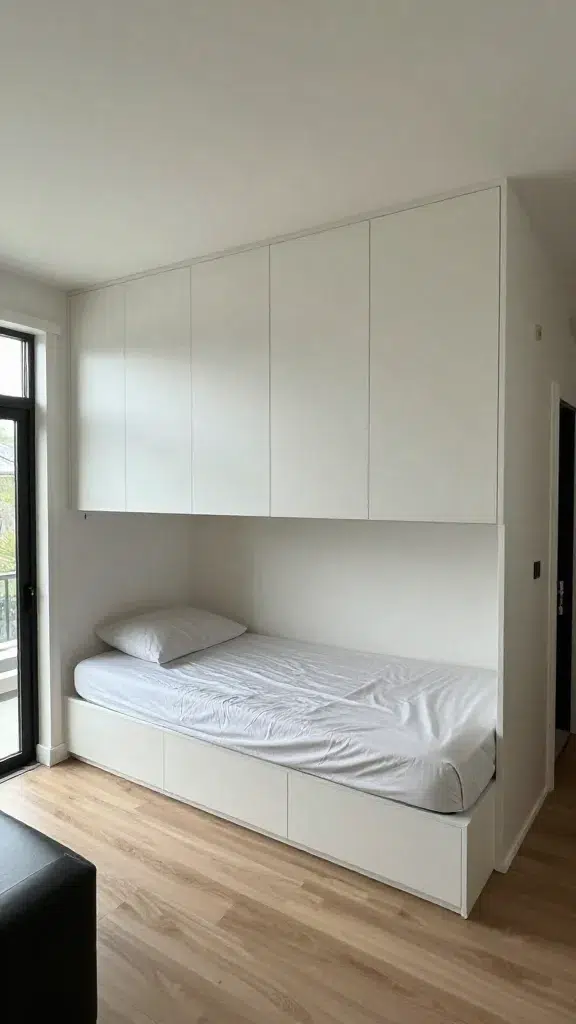
Most tiny home owners struggle with the guilt of not having a spot for friends to crash. You want to host people for a weekend, but a permanent guest room on the main floor eats up every square inch of your living area.
A downstairs Murphy bed solves this by tucking a full or queen mattress vertically into the wall. During the day, it looks like a sleek cabinet or a set of bookshelves, leaving your floor open for yoga or a desk. When guests arrive, you just pull the handle and the room shifts into a private suite in seconds.
Look for a model with built-in pistons so you aren’t wrestling with the weight of the frame. You can even find designs that include a fold-down desk on the front, giving you a workspace during the week. This setup keeps the upstairs loft strictly for your own privacy while making your tiny house feel twice as big for visitors.
Wrapping Up
Building upward is the best way to get the most out of a small footprint. These 15 must-see ideas for double story tiny home interiors show that you can have a bedroom and a living area without feeling cramped. Use these layouts to plan your own space effectively. Now it is time to grab your measuring tape and start turning these concepts into your actual home.