
A 2 bedroom tiny house plan offers a compact yet functional home under 1,000 sq ft of heated living space—typically ranging from 400 to 900 sq ft depending on whether you’re building on wheels or a permanent foundation. Popular footprints include 24’ x 30’, 28’ x 26’, or linear 20’ x 40’ rectangles, with finished sizes landing around 600, 720, or 840 sq ft for most builds.
This guide covers who these plans work best for, the key benefits of going small with two bedrooms, and which layouts deliver the best results. Whether you’re drawn to a single-story cabin, a cottage with a covered porch, or a compact modern box with a lofted second bedroom, the right tiny house floor plan can make tiny living feel surprisingly spacious, especially when you focus on tiny house plans that fit your life.
Main advantages of 2 bedroom tiny house plans:
- Lower build cost compared to traditional homes
- Reduced monthly utilities and maintenance
- Flexible second room for guests, office, or family
- Smaller footprint suits narrow or rural lots
- Simpler construction timeline (often 4–8 months)
- Who a 2 Bedroom Tiny House Plan Is Perfect For
- Who a 2 Bedroom Tiny House Plan May Not Suit
- Why Tiny Living with 2 Bedrooms Works So Well
- Typical 2 Bedroom Tiny House Layout Ideas
- Key Features to Include in a 2 Bedroom Tiny House Plan
- Popular Styles of 2 Bedroom Tiny Houses
- Planning Your Build: Budget, Permits, and Timeline
- How to Choose the Right 2 Bedroom Tiny House Plan
- Conclusion: Is a 2 Bedroom Tiny House Plan Right for You?
Who a 2 Bedroom Tiny House Plan Is Perfect For
Two bedroom house plans under 1,000 sq ft work well for households that need flexibility without excess square footage and can take cues from tiny homes that redefine small space living. Here’s who typically benefits most:
- Empty nesters downsizing: A retired couple moving from a 3–4 bedroom home to a ~700 sq ft two bedroom house can keep a dedicated guest room without the burden of maintaining unused space. Think of a couple in Oregon using an 8’ x 10’ second bedroom as a guest room in summer and a seasonal home office in winter.
- Young couples planning ahead: A 2 bed / 1 bath plan around 650 sq ft works as a starter home with room for a nursery or future child’s bedroom. You build what you need now and avoid paying for rooms that sit empty for years.
- Single professionals needing a home office: Instead of cramming a desk into the living room or using a pull-out couch as your “workspace,” the extra bedroom becomes a dedicated WFH studio with a door that closes.
- Small households with an aging parent: The second bedroom provides a compact but private suite—enough for a twin bed, small dresser, and nightstand—while keeping the main living space open.
- Part-time residents and vacation homeowners: A 2 bedroom cabin at 720 sq ft offers enough room for the owners and occasional guests without the carrying cost of a larger seasonal property.
Who a 2 Bedroom Tiny House Plan May Not Suit
Not every household thrives in a smaller house. Before committing to bedroom tiny house plans under 1,000 sq ft, consider whether your situation calls for something larger:
- Families with 3+ children: Two bedrooms simply don’t provide enough sleeping space. Even with bunk beds, shared rooms become cramped as kids grow.
- Couples actively planning a larger family: If you’re expecting to have two or three children in the next 3–5 years, starting with a 2 bedroom tiny house often leads to an expensive move or addition sooner than expected.
- Home-based businesses requiring inventory or workshop space: If your work involves storing products, tools, or equipment, the limited storage in tiny homes creates daily friction. A 50–100 sq ft storage footprint won’t accommodate inventory-heavy operations.
- People who dislike minimalist living: Tiny house plans demand ruthless decluttering. If you’re not ready to part with possessions or adopt compact storage systems, you may feel cramped.
Better alternatives to consider:
- 3 bedroom small house plans (1,000–1,400 sq ft)
- 1 bedroom tiny home with a detached studio or workshop
- Accessory dwelling units (ADUs) on a larger property
Why Tiny Living with 2 Bedrooms Works So Well
Building a 2 bedroom house under 1,000 sq ft delivers tangible advantages across cost, energy efficiency, and daily function, and using a tiny home cost calculator helps you understand how those savings translate into real numbers for your project while you compare different tiny houses for sale to see if the lifestyle fits.
A basic 2 bedroom tiny home of ~700 sq ft might cost 30–50% less than a conventional 1,800 sq ft house, depending on finishes, foundation type, and local labor rates in 2024–2025. That said, cost per sq ft can run higher due to compact mechanical systems, custom cabinetry, and efficient appliances packed into smaller rooms.
Energy efficiency improves dramatically when you’re heating and cooling less conditioned volume. Utility bills often drop to $50–100 per month—50–70% lower than a typical 2,000 sq ft home. A small heat pump or mini-split system can handle the entire space, and south-facing windows reduce heating loads by 30–50% in temperate climates, especially when paired with tiny smart home technology for efficient living.
Two bedrooms also make tiny living more practical than single-room layouts. You gain separation between sleep, work, and leisure without wasting space on hallways or formal dining rooms, while still embracing the ethos of minimalist tiny houses for sustainable living and broader tiny house inspiration and resources for downsizing.
Why tiny works:
- Lower build and land cost frees up budget for quality finishes
- Reduced square footage means less time and money to maintain
- Easier to achieve net-zero or all-electric design goals
- Second room adds flexibility as household needs change
Typical 2 Bedroom Tiny House Layout Ideas
Under-1,000 sq ft house plans come in several proven configurations. The right layout depends on your lot shape, household size, and whether you want single-story access or can handle stairs, so it helps to understand the full process of how to build a tiny house from foundation to finishes and draw inspiration from the best tiny house designs for modern living.
- Side-by-side bedrooms: Two 9’ x 10’ bedrooms at one end of a rectangular floor plan, with an open kitchen/living/dining zone at the other. This layout minimizes hallway depth and keeps plumbing stacked in one wall, and works especially well in custom tiny homes designed for efficient small-space living.
- Split-bedroom layout: The primary bedroom sits on one side of the living area, and a smaller room or office occupies the opposite end. This provides acoustic privacy between sleeping spaces—useful for roommates or guests.
- Lofted second bedroom: In a 400–500 sq ft footprint, the second bedroom sits above the kitchen or bathroom on a mezzanine accessed by ladder or ship’s stair. Lofts reclaim 150–200 sq ft of ground-level openness but require 3.5–4 feet of headroom and aren’t ideal for occupants with mobility concerns, though they can feel remarkably spacious in elegant tiny homes that redefine modern living.
- L-shaped cottage: A 20’ x 24’ L-shape separates the bedroom wing (bedrooms + bath) from the public zone at a 90-degree elbow. The bend creates a natural outdoor patio area that extends usable living space by 100–150 sq ft seasonally.
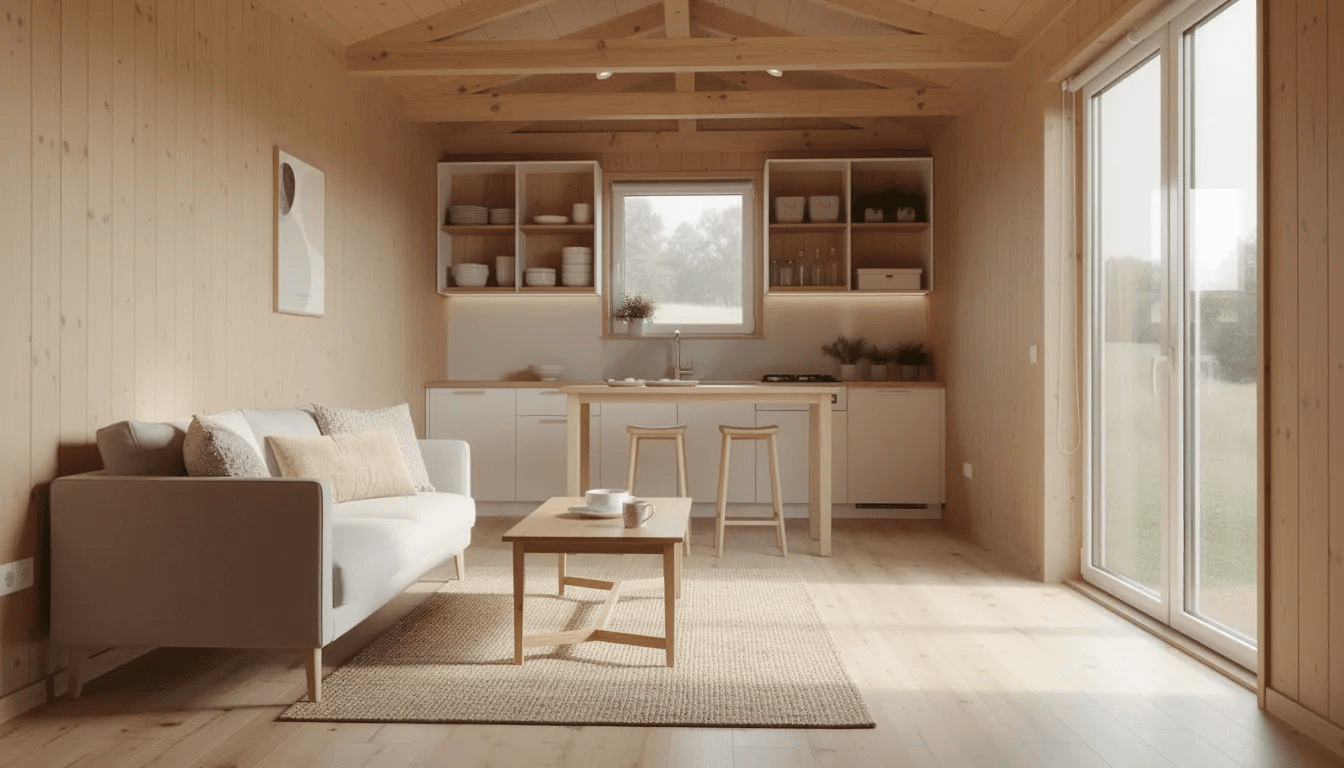
Open floor plans that merge the kitchen, dining, and living space into one room create better flow and make small homes feel larger than their actual size, especially when paired with tiny house interiors that maximize every square foot.
Key Features to Include in a 2 Bedroom Tiny House Plan
A well-designed bedroom tiny house maximizes every square foot through built-ins, smart layouts, and durable materials, much like many affordable tiny house designs and tips that prioritize value without sacrificing function. Use this checklist when reviewing blueprints:
- Space-saving built-ins: Wall-to-wall wardrobes in one bedroom, under-bed drawers in both rooms, and a window seat with hidden storage in the living room add function without eating floor space.
- Efficient kitchen layout: A 12’–14’ combined kitchen–dining wall provides room for full-size appliances while minimizing upper cabinets for openness. Galley configurations work well when depth is limited.
- Bathroom options: Plans closer to 900–1,000 sq ft can support 1.5 baths—a full bath near the bedrooms and a half bath off the living area for guests. Smaller plans typically stick to one full bath.
- Outdoor living extension: At least one outdoor “room”—an 8’ x 12’ covered porch or small deck—extends the home seasonally without adding heated living space, similar to many cozy Swedish tiny houses with strong indoor-outdoor connections.
- Energy-efficient envelope: Quality windows, proper insulation, and a simple roof form (gable or shed) control build cost while reducing long-term heating and cooling expenses.
- Vaulted ceiling or high ceilings: In single-story plans, a vaulted ceiling in the living area creates the perception of more space and allows clerestory windows for natural light.
Popular Styles of 2 Bedroom Tiny Houses
Tiny house plans come in distinct architectural styles. Choosing one that matches your lot, climate, and personal taste makes the design process faster, and exploring cute tiny house designs for your dream home can help you pinpoint the look that feels right.
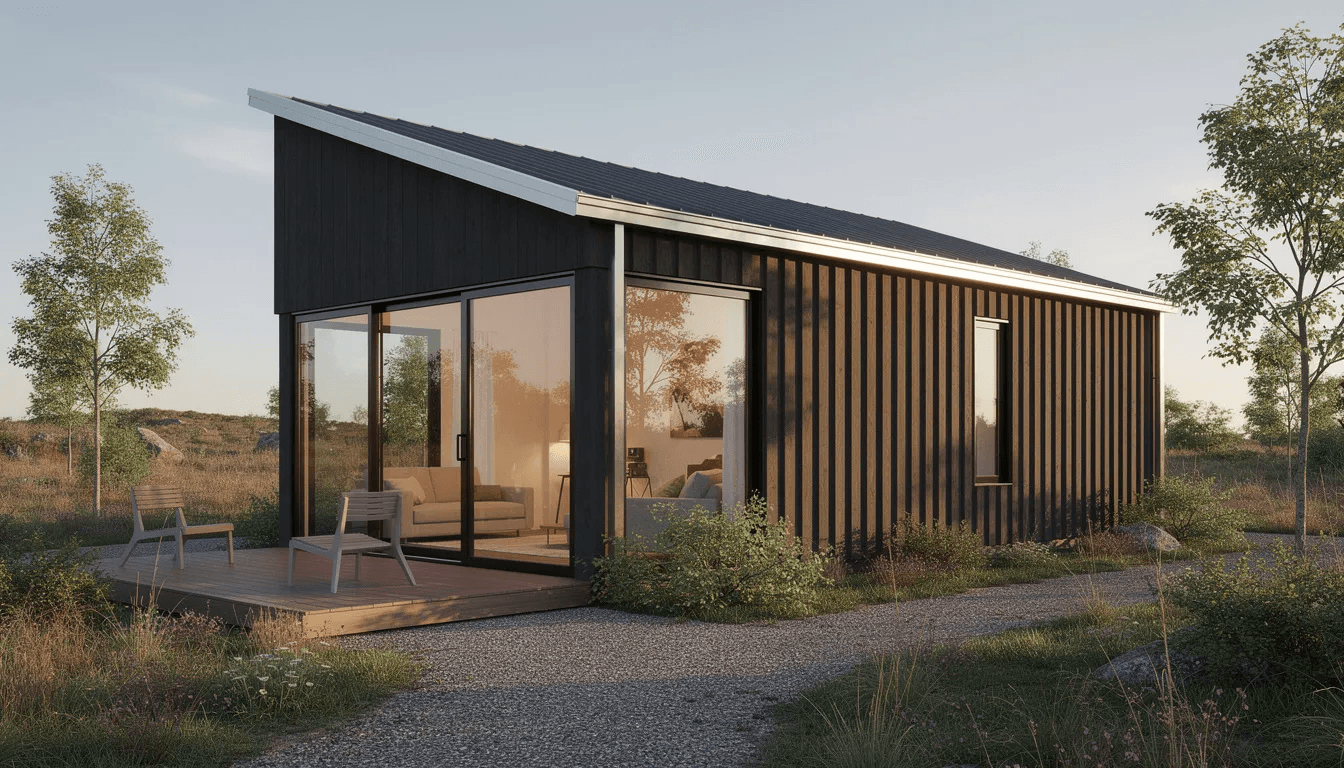
- Modern box: Flat or shed roof, vertical fiber cement or metal cladding, large windows, black or charcoal exterior finishes, and minimal trim. Clean lines and simple geometry keep build costs predictable.
- Farmhouse cottage: Gable roof with a standing-seam metal finish in matte gray, white or soft pastel siding, board-and-batten details, and a front porch with simple square posts. This style blends into rural and suburban settings.
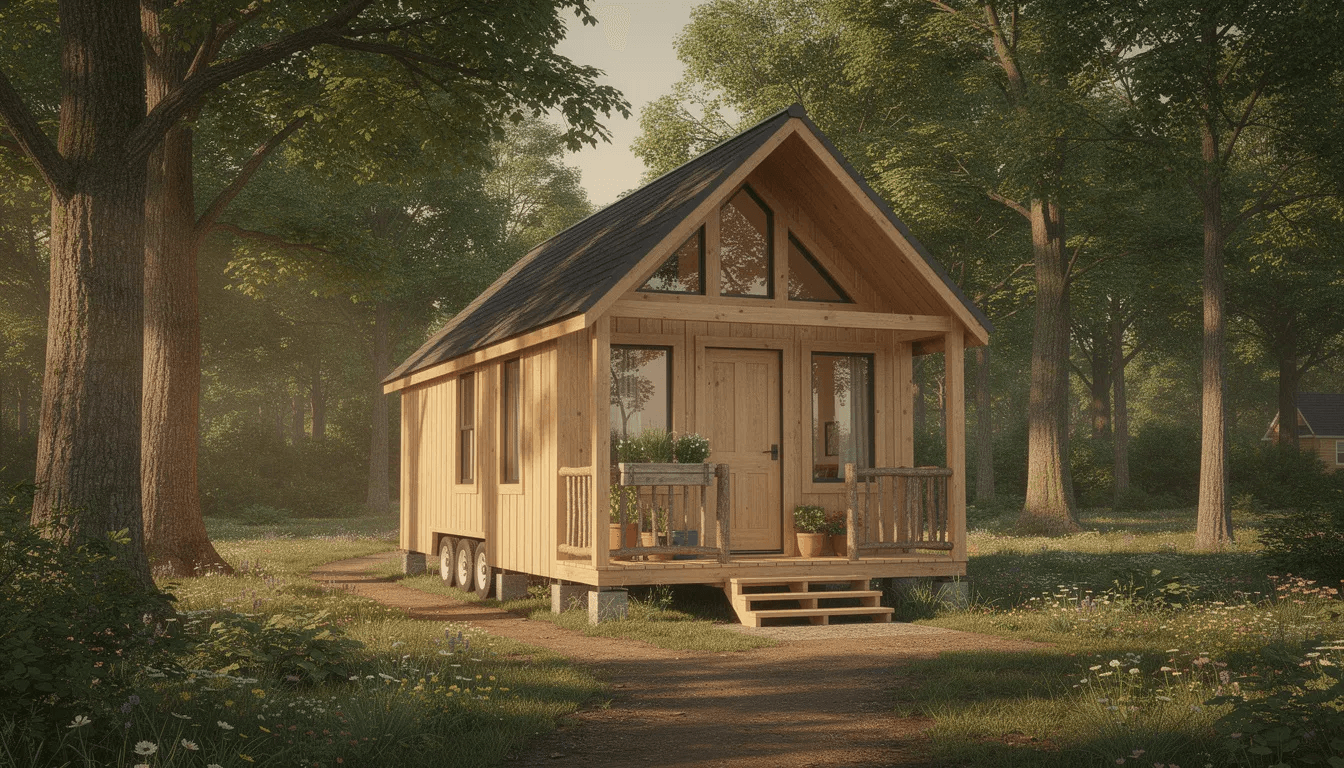
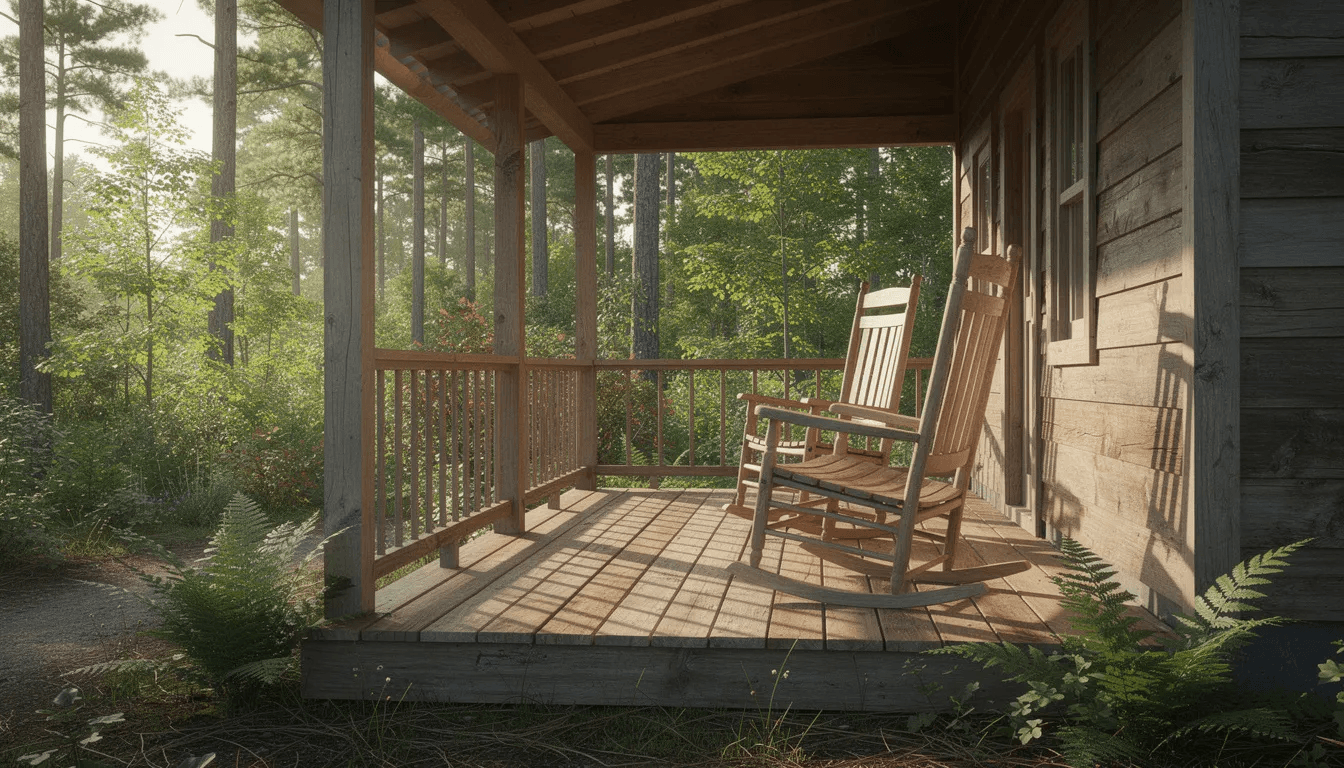
- Rustic cabin: Stained wood siding (cedar or pine), exposed rafters, metal or shingle roof, and a compact footprint suited to forest, mountain, or lakefront lots. Interior finishes often include knotty pine walls and a wood stove as a focal point, a look that’s especially popular among small home builders in Washington State.
- Coastal bungalow: Light exterior colors, larger windows for views, covered porch or screened room, and an elevated foundation where flood zones require it. Durable materials like fiber cement and PVC trim handle salt air and humidity, and similar compact designs appear in some Amazon tiny house offerings for coastal or vacation living.
Planning Your Build: Budget, Permits, and Timeline
Even a tiny house requires full planning: realistic budgets, permits, and a construction schedule that accounts for weather, lead times, and inspections, especially if you’re exploring tiny homes under $20K as ultra-budget options.
Budget breakdown categories:
Category | Typical % of Total |
|---|---|
Foundation | 8–12% |
Framing | 15–20% |
Roofing | 8–10% |
Windows & doors | 8–12% |
Interior finishes | 20–25% |
Systems (HVAC, plumbing, electrical) | 15–20% |
Contingency | 10–15% |
Permitting considerations: |
- Zoning often defines “minimum dwelling size”—confirm a 600–900 sq ft tiny house is allowed on your lot.
- Check setbacks, lot coverage limits, and utility requirements with your local building department before you start.
- Some municipalities require 2 bedroom house plans to meet IRC Appendix Q standards or ADU ordinances.
Typical timelines:
- Simple stick-built 2 bedroom tiny house: 4–8 months
- DIY weekend builds: 12–20 months
- Prefab modular delivery: 4–8 weeks after factory completion
Taking time to search for the right plans and confirm local codes early will save money and prevent delays later.
How to Choose the Right 2 Bedroom Tiny House Plan
Selecting the right layout starts with honest assessment of your household’s daily routines, work needs, and long-term goals, whether you’re commissioning custom plans or considering Home Depot tiny house kits as a faster path to build.
- Start with household size and function: Count the people living full-time, frequency of guests, and whether anyone works from home requiring dedicated office space.
- Measure real furniture: Check that your existing bed sizes, desk, and sofa actually fit the suggested room dimensions. An 8’ x 10’ bedroom fits a queen bed—barely—but may not accommodate a dresser.
- Decide on single-story vs. lofts: Lofted plans create more space in compact footprints, but stairs or ladders limit access for children, elderly occupants, or anyone planning to age in place.
- Prioritize must-have features: List non-negotiables—full-size kitchen, bathtub (not just shower), covered porch, laundry closet—and filter exterior floor plan options accordingly.
- Consider site orientation: Note where natural light enters, where neighbors’ windows face, and any views worth capturing. These factors influence bedroom and living room placement.
- Create an account to access saved plans: Many plan sites let you create an account so you can access your saves whenever you want. This prevents you from needing to lose your saved plans during your search.
Conclusion: Is a 2 Bedroom Tiny House Plan Right for You?
A 2 bedroom tiny house plan fits downsizers, small families, couples, and singles who need an extra bedroom without excess rooms sitting empty. These plans balance affordability, flexibility, and comfort within an efficient footprint that’s easier to build, heat, and maintain.
Before committing, reflect on your 5–10 year life plan. Will a sub-1,000 sq ft layout with two bedrooms still fit your household as it evolves? If the answer is yes, you’ll benefit from simplicity, lower cost, and a home scaled to how you actually live.
Decision checklist:
- Shortlist 2–3 specific plan sizes (e.g., 600, 720, 900 sq ft)
- Compare layouts against real furniture dimensions and daily routines
- Confirm local zoning allows your target square footage
- Budget for foundation, permits, and a 10–15% contingency
- Bring plenty of time to the planning phase—it pays off during construction
Start your search with clear priorities, and the right 2 bedroom tiny house plan will bring your vision to life without wasted space or budget.