
There’s something undeniably appealing about a country house—the generous porch welcoming you home, natural materials that age gracefully, and interiors designed for how families actually live. Country houses designs represent a broad architectural category rooted in rural lifestyles that prioritize functionality, connection to nature, and informal comfort over urban formality.
This design tradition evolved from practical 18th- and 19th-century farm dwellings into today’s popular aesthetic for both primary residences and vacation homes. What began as simple constructions using locally sourced materials has transformed into a versatile style that blends rustic charm with modern amenities. Whether you’re drawn to a French country villa, an English cottage, or a classic American farmhouse, understanding these designs helps you create a home that feels both timeless and personal, even if you’re exploring tiny homes that redefine small-space living.
What Defines a Country House Design?
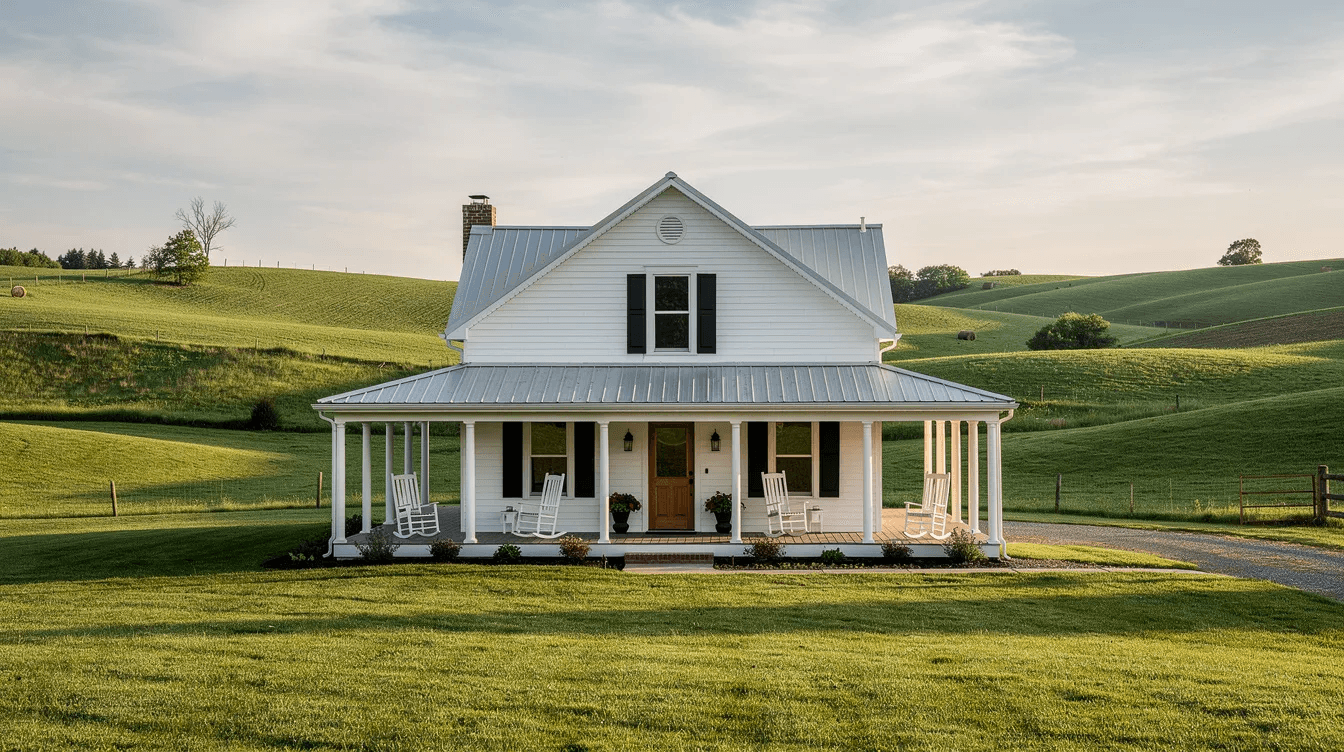
A country house is defined more by lifestyle and feel than by strict architectural rules. The essence lies in creating spaces that embrace comfortable living, casual gatherings, and a seamless relationship with the surrounding land. This focus on relaxed informality rather than rigid formality is what gives country homes their distinctive charm.
Key Exterior Features:
- Covered front porches or wrap around verandas that provide shade and social gathering spaces
- Pitched or gabled roof designs for efficient water shedding in rural climates
- Dormer windows that illuminate attic spaces converted to bedrooms
- Symmetrical or balanced façades conveying welcoming stability
- Large porches extending across multiple sides of the home
- Board-and-batten or horizontal wood siding in traditional colors
Key Interior Features:
- Open floor plans connecting kitchen and living space for family gatherings
- Large kitchen areas with room for oversized islands and family tables
- Exposed ceiling beams adding textural warmth and visual interest
- Wide plank flooring designed for durability under muddy boots
- Practical mudrooms serving as buffer zones between outdoors and interior spaces
- Walk in pantry storage for rural self-sufficiency
Typical Material Palette:
- Timber siding or board-and-batten for textural exteriors
- Stone or brick foundations and chimneys providing longevity
- Metal or shingle roofs in muted earth tones like charcoal or weathered gray
- Natural materials throughout that harmonize with surrounding landscapes
Indoor-Outdoor Connection:
- Multiple French doors opening to porches, decks, or patios
- Large windows oriented to views of fields, woods, lakes, or hills
- Rear porches positioned for privacy and relaxing after long days
- Strategic porch placements capturing prevailing breezes
Modern country homes often integrate energy-efficient windows that reduce heat loss by up to 50% compared to single-pane originals, enhanced insulation achieving R-30 wall values, and smart home systems—all while preserving the traditional country style that makes these homes so appealing.
Classic Country House Styles
Country style house plans span several substyles shaped by region and history. French, English, and American farmhouse traditions each bring distinct proportions, materials, and detailing to the country house conversation. Many contemporary projects mix these influences, creating personalized homes that draw from multiple traditions.
Understanding these categories helps homeowners choose a direction that reflects their taste and lifestyle. Whether you prefer the romantic asymmetry of French country homes or the practical simplicity of traditional country style farmhouses, each approach offers a proven template for creating spaces suited to country living.
French Country House Designs
French country design draws from the rural villas of Normandy, Provence, and the Loire Valley, gaining particular popularity in North American builds from the late 1990s onward. This style balances rustic warmth with an understated elegance that feels both sophisticated and approachable.
Exterior Characteristics:
- Steeply pitched hipped or gabled roofs designed for shedding heavy rains
- Tall second-story windows often fitted with louvered shutters for light modulation
- Arched entry doors evoking chateau architecture
- Asymmetrical façades creating picturesque massing
Common Materials:
- Brick, stone, or stucco walls in warm creams and taupes
- Timber lintels adding rustic detail above windows
- Subtle half-timbering details on some designs
- Clay or slate roofing in earthy tones
Interior Traits:
- Smooth plaster walls contrasting with rustic exposed beams
- Stone or terracotta tile floors that endure spills and heavy traffic
- Cavernous farmhouse style kitchens with central islands
- French doors opening to terraces or garden spaces
A typical French country house plan might feature 3,000–3,500 sq ft across two stories, with a ground-floor owner’s suite, an open kitchen-dining-living spine, and 3–4 bedrooms upstairs, while smaller-scale interpretations like colonial tiny house designs for cozy living translate similar charm into compact footprints. This configuration works well suited for families who enjoy indoor-outdoor entertaining and appreciate the timeless appeal of European country architecture.
English Country House Designs
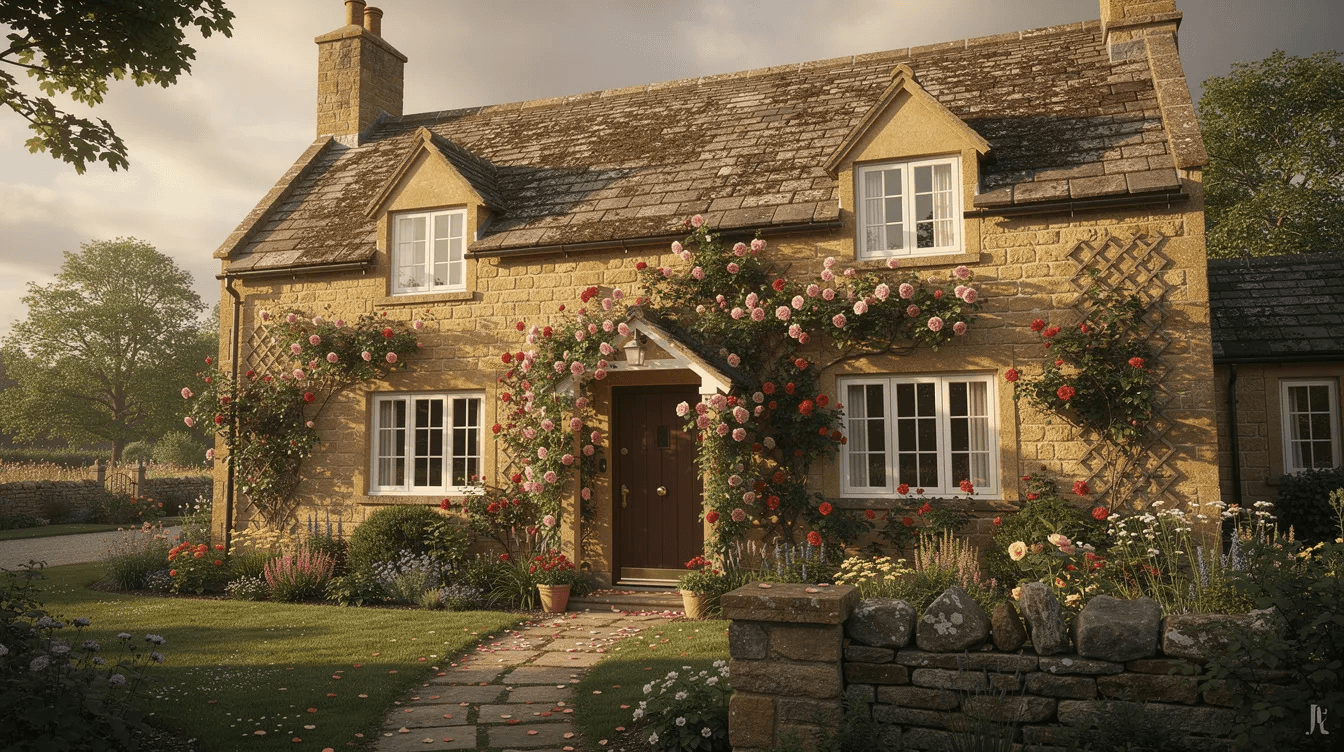
English country design channels the charm of 18th- and 19th-century cottages and manor houses from regions like the Cotswolds and Yorkshire. This architectural style emphasizes cozy proportions, quality materials, and a storybook quality that feels romantically timeless.
Exterior Characteristics:
- Squared, multi-pane sash windows arranged in symmetrical patterns
- Stone or brick surrounds framing windows and doors
- Prominent brick chimneys venting multiple hearths
- Slate or clay pantile roofs with distinctive texture
Typical Materials:
- Stone walls in gray or honey tones, often random-coursed
- Timber framing visible on some designs
- Brick accents around chimneys and foundations
- Lead or copper guttering for authenticity
Interior Traits:
- Cozy, compartmentalized rooms blended today into semi-open plans
- Inglenook fireplaces in primary living areas
- Built-in shelving and cabinetry throughout
- Window seats capturing natural light
An English country house plan might offer 2,400–2,800 sq ft with a central hallway, formal living room and snug, country kitchen with breakfast nook, and 3–4 bedrooms upstairs. The storybook quality extends to landscaping: boxwood hedges, cottage gardens profuse with lavender and roses, and gravel drives that crunch underfoot create an authentic sense of timeless English charm.
American Farmhouse and Traditional Country
The American farmhouse forms the backbone of country home designs, stemming from 19th-century agricultural homes across the Midwest and South, and its straightforward massing adapts naturally into ranch tiny house designs for retreats. These practical dwellings were built for self-sufficient multi-generational families who needed space that worked as hard as they did.
Signature Elements:
- Long or full wraparound porches fostering community and hospitality
- Simple rectangular or L-shaped footprints for cost-effective construction
- Cross-gabled roof designs ventilating attics naturally
- Double-hung windows with shutters enabling cross-breezes
Common Materials:
- White horizontal lap siding or board-and-batten evoking whitewash traditions
- Standing-seam metal roofs lasting 50+ years
- Fieldstone foundations providing solid bases
- Brick accents around porches and chimneys
Interior Focus:
- Generous 12×16-foot kitchens with room for seating 8–10
- Mudrooms with boot benches and storage lockers
- Open family rooms with 9-foot ceilings
- Straightforward bedroom layouts prioritizing function over formality
Popular farmhouse style floor plans from the 2010s and 2020s typically range from 1,800–2,500 sq ft in one- or two-story configurations. These country home plans suit exurban families on 1–5 acre lots, offering 4-bedroom layouts with 2.5 baths and attached 2-car garage space. This approach to country house design remains the most searched and widely built today.
Regional Country House Variations
Climate and geography strongly influence country houses designs, giving rise to regional variants adapted to local conditions. Low Country homes address coastal flooding, Texas Hill Country designs manage intense heat, and ranch-inspired country homes provide single-level accessibility. Each regional style adapts foundations, porches, roof pitches, and materials to handle specific weather challenges while maintaining the core principles of country living.
Low Country House Designs
Low Country houses originate from coastal South Carolina, Georgia, and other marshy Southern regions, with roots tracing back to 18th- and 19th-century rice plantations. These designs developed specific strategies for managing the challenges of living near tidal waters and in humid subtropical climates.
Foundation and Structure:
- Raised foundations on pier-and-beam construction, typically 8–12 feet high
- Elevation avoids tidal flooding while promoting underfloor ventilation
- Elevated main floors can drop indoor temperatures by 10–15°F through natural airflow
Porch and Ventilation Features:
- Wide, deep wraparound porches spanning 10–14 feet providing 40% shaded envelope
- 10–12 foot ceilings with transom windows capturing prevailing coastal breezes
- Screened porches protecting from insects while maintaining airflow
Materials and Colors:
- Light-colored clapboard or shingle siding in seafoam, ivory, or pale gray
- Galvanized metal roofs reflecting solar heat
- Paint schemes designed to reflect rather than absorb sunlight
A Low Country house plan might feature 2,200–2,800 sq ft with the main living floor above ground level, 3–4 bedrooms, heart-pine flooring, and expansive screened porches facing marsh or river views. This contrasts sharply with landlocked country homes, where lower profiles and direct ground contact work fine without flood concerns.
Texas Hill Country and Southern Country Designs
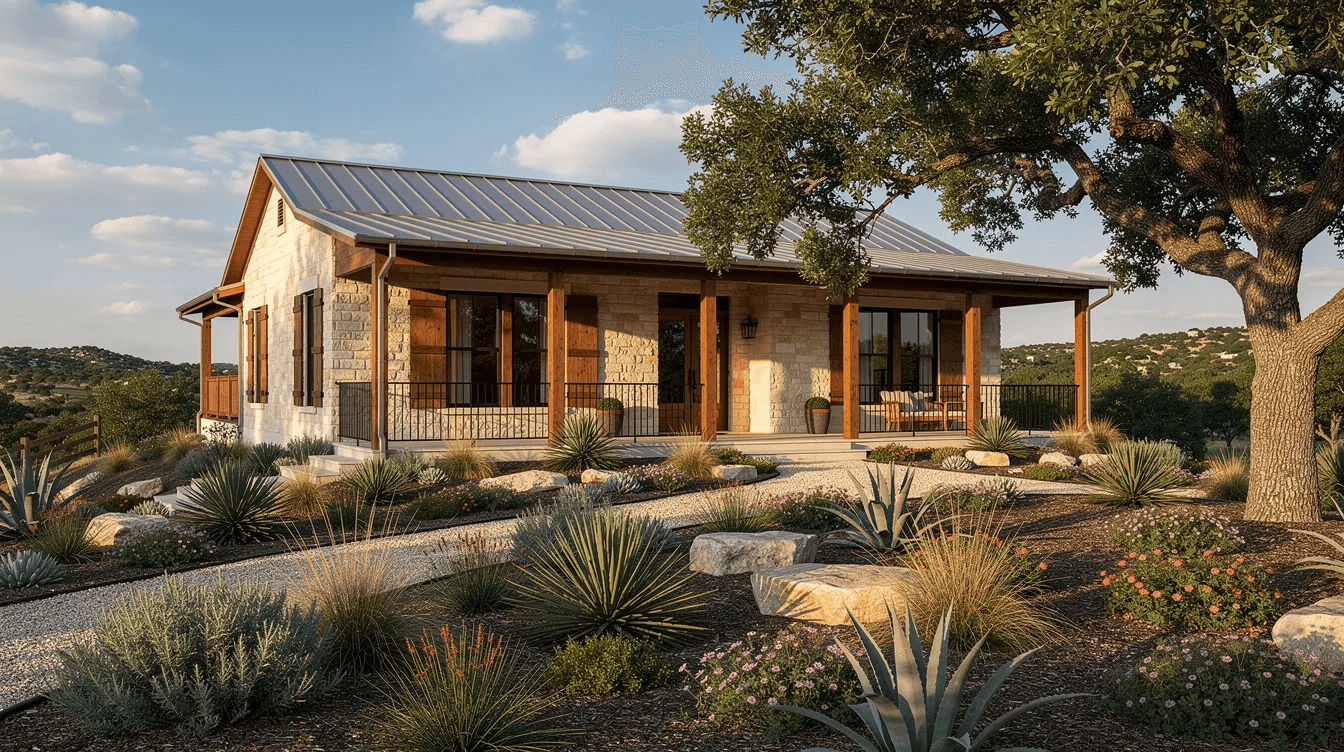
Texas Hill Country style emerged from Central Texas ranches in the late 19th and early 20th centuries, adapting country house principles to handle intense summer heat and the rugged landscape of the region. Today this style enjoys popularity across the Sun Belt.
Exterior Characteristics:
- Low-pitched (4:12) standing-seam metal roofs enduring 100°F summers
- Deep porches extending 12–16 feet with native limestone columns
- Heavy use of local limestone or sandstone quarried onsite
- Thermal mass from stone walls stabilizing temperatures ±5°F daily
Interior Traits:
- Vaulted great rooms reaching 14 feet with exposed king-post trusses
- 8-foot stone fireplaces serving as visual anchors
- Open kitchens designed for hosting 20+ guests
- Split bedroom layouts maintaining privacy
Southern country influences add screened sleeping porches and columned porticos drawn from plantation antecedents. A typical plan might offer 2,500–3,200 sq ft with a central great room, open kitchen axis, and outdoor living spaces oriented to capture evening breezes. This regional approach celebrates the land through material choices and emphasizes casual living in expansive spaces.
Ranch and Single-Story Country Designs
Ranch-inspired country houses gained popularity in the mid-20th century, with the style peaking between the 1940s and 1970s when it comprised roughly 40% of U.S. suburban builds; similar open, view-oriented layouts appear in chalet tiny house models for modern living. Today these designs remain common for aging-in-place considerations and families preferring single-level convenience, and their efficient footprints parallel the appeal of Amish tiny houses with rustic craftsmanship.
Typical Configuration:
- Single-story, elongated footprints often in L or U shapes spanning 60–80 feet
- Attached garage flowing directly to patios via 8-foot sliders
- Low 3:12 pitched roofs minimizing exterior maintenance
- All bedrooms, living areas, and utilities on one level
Shared Country Features:
- Open living areas connecting kitchen, dining, and family rooms
- Large kitchens with ample counter and storage space
- Strong connection to backyards, fields, or views
- Brick and siding combinations with board-and-batten accents
A ranch-country floor plan might offer 1,600–2,200 sq ft with 3 bedrooms on a 1-acre rural lot, updated with modern finishes like quartz counters while maintaining farmhouse utility. Single-level access reduces fall risks by approximately 30% according to CDC data, making this style particularly practical for multi-generational households or those planning to age in place.
Modern Country Style and Contemporary Adaptations
Modern country style represents a blend of rustic elements with streamlined contemporary design that has proliferated since the early 2000s. Search interest in farmhouse and modern country designs increased by 300% between 2015 and 2025, reflecting a cultural desire for homes that balance nostalgia with current lifestyles.
Design Philosophy:
- Busy ornamental details reduced in favor of clean lines
- Simple trim profiles replacing elaborate Victorian-era gingerbread
- Curated mix of vintage and modern furnishings
- Focus on quality over quantity of decorative elements
Interior Color Palette:
- Whites and soft grays forming neutral backgrounds
- Warm neutrals like Benjamin Moore’s Edgecomb Gray or Revere Pewter
- Natural wood tones adding warmth
- Black metal hardware providing contrast against white oak cabinetry
Key Interior Features:
- Open-concept living areas maximizing shared family space
- Large 10–12 foot kitchen islands doubling as buffets
- Sliding barn doors on powder rooms and closets
- Shaker-profile cabinetry with modern appliances
- Home office integration responding to post-2020 remote work demand
Exterior Updates:
- Expansive picture windows up to 10×6 feet boosting natural light by 50%
- Simplified rooflines with clean eaves
- Board-and-batten siding in contemporary colors
- Dark-painted siding or light siding with contrasting black window frames
- Sleek standing-seam metal roofs
A modern country home plan might feature 2,000–2,600 sq ft with a vaulted great room, covered back porch, and integrated home office. This diverse collection of features creates homes that feel simultaneously fresh and rooted in country traditions.
Key Features to Include in Country House Floor Plans
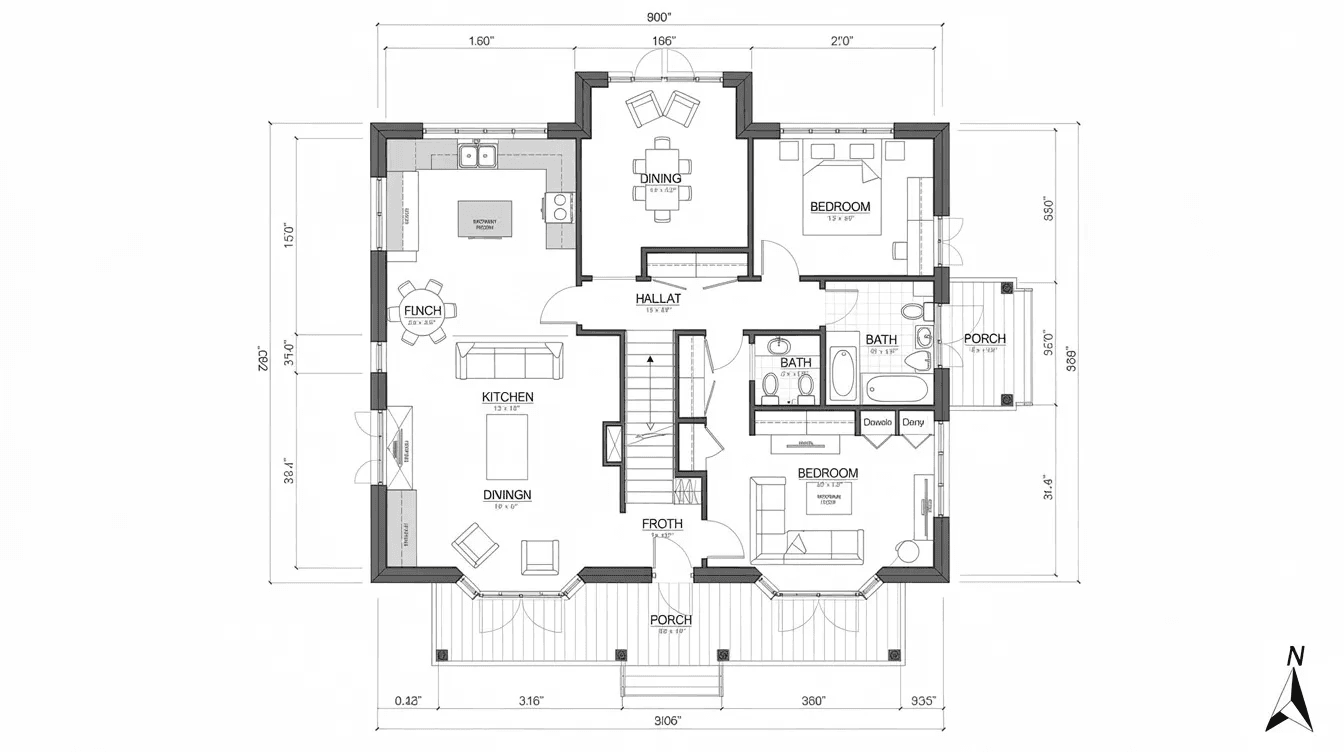
When designing or selecting country house plans, certain features consistently appear in successful layouts, and many of the same principles guide tiny house floor plans that work well in compact spaces. This practical checklist helps ensure your home plans deliver the functionality that defines authentic country living and mirrors the way tiny house plans can be tailored to your life on a smaller scale.
Must-Have Spaces:
Space | Recommended Size | Purpose |
|---|---|---|
Kitchen | 400+ sq ft | Family meals, entertaining, daily hub |
Great/Family Room | 500 sq ft | Gathering, relaxing, TV viewing |
Front/Wraparound Porch | 200+ sq ft | Outdoor social space, arrival zone |
Outdoor Dining Area | 150+ sq ft | Al fresco meals, evening gatherings |
Functional Support Areas: |
- Mudroom with storage cubbies, boot benches, and coat hooks (essential for 70% of rural households per NAHB surveys)
- Laundry room positioned near entry or bedrooms for convenience
- Walk in pantry offering 100+ square feet for bulk storage, while smaller homes may rely on tiny house interiors that maximize every square foot through clever storage
- Combined mudroom-laundry for efficient use of square footage
Bedroom Layout Options:
- Main-floor primary suite for accessibility and aging-in-place
- Clustered children’s bedrooms sharing a bathroom
- Split-bedroom plans placing owner’s suite opposite guest rooms for privacy
- 6×8 foot walk-in closets for practical storage
Circulation Principles:
- Simple, intuitive traffic patterns without wasted corridors
- Hallways limited to 10% of total footprint
- Direct routes from kitchen to porch or patio
- Easy flow for gatherings of extended family
Storage Considerations:
- Built-in cabinetry throughout living areas
- Linen closets on each floor
- Space for outdoor gear, gardening tools, and hobby equipment
- Garage with additional storage bays for rural equipment
Consider a country house floor plan configuration like a 2,400 sq ft home with: main-floor primary suite with spa bath, open kitchen-great room axis, formal dining that can convert to home office, mudroom-laundry combo, covered front porch, and three upstairs bedrooms sharing two baths, or explore custom tiny homes for personalized small-space living if you prefer a more compact version of country comfort.
Materials, Finishes, and Color Palettes in Country Homes
Finishes and colors play a major role in making a new build or renovation feel authentically country. The right material choices establish character, ensure durability, and create the sense of warmth that defines this architectural style.
Common Exterior Materials:
Material | Lifespan | Maintenance | Character |
|---|---|---|---|
Cedar/Cypress Siding | 50+ years | Annual sealing | Authentic warmth |
Fiber-Cement Board-and-Batten | 30+ years | 30% less than wood | Clean, durable |
Random-Laid Fieldstone | 100+ years | Minimal | Timeless permanence |
24-Gauge Steel Roof | 40–70 years | Minimal | Rural authenticity |
Interior Finishes: |
- Wide plank wood floors (5–7 inch red or white oak) providing tactile depth
- Stone or cultured stone fireplaces as visual anchors
- Tongue-and-groove pine ceilings adding overhead warmth
- Shiplap or beadboard wainscoting for traditional texture
- Sturdy, easy-to-clean surfaces in kitchens and mudrooms, a priority shared with tiny house designs for modern living where every finish must work hard
Recommended Color Palettes:
- Walls: Sherwin-Williams Alabaster, soft creams, warm grays
- Accents: Farrow & Ball French Gray, sage greens, historic ochres
- Trim: Crisp whites or natural wood stains
- Exterior: White siding with charcoal metal roofs, or reverse contrast
Balancing Old and New:
- Reclaimed barn beams (sourced via salvage companies like Black Dog Salvage) paired with LED recessed lighting
- Antique doors combined with modern hardware
- Reclaimed brick fireplaces with efficient gas inserts
- Vintage-style fixtures running on tankless water heaters achieving 40% energy savings
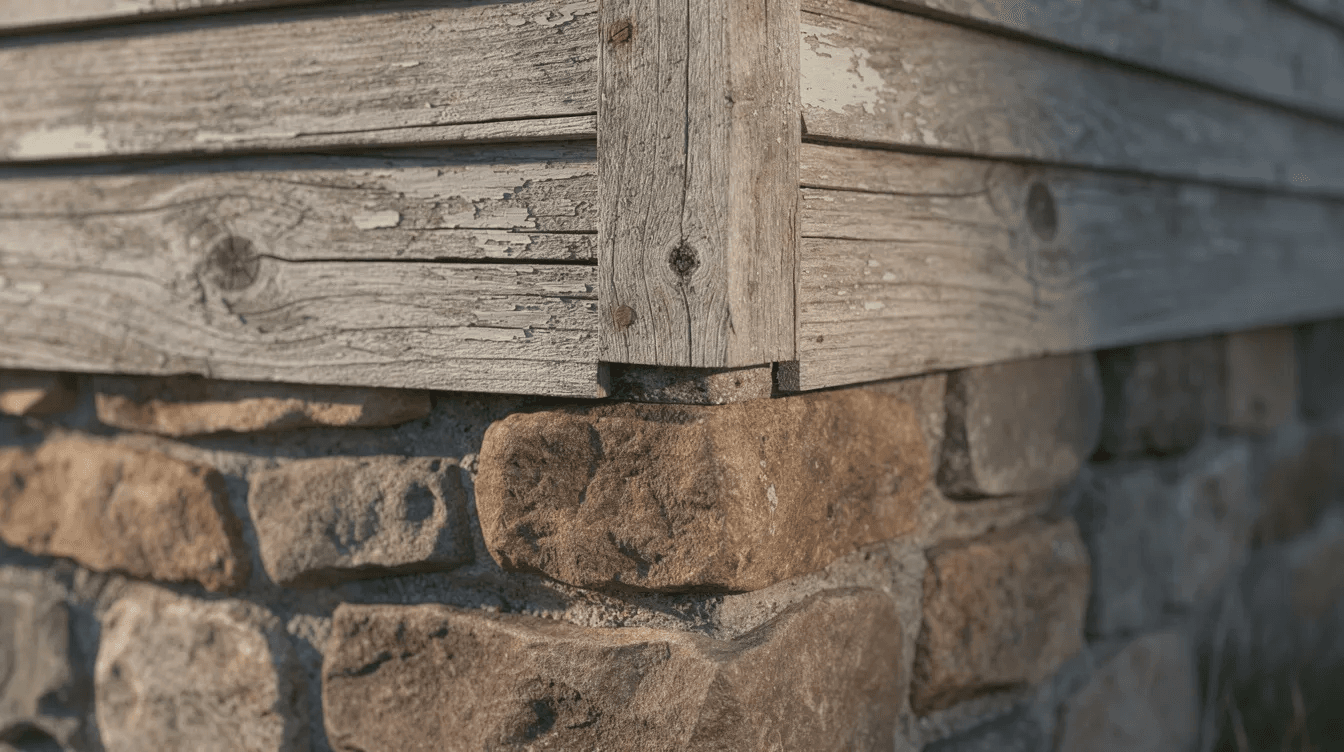
A specific finish combination might include: white fiber-cement board-and-batten siding, charcoal standing-seam metal roof, natural cedar porch posts and beams, random-coursed fieldstone foundation, and warm oak flooring throughout the interior. This approach creates the collection of textures and tones that make country homes feel lived-in from day one.
Planning Your Own Country House Design
Creating your own country home starts with aligning personal lifestyle, budget, and site conditions. The process rewards thoughtful planning, and understanding the steps involved helps you discover the right approach for your family.
Reading and Comparing House Plans:
- Total square footage and how it’s distributed across floors
- Number of stories and accessibility considerations
- Bedroom and bathroom count relative to family needs
- Orientation to views, sun exposure, and prevailing winds
- Garage and storage configurations
Site Analysis Essentials:
- Driveway access and approach to the home
- Prevailing wind direction for porch placement
- Sun path analysis (orient porches east or north in hot climates for 20% cooling reduction)
- Privacy from neighbors and road visibility
- Existing trees, slopes, and water features
Practical Considerations:
- Local building codes and IRC 2021 requirements (2×6 walls for R-20 insulation)
- Septic and well requirements for rural lots (budget 5–10% premium)
- Energy efficiency goals and ENERGY STAR compliance
- Future expansion options and resale value
- Access to utilities and emergency services
Rough Planning Timeline:
Phase | Duration | Activities |
|---|---|---|
Concept Design | 1–2 months | Site selection, style research, plan search |
Plan Selection/Customization | 2–3 months | Working with architects, finalizing details |
Permits | 1–3 months | Local approvals, engineering review |
Construction | 9–12 months | Framing through move-in |
Total | 12–18 months | Concept to occupancy |
Working with Professionals: |
Engage AIA-registered architects or designers specializing in vernacular country designs to customize plans to your specific needs. Plan providers like Architectural Designs, Monster House Plans, and Houseplans.com offer extensive country house plans collection options ranging from $150–250 per square feet to build in 2025. Custom modifications ensure your vacation home or primary residence reflects both regional traditions and personal preferences.
Country house design remains a timeless choice amid urbanization fatigue, with Census data showing 15% annual increases in rural relocations. Whether you’re building a 1,600 sq ft ranch-country home on a modest lot or a 3,500 sq ft French country estate on acreage, the principles remain consistent: embrace natural materials, create generous outdoor living spaces, design interiors for how your family actually lives, and let the architecture reflect the land around it.
The advantage of country style home plans lies in their adaptability. From the traditional country style of American farmhouses to modern interpretations with clean lines and smart technology, these designs offer a framework for creating homes that feel both rooted and relevant. Start your search with a clear sense of your lifestyle needs, and you’ll discover why country homes continue to capture the imagination of families seeking something more meaningful than suburban uniformity.