


Earthbag building is an innovative and sustainable construction method that uses polypropylene or burlap bags filled with soil or other local materials to create sturdy, insulated walls. Similar to adobe, a traditional earthen building material, earthbag construction offers natural insulation, breathability, and sustainability, making it compatible with eco-friendly and passive solar design principles. This technique is particularly popular for building earthbag dome homes, which are known for their natural thermal mass, durability, and off-grid capabilities.
This guide is for DIY builders, sustainability enthusiasts, and anyone interested in affordable, off-grid housing. Earthbag dome homes offer a sustainable, cost-effective, and resilient alternative to conventional housing. This guide covers everything you need to know about earthbag dome homes, including design, construction, and off-grid living.
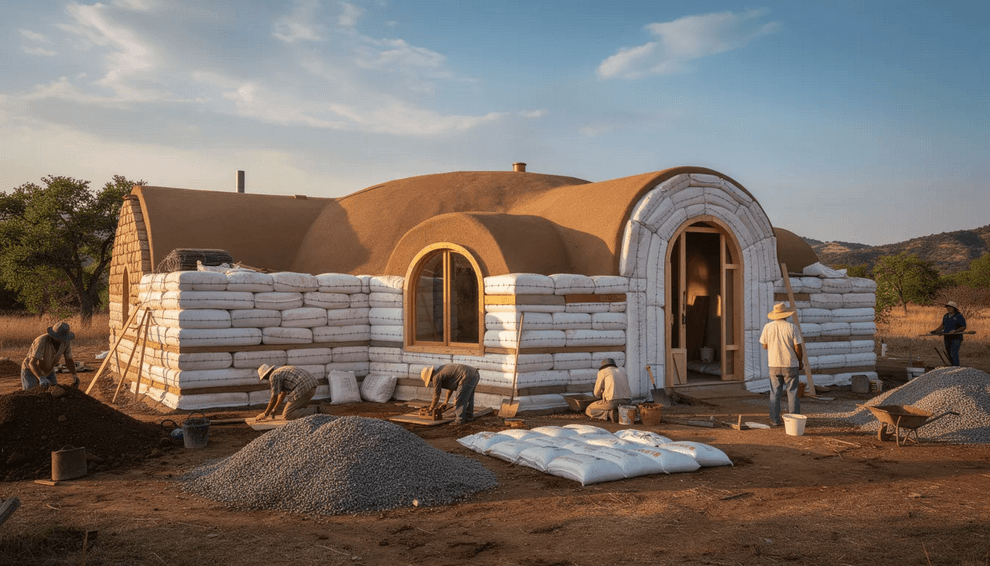
The idea behind using alternative building techniques like earthbag construction is rooted in innovation and a desire for sustainability, often inspired by personal initiative and research into eco-friendly solutions. The dome shape offers structural strength and resilience, making it ideal for seismic zones and harsh climates. Earthbag homes are especially suited for temperate to arid climates where passive solar design can maximize energy efficiency.
Earthbag dome homes are used around the world for both permanent housing and disaster relief shelters due to their simplicity and robustness. They can be built by virtually anyone with minimal building materials, primarily sandbags and soil.
- Benefits of an Earthbag House
- Design Principles for Earthbag Dome Homes
- Materials and Tools for Earth Bag Construction
- Step-by-Step Earthbag Construction
- Off Grid Systems for an Earthbag Home
- Codes, Permits, and Site Considerations for Earthbag Building
- Costs, Time, and Labor Estimates for an Earthbag Home
- Case Studies of Earthbag House and Dome Variations
- Common Problems and Troubleshooting for Earthbag Construction
- Resources, Plans, and Further Reading on Earthbag Building
- FAQ: Quick Answers for Earthbag Dome Homes
Benefits of an Earthbag House
Thermal Mass and Energy Efficiency
One of the primary benefits of an earthbag house is its excellent thermal mass. The thick earthen walls absorb heat during the day and release it slowly at night, helping maintain comfortable indoor temperatures without relying heavily on heating or cooling systems. Earthbag construction is also highly durable; when built correctly, these homes can withstand severe weather, including earthquakes, due to their inherent structural strength and the use of galvanized barbed wire between layers to enhance integrity. Additionally, earthbag homes support sustainable architecture by utilizing recycled materials like polypropylene bags and local soil, reducing environmental impact and construction costs.
Design Principles for Earthbag Dome Homes
When planning an earthbag dome home, it is advisable to start small. Smaller projects are easier to manage and provide valuable experience before scaling up. Round shapes, such as domes or circular homes, are recommended because they evenly distribute structural loads and resist seismic forces better than straight walls. Incorporating passive solar orientation into the design optimizes natural heating and lighting, which is essential for off-grid living and energy efficiency.
Materials and Tools for Earth Bag Construction
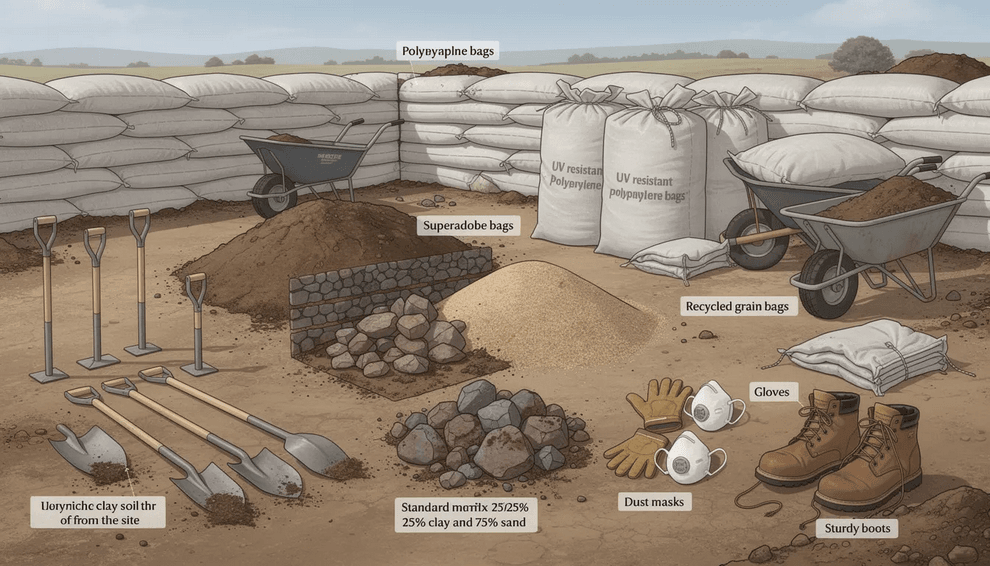
Suitable bags for earthbag walls include polypropylene bags, superadobe bags, or recycled grain sacks. The fill material should ideally be clay-rich soil from the site or nearby, as clay helps the earthbags bind well and maintain structural strength. Other fill options include volcanic rock, scoria, or a mix of sand and clay for enhanced insulation and durability. The standard earthbag fill material is a mixture of 25% clay and 75% sand, with UV-resistant polypropylene bags required for durability.
Essential hand tools include:
- Shovels
- Tampers
- Wheelbarrows (for moving and compacting soil)
Protective gear such as:
- Gloves
- Dust masks
- Sturdy boots
are recommended to ensure crew safety during construction.
Step-by-Step Earthbag Construction
Foundations for an Earthbag House
A rubble trench foundation is a popular choice for earthbag homes, especially in areas with significant rainfall, as it provides excellent drainage and stability. Alternatively, a gravel-pad foundation can be used where soil drainage is already good. Begin by marking and leveling the building footprint carefully to ensure a solid base. The foundation should be deep enough to prevent frost heave and provide a level surface for the first course of earthbags.
Filling and Tamping Earthbags
Constructing the walls involves filling bags with the prepared soil mixture to the right moisture content—damp but not wet—to allow proper compaction. Place each bag in courses, tamping them firmly to eliminate air pockets and ensure a tight fit. Between each course, install two strands of galvanized barbed wire to prevent slipping and add tensile strength. Use a plumb line frequently to maintain straight walls or even curves in dome shapes, ensuring structural integrity.
Earthbag home construction is a sustainable and versatile building method that leverages natural materials and traditional techniques, making it an environmentally friendly choice for both residential and commercial applications.
In addition, careful attention to structural design is crucial for ensuring the long-term integrity and resilience of the walls.
Creating Windows, Doors, and Openings
Strong forms or molds are essential for creating arches over windows and doors, as the arch is a critical structural element that distributes weight and maintains the integrity of openings in earthbag dome homes. For non-arched openings, install fat lintels made from wood or other materials to support the weight above.
Wagon wheels can also be used as supports for large circular window openings in earthbag structures, providing both strength and a unique design element.
Anchoring window and door frames into the earthbag courses using wooden stakes or metal anchors provides additional stability and makes installation easier.
Roofing Options for Earthbag Homes
Reciprocal timber roofs are common for earthbag domes, offering a lightweight yet durable covering. Joists should be tied securely and protected from moisture to prevent sagging or damage. Living roofs, which involve planting vegetation over a waterproof membrane, provide excellent insulation and blend the home into the natural environment. A living roof can also be used for rain protection by covering the dome with plastic sheeting and soil. Whichever roofing option is chosen, ensuring the top of the earthbag walls is well-protected from water infiltration is critical.
Plaster, Finish, and UV Protection
Applying exterior plaster promptly after wall construction is crucial to protect the polypropylene bags from ultraviolet (UV) degradation. Earthbag homes are typically covered with plaster or papercrete to shield the bags from UV damage and the elements, ensuring durability and longevity. Breathable lime or earthen plaster mixes are preferred as they allow moisture to escape while shielding the structure. Sealing or shading the walls further prevents UV damage and extends the lifespan of the home.
Off Grid Systems for an Earthbag Home
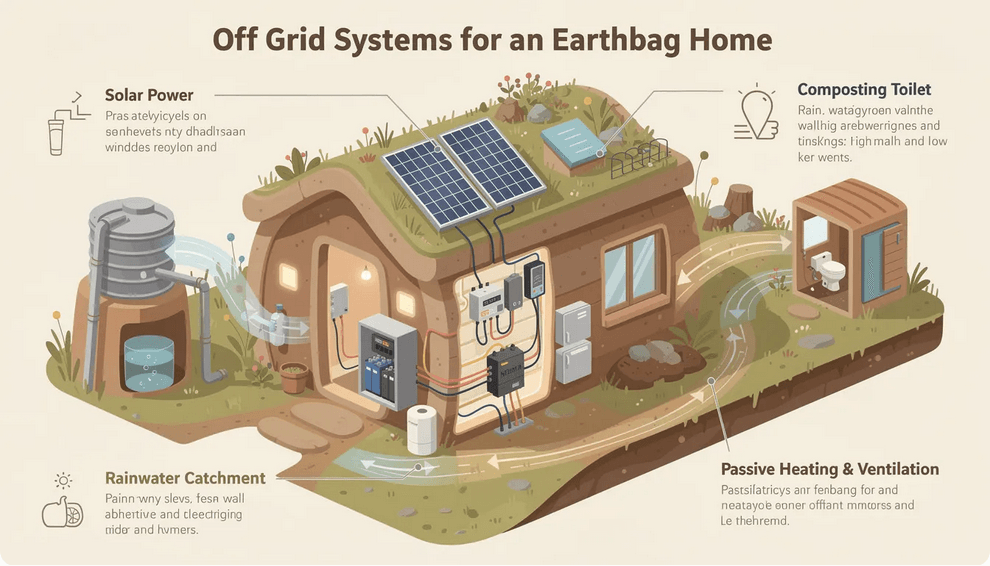
Off-grid earthbag homes can be equipped with:
- Solar power systems sized to meet basic electrical needs, such as lighting, refrigeration, and communication devices
- Rainwater catchment systems to provide a sustainable water source
- Composting toilets for eco-friendly waste management
- Passive heating and ventilation strategies, including strategic window placement and vents, to enhance comfort without relying on mechanical systems
Codes, Permits, and Site Considerations for Earthbag Building
Before construction, check local building codes to ensure earthbag construction is permitted. Navigating approval for alternative building techniques like earthbag dome homes can be challenging, as these innovative methods may not be explicitly addressed in standard codes. Strategies for gaining approval often include providing detailed plans, referencing successful case studies, and communicating with local authorities about the safety and sustainability of such structures.
Obtaining a structural engineer’s sign-off may be necessary, especially for larger projects, innovative or non-standard designs, or in regulated jurisdictions. Site selection should prioritize proper drainage and erosion control to protect the foundation. Conducting a soil test helps determine the suitability of local soil for earthbag fill and informs necessary soil amendments.
Costs, Time, and Labor Estimates for an Earthbag Home
Material costs for a small earthbag dome home project typically range from a few thousand to several thousand dollars, depending on local prices and material availability. The effort involved in such a project can be significant, as it requires careful planning and hands-on work. Labor time can vary widely but expect several weeks of work for a small dome with a dedicated person or team. Specialized contractors may be needed for complex tasks like electrical or plumbing installations, though much of the building process is DIY-friendly. Volunteer labor or workshop participation can reduce costs and foster community involvement.
People who are interested in sustainable and affordable housing often choose earthbag dome home projects for their cost-effectiveness and ecological benefits.
Case Studies of Earthbag House and Dome Variations
Small-scale personal projects demonstrate the feasibility of earthbag structures, including dome homes, vaults, and other innovative building types, for individual builders. The SuperAdobe dome technique, developed by Nader Khalili, exemplifies modern engineering concepts applied to earthbag construction, offering enhanced structural strength and ease of building. Hybrid approaches, such as combining earthbag walls with papercrete finishes, provide additional insulation and aesthetic options. Circular domes are structurally superior, but elliptical layouts offer unique interior spaces and design flexibility. The design of interior space in earthbag dome homes can be optimized to create more functional, open, and versatile living areas.
Common Problems and Troubleshooting for Earthbag Construction
Water Infiltration
Exterior water infiltration is a common issue that can be mitigated with proper site drainage and timely plaster application.
Bulging Walls
Bulging or uneven walls usually result from insufficient tamping or improper bag filling and can be corrected by reinforcing with additional barbed wire or re-tamping.
Warped Frames
Warped window and door frames often arise from inadequate anchoring or premature removal of forms; using sturdy molds and anchors helps prevent this.
UV Protection
Proactive UV protection through plaster and shading prevents bag degradation.
Earthquake Resilience
For earthquake resilience, incorporating base isolation as a modern engineering concept can enhance the stability of earthbag dome homes. While concrete is often used in large-scale, steel-reinforced structures for its strength and scalability, earthbag construction offers a sustainable alternative that is also structurally sound and resilient, having passed rigorous earthquake code tests.
Resources, Plans, and Further Reading on Earthbag Building
For detailed plans and inspiration, explore resources such as Owen Geiger’s designs and the California Institute of Earth Architecture (Cal Earth). Key books include “Earthbag Building: Tools, Tricks and Techniques” by Kaki Hunter and Donald Kiffmeyer. Active online forums and builder communities provide invaluable support and practical advice. Workshop checklists help organize materials, tools, and labor for successful builds.
FAQ: Quick Answers for Earthbag Dome Homes
- How long do earthbag homes last?
Properly constructed and maintained earthbag homes can last a lifetime, with some experts estimating over a century of durability. - What is the R-value of earthbag walls?
R-values vary depending on fill material and wall thickness but typically offer excellent thermal mass rather than high insulation; additional insulation can be added if needed. - Are earthbag homes permitted by building codes?
Permitting varies by location. Some states and municipalities accept earthbag construction, especially with engineer approval and adherence to local codes. - How much labor is required?
Labor depends on size and complexity but is generally manageable for small to medium projects with a dedicated team. - Can earthbag homes be built off-grid?
Yes, earthbag homes are well-suited for off-grid living with integrated solar power, rainwater catchment, and passive heating systems.
This comprehensive guide aims to equip you with the knowledge and confidence to embark on building your own earthbag dome home, blending sustainable architecture with modern engineering concepts for a resilient and comfortable off-grid lifestyle.