
The idea of a fiberglass house might sound like something from a 1960s science fiction film. But these structures are very real, remarkably durable, and increasingly popular in the world of modular construction. With their cool, modern design and visually impressive appearance, fiberglass houses stand out for their innovative qualities. If you’re searching for housing that’s low maintenance, energy efficient, and built to last 50+ years, fiberglass deserves a serious look.
- What Is a Fiberglass House? (Quick Answer for the Reader)
- Why Fiberglass? Strength, Durability & Low Maintenance
- Types of Fiberglass Houses (From Pods to Prefab Neighborhoods)
- Design & Models: Floor Plans, Shapes, and Customization
- How Fiberglass Houses Are Built: From Factory Mold to Finished Home
- Energy Efficiency, Comfort & Safety
- Real-World Examples: From 1973 Experiments to 2020s Modular Villages
- Cost, Financing & Long-Term Value
- How to Choose the Right Fiberglass House
- FAQs About Fiberglass Houses
- Future Outlook: Fiberglass in Tomorrow’s Housing
- Conclusion: The Lasting Impact of Fiberglass Homes
What Is a Fiberglass House? (Quick Answer for the Reader)
A fiberglass house is a dwelling built primarily from FRP (fiber-reinforced plastic) shells or panels instead of traditional materials like wood, brick, or steel. The construction process involves factory-manufactured sections that are transported to your site, then assembled on site in days rather than the months required for conventional building.
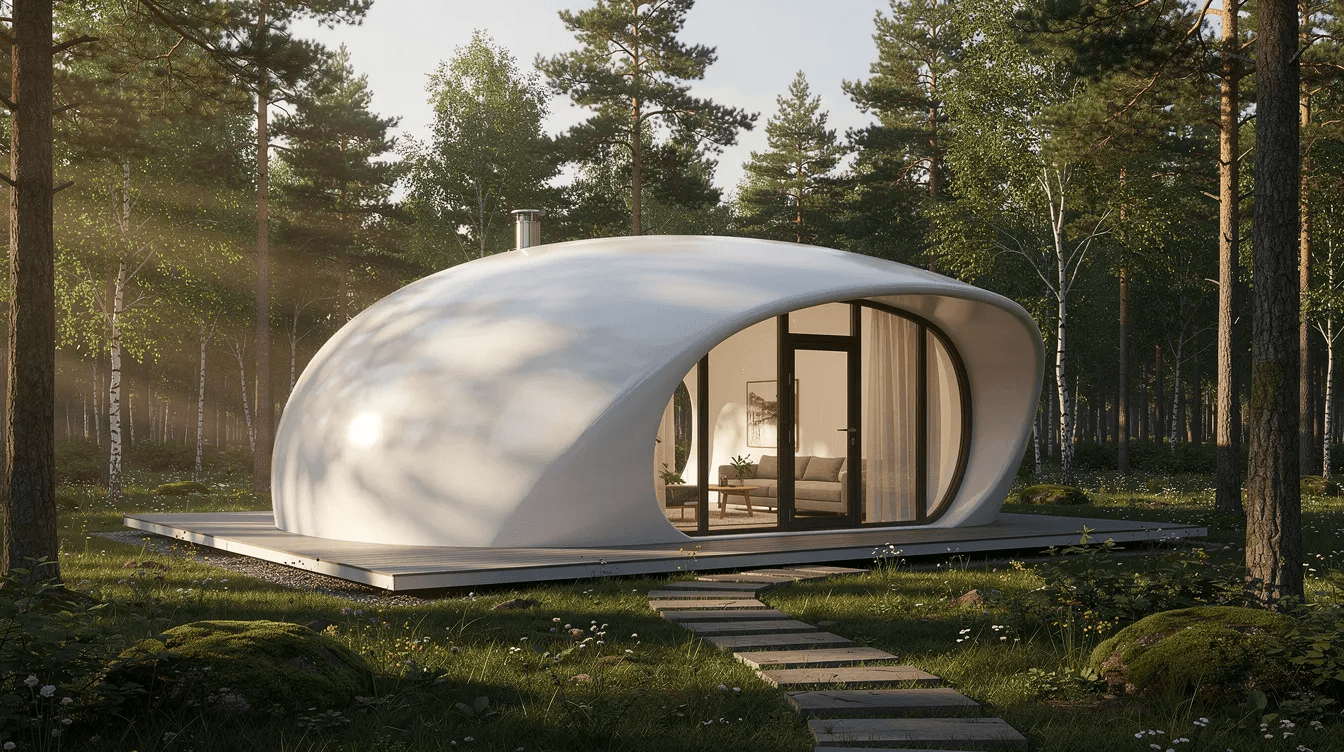
These homes have real history behind them. The 1973 “Marshmallow House” in Hopkinton, New Hampshire—produced through collaboration with Owens-Corning and the Mexico government—demonstrated that fiberglass pods could survive decades with minimal intervention. Today’s models include modular round homes, UFO-style domes, and compact cabins designed for everything from off-grid retreats to eco-resort villages.
What this article covers:
- Types of fiberglass houses (pods, cabins, family homes, modular communities)
- Key benefits: durability, weather resistance, and energy efficiency
- How these structures are manufactured off site and assembled
- Real-world examples from 1973 experiments to 2020s projects
- Cost considerations and how to choose the right model
Why Fiberglass? Strength, Durability & Low Maintenance
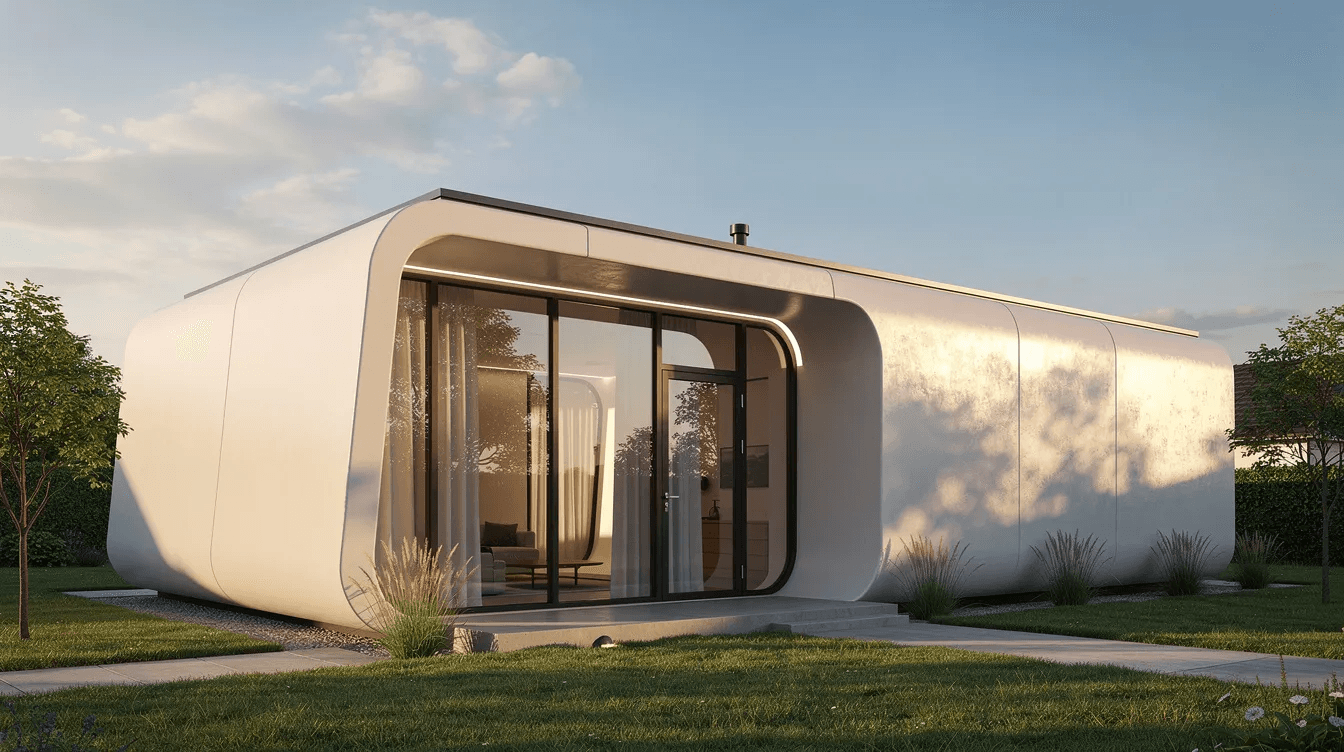
FRP is a composite of glass fibers embedded in a polymer resin matrix—technology perfected in marine and aerospace industries where failure isn’t an option. When you build things with this material, you get remarkable performance characteristics that traditional construction materials simply can’t match.
The lightweight nature of fiberglass makes transportation and assembling far easier than moving heavy steel or concrete components. Yet despite being lighter, these materials deliver exceptional strength-to-weight ratios.
Performance benefits that matter:
- Corrosion resistant: No rust, rot, or termite damage—ideal for coastal and humid climates
- Long lasting: Typical shell lifespans of 50-60+ years with proper care
- Weather tough: Handles snow loads up to 150 psf and wind speeds exceeding 140 mph
- Thermal efficiency: FRP doesn’t conduct heat like metal, reducing thermal bridging
- Hail resistant: Modern gelcoats match automotive and marine-grade protection
- Chemical resistant: Stands up to most environmental chemicals without degradation
Fiberglass houses also help keep interiors cool during the summer, reducing the need for air conditioning and improving energy efficiency and occupant comfort.
Maintenance requirements are minimal compared to wood siding or painted exteriors. You’re looking at periodic washing, occasional seal inspections, and gelcoat touch-ups rather than repainting every few years.
Early 1970s experimental houses sometimes suffered from brittleness and cracking. Modern impact-resistant formulations have eliminated these issues, making today’s fiberglass houses far more durable than their predecessors.
Types of Fiberglass Houses (From Pods to Prefab Neighborhoods)
Fiberglass houses come in various shapes and sizes, from single-occupant pods to full modular communities, and they share many benefits with other contemporary prefab home designs for modern living. Understanding the range helps you identify what fits your needs.
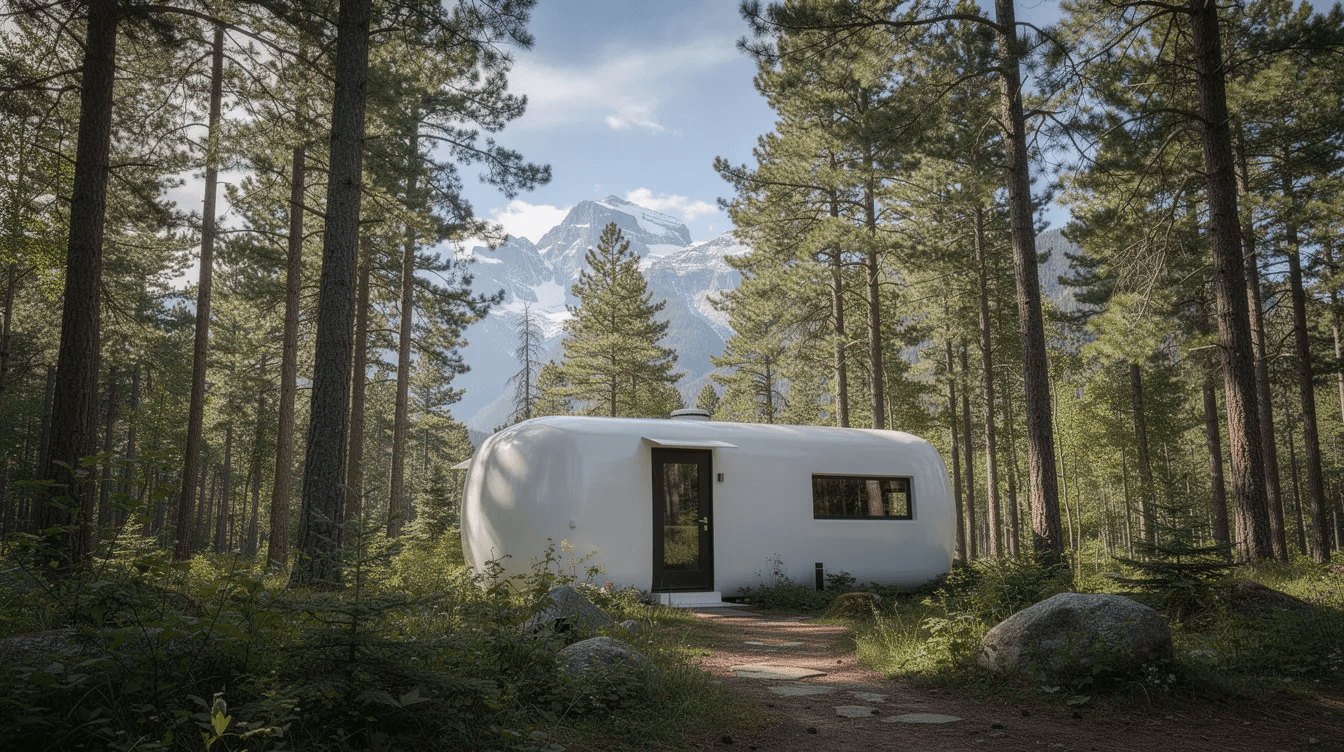
Compact prefabricated cabins and vacation pods Small 150-400 sq ft units work perfectly as tiny house cabin retreats for a cozy getaway, off-grid retreats, Airbnb rentals, or backyard guest houses. These are typically single-mold domes or cylinders that ship complete.
Round and circular houses Modular fiberglass round homes and UFO-inspired units (like 30-ft diameter models) are designed for quick shipping and on-site assembly, offering a distinctive alternative to classic A-frame cabin getaways in nature. Their aerodynamic shapes perform exceptionally well in high winds.
Larger prefab family homes Multi-module panel systems create 2-4 bedroom single-family houses or duplexes up to 1,600 sq ft, with integrated insulation already built into the walls, similar in function to compact tiny house park model homes that maximize livable space.
Specialty applications The same FRP technology produces site offices, worker accommodation, classrooms, clinics, and emergency shelters. Post-disaster temporary villages, affordable housing pilots, and eco-resorts all use fiberglass units to minimize site impact, much like mountain tiny house getaways in eco-focused resorts that prioritize low-impact stays.
Design & Models: Floor Plans, Shapes, and Customization
Because fiberglass shells are molded, architects can create curves, domes, and round plans that would be difficult or expensive to achieve with wood or steel framing. This opens up creative design possibilities that conventional construction can’t easily match.
Typical model ranges:
Model Type | Size Range | Best For |
|---|---|---|
Studio pods | 200-300 sq ft | Guest houses, campers, rentals |
1-2 bedroom round | 500-900 sq ft | Vacation homes, starter homes |
Multi-module family | 1,000-1,600 sq ft | Full-time residences |
Customization options include: |
- Exterior gelcoat colors in virtually any shade
- Interior finishes: drywall versus molded liners
- Window styles from standard to triple-pane low-E
- Rooftop solar or green-roof compatibility
- Loft additions and room-size adjustments
- Connector modules to link multiple pods
- Amenities such as openable windows, off-grid capabilities, and interior upgrades like built-in storage or customizable lighting to enhance comfort and functionality, similar to how chalet tiny house models for modern living blend smart layouts with cozy design details
Design inspiration draws from iconic futuro houses of the 1960s, 1970s experimental circular villages, and modern eco-domes. Many manufacturers offer downloadable PDF plans with standard layouts plus the flexibility to customize room configurations.
How Fiberglass Houses Are Built: From Factory Mold to Finished Home
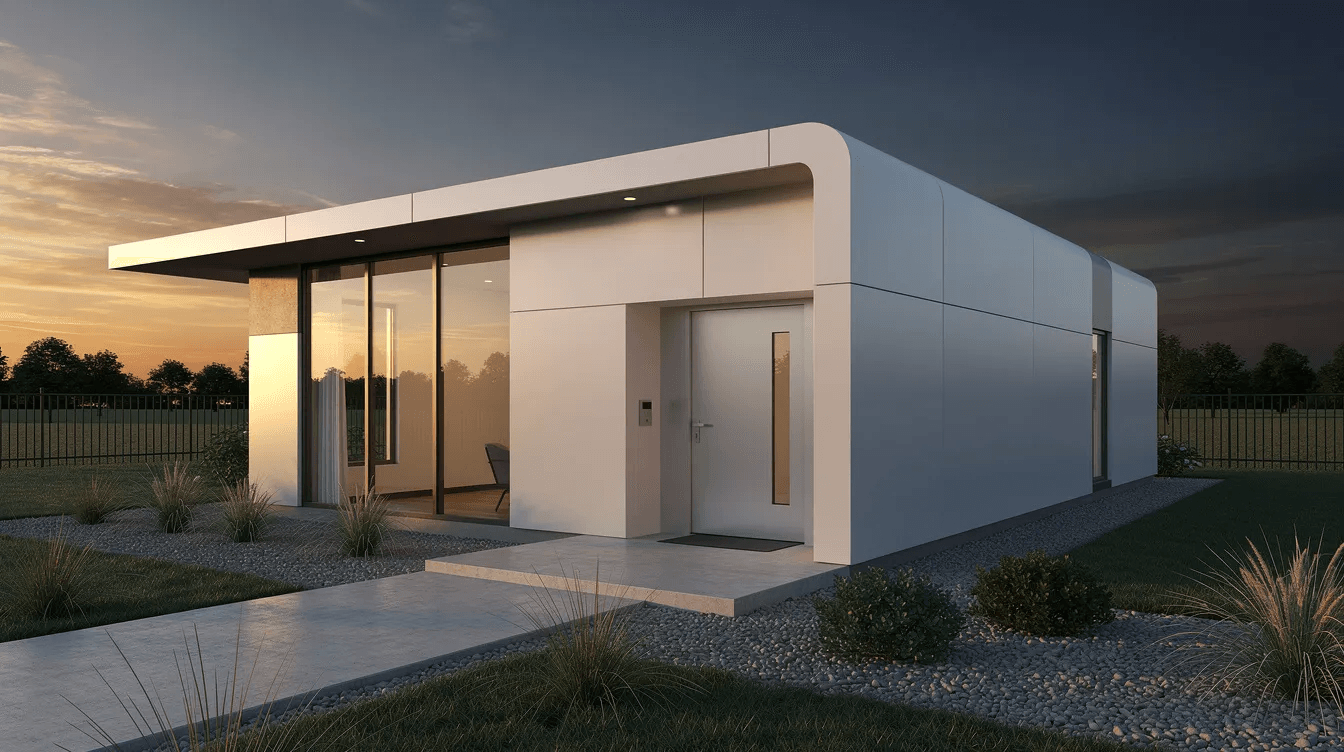
The construction process follows a streamlined factory-to-site workflow that dramatically reduces build times compared to traditional methods.
Manufacturing stages:
- Design and mold creation: Large precision molds designed in CAD software (like SolidWorks) form the basis for each shell section
- Gelcoat application: Release agents and UV-protective gelcoat are sprayed onto mold surfaces
- Lamination: Fiberglass mats layered with resin, air voids removed via rollers or vacuum
- Core insertion: Foam or honeycomb cores added for strength and insulation (similar to high-quality marine hulls)
- Factory fit-out: Window and door openings cut, conduit pathways installed, mounting points embedded
- Quality testing: Modules test-fitted before shipping
Logistics and assembly:
Modules are sized to fit standard shipping containers or flatbed trucks. Delivery typically takes weeks to months from order, depending on manufacturer capacity.
On-site assembly involves cranes or light lifting equipment placing shells on prepared foundations or piers. Seams are joined with fiberglass tapes, and interior fit-out (plumbing, electrical, HVAC) completes in days rather than weeks.
This factory-based approach means weather delays become largely irrelevant—the quality-controlled environment ensures consistent results regardless of what’s happening outside.
Energy Efficiency, Comfort & Safety
Fiberglass houses aren’t just about futuristic appearance—they’re engineered for modern energy codes and occupant safety.
Insulation performance:
- Closed-cell polyurethane foam between inner and outer skins
- Wall R-values of R-20+ comparable to or exceeding standard stud walls
- Airtight shells that minimize infiltration losses
- No thermal bridging from metal studs or fasteners
Climate performance examples:
- Cold regions: Snow load ratings up to 150 psf for harsh winters
- Hot climates: Reduced thermal bridging keeps interiors cooler
- Coastal areas: Resistant to salt spray and humidity
Safety features:
- Fiberglass is non-conductive, reducing electrical shock risk
- Fire-retardant resins and fire-rated interior linings meet building codes
- Curved aerodynamic shapes distribute wind loads more evenly than flat walls
Comfort factors include quiet interiors (solid panels dampen vibration and sound), compatibility with triple-pane windows, and integration with mechanical ventilation systems for controlled air quality.
Real-World Examples: From 1973 Experiments to 2020s Modular Villages
The 1973 Hopkinton “Marshmallow House”
This New Hampshire project produced 15-ft diameter pods using fiberglass shells with foam insulation. The concept aimed for low-cost, fast-build housing. Early challenges included:
- Brittle formulations leading to some cracking
- Detailing issues with tongue-and-groove ceilings
- Integration problems with a later garage addition
The previous owner maintained the Marshmallow House for decades before selling it through a local real estate agent. The current owner has announced plans to refurbish and update the home while preserving its unique fiberglass structure.
Despite these early growing pains, the structure survived 50+ years, eventually listing around $325,000 on approximately 4 acres. It proved that fiberglass houses could achieve long lasting performance with minimal maintenance.
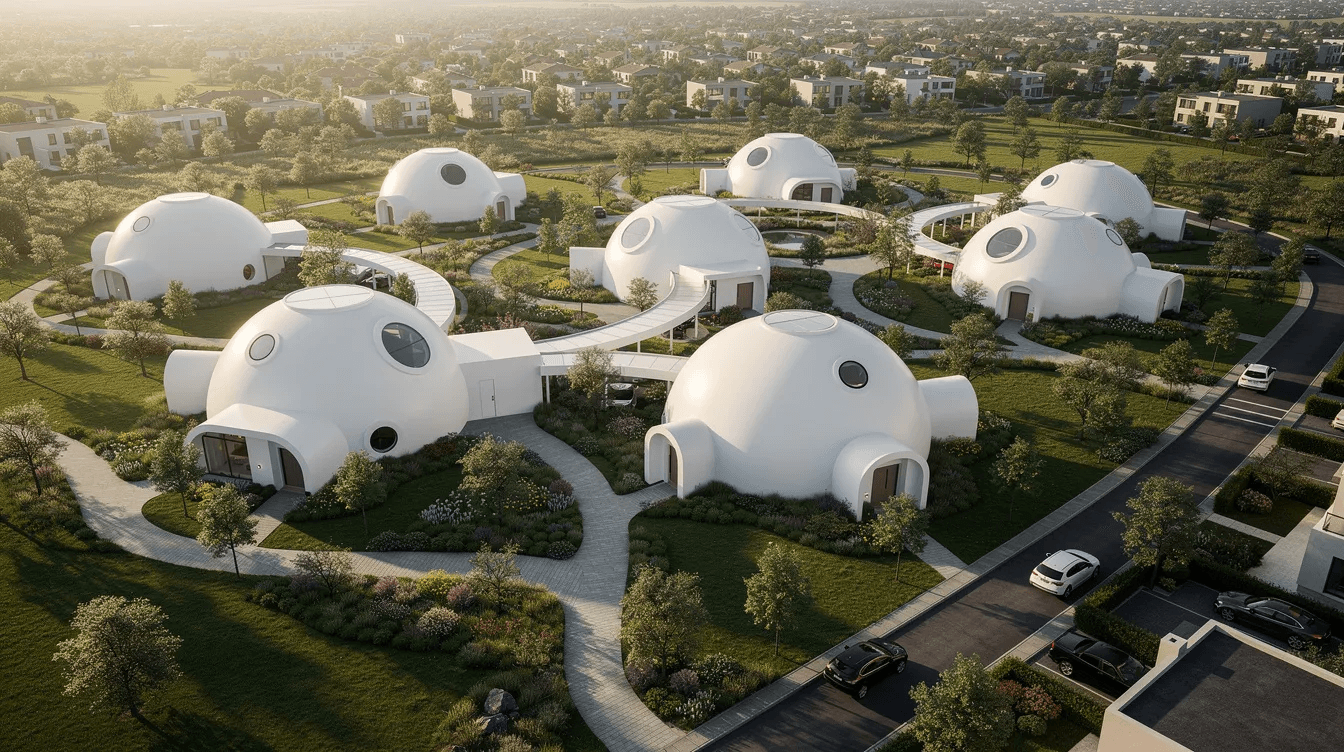
21st-century evolution
Modern projects address early shortcomings with:
- Larger 30-ft diameter units with thicker gelcoats
- Double-pane windows and impact-resistant resins
- Off-grid capabilities: solar, wind, rainwater collection
- Applications in eco-resort villages, workforce housing, and emergency shelters
The quality improvements between 1970s experiments and 2020s production models demonstrate how this market has matured into viable housing alternatives.
Cost, Financing & Long-Term Value
Fiberglass houses can reduce lifecycle costs significantly, even when upfront prices vary by design complexity and location.
Cost components to budget:
- Shell and structure fabrication (majority of expense)
- Transportation to site
- Foundation or pier system
- Interior fit-out (plumbing, electrical, finishes, accessories)
- Site work: utilities, landscaping, permits
Price ranges:
Per-square-foot costs often run $150-300 depending on region, code requirements, and customization level—competitive with North American stick-built construction in many markets.
Why operating costs run cheaper:
- No exterior painting every 5-7 years
- Minimal siding repairs or replacements
- Strong insulation reduces heating/cooling bills
- Fewer moisture-related problems
Financing has evolved significantly. In the 2020s, mortgages of up to 25 years have been used for modular fiberglass homes as lenders increasingly recognize these as legitimate housing. Resale value benefits from architectural uniqueness, documented energy performance, and engineering certificates for structural loads.
How to Choose the Right Fiberglass House
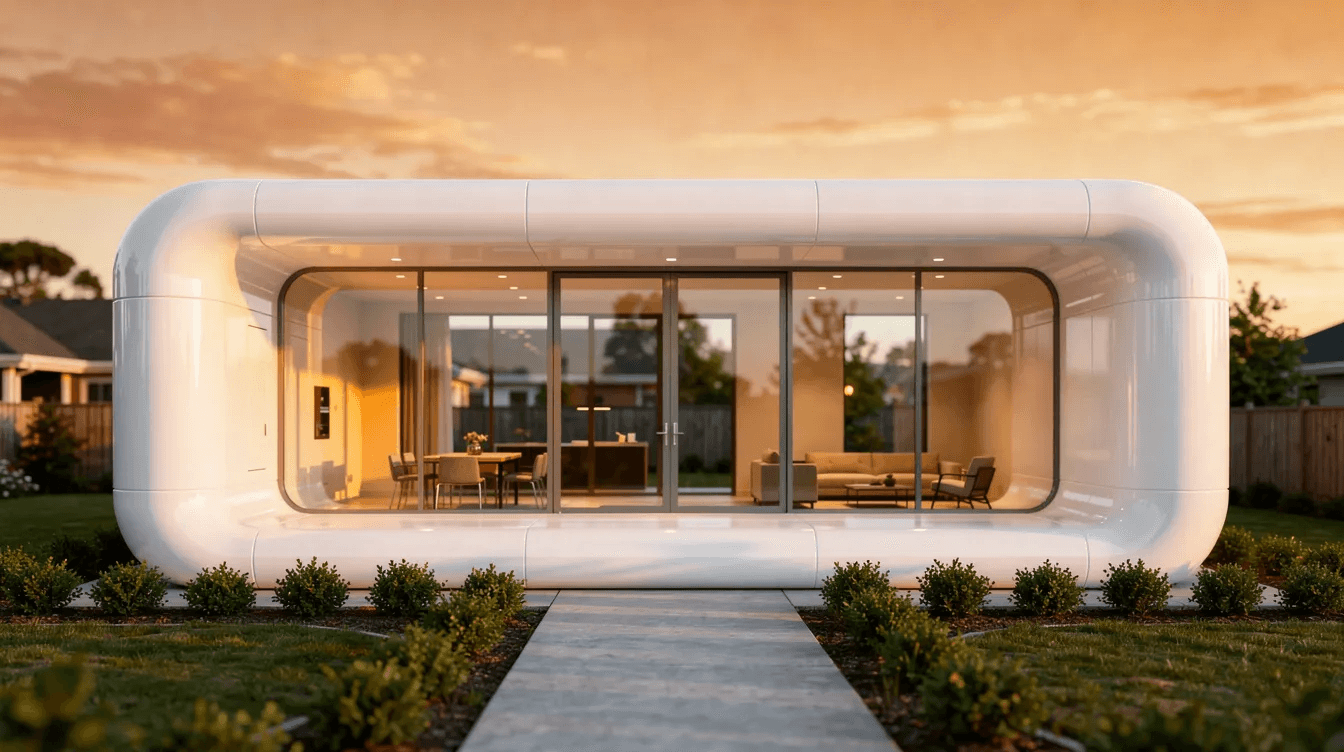
Selecting the right fiberglass house requires systematic evaluation across several factors.
Define your purpose:
- Full-time residence
- Guest house or rental unit (Airbnb), including rustic options like Amish tiny house cabins with handcrafted charm
- Site offices or worker accommodation, or even pre built log homes for a cozy cabin lifestyle in rural settings
- Emergency or transitional shelter
Check structural engineering: Once structure is confirmed, you can also plan interiors inspired by cozy log cabin interior ideas to make the most of compact fiberglass spaces.
- Snow load ratings appropriate for your climate
- Wind design speeds (look for 140+ mph ratings in storm-prone areas)
- Seismic performance compliance
- Local building code acceptance
Inspect material quality:
- Resin type and fire-retardant properties
- Gelcoat thickness (20-30 mils typical)
- UV protection and stabilizers
- Reinforcement schedule and test reports
Evaluate practical considerations:
- Transport accessibility (road width, crane access)
- Foundation requirements for your site
- Utility connection options
- Off-grid system integration if needed
Assess manufacturer support:
- Warranty terms (10-50 years for structure)
- After-sales service availability
- Replacement panel supply capability
- Experience with local permitting processes
FAQs About Fiberglass Houses
How long does a fiberglass house last? Modern fiberglass houses with proper design and manufacture typically exceed 50-year service life. Many 1970s structures remain habitable today with minimal intervention, demonstrating the material’s long lasting nature.
Will it crack or fade over time? Early experimental houses sometimes experienced brittleness, but modern impact-resistant formulations and UV-stable gelcoats significantly reduce cracking and fading risk. Regular maintenance keeps appearance fresh.
Is it safe in storms and heavy snow? Fiberglass domes and curved structures distribute wind loads more evenly than conventional boxes. Engineering ratings of 150 psf snow loads and 140+ mph wind speeds are common for quality manufacturers.
Can I finance it like a regular home? Yes. Lenders increasingly accept modular fiberglass homes for standard mortgages, including 25-year terms. Having engineering certificates and code compliance documentation helps with approval.
Does fiberglass mean poor insulation? This is a common misconception. Insulation comes from foam cores and window performance, not the fiberglass shell itself. Wall R-values of R-20+ meet or exceed standard construction.
What maintenance is required? Annual washing, seal inspections, and occasional gelcoat touch-ups using DIY repair kits. Far less work than maintaining wood siding or painted exteriors.
Future Outlook: Fiberglass in Tomorrow’s Housing
Fiberglass is transitioning from niche experiments into mainstream modular construction. Several trends are driving this shift.
Emerging applications:
- Off-grid micro-homes (200-400 sq ft) for sustainable living
- Circular and sculptural architecture for eco-resorts
- Fast-deployed crisis housing after disasters
- Affordable housing initiatives requiring durable, efficient structures
Industry evolution:
- Building codes increasingly recognize FRP composite systems
- More manufacturers entering the market with improved models
- Integration with smart home and renewable energy systems
- Growing acceptance among lenders and insurers
The innovation represented by fiberglass houses addresses real problems: housing shortages, maintenance burdens, energy costs, and environmental impact. These amazing structures offer practical solutions for owners seeking alternatives to conventional construction.
Whether you’re exploring options for a weekend cabin, a full-time residence, or development projects requiring rapid deployment, fiberglass houses deserve serious consideration. The future of housing may be lighter, more durable, and more efficient than we ever imagined.
Conclusion: The Lasting Impact of Fiberglass Homes
The rise of fiberglass homes marks a transformative moment in the construction process, blending modern design with practical benefits that appeal to a wide range of homeowners and builders. Thanks to modular construction techniques, companies like Futuro Houses are redefining what’s possible—delivering houses that are not only visually striking but also highly efficient and sustainable.
One of the standout advantages of fiberglass is its lightweight nature, which streamlines transportation and assembling on site. This efficiency reduces both construction time and costs, making it easier for customers to bring their dream homes to life without the delays and complications of traditional building methods. The materials used in these structures are engineered for energy efficiency, providing superior insulation that keeps interiors comfortable year-round while lowering energy bills.
Low maintenance is another key benefit. Unlike wood, fiberglass resists corrosion, rot, and pests, so owners spend less time and money on upkeep. This durability ensures that fiberglass houses remain attractive and functional for decades, even in challenging climates.
What truly sets fiberglass homes apart is their versatility. The ability to mold fiberglass into various shapes opens up a world of creative design possibilities—from futuristic domes to cozy cabins and everything in between. Homeowners enjoy a wide range of customization options, allowing them to tailor their houses to their unique tastes and needs. Additionally, the move away from wood and other traditional materials supports a more sustainable approach to building, reducing environmental impact and supporting long-term resource conservation.
As the market for innovative, energy efficient housing grows, manufacturers are investing in new models and improvements, making fiberglass homes more accessible and appealing than ever. The future of modular construction is bright, with ongoing innovation driving better quality, style, and performance.
In summary, fiberglass homes offer a compelling combination of durability, efficiency, and design flexibility. Whether you’re looking to break away from conventional construction, explore creative architectural ideas, or invest in a long lasting, low maintenance property, fiberglass houses present a modern solution for today’s—and tomorrow’s—housing needs. The world of fiberglass homes is expanding rapidly, and now is the perfect time to explore the benefits and possibilities this innovative approach to building has to offer.