
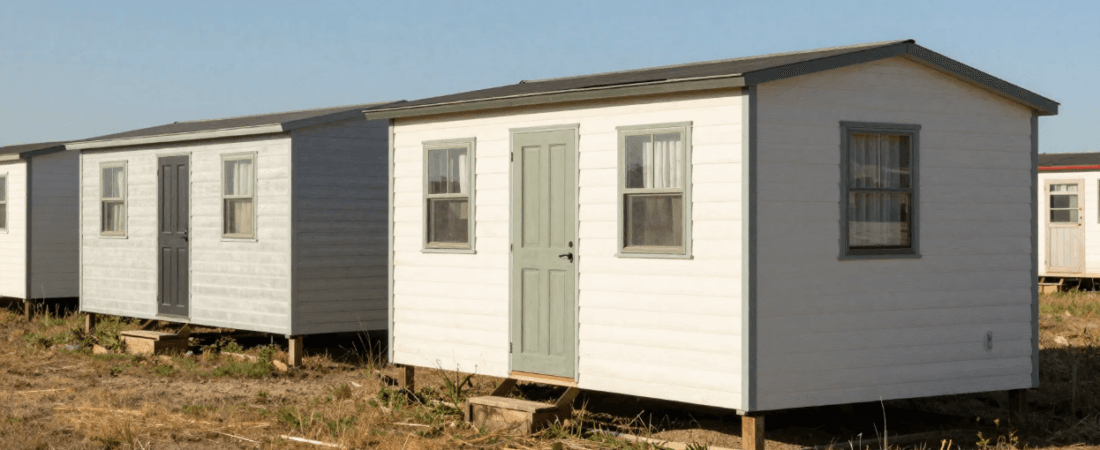
If you’re exploring ways to keep aging parents close while giving them their own living space, granny pods in Texas offer a compelling solution worth understanding. These compact, self-contained dwelling units—typically 300 to 800 square feet—sit on the same property as your primary residence, providing independence for elderly relatives and peace of mind for adult children.
Texas families are increasingly turning to granny pods as the state’s 65+ population surges toward an estimated 4 million by 2030, with projections suggesting this number will double between 2020 and 2050. Meanwhile, assisted living facilities in cities like Austin, Dallas, Houston, and San Antonio now charge $4,000 to $7,000+ monthly, making backyard alternatives financially attractive for long-term care planning.
This guide focuses specifically on Texas rules, costs, and practical steps for installing a granny pod on your property. Whether you’re in a sprawling suburban lot or navigating tighter urban spaces, you’ll find actionable information tailored to the Lone Star State.
- Proximity matters: Your loved ones stay within steps of family members, enabling quick check-ins and shared meals without the commute to a facility
- Long-term savings: A one-time investment of $80,000–$200,000 often pays for itself within 2–4 years compared to recurring assisted living bills
- Aging in place: Modern granny pods include accessibility features that adapt as mobility needs change
- Property value upside: A well-built, code-compliant accessory dwelling can boost resale value by 10–20% in competitive Texas markets
- What Are Granny Pods (Texas Perspective)?
- Inside a Modern Texas Granny Pod: Design, Features & Comfort
- Cost Benefits Compared to Assisted Living in Texas
- Why Granny Pods Work Especially Well in Texas
- Legal Considerations for Granny Pods in Texas
- Where in Texas Can You Build a Granny Pod?
- How Much Does a Granny Pod Cost in Texas?
- Step-by-Step Process to Add a Granny Pod in Texas
- Step 1: Research Local Rules & Property Constraints
- Step 2: Define Budget, Care Needs & Long-Term Use
- Step 3: Choose Design, Builder & Delivery Method
- Step 4: Permits, Approvals & HOA Sign-Off
- Step 5: Site Preparation, Foundation & Utility Rough-Ins
- Step 6: Delivery, Construction & Finish Work
- Step 7: Inspections, Move-In & Fine-Tuning
- Designing for Texas Climate, Accessibility & Future Flexibility
- Is a Granny Pod Right for Your Texas Family?
- Texas Granny Pod FAQ
What Are Granny Pods (Texas Perspective)?
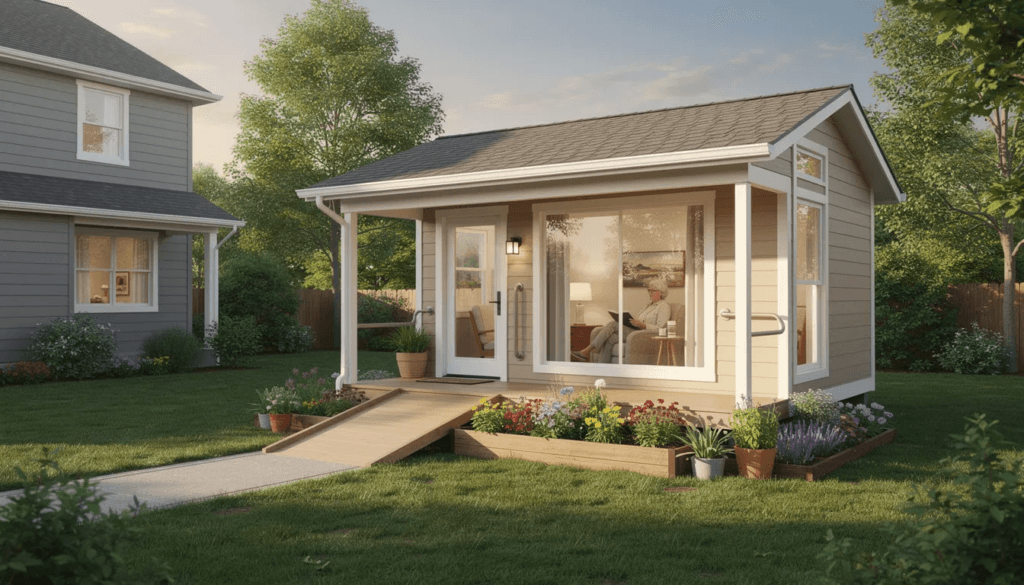
A granny pod is a small, detached accessory dwelling unit placed on the same lot as your main house, designed primarily to house an aging parent or relative. These structures provide a comfortable living space ranging from 300 to 800 square feet, complete with bedroom, bathroom, kitchenette, and small living area—everything needed for independent daily life.
In Texas, you’ll encounter overlapping terminology that can create confusion. Local ordinances may reference Accessory Dwelling Units (ADUs), granny flats, backyard cottages, casitas, or mother-in-law suites. Many Texas cities officially use “Accessory Dwelling Unit” in their zoning codes, though the underlying concept remains the same: a secondary residential structure on a single-family lot. Understanding your municipality’s specific language helps when researching local regulations and permit requirements.
Common layouts in Texas granny pods include studio configurations (one open room plus bathroom) and one-bedroom setups with separate sleeping quarters. Size caps vary by jurisdiction—Austin allows ADUs up to 1,100 square feet on qualifying lots, while other cities cap structures at 600–800 square feet or limit them to a percentage of the main residence’s footprint.
Texas families often choose detached pods over attached in-law suites for practical reasons. A freestanding structure in the backyard provides noise separation, distinct entrances, and a stronger sense of “my own home” for the elderly family member. While attached granny flat conversions (over a garage or as an addition) remain viable options, the detached approach typically delivers better privacy for both generations.
Some families also explore alternative small-footprint structures—such as chalet tiny house models or working with Texas-based builders like Garland Tiny Homes—to compare layouts, finishes, and pricing before committing to a specific granny pod design. The core purpose of a granny pod comes down to three goals: combine independence and dignity for your aging relatives, ensure safety through accessible design and monitoring options, and maintain easy access for caregiving—all without the institutional atmosphere of a nursing home.
Inside a Modern Texas Granny Pod: Design, Features & Comfort
Layout and Living Spaces
Step into a well-designed Texas granny pod and you’ll notice immediately how different it feels from a cramped studio apartment. Natural light streams through energy efficient windows sized to capture morning sun while blocking afternoon heat. Single-level living eliminates stairs entirely. The climate-controlled interior stays comfortable even as temperatures outside climb past 100°F—a critical consideration for elderly relatives who may be vulnerable to heat-related health issues.
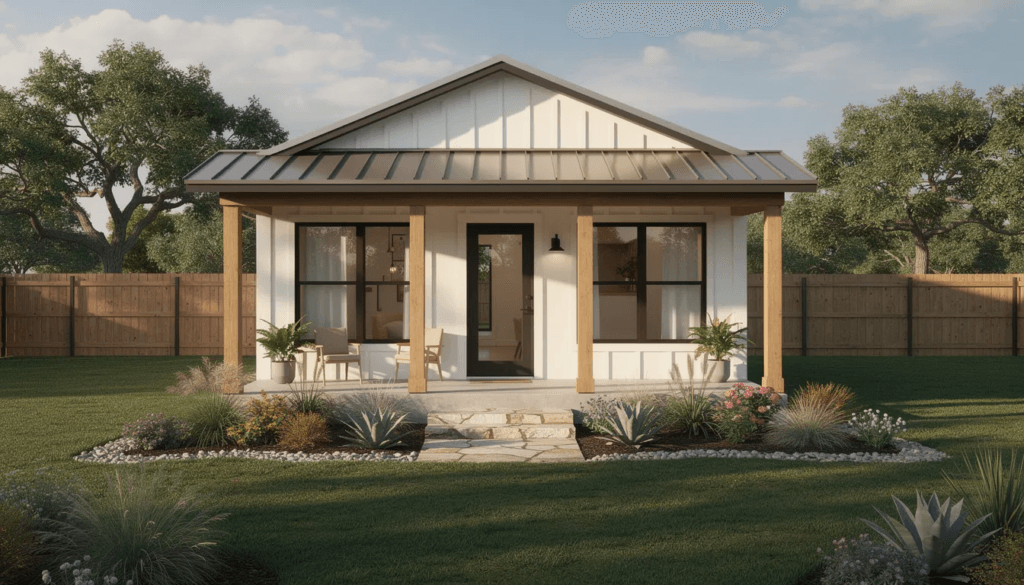
Typical interior features include:
- A dedicated bedroom (or sleeping alcove in smaller units)
- An accessible bathroom with walk-in shower
- A kitchenette with essential appliances
- A compact living space for reading, watching television, or receiving visitors
- Storage solutions that maximize vertical space
- A small front porch or covered patio suited for Texas’s mild winters and pleasant spring evenings
The evolution from simple backyard cottages to sophisticated senior-friendly units has been dramatic. Modern granny pods now rival assisted living facilities in comfort and safety, featuring medical monitoring integration, smart home features, and finishes designed specifically for aging in place. This isn’t your grandmother’s garden shed with a bed—it’s a purpose-built residence.
Texas-specific design considerations shape these structures in meaningful ways. Builders specify strong insulation for brutal summers, efficient cooling systems that handle sustained heat, and materials that withstand humidity, intense UV exposure, and occasional severe storms. In coastal areas, hurricane-resistant construction adds another layer of engineering.
Many families plan for dual use from the start. A pod designed for an aging parent today can serve as a guest house, home office, or rental unit (where local rules allow) after circumstances change. This forward-thinking approach transforms the granny pod from a care expense into a long-term property asset with endless possibilities, similar to how affordable tiny house buildings are often used for rentals, studios, or guest suites.
Accessibility Features
Accessibility isn’t an afterthought in granny pod design—it’s the foundation. When an elderly family member uses a walker, wheelchair, or simply needs fall prevention features, architectural details make the difference between safe independence and constant worry.
Entryways and circulation:
- Zero-step entrances with gentle ramps (maximum 1:12 slope)
- 36-inch doorways throughout
- Wide hallways (minimum 42 inches)
- Open turning spaces (approximately 5-foot diameter) in bedroom and bathroom
- Lever door handles instead of round knobs
Bathroom safety features:
- Curbless walk-in showers with non-slip tile flooring
- Sturdy grab bars at toilet, shower, and tub areas
- Handheld showerheads on adjustable slide bars
- Built-in shower benches or fold-down seats
- Raised toilet height (17–19 inches) for easier transfers
Kitchen accessibility:
- Lowered countertops (34 inches vs. standard 36 inches)
- D-shaped cabinet pulls for easier gripping
- Pull-out shelves and lazy susans
- Under-counter microwave placement
- Side-by-side or French-door refrigerators for reachable contents
Lighting and hardware adaptations round out the accessibility package:
- Rocker light switches respond to light touches
- Strong task lighting illuminates work surfaces
- Night lights along bathroom paths reduce fall risk during nighttime trips
Even when full ADA certification isn’t legally required for a private residence, borrowing ADA principles future-proofs the pod. A parent who walks independently today may need a wheelchair in five years. Building accessibility into the original design costs far less than retrofitting later.
Smart Home Technology
Many Texas families integrate health monitoring and smart home technology into granny pods, creating a safety net that respects privacy while providing reassurance. The goal isn’t constant surveillance—it’s catching problems early and enabling quick response when needed.
Common medical-related options include:
- Fall detection sensors (worn as pendants or installed in ceilings)
- Bed occupancy sensors that alert family if a loved one doesn’t get up at expected times
- Emergency call buttons throughout the unit
- Medication reminder systems with audible alerts
- Basic vital sign monitoring devices that transmit readings to family members or healthcare providers
Smart home tools extend beyond medical functions:
- Voice-activated assistants like Amazon Alexa or Google Home to control lights, adjust the thermostat, and make phone calls hands-free
- Video doorbells to see visitors before opening the door
- Smart locks to enable family members to enter during emergencies
- Interior cameras in common areas (if mutually agreed upon) for visual check-ins
Two-way communication options:
- Simple intercoms for quick conversations
- Video chat screens like Amazon Echo Show or Google Nest Hub for face-to-face check-ins
When installing these systems, work with licensed Texas electricians and low-voltage installers familiar with residential ADU requirements. Proper wiring during construction is far simpler than adding it after walls are closed.
Family Connection, Independence & Dignity
Placing a granny pod 30–80 feet from the main house creates an ideal balance. Help arrives in seconds when needed, yet the older adult maintains a genuine sense of “this is my own space.” That psychological distinction matters enormously for dignity and mental health.
Everyday benefits include:
- Shared dinners at the main house without anyone driving across town
- Grandkids walking over after school to say hello or do homework together
- Simpler medical appointments with transportation just steps away
- Informal wellness checks that happen organically
Psychological benefits:
- 25% lower depression rates among seniors living near family compared to institutional settings
- Autonomy over daily routines—when to wake, what to eat, when to watch television
- Ability to host friends, keep pets (subject to any local rules), and decorate the space personally
Proximity also reduces caregiver burnout among adult children. When mom or dad lives 30 minutes away, every check-in requires planning and travel time. When they’re in the backyard, support becomes more flexible and can be distributed among multiple family members without logistical coordination.
Cost Benefits Compared to Assisted Living in Texas
Cost Comparison Table
The financial case for granny pods becomes clearer when you run the numbers over a multi-year horizon. Assisted living in Texas metropolitan areas typically costs $3,500 to $7,000+ per month as of 2024–2025, depending on location and level of care. Memory care and nursing home facilities push even higher.
Cost Category | Assisted Living (5 years) | Granny Pod (5 years) |
|---|---|---|
Initial investment | $0 | $80,000–$200,000 |
Monthly fees | $210,000–$420,000 total | $0 |
Utilities | Included | ~$6,000–$12,000 total |
Remaining asset value | $0 | $50,000–$150,000+ |
Breakeven Analysis
The breakeven point often arrives in 2–4 years, after which the granny pod essentially provides free housing while maintaining or increasing property value. For families planning a 5–10 year care horizon, the math strongly favors building.
Ongoing Costs
That said, upfront costs are high, and not every family can access $80,000–$200,000 in savings, home equity, or financing. But viewing the pod as a multi-decade asset—usable for future generations, guest housing, or rental income after elder care ends—changes the calculation from pure expense to investment.
Why Granny Pods Work Especially Well in Texas
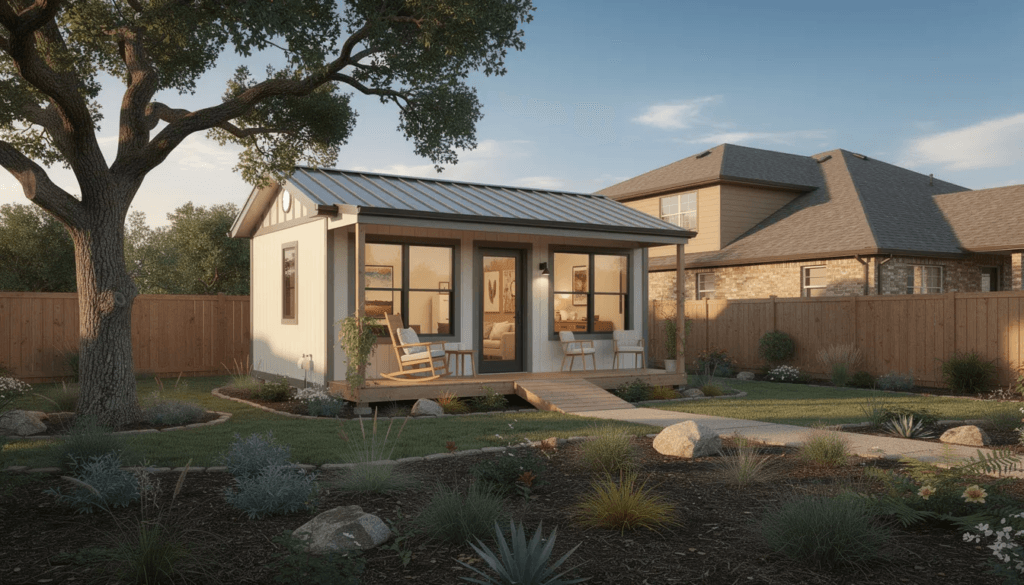
Texas-Specific Advantages
Climate and outdoor living: Texas’s relatively mild winters allow safe outdoor access most of the year. A covered porch or patio gets genuine use from October through May, extending the effective living space well beyond the pod’s interior square feet.
Property size and family culture: Texas homes—particularly in suburbs and rural areas—tend to sit on larger lots than their counterparts in coastal states. Strong multigenerational living traditions in many Texas communities also mean neighbors are less likely to object to backyard family housing.
Demographic pressures: Texas’s 65+ population is projected to more than double between 2020 and 2050, driving demand for flexible senior housing options that keep families connected.
Evolving regulations: Many Texas cities have gradually updated ADU policies over the past decade. Austin, San Antonio, and parts of Dallas and Houston have streamlined approval processes, reduced setback requirements, and waived certain fees.
Property value upside: In competitive markets like Austin and the DFW Metroplex, a legal, well-built ADU can be a genuine advantage at resale.
Legal Considerations for Granny Pods in Texas
Understanding Texas Law and Local Ordinances
Here’s where Texas families need to pay careful attention: while the state is generally pro-property-rights, ADU and granny pod rules vary dramatically by city, county, and HOA. Building without proper approvals can result in fines, stop-work orders, or requirements to remove the structure entirely.
There is no single “Texas granny pod law.” Land-use rules are primarily local—set by cities and sometimes counties—while building safety standards come from state-adopted codes.
State-Level Rules & Building Codes
Texas adopts versions of the International Residential Code (IRC) along with electrical, plumbing, and energy codes. These apply to granny pods as they would to any small house, setting minimum standards for structure, wiring, plumbing, HVAC, smoke/CO detectors, and egress windows.
Some Texas areas allow “medical hardship” or temporary caregiver dwellings on a time-limited basis, typically 5–10 years with periodic renewal. These provisions may offer expedited approval but usually require physician documentation demonstrating medical need for the arrangement.
City & County Differences Across Texas
Texas lacks statewide ADU legislation, meaning each of the state’s 1,200+ municipalities and 254 counties can set its own rules. Here’s how several major areas approach granny pods:
- Austin (Travis County): Relatively ADU-friendly, permitting units up to 1,100 square feet on lots as small as 5,750 square feet.
- Houston (Harris County): No traditional zoning, but development regulations and deed restrictions heavily influence what’s buildable.
- Dallas: Allows ADUs in certain zoning districts, sometimes requiring special use permits.
- San Antonio (Bexar County): Post-2022 code updates permit ADUs up to 1,200 square feet.
- Growing suburbs: Evolving ordinances with wide variation.
- Rural/unincorporated county areas: Often minimal zoning, but homeowners must still meet on-site septic requirements and building codes.
Always request written confirmation or official code references from local planning departments.
Zoning Basics: Setbacks, Size & Placement
Key zoning terms:
- Setbacks: Minimum distances from property lines (typically 5–15 feet in side and rear yards)
- Size limits: Common ADU caps in Texas cities range from 600–1,100 square feet, or a percentage of the main house
- Lot coverage: Many ordinances cap total building coverage at 40–60% of lot area
Additional requirements may include:
- Owner-occupancy of primary residence
- Prohibition on separate front driveways or addresses
- Parking requirements (often one additional off-street space)
- Design review for exterior materials and colors
Permits, Inspections & Working with Professionals
The typical Texas granny pod permitting process follows these steps:
- Pre-application meeting: Informal consultations with planning staff
- Permit submission: Provide site plan, floor plans, elevation drawings, and sometimes engineering documents
- Plan review: City officials check drawings against zoning and building codes
- Permit issuance: Receive building permits
- Construction with inspections: Inspectors verify compliance at key points
- Certificate of occupancy: Final approval allowing legal habitation
Working with a builder, architect, or design-build firm experienced in Texas ADUs significantly reduces friction.
Where in Texas Can You Build a Granny Pod?
No official statewide map exists showing where granny pods are allowed. Approval depends entirely on local ordinances, your specific lot conditions, and any private deed restrictions or HOAs governing your property.
Before buying a pod or signing a build contract, confirm with three entities:
- City or county planning: Zoning classification and ADU provisions
- Utility provider or septic authority: Connection capacity and requirements
- HOA (if applicable): Covenant restrictions on secondary structures
How Much Does a Granny Pod Cost in Texas?
A complete Texas granny pod project usually ranges from roughly $80,000 on the low end (smaller unit, easy site, basic finishes) to $200,000+ (larger custom build, complex site, premium features).
Structure Costs by Size & Type
Size Range | Basic Finishes | Premium Finishes |
|---|---|---|
300–400 sq ft | $50,000–$80,000 | $70,000–$100,000 |
400–600 sq ft | $80,000–$130,000 | $110,000–$160,000 |
600–800 sq ft | $130,000–$180,000 | $160,000–$220,000+ |
Basic models include standard fixtures, builder-grade flooring, minimal smart home features, and basic accessibility elements. Premium models upgrade to higher-end appliances, custom cabinetry, advanced medical monitoring integration, luxury vinyl or hardwood flooring, and extensive accessibility features.
Site Preparation & Foundation Costs
Grading and clearing estimates:
- Level lot with minimal vegetation: $2,000–$5,000
- Moderate slope or tree removal required: $5,000–$10,000
- Significant grading, retaining walls, or extensive clearing: $10,000–$20,000+
Foundation options:
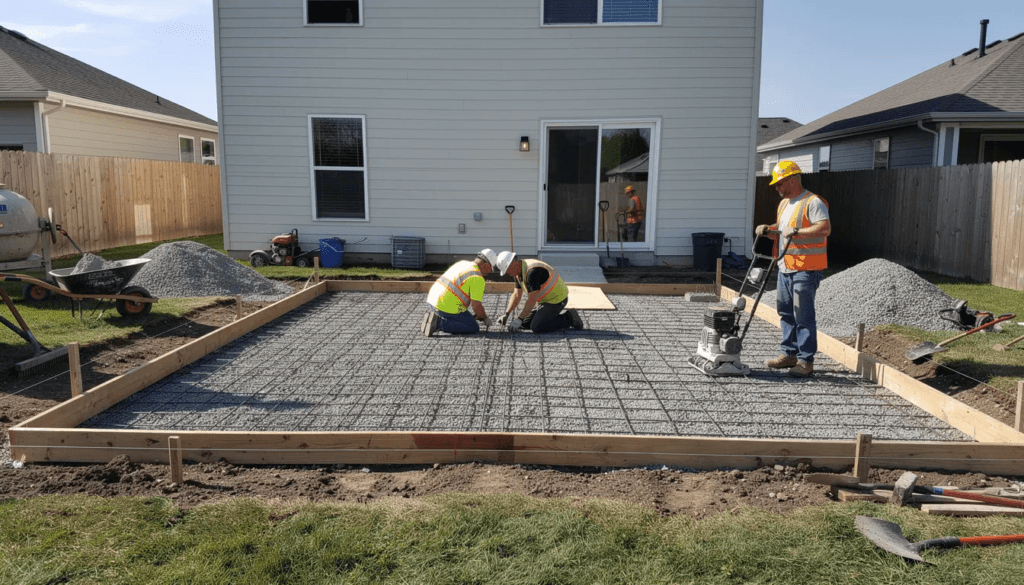
- Concrete slab-on-grade (most common): $4,000–$10,000 for small pods
- Pier-and-beam or block piers: $5,000–$12,000
- Engineered foundations for larger modular units: $8,000–$15,000+
Utility Connection Costs
Electrical connections:
- Basic subpanel and trenching: $1,500–$3,000
- Main panel upgrade or long runs required: $3,000–$6,000+
Plumbing connections:
- Tie into city water and sewer near main residence: $2,000–$6,000
- Septic system upgrade or new tank/field: $5,000–$15,000+
- Extended runs or difficult soil conditions: Add $2,000–$5,000
HVAC systems:
- Mini-split heat pump: $3,500–$6,000
- Small central system with ductwork: $5,000–$9,000
Communications and security:
- Internet extension, phone, security sensors: $500–$3,000
Permits, Professional Fees & Design
Cost Category | Typical Range |
|---|---|
Building permits | $800–$3,000 |
Impact or utility tap fees | $500–$2,500 |
Architectural/design services | $2,000–$8,000 |
Structural/foundation engineering | $500–$2,000 |
Survey (boundary or topographic) | $400–$1,200 |
Plan for a contingency of 10–15% above estimated hard costs to cover unexpected issues.
Ongoing Costs & Property Value Impact
Monthly utilities: $100–$200 for a well-insulated 400–600 sq ft pod
Property taxes: Typically adds several hundred to a few thousand dollars annually
Insurance: Premium increases commonly in the $200–$600 per year range
Maintenance: Budget approximately $500–$1,500 per year for routine upkeep
Property value impact: Well-designed, code-compliant granny pods typically add a substantial portion of their cost to resale value
Comparing Texas Granny Pods vs. Assisted Living or Nursing Homes
At $5,000/month for assisted living—a mid-range estimate for Texas metros—you’ll spend $60,000 per year, $300,000 over five years, $600,000 over ten years. This money leaves your family permanently with no remaining asset.
A $120,000 granny pod project (including all site work and fees) breaks even against assisted living in roughly two years. Every month beyond that point represents savings while maintaining an asset that retains value.
However, granny pods have limits. Nursing homes and memory care facilities—which can exceed $7,000 per month in Texas—may remain necessary for complex medical needs beyond what a pod and family caregiving can safely address.
Step-by-Step Process to Add a Granny Pod in Texas
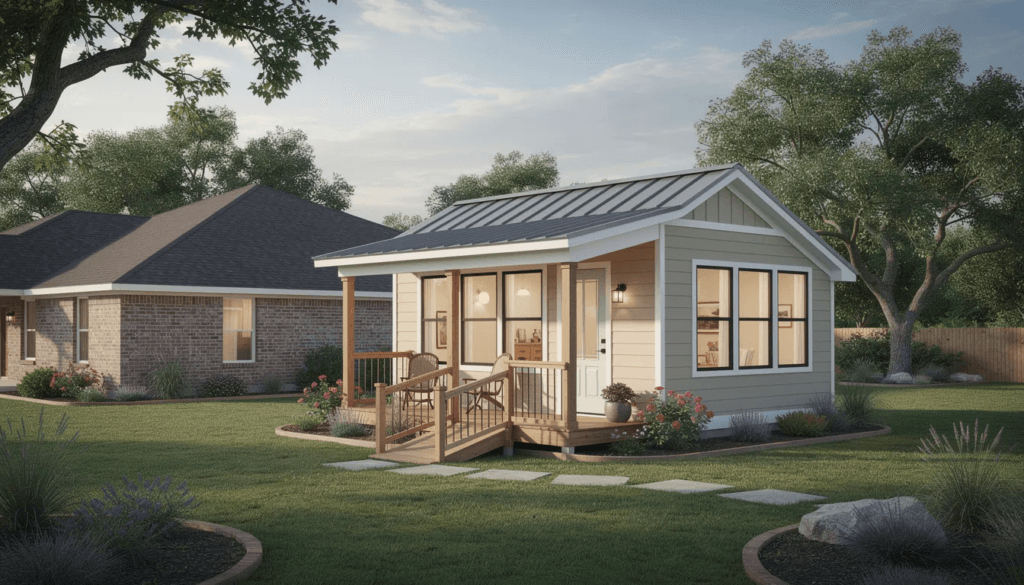
Step 1: Research Local Rules & Property Constraints
Before spending money on designs or deposits, confirm what’s legally possible on your property.
- Check with city or county planning:
- Zoning classification of your lot
- ADU/granny flat provisions in your zone
- Lot size minimums and maximum unit size
- Setback requirements (side, rear, front)
- Special use permit or variance requirements
- Owner-occupancy rules
- Review HOA restrictions:
- Request your CC&Rs (covenants, conditions, and restrictions)
- Ask the HOA board in writing about detached secondary units
- Identify any architectural review committee requirements
- Identify property constraints:
- Floodplain maps (FEMA flood zones)
- Utility easements and setback impacts
- Existing structures and lot coverage calculations
- Tree preservation requirements
Step 2: Define Budget, Care Needs & Long-Term Use
- Assess care needs:
- Current mobility, medical conditions, and daily assistance requirements
- Anticipated changes over 5–10 years
- Desired privacy level and overnight caregiver space needs
- Medical equipment or monitoring requirements
- Establish a realistic budget:
- Total available funds (savings, home equity, family contributions)
- Financing options (home equity line, construction loan, personal loan)
- Include 10–15% contingency for unforeseen issues
- Account for ongoing costs (utilities, taxes, maintenance)
- Clarify future uses:
- Will the pod be repurposed after elder care ends?
- Is rental income desired (and legally permitted)?
- Could adult children eventually use the space?
- How do layout choices today affect flexibility later?
Step 3: Choose Design, Builder & Delivery Method
- Main options:
- Fully custom site-built
- Modular ADU
- Park model or prefab shell
- Selecting a builder:
- Interview 2–3 Texas builders or design-build firms
- Request references from recent ADU projects
- Verify familiarity with your specific city’s permitting process
- Compare all-in project quotes, not just structure prices
- Floor plan priorities:
- Single-level living throughout
- Wide circulation paths (42+ inches)
- Direct access to outdoor space (covered porch or patio)
- Accessible bathroom with curbless shower and grab bars
- Kitchenette or full kitchen based on need and budget
Step 4: Permits, Approvals & HOA Sign-Off
- The builder or designer prepares construction drawings and site plans for permit submission.
- If your subdivision has an HOA, architectural review committee approval may be required first.
- Submit complete, accurate documents to speed city review.
- Expect review periods of:
- Smaller cities: 2–4 weeks
- Major metros (Austin, Dallas, San Antonio): 6–8+ weeks
- Complex projects requiring variances: 3–6 months
Step 5: Site Preparation, Foundation & Utility Rough-Ins
- Clearing and grading:
- Remove existing structures, vegetation, or debris
- Level the building pad
- Install drainage solutions
- Tree protection measures
- Foundation work:
- Form and pour concrete slab, or install pier foundations
- Schedule and pass foundation inspection before proceeding
- Utility trenching:
- Excavate trenches for electrical, water, sewer/septic, and communications conduits
- Install underground utilities
- Schedule rough-in inspections before backfilling
Step 6: Delivery, Construction & Finish Work
For prefab or modular pods, a crane lifts the structure onto the prepared foundation—often completed in a single day.
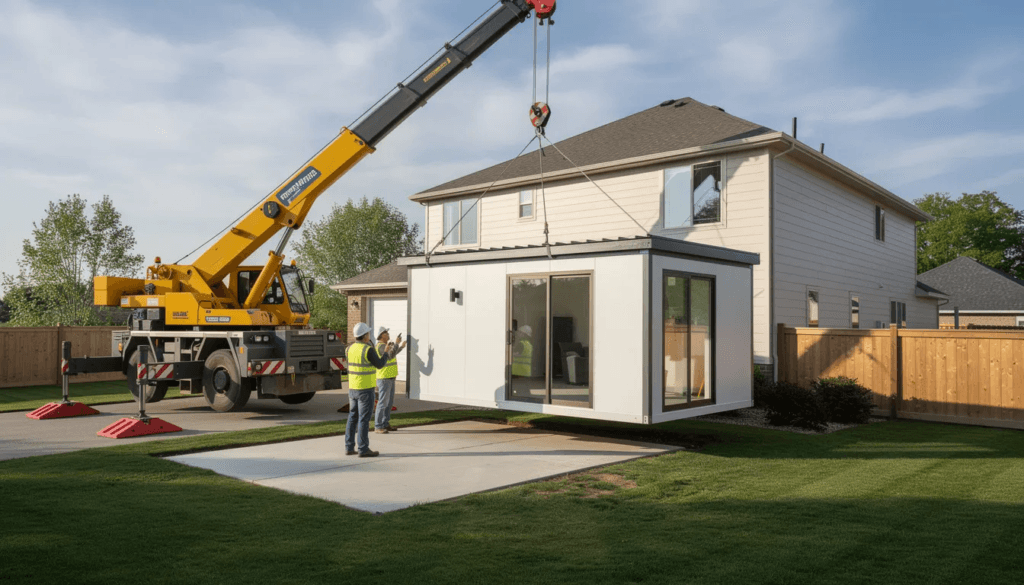
For site-built pods, construction proceeds through familiar stages:
- Framing and structural connections
- Roofing and weatherproofing
- Window and door installation
- Rough-in electrical, plumbing, and HVAC
- Insulation and air sealing
- Drywall, taping, and texture
- Flooring, cabinets, countertops
- Fixtures, appliances, trim work
- Exterior finishes and paint
Step 7: Inspections, Move-In & Fine-Tuning
- Final inspection checklist:
- Electrical: Outlets, switches, panel, GFCI protection, smoke/CO detectors
- Plumbing: Water pressure, hot water, drainage, fixtures
- Mechanical: HVAC operation, thermostat function
- Structural: As-built matches approved drawings
- Accessibility: Grab bars, ramp slope, door widths per plan
- Homeowner walkthrough:
- Test every outlet, switch, and light fixture
- Run all faucets and flush toilets
- Verify hot water reaches appropriate temperature
- Test HVAC in both heating and cooling modes
- Check for leaks under sinks and around windows
- Note cosmetic defects for builder correction
- Move-in setup:
- Program smart home accounts and thermostats
- Set up medical alert devices and test emergency calls
- Post emergency contacts near phones or call buttons
- Install night lights along bathroom paths
- Confirm internet and phone connectivity
Designing for Texas Climate, Accessibility & Future Flexibility
Climate & Energy Efficiency Strategies
Texas summers demand serious attention to cooling efficiency. Design choices made during construction determine comfort and utility costs for decades.
Insulation targets for Texas climate:
- Ceilings: R-30 to R-38 (attic insulation is critical)
- Walls: R-13 to R-21
- Slab edge: Insulated where feasible in north Texas
Heat-blocking strategies:
- Radiant barriers in attic spaces
- Cool-colored or reflective roofing materials
- High-performance windows with low-E coatings and appropriate solar heat gain coefficients (SHGC below 0.25 for south- and west-facing glass)
- Deep roof overhangs or covered porches to shade windows
Efficient HVAC:
- Inverter-driven mini-split heat pumps sized appropriately for 300–800 sq ft (often 9,000–12,000 BTU)
- Variable-speed operation for humidity control
- Smart thermostats with high-temperature alerts for safety monitoring
Appliances and lighting:
- LED lighting throughout
- Energy Star appliances
- Tankless or heat pump water heaters
Rooftop or carport solar panels fit naturally in many Texas markets with high sun exposure.
Accessibility for Aging in Place
Building accessibility into the original design costs far less than retrofitting. Plan for progressive mobility needs, not just current abilities.
Bathroom design for long-term use:
- Curbless shower with linear drain
- Blocking in walls for future grab bars
- Space for shower bench or transfer seat
- Clear floor space for wheelchair or walker maneuvering
Bedroom considerations:
- Room dimensions accommodating hospital bed if eventually needed
- Ceiling blocking for potential patient lift installation
- Outlets and controls reachable from bed
Flooring and transitions:
- Flush thresholds throughout (maximum ½ inch height changes)
- Slip-resistant surfaces in all wet areas
- No thick, loose rugs that create tripping hazards
- Contrasting colors at transitions and steps
Controls and hardware:
- Lever handles on all doors and faucets
- Rocker light switches at 42–48 inches
- Outlets at 18–24 inches (not standard 12 inches)
- Easy-grip cabinet pulls
Visual and cognitive supports:
- Large-print labels where helpful
- Contrasting colors around edges and steps
- Nightlights on motion sensors
- Simple, consistent layouts
Smart Home & Monitoring Options
Voice control integration:
- “Alexa, turn on the bathroom light” avoids reaching for switches in the dark
- Voice-activated emergency calls
- Hands-free thermostat adjustment
- Audio reminders for medications
Safety monitoring:
- Motion sensors detecting unusual inactivity
- Door/window sensors noting unexpected exits
- Water leak detectors in bathroom and kitchen
- Temperature alerts if HVAC fails during heat waves
Remote family connection:
- Video calling screens (Echo Show, Google Nest Hub) for face-to-face check-ins
- Shared digital calendars for appointments
- Doorbell cameras letting resident preview visitors
Medical integration:
- Fall detection pendants or ceiling sensors
- Bed occupancy monitoring
- Medication dispensers with reminders
- Blood pressure or glucose monitors with app reporting
Backup power deserves consideration in Texas, where summer grid strain occasionally causes outages.
Aesthetics, Landscaping & Integration with the Main Home
Exterior harmony:
- Match or complement main house materials
- Consistent architectural style
- Proper scale relative to yard and main residence
Landscape integration:
- Accessible pathways (4+ feet wide, gentle slopes, non-slip surfaces)
- Landscape lighting along walking routes
- Shade trees or pergolas creating comfortable outdoor zones
- Gardens or planters at accessible heights
Interior personalization:
- Family photos and familiar artwork
- Furniture from previous home if desired
- Color schemes reflecting resident preferences
- Space for hobbies, books, or collections
Is a Granny Pod Right for Your Texas Family?
Pros and Cons of Granny Pods
Major advantages:
- Daily proximity enables natural oversight and family meals
- Independence and dignity preserved for aging loved ones
- Long-term cost savings compared to institutional care
- Property value often increases with a legal ADU
- Multi-use flexibility after elder care (guest house, rental, home offices)
- Avoids the disruption and emotional toll of nursing home placement
Key challenges:
- High upfront investment ($80,000–$200,000+)
- Space limitations on small urban lots may prevent construction
- Ongoing maintenance becomes family responsibility
- Navigating local regulations and HOAs requires research and patience
- Some medical conditions require professional care beyond family capability
- Insurance and tax implications need advance planning
Family Discussion Questions
- Is the aging parent comfortable with this level of proximity, or would they prefer more independence?
- Can family members realistically provide the oversight and support needed?
- What happens when care needs exceed family capability?
- How will costs and responsibilities be shared among siblings?
- Is the property suitable, and do local rules permit construction?
Involve the future resident in planning discussions. Their preferences and comfort level matter as much as practical considerations.
Next Steps: How to Move Forward
- Confirm local rules: Contact your city/county planning department and HOA (if applicable) to verify that an ADU is permitted on your specific property
- Talk with family: Discuss needs, boundaries, financial contributions, and care expectations with all involved parties
- Draft a realistic budget: Include structure, site work, permits, and 10–15% contingency
- Gather preliminary quotes: Request estimates from 2–3 Texas-based ADU/granny pod builders familiar with your area
- Visit examples: Tour model units or completed projects to understand small house solutions in person
Create a wish-list separating “must-haves” (zero-step entry, curbless shower) from “nice-to-haves” (full-size kitchen, smart home features).
Texas Granny Pod FAQ
This section addresses the most common questions Texas families ask about granny pods. Answers reflect 2024–2025 guidelines; always confirm details with your local city or county.
Legal & Zoning Questions
Are granny pods legal everywhere in Texas?
No. Texas has no statewide ADU legislation, so rules vary by city, county, and HOA. Austin, San Antonio, and parts of Dallas and Houston have relatively ADU-friendly ordinances, but many suburbs and smaller towns restrict or prohibit detached secondary dwelling units. Your specific lot’s zoning classification determines eligibility, not just your city’s general policies.
Can I rent out my granny pod?
It depends entirely on local ordinances. Some Texas cities allow ADU rentals with owner-occupancy requirements (you must live in either the main house or the pod). Others restrict ADUs to family members only or prohibit short-term rentals entirely. Rental income potential requires confirming that both city ordinances and HOA rules permit tenant occupancy.
Can HOAs stop me from building?
Yes. HOA covenants often impose restrictions more limiting than city codes. Even if your municipality permits granny pods, your subdivision’s CC&Rs may prohibit secondary structures, limit building sizes, or impose architectural requirements that effectively prevent construction. Always check HOA rules before investing in design work.
Do I need a permit for a granny pod?
Yes. Permanent, habitable dwelling units in Texas almost always require building permits and inspections. Unpermitted structures cannot receive certificates of occupancy, may not be covered by insurance, create liability exposure, and cause serious problems at resale. Permits protect both safety and property value.
Cost, Property Size & Utilities Questions
How much does a typical granny pod cost in Texas?
A complete project typically ranges from $80,000 (smaller unit, easy site, basic finishes) to $200,000+ (larger custom build, complex site, premium features). A middle-ground 450 sq ft pod with good finishes, proper site work, and utility connections commonly runs $110,000–$150,000 all-in.
Can I put a granny pod on a small city lot?
Maybe. Many Texas cities require minimum lot sizes of 5,750–7,200 sq ft for ADUs. Setback requirements (distance from property lines) and lot coverage limits further constrain buildable area. A 6,000 sq ft lot with a large house and detached garage may not have sufficient space availability. Have a builder evaluate your specific lot before assuming a pod will fit.
How are utilities connected?
Typically through underground trenches from the main house, tying into existing electrical, water, and sewer systems. Licensed contractors install subpanels, extend water lines, and connect to city sewer or septic. The main residence’s utility accounts usually cover the pod, simplifying billing but requiring adequate capacity. Texas code requires inspections at multiple stages.
What about property taxes and insurance?
Adding a granny pod increases your property’s assessed value, raising annual property taxes—often by several hundred to a few thousand dollars depending on location and improvement value. Homeowners insurance premiums typically increase $200–$600 annually when adding an ADU. Contact your county appraisal district and insurer before construction to understand specific tax implications.
Timeline, Durability & Everyday Living Questions
How long does it take to build or install a granny pod?
From permit approval to move-in, expect 4–8 weeks for prefab/modular units (placement plus finish work and utility connections) or 3–6 months for custom site-built construction. Permit review adds 2–8 weeks depending on your city’s workload and application completeness.
How long will a granny pod last?
Well-built, code-compliant structures should last 30–50 years or more with regular maintenance—comparable to any other quality residential construction. Key durability factors include foundation design (especially in expansive clay soils), roof quality, and ongoing HVAC and exterior maintenance.
Can the pod be used after my parent no longer needs it?
Yes, assuming local rules permit. Common repurposing includes guest suites for visiting family members, home offices or creative studios, housing for adult children, and long-term rental units (where legally allowed). This flexibility transforms a care expense into a lasting property improvement.
How do granny pods handle Texas winters and occasional cold snaps?
Modern pods include proper insulation (R-13+ walls, R-30+ ceilings) and efficient heat pump systems that handle both cooling and heating. Mini-splits perform well in mild Texas winters and provide backup heating during rare severe cold events. Quality construction with proper air sealing prevents drafts and maintains comfortable space temperatures year-round.