


Key Takeaways
- Kentucky offers diverse house kit options including timber frame, steel buildings, log cabins, and barndominiums starting from $39-42 per square foot
- Prefabricated house kits provide significant cost savings, faster construction timelines, and superior energy efficiency compared to traditional building methods
- Steel house kits offer exceptional durability and weather resistance, while timber frame kits provide rustic elegance with advanced insulation systems
- Most Kentucky house kit providers offer complete packages including materials, engineering, and construction support with delivery anywhere in the state. Components of house kits may include engineer-stamped blueprints, precut wall panels, and lumber.
- Building codes compliance is guaranteed across all wind zones and snow load requirements throughout Kentucky’s diverse climate regions
Kentucky’s rich tradition of home construction, from frontier log cabins to modern suburban developments, has evolved to embrace innovative prefabricated building solutions. Prefabricated home and cabin kits are transforming residential building practices worldwide. House kits represent a revolutionary approach to home construction that combines the efficiency of factory manufacturing with the flexibility of custom design. These building kits offer Kentucky homeowners an opportunity to create their dream home while significantly reducing construction costs and timelines.
The growing popularity of house kits in Kentucky stems from their ability to accommodate the state’s diverse climate conditions, from the rolling hills of Louisville to the mountainous regions of eastern Kentucky. Whether you’re planning a rustic cabin retreat in the Appalachian foothills or a modern steel building on western Kentucky farmland, prefabricated kits provide quality materials and engineered designs that meet local requirements while delivering improved energy efficiency.
- Types of House Kits Available in Kentucky
- What’s Included in Kentucky House Kits
- Benefits of Building House Kits in Kentucky
- Kentucky Building Codes and Compliance
- Popular Kentucky Locations for House Kits
- Construction Process and Timeline
- Cost Considerations for Kentucky House Kits
- Choosing the Right House Kit Provider
- FAQ
Types of House Kits Available in Kentucky
Kentucky’s house kit market offers four primary categories, each designed to meet different needs, budgets, and aesthetic preferences. These building kits range from budget-friendly steel shells to premium timber frame packages, providing many options for homeowners seeking to build their perfect home.
The construction methods vary significantly between kit types, with timber frame utilizing traditional mortise-and-tenon joinery, steel buildings employing engineered metal framing, log cabins featuring interlocking log systems, and barndominiums combining agricultural aesthetics with residential comfort. Price ranges typically start at $39-42 per square foot for basic steel packages and can reach $80-120 per square foot for premium timber frame kits with complete finishing packages.
Timber Frame House Kits
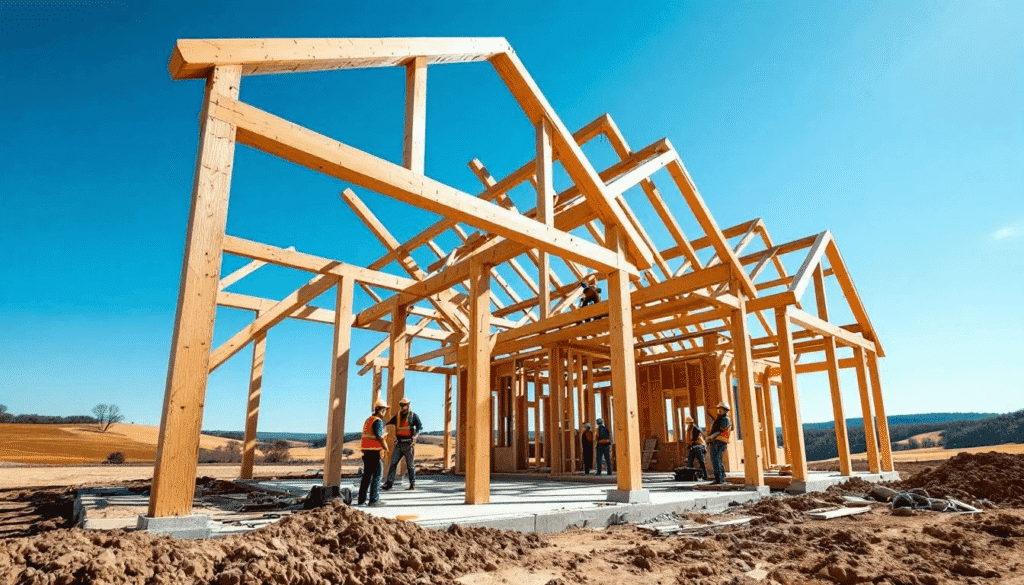
Timber frame house kits represent the perfect marriage of traditional craftsmanship and modern technology. These kits feature mortise-and-tenon joinery combined with structural insulated panels (SIPs) that provide exceptional insulation performance and energy efficiency. Structural insulated panels (SIPs) form a fully insulated shell around the timber skeleton of the home. The TruFit™ system used by many manufacturers ensures perfect assembly through precision-cut components that fit together seamlessly.
Kentucky’s natural landscape provides an ideal backdrop for timber frame construction, with the rustic elegance of exposed beams complementing the state’s rural and suburban settings. These kits accommodate various architectural styles, from classic New England saltbox designs to contemporary post-and-beam structures with large windows that capture scenic views.
The manufacturing process involves computer-controlled cutting of premium lumber, creating components that arrive at the job site ready for efficient assembly. Quality materials include sustainably harvested timber, high-performance insulation systems, and weather-resistant finishes designed to withstand Kentucky’s temperature swings and seasonal weather patterns.
Steel Building House Kits
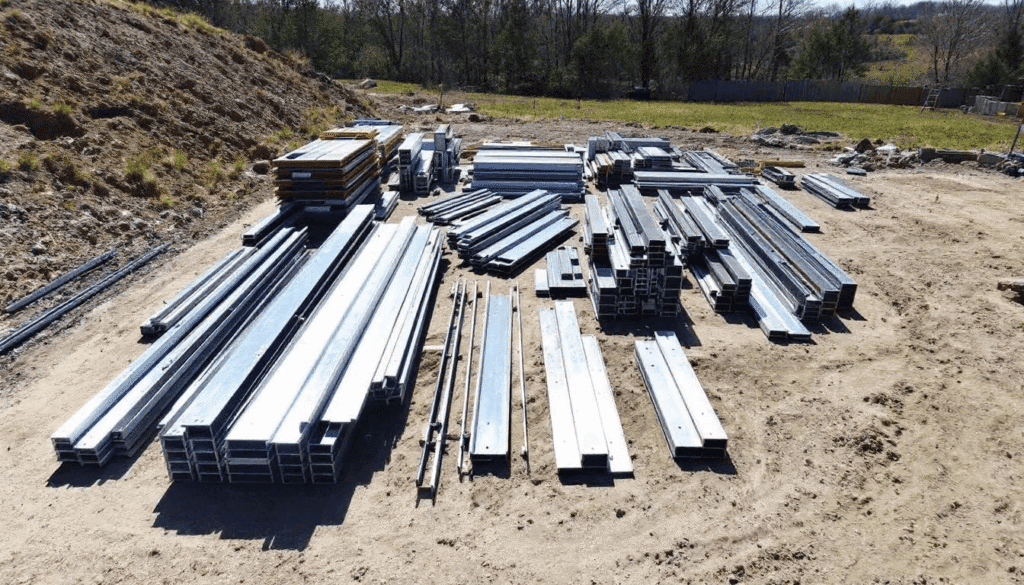
Steel building house kits offer exceptional value starting at $39-42 per square foot, including essential components like windows and doors. These kits provide superior strength-to-weight ratios, requiring less material than traditional wood framing while delivering enhanced structural performance. Steel is eco-friendly, as it is infinitely recyclable and generates less waste during construction. The steel frame construction resists rot, insects, and extreme weather conditions that can challenge other building materials in Kentucky’s diverse climate.
One of the primary advantages of steel house kits is their ability to create clear-span interior spaces without load-bearing walls. This design flexibility allows homeowners to create open floor plans that can be easily modified or expanded in the future. The framing system accommodates various exterior finishes, from traditional siding to modern metal panels, enabling designs that fit seamlessly into Kentucky’s architectural landscape.
Steel kits also provide excellent value through reduced maintenance requirements and improved durability. The galvanized steel components resist corrosion and provide decades of reliable performance with minimal upkeep, making them particularly suitable for rural Kentucky properties where maintenance access might be challenging.
Log Cabin Kits
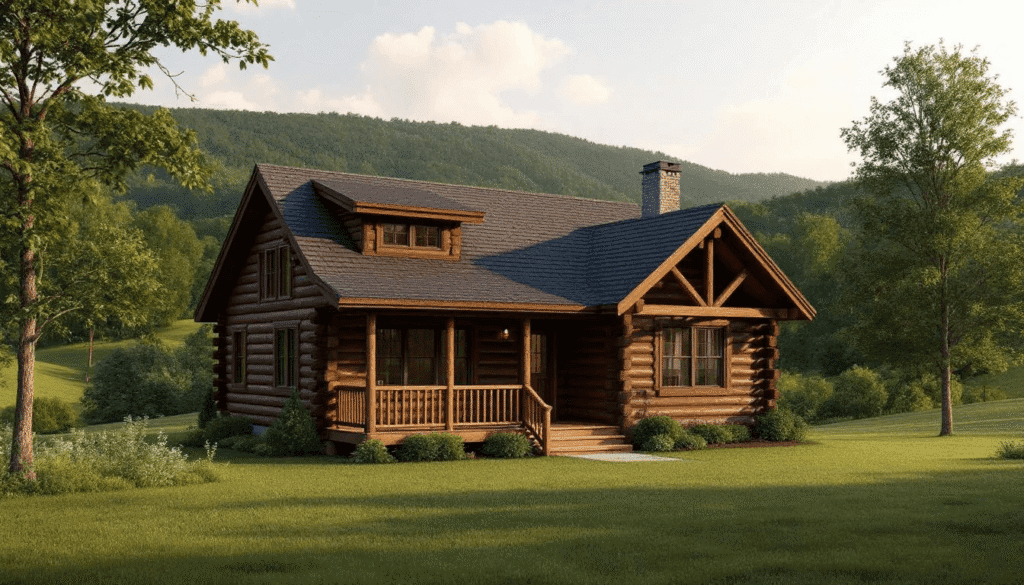
Kentucky’s log cabin kit providers bring over 40 years of experience to the market, with companies like Gastineau Log Homes offering comprehensive packages that include engineered designs and quality materials. Gastineau Log Homes offers quality assurance visits during log home construction in Kentucky. These kits feature advanced systems like the SmartLog Wall System and Therma-Log siding options that provide both aesthetic appeal and superior performance.
The complete packages include pre-cut logs numbered for easy assembly, detailed construction plans, and quality assurance visits from experienced professionals. This level of support ensures that even first-time builders can successfully complete their log home project while maintaining the highest standards of construction quality.
Modern log cabin kits address traditional concerns about energy efficiency through advanced chinking systems, high-performance windows, and carefully engineered wall systems that minimize air infiltration. The natural insulation properties of wood, combined with modern building techniques, create homes that are both energy-efficient and comfortable year-round in Kentucky’s varying climate conditions.
Barndominium Kits
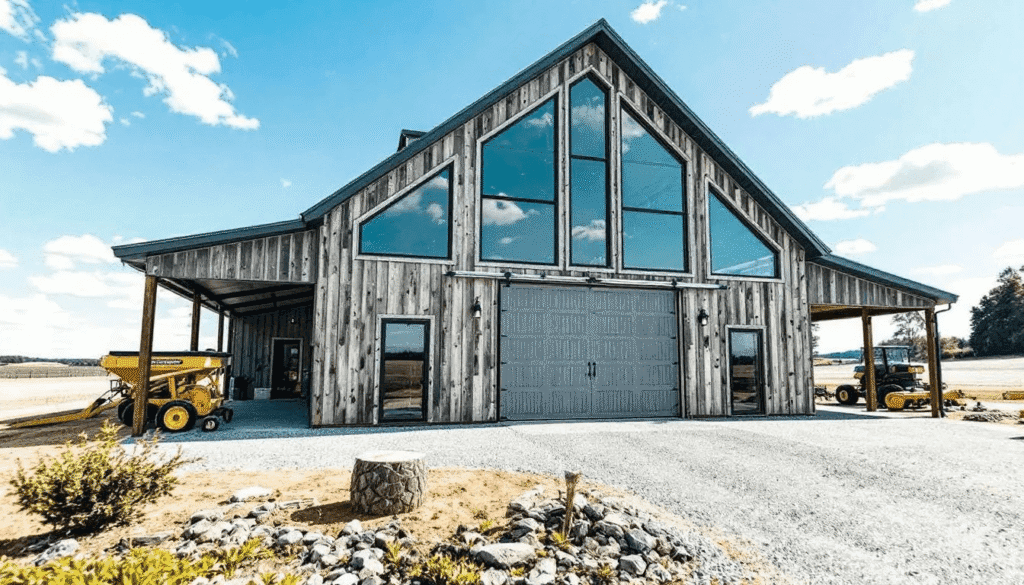
Barndominium kits represent a growing trend in Kentucky, particularly suitable for rural properties and working farms. These structures combine residential living spaces with storage or workshop areas, creating versatile buildings that serve multiple purposes. The steel frame construction provides the strength needed for large open-concept spaces while maintaining cost-effectiveness. Fewer skilled workers are required to assemble steel buildings due to straightforward assembly processes.
The customizable interior layouts allow homeowners to design spaces that fit their specific needs, whether that includes vehicle storage, workshop space, or traditional residential rooms. The agricultural-style exterior blends naturally with Kentucky’s rural landscape while providing a unique and modern living experience.
Cost-effective construction makes barndominiums particularly attractive for large families or those needing significant storage space. The steel framing system allows for easy future modifications, ensuring the structure can adapt as needs change over time.
What’s Included in Kentucky House Kits
Kentucky house kits provide comprehensive packages designed to streamline the construction process and ensure successful project completion. The pre-cut and engineered materials arrive at the job site ready for efficient assembly, eliminating the time and potential errors associated with on-site cutting and measuring. Pre-cut kits are delivered as a collection of pre-cut components with assembly instructions, making them DIY-friendly.
Complete structural components form the foundation of every kit, including precision-engineered framing members, roofing systems, and wall assemblies. The factory manufacturing process ensures consistent quality and dimensional accuracy that would be difficult to achieve with traditional stick-built construction methods.
Component Category | Basic Kits | Premium Packages |
|---|---|---|
Structural Frame | ✓ | ✓ |
Roofing Materials | ✓ | ✓ |
Wall Systems | ✓ | ✓ |
Windows & Doors | Limited | ✓ |
Exterior Finishes | Basic | Premium |
Interior Materials | ✗ | ✓ |
Plumbing Fixtures | ✗ | Optional |
Electrical Components | ✗ | Optional |
Premium packages often include windows, doors, and exterior finishing materials selected to complement Kentucky’s architectural styles and climate requirements. These components are carefully matched to ensure proper fit and performance, eliminating the guesswork involved in sourcing compatible materials from multiple suppliers.
Detailed assembly instructions and engineering drawings provide step-by-step guidance for the construction process. These documents include specifications for foundation requirements, assembly sequences, and quality control checkpoints that ensure compliance with Kentucky building codes and manufacturer warranties.
Hardware and fasteners required for construction are included in most packages, with quantities calculated to complete the assembly process without delays for additional material purchases. Some premium kits extend beyond structural components to include plumbing fixtures, electrical components, and interior finishes that allow for more complete project delivery.
Benefits of Building House Kits in Kentucky
The advantages of building house kits in Kentucky extend far beyond simple cost savings, encompassing improved construction quality, enhanced energy performance, and reduced environmental impact. These benefits make kit construction an increasingly attractive option for Kentucky homeowners seeking efficient and reliable building solutions.
Faster construction timelines represent one of the most significant advantages, reducing labor costs and minimizing weather exposure during the building process. While traditional construction projects can extend for many months and face delays due to material availability or weather conditions, kit homes typically reach completion in a fraction of the time.
Superior energy efficiency results from the controlled manufacturing environment where precise tolerances and consistent assembly create tighter building envelopes. This improved performance translates directly into reduced heating and cooling costs, particularly important in Kentucky where seasonal temperature variations can be significant.
Quality control through factory manufacturing eliminates many of the variables that can affect traditional construction. Materials are protected from weather during manufacturing, components are assembled under controlled conditions, and quality inspections occur at multiple stages of the production process.
The engineered designs specifically address Kentucky’s climate challenges, including resistance to temperature swings, severe weather patterns, and humidity variations. Structural engineering accounts for wind loads, snow loads, and seismic considerations specific to different regions of Kentucky, ensuring safety and durability regardless of location.
Reduced construction waste results from precise material calculations and factory efficiency, making kit construction more environmentally sustainable than traditional building methods. This efficiency also translates into cost savings that can be significant over the course of a project.
Lower insurance costs often result from the superior structural performance of kit homes, as insurance companies recognize the reduced risk associated with engineered construction and quality materials. This advantage can provide ongoing savings throughout the life of the home.
Kentucky Building Codes and Compliance
All reputable house kit manufacturers design their products to meet or exceed Kentucky state building codes, ensuring that homeowners can obtain permits and pass inspections without complications. This compliance represents a significant advantage over some alternative building methods that may require extensive modifications to meet local standards.
Wind load specifications vary across Kentucky’s diverse climate zones, with higher requirements in areas prone to severe weather events. Kit manufacturers engineer their products to accommodate these variations, providing structural designs that perform reliably under local conditions.
Snow load requirements differ between northern and southern regions of Kentucky, reflecting the varying winter weather patterns across the state. Eastern Kentucky mountain areas may require higher snow load ratings than western Kentucky farmland, and kit designs accommodate these regional differences.
Seismic considerations become particularly important in eastern Kentucky areas where geological activity may require enhanced structural provisions. Modern kit designs incorporate seismic-resistant features that meet or exceed code requirements while maintaining cost-effectiveness.
Local permit assistance and engineering support provided by kit manufacturers streamline the approval process, often including stamped engineering drawings and technical documentation required by Kentucky building departments. This support can significantly reduce the time and complexity of obtaining necessary permits.
The compliance assurance offered by established kit manufacturers provides peace of mind for homeowners and builders, eliminating concerns about code violations or inspection failures that could delay project completion or require expensive modifications.
Popular Kentucky Locations for House Kits
The Louisville metro area presents significant development opportunities for house kits, with growing suburban communities seeking cost-effective housing solutions. The region’s proximity to major transportation networks facilitates efficient kit delivery while providing access to skilled contractors familiar with prefabricated construction methods.
Lexington-Fayette region growth continues to drive housing demand, creating opportunities for kit homes that can be completed quickly to meet market needs. The area’s diverse economic base supports various housing price points, making both budget-friendly steel kits and premium timber frame packages viable options.
Rural Kentucky properties provide ideal settings for cabin and barndominium kits, where the agricultural aesthetic and functional design elements align perfectly with property uses and owner preferences. The flexibility to combine residential and agricultural functions makes these locations particularly suitable for specialized kit designs.
Eastern Kentucky mountain regions offer perfect environments for timber frame homes that complement the natural beauty and rugged landscape. The challenging terrain and remote locations favor construction methods that minimize on-site work and material transportation requirements.
Western Kentucky farmland provides excellent opportunities for steel building houses that can accommodate both residential needs and agricultural storage requirements. The flat terrain and established infrastructure support efficient kit delivery and assembly operations.
Construction Process and Timeline
The construction process begins with initial consultation and site assessment to determine the most suitable kit type and design options for the specific location and owner requirements. This evaluation considers factors such as soil conditions, access routes, utility availability, and local zoning restrictions that might affect the project.
Design selection and customization typically require 2-4 weeks, during which homeowners work with kit providers to finalize floor plans, exterior finishes, and optional components. This phase allows for modifications that address site-specific requirements or personal preferences while maintaining the efficiency advantages of prefabricated construction.
Manufacturing and delivery timelines generally span 6-12 weeks, depending on kit complexity and manufacturer capacity. The factory production process occurs simultaneously with site preparation activities, maximizing overall project efficiency and minimizing total completion time.
Foundation preparation and site work coordination must align with kit delivery schedules to ensure smooth project progression. Site preparation includes excavation, utility rough-ins, and foundation installation according to manufacturer specifications and local building codes.
Assembly process duration varies significantly by kit type, with steel buildings typically requiring 2-4 weeks, timber frame kits needing 4-6 weeks, and log cabin kits taking 6-8 weeks depending on size and complexity. Weather conditions and crew experience can affect these timelines, but the controlled manufacturing process minimizes delays compared to traditional construction.
Final inspections and occupancy permit procedures follow standard Kentucky building department processes, with the advantage that kit construction typically encounters fewer inspection issues due to the engineered designs and quality control measures implemented during manufacturing.
Cost Considerations for Kentucky House Kits
Kit costs represent only the beginning of total project expenses, with complete turnkey costs typically running 2-5 times higher than the basic kit price. Understanding these cost components helps homeowners budget accurately and avoid unexpected expenses during construction.
The foundation costs vary significantly based on soil conditions and kit type, with steel buildings often requiring simpler slab foundations while timber frame and log kits may need full basements or crawl spaces to accommodate Kentucky’s freeze-thaw cycles and provide proper moisture management.
Labor expenses for assembly and finishing work depend on kit complexity and local contractor availability. While some components may be suitable for DIY installation, most Kentucky jurisdictions require licensed professionals for electrical, plumbing, and foundation work, adding to overall project costs.
Utility connections and site preparation budget requirements can vary dramatically based on location and existing infrastructure. Rural sites may require significant investment in well drilling, septic systems, and electrical service installation that must be factored into total project costs.
Permit fees and inspection costs across Kentucky jurisdictions typically represent a small percentage of total project costs but should be included in initial budgeting. Some areas may have additional requirements for environmental assessments or special use permits that can add to administrative expenses.
Long-term savings through energy efficiency and reduced maintenance often justify higher initial investments in premium kit options. The improved performance of factory-built components can provide decades of operational savings that offset higher upfront costs.
Cost Category | Steel Kits | Timber Frame | Log Cabins | Barndominiums |
|---|---|---|---|---|
Kit Cost (per sq ft) | $39-42 | $80-120 | $60-90 | $45-65 |
Foundation | Moderate | High | High | Moderate |
Labor | Low-Moderate | Moderate-High | Moderate | Low-Moderate |
Finishing | Variable | High | Moderate | Variable |
Total Range | $80-150/sq ft | $150-250/sq ft | $120-200/sq ft | $90-160/sq ft |
Choosing the Right House Kit Provider
Experience and reputation in the Kentucky market should be primary considerations when selecting a house kit provider. Companies with decades of experience understand local building codes, climate challenges, and contractor networks that can significantly impact project success. Look for providers with over 40 years of experience and established track records in Kentucky construction.
Local support and construction assistance availability can make the difference between a smooth project and a frustrating experience. Providers that offer on-site visits, technical support, and local contractor referrals provide valuable resources that justify higher kit costs through improved project outcomes.
Warranty coverage and quality assurance programs demonstrate manufacturer confidence in their products and provide protection for homeowners’ investments. Comprehensive warranties should cover materials, manufacturing defects, and structural performance for extended periods, reflecting the long-term value proposition of quality kit construction.
Customization options and design flexibility offered by different providers vary significantly, with some companies specializing in standard designs while others accommodate extensive modifications. Consider your specific needs for custom features, non-standard dimensions, or special architectural elements when evaluating providers.
Delivery capabilities throughout Kentucky’s diverse geography require consideration, particularly for remote or challenging sites. Providers with established logistics networks and experience delivering to rural Kentucky locations can ensure timely delivery and minimize transportation costs.
References from previous Kentucky customers and completed projects provide valuable insights into provider performance and customer satisfaction. Request contact information for recent customers and visit completed projects when possible to evaluate quality and workmanship standards.
The selection process should also consider the level of engineering support provided, particularly for sites with challenging conditions or special requirements. Providers that offer comprehensive engineering services can address site-specific issues and ensure compliance with all applicable codes and regulations.
Financial stability and business longevity of kit providers affect warranty coverage and ongoing support availability. Choose established companies with strong financial positions that can honor commitments and provide support throughout the construction process and beyond.
FAQ
How long does it take to assemble a house kit in Kentucky?
Assembly time varies by kit type: steel buildings typically take 2-4 weeks, timber frame kits require 4-6 weeks, and log cabin kits need 6-8 weeks depending on size and complexity. Weather conditions, crew experience, and site accessibility can affect these timelines. The controlled manufacturing process and pre-cut components significantly reduce assembly time compared to traditional stick-built construction.
Do I need a contractor to build a house kit in Kentucky?
While some experienced DIY builders can assemble simpler kits, most Kentucky jurisdictions require licensed contractors for electrical, plumbing, and foundation work. Many kit providers offer contractor referrals and some components may be suitable for owner installation. However, professional installation typically ensures warranty compliance and proper building code adherence.
What foundation is required for house kits in Kentucky?
Foundation requirements depend on kit type and local soil conditions. Steel buildings often use concrete slabs, while timber frame and log kits typically require full basements or crawl spaces due to Kentucky’s freeze-thaw cycles. Site evaluation by a qualified engineer helps determine the most appropriate foundation design for specific locations and soil conditions. Modular homes are fully assembled sections built in a factory and then transported to the site.
Foundation requirements depend on kit type and local soil conditions. Steel buildings often use concrete slabs, while timber frame and log kits typically require full basements or crawl spaces due to Kentucky’s freeze-thaw cycles. Site evaluation by a qualified engineer helps determine the most appropriate foundation design for specific locations and soil conditions.
Are house kits suitable for Kentucky’s weather conditions?
Yes, all reputable house kits are engineered to exceed Kentucky building codes for wind loads up to 90 mph, snow loads up to 25 psf, and temperature variations from -10°F to 100°F typical in the state. The factory manufacturing process ensures consistent quality and proper assembly that enhances weather resistance compared to traditional construction methods.
Can I modify a standard house kit design for my Kentucky property?
Most providers offer extensive customization options including room layouts, exterior finishes, window placement, and porch additions to suit Kentucky’s architectural preferences and site-specific requirements. However, structural modifications may require additional engineering and could affect costs and delivery timelines. Discuss customization options early in the design process to understand available flexibility and associated costs.