
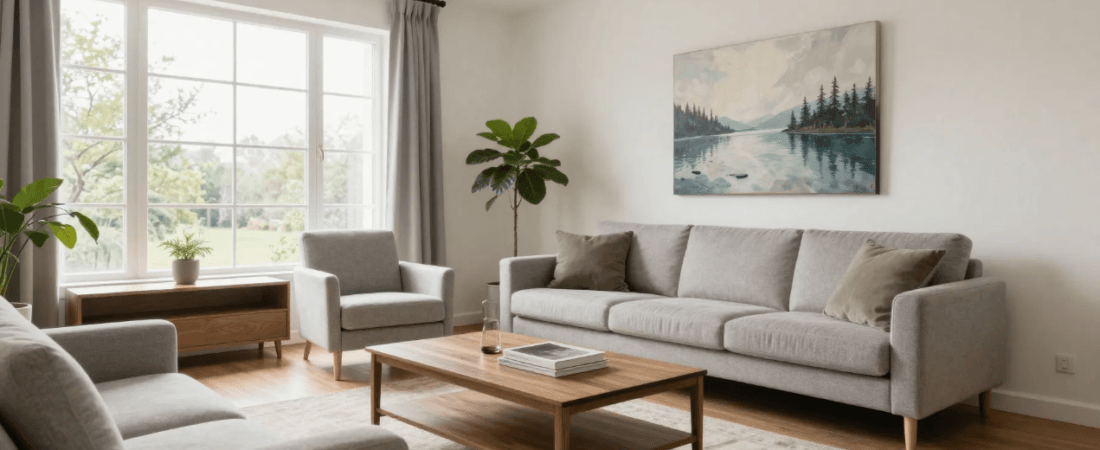
Creating a functional and stylish living room in a long, narrow rectangular space or a tiny home can be a real challenge, especially when searching for rectangle living room ideas that truly work. This guide is for anyone struggling with a long, narrow, or tiny rectangular living room. Most people face unique traffic flow issues, limited width, and awkward proportions that make furniture placement and decor choices tricky. A well-designed rectangular living room can dramatically improve comfort, functionality, and style in your home. This comprehensive guide provides expert advice and practical strategies for designing a rectangular living room, ensuring you can transform these spaces into cozy, inviting, and highly functional areas that fit your lifestyle perfectly.
This post targets long rectangle living rooms and tiny home layouts, focusing on practical solutions and creative ideas to make the most of these challenging shapes. Creating a comfortable and visually appealing rectangular living room involves more than just placing furniture and hanging artwork. We’ll explore common problems such as narrow traffic paths and lack of focal points, and discuss how zoning and thoughtful furniture placement can turn your rectangular room into a well-balanced, beautiful space. A thoughtfully designed room feels complete and satisfying, making your living area both functional and visually appealing.
Introduction: Long Rectangle Living Room Challenges
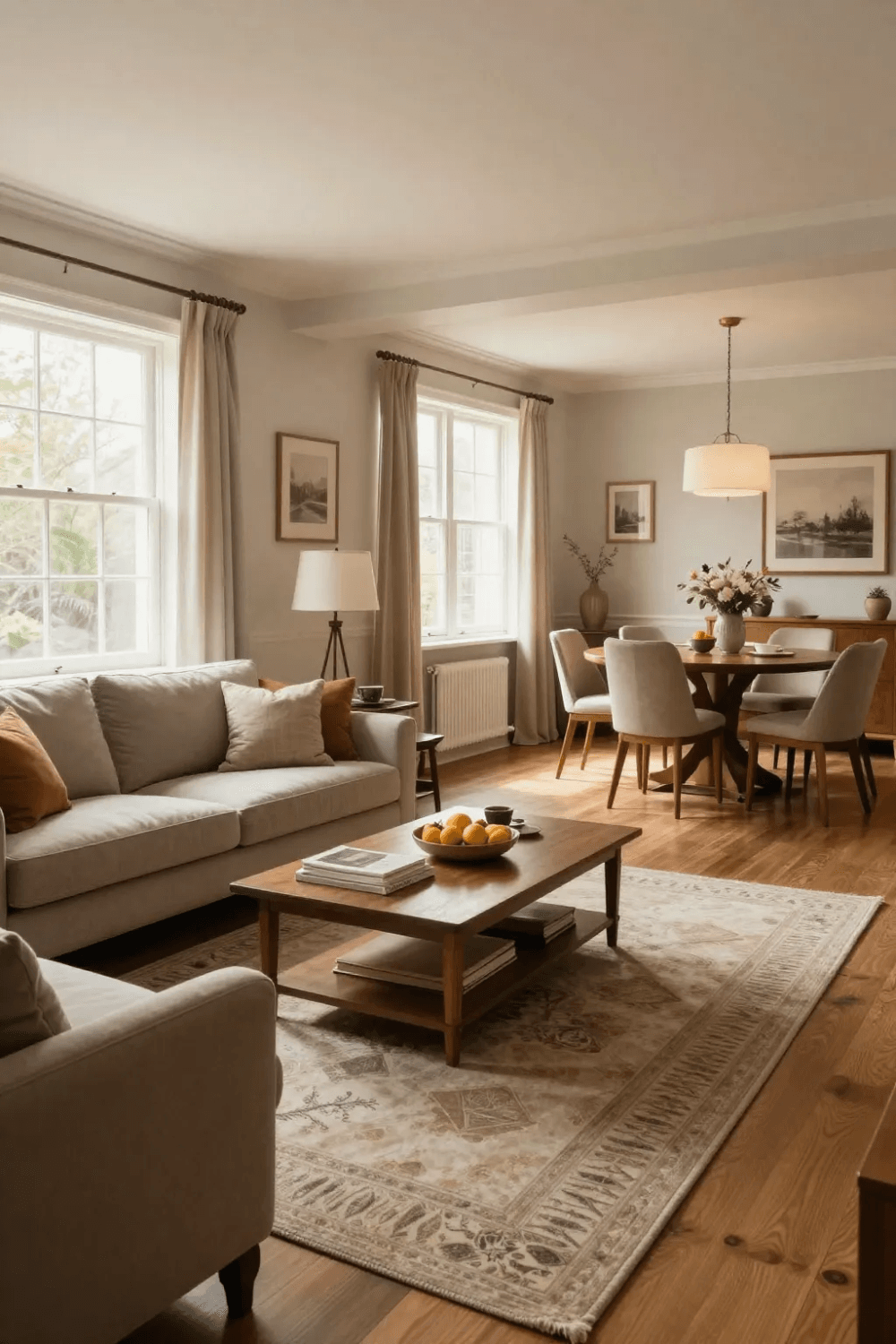
Long rectangular rooms often suffer from traffic flow issues where narrow walkways and multiple entry points can make movement awkward. The length can make the space feel like a corridor rather than a room, and poor window or door placement can limit natural light and furniture options. Without clear zoning or focal points, these rooms risk feeling empty, uninviting, or cluttered. Zoning means breaking a long rectangular living room into separate areas, which can make it feel cozier and more functional. The good news is that by defining the function of your room, breaking it into different zones, and carefully considering furniture layout, you can create a cozy and functional living space. Layered lighting, statement rugs, and strategic decor choices further enhance the ambiance and visual appeal.
Assessing the Room’s Layout
Identify Entry Points and Windows
Before diving into decor and furniture choices, take a close look at your rectangular living room’s layout. Start by noting the position of doors, windows, and any standout architectural features like fireplaces or French doors. These elements play a big role in how you’ll arrange your furniture and create a functional flow through the space.
Visualize Layout Options
In a long rectangular living room, it’s especially important to balance the length of the room with smart furniture placement, so the space doesn’t feel like a narrow hallway. Try sketching out different layouts or using online room planners to visualize how your rectangular room could look with various arrangements. If you’re feeling stuck, consulting a design professional can help you unlock the full potential of your living room, ensuring every inch is used effectively and beautifully.
Defining the Room’s Purpose
Determine Main Functions
Every great rectangular living room starts with a clear sense of purpose. Think about how you want to use the space: Is it mainly for relaxing and watching TV, entertaining guests, dining, or maybe even working from home?
Create Separate Zones
In a long rectangular living room, defining the main function—or even splitting the room into two zones—can make all the difference. For example, you might dedicate one end of the room to a cozy seating area and the other to a dining space or a small home office. Let the intended use of each zone guide your layout and furniture choices, so every part of the room feels intentional and functional. By focusing on your household’s needs and lifestyle, you’ll create a living room that’s not only beautiful but also perfectly suited to real life.
10 Rectangle Living Room Ideas to Transform Your Space
Embrace Different Zones to Break Up the Space
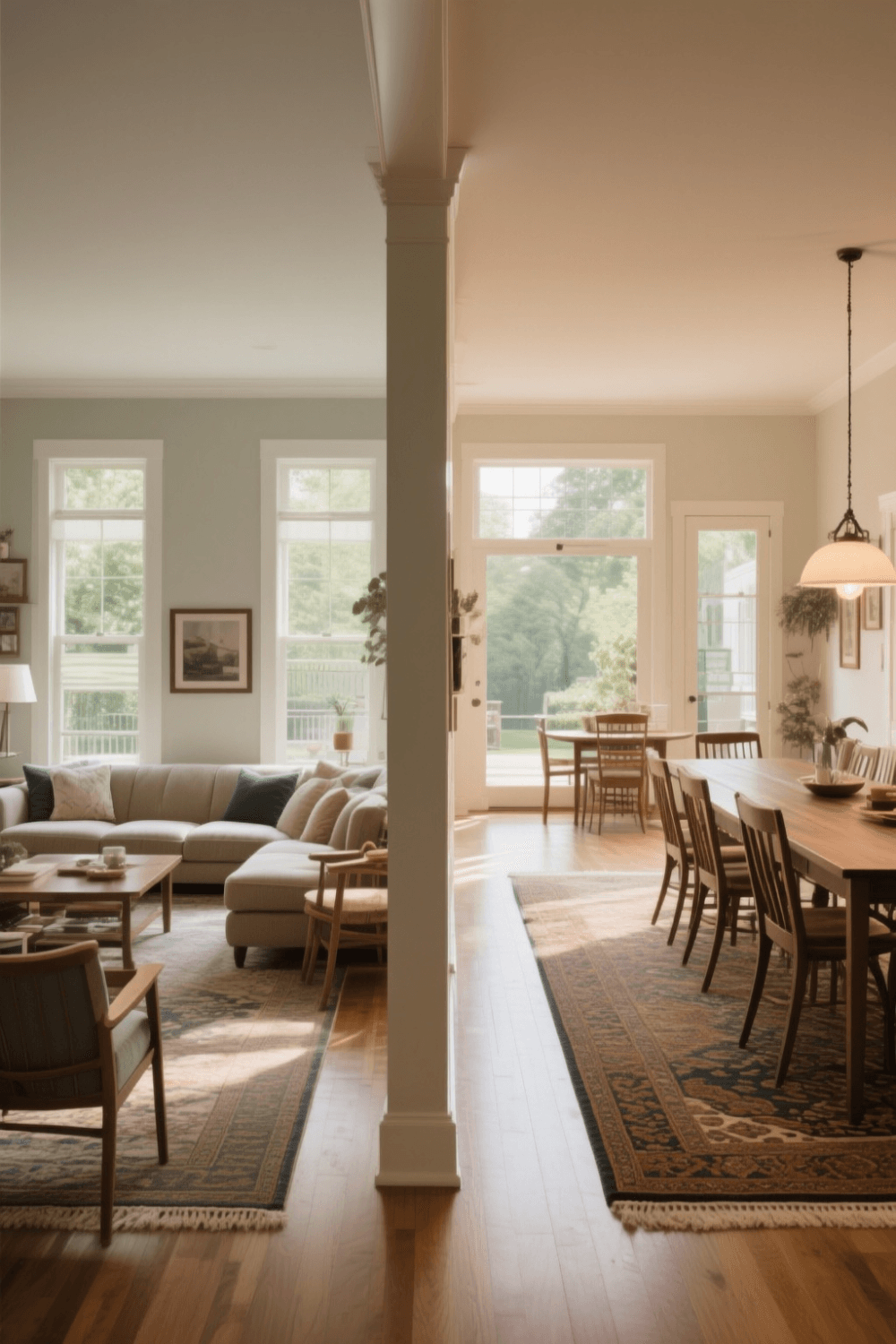
Dividing your long rectangular living room into two zones can create a sense of intimacy and purpose. For example, designate one area as the main seating or living zone with sofas and chairs, and the other as a dining room, reading nook, or workspace. Use rugs to visually separate these zones and arrange furniture to support the function of each.
Float Furniture Away from Walls
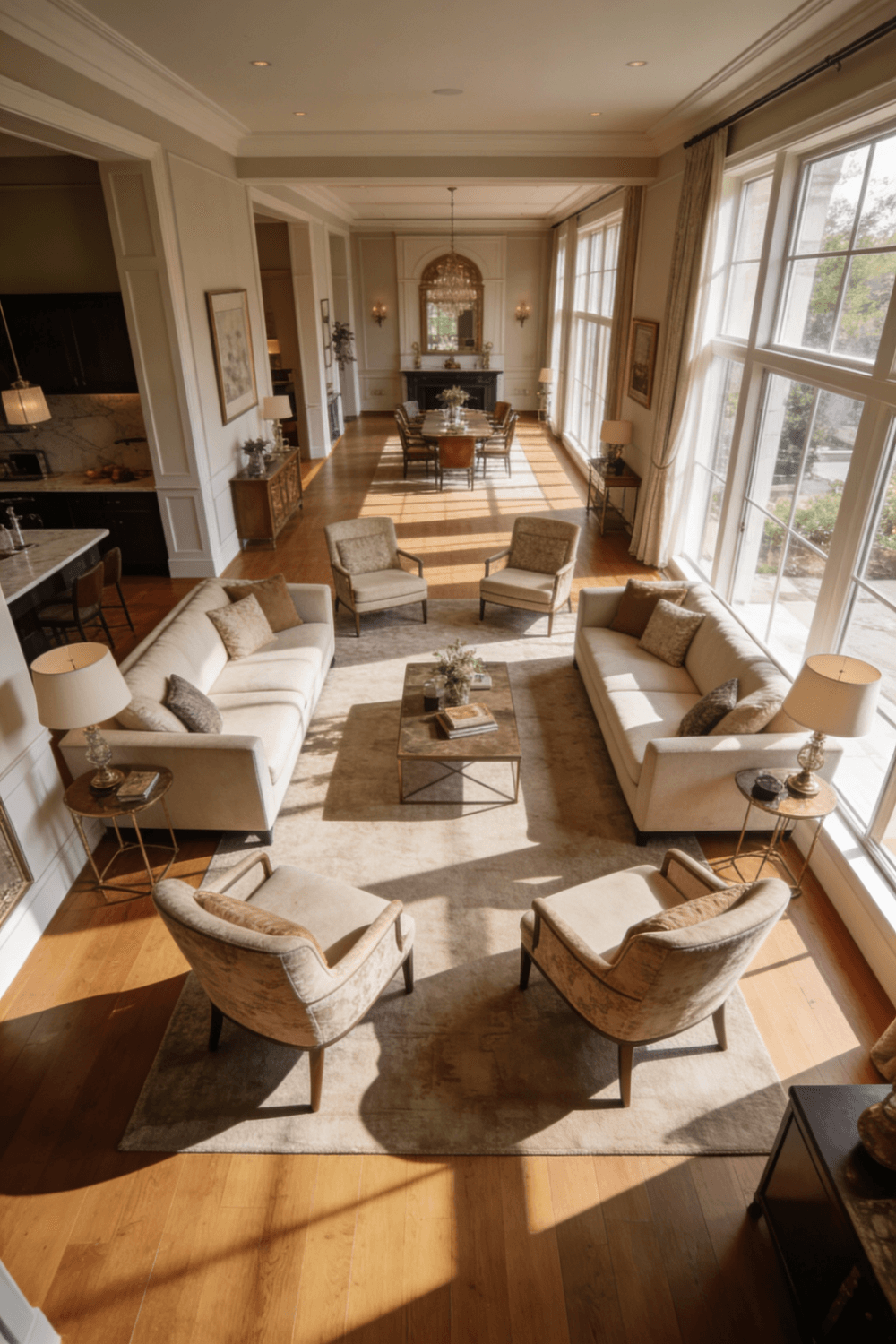
Instead of pushing all furniture, such as your couch and chairs, against the long walls, try floating them slightly inward. This opens up pathways along the edges and creates a clear walk path through the room, making the conversation area in the middle more inviting. It also helps break the “tunnel” effect common in long rooms.
Use Narrow-Profile Sofas and Chairs
Choose slim, narrow-profile sofas and chairs that don’t overwhelm the limited width of the room. Alternatively, consider using a sectional—especially an L-shaped sectional—placed in a corner to maximize seating without occupying excessive floor space. Furniture with slim legs and low backs maintains sightlines and keeps the room feeling airy, which is especially important in smaller or narrow spaces.
Create a Strong Focal Point
Placing the focal point at the center of the room can help create balance and symmetry. A focal point is a feature such as a fireplace, large artwork, or TV that anchors the space and provides a sense of purpose. Whether it’s a fireplace, a large piece of artwork, or a TV mounted on a short wall, having one clear focal point helps anchor the space and gives the room a sense of purpose. Arrange seating to face the focal point and avoid scattering furniture in a way that feels unbalanced.
Layer Your Lighting
Combine overhead lighting with floor lamps, table lamps, and wall sconces to create layers of light that add warmth and dimension. Layered lighting also helps define different zones and ensures the entire room is well-lit without harsh shadows.
Use Horizontal Rugs to Shorten Visual Length
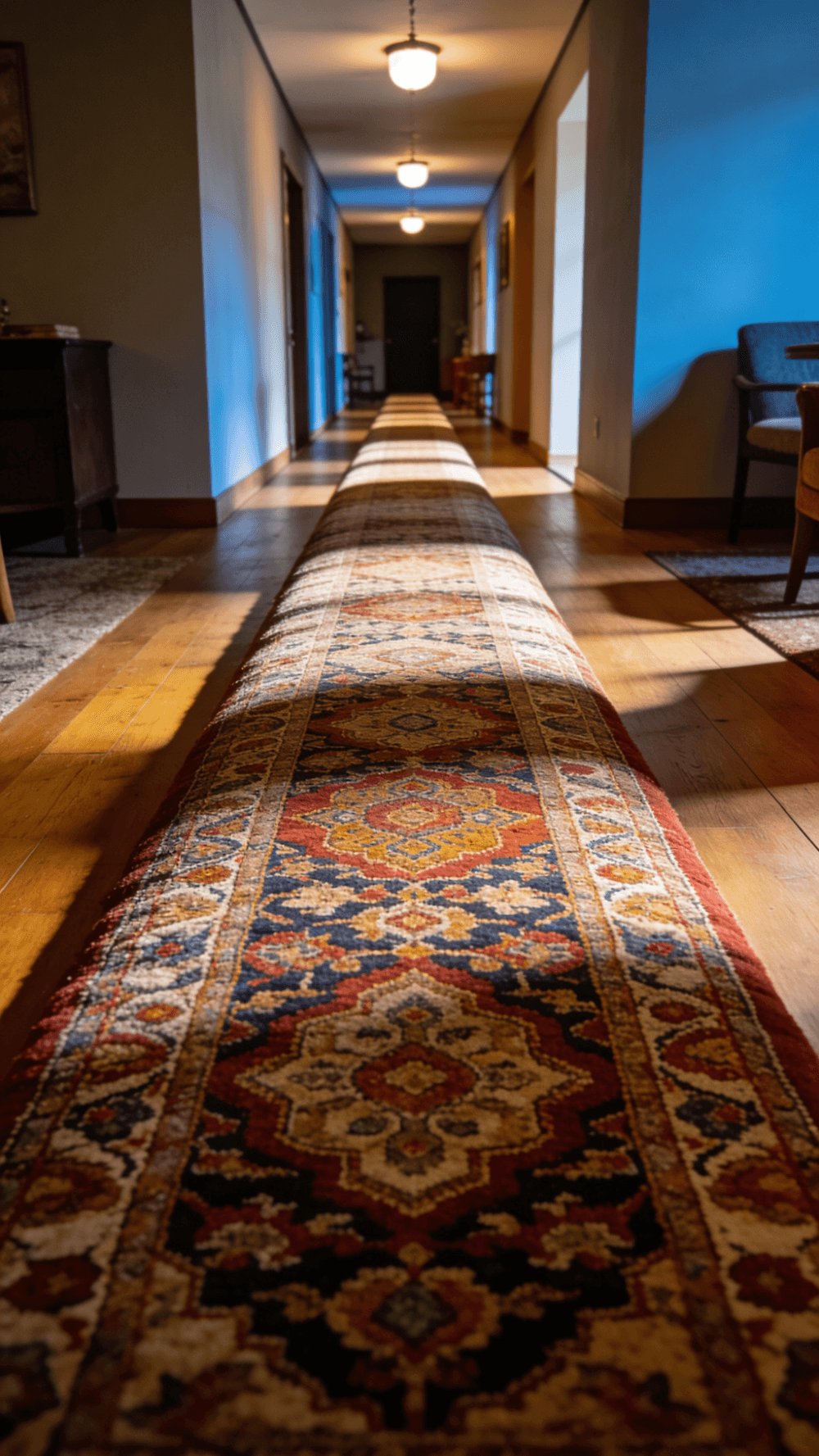
A large horizontal rug placed across the width of the room can visually shorten the length of the space. This helps prevent the room from feeling like a long corridor and adds texture and color to the floor area.
Incorporate Vertical Storage
Tall bookshelves or wall-mounted shelves take advantage of vertical space, freeing up floor space and drawing the eye upward. This adds interest and storage without crowding the room.
Opt for Multipurpose Furniture in Tiny Homes
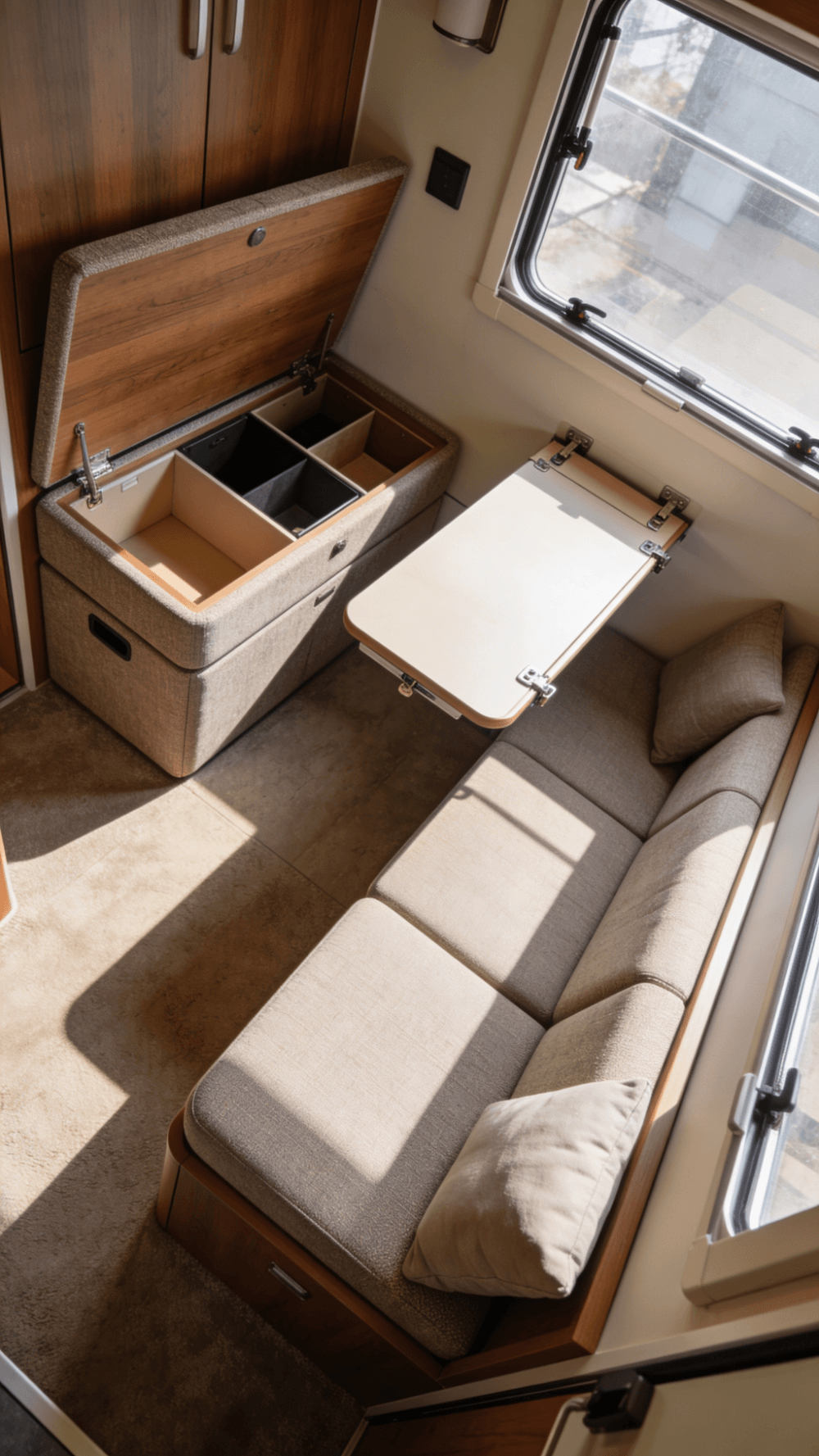
In tiny house living rooms, furniture that serves multiple functions is a must. Storage ottomans, fold-out tables, and slim-profile sectionals that fit into corners maximize utility without sacrificing style.
Use Mirrors to Amplify Natural Light
Mirrors placed opposite windows or doors reflect natural light and make the room feel brighter and more spacious. This trick is especially helpful in long rooms where light may not reach every corner.
Keep Walkways Clear and Define Circulation Paths
Plan furniture placement so that walkways are clear and logical. Keeping the right side of the room open can help with flow and make movement easier. The other side of the room can be used for a different zone or function, such as a reading nook or workspace. Avoid blocking primary traffic flow with large sofas or oversized coffee tables. Using round coffee tables can help soften the harsh lines of a rectangular room. Clear circulation paths make the room feel more open and comfortable for real life activities.
Incorporating a Dining Area
Choose the Right Table
Adding a dining area to a rectangular living room is a smart way to maximize your space, especially in long, narrow, or tiny homes. The key is to choose a dining table that fits the scale of your rectangular room—avoid oversized tables that can overwhelm the space.
Position for Light and Flow
Positioning the dining table near a window is a great way to take advantage of natural light, making the dining zone feel open and inviting. For small-scale or narrow rooms, consider a round table, which allows for easier movement and creates a more intimate dining experience.
Maximize Functionality
Multi-functional furniture, like storage benches or tables with built-in storage, can help keep the area tidy and functional. With thoughtful planning, your dining area can be both stylish and practical, seamlessly blending with the rest of your living room.
Color Schemes for Rectangle Living Rooms
Light Colors for Spaciousness
The right color scheme can completely transform the look and feel of a rectangular living room. Lighter shades—think soft whites, gentle grays, or warm beiges—can make a narrow room feel wider and more open, especially when paired with plenty of natural light.
Accent Walls and Pops of Color
If you’re after a cozier vibe, don’t be afraid to experiment with deeper hues on an accent wall or through your decor. Neutral palettes are always a safe bet, as they reflect light and create a sense of spaciousness, but adding pops of color through furniture or accessories can bring personality to the space.
Consider Light and Mood
When choosing your colors, consider how much natural light the room gets, the tones of your furniture, and the mood you want to create. A well-chosen color scheme will enhance your living room’s style and make it a welcoming retreat for family and friends.
Adding Texture and Pattern
Layer Textures for Depth
Texture and pattern are your secret weapons for making a rectangular living room feel warm, inviting, and full of character. Layering different textures—like a plush rug, a sleek leather sofa, and soft throw pillows—adds depth and coziness to the space.
Use Patterns to Break Up Length
Patterns, whether on rugs, cushions, or wall art, can help break up the length of a long room and draw the eye around the space. The key is to mix and match thoughtfully: stick to a few complementary textures and patterns to keep the look cohesive and avoid visual clutter.
Balance for Style and Function
For example, a natural fiber rug can ground the room, while a velvet sofa adds a touch of luxury, and a patterned throw or gallery wall brings in personality. With the right balance, your living room will feel both stylish and functional, perfect for relaxing or entertaining in any season.