
Finding the right place to live often comes down to a simple question: how much space do you actually need? For millions of people in cities like London, Los Angeles, and Sydney, the answer is leading them toward self contained housing—compact, independent dwellings that offer everything you need without paying for square footage you don’t use.
This guide breaks down what self contained housing actually means, who it works best for, and how to find or create your own self contained home.
- What Is Self Contained Housing?
- Why People Choose Self Contained Housing
- Key Features of a Self Contained Home
- Types of Self Contained Housing
- Self Contained Housing vs. Shared and Non-Self-Contained Options
- Benefits of Self Contained Housing
- Designing Self Contained Units for Comfort and Accessibility
- Planning, Zoning, and Legal Considerations
- Costs, Financing, and Affordability
- Who Self Contained Housing Works Best For
- How to Find or Create a Self Contained Home
- Future of Self Contained Housing
- Key Takeaways
What Is Self Contained Housing?
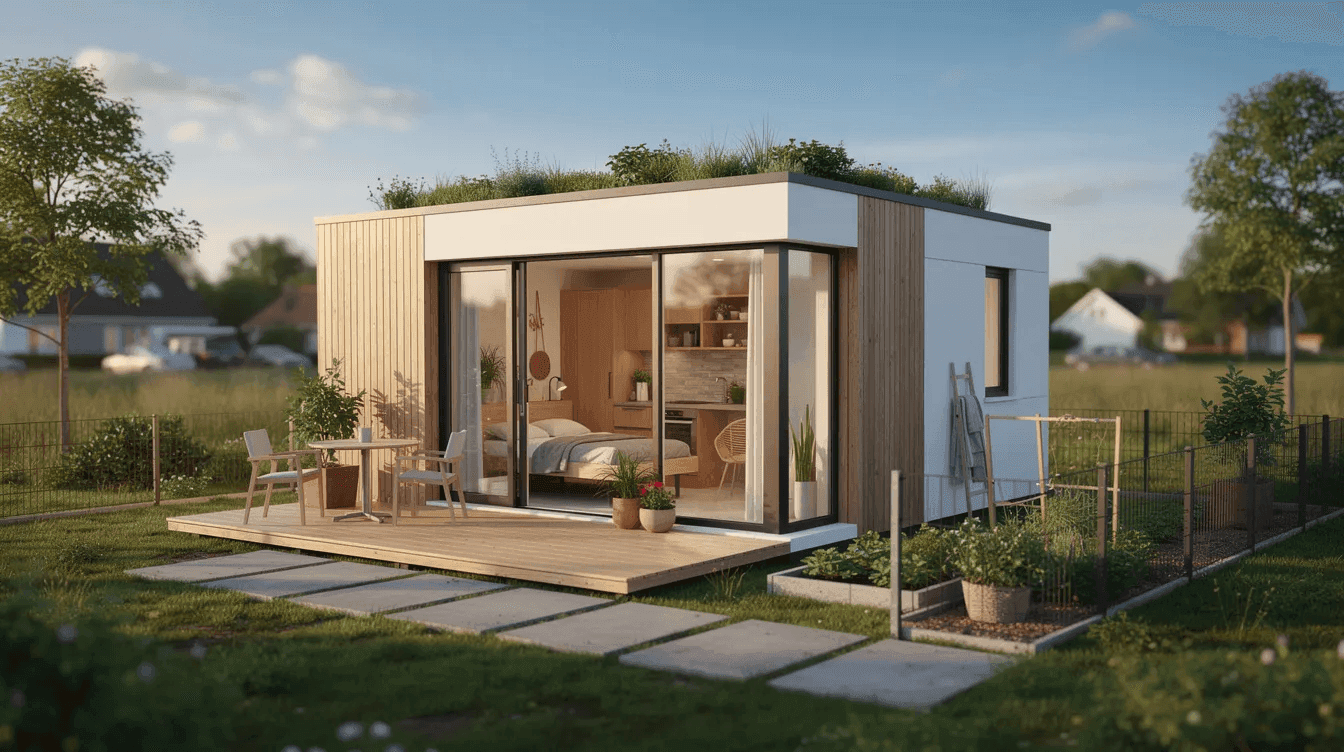
Self contained housing refers to a dwelling unit designed for complete independence. A self contained home includes its own private entrance, bathroom, kitchen facilities, and sleeping area—all within the unit’s boundaries. Residents don’t share essential amenities with other households.
This type of accommodation can take many forms: a studio apartment, one-bedroom flat, backyard accessory dwelling unit (ADU), modular unit, or small house. Most self contained units range from about 250 to 700 square feet, depending on local standards and building codes.
The key distinction is what you don’t share. Unlike rooms in house shares, co-living spaces, single room occupancy buildings, hostels, or student halls with shared kitchens and a shared bathroom, self contained dwellings give you exclusive access to all essential facilities.
Here’s what defines a self contained unit:
- Private entrance that doesn’t require passing through another household’s space
- Complete kitchen with cooking facilities, sink, refrigerator, and food preparation area
- Private bathroom with toilet, basin, and shower or bath
- Dedicated sleeping and living space within the unit
- Independence from shared facilities for daily living needs
Many local governments explicitly define “self contained accommodation” for regulatory and subsidy purposes. In the UK, post-2010 local council guidelines for housing benefits specify minimum requirements including exclusive entrance, fully equipped kitchen, and private bathroom. In the US, zoning codes updated after 2016 ADU reforms in states like California (AB 2299, AB 68, SB 13) and Oregon (HB 2001) recognize self contained accessory dwelling units as separate living quarters with independent utilities and full facilities.
Why People Choose Self Contained Housing
The appeal of self contained housing comes down to four factors: privacy, autonomy, affordability, and flexibility—all delivered in a small footprint that’s easier to maintain and pay for.
- Privacy and independence matter most for singles, couples, students, and seniors who want their own bathroom, kitchen, and front door without negotiating schedules or cleanliness standards with housemates.
- Affordability compared with larger apartments makes self contained units attractive in high-cost urban areas. In London, a self contained studio typically rents for £1,200-£1,800 per month compared with £2,500+ for a two-bedroom flat. In Los Angeles, ADU rents run $1,800-$2,500 versus $3,500 for standard apartments.
- Young professionals benefit from proximity to employment hubs without paying for space they rarely use.
- People downsizing after children move out can reduce maintenance, costs, and cleaning while keeping full independence.
- Retirees seeking low-maintenance living appreciate smaller spaces that don’t require climbing stairs or managing large gardens.
- Key workers in health care and other essential services can live close to hospitals and workplaces without committing to expensive family-sized accommodation.
- Vulnerable groups exiting homelessness or institutional care benefit from secure, private space with supportive services nearby. UK data shows 70% retention rates in private self contained studios versus 40% in hostels for people transitioning out of homelessness.
- Families with aging parents can house relatives in backyard ADUs, maintaining social interaction and access while preserving everyone’s independence.
Key Features of a Self Contained Home
Any unit described as “self contained” should reliably include specific features. When you’re viewing properties or planning to build, use this checklist to verify the dwelling meets the standard.
Private Entrance
A self contained home needs its own entrance that doesn’t require passing through another household’s living space. This might be:
- A dedicated front door opening directly to the street
- A separate entry off a shared hallway with a lockable door
- A side gate leading through a garden to a detached ADU
- An exterior staircase to an over-garage apartment
Kitchen Facilities
The unit must have its own cooking area including:
- Cooking hob (stovetop) with at least two burners
- Sink with hot and cold running water
- Refrigerator or fridge-freezer
- Adequate worktop space for food preparation
- Storage cupboards for food and cookware
Compact kitchenettes qualify as long as they’re functional and meet local building codes. The key is that residents can prepare complete meals without accessing shared facilities.
Bathroom
A self contained unit requires an internal bathroom with:
- Toilet
- Basin (sink) with hot and cold water
- Shower or bathtub
This bathroom must not be shared with other households on the property.
Sleeping and Living Space
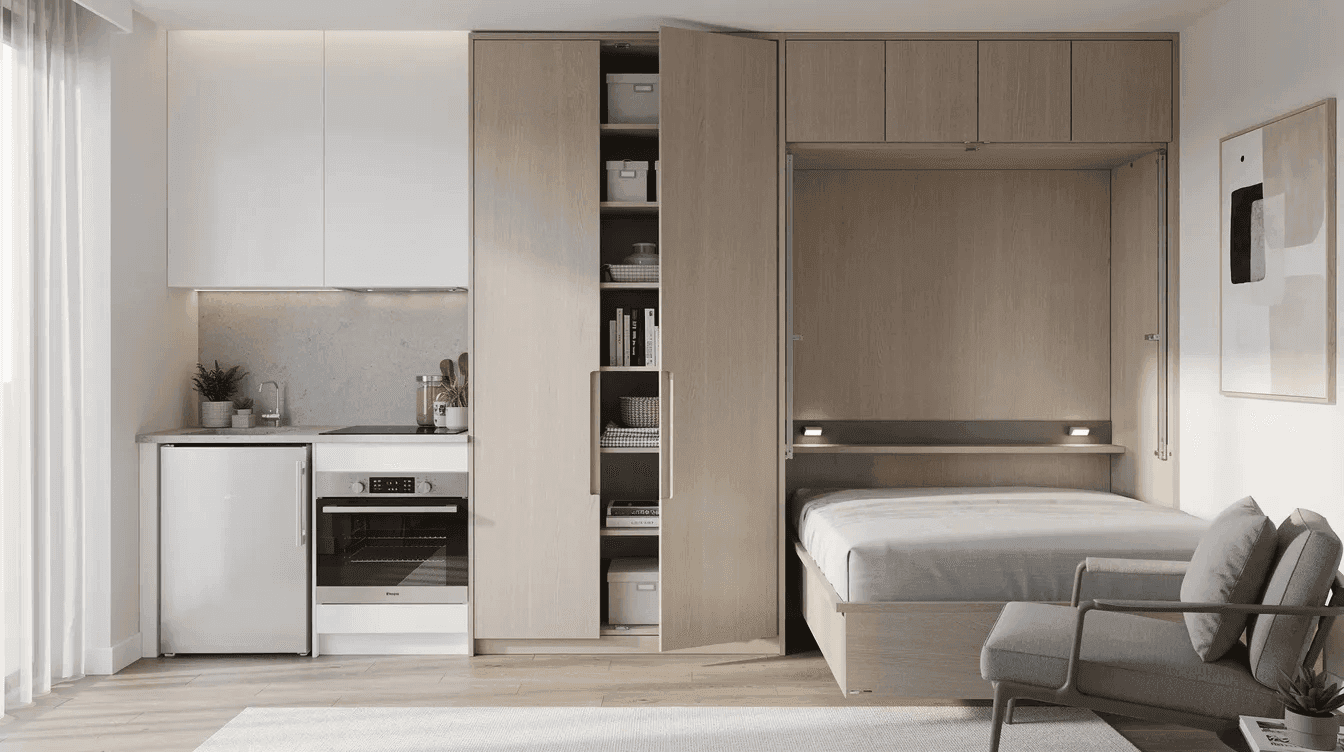
Studio self contained units combine living and sleeping areas in a single room, often using Murphy beds, sofa beds, or lofted sleeping platforms to maximize floor space, much like well-planned tiny house floor plans that work for you. One-bedroom self contained flats offer a separate bedroom, providing extra privacy and the ability to close off sleeping areas.
Utilities and Controls
Well-designed self contained units include:
- Separate or sub-metered electricity, water, and gas connections
- Individual thermostats for heating and cooling
- Dedicated circuit breaker panel or clearly marked circuits
- Independent water heater or clearly allocated hot water supply
These features let residents manage their own comfort and bills without relying on or subsidizing other households.
Storage and Laundry
Minimum practical storage includes:
- Wardrobe or closet space for clothing
- Kitchen cupboards for food and equipment
- General storage cupboard or shelving
- In-unit washer-dryer or dedicated laundry hookups in a private area
Types of Self Contained Housing
Self contained homes come in many physical forms, from micro-apartments in dense city centers to backyard cottages in suburban neighborhoods. The right form depends on location, budget, and how the unit will be used.
Self Contained Studios and Micro-Apartments
These units typically measure under 400 square feet and are located in urban areas where land costs are high, appealing to people interested in exploring the world of tiny houses and minimalist urban living. Cities like Seattle legalized micro-apartments as small as 220 square feet in 2012, and now has over 5,000 such units. London permits self contained studios under 50 square meters through permitted development rights.
These apartments use space-saving layouts including:
- Murphy beds or wall beds
- Sliding partitions between zones
- Lofted sleeping platforms
- Fold-down tables and multi-purpose furniture
Seattle’s Yesler Terrace development added 300 self contained micro-apartments between 2016-2020, maintaining 98% occupancy for low-income workers and participants in housing programs.
Accessory Dwelling Units and Backyard Cottages
ADUs are secondary self contained units built on the same property as a primary home, and many homeowners use them as a way to generate rental income or house family members as outlined in the ultimate guide to accessory dwelling units. They come in three main forms:
- Detached ADUs: Standalone structures in backyards or side yards
- Attached ADUs: Units connected to the main house but with separate entrances
- Junior ADUs: Smaller units (under 500 square feet in California) converted from existing space within the main building
Zoning reforms in US states like California (2017-2023) dramatically expanded where ADUs are eligible for construction. California added approximately 25,000 ADU units statewide in 2023 alone, housing seniors, young adults, and families at rents averaging 30% below market rates.
Modular and Factory-Built Units
Modular construction produces self contained homes in factory settings before transporting them to prepared sites, often delivered by specialized micro house builders focused on quality and affordability. Examples include:
- One-bedroom modular homes (400-800 square feet)
- Prefab pods designed for backyard installation
- Manufactured homes on permanent foundations
- Tiny houses built on foundations rather than wheels
Companies like Boxabl produce self contained units as small as 361 square feet for around $50,000 base price, with assembly taking as little as one hour on site, similar in spirit to many tiny house designs for modern living that prioritize efficiency and smart use of space.
Self Contained Supported Housing
Councils, housing associations, and nonprofits develop self contained units for people with special needs or support requirements. These projects combine private dwellings with on-site or visiting services including case management, health care coordination, and life skills assistance.
A 2022 modular development in Bristol created 32 self contained flats for people exiting homelessness, with each unit having private facilities while staff provide supportive services on-site.
Self Contained Housing vs. Shared and Non-Self-Contained Options
Understanding contrasts between housing types helps you decide if self contained living suits your budget and lifestyle.
Feature | Self Contained | House Share/HMO | SRO/Boarding | Co-Living |
|---|---|---|---|---|
Private bathroom | Yes | No | Usually no | Sometimes |
Private kitchen | Yes | No | No | No |
Private entrance | Yes | Sometimes | Sometimes | Sometimes |
Typical cost | Higher | Lower | Lowest | Medium |
Privacy level | High | Low | Low-Medium | Medium |
Lease control | Full | Partial | Limited | Varies |
House Shares, Co-Living, and HMOs |
In house shares and houses in multiple occupation (HMOs), residents have private bedrooms but share kitchens and bathrooms. UK licensing requires properties with three or more unrelated tenants sharing facilities to meet HMO standards. Rents are typically 20-30% lower than self contained alternatives, but you sacrifice control over shared spaces.
Single Room Occupancy and Boarding Houses
SROs and boarding houses offer private rooms with shared bathroom and kitchen facilities. NYC’s SRO regulations cap room sizes at 400 square feet. These options serve the market between hostels and self contained apartments, often at $800-$1,200 per month versus $1,800+ for self contained studios in the same city.
Student Housing and Hostels
Many “private rooms” in student halls or hostels don’t qualify as self contained because residents share essential amenities. Even when bedrooms are private, shared kitchens and bathrooms mean you’re not in a self contained dwelling.
Trade-offs to Consider
Self contained units typically cost 25-50% more per person than shared alternatives. However, surveys conducted during COVID-19 showed 60% of UK renters actively avoided shared housing due to hygiene concerns. Self contained tenants also experience:
- 15% lower eviction rates
- Better control over noise and schedules
- Greater long-term stability
- More predictable utility costs
Verification Tips
When searching for housing:
- Check lease documents for explicit “self contained” language
- Ask about planning permissions and building approvals
- Verify that kitchen and bathroom are within the unit, not down a hallway
- Confirm whether utilities are separately metered
- Request council tax band information (self contained units are banded A-C, not single-person discount properties)
Benefits of Self Contained Housing
The benefits of self contained housing connect directly to quality of life, stability, and long-term affordability when units are well designed.
Privacy and Dignity
Having your own bathroom and kitchen supports personal routines, cultural food preferences, and boundaries. One UK study participant explained: “Own kitchen means cooking halal without compromise.” This autonomy matters for people from diverse backgrounds, those with specific dietary needs, and anyone who values controlling their living environment.
Safety and Security
Lockable private entrances let residents control who enters their space. Self contained accommodation reduces exposure to:
- Conflicts over shared kitchen cleanliness
- Disagreements about bathroom schedules
- Theft from communal areas
- Unwanted guests brought by housemates
UK crime data indicates burglary rates are 40% lower in self contained flats compared with rooms in shared houses.
Health and Hygiene
Fewer people sharing facilities means reduced issues with cleanliness, mold from poor ventilation, and disease transmission. CDC guidance during pandemic outbreaks emphasized that shared bathrooms and kitchens increase contagion risk. Private facilities in self contained units eliminate this concern.
Energy Efficiency
Compact, well-insulated self contained homes can use 50% less energy than larger dwellings according to US Department of Energy data. Benefits include:
- Lower heating and cooling bills (20-30% reduction in utility costs)
- Smaller carbon footprint per person
- Easier temperature management with individual controls
- Qualification for energy efficiency programs and incentives
Stability and Outcomes
For families and individuals leaving homelessness, temporary shelters, or institutional settings, self contained flats provide crucial stability. HUD Continuum of Care data shows self contained alternatives improve housing retention by 50% compared with non-self-contained options. Permanent housing in a self contained unit provides the foundation for employment, education, and community connection.
Designing Self Contained Units for Comfort and Accessibility
Good design helps small homes feel spacious, safe, and usable for people of many ages and abilities. Poor design makes compact living frustrating.
Minimum Floor Areas
Local guidelines establish minimums that ensure livability:
- Studios: 250-300 square feet (around 37 square meters under pre-2018 UK standards)
- One-bedroom units: 400-500 square feet
- Bedrooms: minimum 70 square feet of floor area
These minimums allow for essential furniture, circulation space, and daily activities.
Open-Plan Layouts
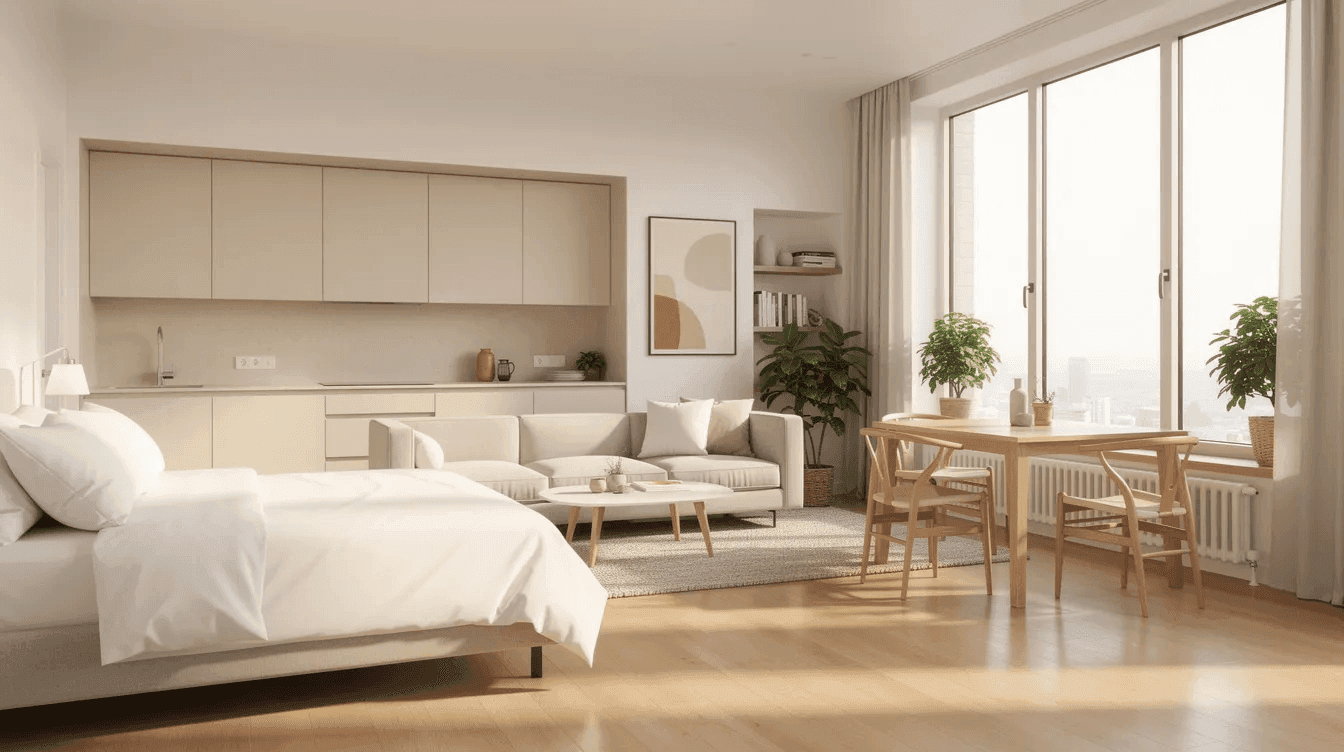
Combining kitchen, dining, and living spaces creates flexibility and makes units feel larger. Design strategies include:
- Ceilings of 9-10 feet where possible
- Large windows providing natural light (ASHRAE recommends 10-15% of floor area)
- Clerestory windows in tight spaces
- Minimal internal walls and partitions
- Visual continuity through consistent flooring
Accessibility Features
Self contained units can serve residents with mobility limitations when designed with:
- Step-free entrances (no threshold higher than ½ inch)
- Door widths of 36 inches (915mm) clear opening
- Lever handles instead of knobs
- Bathroom layouts adaptable for grab bars
- 60-inch turning radius in bathroom and kitchen
- Accessible electrical outlets at 18-44 inches from floor
Multi-Functional Elements
Small spaces work when furniture and fixtures serve multiple purposes:
- Murphy beds or wall beds that fold away during daytime
- Sofa beds for guests or flexible sleeping arrangements
- Fold-down dining tables mounted to walls
- Storage ottomans and benches
- Lofted sleeping platforms with storage or workspace below
Acoustic Insulation
Privacy requires sound separation. UK Part E standards mandate 45 dB reduction between dwellings. This means:
- Sound-rated walls (STC 50 rating minimum) between units
- Acoustic insulation in floors when units are stacked
- Solid-core doors to reduce sound transmission
- Careful placement of bathrooms and kitchens away from neighboring bedrooms
Planning, Zoning, and Legal Considerations
Regulations for self contained housing are highly local and must be checked before building, converting, or renting. What’s permitted in one city may be prohibited in the next neighborhood.
Planning and Zoning Rules
Typical regulations covering self contained units include:
- Minimum lot sizes for adding ADUs
- Maximum ADU sizes (California allows up to 1,200 square feet)
- Setback requirements from property lines (often 4-5 feet minimum)
- Height restrictions for detached structures
- Parking requirements (increasingly waived in transit zones)
- Limits on number of units per property
- Owner-occupancy requirements (being phased out in many areas)
Recent Zoning Reforms
Many cities updated zoning between 2015-2023 to address housing shortages:
- California’s SB 897 (2023) streamlined ADU approvals and increased height allowances
- Oregon’s HB 2001 (2019) required cities to allow ADUs statewide
- Many cities eliminated parking minimums for ADUs near transit
- Lot coverage limits have been relaxed to allow larger accessory structures
Building Code Requirements
Official inspectors will verify:
- Fire safety: Smoke and carbon monoxide alarms (NFPA 72 standards), egress windows (minimum 5.7 square feet operable area per US IBC)
- Ventilation: Natural light equivalent to 8% of floor area (IRC R303.5.1), permanent ventilation openings (UK requires 100 cm² per habitable room)
- Insulation: Minimum R-values for walls, ceiling, and floors
- Electrical: Proper outlet placement, GFCI protection in kitchens and bathrooms
- Plumbing: Code-compliant fixtures and connections
- Minimum room sizes: Based on local habitable room standards
Landlord and Tenant Requirements
Renting a self contained unit requires:
- Written lease agreement specifying “self contained” accommodation
- Safety certificates (gas safety, electrical installation condition reports where applicable)
- Energy performance certificates (UK requires EPC rating of C or better for new tenancies)
- Registration or licensing in jurisdictions that require landlord registration
- Compliance with habitability standards
Getting Help
Before starting any development project:
- Contact your local council, municipality, or housing department for current rules
- Consult a planning professional familiar with ADU and small dwelling regulations
- Work with architects experienced in compact housing design
- Verify utility connection requirements and costs with local agencies
Costs, Financing, and Affordability
Self contained units can be more affordable than large homes but still require careful budgeting for construction or rent. Understanding the numbers helps you plan realistically.
Upfront Construction Costs
Building a new self contained unit involves several cost categories:
Cost Category | Typical Range |
|---|---|
Design and permits | $5,000-$15,000 |
Site preparation | $5,000-$25,000 |
Construction (per sq ft) | $150-$400 |
Utility connections | $5,000-$30,000 |
Interior finishes | $10,000-$30,000 |
A modest-cost modular self contained unit of 600 square feet might run $150,000-$200,000 total, while traditional site-built construction could reach $250,000-$300,000 for similar size. |
Modular vs. Site-Built
Modular construction typically costs 10-20% less than traditional building methods and offers faster completion. A 361 square foot prefab unit might start at $50,000 for the structure itself, plus site work and installation.
Rental Cost Comparisons
Self contained units typically rent for:
- 25-40% more than a room in a house share
- 20-40% less than a two-bedroom apartment in the same market
- Similar to or slightly below one-bedroom apartments with comparable amenities
Seattle micro-apartments rent for $1,500-$2,200 per month. Subsidized programs have achieved rents as low as $645 for income-eligible residents, and some regions such as Washington State also support compact living through small homes and tiny home communities that broaden affordable options.
Financing Options
Funding routes for self contained housing include:
- Personal savings for smaller projects
- Home equity loans (HELOCs) at 4-6% rates for homeowners adding ADUs
- ADU-specific loan products introduced by some lenders after 2019, including Fannie Mae 15-year terms
- Construction loans converting to permanent mortgages
- Conventional mortgages for purchasing existing self contained properties
Public and Nonprofit Programs
Some self contained units are part of affordable housing schemes backed by:
- Local government grants for ADU construction
- State financing programs supporting manufactured home communities and modular development
- Nonprofit funding for supportive housing projects
- Low-interest loans for housing serving income-eligible households
Example Investment Scenario
A homeowner builds a $250,000 backyard ADU and rents it for $2,200 per month. After property taxes, insurance, and maintenance:
- Annual net income: approximately $22,000
- Return on investment: 8-10 years to recoup construction costs
- Long-term benefit: Ongoing rental income plus property value increase
Who Self Contained Housing Works Best For
Matching housing types to life stages and needs helps you determine whether self contained living fits your situation.
Single Adults
Students and early-career workers benefit from self contained studios offering:
- Privacy in city centers near employment and education
- Lower costs than one-bedroom apartments
- Independence from housemate dynamics
- Short commutes reducing transportation costs
Self contained micro-apartments maintain 90%+ occupancy rates in urban areas, demonstrating strong demand from this group.
Couples Without Children
Well-planned studios or one-bedroom self contained units work for couples who:
- Prioritize location over space
- Plan to live in the unit for several years before expanding
- Value privacy over maximum square footage
- Want to save money for future housing or other goals
Older Relatives Seeking Independence
Self contained annexes or backyard ADUs allow older parents or relatives to:
- Live near family while maintaining independence
- Access assistance when needed without sacrificing privacy
- Reduce housing and maintenance costs
- Stay connected through proximity rather than shared living space
US Census data shows 30% growth in multigenerational living arrangements, with many families choosing self contained ADUs as the form of housing that preserves everyone’s autonomy.
People Exiting Homelessness or Institutions
For people leaving shelters, foster care, or institutional settings, a small self contained flat provides:
- Secure, permanent housing rather than transitional placement
- Private space supporting recovery and stability
- Access to supportive services without shared living complications
- A foundation for employment and self sufficiency
UK programs report that self contained units for this population achieve significantly better outcomes than hostel placements.
Limitations to Consider
Self contained housing may not work well for:
- Larger families needing more than 800 square feet
- People requiring extensive storage for hobbies or work
- Those with accessibility needs requiring ground-floor access or specific adaptations
- Anyone who prioritizes outdoor space, gardens, or land
- Children needing separate bedrooms as they grow
How to Find or Create a Self Contained Home
You can either rent or buy an existing self contained unit, or add and convert space into a self contained home on your property.
Searching for Existing Units
When looking at listings, search for keywords including:
- “Self contained studio”
- “Self contained annex”
- “Private kitchen and bathroom”
- “Detached ADU”
- “Granny flat”
- “Independent apartment”
Questions to ask agents or landlords:
- Are the kitchen and bathroom inside the unit, or shared?
- Does the unit have its own entrance?
- Are utilities separately metered?
- What planning permissions and building approvals exist?
- Is this properly registered as a self contained dwelling?
Viewing Checklist
During property viewings, verify:
- [ ] Private kitchen with cooking facilities, sink, and refrigerator
- [ ] Private bathroom with toilet, basin, and shower/bath
- [ ] Separate or lockable entrance
- [ ] Condition of plumbing (check water pressure, drainage)
- [ ] Electrical safety (look for recent EICR certificate)
- [ ] Separate utility meters or clear billing arrangement
- [ ] Building approval documentation
- [ ] Adequate ventilation and natural light
Creating a Self Contained Unit
Converting existing space (garage, basement, outbuilding) into self contained accommodation typically follows this process:
- Feasibility assessment: Evaluate structural condition, utility access, and minimum size requirements
- Planning consultation: Contact local planning department about permits required
- Design development: Work with an architect on layout, accessibility, and code compliance
- Permit application: Submit plans and wait for approval (typically 8-12 weeks)
- Construction: Build or renovate space (3-6 months for modular, longer for site-built)
- Inspections: Pass building, electrical, and plumbing inspections
- Utility connections: Complete separate metering and service connections
- Occupancy: Obtain certificate of occupancy and begin leasing or move-in
Professional Help
For best results, work with:
- Architects experienced in small-space and ADU design
- Builders familiar with local building codes for self contained units
- Planning consultants who know your jurisdiction’s specific requirements
- Real estate attorneys for lease development if renting
Future of Self Contained Housing
Rising housing costs, demographic shifts, and policy changes are driving growing interest in compact, self contained living across urban areas worldwide.
Modular Construction Trends
Factory-built self contained units are becoming mainstream. Industry projections suggest modular construction could represent 20% of the US ADU market by 2025. Benefits driving adoption include:
- Faster construction timelines (weeks versus months)
- More predictable costs
- Quality control in factory settings
- Reduced site disruption
- Growing financing options specifically for modular projects
Policy Initiatives
Governments at all levels are supporting self contained housing development through:
- Streamlined ADU permitting (California, Oregon, Washington since 2018-2024)
- Reduced or eliminated parking requirements in transit-rich areas
- Funding programs for accessory dwelling unit construction
- Adaptive reuse policies allowing office-to-residential conversions
- EU initiatives promoting compact urban housing
Environmental Considerations
Smaller, energy-efficient self contained units offer environmental benefits, especially when designed as self contained tiny homes for off-grid living with integrated energy and water systems:
- Lower per-person carbon footprints
- Reduced land consumption through infill development
- Solar-ready designs cutting energy use by 40% and integrating smart controls similar to tiny smart homes for efficient living
- Net-zero capable prefab pods entering the market
- Less material use in construction compared to larger homes
Demographic Drivers
Several population trends support continued growth in self contained housing:
- Aging baby boomers (25% increase in multigenerational households)
- Remote workers seeking affordable urban locations
- Young adults delaying homeownership
- Seniors preferring independent living near family
- Growing single-person households in cities
Looking Ahead
Projections suggest 50% of urban infill housing could be self contained units by 2030, driven by affordability pressures and sustainability goals. Whether as backyard ADUs, converted basements, modular pods, or micro-apartments, self contained housing offers a practical path to independent, affordable living.
Key Takeaways
- Self contained housing means a dwelling with its own private entrance, bathroom, kitchen, and sleeping area—not sharing essential facilities with other households.
- These units typically range from 250-700 square feet and suit singles, couples, downsizers, and people needing stable, independent accommodation.
- Key features include private entrance, complete kitchen, internal bathroom, sleeping/living space, and ideally separate utility controls.
- Types include micro-apartments, ADUs, modular homes, and supported housing developments.
- Benefits include privacy, security, health advantages, energy efficiency, and better stability outcomes.
- Costs run $150-400 per square foot to build, with rents 20-40% below larger apartments in the same market.
- Regulations vary locally—always verify planning permissions, building codes, and tenant law requirements before building or renting.
Whether you’re searching for a self contained studio in a city center or planning to build a backyard cottage for rental income or family use, understanding what makes housing truly self contained helps you make informed decisions. Start by researching your local regulations, assessing your needs, and connecting with professionals who specialize in compact, self sufficient living solutions.