
If you’re tired of looking at $420,000 median new-home prices and wondering how anyone affords a house anymore, you’re not alone. Small houses—those compact 800–1,200 sq ft homes—have become a practical path to ownership for buyers who want real square footage without the traditional mortgage burden. This guide breaks down exactly what small houses cost in 2026, from build methods to regional price swings, so you can make an informed decision.
- TL;DR: Small House Price In 2026
- What Counts As A Small House In 2026?
- How Much Does A Small House Cost To Build Or Buy?
- Small House Price Ranges By Size
- Small House Vs. Tiny House: Price And Lifestyle
- Detailed Small House Cost Breakdown
- Small House Price By Build Type
- Regional Small House Price Examples
- Ongoing Costs Beyond The Purchase Price
- Financing Options For Small Houses
- How To Save Money On A Small House Without Regretting It
- Is A Small House Worth The Price In 2026?
TL;DR: Small House Price In 2026
- Small house prices in the U.S. (800–1,200 sq ft) typically range from $160,000 to $320,000 in 2026, depending on location, construction method, and interior finishes.
- Most buyers see turnkey small homes around $220,000–$260,000 in mid-cost markets like Columbus, OH or Kansas City, MO.
- Tiny homes under 400 sq ft still often run $30,000–$150,000, but this article focuses mainly on small houses (roughly 600–1,500 sq ft) that qualify for standard financing.
- Rising median U.S. new-home prices (around $420,000+ in early 2026) are pushing interest toward smaller homes as a way to reduce total cost while still building equity.
What Counts As A Small House In 2026?
For this article, a small house means roughly 600–1,500 sq ft—clearly larger than a tiny house under 400 sq ft but smaller than traditional homes over 2,000 sq ft. This distinction matters because it affects everything from zoning to your financing options.
Many modern small homes fall in the 800–1,200 sq ft range, typically featuring 2-bed/1-bath or 2-bed/2-bath layouts. These can be single-story cottages, compact bungalows, or narrow-lot houses designed for urban infill.
- Small houses serve as primary residences, accessory dwelling units (ADUs), or downsizing options for retirees and single professionals seeking less space with lower overhead.
- Building codes treat small houses like standard homes, meaning you get access to traditional mortgages, FHA/VA/USDA loans, and conventional homeowners insurance—unlike mobile tiny homes on wheels that often face residential zoning hurdles.
- Historical data shows the median new single-family home size shrinking from 2,500 sq ft in 2010 to around 2,200 sq ft by 2025, making small houses increasingly mainstream.
How Much Does A Small House Cost To Build Or Buy?
The typical small house price to build or buy in 2026 ranges from about $160,000 to $320,000 for 800–1,200 sq ft, excluding unusually high-cost coastal markets. Costs vary widely based on your location, chosen materials, and labor availability in your region.
In 2026, a newly built 1,000 sq ft small home in Tulsa, Oklahoma might cost around $190,000–$230,000, while a similar home near Denver, Colorado could easily reach $280,000–$340,000. The difference comes down to land prices, local labor costs, and regulatory fees.
- Cost per square foot usually runs $200–$350 for modest small homes with standard finishes, and $350–$500 per sq ft for high-end or complex designs in premium markets.
- Buying an existing small home may be cheaper and faster in markets with good inventory—places like Columbus, OH offer turnkey small homes around $220,000–$260,000. New builds allow more customization but face 2024–2026 material and labor inflation that’s added 5–10% to lumber costs alone.
- Land cost is separate and can range from a few thousand dollars in rural Midwest to $200,000+ for a modest infill lot in coastal California or the Seattle metro.
Small House Price Ranges By Size
Size is a straightforward driver of total price, even though cost per square foot often drops slightly as size increases. Here’s what to expect across the typical small house range:
- 600–800 sq ft: Total cost typically $140,000–$220,000 in 2026. These are often one-bedroom cottages or studio-plus-loft layouts ideal for single occupants or couples.
- 800–1,000 sq ft: Price band around $160,000–$260,000. Common layouts include 2-bed/1-bath bungalows or starter ranches with enough room for a small family.
- 1,000–1,200 sq ft: Price band around $200,000–$320,000 with more flexible layouts—2–3 bedrooms, possibly 2 baths, and a small attached garage in some regions.
- In coastal metros like San Diego, Boston, or Seattle, even an 800–1,000 sq ft home can exceed $500,000 due to land and labor, while similar square footage in Des Moines or Birmingham may be around $200,000.
- These ranges assume standard stick-built or modular construction with mid-range finishes—not ultra-luxury materials or off-grid custom systems that would push costs higher.
Small House Vs. Tiny House: Price And Lifestyle
Small houses and tiny homes serve different needs, and the price comparison isn’t as simple as total cost. While tiny house prices typically run $30,000–$150,000+ in 2026, the cost per square foot is often significantly higher than small houses because of scaling inefficiencies in custom builds, so it’s worth considering whether a tiny house for sale is really right for you.
- A 250 sq ft tiny house at $90,000 costs about $360 per square foot, whereas a 1,000 sq ft small house at $260,000 runs $260 per square foot. Most tiny homes hit $300–$500 per sq ft—the trade-off is lower total cost but higher cost per usable foot, which makes using a detailed tiny home cost calculator essential when comparing options.
- Financing differs dramatically: small houses on a permanent foundation usually qualify for conventional mortgages or FHA loans with 30-year terms, while most tiny homes on trailers rely on rv loans, personal loans, or cash purchases with shorter payback periods.
- Tiny house living demands extreme minimalism—most tiny homes lack separate bedrooms, full-size appliances, and conventional storage, but minimalist tiny houses for sustainable living can appeal if you want to fully embrace that lifestyle. Small houses support more traditional living with dedicated rooms and standard fixtures.
- A 900 sq ft starter home in Spokane, WA at $235,000 might cost only slightly more per month on a 30-year mortgage (~$1,400) than a $95,000 tiny house financed on a 12-year RV loan (~$900–$1,100) once interest rates and insurance gaps are considered, even if you’re eyeing ultra-budget tiny homes under $20K.
- Local zoning laws often restrict where tiny home buyers can place wheeled units, while small houses face standard residential zoning rules that are easier to navigate.
Detailed Small House Cost Breakdown
Understanding how the final price breaks down helps you spot where money actually goes—and where you might save it. Total cost comes from several buckets: land acquisition, structure, systems, interior finishes, and soft costs like design, building permits, and labor overhead.
For a typical 1,000 sq ft small house in 2026, expect total spend in the $220,000–$280,000 range in an average-cost region. Here’s how it roughly divides:
Land and Site Prep
- Cost range: $5,000–$25,000 in low-cost regions to $100,000+ in high-demand infill areas
- Tasks include clearing, grading, utility hookups, septic system installation if needed, and driveway construction
- Site prep complexity varies based on terrain, existing utility connections, and local requirements
Foundation
- Concrete slab, crawlspace, or small basement runs roughly $6–$35 per square foot
- A basic 1,000 sq ft slab costs $8,000–$18,000 depending on soil conditions and frost line depth
- Basements add significant cost but provide storage or future living space
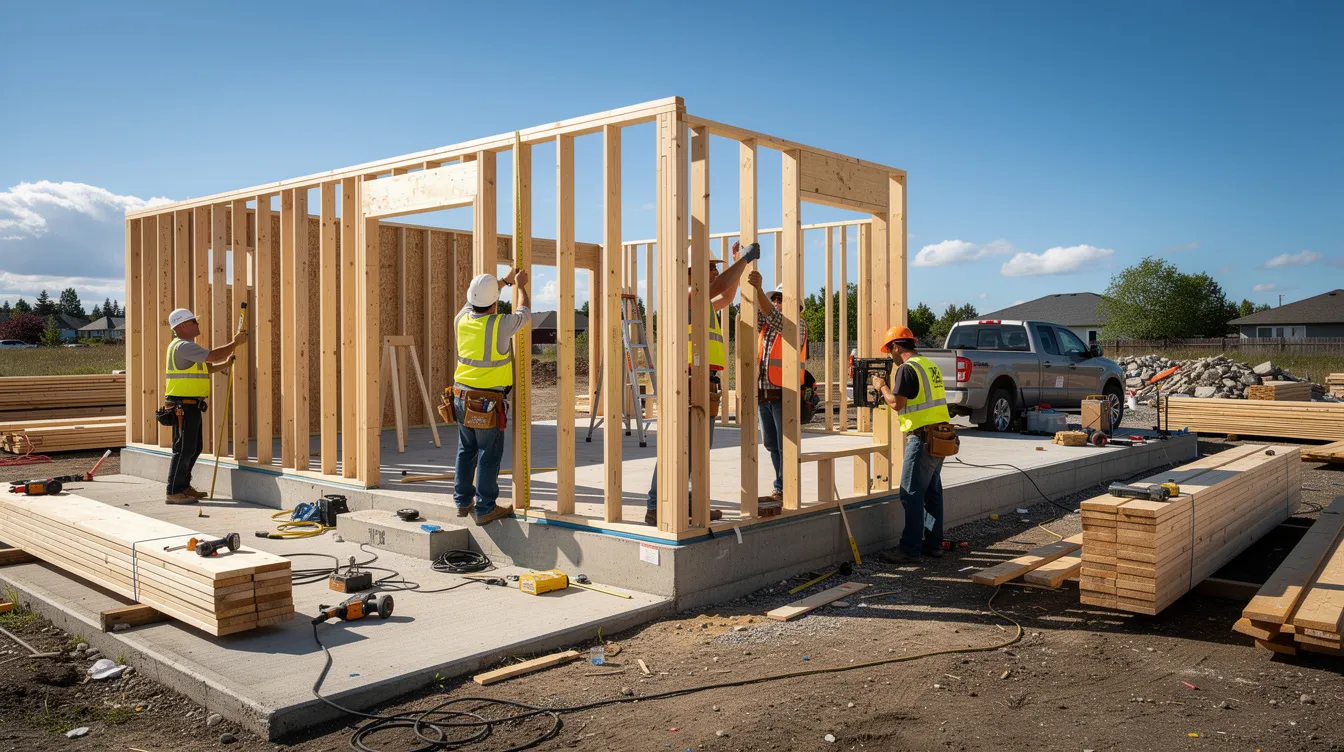
Framing and Shell
- Framing alone runs $7–$20 per sq ft depending on lumber prices and complexity
- A fully weather-tight shell (roof, windows, exterior doors) adds $25,000–$60,000 for a small home
- Simple rectangular footprints with minimal corners keep framing costs toward the low end
Plumbing and Electrical
- Combined budget of $8,000–$20,000 for a 2-bed/1-bath small home
- Add $3,000–$5,000 for EV charging, solar pre-wire, or multi-zone plumbing for complex designs
- Building code compliance requirements vary by jurisdiction
HVAC
- Mini-splits or small central systems cost $4,000–$15,000
- Climate drives this number—Minnesota winters need robust systems while mild coastal areas can use simpler setups
Interior Finishes
- Drywall, paint, trim, cabinets, countertops, lighting, and doors: $30,000–$90,000+
- A modest kitchen with IKEA-style cabinets and basic LVP flooring keeps costs near the low end
- Material choices here have the biggest impact on your final budget flexibility
Appliances
- Typical $4,000–$12,000 including fridge, range, dishwasher, washer/dryer
- Energy efficient heat-pump water heaters add $1,500–$2,500 but reduce operating costs
Design, Permits, and Inspections
- Roughly 5–20% of construction cost
- Real-world example: $12,000–$35,000 on a $220,000 build in 2026
- Permit fees vary dramatically between cities—urban areas charge more
Labor and Contractor Margin
- Labor costs plus contractor overhead can be 30–50% of the build
- Union rates, trade demand, and regional wages drive this significantly
- Sun Belt states often see lower labor percentages than Northeast metros
Small House Price By Build Type
Your construction method can swing total cost by tens of thousands of dollars. Each approach has trade-offs in price, timeline, and customization:
- Stick-built on-site construction: Typically $200–$400 per square foot in many markets, higher in premium regions. Full customization potential but 6–12 month timelines. Local labor costs are the key driver.
- Prefab or modular small homes: Price ranges around $150–$250 per sq ft for mainstream manufacturers. An 880 sq ft modular builds might run $180,000–$210,000 package before land and utilities. Factory quality control and 3–6 month timelines are advantages, and many mirror affordable tiny house building designs and tips in how they balance cost and livability.
- Kit homes: Pre-cut packages run $70,000–$150,000 for 700–1,100 sq ft structures (materials only). These require owner or local labor for assembly and finishes—diy builds can save money but demand significant time, similar to how Amazon tiny house packages shift more responsibility to the buyer for setup and compliance.
- Container-based small homes: Converting one or two 40-ft containers into a 640–960 sq ft house costs $120,000–$250,000 depending on insulation, windows, and code compliance upgrades.
- Pole barn or metal building conversions: Bare structures may be cheap ($20–$40 per square foot for shell) but full residential build-out often brings total cost closer to $150–$250 per sq ft.
- 3D-printed small homes: Emerging technology with pilot projects in Texas and Arizona showing shell costs as low as $80–$120 per sq ft, but full finished costs still evolving as the technology matures.
Regional Small House Price Examples
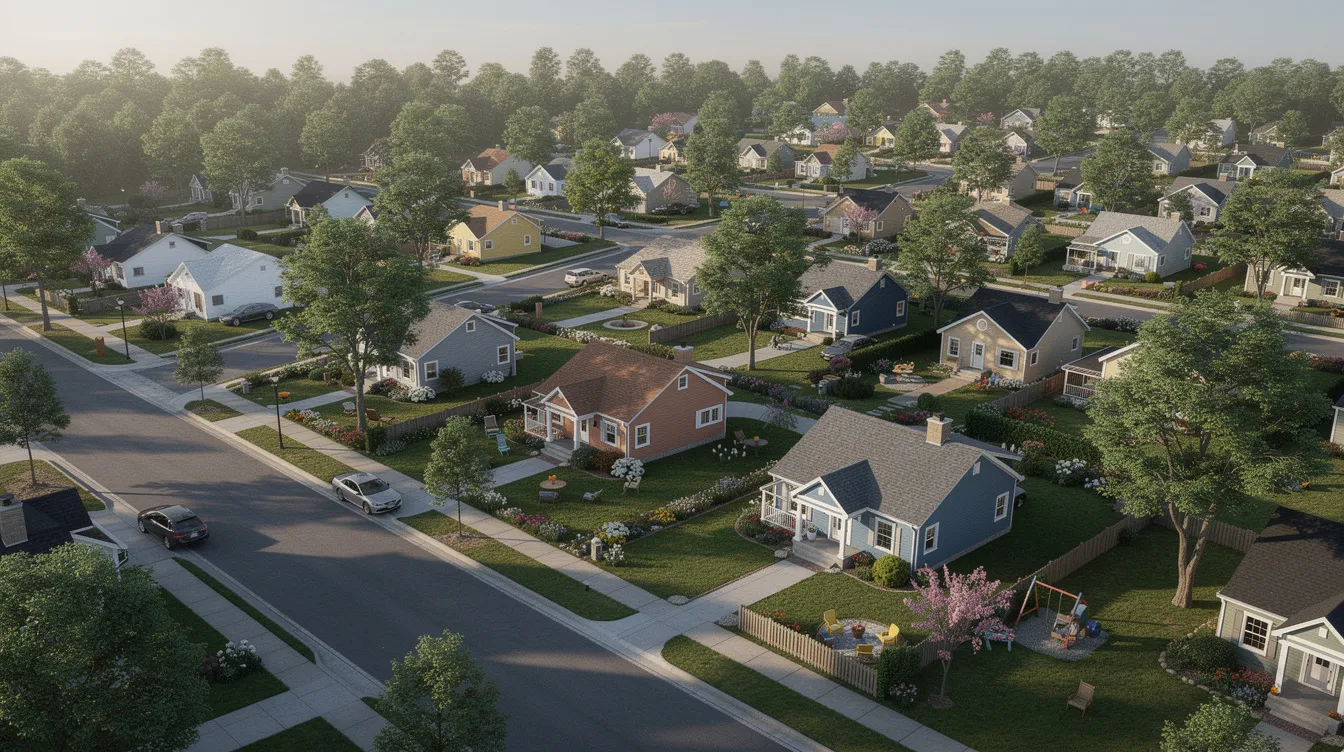
Geographic location has one of the largest impacts on small house prices due to land, labor, materials, and local building requirements. The final price depends heavily on where you’re building.
- In 2026, a basic 900 sq ft new small home in Cleveland, Ohio might be achievable around $190,000–$230,000, while the same design near San Jose, California could push $650,000+ primarily due to land cost.
- Sun Belt example: A 1,000 sq ft small house near Raleigh, North Carolina may cost $240,000–$300,000 turnkey, with moderate land and labor costs but strong regional demand pushing prices up.
- Rural example: A 1,100 sq ft small home in rural Arkansas or Iowa might be built for $180,000–$230,000 if you purchase land cheaply and handle some work yourself.
- Urban infill lots often require higher permit, impact, and utility connection fees than building on an unincorporated or exurban lot—sometimes adding 10–20% to project costs.
- Always pull 2–3 local builder quotes and check real recent comps (2024–2026 sales) because national averages can mislead. Get estimates independently verified before committing.
Ongoing Costs Beyond The Purchase Price
Small houses are cheaper to own than larger homes overall, but buyers must still plan for annual operating costs. A smaller footprint reduces bills across the board, but these expenses don’t disappear.
- Property taxes: A $240,000 small house pays roughly $2,400–$4,800 per year depending on your state and local tax rate. Some states offer homestead exemptions that reduce this burden.
- Utilities: Typical monthly costs of $100–$250 for electricity, gas, water, and trash in a small, energy efficient home. Climate variance matters—Phoenix AC bills differ from Minneapolis heating costs.
- Insurance: Homeowners premiums on a small house run $700–$1,800 per year, higher in areas with wildfire, hurricane, or hail risk. This compares favorably to mobile home or RV insurance complications, especially when you look at how great tiny homes redefine small-space living but may fall into different insurance categories.
- Maintenance and reserves: Set aside 1–2% of home value per year ($2,000–$5,000 for a $250,000 property) for repairs and capital replacements like roof, HVAC, and appliances.
- HOA or community fees: Small homes in planned communities or cottage courts may carry $50–$300 monthly dues for shared amenities and curb appeal upkeep.
Financing Options For Small Houses
Unlike many tiny homes, small houses built on permanent foundations generally qualify for mainstream mortgage products—a major advantage that makes them accessible to most buyers.
- Conventional mortgages: Standard 20% down and 30-year fixed options work well. Example: a $240,000 small house with 10% down at mid-6% interest results in about $1,300–$1,500 monthly principal and interest in 2026.
- FHA, VA, or USDA loans: Lower down payment routes for qualifying buyers. Many lenders are comfortable with smaller homes as long as they meet local codes and minimum square footage requirements (usually around 400–600 sq ft minimums).
- Construction loans: Most construction loans fund ground-up small house builds, rolling into a long-term mortgage after completion. Expect interest-only payments during the building phase, with land loans sometimes handled separately.
- Personal loans and home equity: These cover portions of the build (upgrades, land, or out-of-scope costs) but come with higher interest rates and shorter terms—use cautiously.
- Talk to lenders early: If building in unconventional formats (modular builds, container, or off grid), confirm appraisal and underwriting guidelines before you spend money on plans. Traditional mortgages have specific requirements your project must meet.
How To Save Money On A Small House Without Regretting It
Cutting costs smartly—through simple layouts, right-sized design, and energy efficiency—beats compromising on structure or safety. Most people who build small can find 10–20% savings without sacrificing quality.
- Simple floor plans: Rectangular footprints, stacked plumbing walls, and fewer corners reduce framing and labor costs by 10–20% versus complex designs with multiple rooflines.
- Prioritize envelope quality: Invest in good insulation (R-19+ walls), quality windows, and proper air-sealing over trendy interior finishes. A tight building shell supports a sustainable lifestyle and saves $500+ annually on utilities.
- Phased upgrades: Start with basic but durable finishes (LVP flooring, mid-range cabinets) and plan for future luxury upgrades when budget allows. Don’t spend more money upfront than necessary.
- DIY strategically: Handle low-risk tasks like painting, landscaping, and interior trim yourself, but leave structural, electrical, and plumbing to licensed pros. Fixing amateur mistakes costs more than hiring right the first time, and good tiny house plans that fit your life can clarify which projects are realistic to tackle yourself.
- Shop locally and off-season: Deals on windows, appliances, and leftover building materials—including recycled materials—can shave thousands off your budget. Flexibility on timing helps.
Do your homework ahead of time. Get multiple quotes, compare material options, and understand what’s driving costs in your specific location before signing contracts.
Is A Small House Worth The Price In 2026?
Small houses sit in a cost effective sweet spot between expensive traditional houses and ultra-minimal tiny house living. For most people priced out of the $420,000+ median new-home market, an 800–1,200 sq ft home offers a realistic path to ownership and equity building.
- Financial benefits: Lower purchase price than larger traditional homes, smaller utility bills, reduced property taxes, and potentially easier maintenance for older owners or busy professionals looking to save money.
- Trade-offs: Limited storage, fewer extra rooms, and potential constraints for growing families compared with a 2,400+ sq ft custom home. The final cost reflects these space limitations.
- Smart design matters: Good architecture makes an 800–1,200 sq ft home feel spacious. Open floor plans, natural light, and built-in storage—ideas you’ll see in both top modern tiny house designs and cute tiny house design inspirations—can help you find your perfect tiny home without the extreme compromises.
- Run the numbers locally: Compare real costs of renting versus buying a small house in your market, factoring in 2024–2026 rent increases and your long-term lifestyle goals. For sale inventory in many markets now includes viable small house options.
The next step? Sketch your ideal square footage, list your must-have rooms, and use the price ranges in this guide as a starting point for conversations with local builders and lenders. The numbers work for many buyers—finding out if they work for you starts with getting real quotes in your target location.