
Living small doesn’t mean living cramped. The best tiny homes built between 2015 and 2026 prove that 200–400 square feet can feel surprisingly spacious when every corner, wall, and ceiling does double duty. This guide walks you through specific design ideas, real-world layouts, and clever tricks to make your compact space work harder than you ever thought possible.
- Quick Answer: The Best Tiny Home Ideas to Copy Right Now
- What Counts as a Tiny Home in 2026?
- Maximize the Main Floor: Layout & Flow Ideas
- Go Vertical: Loft, Platform, and Ceiling-Height Hacks
- Furniture That Works Twice as Hard
- Storage Everywhere: Clever, Invisible, and Underfoot
- Kitchens That Tuck Away but Still Cook Like Full-Sized
- Work, Play, and Workout Zones in Tiny Homes
- Style, Materials, and Light: Making Tiny Feel Luxe
- Outdoor Extensions: Decks, Porches, and Bonus Space
- Planning Your Own Tiny Home: Budget, Tools, and Next Steps
Quick Answer: The Best Tiny Home Ideas to Copy Right Now
Before diving into the details, here’s a fast collection of tiny homes ideas you can start sketching today. Each one comes from actual builds completed in the past few years, sized under 400 sq ft.
- Lofted sleeping zone: A queen bed in a 7-foot-high loft accessed by alternating-tread stairs, freeing up the entire main floor for living.
- Storage stairs with pull-out treads: Five steps leading to a loft, each containing a full drawer for shoes, tools, and bags.
- Fold-down dining desk: A wall-mounted table that doubles as a workspace by day and dinner spot for four by night.
- Hidden galley kitchen: A 7-foot run tucked behind bi-fold doors that disappear when you want an open living area.
- Platform bed with drawers: A main-floor bed raised 24 inches on a platform hiding six deep drawers and a roll-out desk underneath.
- Room-dividing curtains: Ceiling-mounted tracks letting you close off a sleeping nook or guest zone in seconds.
- Tuck-away home office: A 36-inch desk built into a window bay with overhead shelving that folds flat against the wall.
- Shoe drawers in stair risers: Toe-kick style compartments in each step, keeping entry clutter invisible.
- 24-foot gooseneck with raised bedroom: The bed sits over the trailer hitch, leaving a 6-foot wardrobe space directly below.
- Sliding bed under platform: A queen mattress on casters that rolls out from beneath a raised office area.
The rest of this article expands on these ideas with examples, dates, and layout tips from real tiny homes completed between 2018 and 2025.
What Counts as a Tiny Home in 2026?
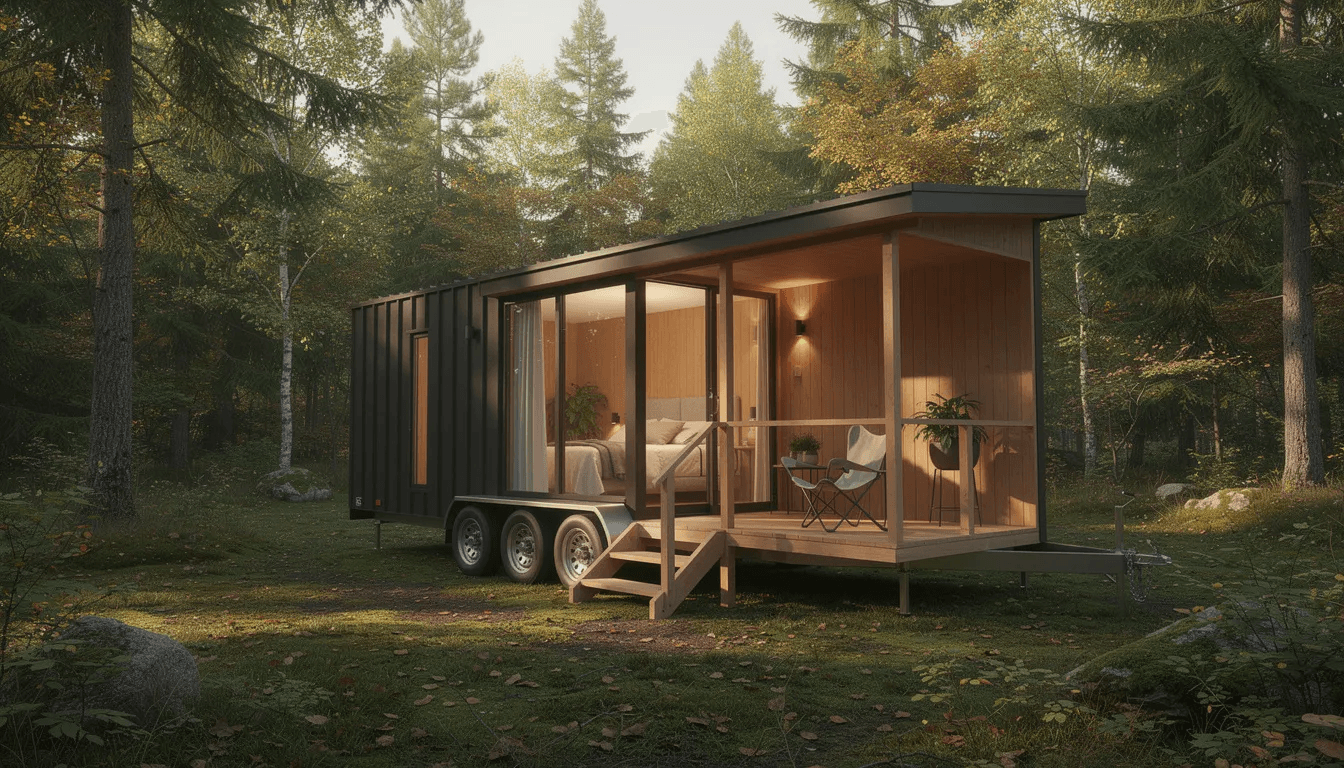
A tiny house typically measures between 100 and 400 sq ft, though definitions sometimes stretch to 1,000 square feet. This includes both tiny homes on wheels (THOW) that can relocate and permanent foundation builds classified as accessory dwelling units or guest house structures.
Modern tiny homes differ from the pioneer cabins and shotgun shacks of earlier eras in several key ways:
- Better insulation: Closed-cell spray foam or EPS panels rated for extreme temperatures, not just basic fiberglass batts.
- Integrated solar panels: Off-grid power setups that cost under $5,000 by 2026, making energy independence realistic.
- Composting toilets and gray water systems: Eliminating the need for traditional sewer hookups.
- Multi-use rooms: A single space that functions as bedroom, office, and living room depending on how furniture is configured.
Here are two concrete size examples to ground expectations:
- A 28-foot tiny house on wheels measures roughly 230 sq ft on the main floor plus a 50 sq ft sleeping loft, totaling around 280 sq ft of usable space.
- A 320 sq ft single-level park model built on a foundation includes a full kitchen, separate bedroom, and combined living area with dining zone.
This article focuses on practical design ideas—not just tiny house floor plans that actually work—for people actually planning to build or renovate in 2024–2026.
Maximize the Main Floor: Layout & Flow Ideas
The main floor of a 200–350 sq ft tiny home determines how the space feels every single day. Get the layout right, and the whole place breathes. Get it wrong, and you’ll trip over furniture for years.
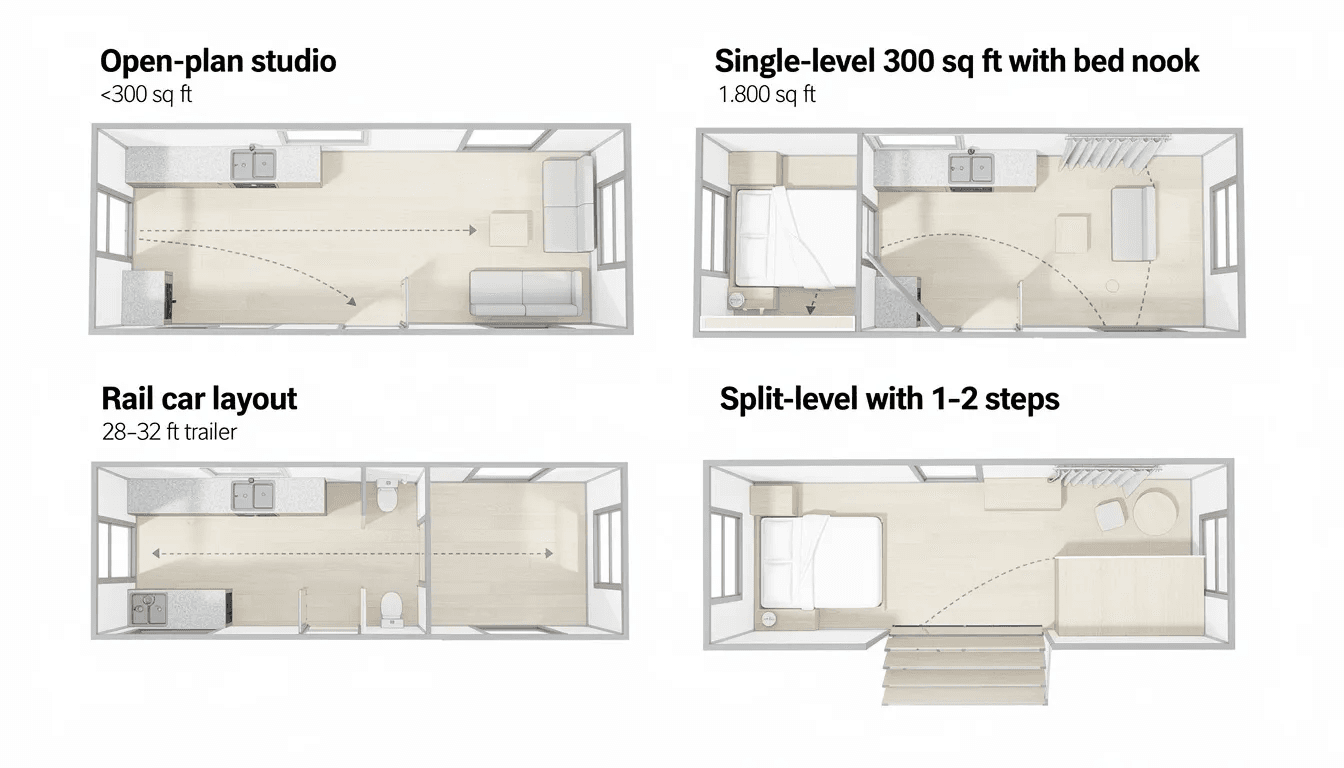
Here are the most common layout archetypes that work, similar to many proven tiny house plans that fit different lifestyles:
- Open-plan studio: No interior walls, with bed, kitchen, and sofa sharing one continuous room. Works best under 200 sq ft.
- Single-level 300 sq ft with bed nook: A partial wall or curtain separates the sleeping area without fully closing it off.
- Long and narrow “rail car” layout: Kitchen at one end, bathroom in the middle, bedroom at the far end—ideal for 28–32 foot trailers.
- Split-level with 1–2 steps: The kitchen sits slightly raised or lowered from the lounge, creating visual separation without walls.
A concrete example: a 26-foot, 208 sq ft tiny house finished in 2023 features a glass front door flooding light into the entry, a central galley kitchen with open shelving, and a rear bedroom separated from the living space by a 42-inch half wall. The layout keeps sightlines open while defining zones.
For traffic flow, keep these rules in mind:
- Maintain at least a 30-inch clear path from the front door to the bathroom. Anything narrower feels like an obstacle course.
- Group “wet” areas (kitchen sink, bathroom) on one side of the house to simplify plumbing runs and reduce cost.
Large windows and a glass door on the long wall pull in natural light and visually double the perceived size of any tight living space.
Main-Floor Bedroom vs Loft: Which Works for You?
The bedroom question splits tiny home owners into two camps: main-floor sleepers who prioritize accessibility, and loft lovers who want to maximize daytime square footage.
Here are real-life examples of each approach:
- A 280 sq ft no-loft tiny home completed in Oregon in 2022 keeps a queen bed on the main floor, tucked into a corner with built-in nightstands. The owners chose this layout for aging-in-place flexibility.
- A 24-foot lofted studio tiny house in Texas uses a sleeping loft with 3.5 feet of headroom, leaving the entire 180 sq ft main floor open for a full kitchen, sofa, and dining table.
Feature | Main-Floor Bed | Loft Bed |
|---|---|---|
Accessibility | Easy entry, no climbing | Requires stairs or ladder |
Daytime space | Bed visible all day | Bed hidden above |
Storage potential | Under-bed drawers | Under-loft room for closet or bath |
Resale appeal | Better for aging buyers | Popular with younger owners |
If you fall frequently, have mobility concerns, or simply hate climbing in the dark, a main-floor bedroom makes sense. If you want your 200 sq ft living area to feel like 300 sq ft during waking hours, go vertical. |
Go Vertical: Loft, Platform, and Ceiling-Height Hacks
Tiny homes with 11–13 foot interior ceiling heights feel dramatically larger than squat 8-foot builds. When you can’t expand outward, the only direction left is up—and vertical space is often the least expensive square footage you can add.
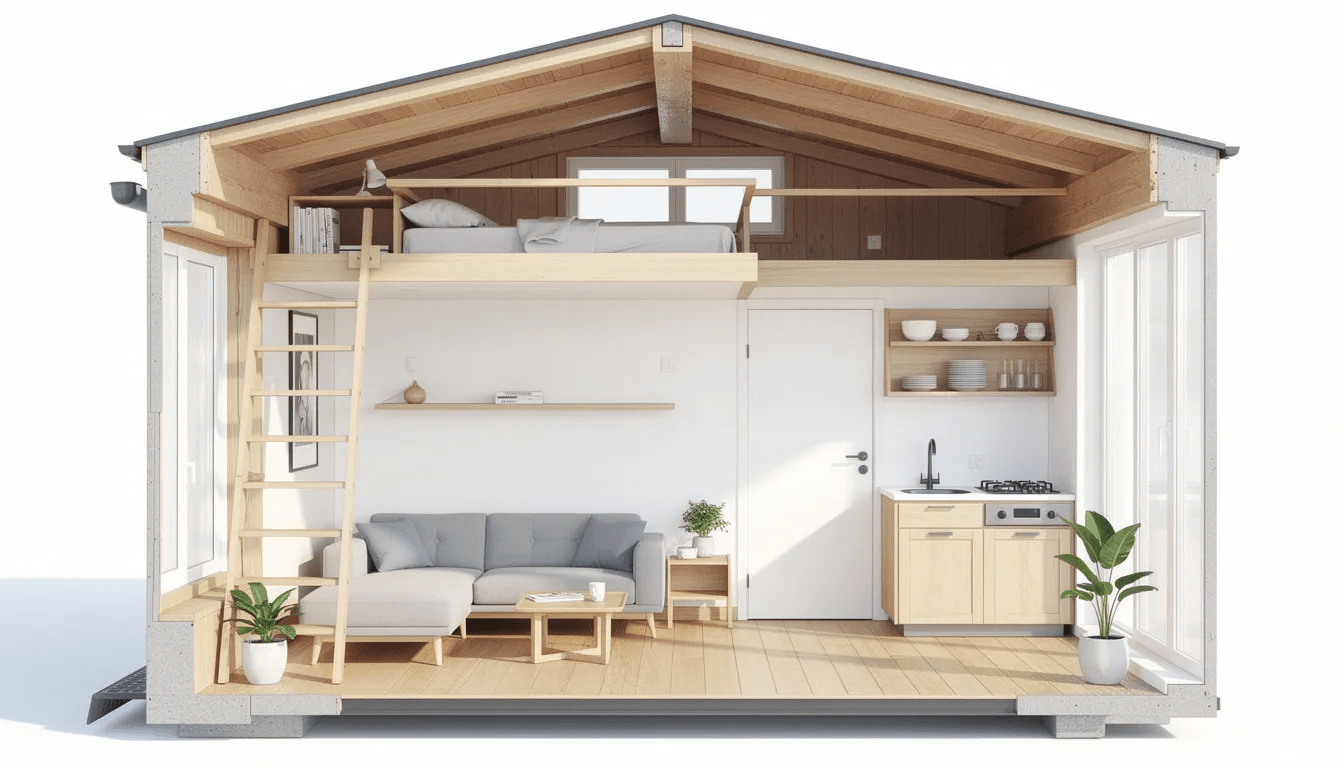
Here’s how to use every inch of height:
- Classic sleeping loft: Position the loft floor at 7 feet above the main level, leaving roughly 3 feet of headroom for sleeping. Access via a ladder (cheapest), alternating-tread staircase (safer), or full stairs with storage (most functional).
- Raised platform bed: Keep the bed on the main floor but elevate it 24–30 inches on a platform. Underneath, install pull-out drawers, a hidden roll-out desk, or a full wardrobe space.
- Terraced multi-level platform: A 172 sq ft city micro-apartment completed in 2019 used a terraced platform that blends bed, sofa, and dining bench with storage under each step. The bed slides out from the highest tier, while lower steps become seating.
- Full-height storage: Mount overhead cabinets near the entry, hang pot racks from the kitchen ceiling, and install a ceiling-mounted drying rack above the shower to keep floors clear.
When planning, visualize the vertical space in side-on cutaway sketches. This makes it easier to see how platforms, lofts, and storage zones stack without wasting headroom.
Loft Safety and Comfort Details
Building a safe, comfortable loft requires attention to dimensions and finishes that many first-time builders overlook. Consider this a quick checklist for lofts built after 2020 code updates:
- Minimum loft width: 54 inches for a queen mattress, plus a few inches on each side for sheets and pillows.
- Guardrail height: A 36-inch guardrail meets most safety standards and prevents nighttime falls.
- Ladder angle: Steeper ladders save floor space but increase fall risk. Alternating-tread stairs at a 60–65 degree angle balance both.
- Low-profile mattress: Use a 6–8 inch mattress on a slatted base to maximize headroom under sloped roofs.
- Ventilation: Add a small operable window or skylight in the loft for airflow and nighttime star views. A 2021 off-grid cabin in Colorado uses a 24-inch square skylight directly above the pillow for both light and ventilation.
- Soft lighting: LED strip lights along the loft edge or wall sconces on dimmers avoid harsh overhead fixtures that make low ceilings feel oppressive.
Furniture That Works Twice as Hard
In a tiny house, every piece of furniture needs to justify its footprint. The best pieces either store things, convert into something else, or do both, as shown in many inspiring tiny house interiors that maximize every square foot. Here’s what shows up in successful tiny homes built between 2018 and 2026:
- Storage bed with lift-up mattress: An IKEA-style gas-lift frame adapted into a custom platform lets you access the entire area under the bed without moving anything. Store suitcases, off-season clothes, and extra bedding.
- Fold-down dining table: A wall-mounted table on hinges drops to become a desk for two laptops or a dinner spot for four. When folded up, it reveals a chalkboard, mirror, or art piece.
- Convertible sofa with built-in drawers: In sub-250 sq ft homes, this piece functions as daytime lounge, guest bed, and blanket storage. Look for models under 60 inches wide with firm cushions.
- Sliding or nesting tables: A 230 sq ft tiny home in British Columbia built in 2020 includes a pull-out kitchen island that nests entirely under the main counter. When guests arrive, it extends to provide prep space or extra seating.
Photographs of these pieces work best when shown in “day mode” and “night mode” side by side—fold-down tables open and closed, sofa cushions flat versus configured as a bed.
Hide-and-Seek Sleeping Arrangements
When there’s no separate bedroom, creative sleeping solutions let you accommodate guests and small families without permanent beds taking over the living area.
- Sliding bed under raised platform: By day, the queen mattress hides completely under a 6-foot-wide office desk. By night, it rolls out on casters. Minimum clearance needed: 30 inches between the pulled-out bed edge and the front door.
- Murphy bed with integrated shelving: The bed folds up against the wall, revealing shelves or a fold-down table on the underside. Some models include lighting so the folded position works as a reading nook.
- Bunk-style kids’ area: A 22-foot family tiny home completed in 2021 uses a curtained bunk alcove with built-in shelves for books and toys. The curtains close for privacy during naps.
These arrangements turn a 200 sq ft studio into a space that can sleep four without feeling like a dorm room.
Storage Everywhere: Clever, Invisible, and Underfoot
If you’ve ever lived in a tiny space, you know the enemy isn’t the square footage—it’s the stuff. Shoe piles, seasonal gear, and kitchen clutter can make even 400 sq ft feel suffocating. The clever use of hidden storage changes everything, as you’ll see in many great tiny homes that redefine small-space living.
- Under-stair drawers: A 300 sq ft London-style micro-home built in 2018 features five pull-out treads, each containing a full drawer for shoes, bags, and tools. The stairs do double duty without looking bulky.
- Toe-kick drawers: The 4-inch gap under kitchen cabinets becomes storage for flat items like baking sheets, cutting boards, and placemats. Most people never notice these drawers exist.
- Under-floor hatches: Raised sections of a tiny house on wheels—especially over wheel wells—create hidden compartments for tools, off-season clothing, or emergency supplies. A 24-foot THOW might gain 15–20 cubic feet this way.
- Labeled bins under benches: Use 12-inch-high bins that slide easily under a 16-inch bench seat. Label each bin so you can find winter hats without excavating the entire storage area.
When planning storage layout, sketch an overhead “plan” view showing where hidden zones are located. This prevents accidentally building drawers that block each other or hatches that open into walking paths.
Entryway & Closet Tricks in Tiny Homes
The entry zone sets the tone for the entire tiny home. A cluttered doorway makes 300 sq ft feel like 150. A well-organized entry makes the same space feel twice as large.
- Ceiling-mounted curtain tracks: Create flexible closet areas behind the bed or in hallways without building full walls or installing swinging doors that eat floor space.
- Wall-mounted peg rails: A 200 sq ft cabin completed in 2020 uses a 6-foot-long peg rail near the front door for coats, bags, hats, and dog leashes. Everything hangs visible and accessible.
- Shallow wardrobes: At just 10–12 inches deep, these don’t protrude into walking space. Add mirrored doors to bounce light and create the illusion of depth.
- Narrow entry bench with shoe drawer: A 12-inch-deep bench with a flip-top seat and a pull-out drawer below handles shoes, umbrellas, and keys in one compact unit.
The before/after difference is dramatic: an open cluttered wall versus organized hooks, a slim bench, and invisible shoe storage.
Kitchens That Tuck Away but Still Cook Like Full-Sized
Designing a compact kitchen that actually works requires thinking in linear feet rather than square feet. Most functional tiny home kitchens run 6–10 linear feet along one wall, packing in everything you need without wasted steps.
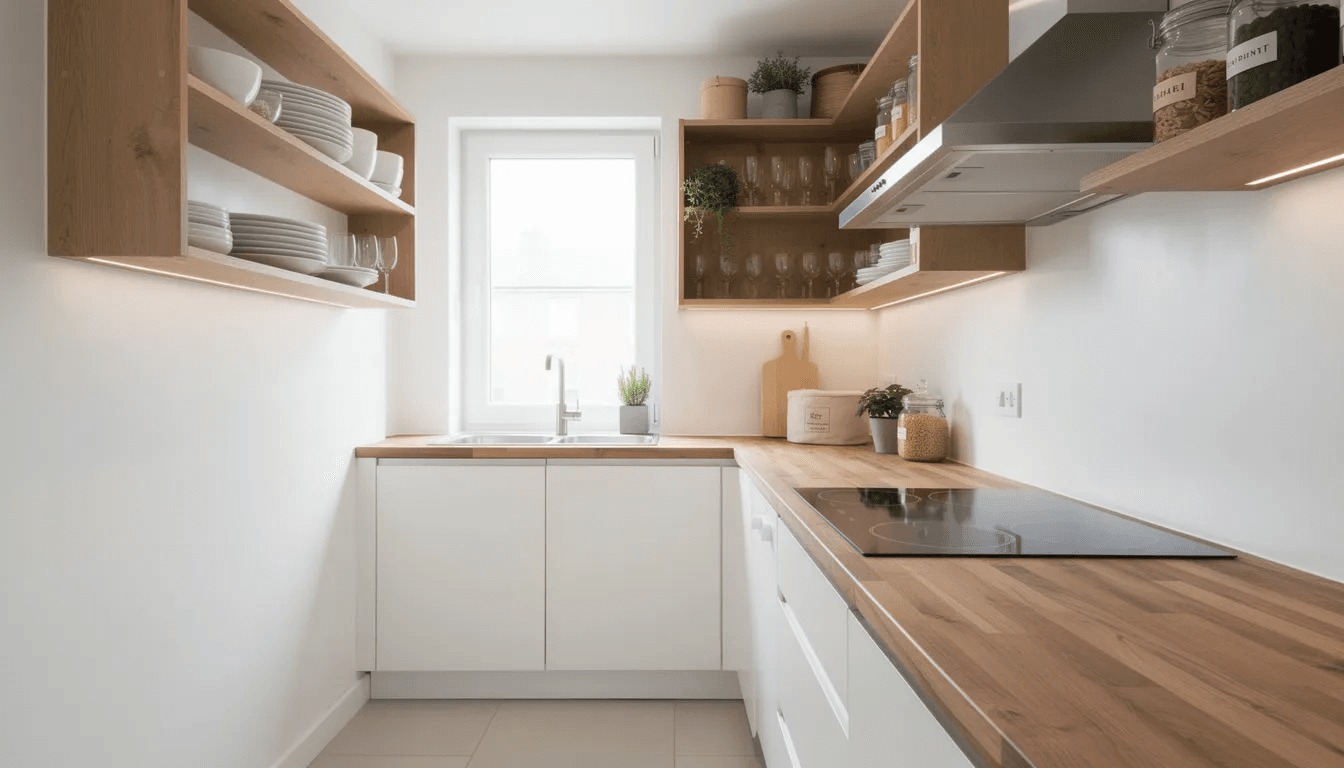
- Galley kitchen along one wall: A two-burner induction cooktop, 24-inch deep sink, under-counter fridge, and open shelving above. This configuration fits in 7 linear feet and handles daily cooking for two.
- Hidden kitchenette behind bi-fold doors: A 2022 guest house tiny home conceals the entire kitchen when not in use. Open the doors and you have a full kitchen with stovetop, mini dishwasher, and microwave. Close them and it’s a clean living room wall.
- Combination appliances: A convection microwave that also bakes, paired with a two-burner induction cooktop, saves counter space and eliminates the need for a full oven.
- Narrow pull-out pantry: A 4–6 shelf unit just 6 inches wide fits between the fridge and wall, perfect for oils, spices, jars, and snacks.
A concrete example worth studying: a 260 sq ft lakeside tiny cabin finished in 2021 features a 7-foot kitchen run with butcher-block counter, open shelving for dishes, and a fold-down additional prep shelf that extends the workspace when cooking for guests.
Smart Dining in Small Spaces
Hosting a dinner party in 220 sq ft sounds crazy until you see how it’s done. The secret is furniture that moves, stacks, or converts.
- Small round pedestal table: A 30–32 inch diameter table moves easily between the window and kitchen. Pair it with two stackable chairs that slide under the bed when not needed.
- Flip-up window bar: A hinged counter attached to a window ledge creates café-style dining for two. Stools slide entirely underneath when folded down.
- Built-in bench with convertible table: A slim rectangular table runs along one wall. Lower the table and it becomes part of a lounge seating area. Raise it for meals.
Here’s a real scenario: hosting dinner for four in a 220 sq ft tiny house. Rotate the pedestal table to the center of the room, pull two spare stools from under the platform bed, and you’re set. After dinner, the table returns to its window spot and stools disappear again.
Work, Play, and Workout Zones in Tiny Homes
Working from home in a tiny space requires dedicated zones—even if those zones overlap with sleeping and dining areas. The key is visual and functional separation using lighting, rugs, and convertible furniture, much like in many custom tiny homes designed for small-space living.
- Fold-down desk beside the bed: Inspired by boutique hotels and Stockholm micro-hotels, a 24-inch-wide desk mounted to the wall drops down for work and folds flat when you need floor space.
- Compact office nook in a window bay: A 2023 digital nomad tiny house on wheels features a 36-inch-wide desk built into a window bay with overhead shelving for supplies and a view that makes video calls look professional.
- Micro gym corner: A stationary bike takes up just 4 sq ft. Yoga mat storage fits under the sofa. A small shelf holds a few hand weights alongside plants and books.
- Zone separation: A colorful area rug and a dedicated desk lamp visually separate “work” from “relax” even in one open room. Your brain learns the cue.
- Sound considerations: Rugs, soft furnishings, and small acoustic panels keep Zoom calls professional in thin-walled tiny homes where every sound travels.
Kid and Guest Zones That Don’t Take Over
Families and frequent hosts can share tiny homes without feeling crowded—if the design anticipates multiple uses from the start.
- Lofted kids’ zone above bathroom: A small secondary loft with built-in ladder, safety rails, and toy storage bins gives children their own space without taking floor area.
- Daybed with trundle: A tiny home finished in 2020 sleeps four in 240 sq ft using a daybed in the living area. The trundle pulls out for a second guest.
- Curtains for temporary privacy: Sliding panels or curtains on ceiling tracks let you “close off” kid or guest zones for naps and video calls.
A real-world sleeping configuration: parents in a main-floor bedroom nook (queen bed), toddler in a mini loft accessed by three steps, and occasional guests on a convertible sofa that unfolds to a full mattress.
Style, Materials, and Light: Making Tiny Feel Luxe
Once function is sorted, style transforms a cramped box into a perfect retreat. The right materials, colors, and finishes make 180–300 sq ft feel elevated rather than economy, similar to many elegant tiny homes that redefine modern living.
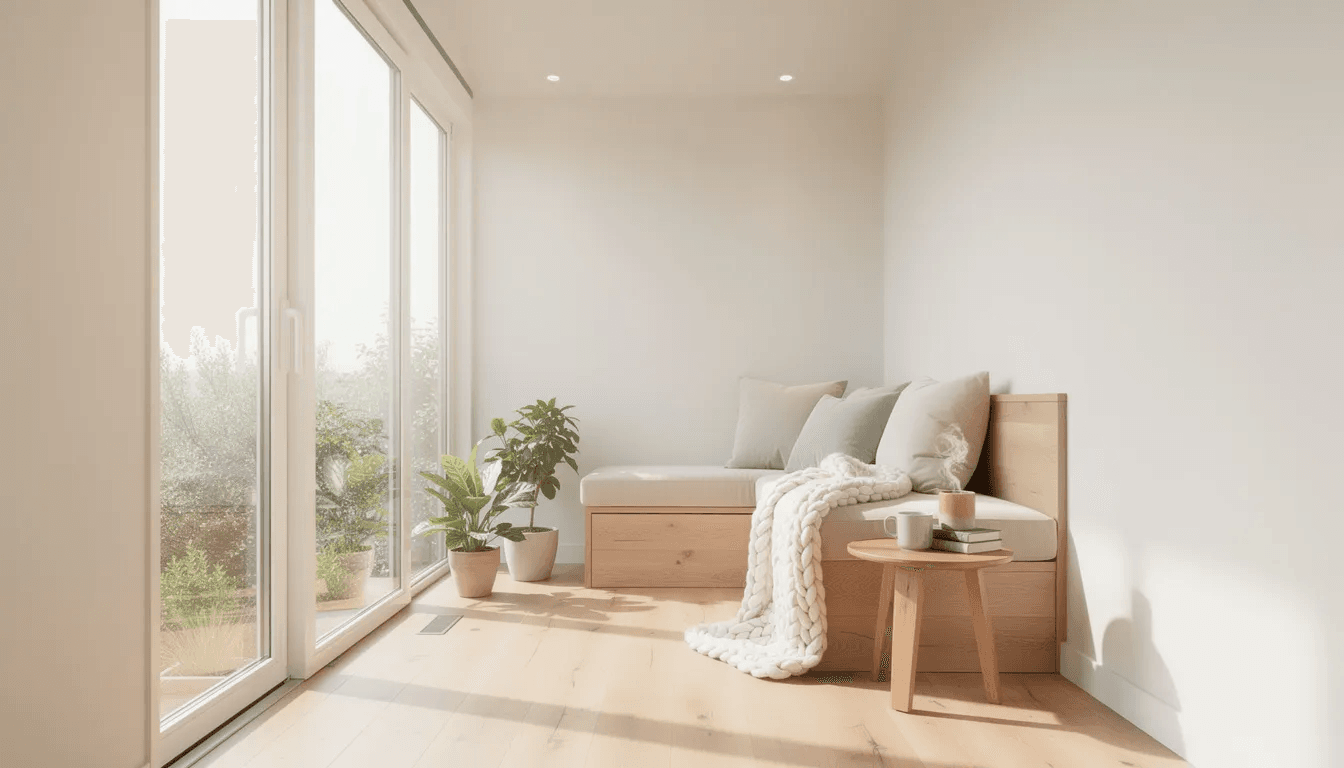
- Pale walls with wood accents: Off-white, light gray, or muted green walls keep the space bright without feeling sterile. Warm wood trim, floors, and furniture add charm and reinforce the calm, efficient feel of minimalist tiny houses for sustainable living.
- One “luxury moment”: Invest in a single high-end surface—a marble or quartz countertop, handcrafted tile backsplash, or solid oak flooring. A 2022 220 sq ft Rhinecliff-style attic tiny bedroom uses Calacatta-look surfaces for instant sophistication.
- Maximize natural light: Larger windows on the long side, a glass front door, and at least one skylight over the loft or kitchen flood the interior with daylight.
- Continuous flooring: Use the same floor material throughout—no transitions between rooms—to visually expand the footprint. Area rugs define zones without breaking the flow.
- Quality over quantity: Better to have three beautiful pieces than ten cheap ones. A stylish sofa, a handmade wood dining table, and one statement lamp create more impact than a room full of budget finds.
Decor That Doubles as Storage or Function
In tiny spaces, decor choices should do work—not just look pretty. Every object on display should either store something, serve a function, or both.
- Hang everyday items as art: Cooking pans on a wall-mounted rack, woven baskets holding scarves, and plates displayed on open shelving free up cabinet space while adding visual interest.
- Slim wall shelves over sofas and beds: Books, ceramics, and plants on floating shelves replace bulky bookcases and create vertical interest.
- Mirrors opposite windows: A large mirror bounces light deeper into the tiny home and visually widens narrow rooms by reflecting the view.
- 2–3 statement pieces: A colorful rug, sculptural lamp, or bright art print gives the space intentional personality without clutter.
Outdoor Extensions: Decks, Porches, and Bonus Space
In a tiny home, the outdoors becomes an extension of your living space. A well-designed deck or porch effectively adds a room without the cost of walls, a roof, or insulation, complementing many of the best tiny house designs for modern living.
- Covered porch as outdoor living room: A 24-foot tiny house built in 2020 includes a 6-foot-deep covered porch with two chairs and a small table—essentially an 80 sq ft outdoor room.
- Seamless indoor-outdoor connection: Sliding glass doors or French doors open the interior fully to the deck, making 200 sq ft inside feel like 300.
- Fold-down decks for THOWs: Steps and deck sections that stow during travel, then unfold when parked, expand the footprint without permanent construction.
- Weather protection: Awnings, pergolas with retractable fabric, or roll-down clear vinyl panels extend outdoor use into cooler months.
A typical layout: 200–250 sq ft interior plus 80–120 sq ft of covered outdoor deck space used for dining, lounging, and morning coffee. The total functional area jumps 40% without adding to the building footprint.
Storage Sheds, Pods, and Community Spaces
Sometimes the smartest tiny home idea is to move stuff out of the main building entirely. Adjacent structures and shared amenities let your 200 sq ft focus on living rather than storing.
- Small 4×8 foot storage shed: Tools, bikes, seasonal gear, and outdoor equipment stay out of the main space. A 260 sq ft tiny house becomes roomier when the lawn mower isn’t under the loft.
- Modular bonus pods: In tiny home communities established after 2019, additional 80–120 sq ft pods serve as offices, art studios, or guest quarters.
- Community amenities: Shared laundries, workshops, and gardens mean your tiny home doesn’t need to accommodate every lifestyle activity. A 2021 coastal tiny home community with shared pavilions and a central garden lets residents offload entertaining and projects.
Planning Your Own Tiny Home: Budget, Tools, and Next Steps
Every tiny home idea in this article becomes real only when you start planning. For a step-by-step overview of the process, see a complete guide on how to build a tiny house. Here’s how to move from inspiration to action for a 2024–2026 build or renovation.
- Create a basic floor plan first: Use online tools like SketchUp or simple graph paper before committing to a builder. Most designs fall between 18 and 32 feet in length for THOWs, or 300–400 sq ft for foundation builds. This step catches major layout errors before they become expensive mistakes.
- Set a realistic budget: DIY builds typically run $10,000–$50,000 depending on materials and finishes. Professional custom builds range from $50,000–$150,000 or more. Set aside 10–15% contingency for surprises—there are always surprises.
- Prioritize your spending: Invest first in structure, insulation, windows, and appliances. These determine how the home performs for decades. Custom cabinetry, luxury finishes, and paint colors can come later if money gets tight.
- Visit finished tiny homes: Open houses, model villages, and rental stays let you test layouts in person. Spend a night in a 180 sq ft rental before committing to that size. What feels cozy for a weekend might feel suffocating after a few years.
- Explore resources and community support: Online forums, local builder meetups, and tiny home festivals offer loads of practical advice and cautionary stories from people who’ve already made the errors you’re trying to avoid, especially if you’re considering a tiny smart home with efficient tech-driven living.
Combining smart layouts, multi-use furniture, and one or two luxury moments can make even 200 sq ft feel like a complete, comfortable home. The tiny homes movement isn’t about sacrifice—it’s about discovering what you actually need and designing a lifestyle around it.
Start by sketching your ideal floor plan this week. Visit a finished tiny home this month. And remember: every 24-foot gooseneck and 280 sq ft cabin started exactly where you are now—with an idea and a willingness to build something different.