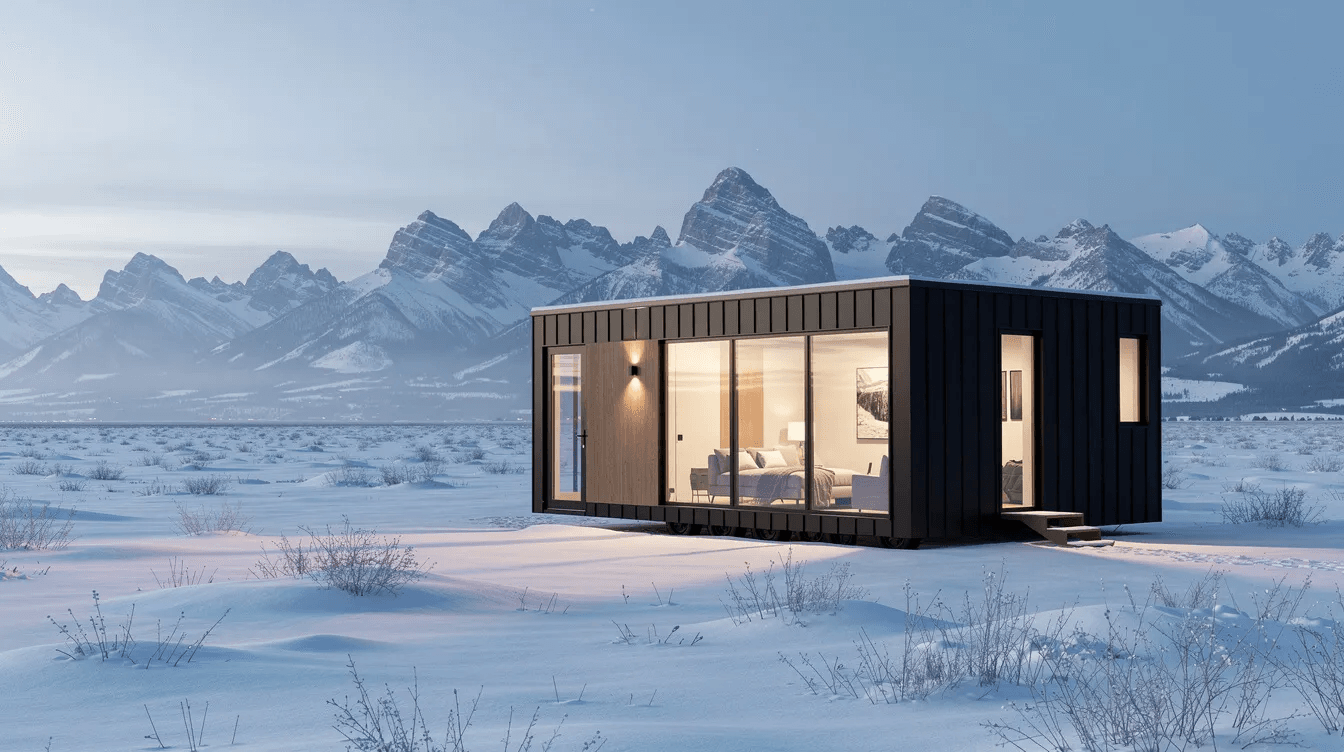
Tiny homes in Alberta are gaining serious momentum as housing prices continue climbing across the province. With Calgary’s average home prices exceeding $600,000 and Edmonton hovering around $450,000 as of 2025, many residents are exploring compact dwellings as a practical alternative. Add in the rise of remote work, Alberta’s affinity for outdoor lifestyles, and a growing interest in sustainability, and you’ve got a perfect environment for the tiny home movement to flourish.
Tiny homes in Alberta are legal where they meet local land use bylaws and building codes, with most municipalities treating tiny homes on wheels as RVs and foundation-built tiny houses as standard dwellings.
This article focuses specifically on Alberta cities like Calgary, Edmonton, Red Deer, and Lethbridge, plus rural areas across the province—not generic Canada-wide information. We’ll cover types of tiny homes (on wheels, park models, modular), Alberta-specific laws and bylaws, climate and construction requirements, costs, example price ranges, and where people are actually living tiny today.
- What Counts as a Tiny Home in Alberta?
- Tiny Home Laws, Zoning, and Bylaws in Alberta
- City‑by‑City Snapshot: Calgary, Edmonton, and Beyond
- Land Options: Where People Actually Park and Live Tiny in Alberta
- Building for Alberta’s Climate: Cold, Wind, and Snow
- Types of Tiny Homes in Alberta: RVs, Park Models, and Modular Dwellings
- Costs and Example Price Ranges for Tiny Homes in Alberta
- Financing, Insurance, and Permits
- Pros and Cons of Tiny Home Living in Alberta
- Is a Tiny Home in Alberta Right for You?
- Frequently Asked Questions About Tiny Homes in Alberta
- Next Steps if You’re Considering a Tiny Home in Alberta
What Counts as a Tiny Home in Alberta?
In practical Alberta terms, a tiny home typically refers to a dwelling between 150 and 400 square feet. These compact spaces come in three main categories: tiny homes on wheels (THOWs), park model RVs, and small modular homes on permanent foundations. Each type serves different needs and falls under different regulations.
Understanding the distinctions matters because Alberta doesn’t have a unified “Tiny House Act.” Instead, classification depends on CSA certification standards, whether the dwelling sits on a chassis or foundation, and its intended mobility.
Tiny Homes on Wheels (THOWs) are built on trailer chassis, typically under 8.5 feet wide to remain road-legal. These units can be towed by heavy-duty pickups like Ford F-350s and must meet CSA Z240 RV standards. They’re ideal for seasonal workers in oil sands or agriculture but face occupancy restrictions in urban areas, similar to many pre-fabricated Amazon tiny houses marketed as affordable starter units.
Park Model RVs stretch 30-45 feet long and adhere to CSA Z241 standards. These cottage-like structures are designed for semi-permanent placement in resorts and RV communities, making them popular for lake-adjacent retreats near places like Sylvan Lake.
Modular or Foundation-Built Tiny Homes are factory-built units certified under CSA A277, then craned onto permanent foundations on-site. These qualify as standard dwellings under the National Building Code – Alberta Edition and can serve as primary residences or accessory dwelling units in city backyards.
Type | Mobility | Typical Use | Primary Code |
|---|---|---|---|
THOW | Fully mobile | Seasonal, travel | CSA Z240 (RV) |
Park Model | Semi-permanent | Resort living | CSA Z241 |
Modular | Permanent | ADU, primary home | Building Code |
Tiny Home Laws, Zoning, and Bylaws in Alberta
Alberta’s regulatory framework for tiny homes fragments across 344 municipalities, with no provincial overrides. Every city, town, and county has its own land use bylaw and approach to these compact dwellings. What works in Edmonton may not fly in Lethbridge.
Three legal “buckets” generally apply to tiny homes across the province:
- Tiny homes on wheels are classified as recreational vehicles in most bylaws, meaning full-time residence is typically prohibited except in designated RV parks or campgrounds
- Park models follow similar RV rules but gain easier approvals in recreational districts under CSA Z241 standards
- Permanent tiny houses fall under the National Building Code – Alberta Edition, requiring engineered plans, inspections, and full utility servicing
Land use bylaws regulate where each type can be placed: residential zones, agricultural land, RV parks, or specific “garden suite” designations. The key distinction lies between principal dwelling status (your main home) and secondary suite or accessory dwelling unit classification (a secondary dwelling on the same property). Principal dwellings demand minimum lot sizes—for example, 50×120 feet in Calgary’s R-C1 zones—while secondary suites in many bylaws are capped at 60-75 square metres.
City‑by‑City Snapshot: Calgary, Edmonton, and Beyond
Understanding how specific Alberta municipalities handle tiny homes helps you plan your tiny home journey more effectively. This is especially important if you’re browsing tiny houses for sale and deciding if they’re right for you. Here’s what to expect in key centres as of 2024-2025.
Calgary allows backyard suites and secondary suites in many low-density residential districts under Land Use Bylaw 1P2007. A tiny house on a foundation can qualify as a backyard suite if it meets size requirements (under 120 square metres), provides one parking space, and maintains architectural harmony with the principal home. Calgary typically classifies tiny homes on wheels as RVs, restricting full time residence to RV parks and campgrounds. Full servicing via municipal water and sewer is mandatory for occupancy.
Edmonton has been a leader on infill housing, with mature neighbourhood overlays and specific policies for garden suites. The 2019-2020 zoning reforms under Bylaw 20001 eliminated minimum width requirements for single-detached homes and enabled garden suites up to 75 square metres in RF1 overlays. Edmonton still treats mobile units like RVs unless permanently installed. Projects like veteran villages have piloted clusters of 200-300 square foot units on infill lots, demonstrating viability for small dwelling communities.
Lethbridge and Red Deer permit secondary suites in designated zones. Lethbridge allows up to 90 square metres in R-L zones with 1.2-metre side yards. Red Deer mirrors this approach in UR1 zones for garden suites. Both cities treat tiny homes on wheels under RV bylaws, limiting them to seasonal use or approved parks.
Rural municipalities like Strathcona County and Rocky View County often offer more flexibility on agricultural or country residential land. Small dwellings under 50 square metres may qualify as “farm help quarters” without minimum size requirements, though development permits, septic approvals, and fire separations remain mandatory.
Land Options: Where People Actually Park and Live Tiny in Alberta
Alberta residents pursuing tiny living typically follow one of three main paths: urban backyards, RV parks, or rural land. Each option comes with distinct advantages and regulatory requirements, especially if you’re leaning toward tiny house park model homes as a semi-permanent option.
Backyard and Urban Lots
A small house on a permanent foundation can be approved as a secondary dwelling in zones where secondary suites or garden suites are permitted. This approach requires tying into existing utilities—water, sewer, and power. Composting toilets and off-grid setups may need variance approval under the Safety Codes Act. Cities like Edmonton and Calgary increasingly approve 200-400 square foot ADUs connected to existing 3/4-inch water lines and 100-amp electrical services.
RV Parks and Four-Season Resorts
Alberta has numerous RV parks and resort communities that accept tiny homes or park models for longer-term stays. Parks in Mountain View County, the foothills, and areas between Edmonton and Red Deer offer year-round pads with 30/50-amp power pedestals and winterized infrastructure tolerant to -20°C. Some parks provide heated water risers and full amenities like pools and recreation facilities, while others operate strictly seasonally from May through October.
Rural and Farm Properties
Many Albertans negotiate pad rentals on acreages and farms across central and southern Alberta, typically paying $300-600 monthly. County approvals remain necessary for additional dwellings or RVs used as long-term housing, including development permits and engineered septic systems handling 300-500 litres per day.
Quick comparison:
- Urban backyard: Utility access minimizes hookup costs, proximity to services, but subject to strict bylaws
- RV park: Community amenities, but stay limits of 6-12 months common
- Rural land: Privacy and off-grid potential, but 50km+ commutes to urban centres
Building for Alberta’s Climate: Cold, Wind, and Snow
Alberta’s continental climate presents unique challenges for tiny home living. Winter temperatures regularly dip below -30°C, Calgary experiences dramatic Chinook swings (from -30°C to +15°C in hours), prairie winds reach 150 km/h, and foothills accumulate over 200 cm of snow annually. Building for year-round comfort requires serious attention to insulation, heating, and moisture management, and any step-by-step approach to building a tiny house from scratch needs to factor these regional demands into the design.
Insulation and Windows
Expertly crafted tiny homes for Alberta prioritize high R-value insulation throughout: R-28+ walls using 2×6 framing with 5-7 inches of spray foam, R-40+ roofs via rigid polyiso over trusses, and continuous exterior insulation (like 2-inch XPS) to reduce thermal bridging by 30%. Triple-pane low-E argon windows with U-factors around 0.15 prevent significant heat loss—critical when temperatures stay below freezing for months.
Heating and Energy
Mini-split heat pumps sized for small interiors (Mitsubishi MXZ models maintain COP 4.5 even at -25°C) paired with propane backups provide reliable warmth. In-floor hydronic radiant heating using PEX loops offers even heat distribution. Off-grid setups often combine 5-10kW solar panels with 20-48kWh lithium battery banks, though Alberta’s 3.5 peak sun hours in December-January mean robust backup systems are essential.
Moisture and Ventilation
Tight building envelopes require HRV or ERV units (80% efficiency, 50-100 CFM) to manage condensation. Proper vapour barriers using 6-mil poly at interior surfaces prevent ice buildup and mold. Achieving 0.6 ACH50 or better on blower door tests ensures energy efficiency without moisture problems.
Underbelly Protection (THOWs)
Tiny homes on wheels need insulated skirting with R-10 rigid foam and heat trace cables protecting plumbing. Interior tank placement keeps grey water systems functional at -40°C.
Winter-Ready Checklist: R-28+ walls, R-40+ roof, triple-pane windows, HRV/ERV ventilation, redundant heating, insulated underbelly
Types of Tiny Homes in Alberta: RVs, Park Models, and Modular Dwellings
Alberta’s tiny home market offers distinct options suited to different lifestyles—from weekend getaways to full time residence. Understanding each type helps match your unique needs with the right dwelling.
Tiny Home RVs
These CSA Z240-certified units on trailers, typically under 8.5 feet wide, can be towed with heavy-duty pickup trucks. They’re ideal for mobility, seasonal work across Alberta’s vast 661,000 square kilometres, and snowbirding. However, most municipalities regulate them as RVs, limiting urban permanence. Thoughtful design in custom tiny homes on wheels maximizes limited space while maintaining modern amenities like compact kitchens and efficient heating systems.
Tiny Home Park Models
Park model units (under 399 square feet per CSA Z241) thrive in Alberta’s 50+ RV resorts. Their steel roofs handle 100 cm snow loads, and four-season construction with enhanced fire separations makes them suitable for year-round living. These semi-permanent structures appeal to retirees and families wanting cabin-style retreats near lakes or mountains without building full cottages, while still enjoying the kind of elegant tiny homes that redefine modern living.
Modular and Small Homes on Foundations
Custom built tiny homes under CSA A277 certification are factory-built in 20-30 days, then craned onto permanent foundations. Inspected under NBC-AE Part 9, these functional dwellings integrate seamlessly as backyard suites or primary residences. Edmonton’s bylaw reforms eliminated 5.5-metre minimum width requirements, enabling creative small homes in RF5 zones with 2.4-metre separations between units, especially when paired with well-thought-out tiny house plans that fit your life.
Costs and Example Price Ranges for Tiny Homes in Alberta
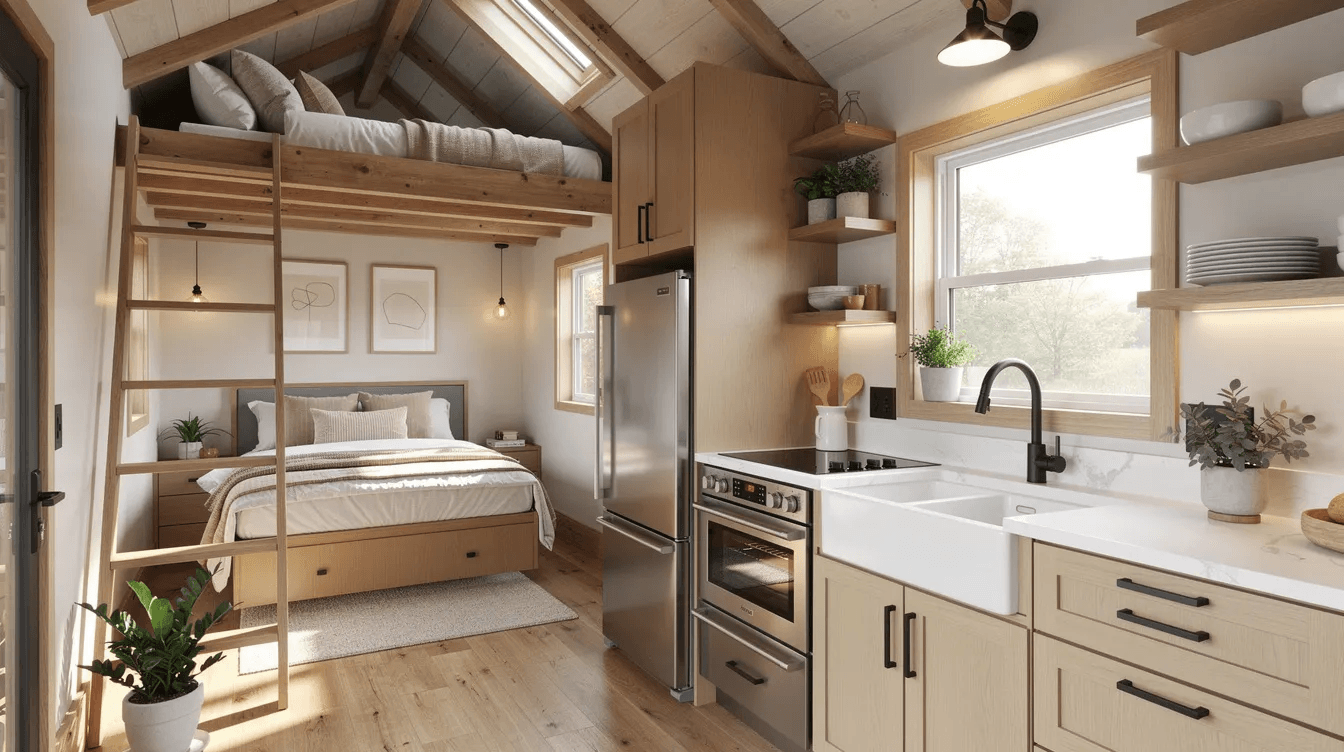
Tiny home costs in Alberta vary significantly based on size, finish level, and off-grid capabilities. Using a detailed tiny home cost calculator to model these variables can clarify what’s realistic for your budget. As of 2024-2026, simple shells on wheels start in the $30,000-$60,000 range for DIY builders, while fully finished, winter-ready tiny homes commonly run $90,000-$200,000 or more.
Key cost factors include:
- Size (length and width affect materials and transport)
- Level of finish (basic cabinetry vs luxury custom millwork)
- Off-grid systems (solar panels, batteries, composting toilets add $10,000-25,000)
- Transport distance across Alberta’s vast landscape ($3-5/km for 500km hauls)
- Professional vs DIY or shell-completion approach
Example scenarios:
- 24-foot finished THOW with mid-range finishes and electric baseboard heat: approximately $95,000
- 30-foot winterized family layout with dual lofts, R-30 spray foam insulation, and mini-split heating: approximately $165,000, especially when paired with tiny house interiors that maximize every square foot
- 35-foot modular ADU on foundation with full basement services and city utility hookups: approximately $220,000, comparable in scale to many of the great tiny homes that redefine small-space living
Land, site preparation, permits, and utility hookups add additional costs—often tens of thousands depending on your municipality and soil conditions. Rural properties may require engineered septics ($5,000-15,000) and well drilling, while urban sites need connection to municipal services.
Financing, Insurance, and Permits
Traditional 25-year mortgages typically aren’t available for tiny homes on wheels in Alberta, but several alternative pathways exist for financing your dream home.
Financing Options:
- RV loans from institutions like ATB Financial at 6-9% interest over 10-15 years (up to $150,000 for THOW units)
- Personal loans and HELOCs (home equity lines of credit) at prime+0.5%
- Construction mortgages (5-7% with draw schedules) convertible to 30-year terms for foundation-built tiny houses meeting building code requirements
Permits and Inspections:
Development permits ($500-2,000 fees, 4-8 week processing) and building permits are required for foundation-based tiny houses and backyard suites. Expect inspections at 25%, 50%, and 100% completion for structure, electrical (per Alberta Safety Codes), plumbing, and gas installations.
Insurance:
- RV policies ($800-1,500/year) cover tiny homes on wheels through specialized providers
- Homeowner’s or landlord policies ($1,200-2,500/year) apply to foundation-built tiny homes, covering rebuilds up to $200,000+
Documents you’ll likely need: Engineered plans, site plan, proof of property ownership, CSA certification (for THOWs), and septic/water system approvals for rural locations
Pros and Cons of Tiny Home Living in Alberta
Alberta’s climate, job market, and vast distances shape tiny living differently than in milder provinces. Understanding both advantages and challenges helps determine if this unique lifestyle fits your life.
Pros:
- Lower housing prices compared to conventional homes—entering homeownership around $100,000 versus $500,000+ median
- Smaller environmental footprint with 50-70% lower energy consumption (2,000 kWh/year vs 10,000)
- Flexibility to live closer to nature in foothills, near lakes, or rural communities while accessing cities for work
- Potential rental income from backyard ADUs in Edmonton or Calgary
- Expert craftsmanship in purpose-built tiny homes maximizes every inch of space
Cons:
- Space limitations become challenging in winter when residents spend more time indoors—200 square feet constrains gear storage (bulky jackets, skis, snowshoes)
- Bylaw complexity means finding legal land often takes longer than finding the tiny home itself
- Financing difficulties for THOWs with 10-20% depreciation affecting resale
- Permit processes can delay projects 6-12 months in some municipalities
Is a Tiny Home in Alberta Right for You?
Before you begin your tiny living adventure, consider how Alberta’s realities match your lifestyle. Think about commuting distances between cities like Calgary-Airdrie or Edmonton-Spruce Grove, your tolerance for -30°C winters, need for privacy, and storage requirements for sports gear, tools, or family items.
Key questions to ask yourself:
- Can you live comfortably in under 400 square feet through harsh Alberta winters?
- Are you prepared to navigate zoning bylaws, permits, and the learning curve of non-traditional housing?
- Do you value mobility and travel, or do you want a compact but permanent base?
- Where will you store seasonal items like camping gear, winter tires, and outdoor equipment?
Consider exploring different formats before committing. Rent a tiny home or park model in Alberta for a winter trial. Stay in short-term rental tiny homes in the Rockies or near central Alberta lakes to test layouts and experience the embrace of small-space living firsthand.
Tiny homes in Alberta serve as starter homes, downsizing solutions, rural retreats, or income-generating backyard suites when aligned with local rules and personal goals. The key is matching your priorities with the right type and location.
Frequently Asked Questions About Tiny Homes in Alberta
This section answers common Alberta-specific questions about legality, locations, and costs for those considering tiny home living in the province.
Are tiny houses legal in Alberta?
Tiny homes are legal in Alberta where they comply with municipal land use bylaws and applicable codes. The legal status depends on the type:
- THOWs are treated as RVs in most municipalities, limiting full-time residence to RV parks or rural properties with appropriate permits
- Foundation-built tiny homes are treated as regular dwellings under the building code, requiring proper zoning, permits, and inspections
- Park models follow RV classifications but gain approvals more easily in designated recreational districts
Where can I live in a tiny home in Alberta?
Options for tiny home living in Alberta include:
- Backyard suites and garden suites in cities like Calgary (500+ approvals 2023-2025) and Edmonton where bylaws permit
- Four-season RV parks and tiny-friendly resorts (200+ year-round sites across the province)
- Rural and agricultural land with county approval (thousands of acres available for lease)
- Specific community projects and small-scale developments
How much does it cost to build a tiny house in Alberta?
As of 2024-2026, expect these approximate ranges:
- DIY shells from $30,000-$60,000
- Professionally built, winter-ready tiny homes from approximately $90,000 to well over $200,000
- Add $15,000-$30,000 for land preparation, permits, and utility hookups depending on location
Winter upgrades (insulation, heating systems, insulated skirting) add significant cost but remain essential for year-round comfort. Companies building homes in Alberta understand these requirements and factor them into pricing.
Can I live off‑grid in a tiny home in Alberta?
Off-grid living is technically possible and increasingly common on rural land across Alberta. However:
- Municipal rules may still require approved septic systems and water cisterns (10,000L typical)
- Long, dark winters (14-hour nights in December) demand larger battery banks and backup generators even with solar
- Propane heating backup is standard for reliability at -40°C
- County development permits may be required depending on your municipality
Next Steps if You’re Considering a Tiny Home in Alberta
Moving from research to action requires a clear plan. Here’s a practical path forward for Albertans ready to explore tiny home ownership.
Step-by-step approach:
- Identify your priority—cost savings, mobility, rental income, or rural retreat
- Choose your preferred type (THOW, park model, or modular/foundation)
- Contact your municipality or county planning department to confirm zoning and servicing requirements for your specific lot or area
- Visit local show lots, open houses, or tiny home tours in Alberta to experience layouts in person
- Connect with builders and services that understand Alberta’s climate requirements
Keep detailed notes on bylaws, costs, and must-have features—whether you need a loft or main-floor bedroom, dedicated office space, or ample gear storage. These decisions made early prevent costly design changes later.
Tiny homes offer Albertans a realistic way to own a warm, efficient, and personalized space—even in one of Canada’s coldest provinces—when carefully planned. The support from growing communities of tiny home enthusiasts, expanding municipal policies, and experienced local builders makes 2025-2026 an opportune time to join the movement and explore what tiny living can offer your family.