
Living in a tiny house means every square inch counts. Your kitchen needs to work harder than any other room. The right tiny house appliances can make cooking a joy instead of a struggle. Here’s how to pick compact appliances that fit your small kitchen and actually get used.
- Quick-start guide: the best tiny house kitchen appliances
- How to plan a tiny house kitchen for small spaces
- Essential tiny house cooking appliances
- Compact appliances that save counter space
- Cold storage and dishwashing for tiny houses
- Storage strategies: making small appliances disappear
- Example layouts and appliance combinations for tiny homes
- Final thoughts
Quick-start guide: the best tiny house kitchen appliances
Want answers fast? Here are the top picks for tiny house kitchen appliances that work in small spaces.
Compact appliances are designed to maximize functionality in small spaces, making them ideal for apartments and tiny houses. These essentials earn their place:
- Immersion blender – Blends soups and smoothies, stores in a drawer. No bulky pitcher needed.
- Hand mixer – Does the job of a stand mixer in half the footprint. Perfect for baking in a small kitchen.
- Mini toaster oven – Replaces both a toaster and a full oven for everyday meals. Uses less electricity.
- The Instant Mini Vortex air fryer – Recommended for reheating smaller portions and cooking meals for one or two, featuring preprogrammed settings for convenience.
- 3-cup rice cooker – Handles rice, grains, and steamed vegetables. Compact enough to store in a cabinet.
- Programmable slow cooker – Set-and-forget meals with low power draw. Great for off-grid setups.
- Slim 24-inch gas range – Four burners and an oven in a narrow footprint. The workhorse of tiny kitchens.
- Compact refrigerator – Slim-line models (22-24 inches wide) fit tight layouts without sacrificing capacity.
- Countertop dishwasher – Saves water and time. Stores away when not in use.
- Electric kettle – Boils water for coffee, tea, and cooking faster than a stove.
These items save counter space and cabinet room while delivering real functionality.
How to plan a tiny house kitchen for small spaces
Tiny houses typically range from 200 to 400 square feet total. Your kitchen might get just 40 to 80 square feet of that. An 8-foot-wide tiny house leaves minimal wall space once you add doors and windows. Many compact kitchen appliances, such as refrigerators and microwaves, are specifically designed to fit into tight spaces while still providing essential features, which makes them especially important to consider when you’re evaluating tiny house floor plans that prioritize efficient layouts.
Before you buy anything, do this:
- Measure your wall length, vertical clearance, and cabinet depth. Write it down.
- Note ceiling height. Some tiny houses have 7.5-foot ceilings for highway compliance.
- Check your power source: 120V outlets, 240V service, propane hookups, or off-grid batteries.
- Identify your cooking habits. Do you bake bread weekly or mostly reheat food?
Create appliance zones along one wall or in an L-shape; pairing these zones with tiny house interiors that maximize every square foot helps your kitchen blend seamlessly with the rest of your living space.
- Cooking zone – Stove, oven, or cooktop
- Prep zone – Counter space near the sink
- Cleaning zone – Sink and dishwasher area
- Cold storage zone – Fridge placement
Space-efficient appliances are designed to maximize functionality in small living areas, making them ideal for apartments and tiny homes, especially when you’re starting from tiny house plans that are tailored to your lifestyle. Prioritize multi-use compact appliances over single-use gadgets. One multi-cooker beats owning a separate slow cooker, rice cooker, and steamer.
Essential tiny house cooking appliances
These are the core tools for most tiny kitchens. Get these right and everything else is gravy.
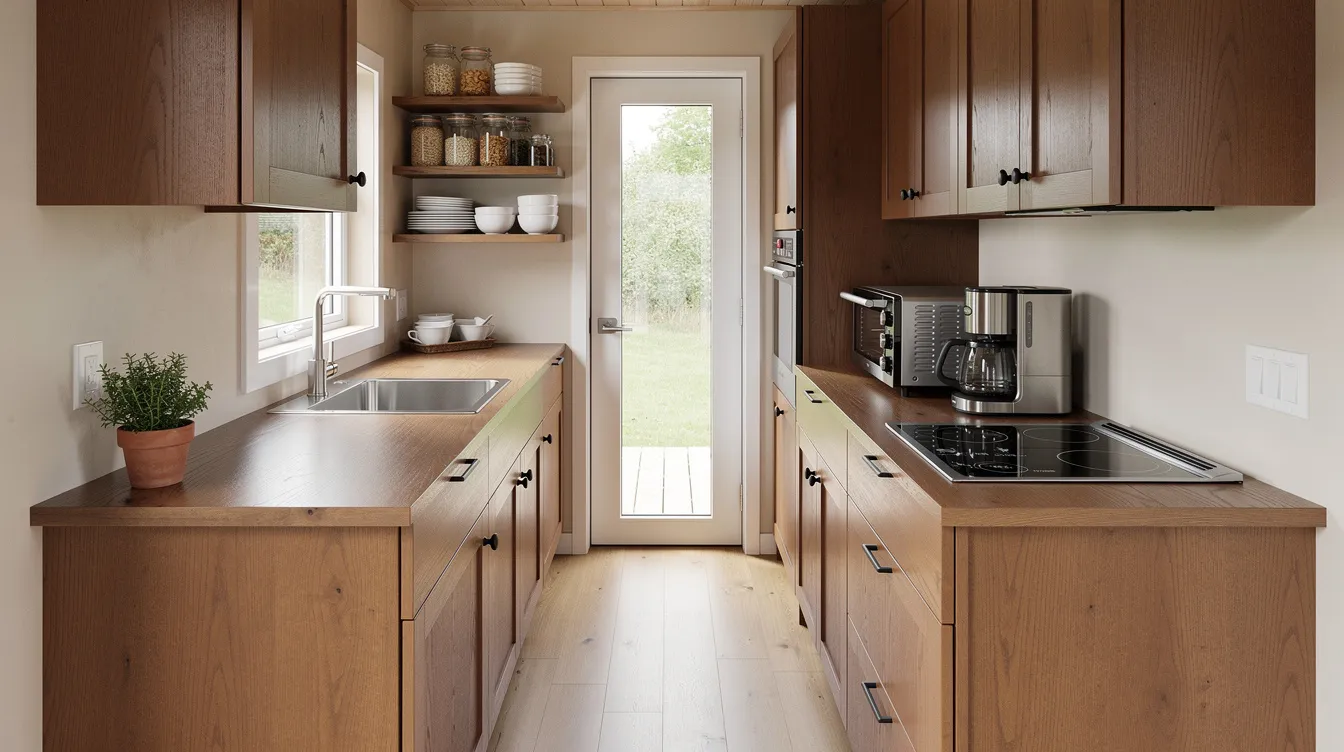
- Slim gas range (20-24 inches wide) – A 24-inch gas range offers four burners and a small oven. Depth runs 24-26 inches including the backguard. Sealed burners are easier to clean. Propane models work great off-grid.
- Portable induction cooktop – Uses electricity efficiently, generates less heat, and stores flat when not in use. Perfect for all-electric tiny homes. Requires induction-compatible cookware (stainless steel or cast iron).
- Mini convection oven – A versatile toaster oven with convection can bake, roast, and toast. Uses 1000-1500 watts versus 2000-5000 watts for a full-size electric oven. Major money savings on electricity.
- Compact electric range – For stationary tiny homes on standard electrical service. Glass cooktops are easier to clean than coil burners.
Air fryer vs. toaster oven? Here’s the deal:
- An air fryer excels at crisping food fast. Uses 1000-1500 watts. Needs 6-12 inches clearance around vents.
- A toaster oven is more versatile. You can bake a pan of cookies or roast vegetables.
- If you can only pick one, the toaster oven wins for flexibility.
Slow cooker, rice cooker, and other set-it-and-forget-it helpers
Low-effort appliances are gold in tiny houses. They free up your time and your counter while meals practically cook themselves.
- Programmable slow cooker (4-6 quart) – Uses just 75-150 watts continuously. Perfect for off-grid setups with limited power. Set it in the morning, eat hot food by dinner.
- 3-cup or 6-cup rice cooker – Handles rice, quinoa, farro, and steamed vegetables. A 3-cup model fits easily in a cabinet. Choose simple manual controls over complex digital panels.
- Multi-cooker (electric pressure cooker) – Combines pressure cooking, slow cooking, rice cooking, and steaming. One unit replaces three appliances. Measures about 10-12 inches in diameter. Worth the counter space it takes.
For tiny homes, a multi-cooker often beats owning separate units. You gain storage space and lose nothing in convenience.
Compact appliances that save counter space
Every inch of counter matters in a mini kitchen. These tools deliver without hogging space, and they pair especially well with tiny smart home setups that use technology to boost efficiency.
- Immersion blender – The NutriBullet Pro 900 is a compact blender that is ideal for making single servings of smoothies and small-batch sauces, offering a balance of power and ease of use. Detachable wands store in drawers. No bulky pitcher sitting on the counter.
- Hand mixer – Weighs 2-4 pounds. Stores in a single drawer. Does 90% of what a stand mixer does for occasional baking.
- The Cuisinart Core Custom 4-Cup Mini Chopper – A highly rated small appliance that can accommodate larger ingredients while taking up minimal countertop space. Great for sauces, dips, and quick prep work.
- Slim toasters – Long-slot models under 4 inches deep tuck against the backsplash. Some vertical designs reduce footprint by 30-40%.
- Under-cabinet microwave – Mounts below upper cabinets. Recovers 2-3 square feet of usable counter.
Many space-efficient appliances, such as built-in microwaves and cooktops, can be integrated into walls or cabinetry to save floor space.
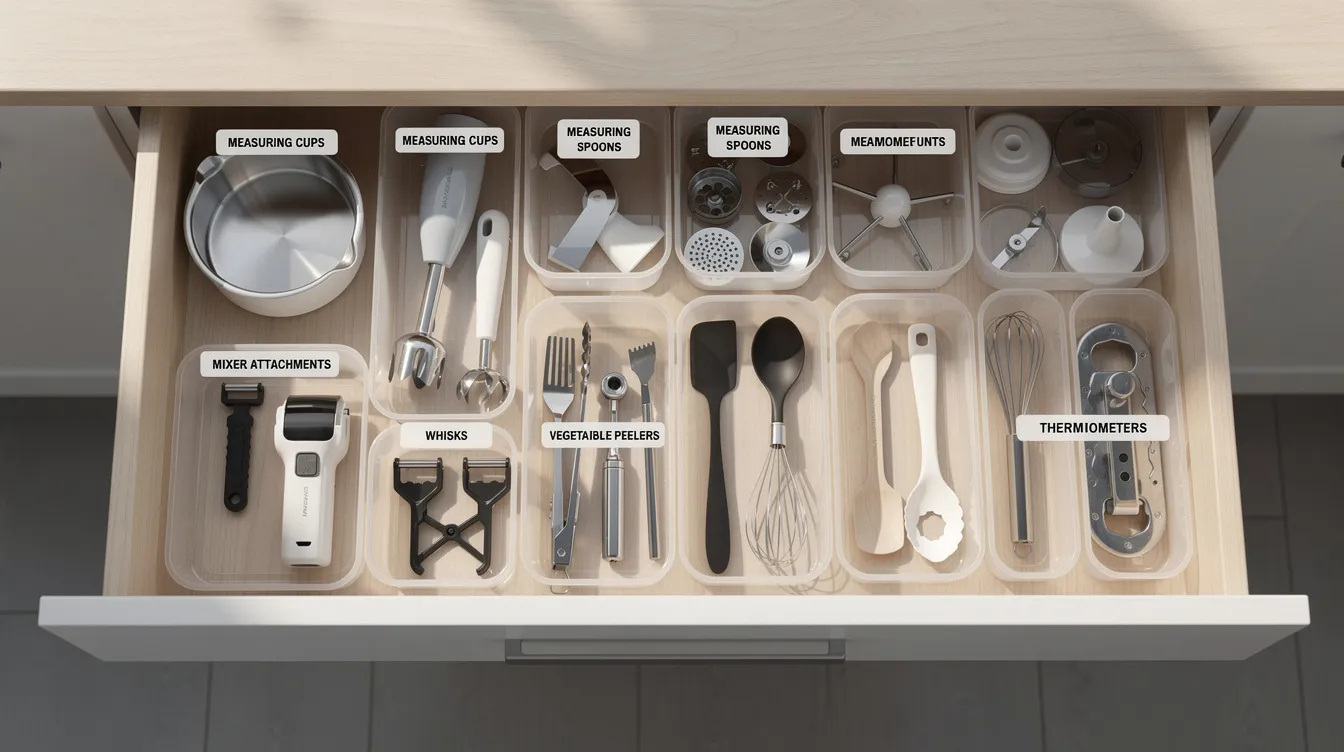
Keep accessories corralled in one container or bin. A small basket holds blender attachments, mixer beaters, and power cords together.
Multi-use gadgets vs. single-use tools in a small space
Multi-function gear usually wins in tiny houses. Less stuff means less clutter.
- A multi-cooker replaces a slow cooker, rice cooker, and steamer. That’s three appliances consolidated into one.
- An immersion blender handles smoothies, soups, and sauces without a full blender taking up room.
- A quality chef’s knife can replace several single-purpose cutters.
But some single-use items earn their place:
- Electric kettle – Faster and more efficient than boiling water on the stove. Essential for daily coffee or tea.
- Mini waffle maker – If you actually use it weekly, keep it. If it sits for months, donate it.
The rule: keep only what’s used weekly in the main kitchen. Store rarely used items in harder-to-reach spots or off-site.
Cold storage and dishwashing for tiny houses
Balancing food storage with limited floor area is tricky, as many innovative tiny homes that redefine small-space living demonstrate in their cleverly integrated kitchen solutions. Here’s how to make it work.
- Slim-line refrigerator (22-24 inches wide) – Provides 8-12 cubic feet of capacity. Enough for 2-3 people with weekly grocery shopping.
- Undercounter fridge – Fits below counters, occupies zero visible space. Provides 3-5 cubic feet for supplementary storage.
- Separate freezer – Choose based on cooking habits. Batch cookers need freezer space. Fresh-food focused households might skip it entirely.
Compact kitchen appliances often include features that allow for flexible organization, such as adjustable shelves and bins, to make the most of limited space. Compact appliances can include features like adjustable shelving and multiple cooking functions to enhance their usability in limited areas.
For dishwashers:
- 18-inch compact dishwasher – Uses 3-4 gallons per cycle versus 15-20+ for full-size models.
- Countertop dishwasher – Handles 4-6 place settings. Connects to faucet, stores away when done. Great for tiny homes on wheels.
- Handwashing – Still practical. A quality dish rack draining into the sink works fine for 1-2 people.
For tiny houses on wheels, secure all appliances for travel, taking cues from custom tiny homes designed specifically for mobile living. Install latches on the fridge door and ensure venting for gas appliances meets safety codes.
Choosing energy-efficient appliances for small homes
Tiny houses often run on limited electrical service, solar panels, or propane. Every watt counts.
- Look for ENERGY STAR ratings. These models use 10-30% less energy than standard units.
- Check standby power draw. Appliances use 1-10 watts even when off. Unplug what you don’t use or use power strips with switches.
- A compact toaster oven uses 1000-1500 watts. A full-size oven uses 2000-5000 watts. For everyday meals, the toaster oven wins.
- Compact refrigerators typically use 150-250 watts continuously versus 200-400 watts for full-size models.
Balance gas versus electric based on your setup:
- On-grid – Electric appliances work fine with standard 100-200 amp service.
- Off-grid – Propane gas range plus efficient electric appliances often works best. A 30-amp RV-style connection limits what you can run simultaneously.
Storage strategies: making small appliances disappear
Visual clutter makes small spaces feel smaller. Hide what you can.
- Deep drawers – Store heavy items like your slow cooker, rice cooker, or air fryer in pull-out drawers below counter height.
- Vertical storage – Wall-mounted rails, pegboards, and tall pantry cabinets let you stack compact appliances without losing floor space.
- Appliance garages – Small cabinet nooks with lift-up doors hide toaster ovens and blenders while keeping them accessible.
- Corner cabinets – Often wasted space. Install lazy susans or pull-out trays for small appliances.
Label bins and shelves. In a tiny home where every item has a specific spot, you need to find things fast. A bit of organization saves an hour of frustration later.
Safety and ventilation in a tiny house kitchen
Small spaces concentrate heat, steam, and cooking odors. Proper ventilation isn’t optional.
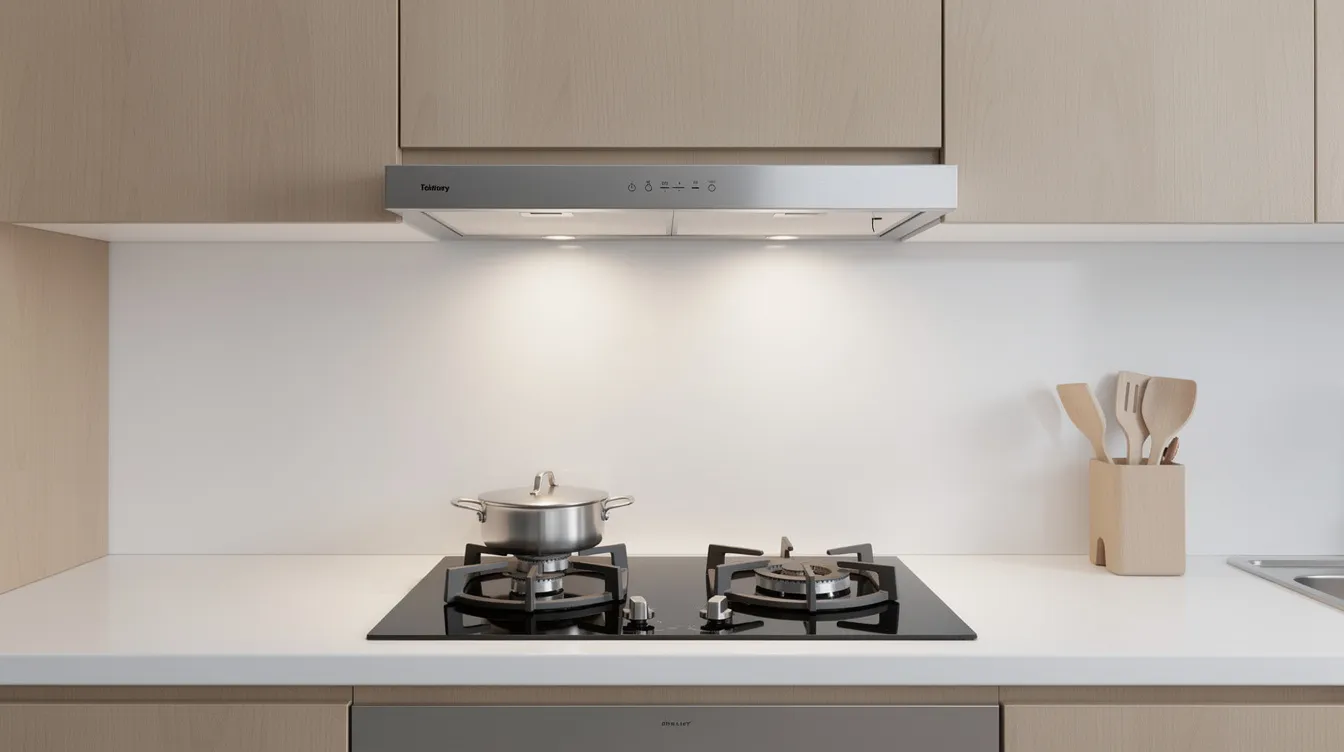
- Thin-line range hood (18-24 inches) – Sized for small cooking surfaces. Look for 100-200 CFM capacity. Ducting to outside is ideal.
- Clearances – Gas ranges need 6-inch clearance to combustible materials. Air fryers need 6-12 inches around vents. Don’t crowd hot appliances.
- Carbon monoxide detectors – Non-negotiable for any tiny house with gas appliances. Place 10-15 feet from the stove.
- Fire extinguisher – Keep one within reach of the cooking area. A warm oven and tight quarters can turn dangerous fast.
Open a window when cooking with gas. The confined space of a tiny home means combustion byproducts accumulate quickly.
Example layouts and appliance combinations for tiny homes
Different tiny houses need different setups, just as varied tiny house floor plans that work for different lifestyles show in their kitchen layouts, and as many of the cutest tiny house designs for dream homes highlight through their compact but fully functional cooking areas. Here are three that work.
8-foot single-wall kitchen:
- 24-inch compact refrigerator
- 24-inch gas range with sealed burners
- Small sink (24 inches)
- 2-3 feet of counter for prep
- Under-cabinet microwave
- No room for a dishwasher. Handwash or use a countertop model stored elsewhere.
Galley-style kitchen (24-foot tiny house):
- Undercounter fridge on one wall
- Compact cooktop plus separate toaster oven on opposite wall
- 18-inch dishwasher beside the sink
- Open shelving for storage
- Portable induction burner for extra cooking capacity
Ultra-minimal kitchenette:
- Combo unit with cooktop, sink, and mini fridge in one 36-inch run
- Single portable induction burner for backup
- 3-cup rice cooker for grains and steamed food
- Multi-cooker for everything else
- Maximum living space, minimal kitchen footprint
Each layout proves that tiny kitchens can accommodate real cooking when you choose the right appliances, especially when combined with tiny house interiors that maximize storage and flow or even pre-configured tiny house kits that make planning your space simpler.
Budgeting and buying tips for tiny house appliances
Smart planning prevents buying appliances that won’t fit or won’t get used.
- Set a total budget – Expect $2000-$5000 for basic essentials (fridge, range, sink). Use tools like a tiny home cost calculator to map your full budget. Add $500-$1500 for extras like an air fryer or quality slow cooker.
- Prioritize – Must-haves first: refrigerator, cooking surface, sink. Nice-to-haves second: dishwasher, specialty gadgets.
- Compare dimensions – A 24-inch fridge might be 28-30 inches deep with door handles. Measure your access point.
- Read reviews – Look for users mentioning apartments, small spaces, or tiny homes specifically.
Use this checklist before you buy:
- Does it fit the measured space?
- Does your electrical or gas hookup support it?
- Where will you store it when not in use?
- Will you use it weekly?
If any answer is uncertain, wait. The possibilities are bright when you plan first, from choosing tiny house plans that fit your life and cooking style and selecting space-smart doors that enhance tiny house functionality to exploring affordable tiny house kits that simplify the build process. You can draw inspiration from cute tiny house designs that showcase charming, efficient kitchens and great tiny homes that redefine small-space living, or lean into tiny smart home technology for ultra-efficient kitchens and custom tiny homes tailored around your ideal kitchen layout.
Final thoughts
A tiny kitchen doesn’t limit your life. It focuses it.
The right compact appliances let you cook real meals, save money on electricity, and keep your space organized. Measure twice. Buy once. Start with essentials and add only what you actually use.
Your tiny home kitchen can be as functional as any full-size room. It just takes smarter choices.