
Key Takeaways
- Modern families with 2–4 kids successfully live in tiny houses or small homes under 900 sq ft by prioritizing smart design, consistent routines, and honest communication over extreme minimalism.
- Financial freedom stands out as the primary benefit—many families pay off a tiny home in 3–7 years instead of a 30-year mortgage, while enjoying 40–60% lower utility bills.
- The biggest challenges include privacy management, storage space for kids’ belongings, and noise control in a small space, but each has practical solutions families use daily.
- When families live in smaller spaces, they tend to spend more time together, which can lead to stronger family bonds and shared experiences.
- This article shares real layout ideas, daily-life tips, and transition advice for families considering a tiny home or very small house.
What It’s Really Like to Live in a Tiny House With Kids
Picture this: Sam and Ayana wake up at 6:30 AM in their 10.5-meter tiny house on wheels parked beside a river in New Zealand. Their two young kids stir in the lofts above—one in a queen bed, one in a single—while the parents’ bedroom sits on the ground floor. By 7 AM, breakfast happens at the kitchen island. By 8 AM, school prep uses the lounge table that got cleared of toys the night before. This has been their life since 2022, and they expect to stay for years more.
What counts as tiny for a family? Traditional tiny homes on wheels typically measure under 400 sq ft. Small cottages or flats range from 400–900 sq ft. Bigger Tiny Homes designed for 4–6 people push toward that upper limit. Sam and Ayana’s 34-foot THOW offers roughly 315 sq ft of interior space—about the size of a large bedroom in a conventional house.
Daily life runs on rhythm. Morning routines flow around the kitchen island. Homework happens on fold-down desk flaps or outside on the deck when weather allows. Shared meals occur family-style at a built-in bench. Bedtimes stagger so each child gets loft time alone, with curtains providing semi-privacy. Muddy returns from riverside play route through the bathroom’s outdoor access.
Is it perfect? No. Limited personal space creates friction. Clutter accumulates fast without discipline. But the rewards balance it: Sam and Ayana paid off their $85,000 NZD build in five years. They’d still be paying a mortgage on a conventional house. Their son gets fresh air daily. The kids sleep ten feet from mom and dad. There’s enough room because they designed for it.
- Why Families Choose Tiny Living
- Designing a Tiny Home That Works for a Family
- Making a Small Space Work With Kids’ Stuff
- Routines, Privacy, and Family Dynamics in a Tiny House
- Planning the Transition to Tiny House Living With a Family
- Real-World Tiny House Family Examples and Ideas
- Is Tiny House Living Right for Your Family? Final Thoughts
- FAQ: Tiny House Living for Families
Why Families Choose Tiny Living
Families don’t shrink their homes randomly. They do it for reasons that make sense to them.
Financial freedom tops the list. A 2024 American Tiny House Association report found average THOW build costs at $75,000–$120,000. Compare that to $300,000+ for a starter house in many markets. Utilities run 40–60% lower—roughly $150–300 per month—due to compact footprints and high-efficiency systems. Some families save $500 yearly just from composting toilets reducing water bills.
Location flexibility matters too. Tiny houses on wheels let families live closer to nature, better schools, or jobs without big-city housing prices. Builders like Mint Tiny Homes offer 30–34 foot models that sleep up to eight people for $110,000–$160,000, enabling rural placements near mountains or coastlines.
Value shifts drive many parents. Sarah Wooden’s family in Australia downsized from a five-bedroom house to a THOW around 2020 with two kids under four. Cleaning time dropped from 10 hours weekly to 5. That freed time for excursions and play. The idea was simple: spend more life with kids, less life maintaining a larger house.
Environmental impact appeals to eco-conscious families. Tiny homes have long been recognized as eco-friendly living solutions due to their smaller ecological footprint, which reduces energy consumption and waste production. Bigger Tiny Homes are designed with energy-efficient features and innovative materials that help to further reduce energy consumption and promote sustainable living. Many run on 5–10kW solar setups, completely off-grid, much like self contained tiny homes for modern off-grid living highlighted in many off-grid case studies.
Life transitions push families toward tiny living. Post-2020 homeschooling surges drove 35% of family tiny moves, per Tiny House Listings analytics. Job changes, debt recovery, and burnout all contribute. For many, the appeal mirrors that of minimalist tiny houses for sustainable living: a more mindful lifestyle that prompts families to prioritize meaningful experiences over material possessions, which can lead to reduced consumption and waste.
Designing a Tiny Home That Works for a Family
Good design separates cramped from living big, and drawing on broader tiny house inspiration and resources can spark ideas that make a small family home feel expansive.
The difference isn’t just square footage. It’s how you plan the space. A 350 sq ft THOW built wrong feels smaller than a 280 sq ft home built right.
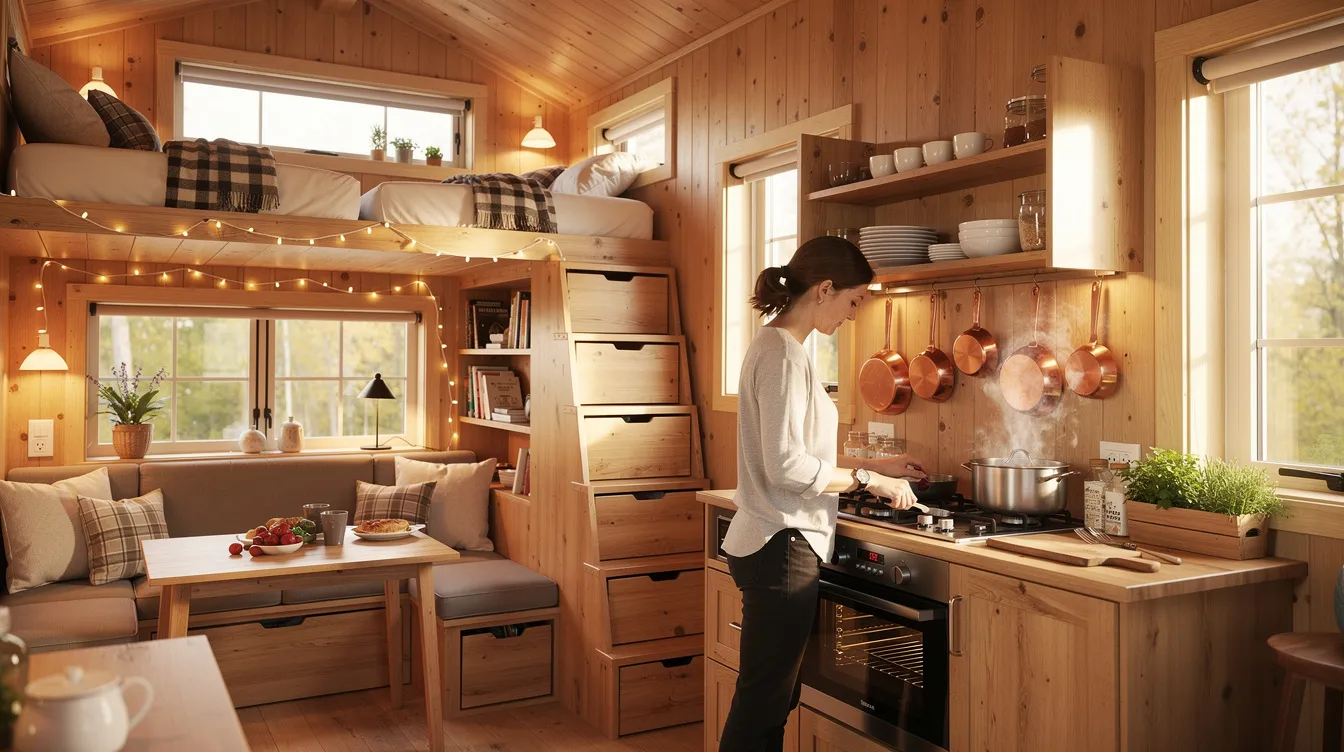
Layout planning starts with zones, not bedrooms. Core layouts from builders like Timbercraft Tiny Homes feature linear flow: entry to living/kitchen (40% of space), bathroom (10%), parents’ room (15%), and lofts (35%). Each zone has a job. Exploring thoughtful tiny house floor plans that work for you helps ensure every area supports how your family actually lives. The Bigger Tiny Home movement allows families to collaborate with architects and designers to create personalized spaces that meet their unique needs, enhancing functionality and individuality.
Sleeping spaces need creative solutions:
- Loft bedrooms for older kids (6×8 feet works for a twin bed plus small desk)
- Main-floor bedroom for parents with a privacy door or curtain
- Bunk beds or convertible futons for younger children
- Stacked bunks in builders like Tiny Heirloom’s two-bedroom THOWs with actual walls
Multi-purpose areas save square footage, especially when you borrow ideas from tiny house interiors that maximize every square foot:
- Dining nooks double as homeschooling desks
- Couches convert to guest beds
- Window seats hide lift-up storage (adding 20–30 cubic feet)
- Stair cubbies hold shoes, books, or toy bins
Kitchen and bathroom basics matter. Families need a full-size fridge (10 cu ft minimum), 4–6 linear feet of counter space, and at least one standard 3×6 foot shower. Anything less creates daily stress.
Outdoor integration expands livable space. Wraparound decks (100–200 sq ft) serve as playrooms in Rocky Mountain models. Sheds handle laundry or storage. Some families add covered porches for year-round use.
Example floor plan 1: 28-foot THOW for four (260 sq ft)—enter to 10×8 lounge/kitchen with L-shaped counter and bench-to-bed sofa; 5×8 bath; 6×10 parents’ room; twin lofts over bath/room with shared headroom staircase.
Example floor plan 2: 850 sq ft cottage—ground floor 20×20 open living/kitchen/dining with island; two 10×10 bedrooms; 400 sq ft loft bunkroom; mudroom to deck. Families who want to customize further can look at tiny house plans that fit your life to adapt layouts as kids grow.
Bigger Tiny Homes provide more expansive living areas, multiple bedrooms, and additional storage options, allowing each family member to have personal space while fostering togetherness, similar to what you find in top custom tiny homes for small-space living.
Making a Small Space Work With Kids’ Stuff
Toys, clothes, and school supplies cause the biggest headaches in tiny homes. Left unchecked, they overwhelm a 300 sq ft space in days.
Decluttering before move-in is essential. One family’s 2022 trial reduced 2,000 toys to 400 using KonMari methods over two months. Aim for a 50–70% reduction. Keep only what fits in specific bins. Donate duplicates. Plan 1–3 months for this process with kids involved.
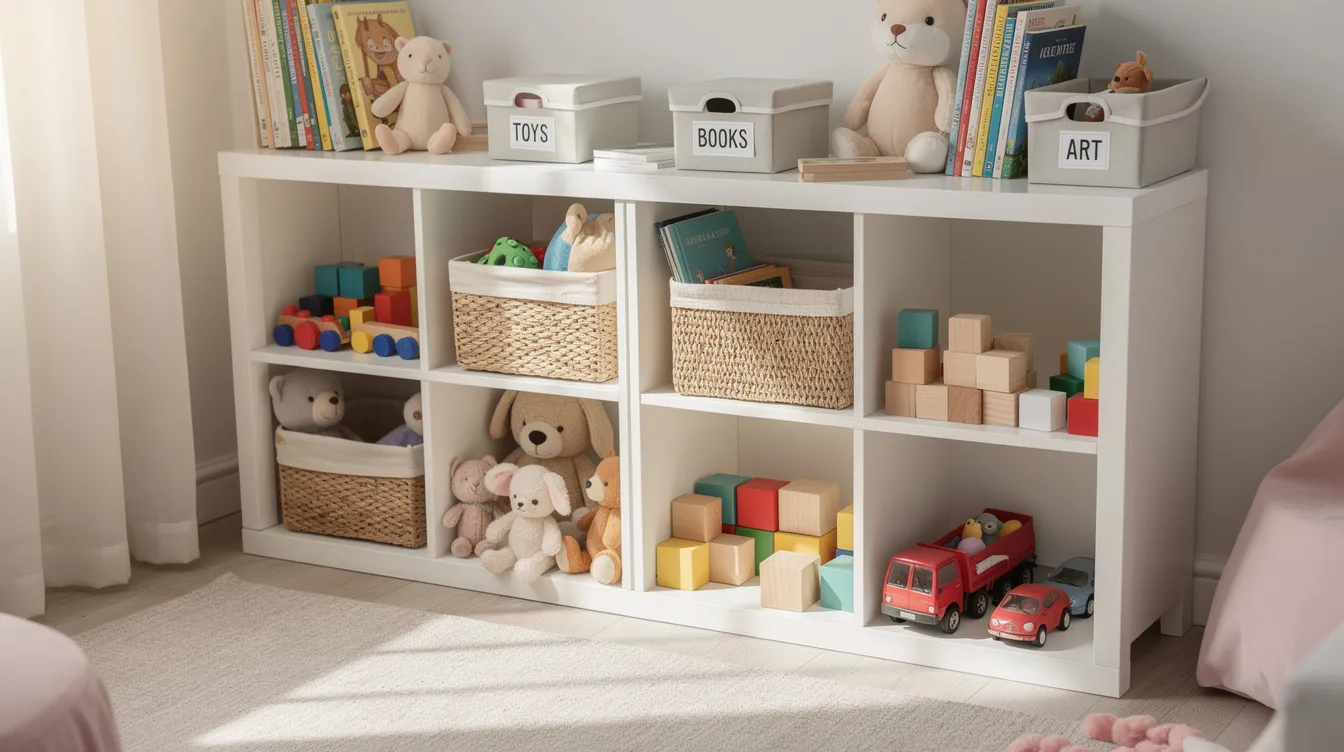
Storage systems make or break tiny living:
- Under-bed drawers (12–18 inches deep, potentially 50 cu ft total)
- Wall-mounted shelves and IKEA Trofast bins
- Hooks behind every door
- Under-stair cubbies for shoes and bags
Toy and book rotation prevents overload. Teacup Tiny Homes advocates keeping 20% of toys accessible while the rest sits in labeled 50-gallon bins. Rotate bi-monthly. This teaches kids ownership and keeps surfaces clear. It’s fine to store overflow in a shed or vehicle.
Shared essentials reduce clutter and build cooperation. Sports gear, art supplies, and electronics don’t need one per child. Bigger Tiny Homes can accommodate larger families by providing innovative storage solutions and well-planned layouts that ensure personal space for each family member.
House rules for stuff:
- “One in, one out” for new purchases
- Daily 10-minute “reset” ritual before bed
- Clear homes for every item
- Weekly check for items that migrated from their spots
Routines, Privacy, and Family Dynamics in a Tiny House
Tiny house living reshapes how families relate. You can’t avoid each other. That’s both the challenge and the beauty.
The cozy ambiance of tiny homes fosters effective communication and empathy among family member interactions, creating an environment of love and harmony. But only if you plan for it.
Daily routines create predictability. A typical schedule: 6:30 AM wake, 7 AM breakfast at the fixed table, 8 AM–3 PM school (table or desk), 6 PM dinner, 8 PM quiet time. Consistency keeps a small house calm. In the NSW multigenerational homestead, full-time parenting became feasible because low costs meant less job stress.
Privacy for parents requires intention:
- Doors or curtains on sleeping areas
- White noise apps or machines
- Agreed “quiet hours” like 8–9 PM
- “Do not disturb” signals kids learn to respect
Privacy for kids and teens matters more as they grow:
- Loft curtains or partial walls
- Headphones for personal media
- Outdoor tents or deck spaces for alone time
- Library trips for quiet study
Noise management uses simple tools:
- Rugs absorbing 20–30% of sound
- Soft furnishings and upholstered surfaces
- Clear rules: loud play outside, quiet time inside
- Zoned activities during specific hours
Conflict resolution improves with structure. Weekly family meetings at the tiny home dining table let everyone discuss what’s working and what isn’t. Anecdotal builder reports suggest this reduces conflicts by 40%.
Guests and sleepovers need realistic expectations. Options include deck tents, camper vans outside, or pull-out couches. Limit overnight guests to weekends. Set clear expectations with kids about how often friends can stay.
Living in a tiny house encourages families to engage in shared activities like cooking together and participating in family game nights, which can nurture stronger emotional bonds.
Planning the Transition to Tiny House Living With a Family
Success comes from gradual transition. Rushing creates chaos.
Talking with kids starts the process. Frame it as adventure: less stuff means more parks, more time together, more freedom. For younger kids, focus on the fun parts—lofts like tree houses, outdoor play daily. For older kids, expect questions. Answer honestly. Involve them in decisions.
Trial runs reveal truth faster than imagination and help you decide if buying a tiny house for sale is really for you:
- Weekend stays in rental tiny homes (2024 listings average $150/night)
- Camping trips that simulate shared sleeping
- Restricting family to a few rooms for a week in your current house
- Talking through what felt hard and what felt fine
Financial planning requires real numbers. Calculate current housing and utility costs versus projected tiny home expenses. Include land, parking fees, insurance, and maintenance. A 2025 calculator might show $2,000/month for a big family house versus $500 for tiny living.
Legal and logistical checks prevent surprises:
- Verify local zoning law requirements
- Check parking rules for THOWs
- Research school options for rural properties
- 40 U.S. states allow THOWs in RV parks; ADUs on properties vary widely
Realistic timelines prevent burnout. Plan 6–24 months:
- Months 1–3: Declutter and research
- Months 4–8: Design or buy the tiny home
- Months 9–12: Sell or rent out the old house
- Month 12+: Move in and adjust
Exit strategies matter. Many families treat tiny living as a 3–10 year season. Have a backup plan if kids’ needs change or jobs shift. Trends show 30% of families upsize when the oldest child reaches 14. This isn’t failure—it’s flexibility.
Real-World Tiny House Family Examples and Ideas
Real families between 2015 and 2025 prove tiny living works. Here’s what they built.
Example 1: Sam and Ayana’s 34-ft THOW (Family of 4)
Since 2022, this New Zealand family has lived in a 315 sq ft tiny home with two lofts, a main-floor parents’ bedroom, a full kitchen, and an outdoor deck serving as the kids’ primary playroom. Son Tulsi and his sibling each have their own loft with curtain privacy. The bathroom has outdoor access for muddy play returns. Build cost: $85,000 NZD, paid off in five years.
Example 2: Homesteady Family of Six in 1,000 sq ft
A Pennsylvania family with four kids (aged 2–12) has lived in a garage loft conversion since 2022. That’s 166 sq ft per person. Meals rotate kitchen seating. Homeschooling uses wall-mounted desks. Play spills to an adjacent yard. They manage noise with scheduled “quiet hours” from 8–9 PM. Monthly utilities run $400—half a typical home. They figure the hard work pays off in family closeness.
Example 3: Rocky Mountain Pemberley (Family of 5) illustrates how families can adapt proven designs like the great tiny homes that redefine small space living showcased across the movement.
This 460 sq ft model features multiple lofts, climbing ladders instead of stairs, and a big kitchen. It’s a bigger tiny home built for a family with three children. Each child has a defined sleep space. Storage sits under every surface. The world outside becomes an extension of home via a wraparound deck.
Ideas to adapt:
- Climbing-wall loft ladders (fun for kids, saves stair space)
- Built-in desks along hallway walls (instant homework zones)
- Shared family wardrobes (one closet system, multiple people)
- Outdoor cabin or shed for laundry and overflow storage
- Deck saunas or hot tubs as luxury escapes
Watch tiny home tour videos on YouTube channels like Living Big In A Tiny House. By 2025, they’d documented over 500 tours including dozens of family setups. Seeing it helps more than imagining it, just as browsing approachable options like Home Depot tiny house kits with big possibilities can turn abstract ideas into concrete next steps.
Is Tiny House Living Right for Your Family? Final Thoughts
Tiny houses aren’t a magic fix. They’re a deliberate trade-off.
You give up personal space and possessions. You gain financial and lifestyle freedom. A 2023 Tiny House Society survey of 1,200 owners found 28% were families with kids under 18—up from 15% in 2015. For 85% of long-term tiny dwellers, the benefits outweigh challenges.
Signs tiny living might fit your family:
- Kids are flexible and enjoy outdoor time
- Parents value experiences over possessions
- Everyone can commit to routines and shared space
- You want to save money or live debt-free
- The joy of simplicity appeals more than the stress of a big house
Signs it might not work long-term:
- Strong need for personal space (especially teens)
- Work-from-home jobs requiring separate offices
- Local regulations that prohibit tiny homes
- Unwillingness to maintain daily tidying habits
- You’re doing it as an excuse to avoid other problems
The beauty of tiny living is that it doesn’t have to be permanent. Treat it as a season. Start with a trial. See how your family responds to less space and more togetherness. Point yourself toward what matters. Wait and see what unfolds.
The choice is yours.
FAQ: Tiny House Living for Families
How many kids can realistically live in a tiny house?
Comfort depends on layout more than strict numbers. Most full-time tiny houses on wheels under 400 sq ft work best for 2–4 kids. Small fixed homes up to 900 sq ft can accommodate larger families—like a big family of five or six—if designed with multiple sleep zones and smart storage.
As children become teenagers, the need for separate sleeping or study spaces increases. Many families find very small THOWs work well until kids hit age 12–14, then consider upsizing to a larger small home or adding an accessory dwelling.
Can you legally live in a tiny home full time with kids?
Laws vary wildly by country, state, and city. Check local zoning codes, building standards, and minimum-square-footage rules before committing. The law treats tiny houses on wheels differently than foundation-built homes.
Typical options families use: placing tiny houses on permanent foundations, parking in zoned tiny house communities or RV parks, or using accessory dwelling unit (ADU) rules on a larger property with land you own. Some states have eased restrictions since 2023, with 20 states updating ADU laws favorably.
How do kids do homework or homeschooling in such a small space?
Families use multi-purpose tables, fold-down desks, or window counters as study areas. The rest of the home clears for other activities after schoolwork ends. Strict “clutter reset” habits keep surfaces available.
Libraries, community centers, and outdoor spaces serve as quiet study environments when the tiny home feels too busy or noisy. Some parents schedule homework during specific hours when younger siblings nap or play outside.
What about hosting birthday parties and family gatherings?
Tiny house families move gatherings outdoors. Yards, local parks, and community halls become party venues. Indoor parties stay small and simple—maybe three friends instead of fifteen.
Practical tips: stagger guest arrival times, host potluck-style meals to save kitchen space, and use nearby grandparents’ or a friend’s house for larger events. Eat outside when weather allows. Keep expectations realistic with kids about party size.
Do kids feel deprived growing up in a tiny home?
Many children value shared experiences, outdoor time, and family closeness more than bedroom size. A 2024 child survey found kids in tiny homes often report higher satisfaction when parents communicate openly and involve them in decisions.
Balance fewer physical possessions with rich experiences—trips, hobbies, and time together. When kids understand tiny living as a positive, intentional choice rather than a restriction, they adapt. The crazy thing? Many kids prefer it. Resources go toward adventures instead of stuff. That’s not deprivation. That’s a different kind of wealth.