
Building your own tiny house is one of the most affordable paths to homeownership in 2024—but only if you go in with realistic expectations. This article breaks down exactly what it costs, how long it takes, and the smartest ways to get started on your own tiny house project without blowing your budget or burning out halfway through.
- Quick Answer: What It Really Takes To Build a Tiny House in 2024
- Understanding Tiny House Build Costs
- Main Factors That Impact Your Tiny House Budget
- Three Budget-Friendly Ways To Build Your Tiny House
- Growing Your Skills To Shrink Tiny House Costs
- Key Material Decisions: Trailers, Lumber, Windows & More
- Creative Ways To Save: Salvage, Repurposing & Off-Cuts
- Planning Your Build: Time, Space & Design Strategy
- Designing For Your Budget (And Your Life)
- Next Steps: From Idea To Groundbreaking
Quick Answer: What It Really Takes To Build a Tiny House in 2024
If you’re looking for a straight answer on what it takes to build a tiny house, here it is: most DIY builders spend between $25,000 and $60,000 in materials and some professional help for a typical 18–26 ft tiny home. That said, an ultra-frugal builder using secondhand materials, simple systems, and doing nearly all the labor themselves can realistically complete a very basic 20–24 ft tiny house for under $15,000. On the other end, hiring professionals for a turnkey custom build can easily push costs past $100,000.
Time is the other major factor people underestimate. A first-time builder working full-time on their project (35–40 hours per week) should expect 6–10 months from bare trailer to move-in ready. If you’re building on nights and weekends at 10–20 hours per week, plan for 18–30 months. These aren’t pessimistic numbers—they’re based on the 1,000–1,600 labor hours that typical DIY tiny house building requires.
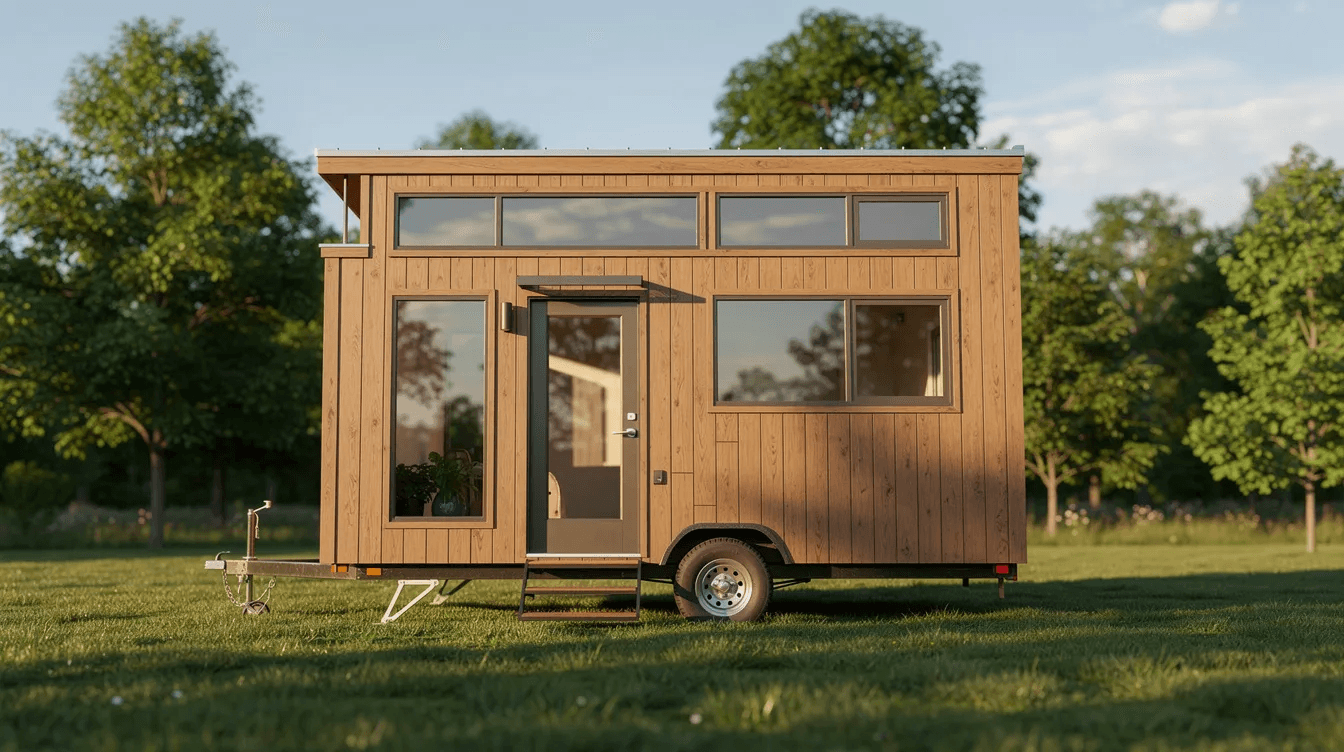
To ground this in a real example: a 24 ft tiny house on wheels (~180 sq ft plus loft) constructed in 2023 in Oregon came in at approximately $32,000 in materials. That build used a new purpose-built trailer, mid-range windows, a mini-split HVAC system, and decent interior finishes. The builder did most of the work themselves, hiring an electrician only for panel connection and final inspection.
Understanding Tiny House Build Costs
Tiny homes can be cheap overall, but they’re often expensive per square foot. That seems counterintuitive until you realize that every tiny house still needs all the systems of a regular house—kitchen, bathroom, electrical, plumbing, HVAC, insulation—just compressed into a much smaller footprint. The cost of those systems doesn’t shrink proportionally with square footage, which is why tiny houses often run $150–$300 per square foot compared to $150–$200 for conventional homes.
In 2024, the realistic cost range spans from about $8,000 for an ultra-frugal DIY shell with minimal systems to $100,000+ for a professionally built, fully-equipped tiny home. Using a tiny home cost calculator can help you understand where your own project is likely to land, though most DIYers with modest but decent finishes end up somewhere between $25,000 and $60,000 in total out-of-pocket expenses.
Several major factors drive where you’ll fall in that range. Size matters most—a 16 ft house needs fewer materials across every category than a 24 ft house. Foundation type affects early costs significantly, with purpose-built tiny house trailers running $4,500–$9,000 new, while building on skids or pier blocks can cost a few hundred to a couple thousand dollars. Level of finish creates huge swings; hardwood flooring, cedar siding, and custom cabinetry can double or triple what you’d spend on vinyl plank, basic siding, and IKEA cabinets. Location influences both material and labor costs, with high-cost coastal metros running 20–40% higher than rural areas for the same project.
Here’s a concrete sample budget for a 22 ft (~160 sq ft) tiny house on wheels in 2024, using mid-range materials and grid-tied systems:
The trailer runs $5,000–$7,000 for a 22 ft purpose-built unit with brakes. Framing, sheathing, and subfloor add $3,000–$5,000 in lumber and fasteners. Metal roofing with underlayment and flashing costs $1,000–$1,800. Windows and doors using a mix of new and surplus units run $2,000–$4,000. Insulation for walls, floor, and roof adds $1,200–$2,500. Exterior siding and trim come to $1,500–$3,000. Interior wall and ceiling finishes (plywood, shiplap, or drywall plus paint) run $800–$2,000. Flooring costs $500–$1,200 for vinyl plank or laminate. Kitchen cabinets, counters, sink, and faucet add $1,500–$3,000. Bathroom fixtures including shower, toilet, and sink run $1,500–$3,000. Electrical wiring, panel, outlets, and lighting cost $1,500–$3,500 including some professional help. Plumbing materials, water heater, and fittings add $1,500–$3,500. HVAC via mini-split or wall-mounted heater runs $1,500–$4,000. Miscellaneous items including fasteners, sealants, tools, permits, and a 10–15% contingency add $3,000–$6,000.
That brings the total to roughly $27,000–$45,000 in materials and partial professional trades.
Adding off-grid capability changes the math significantly. A small 1–2 kW solar array with charge controller adds $2,000–$5,000. A lithium or AGM battery bank with inverter runs $3,000–$7,000. Water tanks, pump, and filtration add $800–$2,000. A quality composting toilet costs $900–$1,600. These off-grid extras can easily add $10,000–$25,000 to your build, which is why many builders start grid-tied and add off-grid systems over time.
Main Factors That Impact Your Tiny House Budget
Careful choices in a few key areas can swing your final cost by tens of thousands of dollars. Understanding these levers before you start buying materials gives you control over where your money goes.
Labor is the biggest variable. Professional labor typically accounts for 30–60% of a tiny home’s total project cost. In 2024, general laborers charge $20–$40 per hour, while skilled trades like electricians and plumbers run $50–$120 per hour in most markets. If a tiny house requires 1,200–1,500 hours of labor and you hire out most of it, you could easily spend $40,000–$80,000 on labor alone. By doing most of the work yourself and hiring only for code-critical tasks like electrical panel connections and gas line work, you can save $30,000–$60,000 compared to a fully contracted build.
Structure type creates another major cost difference. A tiny house on wheels requires a custom trailer costing $4,500–$9,000 new for a purpose-built unit, or $1,500–$4,000 for a refurbished car hauler or flatbed. Building on skids (heavy treated timbers on gravel or blocks) can cost as little as a few hundred dollars in materials plus some welder time for a detachable wheel kit if you want occasional mobility. A permanent foundation with slab or piers runs roughly $4–$7 per square foot for the concrete work, but excavation, inspections, and code compliance often push real costs higher.
Building envelope quality affects both upfront cost and long-term expenses. Better insulation (closed-cell spray foam vs. fiberglass batts), high-performance windows (double or triple-pane with low-e coatings), and proper air sealing cost more initially—perhaps an extra $2,000–$5,000 for a typical tiny house. However, these investments can dramatically reduce heating and cooling loads, especially important in small spaces that gain and lose heat quickly.
Systems represent another decision point with major cost implications. Full plumbing with a flush toilet, hot water, and proper drainage is essential for full-time living but adds significant cost compared to a simple composting toilet and outdoor water access. Electrical systems can range from minimal (a few circuits and lights) to complete with multiple 20-amp circuits, outdoor hookup, and solar backup. HVAC via a mini-split typically costs $2,000–$5,000 installed but provides both heating and cooling efficiently.
The difference between a weekend cabin and a full-time home can easily be $25,000–$40,000 in systems alone.
Consider this comparison: a basic weekend cabin built on skids with no indoor plumbing, minimal electrical, and a simple propane heater might total $12,000–$20,000 in materials. A full-time tiny home on a proper trailer with complete bathroom, full kitchen, mini-split HVAC, and off-grid capability could run $50,000–$80,000 in materials plus professional help. Same approximate size, vastly different price tags based on intended use.
Three Budget-Friendly Ways To Build Your Tiny House
There isn’t one right way to build cheaply. Different approaches fit different timelines, skill levels, and priorities. Here are three proven paths that have helped people complete their own tiny house without breaking the bank.
The first approach is ultra-DIY on a used trailer with heavily salvaged materials. This path targets a total cost under $15,000 and requires maximum sweat equity. You’d start with a used car hauler or flatbed trailer in the $1,500–$3,000 range rather than a new purpose-built unit. Windows and doors come from Habitat ReStore, contractor surplus yards, or Facebook Marketplace—often for 25–70% less than retail. Interior finishes use reclaimed wood, repainted vintage cabinets, and simple plywood surfaces. Systems stay basic: a composting toilet instead of flush plumbing, minimal electrical, and a small propane or wood heater. A builder in 2022 completed a 20 ft tiny house on wheels using this approach for approximately $11,000 in materials, though the build required extensive time sourcing secondhand materials and accepting a more rustic aesthetic.
The second approach is semi-DIY using a new tiny house trailer and framed shell or kit. This path typically runs $30,000–$50,000 total. You purchase a purpose-built trailer for $5,000–$8,000 and either frame the structure yourself or buy a weather-tight shell from a builder for $25,000–$40,000. You then complete the interior: insulation, interior walls, flooring, cabinets, and some systems. This approach gives you a solid, road-worthy base while letting you customize finishes and save money on the portions you can handle, similar to tiny house kits from Home Depot and other retailers. A 2023 build in this category started with a 24 ft shell purchased from a tiny house builder for $32,000, then added $15,000 in interior materials and partial professional trades for electrical and plumbing, totaling roughly $47,000.
The third approach involves buying a prefab shell or finished unit and customizing over time. This path has higher upfront cost—typically $50,000–$100,000 for a nearly complete tiny home—but lower DIY complexity. You’re paying for professional construction, but you can still personalize the space over time with décor, additional storage, and system upgrades like solar. This works well if you have more money than time. Someone in 2023 purchased a 26 ft turnkey tiny house on wheels for $73,000, then added a $6,000 solar system and $3,000 in interior upgrades over the following year, ending up around $82,000 total.
Growing Your Skills To Shrink Tiny House Costs
Every skill you learn—measuring accurately, cutting cleanly, running wire safely, sealing gaps properly—directly translates to money saved. Since professional labor runs $50–$120 per hour for skilled trades, being able to self-perform even 200–300 hours of work represents $10,000–$25,000 in avoided labor costs.
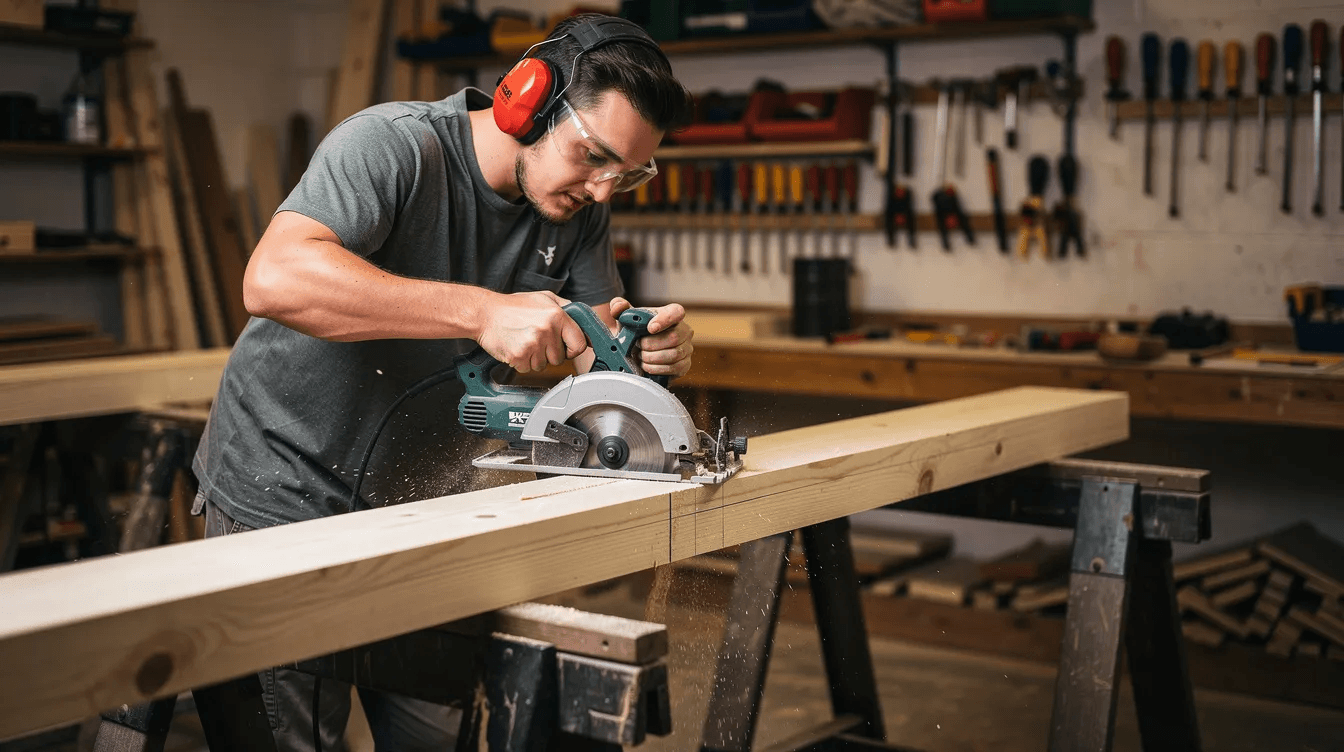
The skills that most reduce cost include: basic framing (layout, stud spacing, headers, squaring walls), sheathing and housewrap installation (creating a continuous air and water barrier), window and door installation (proper flashing prevents leaks and rot), simple plumbing rough-in (running PEX lines, positioning drains), and reading basic electrical diagrams (running cable and installing boxes, leaving panel connections to a licensed pro).
You can acquire these skills before starting your main build through several paths. Community college carpentry courses, typically running 6–12 weeks of weekend or evening classes, cover framing, tool use, and basic construction. Volunteering with Habitat for Humanity provides hands-on exposure to framing, sheathing, roofing, and siding under supervision. Short intensive workshops run by organizations like Wild Abundance offer 1–2 week programs where participants actually frame and sheath a small structure. Shadowing a local contractor for a few weekends—offering labor in exchange for training—can provide focused mentorship, especially when paired with a step-by-step guide on how to build a tiny house.
A realistic prep strategy might look like this: spend 3–6 months in 2024 taking a weekend carpentry class, volunteering on two or three Habitat builds, and constructing a small shed or deck as a practice project. This accumulates 40–80+ hours of practical experience—enough to move from total beginner to competent beginner in measuring, cutting, fastening, and basic layout.
Investing 40–80 hours in learning can realistically save $10,000–$25,000 in professional labor over the full build.
Before you purchase expensive materials like a trailer or window package, commit to specific skill-building steps. Sign up for that community college class. Schedule two Habitat build days. Start that practice shed. These small investments pay enormous dividends when you’re standing in front of your actual tiny house frame.
Key Material Decisions: Trailers, Lumber, Windows & More
A few early material choices—trailer or foundation, framing lumber, windows and doors—lock in both cost and feasibility for the rest of your build. Make these decisions carefully because they’re expensive or impossible to change later.
For tiny houses on wheels, your trailer choice is foundational. New purpose-built tiny house trailers designed for THOWs (with proper crossmember spacing, tie-down points, and often drop axles to lower floor height) typically run $4,000–$10,000 depending on length and axle rating. Used or refurbished car haulers and flatbed trailers can cost $1,500–$4,000 but require careful inspection for rust, frame damage, and adequate axle capacity. Salvaged mobile home or travel trailer chassis are sometimes available for very little or even free, but often need significant assessment and potential reinforcement before use.
For stationary builds, constructing on skids (heavy treated timbers like 6x6s resting on gravel or pier blocks) dramatically reduces foundation cost to a few hundred dollars in materials. Adding a salvaged wheel kit from an old mobile home—detachable axles, tongue, and wheels—allows occasional short-distance moves without the expense of a road-worthy trailer. This approach typically requires a skilled welder and costs perhaps $500–$2,000 in parts and labor.
Lumber choices affect both budget and build weight. Standard kiln-dried dimensional lumber (2×4, 2×6) is the default for code-compliant framing—widely available, predictably sized, and properly graded for structural use. Rough-sawn lumber from local mills often costs 20–40% less per board-foot but comes with tradeoffs: it may lack structural grading (creating permitting issues), and full-dimension boards (actual 2×4 rather than 1.5×3.5) add significant weight—a real concern for trailers with finite gross vehicle weight ratings.
Windows and doors represent a category where creative sourcing can save thousands. New windows and doors for a tiny house typically run $2,000–$5,000, but salvaged units from Habitat ReStore, contractor surplus yards, or online classifieds can drop that to $500–$1,500. When evaluating used windows, watch for: intact seals (no fogging between panes), absence of frame rot, smooth hardware operation, and square frames that will fit your openings.
Other big-ticket materials deserve brief mention. Metal roofing ($500–$2,000 for materials) is popular for tiny homes due to its durability and lighter weight compared to asphalt shingles. Siding typically runs $1,000–$2,500 for materials in vinyl, wood, or fiber-cement. Insulation costs $500–$3,000 depending on whether you choose batts, rigid foam, or closed-cell spray foam. For a home intended for long-term, full-time living, investing in durable, low-maintenance options protects both your comfort and the structure’s long-term value.
Creative Ways To Save: Salvage, Repurposing & Off-Cuts
Creative material sourcing can reduce costs by 20–50% while giving your tiny house uniquely interesting character. Since materials typically represent 30–50% of a tiny house budget, aggressive salvaging can shave $5,000–$10,000 off your total project cost.
Repurposing strategies work particularly well for interior finishes and non-structural elements. Pallet wood can become rustic interior paneling or even exterior siding—free materials, though labor-intensive to de-nail and prepare. Reclaimed barn wood makes impressive interior cladding. Vintage kitchen cabinets from 1990s or 2000s remodels can be repainted and reconfigured, saving thousands compared to new cabinetry. Solid-core doors from renovations can be cleaned, trimmed to fit, and repainted for a fraction of new door prices.
Finding quality off-cuts and surplus requires regular effort. Local flooring and roofing installers often have leftover materials from large jobs—sometimes enough for an entire tiny house roof or floor. Habitat ReStore locations stock discounted doors, windows, cabinets, and fixtures. Contractor surplus yards and liquidation outlets carry misordered or leftover materials at steep discounts. Facebook Marketplace, Craigslist, and OfferUp frequently list free or cheap building materials. Construction and estate auctions can yield bulk materials at pennies on the dollar when contractors close shop.
Set alerts for “building materials” and “construction surplus” on your local classifieds, and visit ReStore weekly. Worthwhile finds—metal roofing, insulated doors, quality windows—appear sporadically and go quickly.
A few caution points matter here. Never use salvaged materials in load-bearing structural roles unless they’re clearly sound—avoid anything cracked, twisted, heavily notched, or showing rot. Check older painted materials for lead (pre-1978 paint) and inspect for mold or hidden water damage. Some older materials may contain asbestos. Don’t compromise on critical structural or safety elements just to save a few hundred dollars.
One builder documented saving approximately $4,500 by using surplus metal roofing ($200 instead of $1,000 retail), salvaged double-pane windows ($500 instead of $3,000 new), and reclaimed flooring ($100 instead of $800). All materials passed inspection and created a durable, functional home—just with a bit more character and a lot less money spent.
Planning Your Build: Time, Space & Design Strategy
Clear planning around time, build site, and design prevents the budget creep and burnout that derail many DIY projects. Getting these details right before you buy your first materials saves both money and frustration.
Time expectations need to be realistic. DIY tiny house builds typically require 1,000–1,600 labor hours to go from bare trailer or foundation to move-in ready. At 40 hours per week (treating it like a full-time job), that’s 6–10 months. At 20 hours per week (intense nights and weekends), expect 12–18 months. At 10 hours per week (more casual part-time), you’re looking at 2–3 years. First-time builders almost always underestimate by at least 2x, so build padding into your schedule.
Build space matters more than many people realize. You need at least 1,000–2,000 square feet of flat, accessible ground to park your trailer or foundation plus staging area for cutting, assembly, and ladder access. You’ll also need dry storage (garage, shed, or covered racks) for lumber, windows, and tools. Vehicle access is essential for material deliveries and eventually towing out your finished tiny home. Consider noise—power tools generate significant sound, and local ordinances or neighbor relationships can make or break a build site. Some HOAs or municipalities restrict visible construction, forcing people to lease build space in rural areas or commercial lots.
Detailed tiny house plans are worth every dollar. Quality plans run 60–90+ pages and include floor plans, elevations, framing layouts for all walls and roof, foundation or trailer details, electrical and plumbing schematics, window and door schedules, and complete material lists. Good plans reduce mistakes (especially structural ones that require expensive rework) and enable accurate budgeting by letting you price materials before committing, and they pair well with broader tiny house inspiration and resources as you refine your ideas. Spending 3–5% of your budget on proven tiny house plans is economically sensible if they prevent even one major error.
A straightforward planning sequence looks like this: finalize your design and floor plan first, then confirm weight calculations and trailer or foundation specs to match. Create a phased budget breaking costs into shell (trailer, framing, roof, windows), rough-in (electrical, plumbing, insulation), and finishes (interior, fixtures, appliances). Line up your build site and storage, verify zoning, and address any permits needed. If building in a jurisdiction requiring inspections, schedule structural, electrical, plumbing, and final inspections and design to accepted codes.
Here’s a concrete timeline example: someone starting design work in spring 2024 and aiming to move in by late 2025 might spend April–August 2024 on research, design selection, budget creation, and securing a trailer and build site. September 2024 through February 2025 focuses on building the shell—framing, sheathing, windows and doors, roofing, and exterior finishes to weather-tight stage. March through August 2025 covers rough-in systems—electrical wiring, plumbing, insulation, interior walls and ceilings, initial cabinetry. September through November 2025 handles finishes—flooring, trim, paint, final fixtures and appliances, inspections, and troubleshooting. Move-in happens late 2025 or early 2026 depending on pace and any delays.
Designing For Your Budget (And Your Life)
Design decisions should reflect both your actual lifestyle and your real budget—not just impressive photos you’ve seen online. A tiny house that works beautifully for a single remote worker will frustrate a couple with different schedules, and a design that looks awesome in photos may cost $20,000 more than a simple version that functions just as well for daily life.
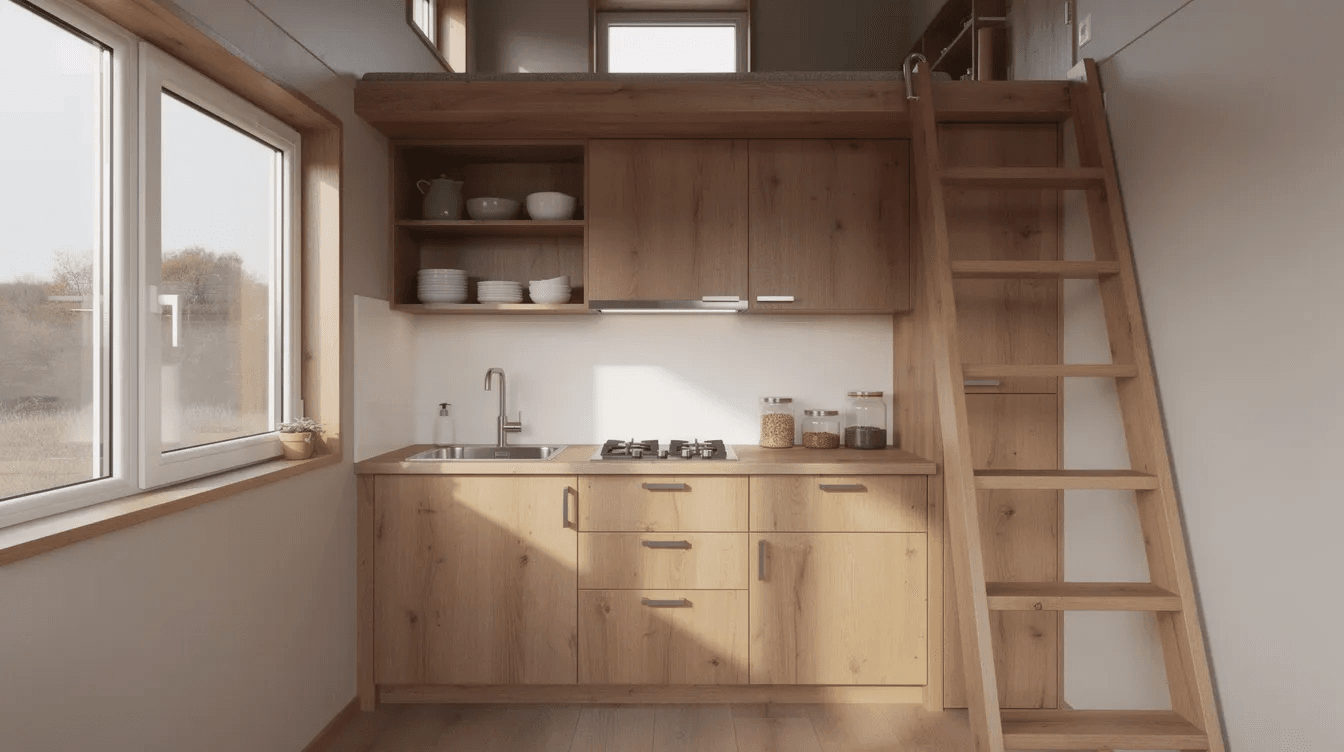
Common tiny house layouts include 18–24 ft homes with loft sleeping areas accessed by ladder or compact stairs, leaving the main floor for kitchen, seating, and bathroom. These are cheaper due to smaller size and simpler structure but less accessible for anyone with mobility concerns. Longer 24–30 ft homes can incorporate a main-floor bedroom or flexible space, adding cost (more materials, more windows, interior walls) but improving daily usability and aging-in-place potential, especially for those drawn to minimalist tiny houses for sustainable living.
Tiny homes suit certain living situations particularly well: singles and couples without young children who can share small spaces comfortably, remote workers who value small footprints and potential mobility, and retirees downsizing who are comfortable with compact living and attracted to affordable tiny house designs and tips. Larger or growing families often find even 260 square feet too constraining—small houses in the 800–2,000 square foot range may make more sense while still offering significant savings over conventional construction.
Certain design choices add cost that surprises first-time builders. Large continuous window walls or extensive glazing look impressive but cost significantly more than standard walls with normal-sized windows. Complex rooflines with dormers and multiple slope changes increase framing labor, flashing complexity, and leak risk. Custom stairs with integrated storage demand many hours of carpentry. Curved walls and non-rectangular floor plans cause material waste and fitting challenges.
Design from a “must-have” list to keep costs aligned with budget. Write down your non-negotiables: perhaps a standing-height ceiling throughout, a 36-inch shower, a dedicated workspace, or a specific amount of closet space for your specific needs. Draft your design to hit these essentials, then identify “nice-to-haves” that could be deferred or eliminated: skylights, oversized picture windows, elaborate built-ins, or premium siding inspired by elegant tiny homes with modern design. Iterate until a rough cost model using the ranges from earlier sections actually fits your numeric budget.
A simple, well-designed tiny house usually feels better and costs less than an over-complicated miniature mansion. Good light, smart storage, and thoughtful circulation create a functional space that doesn’t require a world of expensive custom features to live comfortably, as shown by many great tiny homes that redefine small space living.
Next Steps: From Idea To Groundbreaking
Building a tiny house is achievable for many people on modest budgets—but only with realistic expectations about cost, time, skills, and planning. The typical DIY builder spends $25,000–$60,000 and invests 1,000–1,600 hours over 6–30 months depending on schedule. Learning key skills before you start can save $10,000–$25,000 in professional labor. Detailed research and planning prevent expensive mistakes and budget creep.
Your action plan should follow this sequence: first, set a firm total budget number rather than a vague range. Second, choose your approximate size and foundation type (trailer, skids, or permanent foundation) to anchor your major early decisions. Third, secure a build site with adequate space and verify local zoning allows your project. Fourth, start skill-building through classes, volunteering, or a practice project like a shed. Fifth, select or purchase detailed plans that match both your budget and lifestyle needs.
Put a concrete date on your calendar to move from dreaming to doing. Something like “By June 1, 2024, have my design chosen and budget drafted” creates accountability. Share that date with someone who will hold you to it.
If a complete tiny house build still feels overwhelming, starting small is a valid and smart first step. Build a shed or small deck this season, or study examples of tiny homes under $20K for sale to see what’s realistically achievable at lower budgets. You’ll practice the fundamental skills—measuring, cutting, fastening, weatherproofing—test your tool comfort, and get honest feedback about whether you enjoy construction work. That investment of time and a few hundred dollars in materials can save you from spending $30,000 on a project you’ll never finish.
With planning and patience, creating your own tiny house is within reach. The money you save, the skills you develop, and the life you build in that small space can be worth far more than the months of effort required to get there, whether you eventually construct your own or decide a tiny house for sale is a better fit for your situation.