Choosing between tiny houses and mobile homes affects space, mobility, regulations and lifestyle in fundamentally different ways. The right choice depends on your budget, space needs, and desired level of mobility—whether you’re drawn to minimalist living or prefer a more traditional home layout.
Below is a practical comparison of tiny house vs mobile home differences.
Tiny House vs Mobile Home: Key Differences
The main difference comes down to size versus affordability and lifestyle priorities.
- Tiny house living focuses on minimalism, potential mobility, and requiring fewer resources.
- Mobile home living emphasizes more space, cost-effectiveness per square foot, and traditional layouts.
Both approaches can provide affordable alternatives to a traditional house, but the living experience differs significantly. Tiny homes typically range from 100 to 400 square feet, while mobile homes can range from 480 to over 3,600 square feet, making mobile homes significantly larger.
Size and Living Space
Space is the most fundamental difference between these two housing options.
Tiny House Space
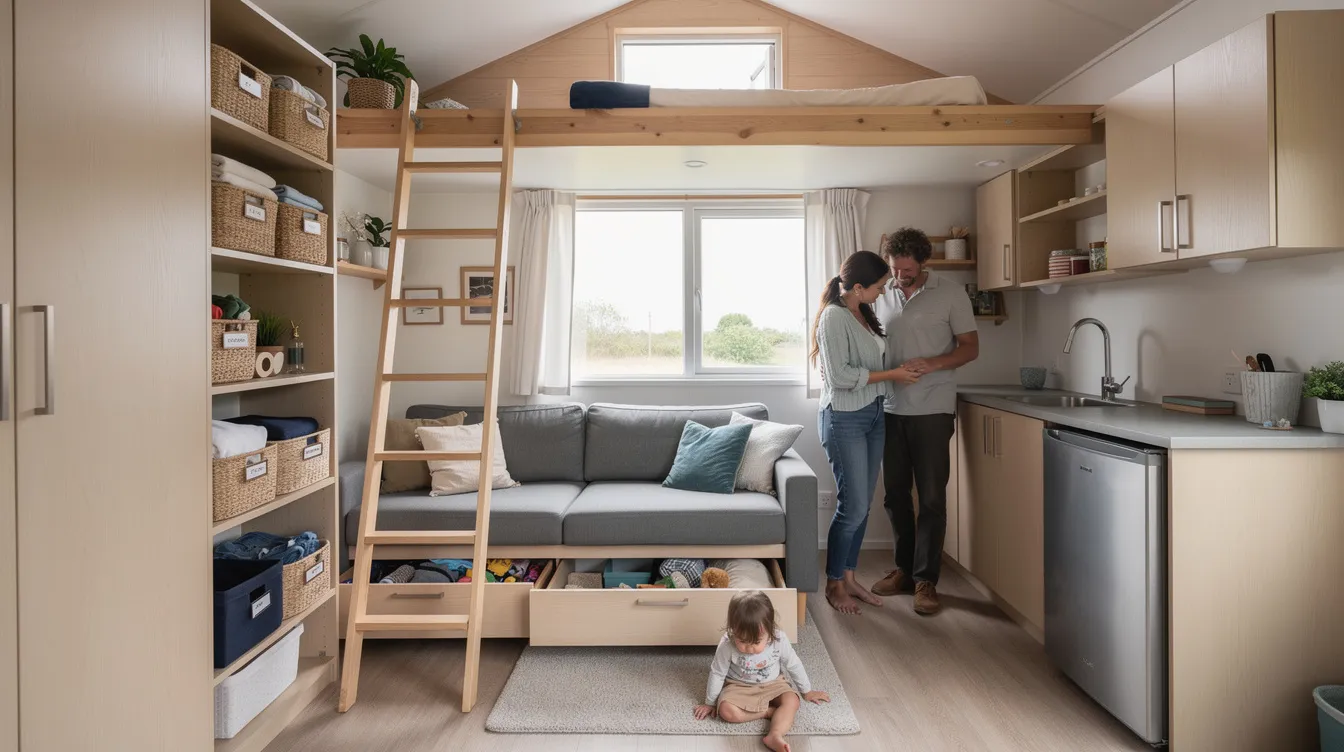
Most tiny houses measure between 100 and 400 square feet, requiring owners to maximize every inch through multi-functional furniture, built-in storage, and vertical space utilization.
This compact dwelling approach means limited storage requiring constant organization and a minimalist lifestyle. Hosting guests becomes challenging, and accommodating life changes—like adding family members—can feel cramped quickly.
Families may find tiny homes too restrictive due to their limited living space, which can make daily living challenging, especially as family size increases or circumstances change.
Mobile Home Space
Mobile homes generally provide more living space, with single-wide models averaging around 600 to 1,300 square feet, and double-wide models offering even more room—typically 1,000 to 2,300 square feet. Triple-wide options can exceed 3,600 square feet.
The average size of a tiny home is significantly smaller than that of a mobile home, which can be up to three times larger, allowing for more bedrooms and living areas in mobile homes. This makes manufactured home options more suitable for larger families and conventional living arrangements.
Mobile homes provide a more traditional layout and amenities that can accommodate the needs of families, such as full-sized appliances and more storage options, which are often lacking in tiny homes.
Cost and Financial Considerations
Both options are more affordable than regular houses but have different cost structures worth understanding.
Tiny House Costs
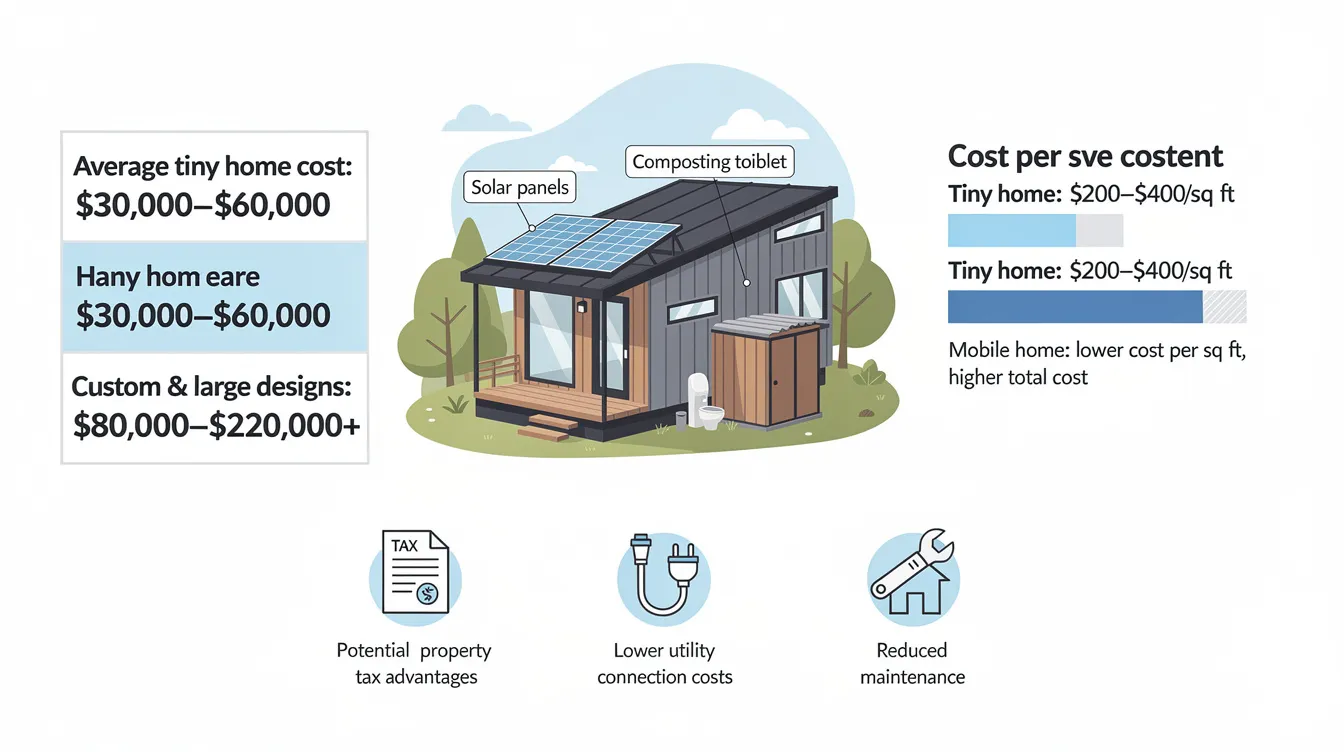
The average cost of a tiny home typically ranges from $30,000 to $60,000, though custom built options and larger designs can run $80,000 to $200,000 or more, and using a tiny home cost calculator can help you estimate your specific budget.
The cost per square foot tends to be higher—often $200 to $400—due to fixed components like kitchens, bathrooms, and electrical systems compressed into a small area. However, affordable tiny house designs can keep total costs manageable, and tiny homes usually have a lower total cost compared to mobile homes and can save money on utilities and maintenance over time.
Financial benefits include potential property taxes advantages (if classified as personal property), lower utility connections costs, and reduced ongoing maintenance. Many tiny home owners incorporate solar panels and composting toilets to further reduce expenses and achieve self sufficiency.
Mobile Home Costs
Used mobile homes can be purchased for around $25,000, while new ones range from $50,000 to $250,000 depending on size and features. A new single-wide averages approximately $50,000, while double wide units run $100,000 to $150,000.
Mobile homes are generally more affordable when considering cost per square foot—often $75 to $150—thanks to factory efficiency and standardized construction. This makes them significantly cheaper per square foot compared to tiny homes.
Additional costs include lot rental if placing in a mobile home park, land purchase if you want private land, utility hook ups, and ongoing maintenance. Financing is often easier for HUD Code-compliant manufactured homes.
Mobility and Transportation
Despite similar-sounding names, these options have very different mobility characteristics.
Tiny House Mobility
Tiny homes on wheels (THOW) are specifically designed for mobility and must comply with road standards to be moved legally, often requiring RVIA certification from the Recreational Vehicle Industry Association.
Tiny homes are designed to be mobile, often built on trailers, allowing them to be towed to different locations easily. This appeals to those seeking a nomadic lifestyle or wanting flexibility in where they live.
THOW owners can often stay in RV parks, though some parks require specific certifications. Maintenance needs for mobile components like tires, axles, and chassis are ongoing considerations. For those pursuing off grid living, mobility allows relocating to optimize solar power access and self sufficient living.
Mobile Home Mobility
Mobile homes, despite their name, are not typically moved frequently. Relocating them can require significant logistical effort and permits, costing between $1,000 to $10,000 depending on distance and size.
Moving a double wide or larger unit requires oversize permits, escort vehicles, potential disassembly, and professional movers. Most homeowners treat manufactured homes as permanent once placed on a home site. The logistics make frequent relocation impractical and expensive.
Regulations and Legal Requirements
Size and classification affect where each type can be legally placed, creating different regulatory landscapes.
Tiny House Regulations
Zoning laws and building codes for tiny homes vary significantly by location, with many cities imposing minimum square footage requirements that tiny homes often do not meet.
While no state outright bans tiny homes, many have strict zoning laws that complicate their placement, making it essential for potential owners to check local laws before committing. Some jurisdictions allow tiny homes as accessory dwelling units when placed on a permanent foundation.
Building codes present varying requirements—foundation-built tiny homes may need to meet International Residential Code standards, while those on wheels might fall under RV or park models regulations. Permits can be difficult to obtain, and many municipalities simply haven’t created pathways for legally placing tiny structures.
Mobile Home Regulations
Mobile homes are subject to federal HUD construction standards, which regulate aspects such as safety, durability, and energy efficiency, while tiny homes often do not have such stringent regulations.
The HUD Code, implemented in 1976, created uniform national standards for manufactured home construction. Homes built before this date (technically “mobile homes”) lack these protections and may face insurance and financing challenges.
Manufactured homes must be placed in designated mobile home parks or approved rural areas in many jurisdictions. The federal standards provide consistency, though state and local restrictions on placement locations still apply. Zoning laws often limit where modular homes and manufactured housing can be situated.
Construction Quality and Standards
Building methods and quality standards differ substantially between these housing options.
Tiny House Construction
Tiny homes are often custom built with higher quality materials and attention to craftsmanship. Superior insulation and energy efficiency are common priorities, given the small space requiring climate control.
Quality varies widely between builders—professional builds typically take about 120 hours, while DIY projects require 500+ hours. The tiny house movement has produced many skilled builders offering custom tiny homes with innovative designs, but also varying standards.
Tiny homes are generally more eco friendly due to their smaller size, which requires fewer resources to build and maintain, and they often incorporate sustainable features like solar panels and composting toilets. This makes tiny living appealing to those prioritizing eco friendly features and energy efficiency, and there are many resources for exploring the world of tiny houses if you want to dive deeper.
Mobile Home Construction
Factory-built manufactured homes follow HUD Code standards since 1976, ensuring standardized construction processes and safety requirements. Mass production allows for consistent quality and faster build times.
Modern manufactured homes have improved significantly from pre-1976 models, featuring better insulation, energy-efficient windows, and modern HVAC systems. The controlled factory environment reduces defect rates compared to traditional home construction.
Mobile homes have improved in energy efficiency over the years, but their larger size means they typically consume more energy and materials compared to tiny homes. However, the standardization provides predictable quality that custom tiny house builds may lack.
Lifestyle Considerations
Climate and location significantly affect which option is more practical for your situation.
- In cold climates, tiny homes require excellent insulation and efficient heating systems—less space means less energy needed, but thin walls can be challenging.
- In hot, dry climates, both options require careful moisture management and cooling considerations.
- In mild, humid regions, outdoor conditions may favor either option with proper planning.
Tiny houses suit those seeking minimalist living and potentially a nomadic lifestyle. Tiny homes encourage a minimalist lifestyle, which can lead to reduced consumption of resources and a smaller overall environmental footprint compared to larger mobile homes. The appeal lies in simplicity, lower environmental impact, and freedom from excess possessions, as shown by many inspiring tiny homes that redefine small space living.
Mobile homes better accommodate traditional family living with multiple bedrooms, separate spaces, and room for small families or larger families to grow. The more living space allows for privacy and conventional daily routines.
Consider maintenance requirements carefully. Tiny homes may use dump station access for waste, require trailer maintenance, and need regular attention to mobile components. Manufactured homes require seasonal maintenance but offer more stable systems.
Evaluate long-term needs including family growth and aging. Loft sleeping arrangements common in tiny homes can be difficult for children or elderly residents, while mobile homes provide ground-level accessibility.
Tiny House vs Mobile Home: Which Should You Choose?
Choose a tiny house if you want maximum mobility, minimalist living, and don’t mind less space. Tiny homes appeal to individuals and couples seeking simplicity, lower costs, eco friendly living with solar power and off grid capabilities, and the freedom to relocate, making a tiny house for sale an attractive option for many first-time buyers.
Choose a mobile home if you need more space, prefer traditional layouts with multiple bedrooms, and want faster setup. Manufactured homes work well for families needing room to grow, those who prefer conventional amenities, and buyers wanting established financing options.
Consider regulations in your desired location before deciding. Many cities have strict building codes and zoning laws that affect where you can legally place either option. Research local laws to ensure your chosen housing type is permitted.
Both options provide affordable alternatives to a traditional home when matched with appropriate lifestyle needs. The primary differences come down to individual tastes, space requirements, mobility desires, and how you envision your daily living experience. Whether you’re drawn to the high cost savings of tiny living or the spacious layouts of manufactured housing, understanding these key differences helps you make the right choice for your situation, whether you’re comparing tiny house plans that fit your life or even exploring Amazon tiny houses as an affordable option.