
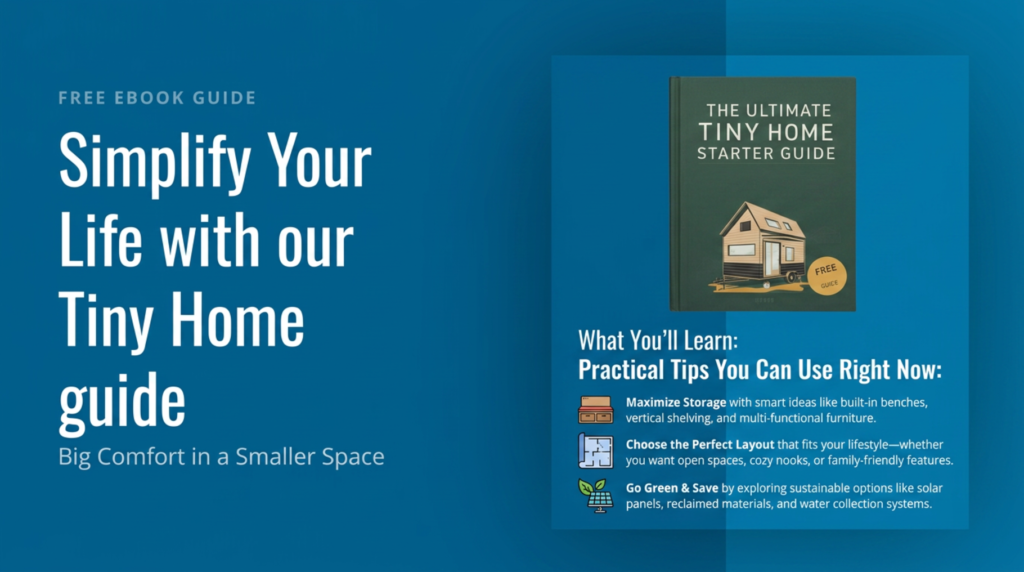
Tiny house interior design ideas require a different mindset than traditional homes.
Every inch matters.
Every piece of furniture needs purpose.
In a tiny home, smart design choices can mean the difference between feeling cramped and feeling cozy. When your square footage is limited to 100-400 square feet, you can’t rely on extra rooms to solve problems.
That’s why we’ve gathered the best tiny house design approaches based on space efficiency and aesthetic impact. These ideas come from real-world success stories, expert recommendations, and proven principles.
The best part? Your ideal approach depends on your lifestyle, budget, and personal preferences. There’s no one-size-fits-all solution.
Let’s explore what works.
- How We Chose the Best Tiny House Interior Design Ideas
- Top 7 Tiny House Interior Design Ideas for Small Space Living
- Quick Comparison of the Best Tiny House Interior Design Ideas
- How to Choose the Right Interior Design Approach
- Which Design Approach Is Best for You?
- Final Thoughts
How We Chose the Best Tiny House Interior Design Ideas
We evaluated dozens of design approaches using these criteria:
- Space maximization potential – How much usable floor area does it recover?
- Visual impact – Does it make the space feel larger and more inviting?
- Daily living practicality – Can you actually live with it day-to-day?
- Budget-friendliness – Is it accessible for different budgets?
- Versatility – Does it work for trailer-based and foundation tiny houses?
- Long-term durability – Will it hold up over years of use?
- User satisfaction – Do real tiny house owners love it?
Research shows 92% of tiny home owners report higher satisfaction when incorporating at least three space-maximizing strategies.
Top 7 Tiny House Interior Design Ideas for Small Space Living
1. Loft Bedroom with Integrated Storage
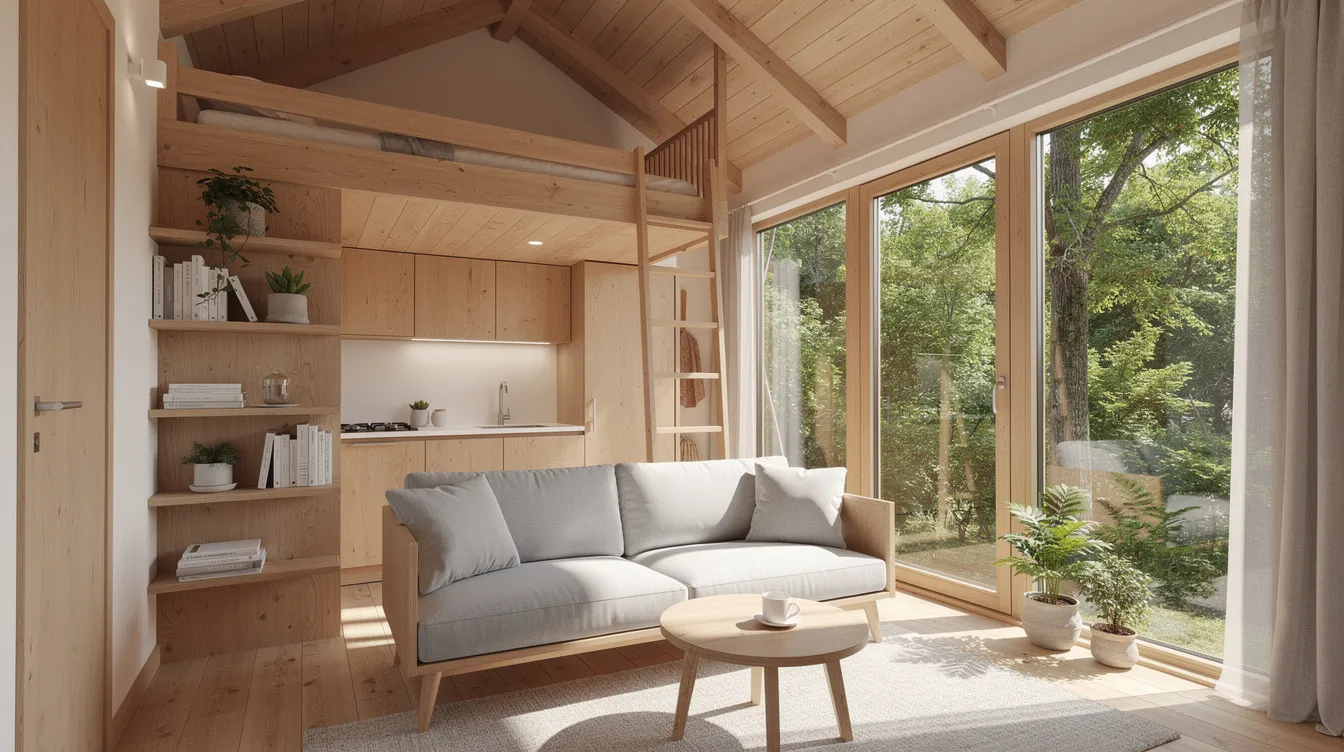
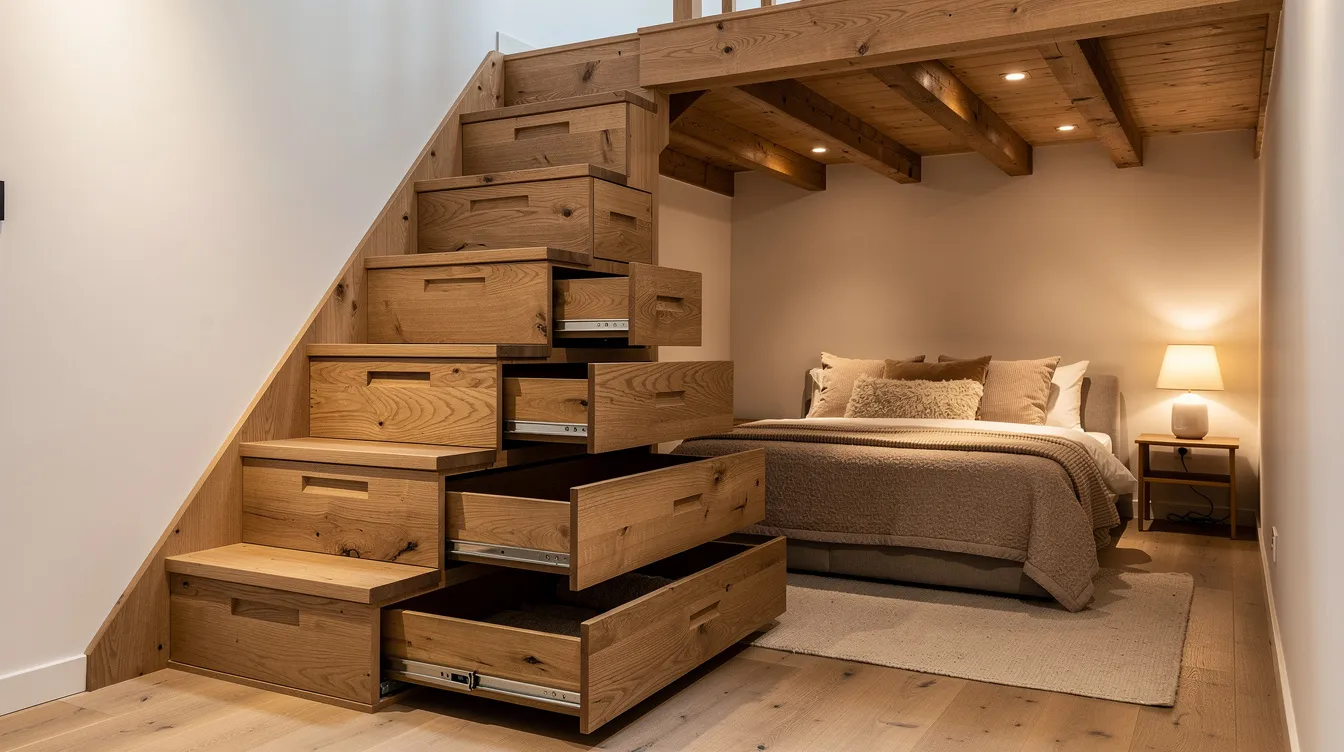
Loft sleeping areas elevate your bed 4-7 feet off the floor, freeing valuable living area below. The best designs integrate storage drawers under stairs, built-in cubbies, and lift-up platforms, and work best when paired with tiny house floor plans that prioritize vertical space and circulation.
Why It Stands Out
A well-designed loft can free 40-60 square feet below for your living area or full kitchen. Incorporating a loft layout in tiny homes maximizes living area by creating distinct volumes and orientations for natural light, enhancing spatial interest. You’re essentially doubling your usable space.
Using built-in furniture, such as a platform bed with deep drawer storage, can significantly reduce the need for additional furniture while maximizing storage in a tiny home.
Best For
- Singles and couples under 6’2” tall
- Homes with ceiling height of 10-13 feet
- Those who want psychological separation between sleeping and living zones
Tiny house owners with lofts report 30% better rest due to distinct sleep zones.
Key Strengths
- Maximizes vertical space efficiently
- Creates distinct sleeping and living zones
- Offers multiple storage compartments
- Incorporating under-stairs storage drawers can effectively utilize otherwise wasted space, providing hidden storage for shoes, cleaning supplies, or folded clothes
Possible Limitations
- Requires adequate ceiling height (minimum 10 feet recommended)
- May feel cramped for taller individuals
- Access can be challenging for elderly or mobility-impaired residents
2. Multi-Functional Furniture Systems
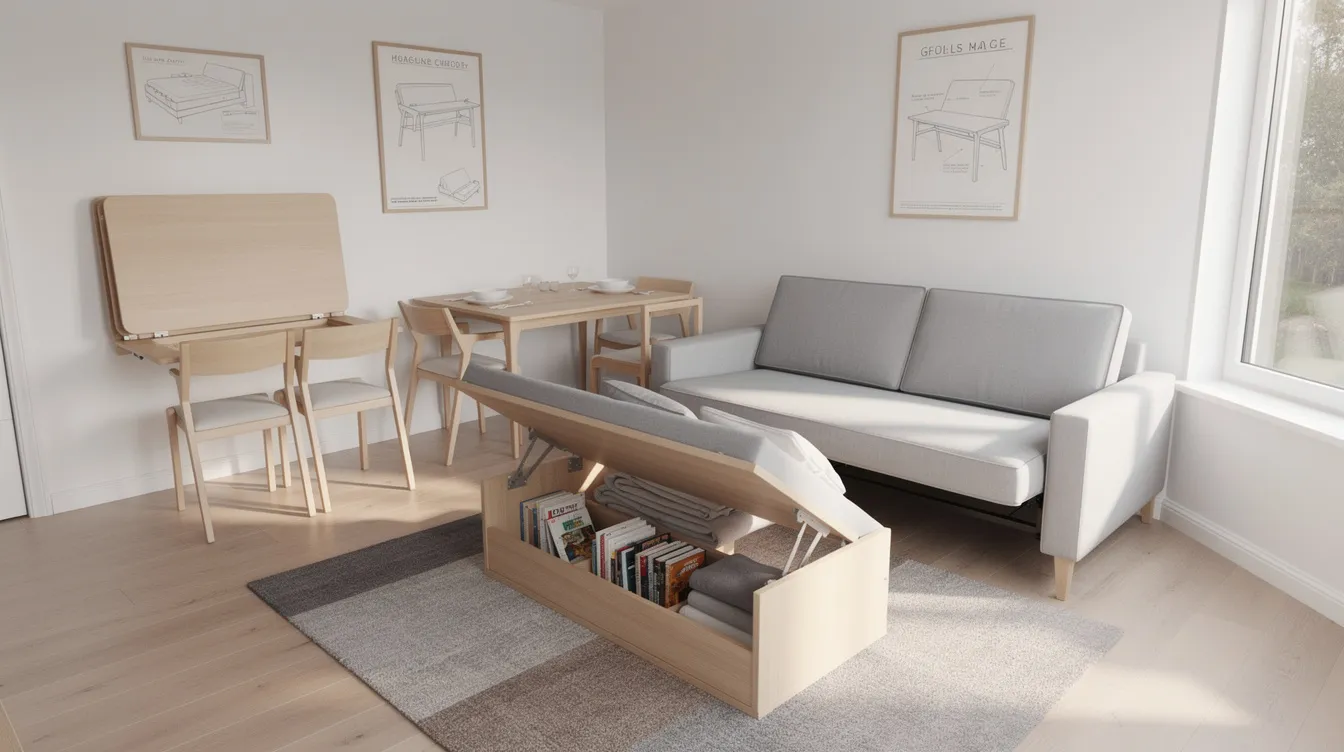
Multi-functional furniture is essential in tiny homes, as it maximizes space and serves multiple purposes, such as a sofa bed or a coffee table with storage, and pairs well with tiny house interiors that creatively maximize every square foot.
These pieces evolved from Murphy bed innovations and Scandinavian design principles. Today’s options include wall-mounted folding tables, convertible sofa beds, and expanding dining tables.
Why It Stands Out
Multi-functional pieces can slash your furniture count from 8-10 items down to 3-5. That’s huge for a small space.
Wall-mounted folding tables can create flexible dining or workspaces, allowing for more open floor space when not in use. Some convertible dining tables expand from 2×3 feet to 4×6 feet for guests.
Best For
- Remote workers needing office-to-guest bed transitions
- Those who entertain despite limited space
- Nomadic lifestyles requiring adaptability
Key Strengths
- Reduces furniture footprint significantly
- Adapts to different daily activities
- Often includes hidden storage compartments
- Smart storage solutions include using ottomans, coffee tables, and nightstands with built-in storage to tuck away items like blankets and books, keeping surfaces clear and organized
- Investing in a storage bed can significantly enhance functionality by providing hidden storage for linens, books, and other items
Possible Limitations
- Higher upfront cost than single-purpose furniture (premium models run $2,000-$5,000)
- May require 1-5 minutes for transitions between configurations
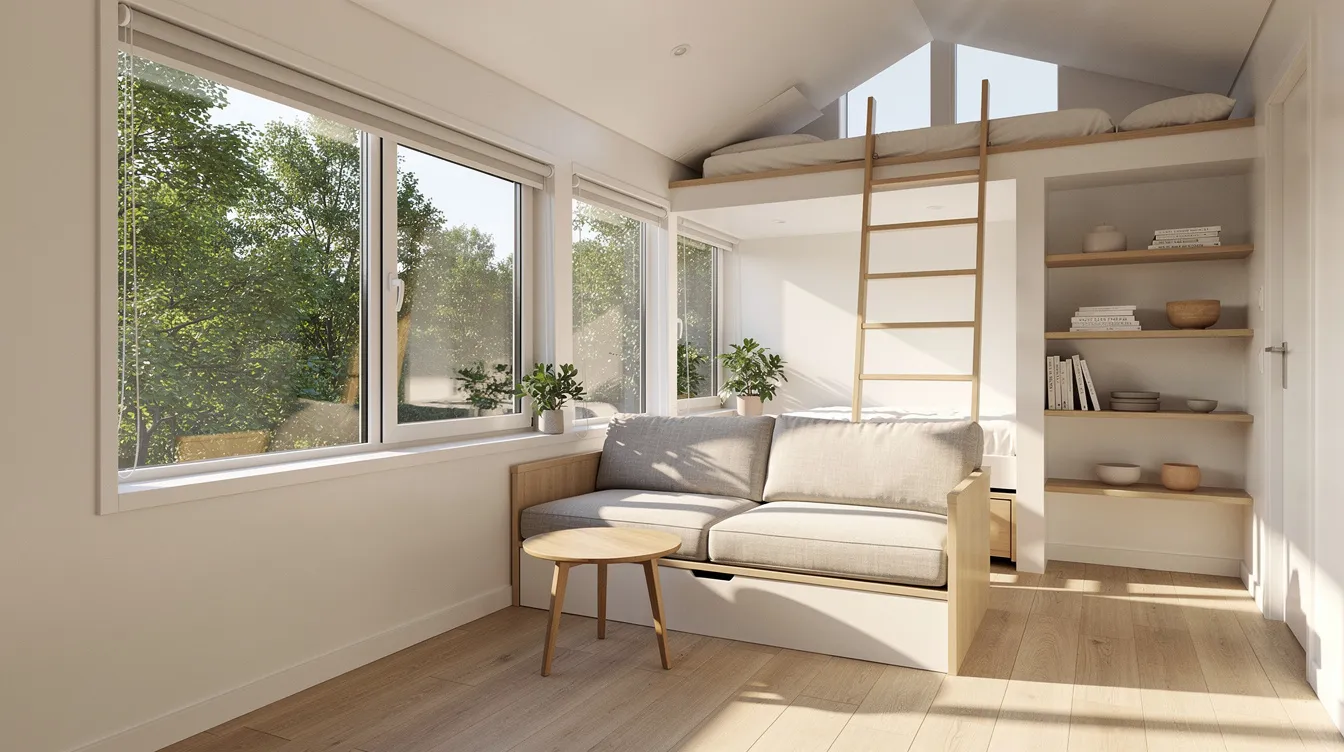
3. Floor-to-Ceiling Windows with Light Colors
Large windows paired with light-colored interiors create the illusion of expanded space. This approach leverages biophilic design principles and spatial psychology and aligns naturally with minimalist tiny houses designed for efficient, sustainable living.
Why It Stands Out
Studies show natural light can increase perceived room volume by up to 20%. Light colors reflect up to 80% more light than dark tones, creating that airy, open feeling.
Painting interiors in light colors can make small spaces feel brighter and larger. Maximizing natural light with large windows, skylights, and light-colored curtains can create a bright and open atmosphere.
Using a warm neutral color palette, such as beige or soft ivory, can transform tiny homes into beautiful, light-filled retreats, especially when paired with mirrors to amplify natural light.
Best For
- South-facing tiny houses in sunny climates
- Rural settings where privacy isn’t a concern
- Those prioritizing mental well-being (natural light boosts serotonin by 15%)
Key Strengths
- Makes spaces feel significantly larger
- Reduces need for artificial lighting by up to 40%
- Creates strong indoor-outdoor connection
- Layered lighting with a mix of ambient ceiling lights, task lighting, and decorative sconces can create depth and dimension, making a tiny home feel more inviting and spacious
- Using led bulbs throughout maximizes efficiency
Possible Limitations
- Reduces privacy in close neighborhoods (frosted film can help)
- May require triple-pane glass doors for cold climates, adding significant cost
4. Vertical Wall Storage Systems
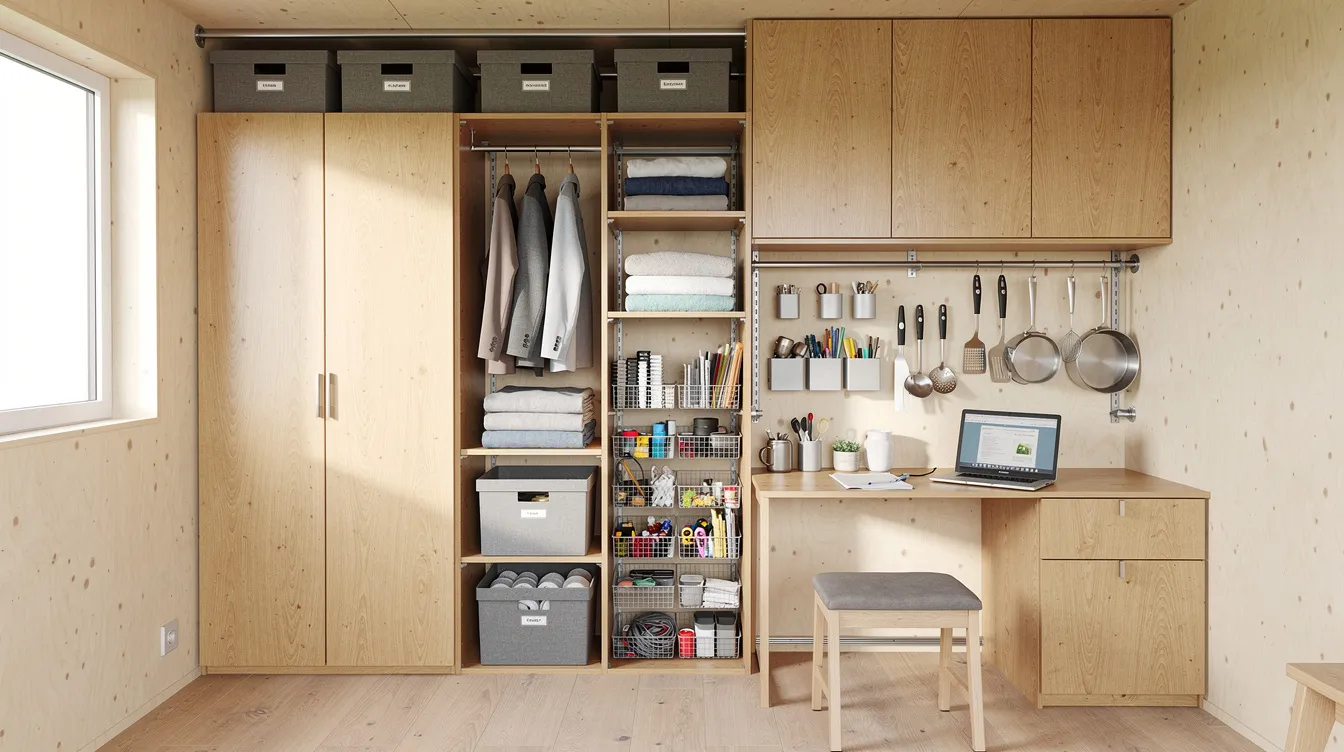
Utilizing vertical space is essential in a tiny home. Installing floating shelves or tall cabinets can help keep the floor clear and maximize storage, as shown in many innovative tiny homes that redefine small space living.
This approach exploits underutilized airspace with slim shelves, pegboards, hooks, and mounted storage systems.
Why It Stands Out
Vertical storage can free up to 80% of floor space. It turns your walls into functional storage while keeping pathways clear.
Install floating shelves and cabinets near the ceiling for rarely used items to improve verticality. Implement floor-to-ceiling wardrobe systems for effective organization of clothing and linens.
Best For
- Those with 100+ small items to organize
- Kitchens needing tool and utensil access
- Home offices storing office supplies and documents
Key Strengths
- Keeps floor space open and uncluttered
- Easy to customize and reconfigure
- Relatively cheaper to implement ($1-3 per square foot in birch plywood)
- Modular tracks like String Shelving allow endless customization
Possible Limitations
- May make walls feel busy if overfilled (limit to 40% wall coverage)
- Requires careful weight distribution planning (drywall anchors support up to 75 lbs)
- Shelves typically hold 20-40 lbs each
5. Hidden Kitchen Solutions
Hidden kitchen solutions conceal sinks, stoves, and counters behind panels. Inspired by yacht galleys, these designs preserve living space aesthetics while maintaining a functional cooking area, and they benefit from step-by-step guidance on how to build a tiny house from the ground up.
Why It Stands Out
A hidden kitchen can preserve 20-30 square feet of living area appearance. Fold-down counters reveal compact cooktops, and everything tucks away when not in use.
Utilize hidden storage compartments such as under flooring or inside benches to maximize available space. Downdraft vents (300 CFM) contain cooking odors effectively.
Best For
- Minimal cooks (under 3 meals per day at home)
- Those who entertain and want a clean room appearance
- Tiny houses where the kitchen opens directly to the living area
Key Strengths
- Maintains clean, uncluttered appearance
- Prevents cooking odors from spreading throughout the house
- Allows living space to feel larger when kitchen is concealed
- Works well with butcher block countertops that fold flat
Possible Limitations
- May limit cooking equipment to 4-6 cubic feet of appliances
- Requires careful planning for ventilation
- Installation costs run $3,000-7,000 for proper plumbing and venting
6. Minimalist Design with Bold Accents
Clean, uncluttered design with strategic color or texture pops. This approach follows the 60-30-10 color rule: 60% neutrals, 30% secondary tones, 10% bold accents, and works best when it’s baked into tiny house plans that are tailored to your lifestyle.
Why It Stands Out
Keeping a consistent aesthetic in tiny home decor helps avoid visual clutter. Data shows 75% of tiny house owners prefer minimalist approaches for homes under 300 square feet.
Investing in a few high-quality decorative pieces is recommended in limited space environments rather than many small items. This prevents the overwhelming feeling that too many objects create.
Best For
- Introverts craving calm, peaceful spaces
- Those willing to maintain fewer items
- Design-conscious owners who want style without clutter
Use reclaimed wood and natural materials to add warmth and a rustic touch in tiny house interiors.
Key Strengths
- Creates sense of spaciousness and calm
- Easy to maintain and keep clean (under 50 items to dust)
- Allows key design elements to shine
- Creating a cohesive flow between spaces involves using a consistent palette and layering detailing throughout the floor plan to establish a sense of continuity
- Using a consistent color palette throughout can create a sense of openness and help unify different areas
Possible Limitations
- Requires discipline to maintain minimal possessions
- May feel stark or impersonal without textures like linen or jute
- In tiny home design, every element should be intentional, ensuring that distinct living spaces maintain unique materials and textures while still feeling connected
7. Indoor-Outdoor Flow Design
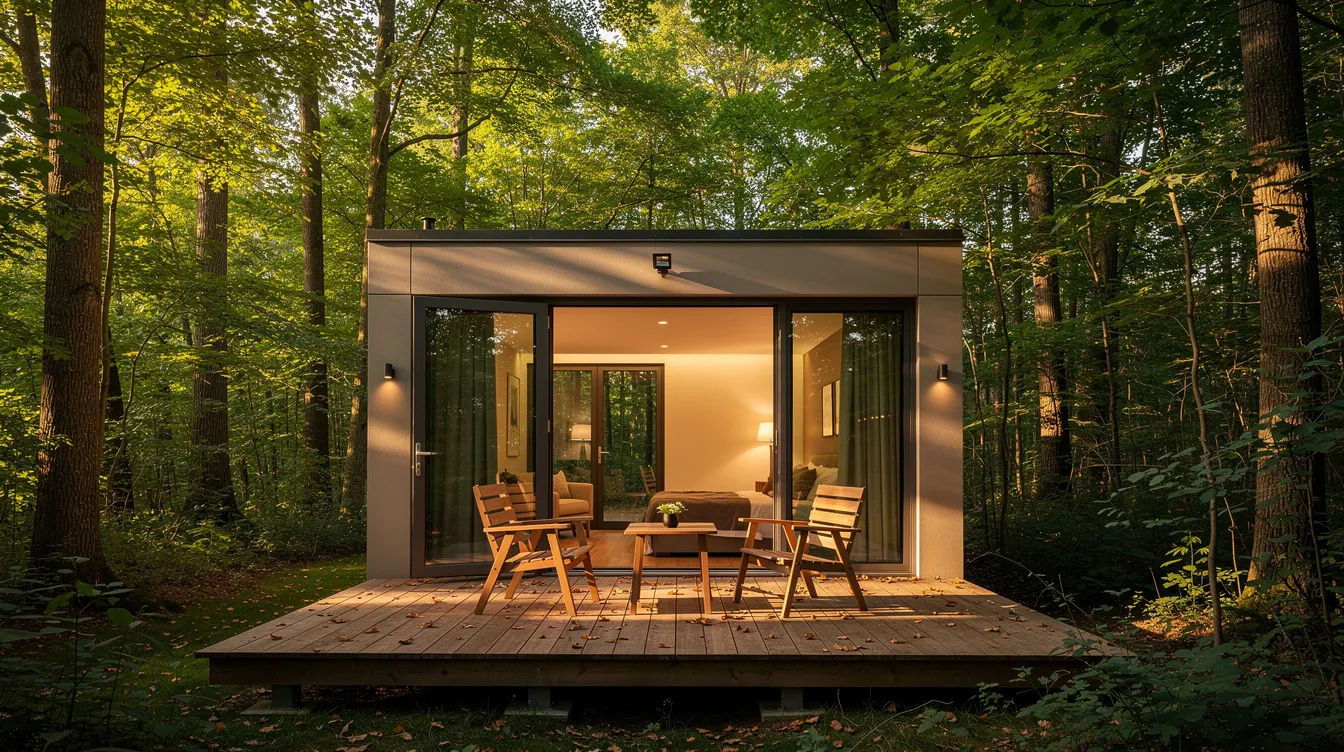
Seamless transitions between interior and exterior spaces using sliding glass doors, French doors, and aligned flooring materials can complement cute tiny house designs that emphasize charming exteriors and outdoor living areas.
Why It Stands Out
Indoor-outdoor flow can effectively double perceived living space. Research shows a 100% increase in perceived volume when boundaries blur between inside and outside.
This approach boosts mood by 15% through stronger connection with nature.
Best For
- Mild climates (USDA zones 7-10)
- Properties with beautiful outdoor surroundings
- Those who enjoy outdoor entertaining and relaxation
- Tiny houses with room for a deck or patio
Key Strengths
- Dramatically expands perceived living area
- Creates strong connection with nature
- Allows for outdoor seating and guest entertaining
- Makes even the smallest space feel expansive
Possible Limitations
- Climate-dependent usability
- Requires maintenance of outdoor furniture and spaces
- Weatherproofing adds $5,000+ to budget
- Privacy and bug issues in some locations
Quick Comparison of the Best Tiny House Interior Design Ideas
Design Approach | Best For | Space Impact | Budget Range |
|---|---|---|---|
Loft Bedroom with Storage | Maximum sleeping/storage efficiency | Saves 40-60 sq ft | Medium-High |
Adaptable daily living needs | Saves 20+ sq ft | Medium-High | |
Windows with Light Colors | Spacious, bright atmosphere | Feels 20%+ larger | Medium |
Vertical Wall Storage | Organized, clutter-free living | Frees 80% floor space | Low |
Hidden Kitchen Solutions | Clean, open aesthetics | Saves 20-30 sq ft | High |
Minimalist with Accents | Calm, stylish living | Psychological openness | Low-Medium |
Indoor-Outdoor Flow | Nature connection, expanded feel | Doubles perceived space | Medium-High |
How to Choose the Right Interior Design Approach
Custom layouts matter as much as finishes, so consider whether a custom tiny home designed specifically around your routines makes sense before locking in an interior direction.
Choose Based on Your Daily Activities
Your routine shapes your design needs.
Heavy cooks benefit most from hidden kitchen solutions with proper ventilation. If you work from home, multi-functional furniture with desk conversions is essential. Entertainers need flexible seating and a dining table that expands for guests.
Think about what you do most:
- Cooking frequently? Prioritize kitchen function
- Working remotely? Create dedicated desk space
- Having guests often? Plan for a guest bed solution
Choose Based on Your Climate and Location
Weather patterns and surroundings affect design decisions, as do structural choices like whether you’re adapting a trailer build or starting from a tiny house kit that simplifies the shell and structure.
South-facing homes benefit from large windows (solar gain increases 20%). Northern climates need insulated vertical storage systems and triple-pane windows. Rural settings allow for more glass doors and indoor-outdoor flow.
Consider:
- Sunny climates maximize window benefits
- Cold regions need insulation priority
- Urban settings may require privacy solutions
Choose Based on Your Budget and Timeline
Cost constraints guide what’s realistic, whether you’re browsing tiny houses for sale to see what fits your lifestyle and budget or planning a custom build.
Budget | Best Options |
|---|---|
Under $5k | Vertical storage, light colors, decorating with minimalism |
$5k-$15k | Multi-functional furniture, strategic windows |
$15k+ | Loft construction, hidden kitchens, floor-to-ceiling glass |
Use clear paths between different zones to avoid a crowded, claustrophobic feeling regardless of budget. |
Which Design Approach Is Best for You?
- Choose Loft Bedroom with Storage if you need maximum space efficiency and privacy for sleeping
- Choose Multi-Functional Furniture if you want ultimate flexibility in how your space functions
- Choose Windows and Light Colors if creating an airy, open feeling is your top priority
- Choose Vertical Storage if organization and accessibility matter most for your lifestyle
- Choose Hidden Kitchen if you want clean aesthetics with a functional full kitchen
- Choose Minimalist with Accents if you prefer calm spaces with thoughtful decorating details
- Choose Indoor-Outdoor Flow if expanding your apartment-sized home through outdoor integration is key
Most successful tiny house owners combine 3+ approaches. A metal roof with skylights, a corner loft, and vertical shelving work beautifully together, especially when supported by tiny house floor plans that work with your daily routines and interior layouts that squeeze function out of every square foot.
Final Thoughts
Successful tiny house living combines multiple design approaches based on your needs.
The best interior design depends on your lifestyle, climate, and personal preferences. There’s no perfect formula—just smart choices that work for you.
Start with one or two ideas that resonate. Explore what fits your daily routine. Build from there.
The tiny house movement proves you don’t need a big house to live well. Thoughtful planning makes tiny house living both practical and beautiful.
Your favorite homes might combine a loft bed with vertical storage and large windows. Or minimalist design with indoor-outdoor flow.
The choice is yours.
Start small. Think creative. Make your tiny home work for your life.