
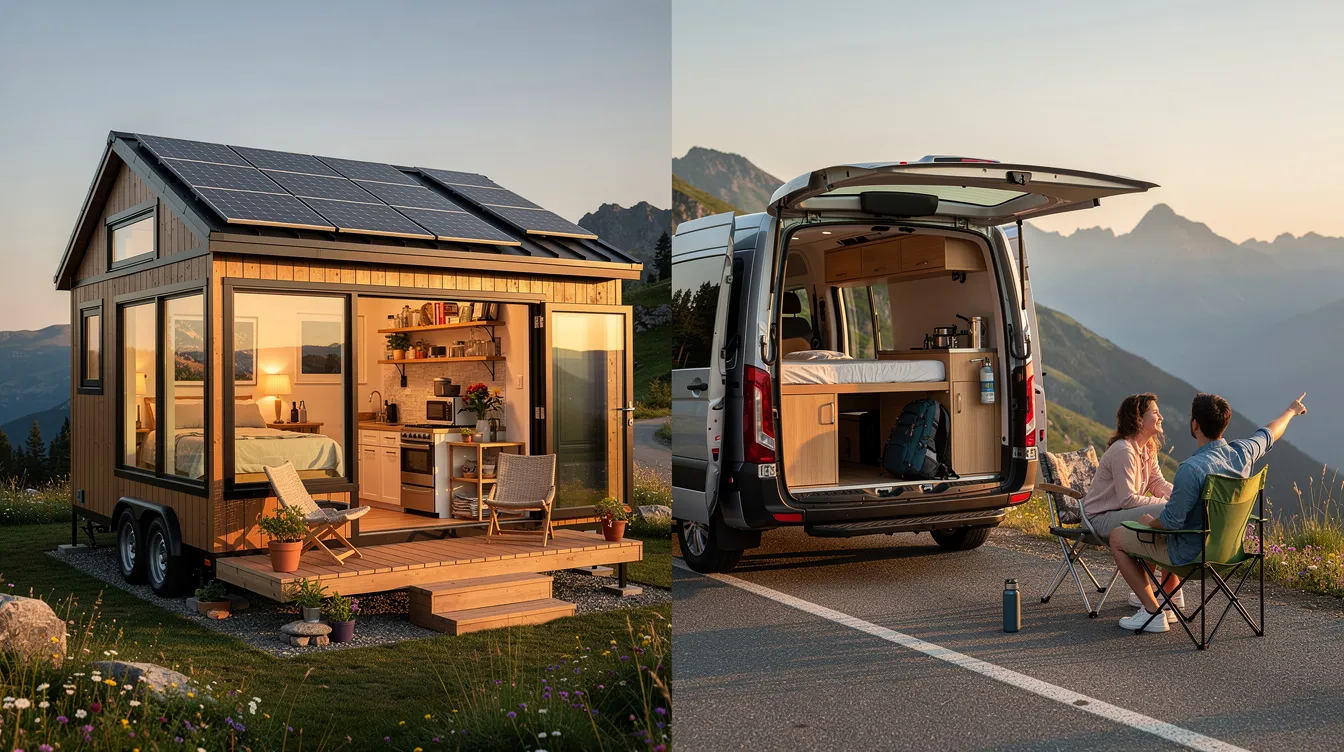
Choosing between tiny house living and van life comes down to one core question: do you prioritize stability or mobility? Both lifestyles offer minimalist living and a path to financial freedom, but the daily experience, costs, and trade-offs differ significantly.
Below is a practical comparison of tiny house vs van life to help you decide which approach fits your goals.
- Tiny House vs Van Life: Key Differences
- Mobility and Location Flexibility
- Setup Costs and Initial Investment
- Daily Living Expenses and Ongoing Costs
- Living Space and Comfort Features
- Environmental Impact and Sustainability
- Lifestyle and Personal Considerations
- Tiny House vs Van Life: Which Should You Choose?
Tiny House vs Van Life: Key Differences
The main difference centers on how you want to live small, especially if you’re exploring the world of tiny houses.
- Tiny house living focuses on stability, full home amenities, and efficient use of a small space.
- Van life prioritizes mobility, adventure, and the freedom to park overnight in new locations.
Both approaches appeal to those seeking to live with less stuff and reduce their environmental footprint. However, tiny houses offer more room and comfort, while van dwelling provides unmatched flexibility to explore the world.
Mobility and Location Flexibility
How often you want to move shapes nearly every aspect of daily life and long-term planning.
Tiny House Mobility
Tiny homes provide a semi-permanent living arrangement that builds community connections over time, and custom tiny homes for your perfect small-space living make it easier to tailor that setup to your needs.
- Pros: Staying in one location allows you to establish relationships with neighbors and participate in local life. Legal parking on your own land or permitted private property provides stability. A survey by the Australian Tiny House Association found that 78% of respondents lived in tiny houses on wheels, indicating significant interest in mobility within that community.
- Cons: Moving a tiny house requires professional towing, road permits, and advance planning. Tiny houses on wheels are not designed for frequent movement, making them more suitable for those who prefer to stay in one place for extended periods. Access to utilities and proper site preparation limits where you can place your dream home.
Van Life Mobility
Van life allows for greater mobility as vans can be parked almost anywhere, enabling exploration of various locations.
- Pros: Complete freedom to travel means you can wake up in a new city every day. Your camper van is self-contained and ready for immediate relocation. Many van lifers chase seasons, following ideal weather year-round.
- Cons: Finding legal spots to park overnight is a constant challenge. Many municipalities restrict sleeping in vehicles or require RV park stays. Frequent movement can prevent deep community connections, making it harder to maintain friendships and a sense of belonging.
Setup Costs and Initial Investment
Upfront costs differ significantly between options, affecting how quickly you can start living tiny.
Tiny House Setup Costs
Professional tiny house builds include all essential systems, from full bathrooms to running water and electricity, and many affordable tiny house designs with top tips focus on keeping those features within a modest budget.
- Pros: Higher initial investment means lower ongoing vehicle maintenance costs. Turnkey builds come with warranties and meet road standards for tiny houses on wheels.
- Cons: Total costs range from $100,000 to $180,000 for professional builds with off-grid systems. Additional costs for land rental, utility connections, and permits add thousands more. If you plan to own land, property costs vary widely depending on location.
Van Life Setup Costs
Van conversions offer more flexibility in how much you spend upfront.
- Pros: Used vans start around $30,000 with conversion costs of $10,000-50,000 for functional full-time living. DIY conversions can be pretty cheap, significantly reducing upfront expenses for those with building skills.
- Cons: Vehicle registration, insurance, and maintenance costs are ongoing. Limited warranty protection exists for DIY electrical and plumbing systems, creating potential safety concerns. A new full-size van plus professional conversion can exceed $120,000 for premium builds.
Daily Living Expenses and Ongoing Costs
Daily expenses vary based on lifestyle choices and location, creating different financial realities for each approach.
Tiny House Daily Expenses
Daily living costs for a tiny house can be lower due to the ability to connect to utilities and have a pantry full of supplies.
- Pros: Stable utility costs with options for solar panels and rainwater collection reduce monthly bills. A tiny house allows for bulk food storage, which can help spread living costs over time. Off-grid systems minimize dependence on external services.
- Cons: Land rental fees typically range from $300-800 monthly if you don’t own land. Property taxes may apply depending on local regulations, particularly for foundation builds.
Van Life Daily Expenses
Living in a van might appear to be cheaper than a tiny house, but it can quickly become a financial burden due to daily expenses such as fuel, parking fees, and maintenance costs.
- Pros: Potential for very low monthly costs with free camping on BLM lands or boondocking spots. No property taxes or land rental fees apply to van dwelling.
- Cons: Fuel costs for frequent movement average $150-600 monthly depending on travel distance and gas mileage. Van life often requires daily purchases due to limited storage space, while campground fees and RV park stays add up quickly. Vehicle maintenance runs $1,500-4,000 annually due to constant road use.
Living Space and Comfort Features
Space constraints affect daily comfort and functionality in different ways for each lifestyle.
Tiny House Living Space
Tiny houses are designed to be comfortable, full-time homes, emphasizing a minimalist tiny house approach to freedom and simplicity.
- Pros: Full-size appliances including washing machines and dishwashers fit comfortably. Permanent bathroom with standard toilet and shower provides everyday convenience. A well-built tiny house can provide a cozy living environment with proper insulation, making it comfortable in both winter and summer conditions.
- Cons: Limited to a stationary location without vehicle mobility once placed. Still requires significant downsizing from traditional homes, though tiny houses offer more space than van conversions.
Van Life Living Space
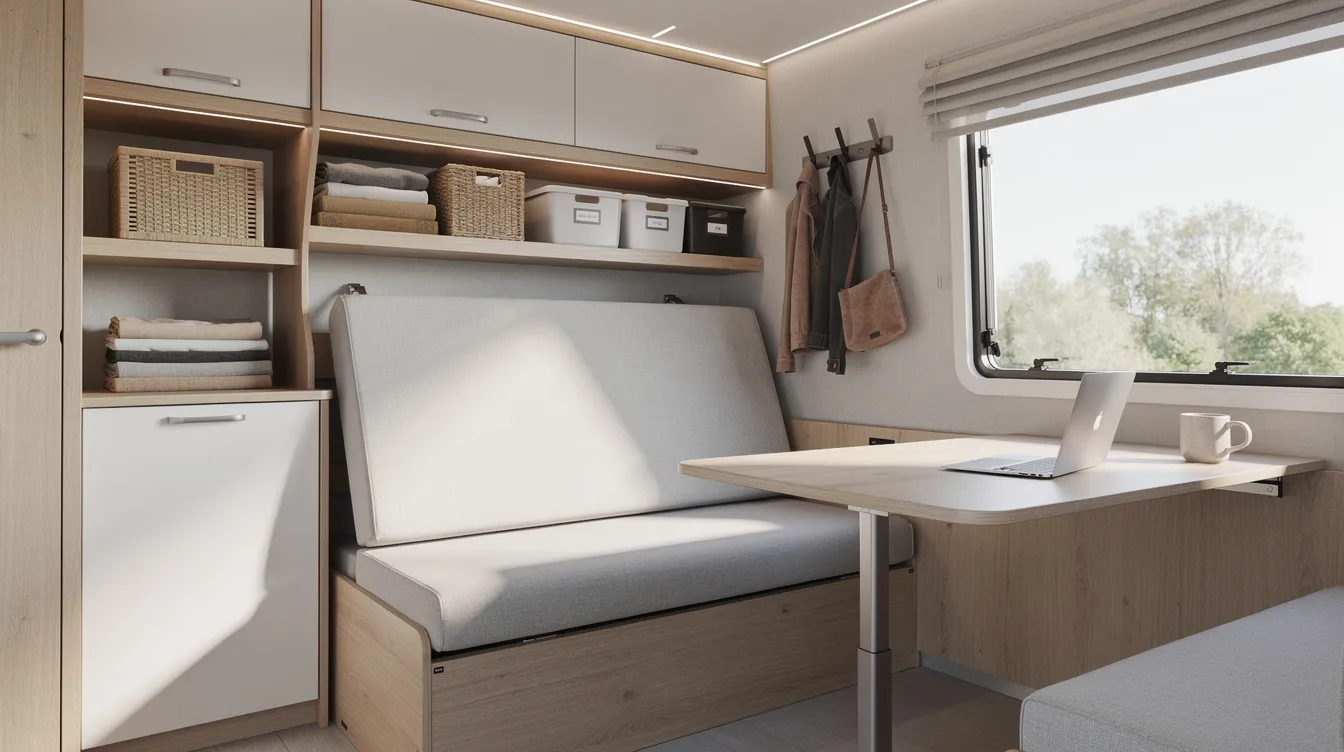
Van conversions maximize every inch through clever design and multi-functional furniture, much like great tiny homes that redefine small space living do in a stationary setting.
- Pros: Maximized space efficiency means your bed, kitchen, and storage space serve multiple purposes. Everything needed is contained in one self-sufficient vehicle ready to roll.
- Cons: Limited headroom and cramped quarters make many people feel cramped in most van builds. Basic bathroom facilities or reliance on public restrooms is common. Living in a van often requires frequent visits to local facilities for showers and waste disposal, which can detract from the overall comfort of the lifestyle. Certain amenities like full-size appliances simply don’t fit.
Environmental Impact and Sustainability
Both tiny houses and vans appeal to environmentally conscious individuals, as they require less energy and materials than traditional homes. However, the specific environmental impacts differ.
Tiny House Environmental Impact
Tiny house living often utilizes materials with a low environmental footprint and premium insulation, which contributes to sustainability by reducing energy needs for heating and cooling, echoing the priorities of minimalist tiny houses for sustainable living.
- Lower material usage compared to standard homes with efficient insulation that requires less energy for climate control
- Solar panel systems and rainwater collection reduce utility dependence significantly
- Minimal fuel consumption once placed in permanent location
- Potential for composting toilets and greywater systems for off-grid living
Van Life Environmental Impact
Most campervans are built from mass-produced materials, which may produce outgassing from carpets and paints, while repurposing a van with recycled materials is a more environmentally friendly option.
- Reduced living space leads to minimal possession accumulation and less stuff overall
- Frequent travel increases fuel consumption and carbon emissions, especially on long drives
- Solar systems are common but limited by roof space constraints on power generation
- Waste management is more challenging without permanent facilities
Lifestyle and Personal Considerations
Several factors influence which lifestyle works better for different people, especially if you’re weighing whether a tiny house for sale is right for you.
- Climate: Tiny homes handle extreme temperatures better due to proper insulation. Van dwellers often struggle with heating and cooling in harsh conditions.
- Work Requirements: Remote work from a tiny house offers reliable electricity and internet. Van lifers depend on mobile connectivity and may face challenges finding consistent workspace.
- Family Size: Tiny living works better for small families who need enough space for children. Van life suits singles or couples who can sleep and live in tight quarters.
- Legal Regulations: Zoning laws vary significantly by state and local jurisdiction. Tiny houses face building code challenges, while van dwellers navigate parking restrictions that differ by city.
Tiny House vs Van Life: Which Should You Choose?
Choose tiny house living if you prioritize stability, community connections, and full home amenities, perhaps drawing inspiration from the best tiny house designs for modern living. The higher upfront cost pays off through lower daily expenses, more room for family and friends, and a sense of permanence.
Choose van life if you value maximum mobility, adventure travel, and lower initial costs, while still taking cues from cute tiny house designs for your dream home if you ever decide to transition to a more stationary setup. The freedom to explore new locations and park wherever wheels take you appeals to those who dream of life on the road.
Consider hybrid approaches like seasonal van travel with a tiny house home base, whether that means a luxurious model like elegant tiny homes that redefine modern living or a more budget-friendly option such as Home Depot tiny house kits with big possibilities. This combination offers the best of both lifestyles—stability when you want it and fun adventures when wanderlust strikes.
Both lifestyles can achieve financial freedom and minimalist living goals successfully. The right choice depends on whether you want to save money through stability or mobility, and whether your dream involves one location or the open road.