
The dream of homeownership feels increasingly out of reach for many people in 2025. Yet a growing movement is proving that you don’t need 2,000 square feet to live well. Tiny tiny houses—ultra-compact dwellings typically under 200 square feet—are capturing the attention of minimalists, first-time buyers, and anyone seeking an affordable path to owning their own space.
This guide walks you through everything you need to know about these remarkably small homes: what defines them, why they’re gaining popularity, the styles available, and how to plan your own.
- What Is a “Tiny Tiny House”? (Fast Answer Up Front)
- Why People Are Downsizing to Tiny Tiny Houses
- Popular Tiny Tiny House Models and Styles
- Layout and Space-Saving Design in Under 200 Square Feet
- Costs, Financing, and Ownership Options
- Zoning, Legalities, and Where to Park a Tiny Tiny House
- Real-World Tiny Tiny House Inspirations
- Planning Your Own Tiny Tiny House
- Conclusion: Living Large in a Tiny Tiny House
What Is a “Tiny Tiny House”? (Fast Answer Up Front)
A “tiny tiny house” is an ultra-compact dwelling typically measuring between 80 and 200 square feet, often built on trailers 10–16 feet long or on small foundations. While not an official code category, this term describes the smallest, most space-efficient end of the tiny house spectrum.
To understand where tiny tiny houses fit, consider these size benchmarks:
- Micro-apartments: Typically 250–350 sq ft, found in urban multifamily buildings with some shared amenities
- Standard tiny homes: Usually 200–400 sq ft, the range covered by IRC Appendix Q building codes
- Tiny tiny houses: Approximately 80–200 sq ft, the ultra-compact subset we’re exploring here
Despite their small footprint, these homes can be fully equipped for full-time living. A thoughtfully designed 130–180 sq ft unit can include a sleeping loft, compact bathroom with shower, and functional kitchen. The key is intentional design where every inch serves a purpose.
Demand for these ultra-small dwellings has risen steadily from 2020 through 2025 across the U.S., UK, and Europe. The drivers are familiar: housing costs that have pushed the median U.S. home price well above $400,000, the flexibility of remote work, and a cultural shift toward minimalist lifestyles.
Why People Are Downsizing to Tiny Tiny Houses
The appeal of tiny tiny houses extends beyond their cute factor. For many, these compact dwellings represent a practical solution to financial pressure, environmental concerns, and a desire for more freedom in daily life.
In 2025, many professionally built tiny tiny houses start around $35,000–$60,000—a fraction of the cost of a conventional home. When you factor in lower utility bills, reduced maintenance, and potentially no mortgage, the financial math becomes compelling.
People choose tiny tiny houses for a variety of purposes:
- Full-time residence for singles, couples, or digital nomads
- Backyard ADU serving as a rental unit or home office
- Guest suite for visiting family without the hotel expense
- Student housing near universities on private land
- Vacation rental capitalizing on the Airbnb cabin trend
- Off-grid retreat for weekend escapes or seasonal living
The environmental benefits add another layer of appeal. Smaller structures use fewer materials during construction and require less energy to heat and cool. Many owners add solar panels, composting toilets, and rainwater systems, further reducing their footprint on the land.
The lifestyle advantages are equally practical:
- Less time spent cleaning (under an hour for a thorough clean)
- Lower monthly bills across utilities, insurance, and maintenance
- More disposable income for travel, hobbies, or savings
- Forced simplicity that many find liberating rather than restrictive
- Freedom to relocate if the home is on wheels
Popular Tiny Tiny House Models and Styles
Despite their compact size, tiny tiny houses span a wide range of architectural styles. You’ll find everything from rustic cabins with knotty pine interiors to sleek modern boxes with floor-to-ceiling glass. The constraints affect interior circulation and program elements, not the basic design vocabulary.
Here are several example configurations you might encounter:
16 ft trailer home (~136 sq ft): Built on a road-legal 8.5-foot-wide trailer, this model typically features an entry into a small living area, galley kitchen along one wall, compact bathroom at one end, and sleeping loft above. Think of it as a fully functional studio apartment on wheels.
84–100 sq ft backyard studio: Often built on a small skid foundation or single-axle trailer, these units work well as home offices, art studios, or guest rooms. Many include a daybed, desk area, and wet bar or micro-kitchen without full plumbing.
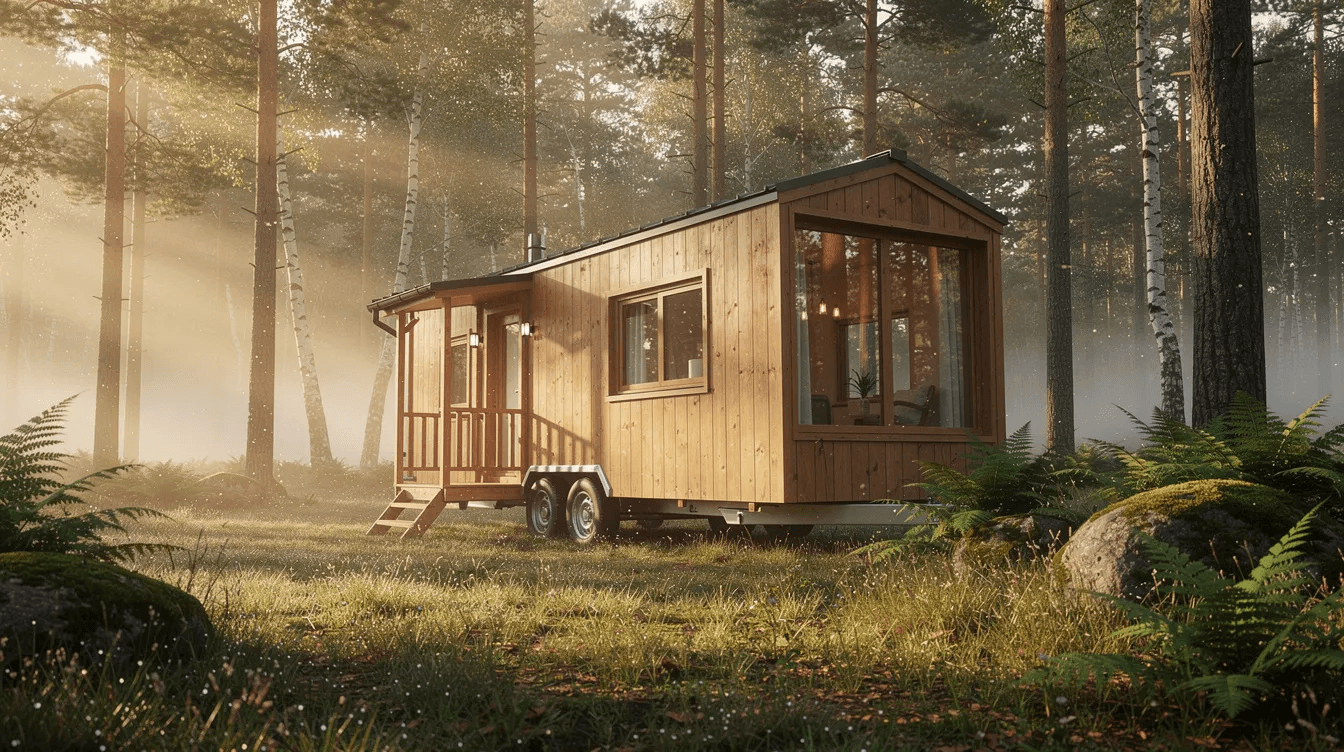
160–180 sq ft Scandinavian-inspired cabin: With dimensions around 8.5 x 20 feet, these designs emphasize large windows, light wood finishes, and open-plan living. The extra square footage allows for a more generous kitchen and potentially main-floor sleeping.
Key distinctions to understand:
- Lofted designs maximize floor space by placing the bed above the kitchen or bathroom, accessed by ladder or compact stairs
- Single-level models keep everything on one floor, ideal for those with mobility concerns or who prefer not to climb daily
- On-wheels configurations offer mobility and often simpler zoning classification as RVs
- On-foundation builds are treated as permanent structures under local building codes
Exterior materials range from engineered wood siding (like LP SmartSide) to metal cladding, cedar shakes, and traditional clapboard. Modern builds often prioritize durable, low-maintenance options that can handle the stresses of transport if on wheels.
Classic Cottage-Inspired Tiny Tiny Houses
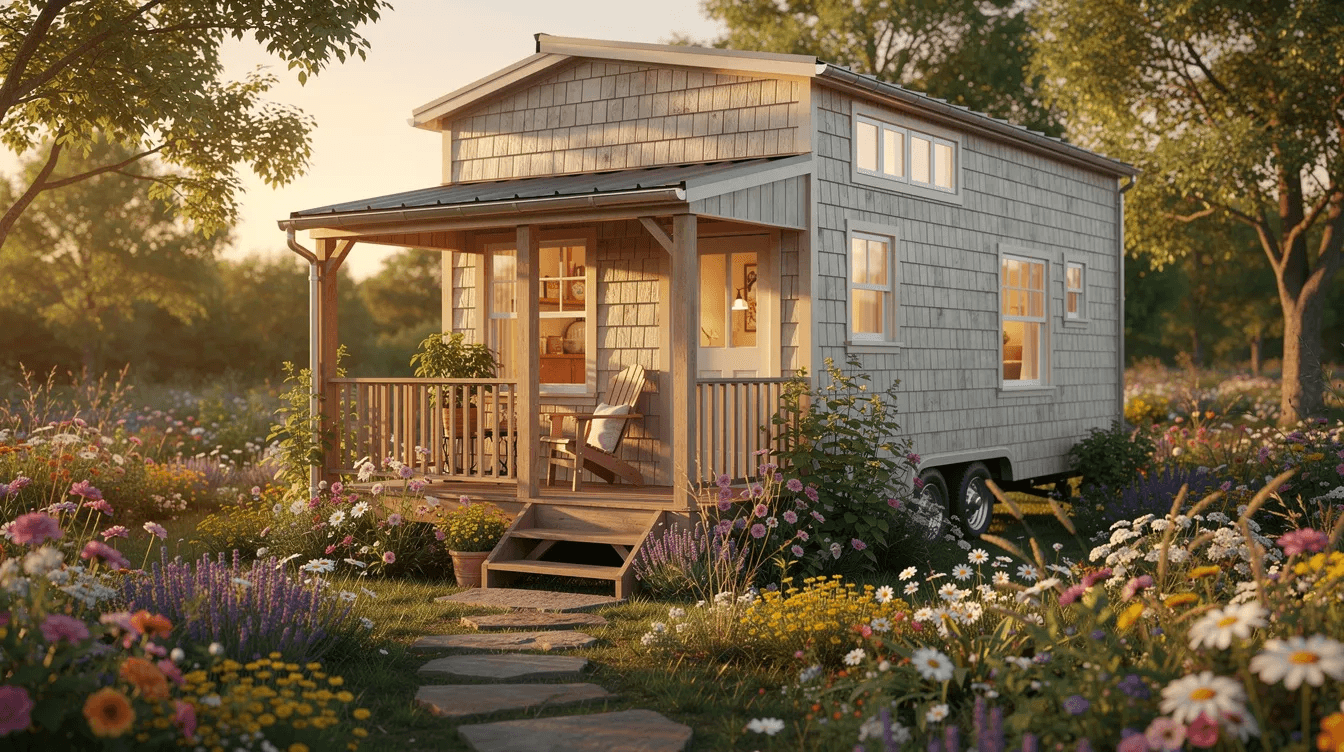
Cottage-style tiny tiny houses bring storybook charm to ultra-compact living. These designs adapt traditional elements—gabled roofs, small porches, and multi-pane windows—to footprints as small as 130 square feet.
Features commonly found in cottage-style tiny tiny houses:
- Shingled or clapboard exterior in soft coastal or farmhouse paint colors
- Petite front or side porch (3–4 feet deep) with space for two chairs and potted plants
- Multi-pane windows and occasionally bay windows to add interior volume and charm
- Dormers over sleeping lofts that increase headroom and add exterior character
- American Gothic-inspired details like decorative trim and vertical board-and-batten accents
A typical 16–20 foot cottage tiny house might feature cedar shake siding, a covered porch just large enough for morning coffee, and a dormer window that brings natural light into the loft while adding 8–18 inches of headroom at the sides.
These designs work particularly well as:
- Lakeside retreats in places like Michigan or Maine
- Backyard guest houses that neighbors find more acceptable than stark modern boxes
- Rental cabins marketed for their cozy, storybook aesthetic
Descriptive cues that capture the style: cozy, storybook, weathered, shingled, nestled, lantern-lit porch, painted clapboard, twinkling cottage windows.
Modern and Scandinavian-Style Tiny Tiny Houses
Clean lines, large glass areas, and light interiors define the modern tiny tiny house. These designs use optical tricks to make 100–180 square feet feel significantly larger than their actual dimensions.
Typical design elements include:
- Flat or low-slope roofs that create a sleek profile and simplify insulation
- Minimalist façades with vertical wood or metal siding that accentuates height
- Floor-to-ceiling windows or a five-window bay that floods the interior with daylight
- Sliding or French doors that blur the boundary between inside and outside
A 20-foot, 170 sq ft Scandinavian-inspired tiny tiny house might feature an open-plan living and kitchen area along one side, a sleeping loft with skylight above the bathroom, pale oak floors, and white shiplap or birch plywood walls. Fixtures in matte black or brushed brass add contemporary contrast to the light palette.
Interior finishes that work well in this style:
- Engineered oak or ash flooring (lighter and more dimensionally stable)
- White or pale grey walls with minimal visible hardware
- Integrated LED lighting in coves and under cabinets
- Limited color palette of 2–3 tones to reduce visual clutter
These designs have become popular for urban backyard studios and design-forward vacation rentals, particularly since 2022. They photograph exceptionally well, making them favorites for short-term rental platforms and are closely related to many Scandinavian tiny home designs for modern living.
Rustic Cabins, Boats, and Unconventional Tiny Tiny Homes
Tiny tiny living isn’t limited to purpose-built trailers. Creative conversions of boats, cabins, silos, and other structures offer alternative paths to ultra-compact homes with distinctive character.
- Converted tugboat or trawler (150–300 sq ft cabin area): Features compact galley, salon with settee, marine head with shower, and built-in berths. Interior details like beadboard paneling, varnished wood, and brass hardware create a nautical atmosphere. The sound of water against the hull and distant harbor activity become part of daily life.
- Grain silo conversion (a 14-foot diameter yields about 154 sq ft per floor): Curved walls require custom furniture and radial shelving. The tall central volume invites spiral staircases and dramatic vertical design. Salvaged barn wood and industrial metal finishes create compelling contrast.
- Restored 1940s–1950s camp cabin (often 400–800 sq ft, but lessons apply): Renovations typically paint dark paneling white, remove dropped ceilings to expose rafters, and replace small windows with larger openings. The result demonstrates how lightening surfaces and celebrating structure can make any small space feel larger.
Design lessons that transfer to tiny tiny houses—and to many minimalist tiny houses for sustainable living:
- Built-in furniture is nearly universal in boats and historic cabins
- Vertical storage and open ceilings create psychological spaciousness
- Restricted material palettes (white plus one wood tone) visually declutter
- Sensory details—the smell of pine boards, rain on a metal roof—enrich the experience
Layout and Space-Saving Design in Under 200 Square Feet
At this scale, function-first planning isn’t optional—it’s everything. Every square inch must serve at least one purpose, and ideally multiple purposes. A 136 sq ft home with poor layout will feel cramped; the same footprint with thoughtful design can feel comfortable for daily living.
Essential space-planning strategies for tiny tiny houses echo many proven tiny house floor plans that work:
- Lofted sleeping areas free the main floor for living, cooking, and working; typical loft depth is 6–8 feet spanning the full width
- Convertible seating such as built-in benches that serve as sofas by day and guest beds at night
- Fold-down tables mounted to walls, approximately 14–20 inches deep when open, that fold flat when not in use
- Drop-down countertop extensions at the end of kitchen runs for extra prep or desk space
- Built-in benches with storage underneath, typically 18 inches high with hinged tops or drawer access
- Circulation paths of at least 24–30 inches between furniture to avoid cramped movement
- Strategic window placement opposite doors to extend sightlines and bring natural light deep into the plan
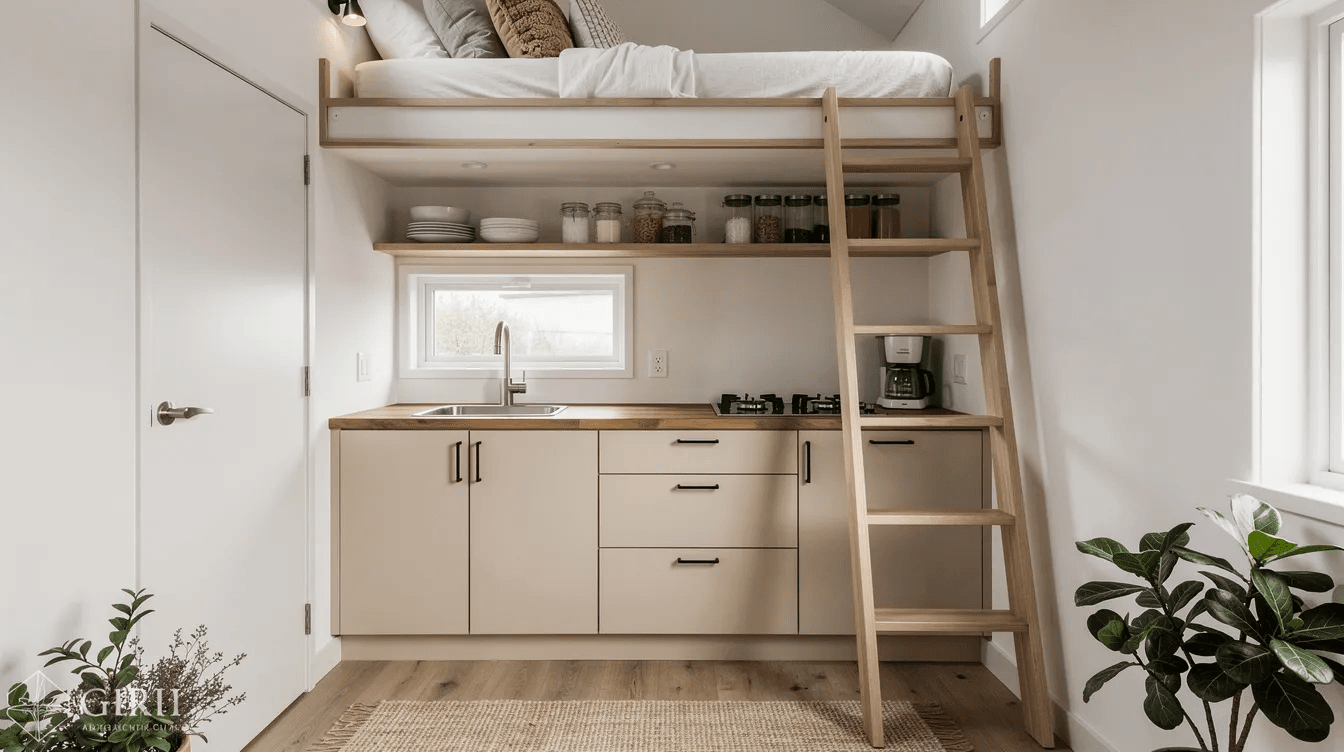
A typical layout for a 16-foot, 136 sq ft home might flow as follows: enter through the front door into a living area with a built-in bench along one wall and a fold-out table. The mid-section houses a galley kitchen with 7–8 feet of lower cabinets, a two-burner cooktop, small sink, and under-counter refrigerator. A pocket door leads to a compact bathroom at one end with a 30-inch shower, toilet, and corner sink. Above the bathroom and part of the kitchen, a sleeping loft is accessed by a ladder or alternating-tread staircase that doubles as storage.
Smart Storage Solutions
Storage can make or break livability in a tiny tiny house. Without thoughtful planning, even a well-designed layout will drown in clutter within months.
Specific storage ideas that work at this scale mirror many principles from broader tiny house inspiration and space optimization resources:
- Staircases that double as storage: Each tread conceals a drawer or cabinet; a 6-step run can provide 3–4 deep drawers plus cabinets
- Toe-kick drawers in the kitchen: Convert the 3–4 inch plinth beneath cabinets into shallow drawers for baking sheets and cutting boards
- Overhead shelves running the room’s length above windows at 6.5–7 foot height for books, baskets, and display items
- Hidden pantries between studs: Standard 14.5-inch stud bays make ideal shallow shelving for cans and spices, concealed behind sliding panels
- Under-sofa storage with lift-up seats supported by gas struts for easy daily access
- Murphy beds or wall beds that fold into cabinets, revealing a sofa or desk during the day
- Wall-mounted drop desks at 12–16 inches deep that don’t crowd circulation when not in use
- Hooks, pegboards, and rail systems for frequently used items instead of bulky furniture
The key is designing storage for specific categories before you move in: two bins for off-season clothes, one cabinet sized for work equipment, a designated spot for outdoor gear.
Comfort, Light, and Ventilation in Tiny Tiny Spaces
Light and airflow dramatically affect how spacious a sub-200 sq ft home feels. Without adequate daylight, even a well-laid-out tiny house can feel like a cave. Because air volume is small, odors and moisture build up faster than in larger homes.
Strategies for maximizing comfort:
- Multiple windows rather than one or two small openings; a full-light entry door plus two 3×4-foot windows yields ample daylight
- Skylights over sleeping lofts, kitchens, or showers to bring sky views deep into the plan
- Cross-ventilation via operable windows on opposite or adjacent walls
- Light-colored interior finishes (white, pale grey, soft beige) that reflect rather than absorb light
- Limited color palettes of 2–3 main tones to avoid visual chaos
Climate control options for small spaces:
- Compact mini-split heat pumps (6,000–9,000 BTU) provide both heating and cooling efficiently
- Electric radiant heaters or panel heaters work in simpler or off-grid builds
- Ceiling or wall-mounted fans circulate air without consuming floor space
Moisture management deserves special attention:
- Vented range hoods ducted to the outside, even over two-burner cooktops
- Bathroom exhaust fans vented outdoors, not into a loft or wall cavity
- Window placement near showers and over sinks for natural purge ventilation
- Proper vapor barriers in wall construction to prevent condensation and mold
Costs, Financing, and Ownership Options
Understanding the full cost picture helps you budget realistically. The sticker price of a tiny tiny house is just one piece of a larger puzzle that includes land, site preparation, utilities, and ongoing expenses, all of which you can explore in detail with a dedicated tiny home cost calculator and budgeting guide.
Cost ranges in 2024–2025:
DIY shell kits often come in under $20,000 for a basic structure including pre-cut walls, roof framing, and exterior sheathing. You then add insulation, interior finishes, plumbing, and electrical—either yourself or with hired help.
Professionally built tiny tiny houses typically range from $35,000 to $80,000. Basic models with modest finishes and simple systems start at the lower end. Units with off-grid packages (solar panels, battery storage, composting toilet), custom cabinetry, and premium materials push toward the higher end.
Land and site preparation are separate considerations. Urban or suburban land costs can dominate the budget. Site prep may include a gravel pad, driveway, utility hookups (water, electric, sewer or septic), and permits ranging from a few thousand dollars to tens of thousands depending on location and complexity.
Common financing options:
- Personal loans from banks or online lenders; higher interest rates but simpler approval than mortgages
- RV loans for homes on wheels built to RVIA-like standards; terms shorter than traditional mortgages
- Cash savings and staged building for DIYers who purchase materials incrementally over 6–18 months
- Specialized tiny home lenders available in some U.S. regions; check availability in your country
Typical payment structure with professional builders:
- Deposit of 20–30% at contract signing
- One or two progress payments at milestones (framing complete, rough-in complete)
- Final payment of 20–30% on completion or delivery
Ongoing costs to budget:
- Insurance (RV policies for THOWs; standard homeowner policies for foundation units)
- Utilities (electric, water, propane if used)
- Parking or land lease fees if not on owned property
- Maintenance (exterior resealing, trailer upkeep for THOWs)
Buying New vs. Used Tiny Tiny Houses
Both new and used tiny tiny houses have advantages. Your choice depends on budget, timeline, and how much customization matters to you.
Advantages of buying new:
- Full customization of layout, finishes, kitchen design, and off-grid options
- Warranty coverage on structural elements and key systems
- Clear documentation of materials, insulation values, and build quality
- Known history with no hidden damage or deferred maintenance
Advantages of buying used:
- Lower purchase price due to depreciation
- Immediate availability without a 6–12 month build queue
- Opportunity to see exactly how the home has weathered real use
Cautions with used units:
- Check thoroughly for water damage: stains, soft spots, and mold in loft corners and under windows
- Verify insulation quality and vapor barrier installation
- Inspect trailer frame for rust, cracks, or bending; check axles, brakes, tires, and lights
- Examine electrical and plumbing for code-like wiring runs and accessible shut-offs
- Request legal documentation: VIN, title, bill of sale, build receipts
Simple inspection checklist:
- Roof, siding, and windows for condition and leaks
- Subfloor and undercarriage for water damage, rot, or rust
- Trailer frame, axles, tires, and lights
- Interior finishes for mold or musty odors
- Electrical panel, outlets, GFCIs, and visible wiring
- Plumbing fixtures and under-sink connections
- Heating and cooling appliances
- Ownership and registration documents
Zoning, Legalities, and Where to Park a Tiny Tiny House
Legal rules for tiny tiny houses vary dramatically by country, state, and municipality—and they’re evolving quickly. What was prohibited in 2020 may be permitted in 2025 under new ADU ordinances or updated building codes.
Key distinctions to understand:
- Tiny tiny houses on wheels are often classified as recreational vehicles, not permanent dwellings. Many cities prohibit full-time RV residence outside licensed parks.
- Tiny homes on foundations are treated as accessory dwelling units or primary dwellings under building codes. They must meet structural, fire, and health requirements.
Common regulatory terms you’ll encounter:
- Minimum square footage requirements for dwellings or ADUs (many progressive cities have eliminated these)
- Setback rules specifying distances from property lines
- Occupancy limits restricting number of unrelated occupants
- RV park regulations governing health, safety, and spacing in communities hosting THOWs
Concrete examples of current approaches:
- Many California, Oregon, and Washington cities now have ADU ordinances allowing small detached units in backyards
- Some rural Western counties permit full-time RV or tiny home living on larger parcels with approved septic or composting systems
- UK and European regulations often treat THOWs similarly to caravans, with specific width and weight limits
Action steps before you buy or build:
- Contact your local planning or building department in writing
- Ask how tiny houses and THOWs are classified in your jurisdiction
- Inquire whether ADUs are allowed and at what minimum/maximum sizes
- Clarify whether an RV or THOW can serve as a full-time dwelling on private land
- Request information on required permits for placement and utility hookups
Typical parking options to explore:
- Tiny home communities with existing zoning approval
- RV parks that welcome tiny houses
- Leased rural plots with flexible regulations
- Family backyards where ADU ordinances apply
Tiny House Communities and Like-Minded Neighbors
Tiny house communities have grown significantly in the U.S. since around 2015, with many new sites established between 2019 and 2024. These developments offer a middle path between isolated rural living and traditional suburban neighborhoods.
Typical community features:
- Shared amenities including gardens, composting areas, laundry facilities, and sometimes co-working spaces with Wi-Fi
- Organized events such as potlucks, skills workshops, and seasonal gatherings
- Governance structures with rules about quiet hours, parking, exterior modifications, and pet policies
- Shared infrastructure costs spread across residents for roads, water systems, and common buildings
Benefits of community living:
- Built-in social support from neighbors who understand tiny living
- Easier legal compliance when the entire site is zoned for tiny homes
- Lower individual costs for shared infrastructure and amenities
- Reduced isolation, especially for single residents or newcomers to an area
When researching communities, consider whether you’re looking for quiet, nature-oriented settings or more vibrant villages with frequent events and closer spacing. Visiting in person before committing helps you gauge noise levels, rule enforcement, and cultural fit.
Real-World Tiny Tiny House Inspirations
Seeing actual examples makes it easier to imagine yourself in a very small space. While many of these inspirations are larger than the 200 sq ft “tiny tiny” threshold, their design lessons scale down effectively.
- 28-foot tiny house primary residence: A single homeowner’s full-time home featuring a garden path, covered porch, and fire pit. Despite the modest footprint, the outdoor rooms—porch, path, fire circle—extend the living space dramatically. Lesson: Invest in the landscape and outdoor elements to multiply perceived square footage.
- Cape Cod and Montauk beach cottages under 1,000 sq ft: Many historic coastal cottages from the early 1900s demonstrate that compact footprints can feel airy and even luxurious. Light walls, big windows, French doors to decks, and built-in banquettes create spaciousness. Lesson: Light surfaces and connection to outdoors are more important than raw square footage.
- Restored 600–800 sq ft folk Victorian cottages (built 1940s, restored 2018–2022): Period details like decorative trim, vintage ranges, and wood floors add charm that makes small spaces feel intentional rather than compromised. Lesson: Architectural character through trim, fixtures, and color makes tiny houses feel like real homes.
- Michigan lakeside cabin (400 sq ft, restored 2020): Original 1950s structure with dark paneling transformed by white paint, removed drop ceiling, and enlarged windows. The exposed rafters now create a lofted feeling. Lesson: Reveal and celebrate structure; vertical volume compensates for limited floor area, as seen in many tiny homes that redefine small space living.
Turning Unused Structures into Tiny Tiny Living Spaces
Many properties already contain underused small buildings that could become tiny living spaces with thoughtful conversion.
Structures worth considering—especially if you’re inspired by cute tiny house designs for your dream home:
- Old boathouses (often 150–400 sq ft) positioned directly over or near water
- Detached single-car garages (roughly 10–12 feet by 18–22 feet, or 180–264 sq ft)
- Garden sheds, pump houses, and farm outbuildings from the late 1800s–1900s
- One-room schoolhouses and small municipal buildings (often 400–1,000 sq ft but subdividable)
Conversion concepts:
- Detached 200 sq ft garage to guest suite: Add insulation, new windows, a bathroom pod, and a kitchenette. Create an open-plan studio with a Murphy bed or daybed.
- Vintage boathouse to seasonal living space: Retain open areas as a lounge with doors opening to water. Add a separate tiny sleeping cabin on shore for overnight stays.
- Historic farm outbuilding to home office: Preserve rustic character while adding modern insulation, lighting, and climate control.
Regulatory and technical considerations:
- Structural integrity assessments may reveal need for reinforcement or foundation repair
- Insulation retrofits must address moisture and vapor control, especially near water
- Electrical upgrades to modern code often require full rewiring
- Converting non-habitable structures (like garages) to dwelling units typically triggers permit requirements
- Some jurisdictions require replacement parking if you convert a garage that counted toward required parking
Planning Your Own Tiny Tiny House
Moving from inspiration to action requires clarifying your goals, setting a realistic budget, and understanding the process before you commit significant resources.
Key planning steps:
- Define primary purpose: Full-time home, guest space, rental income, or home office? Your answer shapes layout priorities.
- Decide on size range: 100–180 sq ft is a common sweet spot for full-time living; smaller footprints work better for offices or guest quarters.
- Choose wheels or foundation: THOWs offer mobility and sometimes simpler zoning; foundation builds often have clearer paths to ADU or primary dwelling status.
- Set a complete budget: Include house cost, land or parking, site work, utility hookups, permits, furnishings, and 10–15% contingency.
- Research local codes: Identify whether your jurisdiction allows your intended use before you design or purchase.
- Identify location options: Tiny home communities, rural land, family backyards, or RV parks each have different requirements.
Typical build timelines—especially if you plan to tackle the project yourself after reviewing a step-by-step guide on how to build a tiny house:
- DIY builds: 6–18 months depending on available time, skill level, and complexity
- Professional builds: Often 6–12 months from signed contract to delivery; inventory units (pre-built spec homes) may be ready in weeks
Create a prioritized wish list divided into must-haves and nice-to-haves, informed by flexible tiny house plans that fit your life:
Must-Haves | Nice-to-Haves |
|---|---|
Full shower (not just RV-style) | Skylights in loft |
Real stairs or sturdy alternating-tread | Farmhouse sink |
Dedicated desk area | Wood stove |
Queen-size sleeping space | Custom tile backsplash |
Composting or flush toilet | Roof deck or covered porch |
Common Mistakes to Avoid
First-time tiny tiny house planners frequently stumble on predictable issues. Learning from others’ mistakes can save you thousands of dollars and months of frustration.
- Underestimating total costs: The house price is just one component. Site work, utility hookups, transport, permits, and furnishings add up quickly. Budget for the complete picture.
- Ignoring weight limits: Over-building with heavy materials (thick tile, solid wood cabinetry, stone countertops) on a trailer with limited capacity creates safety and legal problems. Weigh your finished house; don’t rely on estimates.
- Choosing impractical vertical access: A steep ladder used daily becomes exhausting and potentially dangerous. Alternating-tread stairs or well-built compact stairs are worth the extra cost and floor space.
- Skimping on insulation and ventilation: Thin walls and inadequate air sealing lead to condensation, drafts, and high heating/cooling loads. Invest in proper building envelope details.
- Failing to plan storage: Without designated spots for clothing, hobbies, work materials, and seasonal items, clutter overwhelms even the best layout. Design storage categories before you finalize floor plans.
- Not test-driving tiny living: Renting a tiny house for a week or more before committing reveals whether you’ll thrive in confined space. Discover whether loft ladders, small bathrooms, and proximity work for you before you invest.
Conclusion: Living Large in a Tiny Tiny House
Tiny tiny houses prove that home ownership doesn’t require a massive mortgage or 2,000 square feet. These ultra-compact dwellings—often under 200 sq ft—offer a path to affordable, sustainable, and flexible living that works for a growing number of people in 2025.
The key insight is that space perception depends more on design than raw dimensions. Good layout, abundant natural light, thoughtful storage, and quality finishes transform a footprint that might fit in a typical living room into a comfortable full-time home. Whether you’re drawn to cottage charm, Scandinavian minimalism, or a converted boat, the principles remain consistent: every inch serves a purpose, light pours in through generous windows, and outdoor spaces extend the livable area.
If you’re interested in exploring tiny tiny houses, start with concrete steps. Clarify whether you need a full-time residence, guest quarters, or income property, and consider whether a tiny house for sale is right for you. Research zoning in your target area—ideally in writing from local authorities. Visit a tiny house community or open house to experience the scale firsthand. Sketch floor plans and make your must-have list.
The tiny house movement offers something increasingly rare: a realistic shot at owning a home without decades of debt. At the smallest end of that spectrum, tiny tiny houses make the biggest statement about what’s actually needed for a good life.