
A 2 bedroom portable cabin is a prefabricated, transportable structure featuring two separate sleeping areas, typically including a kitchen, bathroom, and living space, all built to be moved via flatbed truck and installed on-site within a day. With U.S. median home prices now exceeding $400,000 and UK averages climbing past £280,000, these cabins have become a compelling alternative for anyone seeking affordable, flexible housing in 2024 and beyond.
- Overview of 2 Bedroom Portable Cabins
- Current Pricing for 2 Bedroom Portable Cabins
- Benefits of Choosing a 2 Bedroom Portable Cabin
- Popular Sizes and Layouts for 2 Bedroom Portable Cabins
- Key Features and Specifications to Look For
- Use Cases: Residential, Rental, and Commercial Applications
- Planning, Transport, and Installation Considerations
- How to Choose the Right 2 Bedroom Portable Cabin for Your Needs
Overview of 2 Bedroom Portable Cabins
Rising housing costs are driving more people to explore tiny homes, chalet tiny house models for modern living, park models, and portable cabin solutions. Whether you dream of a cozy retreat on rural land, a guest house behind your existing property, or a vacation rental generating passive income, a 2 bedroom portable cabin delivers space and privacy without the price tag of traditional construction.
This article focuses on ready-made, transportable cabins suitable for permanent living, holiday rentals, or backyard guest houses. Here’s what you need to know about sizing:
- Typical external dimensions: 20–40 feet in length and 8–15 feet in width
- Internal floor area: Ranges from about 280 sq ft for compact models up to 600 sq ft for larger lodge-style units
- Example: A 14×40-foot cabin delivers roughly 560 sq ft internally after accounting for wall thicknesses of 4–6 inches
The goal here is to help you understand pricing, layouts, and key decisions before ordering a 2 bedroom portable cabin. By the end, you’ll have the details needed to shop confidently, compare models, and create a realistic plan for your property.
Current Pricing for 2 Bedroom Portable Cabins
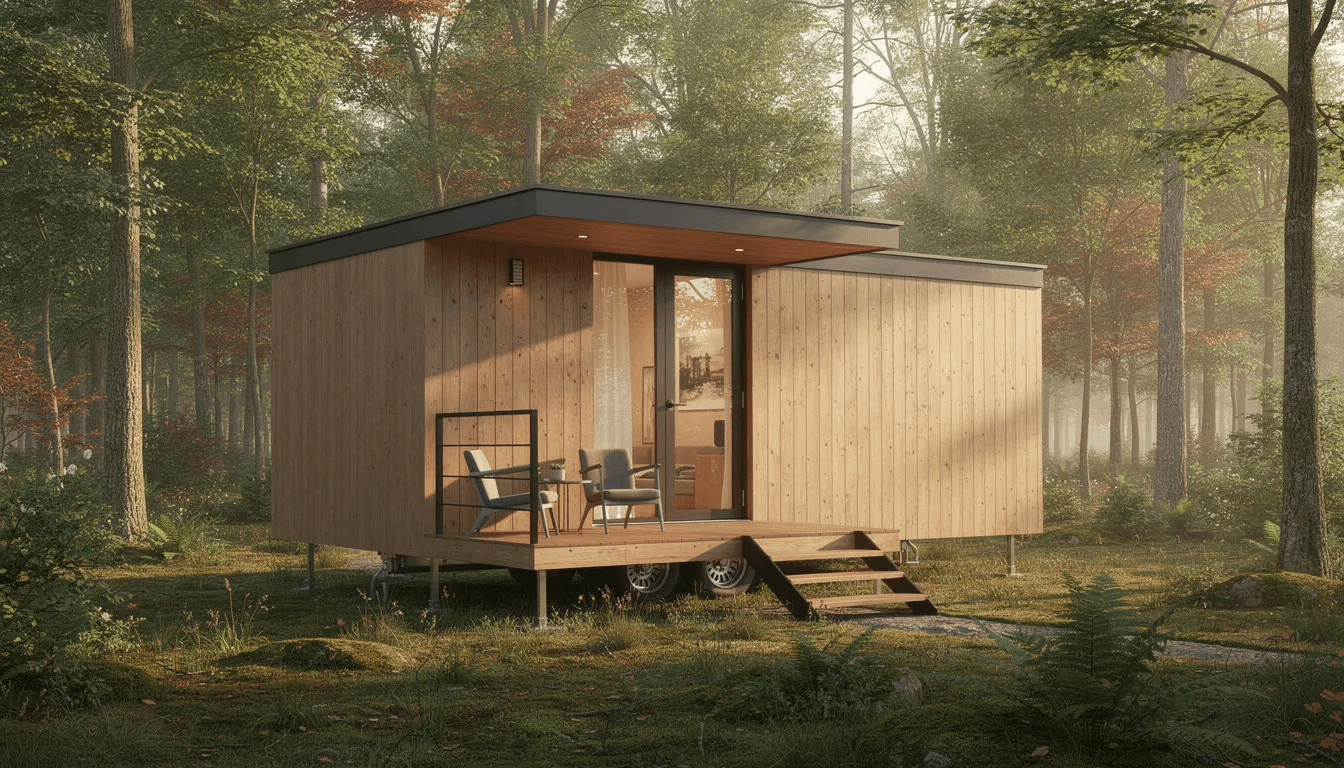
Fully finished 2 bedroom portable cabins in the US and UK typically start around $35,000–$45,000 (approximately £28,000–£36,000) in 2024 and can reach $90,000 or more depending on size, features, and regional requirements. Florida installations, for instance, may add 10–20% for hurricane reinforcements, while Colorado builds often include 15% premiums for enhanced insulation.
Here are concrete price examples across different types:
Compact 26’ x 10’ cabin (~260–280 sq ft) with basic finishes starts from about $36,000. This size works well for vacation cabins or budget-conscious annexes. Amish Built Cabins offers their popular 14×28-foot Tiny Tim model at $35,000 base, configurable for two bedrooms with minimal wall additions, similar in spirit to crafting your dream Amish tiny house.
Mid-size 32’ x 12’ unit (~384 sq ft) with full bathroom, fitted kitchen, and porch falls in the $48,000–$58,000 range. Graceland Cabins’ 16×40-foot turnkey models come in around $49,000 including porch, where adding a dividing wall for the second bedroom costs under $2,000.
Larger 40’ x 13’ lodge-style cabin (~520 sq ft) with double glazing, higher-spec insulation, and quality fixtures runs approximately $68,000–$82,000. This is your dream cabin territory—enough room for comfortable bedrooms, a proper kitchen, and dedicated living space.
Premium park-model-style units with full appliances, upgraded cladding, and decking start around $85,000–$95,000. These often include mini-split HVAC systems but exclude decking, which adds $5,000–$10,000.
Prices are usually quoted as “turn-key,” meaning they include interior fit-out, wiring, plumbing, windows, and doors. However, delivery typically runs $2,000–$10,000 depending on distance, craning costs $1,500–$5,000 for 12–15 ft widths, foundations add $3,000–$15,000, and utility connections can reach $5,000–$20,000.
If you’re comparing options, note that holiday park operators often secure 10–20% multi-unit discounts, while seasonal offers in 2024 have dropped base prices 5–15% for off-season builds. The regular price versus sale price difference can be substantial—visit manufacturers during slower months for better value.
Benefits of Choosing a 2 Bedroom Portable Cabin
A 2 bedroom layout strikes an optimal balance between compact living and privacy. Whether you’re a couple needing a home office plus guest room, a small family seeking affordable housing, or an investor planning cabin rentals, two bedrooms provide flexibility that custom tiny homes for small-space living simply can’t match.
Space and Privacy
Two separate bedrooms allow parents and children, friends, or guests to have distinct sleeping areas while sharing common spaces. Typical bedroom sizes work out to:
- Primary bedroom: 9’ x 10’ (90 sq ft)—fits a queen bed and dresser comfortably
- Secondary bedroom: 7’ x 9’ (63 sq ft)—suitable for twins, bunks, or a home workspace
This layout means everyone gets their own room without sacrificing the open-plan living and kitchen area of 150–200 sq ft.
Flexibility of Use
The same cabin design adapts to remarkably different life situations:
- Full-time tiny home on rural property
- Airbnb unit averaging $100–$250 nightly with 60–80% occupancy
- Holiday park accommodation generating $20,000–$40,000 annual revenue, similar in spirit to mountain tiny house getaways
- Farm stay or agritourism cabin
- Home office combined with guest room
- Granny annexe compliant with accessory dwelling unit (ADU) zoning in 40+ US states
Mobility and Planning Advantages
Many 2 bedroom portable cabins can be transported on a flatbed truck and installed within a day using a hiab crane. Classification often falls under park model RVs (under 400 sq ft) or temporary structures, which can reduce permitting complexity significantly.
Traditional homes typically require 6–12 month approval processes. A portable cabin? Often weeks, depending on your local regulations and whether you’re connecting to permanent utilities.
Cost Efficiency
Portable cabins typically cost $125–$275 per square foot turnkey, compared to $200–$400 for stick-built construction. That’s a 10–30% savings driven by factory efficiencies, standardized materials, and reduced on-site labor.
For perspective, a 500 sq ft prefab cabin might run $62,500–$137,500 complete, versus $150,000+ for site-built construction of similar size.
Sustainability Features
Modern cabins offer options that appeal to eco-conscious buyers:
- R-13 to R-21 wall insulation for 4-season comfort
- Double-glazed low-E windows reducing energy loss by 30%
- Solar compatibility with 5–10kW panel systems for off-grid setups
- Composting toilet options cutting water use by 90%
With off-grid inquiries rising 15% in 2024, manufacturers are increasingly building sustainability into standard specifications, taking cues from self contained tiny homes for modern off-grid living.
Popular Sizes and Layouts for 2 Bedroom Portable Cabins
Layout efficiency matters as much as total square footage when fitting two bedrooms into a transportable footprint. The most successful designs position bedrooms at opposite ends, flanking a central living core to maximize privacy and flow, mirroring principles found in well-designed tiny house floor plans that work.
Compact 2 Bedroom Cabin (~280–320 sq ft)
A 26’ x 11’ unit offers open-plan living and kitchen (roughly 120 sq ft), a compact shower room (30 sq ft), one double bedroom (10’ x 10’), and a bunk room (8’ x 8’). This layout suits 2–4 people and works well for holiday parks, weekend retreats, or budget guest annexes, particularly if you’re inspired by tiny house cabin retreats for a cozy getaway.
Pros: Low cost at $35,000–$45,000, easy towing under 12 feet wide, functional for short stays Cons: Tight storage requiring creative solutions like under-bed drawers, limited room for expansion
Standard Family Layout (~360–420 sq ft)
The 32’ x 12’ or 34’ x 12’ “end-bedroom” design places comfortable bedrooms at opposite ends with a central living and kitchen area. The primary bedroom typically measures 10’ x 12’ with wardrobe space, while the secondary runs 9’ x 9’. The bathroom sits in the hallway zone.
Pros: Excellent privacy flow between bedrooms, suitable for year-round family living Cons: 12-foot width may require permits in some states, delivery costs slightly higher
Extended Lodge-Style (~450–600 sq ft)
The 40’ x 13’ or 38’ x 14’ configuration delivers a larger master suite (12’ x 14’ with ensuite option), full-size kitchen with island setup (80 sq ft), utility closet, and optional loft adding 100 sq ft of sleeping or storage space.
Pros: Resort-like comfort in the $70,000–$90,000 range, room for modern lifestyle needs Cons: Higher transport costs for 13–15 ft widths requiring escort vehicles and special permits
Common Interior Features
Across sizes, you’ll find these standard elements:
- Open-plan living zones fitting sofa beds and 4-person dining tables
- Full bathroom with 48” x 32” shower, toilet, and vanity
- Storage via under-bed lifts (50 cubic feet per room), overhead cabinets, and integrated wardrobes
- High-pitch roofs in some models enabling 7–8 ft ceiling lofts
The best manufacturers provide detailed floor plans showing natural light from window placement, door swings, and furniture fit. Request these before making decisions based on square footage alone.
Key Features and Specifications to Look For
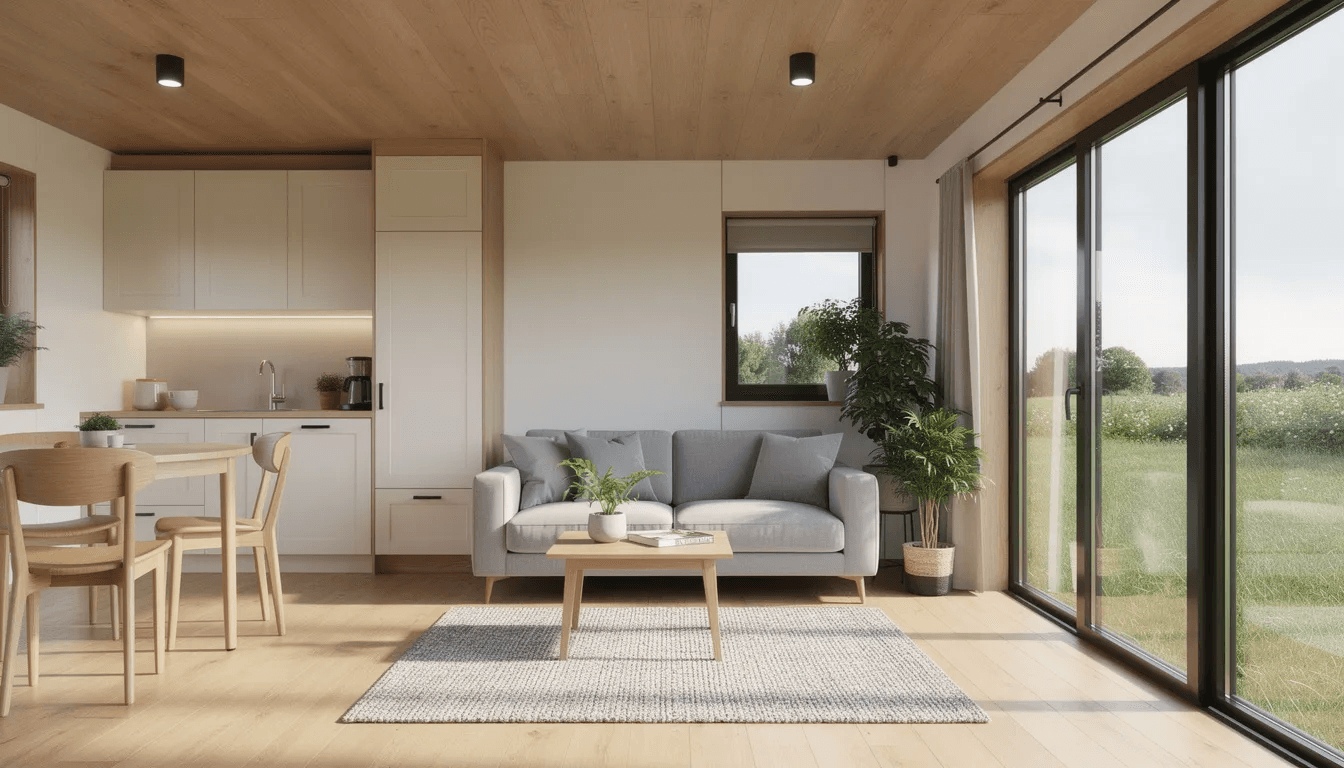
Not all 2 bedroom portable cabins are built to the same standard. Basic shells differ vastly from code-compliant turnkey units, so scrutinizing construction details before purchase is absolutely essential.
Construction and Materials
Steel frame vs. timber frame: Steel frames (galvanized for 50-year corrosion resistance) are common in modular units and handle multiple relocations well. Timber frames (C24 grade spruce) are 20–30% lighter, making transport easier and often more cost effective.
Wall thickness: Look for 4–6 inch walls using SIPs (structural insulated panels) achieving R-19 values for proper insulation.
Cladding options:
- Treated timber (cedar offers 20-year life with low maintenance)
- Composite panels (weatherproof, no painting required)
- Vinyl siding (budget-friendly at $5/sq ft)
- Metal (hail-resistant for harsh climates)
Insulation and Year-Round Comfort
For 4-season use, target these specifications:
- Walls: R-13 minimum, R-19 or higher for cold climates
- Roof: R-30 via spray foam or batts
- Floor: R-10 minimum to prevent heat loss
Windows should be double or triple-glazed with argon fill (U-value around 0.3). Draft-proof seals matter—poor sealing undermines even excellent insulation.
Heating options: Electric panel heaters work for mild climates, while mini-split heat pumps (12,000 BTU, 20 SEER efficiency) cost around $3,000 but offer both heating and cooling. Wood stoves (8,000 BTU output) are permitted in some areas and add rustic character.
Plumbing and Electrics
Standard inclusions should feature:
- Pre-wired 100–200 amp NEC-compliant panels
- LED recessed lighting (typically 50 fixtures)
- PEX plumbing lines for 40-gallon water heaters
- Greywater provisions for eco-conscious setups
For UK/EU models, verify BS 7671 compliance with RCD protection. Certification to local codes isn’t optional—it affects insurance, resale value, and safety.
Interior Finishes and Appliances
Interior choices significantly impact the complete price:
- Flooring: Vinyl plank (waterproof, $3/sq ft) outperforms laminate in moisture resistance
- Cabinetry: Shaker-style built-ins are popular and functional
- Appliances: Bundles including 24-inch fridge, 2-burner hob, and ventless combo washer/dryer run $2,000–$5,000, adding 10–20% to cabin cost
Consider wood paneling accents for visual warmth without full log cabin kits expense, or borrow inspiration from cozy log cabin interior ideas.
Exterior Options
Beyond the cabin itself, exterior additions enhance functionality:
- Porches (4–8 ft depth): $3,000–$8,000
- Steps with handrails: Often included
- Canopies for shade and weather protection
- Roof styles: Mono-pitch (modern aesthetic) or gable (traditional, better for rain/snow)
- Roofing materials: Metal sheeting (30-year warranty) or asphalt shingles
Use Cases: Residential, Rental, and Commercial Applications
The same 2 bedroom portable cabin design serves remarkably different purposes, from private homes to income-generating assets. Here’s how real owners put them to work.
Full-Time or Downsized Living
A couple downsizing to a 38’ x 12’ cabin installed on rural land creates their primary residence at a fraction of traditional home costs. Connection to mains electric and septic typically runs $10,000, or they might choose off-grid systems: a 10kW solar setup ($20,000) paired with a 5,000-gallon rainwater cistern.
Monthly living costs in this scenario often hit $1,500 or less—50% below average home expenses. For those seeking a simpler lifestyle on their own country property, this path is increasingly popular.
Holiday Rental / Airbnb
A small farm or campsite adds three 30’ x 12’ cabins to rent via Airbnb or Booking.com. At $90–$200 nightly rates and 70% occupancy, each unit generates roughly $50,000 annual gross revenue.
Payback period? Often 2–3 years for the cabin investment. Multi-unit deals reduce per-cabin costs by 15%, improving returns further. This has made vacation cabins one of the fastest-growing segments in rural hospitality.
Backyard Guest House or Multigenerational Living
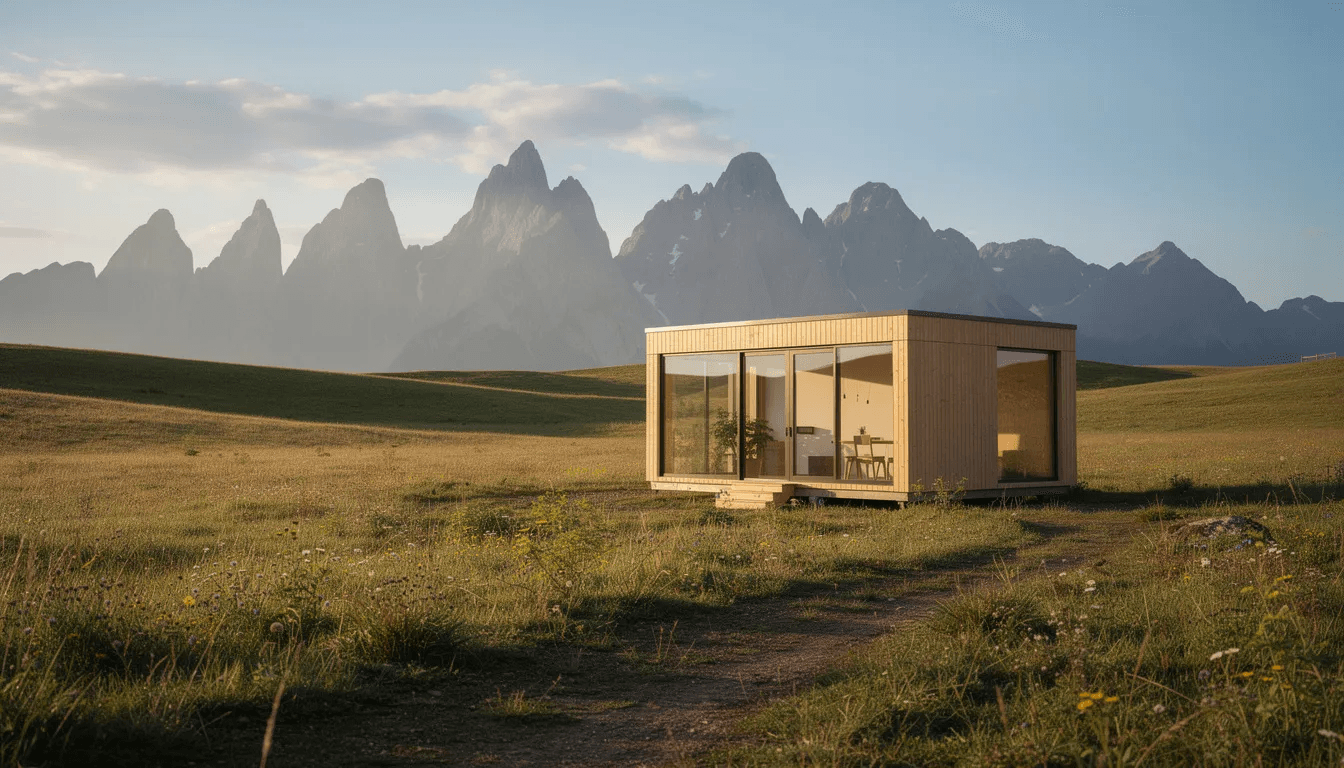
A 28’ x 10’ cabin becomes a guest suite or granny annexe behind an existing home, providing independent space with its own small kitchen and bathroom. In California and 40+ other states, 2024 ADU laws now allow accessory dwellings up to 1,200 sq ft under single-family zoning.
This arrangement lets aging parents or adult children live nearby while maintaining privacy—a functional solution for modern multigenerational families.
Worker Accommodation and Commercial Use
Construction companies and resorts deploy relocatable 32’ x 12’ cabins for on-site staff housing. When projects move, so do the cabins—saving 40% versus site-built dorms.
Steel-frame units built for durability can handle 10+ relocations over their lifespan, making them smart investments for companies with changing site needs.
Planning, Transport, and Installation Considerations
Regulations vary by country and municipality, so confirming local rules before ordering any cabin is non-negotiable. Here’s what the process typically involves.
Planning and Permits
The classification of your cabin determines permitting requirements:
- Park model RVs (under 400 sq ft): Often need no permits if sited temporarily at campgrounds
- Mobile homes: Subject to local zoning for mobile home placements
- Permanent dwellings: Require zoning approval for foundations and utility connections
Planning permission is commonly required when you’re pouring permanent foundations, connecting plumbing to mains systems, or using the cabin as a primary residence. A tour of local planning office requirements before purchase saves headaches later.
Site Preparation
Typical base options include:
- Concrete pads: Level, durable, $5,000–$15,000 depending on size
- Concrete piers: $4,000 for 500 sq ft footprint, requires level tolerance of 1 inch per 10 ft
- Steel skids: Relocatable, lower cost
- Treated timber foundations: Budget-friendly for temporary installations
Ensure level ground, plan for drainage gradients (2% minimum), and confirm 20-foot clearance for delivery vehicles and cranes.
Transport and Craning
Most 2 bedroom cabins travel via lorry or flatbed truck and are lifted into place with a 30-ton hiab crane. The process takes 4–8 hours once on-site.
Width matters for cost:
- Units under 12 ft wide: Standard transport, no special permits
- 14–15 ft wide: Escort vehicles required, additional $500–$2,000
- Delivery fees: $2,000–$10,000 depending on distance
Note that wider models require advance scheduling with transport companies.
Utility Connections
Connecting to grid utilities involves:
- Electrician and plumber hookups: 1–2 days, $5,000–$15,000
- Septic or sewer connection: Variable based on distance and local requirements
For off-grid setups, solar panels, propane systems, and composting toilets eliminate the need for grid connections entirely—though initial setup costs can match or exceed traditional hookups.
Timeline
Realistic lead times in 2024–2026:
- Manufacturing: 8–14 weeks from order for standard 2 bedroom cabin
- Delivery scheduling: 1–2 weeks once ready
- Installation: 1–3 days once the base is prepared and delivery arrives
Plan for the complete process taking 3–5 months from initial deposit to move-in ready.
How to Choose the Right 2 Bedroom Portable Cabin for Your Needs
Before comparing models and visiting showrooms, clarify your intended use, budget, and planning constraints. This preparation makes the selection process far more efficient.
Prioritize Use Case
Your primary purpose shapes every other decision:
Use Case | Size Priority | Key Features |
|---|---|---|
Full-time living | 400+ sq ft | R-19+ insulation, full kitchen, quality finishes |
Short-term rental | 320–400 sq ft | Durable materials, easy-clean surfaces, secure locks |
Guest accommodation | 280–350 sq ft | Compact layout, low maintenance |
Staff housing | 350+ sq ft | Steel frame for relocations, basic finishes |
Set a Realistic Budget
Total costs extend well beyond the cabin price. Here’s an example calculation:
- Cabin (turnkey): $50,000
- Delivery (200 miles): $3,500
- Foundations (concrete piers): $4,000
- Utility connections: $8,000
- Furnishings: $5,000
- Permits and fees: $1,500
- Total all-in: $72,000
Add 20–50% to quoted cabin prices for true project cost.
Evaluate Layout Carefully
Don’t rely on square footage alone. Check these details on floor plans:
- 36-inch hallways for comfortable circulation
- Window orientations (south-facing for solar gain and natural light)
- Storage space (aim for minimum 20% of floor area)
- Furniture fit—will your queen bed plus nightstands work in that 10’ x 10’ room?
Check Build Quality and Compliance
Before finalizing, verify:
- Certifications (HUD/ANSI A119.5 for parks, local building codes)
- Warranty terms (10-year structural, 1–2 years on fixtures is standard)
- Customer references or case studies from previous installs
- Materials documentation—what exactly are you getting?
Plan for the Future
Consider longer-term factors:
- Resale value: Quality cabins retain 70–90% value after 5 years
- Relocatability: Can you move it if circumstances change?
- Expansion potential: Room on your land for additional units?
Your Next Step
Create two lists before contacting any manufacturer or dealer:
Must-haves: Non-negotiables like R-19 insulation, full bathroom, specific bedroom dimensions, loft space
Nice-to-haves: Features you’d love but can live without—deck, upgraded appliances, custom finishes
This clarity transforms your vision into reality faster and helps manufacturers provide accurate quotes. With financing options increasingly available for portable structures, your dream of affordable, flexible living is more achievable than ever.
The 2 bedroom portable cabin market offers genuine alternatives to traditional housing—whether you’re seeking memories made in a family vacation spot, building cabin rentals as an investment, or simply choosing a different lifestyle. The key is matching the right cabin to your specific needs, budget, and site.