An a frame house is a steeply pitched, triangular structure where the roof extends almost to the ground, creating the distinctive letter “A” shape that’s captivated architects and homeowners for decades. The style surged in popularity during the 1960s and 1970s as a symbol of affordable, stylish vacation home ownership. After falling out of favor, a frame homes have made a strong comeback since around 2015, driven by the tiny-house movement, Instagram aesthetics, and renewed appreciation for mid-century design in natural surroundings.
This building form suits specific lifestyles particularly well:
- Mountain cabin owners in Colorado’s Rockies or Utah’s Wasatch Range
- Ski chalet destinations like Lake Tahoe, Vermont, or the Alps
- Forested lakeside plots in Oregon’s Mt. Hood region or small homes in Washington State’s most popular regions
- Tiny-house enthusiasts seeking compact 400-600 sq ft footprints who are inspired by tiny homes that redefine small-space living
- Short-term rental hosts on Airbnb/VRBO leveraging photogenic, cozy appeal, similar to the top A-frame cabins ideal for nature getaways
Cost range for 2026: From approximately $120,000 for a 600 sq ft off-grid frame cabin kit in rural Oregon to $500,000+ for a high-end 2,000 sq ft ski chalet in Vermont.
While A-frame homes are often seen as a cheap or budget-friendly option, actual costs vary widely depending on location, materials, and upgrades. On average, it costs about $100-$300 per square foot for labor and materials to build an A-frame house. For example, a 1,000-square-foot A-frame house will cost about $150,000 to build, excluding upgrades and land costs.
Having a clear idea or plan for your build will help you better estimate your total costs.
Quick decision checklist:
- Yes if your climate features heavy snowfall or rain requiring steep pitches
- Yes if your budget allows $170-350/sq ft for construction
- Maybe if you prefer open lofts and scenic views over flat-ceilinged rooms
- No if you need extensive storage and rectangular furniture arrangements
- Check local codes for height limits and setback requirements
- What is an A-frame house?
- History and evolution of A-frame houses
- Why choose an A-frame house? (Main benefits)
- Drawbacks of A-frame houses you should know
- How much does an A-frame house cost in 2026?
- Is an A-frame cheaper than a traditional house?
- Structural strength, safety, and insulation
- Floor plans and interior layout ideas
- Design styles: from rustic cabins to modern A-frames
- Customization options for A-frame houses
- Climate considerations: Where A-frames work best
- Living in an A-frame: Everyday experience
- Planning, permits, and building an A-frame
- A-frame house kits and prefab options
- DIY projects for A-frame houses
- Using an A-frame as a rental or holiday home
- Sustainability and energy efficiency
- Maintenance and repair of A-frame homes
- Variants: Tent-roof and pyramid houses
- Future of A-frame houses
- How to decide if an A-frame house is right for you
What is an A-frame house?
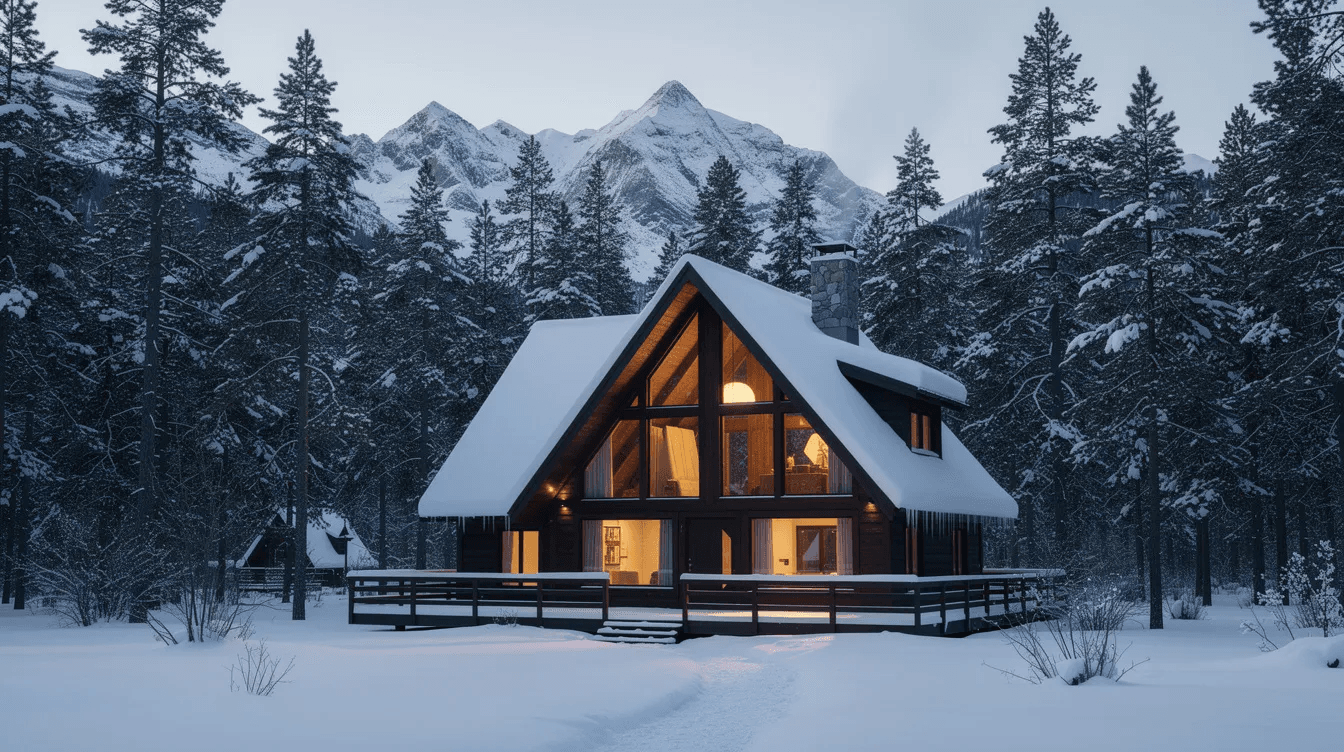
An a frame house is defined by its steeply pitched triangular roofline, where rafters extend directly from the foundation line to meet at a central ridge, forming the shape of the letter A with minimal or no vertical walls. This type of structure is often called a unique building form, where the gable roof extends almost to the ground, creating a distinctive silhouette. The roof pitch typically ranges from 45 to 60 degrees, creating dramatic vaulted interiors with exposed timber framing.
The style traces its roots to medieval European cruck frame construction and simple rural huts. The modern revival began in 1934 when Austrian-born architect Rudolph Schindler designed the pioneering Bennati Cabin near Lake Arrowhead, California. Post-war economic optimism fueled the trend further, with companies like Sears selling prefab kits through the 1950s and 1960s that allowed up to 80% owner-assembly.
Key defining features:
- 45-60° roof pitch for efficient snow shedding
- Exposed timber structure inside
- Large glazed gable ends for natural light and panoramic views
- Minimal exterior walls, often compact footprint
- Common locations today: ski regions in Colorado, Utah, the Alps; forested lakeside sites in Oregon, Washington; Scandinavian holiday parks
History and evolution of A-frame houses
The story of the A-frame house stretches back to the Middle Ages, when simple triangular huts provided sturdy shelter in rural Europe. These early frame houses were valued for their straightforward construction and ability to shed rain and snow, making them a practical solution for challenging climates. The design’s enduring appeal lies in its efficient use of materials and its iconic, instantly recognizable silhouette.
A major turning point for the A-frame style came in the 20th century, when architects began to reimagine the form for modern living. In 1934, R.M. Schindler’s innovative A-frame house at Lake Arrowhead, California, set a new standard for vacation home design, blending rustic charm with modernist principles. By the 1960s and 1970s, A-frame house plans became a staple for mountain retreats and lakeside getaways, especially in regions prone to heavy snowfall. The steep roof pitch and minimal exterior walls made these houses both stylish and practical, allowing them to thrive in challenging environments.
Today, A-frame houses continue to evolve, with contemporary architects and builders adapting classic house plans to suit a variety of locations and lifestyles. Whether nestled in the mountains or perched by a lake, the A-frame remains a beloved style for those seeking a unique blend of history, design, and functionality.
Why choose an A-frame house? (Main benefits)
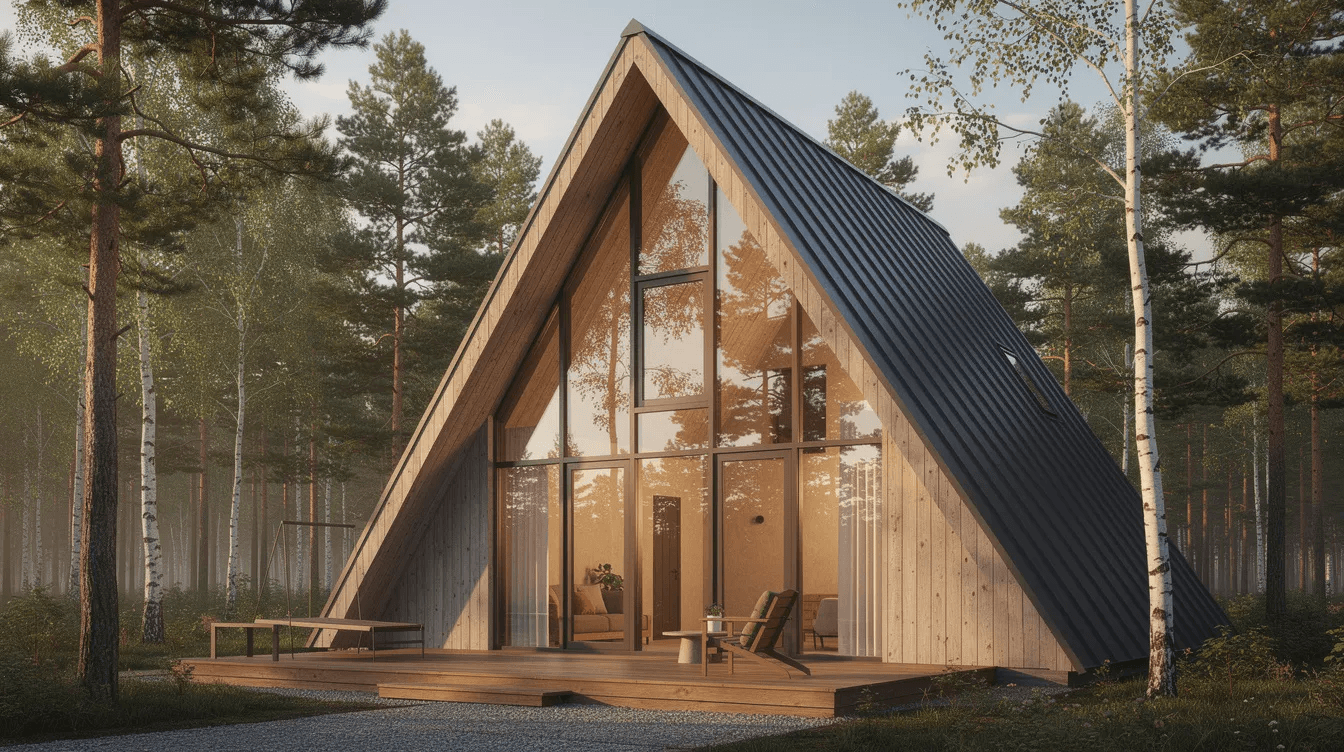
The emotional appeal of a frame homes centers on that cozy “cabin in the woods” feeling combined with dramatic architecture. Stepping into a double-height space wrapped in timber, with forest or mountain views framed through massive gable windows, creates an immersive connection to the landscape that rectangular houses rarely achieve.
Major advantages:
- Efficient snow shedding in climates with 200+ inches annual snowfall (Tahoe, Colorado Rockies)
- Simple structural geometry with inherent triangular rigidity
- Reduced exterior wall area—up to 30-40% less cladding than rectangular homes
- Large windows flooding interiors with natural light, reducing artificial lighting needs by 50% in daylit areas
- South-facing roof planes at 30-40° angles ideal for solar PV installations
- Prefab compatibility shortening build times to weeks for shells
- Strong appeal for short-term rentals due to photogenic, distinctive form
A concrete example: a 750 sq ft weekend retreat near Mt. Hood in Oregon serves dual purposes as a family getaway and Airbnb rental, leveraging its bright gable windows framing forest views to achieve 80% occupancy during peak seasons.
Drawbacks of A-frame houses you should know
The iconic silhouette comes with trade-offs that require upfront planning to address effectively.
- Lost usable floor area: Ceiling heights drop below 1.2-1.5m along 30-40% of perimeter walls, often excluded from livable square footage per 2026 building codes
- Interior layout challenges: Sloping walls complicate standard wardrobes, kitchen upper cabinets, and storage; custom millwork can add 10-20% to fit-out costs
- Potential overheating: Unventilated roof voids risk summer overheating without R-40+ insulation and ridge vents, especially in hot climates like Arizona
- Heat loss through glazing: Large glass gables demand triple glazing with low-E coatings to curb winter heat loss by up to 50%
- Zoning restrictions: Ridge heights (often capped at 35 ft), setback requirements, and non-traditional form rules limit feasibility in urban and suburban areas
How much does an A-frame house cost in 2026?
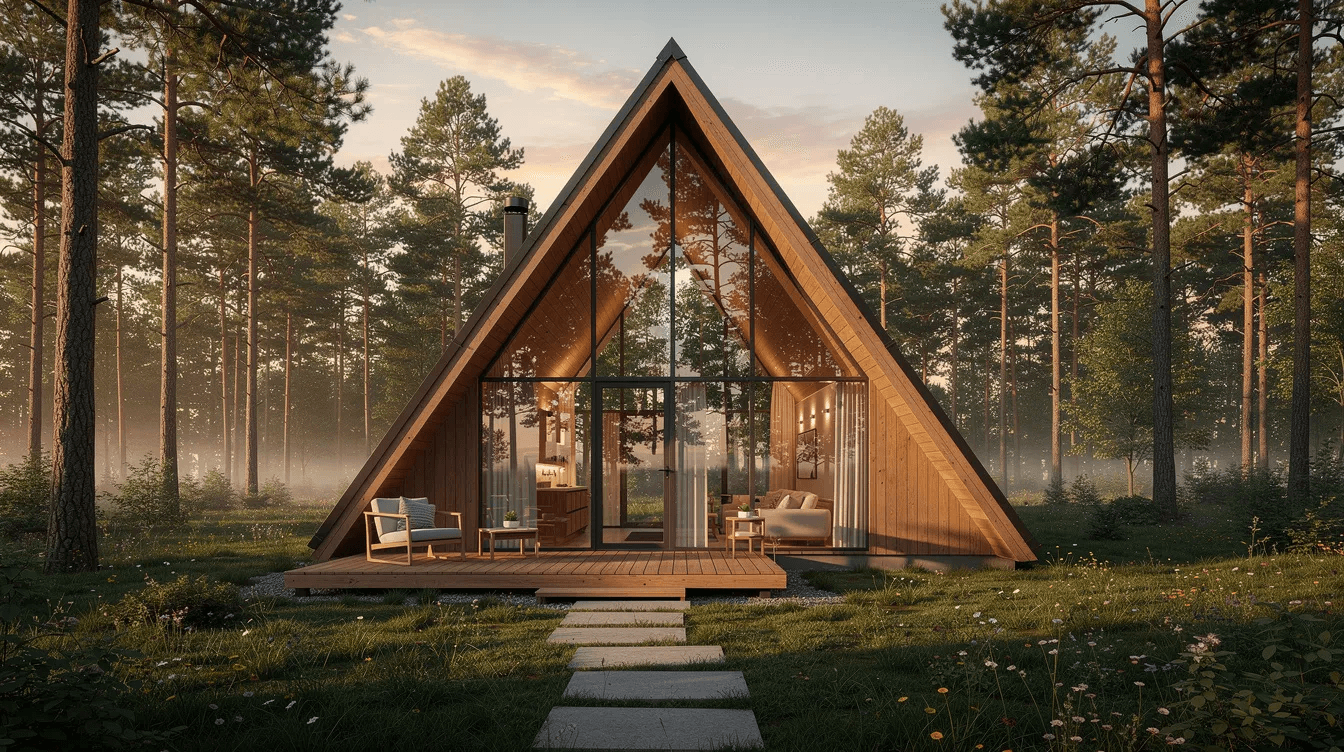
Current ballpark construction costs for new-build a frame homes run approximately $170-350 per sq ft ($1,800-3,500 €/m²), excluding land. The cost of a turnkey A-frame house can be expected to be in the region of 2000 euros per square metre. Your final budget depends heavily on location, site conditions, and finish level.
Concrete cost examples:
- Basic 500-700 sq ft off-grid Montana cabin kit: $100,000-150,000 for pre-cut timbers and sheathing, plus $20,000-40,000 for slab foundation and septic
- Mid-range 1,200 sq ft family A-frame in upstate New York: $300,000-450,000 including $50/sq ft site work on slopes, metal roofing at $15,000, and mid-grade double-glazing
- High-end 2,000 sq ft British Columbia lakefront: $700,000+ with $100,000 foundations, $80,000 triple-pane windows, and luxury oak interiors
Major cost drivers:
- Land prices: $50,000-200,000/acre in mountain regions
- Foundation complexity on sloped terrain: adds 15-25%
- Glazing: 20-30% of budget for large custom panels
- Roofing: standing-seam metal $10-20/sq ft vs. asphalt $5-8
- Off-grid utilities: wells ($15,000), solar+batteries ($40,000), composting toilets ($10,000)
- Many factors influence the cost of building an A-frame house, including location and material upgrades.
- The simple design of A-frame houses can lead to lower building costs due to reduced planning effort.
Request itemized quotes from local builders and use cost-to-build calculators adjusted to your ZIP code for accurate estimates. Having a clear idea or plan for your build will help you estimate costs more accurately.
Is an A-frame cheaper than a traditional house?
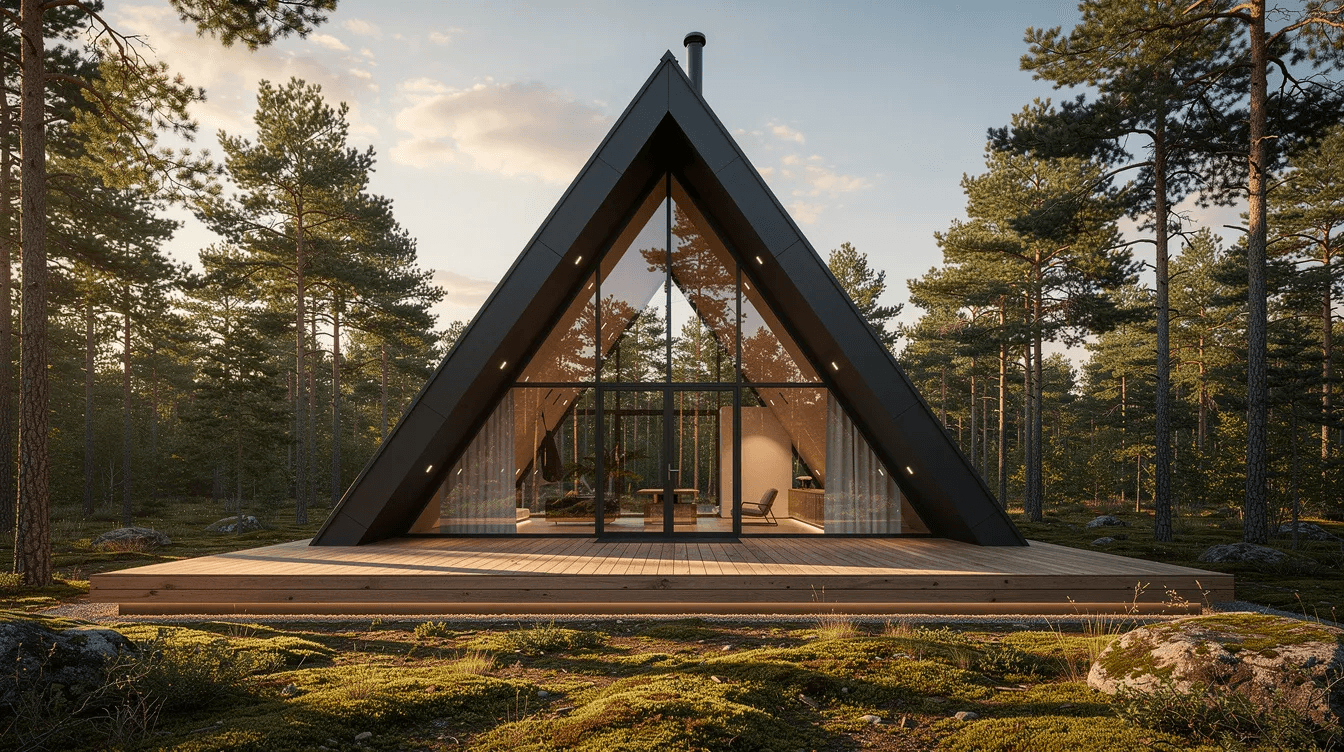
While A-frame houses are sometimes perceived as cheap due to their simple design, their actual cost-effectiveness depends on several factors.
Cost comparison factors:
- Structure: A-frames save 10-15% on simplified roof and wall framing with repetitive rafter pairs
- Simplistic design: The straightforward, minimalist structure of A-frame houses allows for cost-effective and straightforward construction, often requiring fewer materials than traditional homes.
- Exterior walls: Reduced cladding area, but more roofing surface—costs shift from siding to expanded roof materials (20-30% more roof area)
- Windows: Custom gable glazing runs $200-500/sq ft installed, significantly higher than standard rectangular windows
- Insulation: Precision work in tight rafter bays increases labor costs
- Furniture: Custom low-profile pieces required for low-eave zones add 10-20% to fit-out
In 2026 in northern Michigan, builders reported per-sq-ft costs for small A-frames only about 5-10% lower than comparable conventional cabins when all factors combined.
Structural strength, safety, and insulation
The triangular form provides inherent rigidity proven in bridge trusses and roof systems worldwide. This structure resists snow and wind loads efficiently, transferring forces directly along rafters to the foundation line without requiring intermediate load-bearing walls.
Performance in demanding climates:
- Handles 50-100 psf snow loads per 2026 ASCE 7-22 standards in Colorado’s Front Range
- Low profile withstands 110-140 mph winds through shear strength
- Self-shedding roof prevents dangerous snow accumulation during heavy snowfall
Modern insulation approaches:
- R-50+ rigid foam above roof deck
- Dense-pack cellulose (R-3.7/inch) in 2×12 rafter cavities
- Continuous vapor barriers preventing condensation in cold roofs
- Double or triple-glazed windows with U-values under 0.15 Btu/hr-ft²-°F
For fire-prone forests in California or British Columbia, specify Class A metal roofs, ember-resistant vents, and maintain 100-ft defensible space per 2026 wildland codes.
Floor plans and interior layout ideas
Most a frame house plans center on an open-plan living, dining, and kitchen area in a double-height volume with gable views. A lofted mezzanine sleeping area tucks under the roof on the second floor, accessed by stairs or ladder.
Layout examples by size:
- 400-500 sq ft tiny A-frame: Kitchenette with loft bed accessed via ladder to the tiny house loft, built-in benches under eaves, compact bathroom centrally located
- 900-1,100 sq ft two-bedroom: Side entry, ground level master bedroom, alternating-tread stairs (36-inch width) to loft, bathroom where ceiling height exceeds 7 ft, echoing many chalet tiny house models for modern living
- 1,500+ sq ft family home: Ground-floor master with en-suite, walkout basement for additional rooms, open double-height living space
Design recommendations:
- Place bathrooms, kitchens, and storage where walls are highest (center of plan)
- Use low-slope zones for built-in benches, storage drawers, reading nooks, and platform beds, borrowing ideas from affordable tiny house designs and layouts
- Stair options: straight side-run (best flow, space-hungry), space-saver spiral (tight fit), or ladders for ultra-small builds
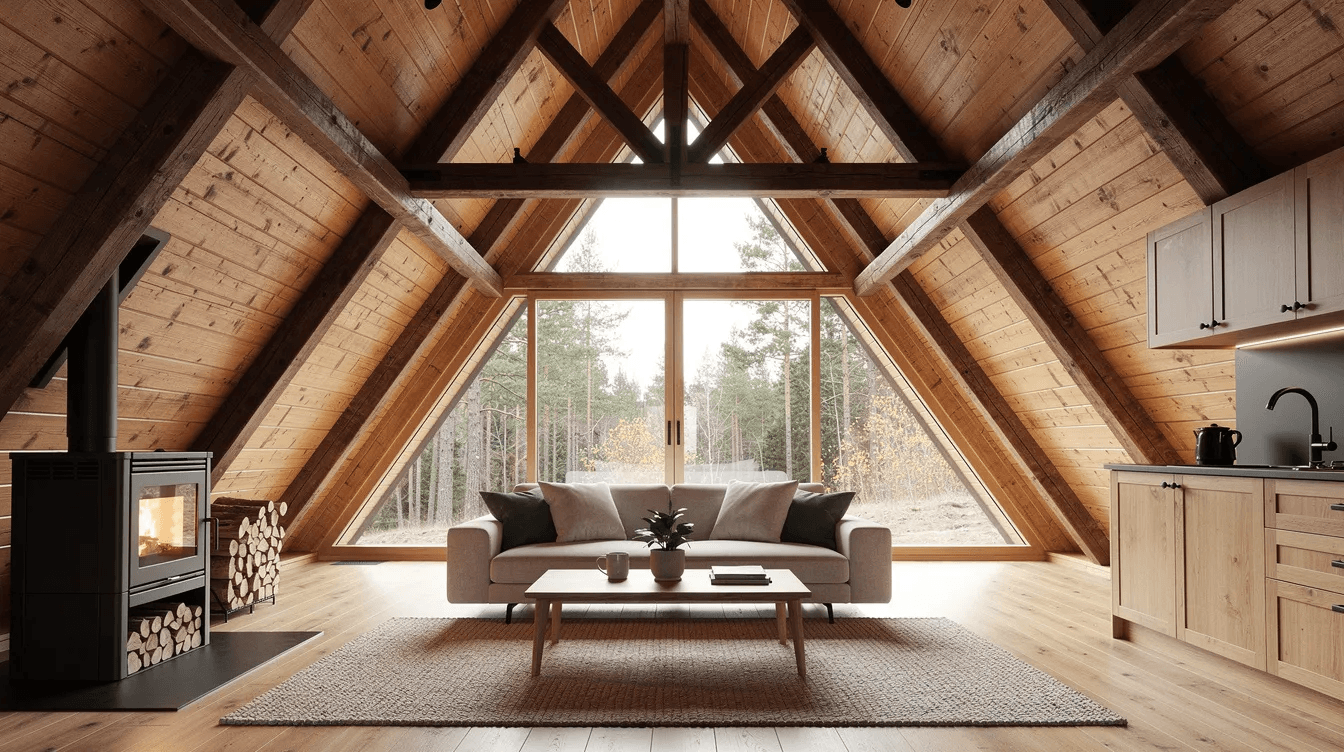
Design styles: from rustic cabins to modern A-frames
The same A-shaped shell can carry vastly different design personalities depending on materials and finishes.
- Rustic cabin style: Exposed pine beams, cedar shingles, cast-iron wood stove, warm earth colors, plaid textiles—the classic mountain retreat dream
- Scandinavian minimalism: Light birch or whitewashed timber, white plaster walls, vast uncluttered windows, simple furniture; popular in Norway, Sweden, and Finland
- Ultra-modern: Charred shou sugi ban or black metal exteriors, slim steel window frames, polished concrete or oak floors; common in Iceland and Pacific Northwest builds
- Hybrid solutions: Cross-gable wings or T-shaped ground floors that expand usable space by 30-50% while retaining the iconic silhouette
Customization options for A-frame houses
One of the greatest strengths of the A-frame is its adaptability. Homeowners can personalize their frame houses to reflect their tastes, needs, and the unique character of their site. From the choice of natural materials like timber and stone to sleek metal accents, the exterior and interior design possibilities are nearly endless.
A-frame house plans can be tailored to maximize natural light and views, with options for expansive windows, skylights, and even dormers that bring the outdoors in, similar in spirit to custom tiny homes designed for small-space living. Large windows not only flood the house with sunlight but also create a seamless connection to the surrounding landscape. Additionally, the interior floor plan can be customized to include open-concept living spaces, cozy lofts, or even multi-level layouts, depending on your needs.
Working with an architect or experienced builder, you can create a plan that fits your budget and lifestyle. Whether you prefer a rustic retreat or a modern masterpiece, the flexibility of A-frame design ensures your home will be as unique as you are.
Climate considerations: Where A-frames work best
A-frames excel in specific climates but can adapt to others with careful detailing and material selection.
Snowy climates (Colorado Rockies, Swiss Alps, Hokkaido):
- 50-60° pitch prevents ice dams
- Structural sizing for 150+ inches annual snowfall
- Metal roofing for longevity
Cool, maritime climates (Pacific Northwest, Scottish Highlands):
- Corrosion-resistant metal roofs (50+ year life)
- Wind-braced rafters
- Mold-resistant detailing
Warm, humid climates (coastal Carolinas, Southeast Asia): Many travelers in these regions also gravitate toward mountain tiny house getaways with modern amenities.
- 4-6 ft roof overhangs
- Operable clerestory vents for cross ventilation
- Light-colored finishes
Hot, dry climates (Arizona, inland Spain):
- Reflective white CRRC-rated roofs
- Electrochromic glazing or shaded patios
- Consider modifying pure A-form to introduce outdoor rooms
Living in an A-frame: Everyday experience
Morning light streams through the tall gable window, filling the space with warmth. Rain patters on the metal roof above—a sound you’ll want to manage with proper insulation (aim for 40-50 dB reduction). The timber-wrapped interior creates a sense of being sheltered yet connected to natural surroundings outside.
Daily life considerations:
- Acoustics: Wind and rain audible on steep roofs; soft finishes and textiles reduce echo
- Seasonal rhythms: Cozy winter evenings by wood stove contrast with bright, tent-like summer days with doors open
- Storage realities: Thoughtful built-ins, under-stair closets, and low-profile furniture keep spaces functional
- Rental management: Modern keyless entry systems, winterizing routines (drain-down valves), and durable finishes simplify changeovers for part-time vacation home rentals
Planning, permits, and building an A-frame
Even simple-looking A-frames must meet the same building code and zoning rules as any house in 2026. Research your site thoroughly before deciding on your project. Note that A-frame houses may not comply with all building regulations, which can limit where they can be built.
Key planning steps:
- Check zoning for minimum house size, height limits, and setbacks
- Verify septic or sewer requirements for your location
- Address any design restrictions in scenic or historic areas
- Engage a local architect or structural engineer familiar with snow/wind load calculations
- Research permitting timelines (varies significantly by region)
- Work closely with your builder or construction board to source materials, manage permits, and coordinate the building process.
- Ensure you have a skilled construction team to oversee the building process and manage permit reviews.
Typical build sequence:
- Site survey (2 weeks)
- Foundation—slab, crawlspace, or basement (1-2 months)
- Structural frame installation (2-4 weeks for prefab)
- Roofing and waterproofing
- Window installation and utilities (1 month)
- Interiors and final inspections (2-3 months)
Timeline: Plan for 6-12 months from permits to complete construction for a 700-1,000 sq ft A-frame.
A-frame house kits and prefab options
An A-frame kit or prefab system consists of factory-cut structural components and predesigned house plans shipped to your building site. This approach can streamline the process significantly.
Typical kit inclusions:
- Structural shell and pre-cut rafters
- Sheathing and basic fasteners
- Sometimes windows and doors
- Foundation and utilities generally NOT included
Kit categories:
- DIY-friendly small kits (200-400 sq ft): $30,000-50,000; skilled owners can assemble with minimal help
- Full-size engineered kits (1,000+ sq ft): $100,000+; require licensed contractors
Pros: Reduced design work, predictable materials list, minimized waste, shortened framing time—attractive for remote sites with short building seasons
Cons: Limited layout flexibility, shipping costs ($5,000-15,000 for remote sites), need to adapt to local codes
Questions to ask kit suppliers: Engineering stamps for 2026 codes, insulation packages, window specs, warranty terms, and company support during construction.
DIY projects for A-frame houses
A-frame houses are a favorite among DIY enthusiasts, offering plenty of opportunities to add personal touches and creative upgrades. One popular project is installing large windows or skylights to enhance natural light and make the most of scenic views—perfect for transforming your house into a bright and airy vacation home.
Homeowners often take on projects like building a loft or gallery to create extra living or sleeping space, making the most of the vertical volume under the steep roof. Using natural materials such as reclaimed wood for accent walls, shelving, or custom furniture can add warmth and character to the interior. Even small projects, like crafting built-in benches or storage solutions under the eaves, can make a big difference in both style and functionality.
With a bit of creativity and hands-on effort, you can create a truly unique space that reflects your personality and makes your A-frame house feel like home, much like the atmosphere found in tiny house cabin retreats for cozy getaways.
Using an A-frame as a rental or holiday home
A-frames perform exceptionally well as short-term rentals, particularly in scenic mountains or beach locations where their photogenic form drives bookings, paralleling the appeal of micro houses built for affordable modern living.
Features that attract 2026 guests:
- Panoramic glazing and dramatic ceilings
- Hot tubs on decks and outdoor fire pits (where legal)
- Wood-burning stoves for atmosphere
- 1Gbps Wi-Fi for remote workers
- Distinctive “cabin in the woods” aesthetic
Business considerations:
- Higher demand during ski season (70-90% winter occupancy in resort areas)
- Summer hiking and lake seasons drive shoulder-season bookings
- Check local regulations: maximum occupancy caps (often 10 guests), parking requirements, safety equipment mandates (CO detectors, smoke alarms)
- Add durable, easy-to-clean finishes and lockable owner storage
Sustainability and energy efficiency
A-frames can achieve strong energy efficiency thanks to compact envelopes and large roof planes suitable for renewables.
Recommended strategies:
- High insulation values meeting 2026 standards (R-50+ roofs)
- Airtight construction with mechanical ventilation
- Orient glazed gable to capture winter sun; add shading for summer
Low-impact materials:
- FSC-certified timber framing
- Cellulose or wood-fiber insulation made from natural materials
- Metal roofing with 50+ year service life
- Natural interior finishes: linoleum, oiled wood
Off-grid potential:
- Solar PV systems (10-20 kW) with 40 kWh battery storage
- Rainwater collection (5,000-gallon cisterns where legal)
- Low-flow fixtures and composting toilets saving 30% water
Maintenance and repair of A-frame homes
Regular maintenance is key to preserving the beauty and integrity of A-frame homes. The foundation line is especially important, as it supports the entire structure and must be kept in good condition to prevent settling or water intrusion. Routine inspections of the roof are also essential, since the steep pitch and large surface area can be vulnerable to weather-related wear over time.
Choosing durable materials, such as metal or high-quality asphalt shingles for the roof, can help extend the life of your house and reduce the frequency of repairs. Additionally, keeping gutters clear and checking for leaks or damage after storms will help protect the structure from moisture issues. By staying proactive with maintenance and addressing small repairs promptly, you can ensure your A-frame home remains safe, comfortable, and beautiful for many years.
Variants: Tent-roof and pyramid houses
Some houses use a related geometry: four sloping roof planes meeting at a central point, forming a pyramid or “tent roof” instead of the classic two-sided A-frame. This type of structure is also called a pyramid house or tent-roof house, depending on the region.
Key differences:
- Four faces instead of two create more evenly distributed interior space
- Central peak with better headroom throughout
- More complex roof junctions requiring careful waterproofing
Examples: Small pyramid cottages in German holiday parks and experimental glass pyramid houses inspired by the Louvre in Paris demonstrate this form’s potential.
Trade-offs: Better central headroom but fewer tall vertical walls for glazing; roof detailing more complex than standard A-frames.
Future of A-frame houses
Looking ahead, the future of A-frame houses is filled with exciting possibilities. Architects and builders are embracing new materials and design strategies to make frame houses more energy-efficient and environmentally friendly. Features like solar panels, advanced insulation, and rainwater harvesting systems are becoming increasingly common, helping to reduce the environmental footprint of these homes.
Additionally, the integration of smart home technology is making A-frame living more convenient and comfortable than ever before. As interest in sustainable and distinctive housing continues to grow, the A-frame style is poised to remain a favorite for those seeking a blend of tradition, innovation, and natural beauty. With their timeless design and adaptability, A-frame houses are set to inspire dream homes for generations to come.
How to decide if an A-frame house is right for you
The A-frame’s iconic shape delivers dramatic living spaces and efficient snow shedding, but requires accepting trade-offs in usable floor area and furniture flexibility. A-frame houses have carved out a unique place in the world of architecture, offering a blend of tradition and innovation. Your ideal choice depends on aligning the form with your specific life circumstances.
Decision checklist:
- Does your climate benefit from steep-pitched roofs?
- Can your budget accommodate $170-350/sq ft construction plus land?
- Are you comfortable with open lofts and sloped walls?
- Do you value distinctive aesthetics over conventional layouts?
- Is your intended use (full-time residence, holiday home, rental) suited to compact living?
Next steps:
- Visit at least one existing A-frame through rentals or open houses to experience ceiling heights, light, and acoustics firsthand
- Sketch preliminary floor plan ideas based on your family size and lifestyle
- Consult local planners or an architect about zoning requirements at your site
- Gather several builder quotes dated in 2026 to capture current material and labor prices
- Visit our A-frame Inspiration page to explore house plans, see real-world examples, and access online planning tools. Many of these tools include features such as interactive maps and cost calculators to help you plan your A-frame project.
Start your search with realistic expectations, fill in the knowledge gaps through research, and discuss your plans with friends or family who’ve built similar projects. The A-frame dream is achievable—but only when you accept both its beauty and its constraints.