
The tiny house movement focuses on minimalism, mobility, and financial independence—and it’s reshaping how people think about home. With tiny houses typically measuring between 200 and 400 square feet, these compact dwellings prove that exceptional design doesn’t require excess square footage.
What makes certain tiny homes stand out from the rest? We’ve evaluated dozens of designs worldwide to identify the best tiny houses that combine architectural innovation, sustainable living, and practical functionality. Whether you’re seeking a cozy vacation home or dreaming of full-time small space living, these eight remarkable structures offer style inspiration for anyone ready to embrace life with less.
- How We Chose the Best Tiny Houses
- Top 8 Best Tiny Houses That Inspire Small Living
- 1. The Beehive – Austin, Texas (Architectural Wonder)
- 2. Chicon House – Austin, Texas (3D-Printed Innovation)
- 3. KODA Float – Estonia (Floating Home)
- 4. Space of Mind Cabin – Finland (Modular Design)
- 5. Tiny House Purunã – Brazil (Off-Grid Retreat)
- 6. Riversdale Retreat – Australia (Award-Winning Design)
- 7. The Greenhouse – South Africa (Glass-Walled Living)
- 8. Kererū Retreat – New Zealand (Sustainable Salvage Build)
- Quick Comparison of the Best Tiny Houses
- How to Choose the Right Tiny House for You
- Which Tiny House Is Best for You?
- Final Thoughts
How We Chose the Best Tiny Houses
Selecting the best tiny homes required a rigorous evaluation across multiple criteria. Tiny house builders often focus on maximizing space efficiency, utilizing innovative designs and materials to create functional living areas within a small footprint. Here’s what we assessed:
Architectural Innovation and Design Excellence
- Unique structural approaches that challenge conventional tiny house design
- Creative solutions for floor plan optimization
- Integration of vertical space mastery, including lofted sleeping areas
Space-Maximizing Solutions
- Key design trends like folding furniture and large windows for natural light
- Multi-functional rooms that serve multiple purposes
- Outdoor extensions like decks and patios that expand the living area
Sustainability and Off-Grid Capabilities
- Solar panel integration and renewable energy systems
- Tiny houses use roughly 45% less energy for heating and cooling than average houses
- Sustainable materials such as reclaimed wood and eco-friendly insulation
Construction Quality and Recognition
- Premium materials and durable construction methods
- Awards from organizations like AIA and DINZ
- Media coverage and industry recognition
Livability and Value
- Practical functionality for daily life
- The price of tiny houses can vary significantly, typically ranging from $30,000 to over $100,000
- Long-term maintenance requirements
Top 8 Best Tiny Houses That Inspire Small Living
The tiny house movement has gained popularity in North America, with many builders specializing in custom designs that cater to individual needs and preferences. These eight exceptional tiny homes represent the pinnacle of small space design worldwide, and they sit alongside other great tiny homes that redefine small space living for anyone exploring compact lifestyle options.
1. The Beehive – Austin, Texas (Architectural Wonder)
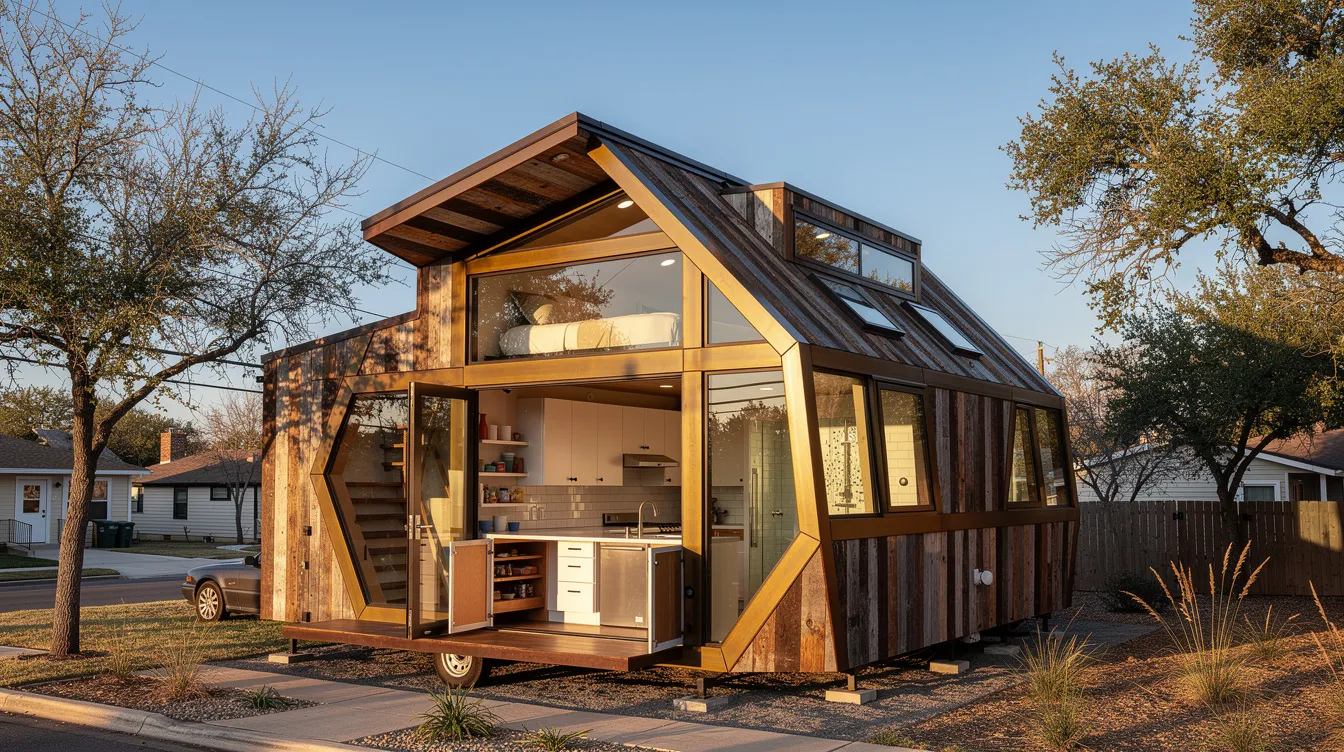
Nicole Blair’s AIA Award-winning Beehive design stands as a masterpiece of modern tiny house architecture. Its angular, honeycomb-inspired exoskeleton captures 40% more natural light through clerestory windows and south-facing orientations, creating a light filled interior that defies its compact footprint.
The sub-400 square feet interior features an open-concept kitchen with pull-out pantries, a spacious 6×8 foot walk in shower, and a compact spiral staircase leading to a 100-square-foot sleeping loft. Steel framing combined with reclaimed wood walls ensures seismic resilience perfect for urban settings.
Best for: Architecture enthusiasts and urban dwellers seeking a fixed foundation tiny home
Key strengths:
- Passive solar heating reduces energy needs by 60%
- Folding glass double doors create seamless indoor-outdoor flow
- High ceilings maximize perceived space
Possible limitations: Custom fabrication drives costs to $120,000-$150,000, and the structure offers limited mobility without disassembly.
2. Chicon House – Austin, Texas (3D-Printed Innovation)
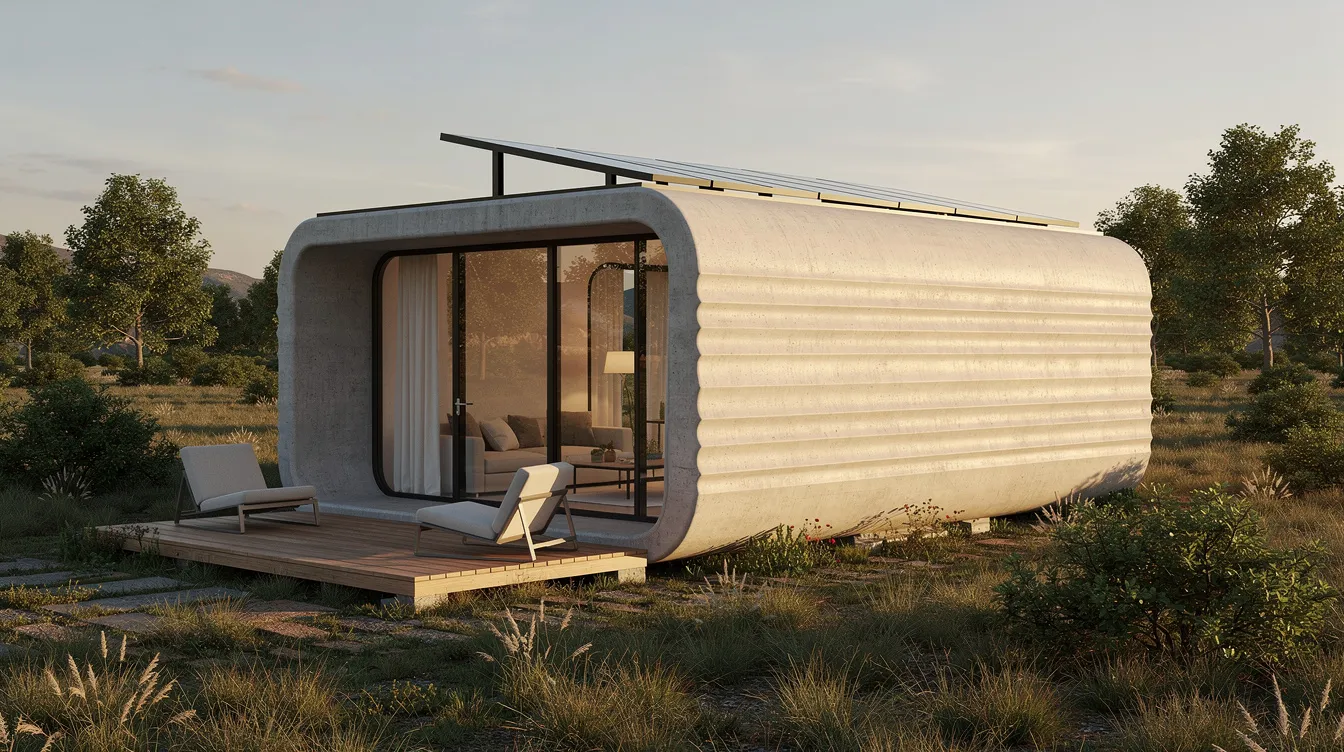
Chicon House in Austin, Texas, is recognized as America’s first 3D-printed house, constructed in just 24 hours using a concrete composite that is resilient and affordable, showcasing innovative construction techniques in tiny home design. ICON’s Vulcan printer used Lavacrete—a lava-based concrete blend offering 2.5 times the compressive strength of traditional mixes at 8,000 psi.
This 350 square foot structure boasts weather resistance against 150 mph winds and eliminates 90% of traditional on-site labor. The monolithic shell includes seamless insulation layers achieving R-30 values in walls without thermal bridging.
Best for: Tech enthusiasts and affordable housing advocates addressing the housing crisis
Key strengths:
- Remarkable $10,000 construction cost (excluding finishes)
- Rapid disaster relief deployment potential
- Turn key assembly in under 24 hours
Possible limitations: Curved printed walls create an industrial aesthetic with limited interior customization options.
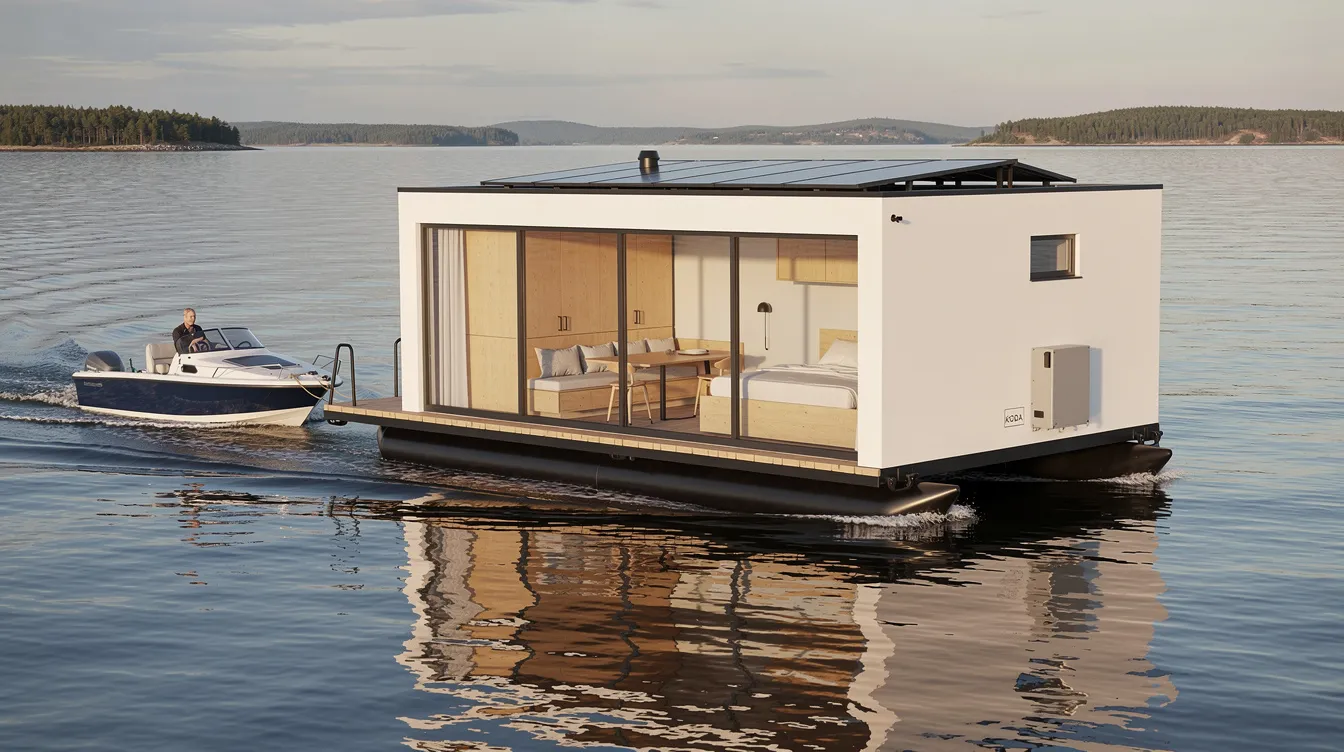
3. KODA Float – Estonia (Floating Home)
The KODA Float, designed by Kodasema, is a prefabricated floating home that can be towed to various locations, offering a modern, minimalist design with a versatile interior that can serve multiple purposes. This 269 square foot structure sits on HDPE pontoons supporting 10-ton loads and travels at 5 knots behind standard boats.
Premium materials include triple-glazed windows achieving U-values of 0.8 W/m²K for Arctic-level insulation. The modular interior features birch plywood cabinetry and space for a double bed and compact living area.
Best for: Water lovers and those seeking location-flexible living on lakes or coastal waters
Key strengths:
- 100% off-grid readiness via 4 kW solar arrays
- Lithium batteries provide 3-4 days of autonomy
- Towable design for seasonal relocation
Possible limitations: Water access permits and maritime zoning variances create regulatory challenges, with costs around €89,000 complicating marine insurance.
4. Space of Mind Cabin – Finland (Modular Design)
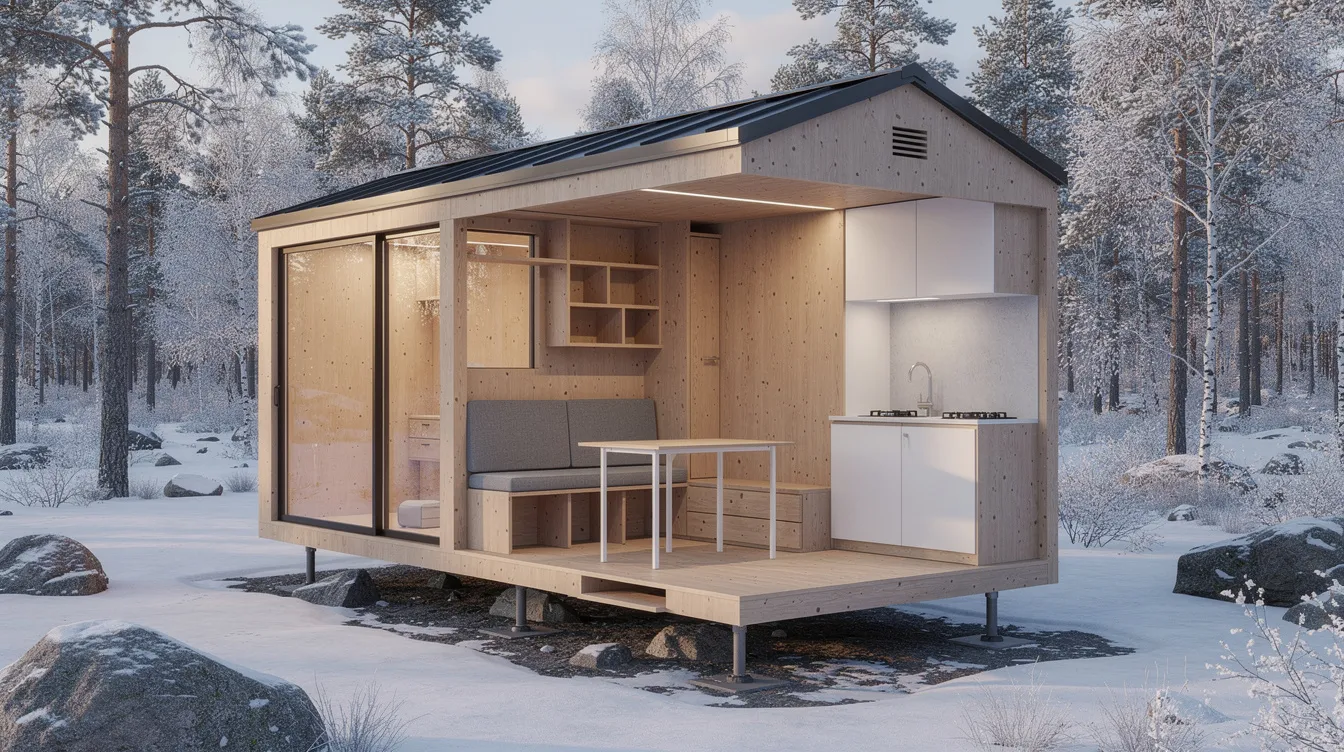
The Space of Mind modular cabin, designed by Studio Puisto Architects, features custom-made furniture attached to the structure, allowing residents to rearrange the floor plan as needed, making it adaptable and practical for various locations. At just 107 square feet, it’s among the most compact viable tiny homes available.
FSC-certified Finnish spruce with 25 cm insulation handles -30°C Arctic temperatures. Foldable benches double as storage, while screw-pile foundations allow installation across diverse terrains without permanent ground disturbance.
Best for: Minimalists seeking flexible living solutions and a guest house option
Key strengths:
- Disassembly in under 4 hours for relocation
- Passive ventilation reduces heating needs by 70%
- Bespoke furniture maximizes every inch
Possible limitations: Ultra-compact layout limits occupancy to one or two people with basic amenities like a two-burner stove. Pricing starts at €45,000.
5. Tiny House Purunã – Brazil (Off-Grid Retreat)
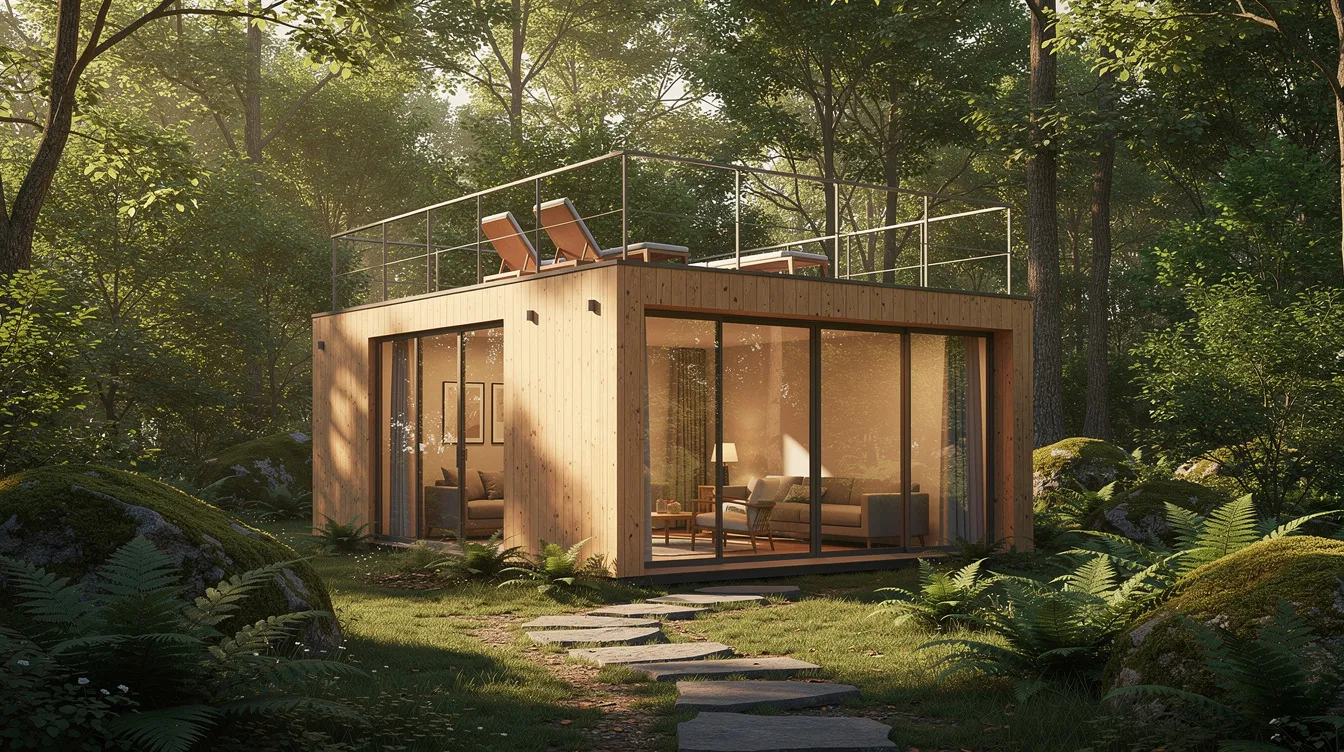
The Tiny House Purunã in Brazil features a floor-to-ceiling glass façade and a roof terrace, emphasizing smart space-saving design that integrates the kitchen, sleeping zone, and dining nook into a multifunctional living area. This 200 square foot timber-clad structure sits surrounded by rainforest, accessible via external stairs to panoramic views.
Off-grid tiny homes often rely on renewable energy sources, such as solar power, and utilize rainwater collection systems for water supply, promoting self-sufficiency, which aligns closely with minimalist tiny houses for sustainable living. Purunã exemplifies this with 6 kW solar panels, 5,000-liter spring water tanks, and rainwater filtration yielding 99% potable water.
Best for: Nature lovers and eco-conscious travelers seeking immersive wilderness experiences
Key strengths:
- Zero utility bills with complete energy independence
- Murphy bed releases 40 square feet of daytime living space
- Local hardwood construction resists termites
Possible limitations: Remote access via unpaved roads and absence of high-speed internet pose challenges for extended stays. Build costs approximately $50,000.
6. Riversdale Retreat – Australia (Award-Winning Design)
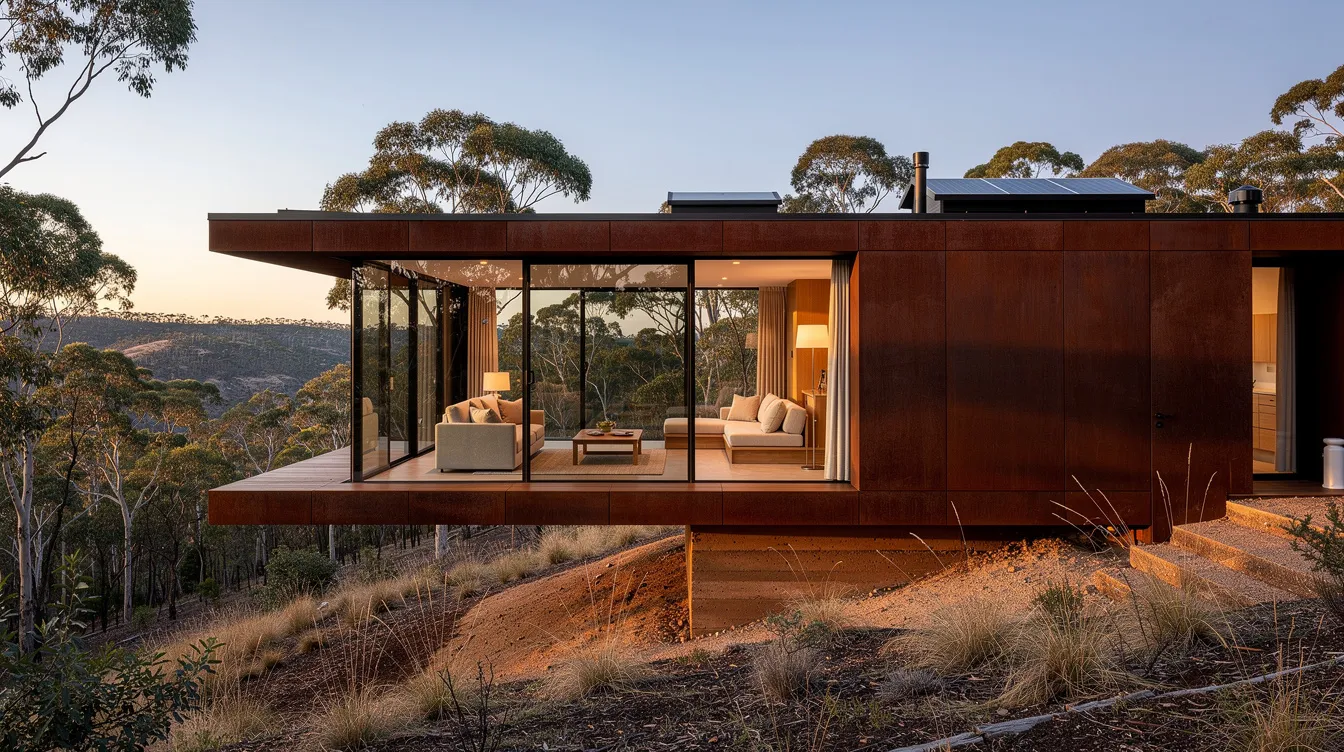
This Japanese-influenced 300 square foot cantilevered design earned Airbnb Host Awards finalist status. Bushfire-resistant corten steel cladding (BAL-40 rating) and floor-to-ceiling glazing frame panoramic Australian bushland views through massive windows.
Sustainable rammed earth walls provide thermal mass stabilizing interior temperatures within 18-25°C year-round. Many tiny homes are designed to be energy-efficient, incorporating features like solar panels and high-quality insulation—Riversdale includes greywater systems recycling 80% of water usage.
Best for: Design lovers and eco-conscious guests seeking luxury accommodations
Key strengths:
- Modern built-in banquettes and contemporary furnishings
- Seamless exterior-to-interior flow
- Sustainable features throughout
Possible limitations: Higher costs exceeding $200,000 and site-specific engineering requirements for sloped terrain installation.
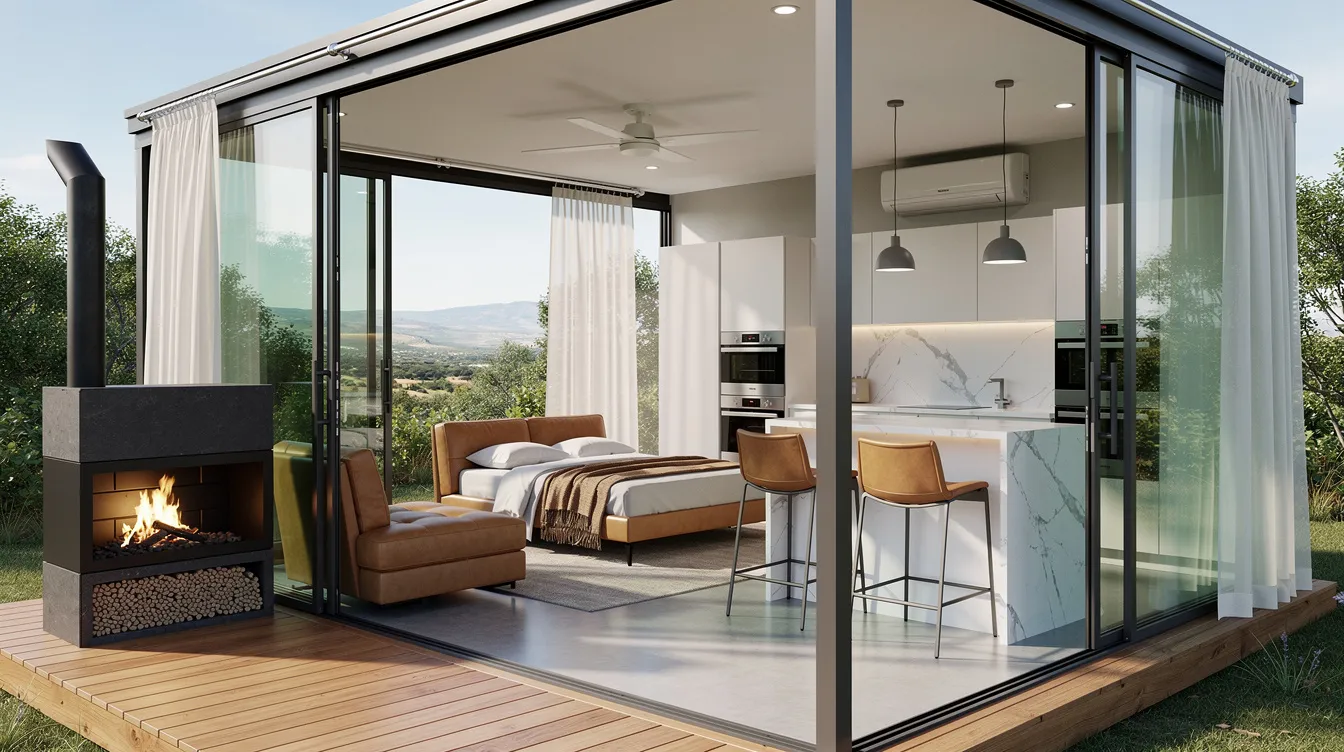
7. The Greenhouse – South Africa (Glass-Walled Living)
This 250 square foot glass-walled structure prioritizes natural light above all else. Low-E double glazing transmits 70% light while blocking 80% UV, with luxury finishes including quartz counters and leather upholstery throughout the bedroom and living area.
Dual indoor-outdoor fireplaces fueled by biomass pellets provide heating, while a wraparound deck expands livable space by 150 square feet. Studies show biophilic design boosts occupant well-being by 15%—The Greenhouse fully embraces this philosophy and demonstrates how tiny house interiors can maximize every square foot without sacrificing comfort.
Best for: Privacy-comfortable individuals seeking abundant light filled spaces
Key strengths:
- Wraparound breakfast bar and modern kitchen
- Floor-to-ceiling glass creates dream-like atmosphere
- Ground-level accessibility throughout
Possible limitations: Minimal privacy requires sheer curtains, and climate control demands high-SEER AC units. Build price approximately $180,000.
8. Kererū Retreat – New Zealand (Sustainable Salvage Build)
This 190 square foot DINZ Best Awards Silver winner proves sustainability and style coexist beautifully, standing among elegant tiny homes that redefine modern living. Tiny houses often utilize sustainable materials, such as reclaimed wood and eco-friendly insulation—Kererū uses 100% salvaged materials including reclaimed rimu timber and recycled steel, cutting embodied carbon by 90%.
The cozy interior accommodates up to four people via two lofts and a fold-out table. Solar-wind hybrid systems generate 8 kWh daily, while composting toilet systems complete the off-grid setup.
Best for: Sustainability advocates and rustic living enthusiasts who value zero-impact ethics
Key strengths:
- Entire structure built from salvaged materials
- Off-grid systems support family occupancy
- Passive solar orientation maximizes efficiency
Possible limitations: Rustic finishes lack modern polish, and remote gravel access requires 4WD. Labor-intensive salvage sourcing brings costs to approximately $80,000.
Quick Comparison of the Best Tiny Houses
Square Footage | Best For | Starting Cost | Key Feature | |
|---|---|---|---|---|
The Beehive | ~400 sq ft | Urban architecture fans | $120,000+ | AIA Award-winning design |
Chicon House | 350 sq ft | Budget-conscious innovators | $10,000 (shell) | 24-hour 3D construction |
KODA Float | 269 sq ft | Aquatic nomads | €89,000 | Towable floating home |
Space of Mind | 107 sq ft | Hyper-minimalists | €45,000 | 4-hour disassembly |
Purunã | 200 sq ft | Jungle off-gridders | $50,000 | Complete water independence |
Riversdale | 300 sq ft | Luxury eco-seekers | $200,000+ | Bushfire-resistant design |
The Greenhouse | 250 sq ft | Light-seekers | $180,000 | Glass-walled living |
Kererū | 190 sq ft | Salvage purists | $80,000 | 100% reclaimed materials |
How to Choose the Right Tiny House for You
Many tiny house builders offer a range of options from fully custom builds to pre-designed models, allowing clients to choose based on their budget and preferences, especially when considering top custom tiny homes for small-space living. Here’s how to match your priorities with the right design.
Choose Based on Location Flexibility
Many tiny houses are built on trailers, allowing for geographical mobility—but your options extend beyond this:
Fixed Foundation
- Requires soil tests and building permits
- Best for permanent property placement
- Examples: Beehive, Riversdale
Mobile/Trailer-Based
- Falls under RV laws in many jurisdictions
- Highway weight limits typically 3,500-10,000 lbs
- Avoids some property taxes
Modular Options
- Crane-transport relocation at $5,000-$15,000 per move
- Combines permanence with flexibility
- Examples: Space of Mind, KODA Float
Note that approximately 40% of U.S. municipalities ban tiny homes outright—rural areas with agricultural exemptions typically offer more flexibility. Companies like Rocky Mountain Tiny Houses specialize in navigating these regulations.
Choose Based on Lifestyle Needs
Tiny homes require less maintenance and cleaning time compared to larger houses, but you’ll need to assess your specific requirements, and consider broader inspiration and resources for exploring tiny houses:
Space Requirements
- Plan 50 square feet minimum per person for comfort
- Single-level living designs in tiny houses are increasingly popular for accessibility
- Consider sleeping area configurations—one sleeping loft versus two bedrooms
Work-From-Home Capabilities
- Starlink provides 100 Mbps in remote locations
- Built-in desks in lofted areas maximize floor space
- Natural light reduces eye strain during work hours
- Air mattresses fit 20 square foot nooks
- Convertible sofa options for occasional visitors
- Some designs like Kererū comfortably accommodate four people
Tiny homes prioritize a lifestyle centered on experiences over material possessions—make sure your chosen design supports your daily life patterns.
Choose Based on Budget and Construction
Tiny houses can be purchased in different configurations—unfinished shells, unfurnished models, or fully furnished options—which affect overall price. The average cost of a tiny house can be influenced by the choice of builder, as different builders may offer varying pricing structures based on materials and craftsmanship.
DIY vs. Professional Builds
- DIY construction: approximately $150/sq ft (40% labor savings)
- Professional builds: approximately $400/sq ft
- Custom builds from specialists ensure quality but increase costs
Ongoing Considerations
- Maintenance typically 20% lower than traditional homes
- Insurance runs 15-30% higher for mobile units
- Financing via personal loans (7-12% APR) or RV loans without 20% down
Tiny homes offer significant financial freedom and low-maintenance, minimalist living compared to traditional homes, making them appealing to anyone wondering if buying a tiny house for sale is right for them. Approximately 68% of tiny home owners are mortgage-free, compared to less than 30% of traditional homeowners.
Which Tiny House Is Best for You?
Match your priorities with these recommendations:
If location flexibility matters most: KODA Float or Space of Mind cabin offer unmatched mobility and share many attributes with modernist tiny house designs. The Cube One, designed by Nestron, is another sustainable smart home worth exploring for its 254 square feet of integrated technology.
If sustainability drives your decisions: Kererū Retreat’s salvaged materials and Purunã’s complete off-grid independence lead the category and echo themes found in top tiny house designs for modern living.
If budget is your primary concern: Chicon House’s $10,000 construction cost (shell only) proves affordable innovation exists, even when pursuing cute tiny house designs for your dream home. Many tiny house designs focus on maximizing comfort within a small footprint, providing a high quality of life at accessible price points.
If design excellence matters: The Beehive’s AIA recognition and Riversdale’s award-finalist status represent architectural achievement.
Timeline Considerations
- Prefab models: 1-3 months from purchase to delivery
- Custom builds: 6-12 months depending on complexity
Practical Next Steps
- Research local zoning requirements before committing
- Visit Airbnb listings to experience designs firsthand
- Get lender pre-approvals for financing options
- Schedule site surveys for foundation requirements
Final Thoughts
The world of tiny house design offers remarkable diversity—from 3D-printed affordability to floating opulence, from salvaged sustainability to glass-walled luxury. Popular tiny house styles emphasize minimalism and sustainable living while proving that quality of life doesn’t correlate with square footage.
Tiny house designs prioritize multi-functional, vertical space to maximize usability, and the movement continues growing with 2025 sales up 25% year-over-year. Whether you’re addressing personal housing crisis concerns, seeking a backyard guest house, or creating your dream vacation property, these eight designs demonstrate what’s possible when innovation meets intention.
Your ideal tiny home exists—the key is matching your lifestyle priorities with the right combination of location flexibility, sustainability features, and budget reality. Consider visiting these properties through rental platforms, exploring the entire website of builders who inspire you, and connecting with the tiny house community to learn from owners who’ve already made the leap. The sign of a great tiny house isn’t its size—it’s how well it supports the life you want to create.