
Building a tiny house should be exciting, not financially terrifying. The tiny home movement is a cool, innovative, and appealing lifestyle choice, making it a trendy and exciting way to live with style and purpose. Our tiny home cost calculator delivers precise, location-specific estimates that help you budget with confidence—so you can start your tiny home journey knowing exactly what to expect.
Tiny Home Cost Calculator
- Finally, a Tiny Home Cost Calculator Built for Smart Builders
- Why Our Tiny Home Cost Calculator Works
- How It Works
- Financing Options for Your Tiny Home
- Material Selection: Making Smart Choices
- Prefab Options: Streamlining Your Build
- Trailer and Foundation: The Hidden Costs
- Designing for Budget and Sustainability
- What Makes Us Different
- Proof That It Works
- Who It’s For
- Calculator Options & Features
- Frequently Asked Questions
- Start Planning Your Tiny Home Today
Finally, a Tiny Home Cost Calculator Built for Smart Builders
If you’ve tried to estimate the cost of building your own home using online tools, you’ve probably experienced the frustration of wildly inaccurate numbers. Most calculators spit out generic averages that ignore regional labor costs, current material prices, and the unique complexities of tiny living construction.
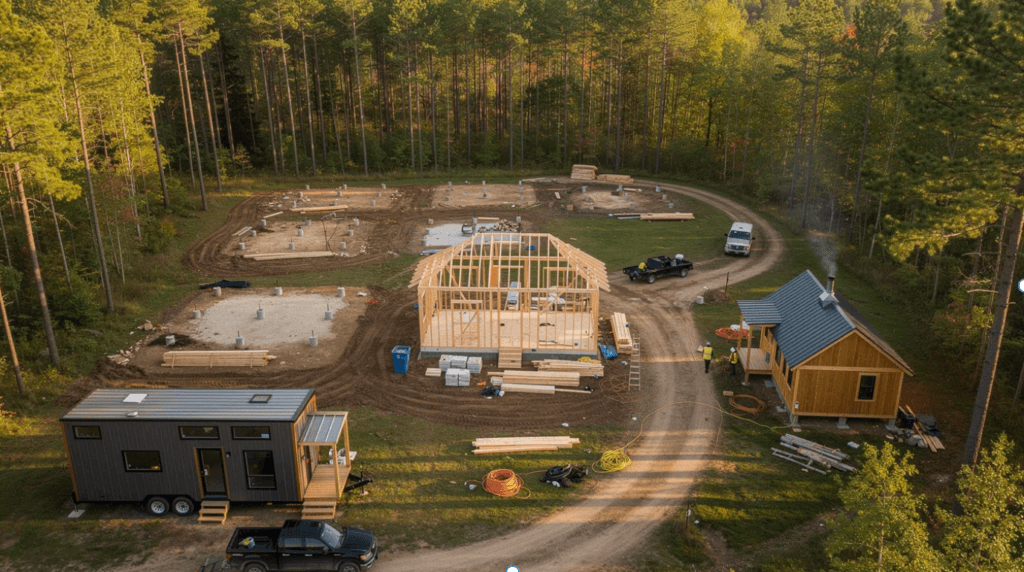
The reality? A tiny home in coastal California can cost double what the same build costs in Arkansas. A mobile tiny house on wheels requires different budgeting than a cabin on a permanent foundation. And those “average tiny house” figures you see online? They rarely include permits, utility hookups, or the premium finishes that make a space actually livable.
Building a tiny house yourself can be a much cheaper option, especially when using recycled or rough sawn lumber to reduce material expenses. DIY labor for building a tiny home is generally 50% cheaper than hiring professionals, making hands-on construction a significant cost-saving strategy.
Our tiny home cost calculator eliminates the guesswork. It factors in your specific location, chosen materials, foundation type, and feature selections to generate estimates within 5-10% of actual build costs. No more budget shock. No more discovering hidden expenses halfway through construction. Just clear, honest numbers that help you plan your tiny home dream with precision.
Why Our Tiny Home Cost Calculator Works
What separates accurate planning from expensive surprises? Data quality and comprehensiveness. Here’s what makes this calculator different from basic tools that leave you guessing:
- Real-Time Material Pricing – Our database pulls current prices from actual tiny home suppliers, reflecting 2025 lumber, insulation, windows, and appliance costs that fluctuate monthly
- Location-Specific Labor Adjustments – Labor costs vary depending on your region by up to 60%; our calculator adjusts for your ZIP code, whether you’re building in a $45/hour rural area or a $120/hour metro zone
- Complete Cost Breakdown – Beyond materials, you’ll see permits ($500-$3,100), utility hookups, trailer costs for mobile homes, foundation expenses, and every other line item that adds up
- No Construction Expertise Required – Simple dropdown menus and guided inputs mean anyone can calculate accurate estimates without understanding construction terminology
- Risk Reduction Through Planning – Identify potential budget issues before you spend money, allowing you to adjust your plan, explore financing options, or save longer before starting
Instead of forcing you to guess at project cost ranges, this tool gives you a detailed roadmap showing exactly where your money goes.
How It Works
Getting accurate numbers doesn’t require complexity. The process takes minutes, not hours.
Step 2: Customize features and systems
Select your preferred features, including insulation, windows, and system upgrades. You can choose options for electric heating, electrical wiring, and plan for electricity needs to power appliances and climate control. The calculator also allows you to factor in off-grid electric solutions like solar panels and battery packs, as well as different heating options such as electric floor heat, wood or pellet fireplaces, and gas fireplaces.
Step 3: Review your cost breakdown
See a detailed estimate for each component, including materials, labor, and system installations. Plumbing, electrical, and HVAC systems can cost between $5,000 and $15,000, depending on the complexity and whether you opt for professional installation.
Step 1: Enter Your Tiny Home Specifications
Start by inputting the basics: square footage (typically 100-400 sq ft for tiny homes), foundation type (wheels, permanent slab, or trailer), and your location. Select your finish level from basic shell construction to luxury turnkey—because a simple box with walls differs dramatically from a custom build with premium interior finishes.
Step 2: Customize Features and Systems
Tailor the estimate to your actual project. Choose your electrical setup, plumbing requirements, and heating/cooling needs. Planning off-grid? Select solar panels, composting toilet systems, and water treatment options. Pick specific materials for your roof, doors, windows, and insulation. Add appliances, deck space, or additional bedrooms to see how each choice affects total cost.
As a course of action for those interested in mobility, consider building your tiny house on skids and attaching a wheel kit. This process can involve salvaging and adapting parts from an old mobile home to facilitate easier movement and transport.
Step 3: Get Detailed Cost Breakdown
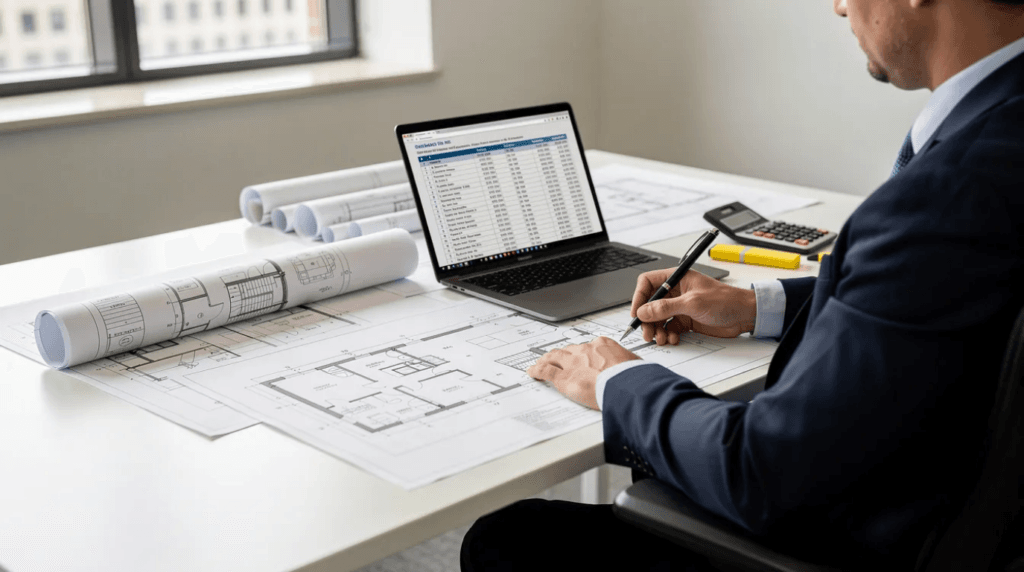
Receive itemized estimates separating material costs, labor costs, permits, and soft costs. View financing options with calculated monthly payment amounts based on current interest rates and loan terms. You are typically required to have a high credit score and enough cash to make a 10% down payment for financing a tiny home. You can also roll delivery, sales tax, tag, and title fees into your tiny home loan, making it easier to pay for all upfront costs. Download a comprehensive PDF report to share with contractors, lenders, or family members helping you plan.
Financing Options for Your Tiny Home
Securing financing for your tiny house is a crucial step in turning your tiny home dream into reality. While the average tiny house costs between $30,000 and $100,000 (not including land), there are several financing options to help you cover your project cost. Many aspiring homeowners explore personal loans, RV loans, or even specialized tiny home loans offered by select lenders. Each option comes with its own requirements—most lenders look for a credit score above 650 and a down payment of 10% to 20% of the total cost.
It’s important to compare interest rates, loan terms, and monthly payment amounts to find the best fit for your budget and lifestyle. Some lenders understand the unique nature of tiny homes and offer flexible financing options tailored to these projects. Using a tiny house loan calculator can help you estimate your monthly payment and determine how much you can comfortably spend on your new house. By researching and planning ahead, you can secure the right financing and move forward with confidence on your tiny home journey.
Material Selection: Making Smart Choices
Choosing the right materials is one of the most important decisions you’ll make when building your tiny house. Material costs can range from $20 to $50 per square foot, depending on the quality and type of materials you select. Opting for recycled materials, like reclaimed wood or repurposed metal, can help you create an affordable and eco-friendly tiny home while adding unique character to your space.
Incorporating features such as composting toilets and energy-efficient appliances not only supports sustainable tiny living but also helps reduce your ongoing utility costs. High-quality insulation is another smart investment, keeping your tiny home comfortable year-round and lowering heating and cooling expenses. By carefully selecting materials that balance durability, sustainability, and cost, you can create a tiny house that fits your budget and supports your lifestyle for years to come.
Prefab Options: Streamlining Your Build
Prefab tiny houses offer a streamlined path to tiny home ownership, combining efficiency with customization. These homes are constructed in a factory setting and delivered to your land, which can significantly reduce construction time and labor costs. The cost of a prefab tiny house typically ranges from $20,000 to $50,000, depending on the size, features, and finishes you choose.
Many prefab manufacturers provide a variety of floor plans, interior layouts, and exterior styles, allowing you to create a house that reflects your personal taste and needs. By choosing a prefab option, you can save money, minimize construction headaches, and move into your new tiny home faster. Prefab builds are a great way to simplify your tiny home journey while still achieving a space that feels uniquely yours.
Trailer and Foundation: The Hidden Costs
When planning a mobile tiny house, it’s easy to overlook the significant costs associated with the trailer and foundation. A quality trailer—essential for a safe and roadworthy mobile tiny house—can cost anywhere from $2,000 to $10,000, depending on size and materials. Don’t forget to budget for axles, wheels, and brakes, which can add another $1,000 to $3,000 to your project cost.
If your tiny home will be stationary, foundation costs—including skids and anchoring systems—can range from $1,000 to $5,000. These elements are critical for the stability and longevity of your house. By accounting for these hidden costs early in your planning, you can ensure your tiny home is both secure and built to last, helping you avoid unexpected expenses down the road and keeping your project on budget.
Designing for Budget and Sustainability
Designing your tiny house with both budget and sustainability in mind is key to creating a space that’s affordable, comfortable, and environmentally friendly. The average tiny house ranges from 200 to 400 square feet, with costs per square foot varying based on your choice of materials and features. To keep your project affordable, focus on energy-efficient design—think solar panels, rainwater harvesting, and composting toilets to reduce utility bills and environmental impact.
Using recycled materials, such as reclaimed wood or repurposed metal, can help lower construction costs and minimize waste. Smart insulation choices and efficient appliances further reduce your monthly expenses while keeping your tiny home cozy. By prioritizing sustainable features and sticking to your budget, you’ll create a tiny living space that supports your lifestyle and the planet—without sacrificing comfort or style.
What Makes Us Different
Most calculators focus on speed. We focus on accuracy.
Generic tools assume $150 per square foot regardless of whether you’re building in Hawaii or Kansas. They ignore that labor accounts for 30-60% of tiny house construction costs—and that labor rates vary dramatically by region. They skip permit fees, foundation costs, and the reality that compact spaces actually cost more per square foot than larger homes because fixed costs like plumbing and electrical don’t scale down.
Our calculator incorporates real supplier pricing updated regularly to reflect current market conditions. When lumber prices spike or insulation costs drop, your estimates reflect those changes. We include regional multipliers for permits, delivery, and contractor rates. And we account for the unique economics of tiny home construction—where a trailer for a mobile tiny house adds $4,500-$9,000, and off-grid systems like solar average over $25,000.
The difference shows in outcomes: homeowners using detailed calculators complete builds within budget far more often than those working from rough estimates.
Proof That It Works
Results speak louder than claims.
“I used three different calculators before finding this one. The others said $35,000—I spent $68,000. This calculator estimated $72,000 for my second build, and I finished at $69,500. Finally, numbers I can trust.” — Marcus T., DIY tiny home builder, Colorado
“As someone helping clients plan tiny home projects, I need accurate estimates for proposals. This calculator breaks down costs in ways that help me explain to clients exactly why their 250 sq ft custom build costs $85,000 instead of the $40,000 they saw on some blog.” — Jennifer K., Tiny Home Contractor, Oregon
Our data shows users who input complete specifications receive estimates within 5-10% of their final build costs. Over 12,000 tiny home projects have been planned using this calculator, with users reporting significantly fewer budget overruns compared to their initial builds planned without detailed cost analysis.
Who It’s For
This calculator serves anyone serious about accurate tiny home budgeting:
- First-time builders planning their initial project and wanting to avoid the expensive learning curve most new homeowners experience
- DIY enthusiasts comparing the real savings of building yourself versus hiring contractors (hint: DIY typically saves 30-50%, but requires 6-12 months of weekend work)
- Investors evaluating tiny home rental property potential, needing total cost including land, utilities, furnishing, and insurance to calculate ROI
- Families downsizing who need precise forecasts including property taxes, ongoing expenses, and the true monthly payment of owning a smaller home
Tiny homes are gaining popularity around the world, reflecting a global movement toward sustainable and flexible living. They also offer flexibility and mobility, allowing residents to adapt their living circumstances as needed.
If you want to build, purchase, or invest in a tiny house with your eyes open to actual costs, this tool was created for you.

Calculator Options & Features
Basic Calculator – Free Cost Estimates
Perfect for exploring whether tiny living fits your budget. Input standard tiny home configurations and receive a reliable cost breakdown covering materials, average labor, and typical permit fees. Includes estimates for both mobile home builds on trailers and permanent foundation options.
Free access with email registration.
Pro Calculator – Detailed Planning Tool
Designed for serious builders ready to plan their project in detail. Customize with specific material brands, appliance selections, and system configurations. Access financing calculator tools showing loan amounts, interest rates, and monthly payment schedules. Connect with our contractor referral database of vetted tiny home builders.
Includes valuable resources like material checklists, permit guides, and cost-saving tips for using recycled materials.
$19/month subscription.
Builder Edition – Professional Planning Suite
Built for contractors and professional builders managing multiple projects. Generate client proposals with detailed cost breakdowns. Access wholesale pricing databases to calculate accurate profit margins. Compare estimates across different configurations to help clients explore options within their budget.
Custom pricing for professional builders.
Frequently Asked Questions
How accurate are the cost estimates?
Most users see estimates within 5-10% of actual final costs when they input complete specifications. Accuracy depends on thoroughness—selecting “basic finish” when you actually want granite countertops and fancy appliances will create discrepancies. Site-specific issues like difficult soil conditions or unusual permit requirements can also push costs 10-30% higher than estimates.
Does the calculator include permit costs?
Yes. Permit fees typically range from $500 to $3,100 depending on your location and build complexity. The calculator uses your ZIP code to estimate local permit costs, though we recommend confirming exact fees with your county building department since regulations vary depending on whether you’re building a mobile tiny house or permanent structure.
Can I save and modify my estimates?
Pro and Builder Edition users can save unlimited estimates, compare different configurations side-by-side, and modify existing projects as plans evolve. The Basic calculator allows you to download PDF reports but doesn’t store projects for later editing.
What if material prices change during my build?
Construction projects often span months, and prices fluctuate. Pro users receive alerts when significant price changes affect their saved estimates. We recommend building in a 10-25% contingency buffer for any project, especially in the current market where material costs remain elevated compared to pre-2020 levels.
Start Planning Your Tiny Home Today
Every successful tiny home journey starts with understanding the real numbers. Whether you’re dreaming about a cozy cabin in the woods or planning a mobile home for full-time travel, accurate cost estimates are the foundation of smart planning.
Stop guessing. Stop relying on outdated averages. Calculate what your specific tiny house will actually cost using real data, current prices, and location-specific adjustments.
The Basic calculator is completely free. Enter your specifications in minutes and get a detailed breakdown of materials, labor, permits, and total project cost. No commitment required—just the honest numbers you need to make informed decisions about your tiny home dream.
[Calculate Your Tiny Home Cost Now]
Questions before you start? Contact our team for guidance on your specific situation.