
A cabin on a trailer combines the rustic charm of a traditional cabin with the freedom of wheels beneath your feet. Unlike a fixed tiny house that requires a permanent foundation, or a factory RV with thin walls and generic layouts, a trailer cabin lets you design exactly what you need while keeping your options open for relocation. Whether you want a weekend getaway at a Tennessee lake, a hunting camp in northern Michigan, an Airbnb unit in Colorado ski country, or a starter home parked on family property, this approach puts you in control.
- Introduction: Why Build a Cabin on a Trailer?
- Step 1: Choose the Right Trailer for Your Cabin Build
- Step 2: Understand Legal Rules and Registration for Trailer Cabins
- Step 3: Design Your Cabin Layout and Structure
- Step 4: Prepare the Trailer and Build the Cabin Floor
- Step 5: Frame the Walls and Roof on the Trailer
- Step 6: Plan and Install Electrical, Plumbing, and Climate Control
- Step 7: Interior Finishes and Space-Saving Cabin Details
- Budget, Timeline, and When to Go Prefab or Modular
- Final Checks, Transport, and Long-Term Maintenance
Introduction: Why Build a Cabin on a Trailer?
The tiny house movement has evolved considerably over the past decade, and tiny homes on wheels now represent a practical solution for people seeking affordable, flexible housing. A trailer cabin sits in a sweet spot between factory RVs and fixed structures. You get residential-style framing, real wood finishes, and four-season insulation without the commitment of a permanent foundation or the lightweight construction of mass-market travel trailers.
Many builders start with a salvaged travel trailer frame, stripping off the water-damaged body and keeping the axles, VIN, and running gear. This path can cost significantly less than buying a purpose-built tiny house trailer, though it demands careful inspection and often reinforcement. Purpose-built cabin trailers, on the other hand, come with heavier steel, pre-drilled anchor points, and optimized deck heights ready for walls.
This article walks you through the entire process: choosing your trailer, understanding legal rules, designing your layout, framing walls and roof, installing utilities, finishing the interior, and planning your budget. While the perspective here is DIY-friendly, many steps can also be handled by professional builders or modular cabin shops if your time is limited. Let’s find out what it takes to turn a bare frame into a cozy mobile retreat.
Step 1: Choose the Right Trailer for Your Cabin Build
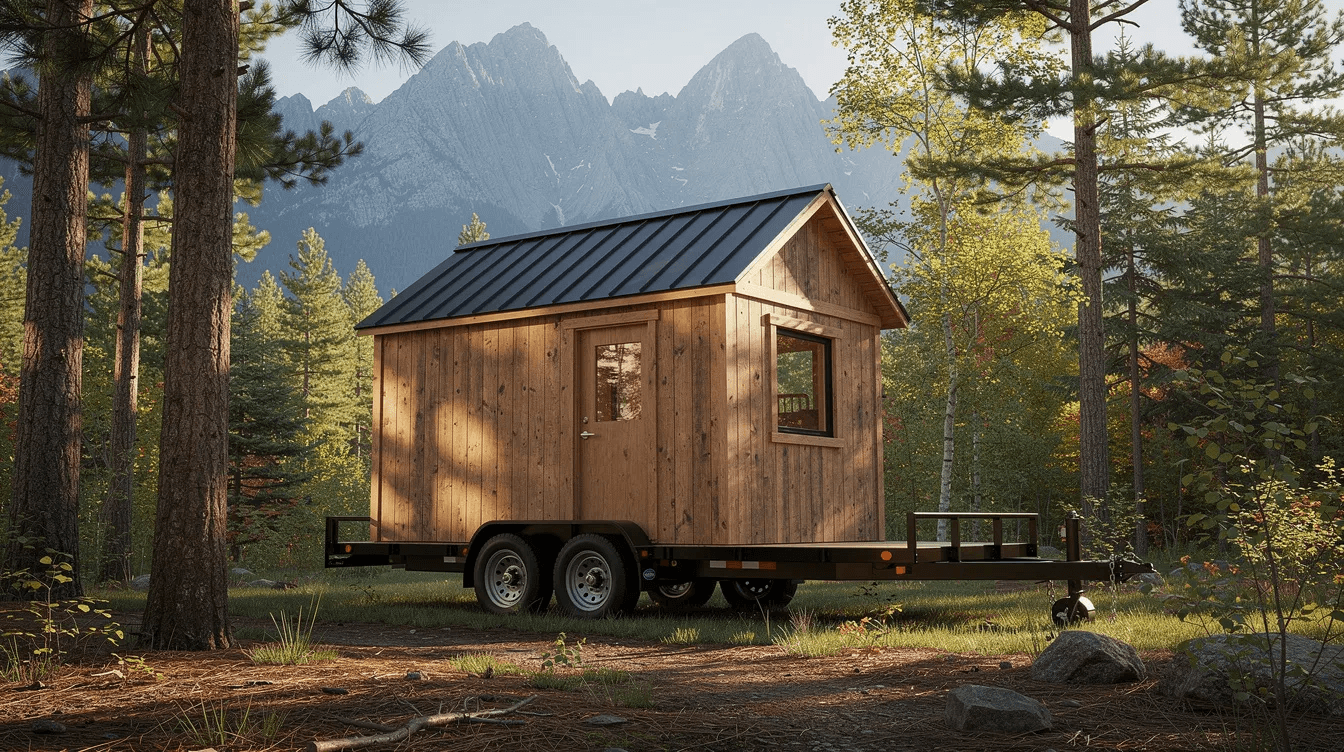
Your trailer is the foundation of everything that follows. Frame stiffness, axle capacity, brake quality, and deck geometry all constrain your cabin’s size, weight, and layout. Experienced builders recommend choosing or building the trailer before finalizing the cabin design and treating it as the non-negotiable grid everything else must respect.
Trailer Types to Consider
- Flatbed equipment trailer: Heavy-duty, low-deck trailers designed for machinery. They typically feature full steel perimeter frames, tandem or triple axles with electric brakes, and deck widths around 82–102 inches. Robust and readily available used, though you may need to engineer custom wall anchoring.
- Purpose-built tiny house trailer: Sold specifically as cabin foundations, these feature perimeter flanges with pre-drilled holes for wall attachment, lower deck heights for maximum interior headroom, and axle capacities commonly rated at 7,000 lb each.
- Utility car hauler: Lighter frames suited for compact seasonal cabins (like a 7×14 hunting cabin) but generally not rated for heavier four-season builds.
- Salvaged travel trailer frame: A budget-friendly option where you strip an old, damaged RV down to its frame. You keep the existing VIN and registration, but must thoroughly inspect and often reinforce the structure.
Common Sizes and Weights
Popular cabin footprints include 8.5’ x 20’ (roughly 170 sq ft), 8.5’ x 24’ (about 200 sq ft), and 10’ x 32’ park-model style units. For a 24-foot cabin, plan for a trailer with a GVWR of at least 10,000–14,000 lb. A typical tandem-axle setup with two 7,000 lb axles provides 14,000 lb capacity, leaving margin for a finished cabin weighing 10,000–12,000 lb plus cargo and water.
Cost Ranges (2025–2026)
Trailer Type | Typical Cost Range |
|---|---|
Used 7k–10k lb utility trailer | $1,500–$3,000 |
Salvaged travel trailer frame | $500–$2,000 |
New tiny house trailer (16–24’) | $4,000–$8,000 |
New heavy-duty trailer (24–32’) | $8,000–$12,000+ |
Avoid ultra-cheap bolt-together utility trailers for full-time cabin use. These flex, fatigue, and can fail under dynamic highway loads. Prioritize welded steel frames, quality wheel hubs, and electric brakes as non-negotiables. |
Inspection Checklist for Salvaged Trailers
When buying used, inspect:
- Rust on main beams and crossmembers (surface rust can be treated; deep pitting or perforation requires welding)
- Cracked welds at joints and axle mounts
- Hitch and coupler condition
- Axle alignment and spring condition
- Brake function and wiring integrity
- Tire date codes (replace tires older than 6 years regardless of tread depth)
Legal Dimensions
Keep deck width at or below 8’6” (102 inches) for legal road travel without special permits in most U.S. states. Plan your finished height under 13’6” to avoid low-bridge strikes. These constraints directly shape your cabin’s proportions and loft headroom.
Step 2: Understand Legal Rules and Registration for Trailer Cabins
Rules vary significantly by state and municipality, so check local requirements before building. You’re dealing with two overlapping regulatory systems: trailer vehicle regulations and building/occupancy regulations.
Trailer Vehicle Requirements
Most states require:
- Working brake lights, tail lights, and turn signals (required at night in states like Oklahoma)
- Safety chains connecting trailer tongue to tow vehicle
- Breakaway brakes with battery backup on trailers over certain weight thresholds
- Electric brakes on all axles for trailers exceeding 5,000–7,000 lb (varies by state)
Colorado and many other states require trailer registration, a stamped VIN on the frame, and license plates. If you’re building from scratch or heavily modifying a frame, you’ll need a weight slip from a certified scale.
Getting a VIN for a Homemade Trailer
The general process in 2025–2026:
- Complete structural construction of the trailer frame
- Gather documentation: receipts, photos, any previous titles for salvaged frames
- Schedule inspection with highway patrol or state DMV
- Receive state-issued VIN plate or instructions to stamp the VIN into the frame
- Complete registration and titling
Width, Length, and Height Limits
To tow without special permits:
- Width: 8’6” (102 inches) maximum
- Height: 13’6” (162 inches) maximum
- Length: varies by state, commonly 40–45’ for single trailers
Cabins exceeding these limits (like 10’-wide park models) require oversize permits, pilot cars, and restricted travel times.
Zoning and Occupancy
Some municipalities treat a cabin on wheels as an RV, allowing it only in RV parks or as a temporary dwelling. Others permit long-term occupation on private property with adequate septic and utilities. Adding permanent utility hook-ups can trigger residential building code requirements. Visit your local planning office before finalizing your plan to understand how your cabin will be classified.
Step 3: Design Your Cabin Layout and Structure
Sketching a detailed floor plan before cutting lumber saves time, money, and frustration. Graph paper, SketchUp, or other 3D software or curated tiny house floor plans that prioritize comfort and functionality lets you test furniture placement, traffic flow, and headroom before committing to framing cuts.
Practical Floor Plan Sizes
- 8.5’ x 20’ with sleeping loft: Living area, galley kitchen, compact bathroom, and loft bedroom accessed by ladder. About 170 sq ft main floor plus 60–80 sq ft loft.
- 8.5’ x 24’ with main-floor bedroom: Entry/living area, center kitchen, rear bedroom with sliding door. Ideal if loft access is a concern.
- 10’ x 30’ park-model style: Separate bedroom, full kitchen, larger bathroom, and spacious living room. This size starts to overlap with tiny house park model homes designed for long-term placement and requires oversize transport.
Typical Zones
Plan for these functional areas:
- Entry/mud area on the curb side (3–4 feet) with hooks and shoe storage
- Living space with convertible seating and possibly a wood or propane heater
- Kitchen galley with 2-burner cooktop, sink, under-counter fridge, and overhead cabinets
- Bathroom with 32” x 32” shower, compact vanity, and toilet (composting or RV-style)
- Sleeping area: loft with 3–4’ headroom or main-floor platform bed with under-bed storage
- Optional front porch on the trailer tongue for outdoor seating
Headroom Planning
With a 24” deck height and 13’6” max overall height, you have roughly 11 feet to work with. A typical main floor ceiling of 7’–7’6” leaves 3.5–4’ for loft joists, flooring, and headroom. Adults should be able to stand (around 6’4”–6’8”) in key areas of the main floor.
Window and Door Placement
Balance natural light with structural simplicity. A large picture window on the curb side facing your view maximizes light and connection to the outdoors. Place doors on the curb side near the trailer’s midpoint for safe campground access. Standard residential doors may be too wide; many tiny homes use 24–30” exterior doors to conserve wall space.
Structural Approach
Most builds use stick framing:
- 2×4 studs at 16” on-center for mild climates
- 2×6 studs at 16” on-center for four-season cabins requiring higher R-values
- Double top plates tying walls together
- Gable or shed roof with 3:12 to 6:12 pitch
Anchor walls to the trailer using through-bolts, structural screws, and metal hold-downs. Keep heavy items (water tanks, batteries, kitchen appliances) close to or slightly ahead of the axles to maintain proper tongue weight (ideally 10–15% of total trailer weight on the hitch).
Choosing Materials and Insulation Strategy
Balancing weight, cost, and durability matters more in a mobile structure than a fixed house. Studying affordable tiny house designs and budgeting strategies can help you prioritize materials, since every material choice affects your total weight and towing requirements.
Framing and Sheathing
- Framing lumber: SPF 2x4s or 2x6s (kiln-dried to reduce warping)
- Subfloor: 3/4” tongue-and-groove plywood
- Wall/roof sheathing: 7/16” OSB or 1/2” plywood
Siding Options
Siding Type | Pros | Cons |
|---|---|---|
Cedar lap | Classic cabin look, naturally rot-resistant | Requires periodic staining |
Log-style | Authentic cabin aesthetic | Heavy, requires strong framing |
Board-and-batten | Modern or rustic depending on finish | Careful flashing needed |
Metal panels | Durable, low maintenance, lightweight | Can be noisy in rain |
Insulation Choices |
- Closed-cell spray foam (R-6 to R-7 per inch): Excellent air sealing and structural stiffening, handles road vibration well
- Rigid foam board (R-3.8 to R-6 per inch): Good between trailer crossmembers, lightweight
- Mineral wool batts (R-4 per inch): Fire-resistant, sound-dampening, doesn’t absorb water
Target R-values for four-season use: R-13 to R-21 walls, R-30+ roof, and insulated floor to prevent cold drafts.
Interior Finishes
Shiplap pine or tongue-and-groove boards create a warm cabin feel but add weight. Lightweight plywood panels offer a minimalist alternative. Drywall can crack under travel vibration but works in low-stress areas.
Step 4: Prepare the Trailer and Build the Cabin Floor
This is the first physical construction step after planning. Proper preparation ensures your cabin sits on a solid, level, rust-protected base.
Prepping the Trailer
For salvaged or used trailers:
- Grind or wire-brush rust off steel surfaces
- Apply rust converter to remaining surface rust
- Coat with oil-based enamel or epoxy paint (black or dark gray works well)
Squaring and Leveling
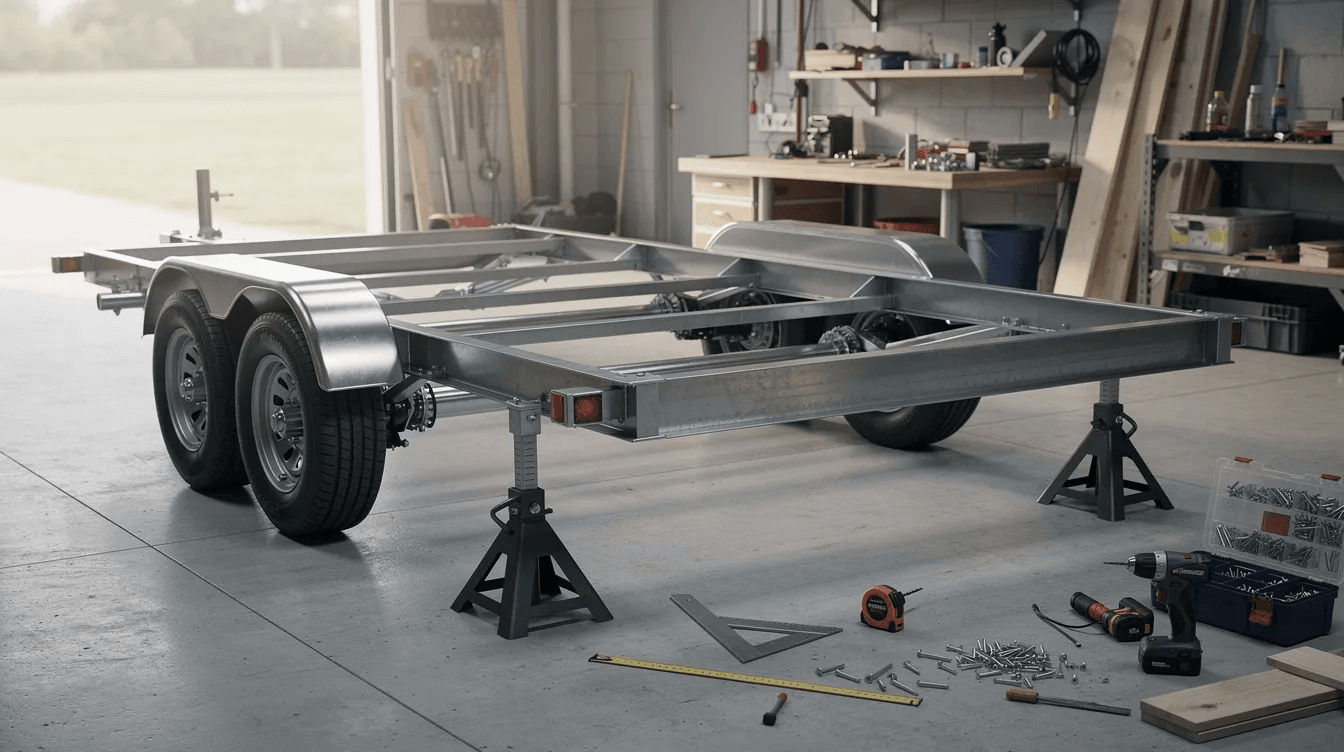
Park the trailer on a level area with wheel chocks in place. Use jack stands under the frame to relieve suspension bounce. Measure diagonals across the deck to confirm squareness—equal diagonals indicate a rectangular base ready for framing.
Floor Framing Options
- Build a pressure-treated 2×6 or 2×8 perimeter frame bolted to the trailer
- Frame directly between steel crossmembers with wood joists
Secure wood framing to steel using 1/2” or 5/8” galvanized bolts with lock washers, holes drilled through steel channel. Space bolts every 4–6 feet around the perimeter.
Floor Insulation
Install rigid foam between steel members or wood joists, sealed at edges with spray foam. For maximum performance, spray closed-cell foam from below. Add a plywood or metal belly pan to protect insulation from road debris and rodents.
Subfloor Installation
If you are new to construction, reviewing a step-by-step guide on how to build a tiny house from the trailer up can clarify subfloor framing details and sequencing.
Lay 3/4” tongue-and-groove plywood or OSB:
- Run panels perpendicular to joists with staggered joints
- Apply construction adhesive to joist tops
- Drive screws every 6–8” along edges, 8–12” in the field
Plan penetrations for plumbing drains and propane lines before closing up the floor. Seal gaps with foam or caulk to prevent drafts.
Step 5: Frame the Walls and Roof on the Trailer
This is the moment your cabin takes shape. Months ago, this trailer was just a bare frame. Now walls rise from the deck.
Building Wall Panels
Frame walls flat on the deck:
- Mark bottom and top plates for 16” on-center stud placement
- Cut 2×4 or 2×6 studs to height
- Frame door and window openings with king studs, jack studs, and headers (2×6 or 2×8 doubled for larger openings)
- Check rough opening sizes against manufacturer specs
Raise panels into position with help or wall jacks. Temporarily brace walls plumb.
Anchoring to the Trailer
- Through-bolt base plates to the steel frame
- Use structural screws and metal straps at key points
- Add hurricane ties or hold-downs at corners
Top Plates and Roof Framing
Install a double top plate to tie all walls together and create a straight line for rafters. Many custom tiny homes on wheels use similar framing approaches while tailoring layouts to specific lifestyles. Choose between:
- Gable roof: Traditional cabin silhouette, good snow shedding (3:12 to 6:12 pitch)
- Shed roof: Simpler framing, maximizes height on one side
Sheath walls and roof with OSB or plywood. Install waterproof roof underlayment, then metal roofing panels (screwed, not nailed, for travel durability) or shingles.
Advanced Framing Details
Add blocking for cabinetry and loft joists. Leave chases for electrical runs through studs before sheathing.
Adding Exterior Siding, Windows, and Doors
This step weatherproofs the cabin and defines its final look—the beautiful exterior that will appear in photos and make visitors want to visit.
Weather Barrier
Install housewrap over sheathing with taped seams. Flash corners and penetrations carefully.
Windows and Doors
- Level the sill and add self-adhesive flashing tape
- Insert units and fasten per manufacturer specs
- Tape flanges in proper sequence (sides, then head)
Siding Installation
Choose siding that matches your vision: drawing inspiration from Amish-built tiny house cabins with classic rustic details can be helpful at this stage.
- Natural log-style siding for a rustic hunting camp
- Vertical board-and-batten for modern cabin aesthetics
- Horizontal lap for classic cottage appeal
Add trim boards around windows, corners, and doors. Seal all joints with high-quality exterior sealant. The finished exterior should evoke warmth and craftsmanship—something that feels ready for its first guests.
Step 6: Plan and Install Electrical, Plumbing, and Climate Control
Utilities determine how comfortable and self-sufficient your trailer cabin will be. This is where your mobile retreat becomes a real home.
Electrical System Design
- 30-amp RV-style hookup for small units; 50-amp for larger builds with electric appliances
- Small breaker panel (8–12 circuits) in an accessible location
- Dedicated circuits for high-draw loads (mini-split, water heater, microwave)
- GFCI protection in kitchens and bathrooms
Run wiring before insulation. Drill through studs at mid-depth, staple NM-B cable (where code allows), and protect cables with nail plates where they pass near stud faces.
Plumbing Layout
Options include:
- Direct hose connection to park water
- On-board fresh water tank (40–60 gallons) with 12V RV pump
- Grey water tank (30–50 gallons) for sink and shower drainage
- Black water tank or composting toilet
Typical fixtures: compact 24” vanity, low-flow showerhead, 32” shower, kitchenette sink, and 4–6 gallon water heater (or on-demand propane unit). For long-term stays, plan ahead for tiny house septic and waste-management options that match your site and usage.
Heating and Cooling
- Mini-split heat pump: Efficient heating and cooling, quiet operation
- Direct-vent propane heater: Works off-grid, provides reliable heat
- Electric baseboard: Simple but requires adequate electrical supply
Insulation and air sealing are essential for four-season use. Without them, even the best HVAC system struggles.
Consult licensed electricians and plumbers for final connections, especially if the cabin will be parked long-term with permanent hookups.
Insulating and Air-Sealing the Cabin
This step happens after rough-in electrical and plumbing but before interior finishes. Proper insulation and air sealing multiply the effectiveness of your climate control system.
Spray Foam Installation
Professional crews can insulate walls and roof in a single day. DIY foam kits work but require PPE (respirator, goggles, gloves) and good ventilation.
Air Sealing Details
- Caulk and canned foam around window and door frames
- Seal wall penetrations and floor edges
- Pay special attention to the junction where cabin walls meet the trailer frame to avoid cold spots and water intrusion
In cold, humid regions, add a vapor retarder or smart membrane where climate and code require.
Step 7: Interior Finishes and Space-Saving Cabin Details
This is where your cabin becomes livable and personal. The construction phase ends and your life in the space begins.
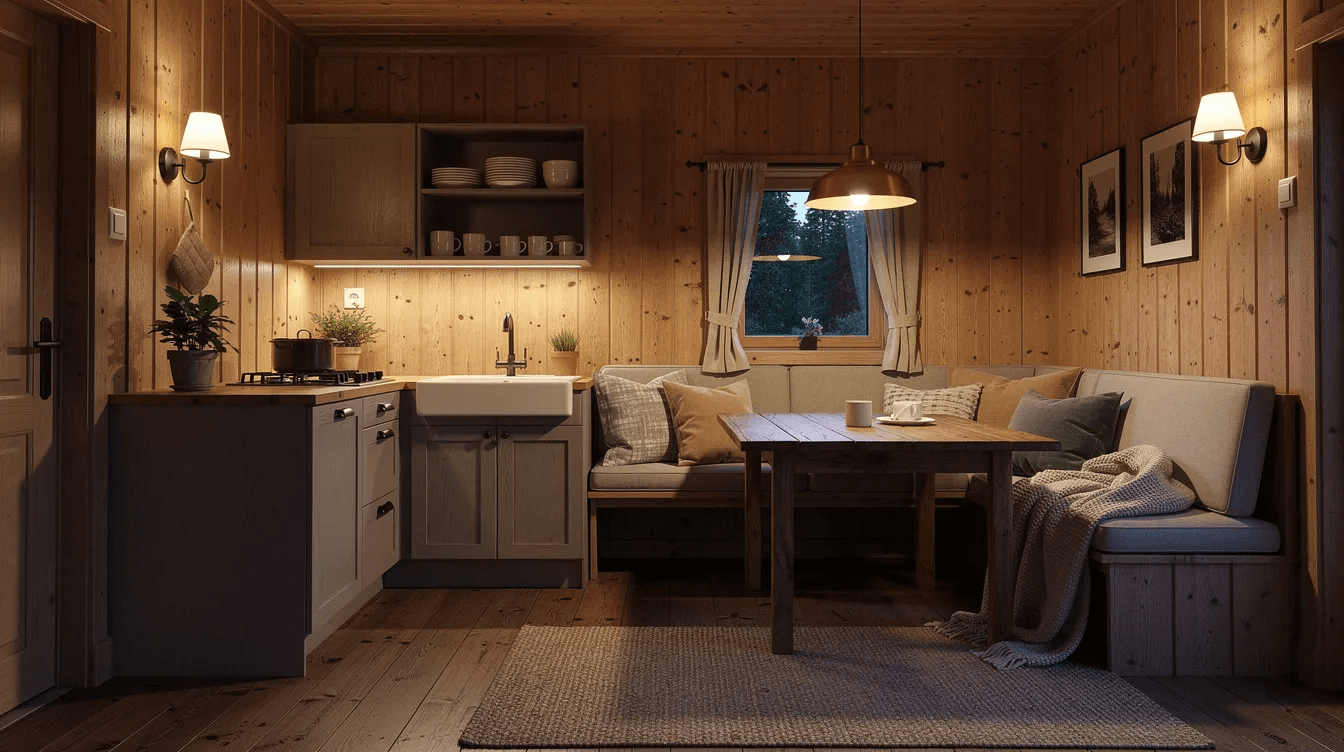
Wall and Ceiling Finishes
- Tongue-and-groove pine boards for a rustic look
- Painted shiplap for a bright, modern feel
- Lightweight plywood panels for minimalist design
Install horizontally to visually widen the cabin or vertically to heighten low ceilings.
Flooring
Choose materials that handle vibration:
- Luxury vinyl plank (LVP): Water-resistant, resilient, click-lock installation
- Engineered wood: More stable than solid hardwood
- Laminate with locking edges: Budget-friendly but watch moisture exposure
Built-In Furniture
Space-saving stuff makes small cabins work, borrowing many ideas from tiny house camper layouts optimized for adventure living:
- Built-in bench with hinged storage
- Compact dining table (fold-down or extendable)
- Convertible sofa for guests
- Queen or full-size bed platform with under-bed drawers
- Ship’s stair with storage in risers
Storage Solutions
- Overhead cabinets in kitchens
- Cubbies in stair risers
- Wall-mounted shelves with lips to prevent items falling during travel
Kitchen Layout
Efficient kitchens fit a lot into smaller spaces:
- 2-burner propane cooktop
- Under-counter fridge
- 24”–30” sink base
- Solid wood or butcher-block countertop
Safety and Finishing Touches
- Smoke and CO detectors
- Fire extinguisher near the kitchen
- Interior and exterior LED lighting
- Coat hooks by the entry door
Budget, Timeline, and When to Go Prefab or Modular
Building a cabin on a trailer is achievable for dedicated DIYers, but it requires honest assessment of your time, skills, and resources.
DIY Timeline
For one or two people working weekends: 6–12 months for a 20–24 foot cabin. Factors extending timelines include custom cabinetry, complex finishes, and unexpected rework.
Sample Budget Ranges (2025–2026)
Category | Cost Range |
|---|---|
Trailer/frame | $1,500–$8,000 |
Lumber and sheathing | $5,000–$10,000 |
Windows and doors | $2,000–$6,000 |
Insulation | $2,000–$5,000 |
Roofing and siding | $3,000–$8,000 |
Electrical and plumbing | $2,000–$5,000 |
Interior finishes | $3,000–$10,000 |
Appliances and climate control | $3,000–$8,000 |
Total DIY materials cost: $20,000–$40,000 for a modest 8.5’ x 24’ cabin. Premium windows, metal roofing, and custom cabinetry push costs higher. |
When to Consider Prefab Cabins or Modular Cabins
Going prefab makes sense when:
- Limited time prevents a 6–12 month build commitment
- Strict park model code requirements apply
- You need turnkey rental units for a campground or Airbnb business
- Multiple identical units are required
Some USA builders offer log-sided or modular trailer cabins at pricing around $90–$150 per square foot, with delivery and customization options. If you’re also thinking about using your build for short-term stays, browsing tiny house cabin retreats that cater to vacation guests can clarify which features matter most to renters. Compare DIY cost plus your labor value versus ready-to-hook-up cabin pricing, especially for commercial projects with deadlines.
Final Checks, Transport, and Long-Term Maintenance
Safe towing and ongoing care protect both your cabin and your investment.
Pre-Trip Checklist
- Torque lug nuts to manufacturer specs; re-check after first 25–50 miles
- Check tire pressure (cold) and read tire date codes
- Test trailer brakes and all lights
- Verify safety chains and breakaway switch function
- Secure all interior items and latch cabinet doors
Weight Verification
Weigh your rig at a public scale. Confirm total weight stays within trailer GVWR, per-axle ratings, and tow vehicle limits. Tongue weight should be 10–15% of total trailer weight.
Parking and Stabilizing
Once parked:
- Place wheel chocks on both sides of at least one axle
- Deploy stabilizer jacks to reduce rocking
- Use ground anchors in windy regions
Long-Term Maintenance (5–10 Years)
Task | Frequency |
|---|---|
Re-seal roof screws and seams | Every 2–3 years |
Stain or paint exterior wood | Every 3–7 years |
Check caulk around windows and doors | Annually |
Inspect steel frame for rust | Annually |
Grease wheel bearings, inspect brakes | Every 12 months or 10,000 miles |
Test smoke/CO detectors | Annually |
Documentation |
Maintain a build log with photos and receipts. This helps with insurance coverage, demonstrates value for resale, and simplifies future upgrades.
Building a cabin on a trailer is achievable with planning, patience, and attention to safety and legal requirements. The experience of creating your own mobile retreat—from bare frame to finished interior—is something people remember for a lifetime. Whether you’re dreaming of lakeside weekends, a remote hunting base, or a flexible rental property, or simply admiring A-frame cabin getaways tucked into scenic locations, the resources exist to make it happen.
Read through your local DMV and planning office requirements, choose a solid trailer, and start sketching your floor plan. Your cozy mobile cabin could be ready for its first season sooner than you think.