
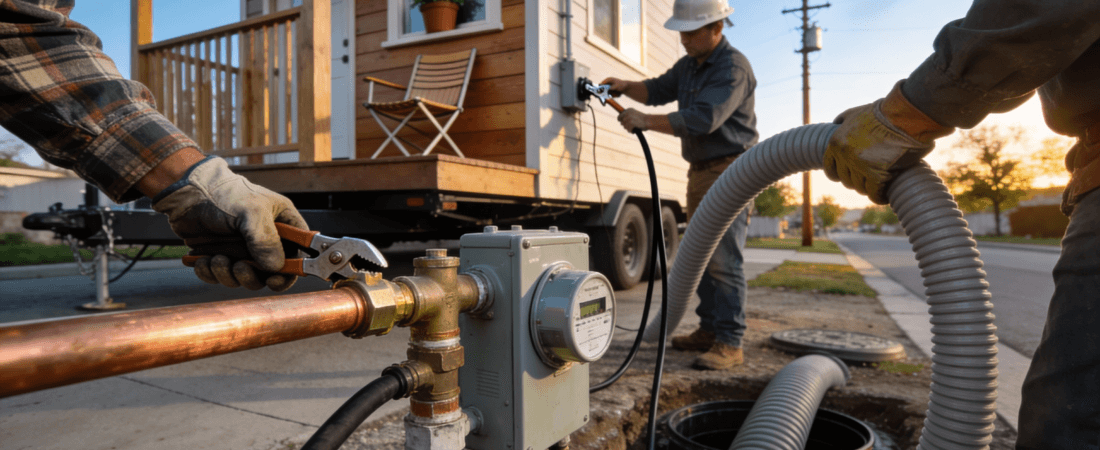
Tiny house living is a growing trend, appealing to those seeking a simpler, more sustainable lifestyle with less space and fewer expenses. However, setting up a tiny house requires careful consideration of utility hookups to ensure comfortable and functional living. Most tiny houses need connections to essential utilities such as electricity, fresh water, and waste water management. Existing homes typically have standard utility hook-ups, making the process more familiar for those transitioning to tiny house living.
Whether you opt for traditional grid connections or off grid solutions like solar panels and septic systems, understanding how to hook up your tiny house to utilities is crucial. Most tiny houses can connect to utilities like traditional homes and RVs, providing flexibility in setup. Additionally, compliance with local building codes and regulations will ensure your tiny home is safe and legal. This guide will walk you through the essential steps to connect your tiny house to utilities effectively.
Finding the Right Location for Your Tiny Home
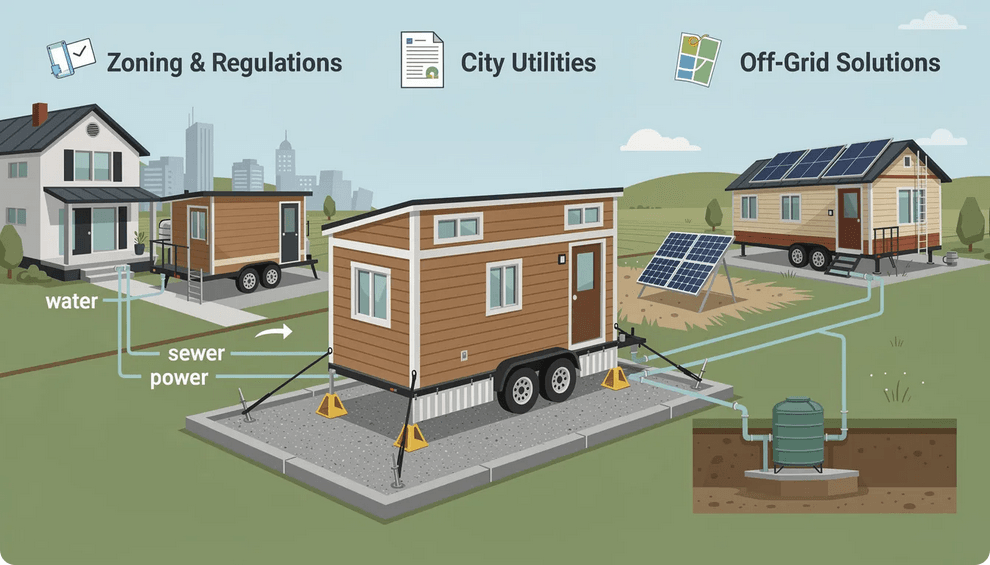
The first step in hooking up utilities is selecting the right location for your tiny house. Choosing the right land is crucial, as it affects zoning, land use regulations, and access to utilities. Location determines the availability of city water, sewer, and grid power, which can simplify utility hookups. Urban areas often provide easier access to existing utilities but may have stricter building codes and zoning regulations. In contrast, rural or remote locations might lack these services, requiring off grid solutions such as solar power, septic tanks, or rainwater collection systems.
Before choosing your spot, research local regulations and zoning laws to ensure your tiny house placement is permitted. Property owners should consider whether modifications to zoning laws allow tiny homes or ADUs on their land, as these changes can increase affordable housing options. If you plan to park your tiny home in a backyard or near an existing home, check if the main house’s utility system can accommodate an additional unit. If a tiny house is parked in someone’s backyard, it can often use the main house’s existing utilities. A concrete pad or gravel foundation can provide a stable, level base for your tiny house, which is especially important for certain utility installations and to prevent shifting.
Most people place their tiny house on a gravel or concrete pad. Anchors are a great idea to keep your tiny house stable in bad weather. Skirting can reduce shaking in high winds and help keep pipes from freezing. You should always leave the wheels of the trailer wedged with chocks.
Standard utility hookups for tiny houses are often available at RV parks or existing homes, making setup more convenient for property owners.
Setting Up Your Small House
Once you have a location, planning your utility hookups is essential. Many tiny house owners adopt a hybrid approach, combining grid power with off grid options to maintain reliability and efficiency. For example, solar systems can supplement grid electricity, reducing utility costs and providing backup power.
Assess your power requirements carefully by considering the appliances and systems you will use. Determine how much power your tiny house needs by estimating the total energy consumption of all appliances and systems. Energy-efficient appliances and lighting can significantly reduce your power needs.
A well-designed water system includes both fresh water supply and waste water management. Calculate how much water your tiny house will require based on daily usage and occupancy. Your tiny house plumbing should cover essentials such as the kitchen sink, toilets, showers, and hot water systems.
If you are placing your tiny house near a guest house or traditional house, their utility hookups can serve as a model, though modifications may be necessary due to the smaller scale and mobility of a tiny home.
Powering Your Tiny House
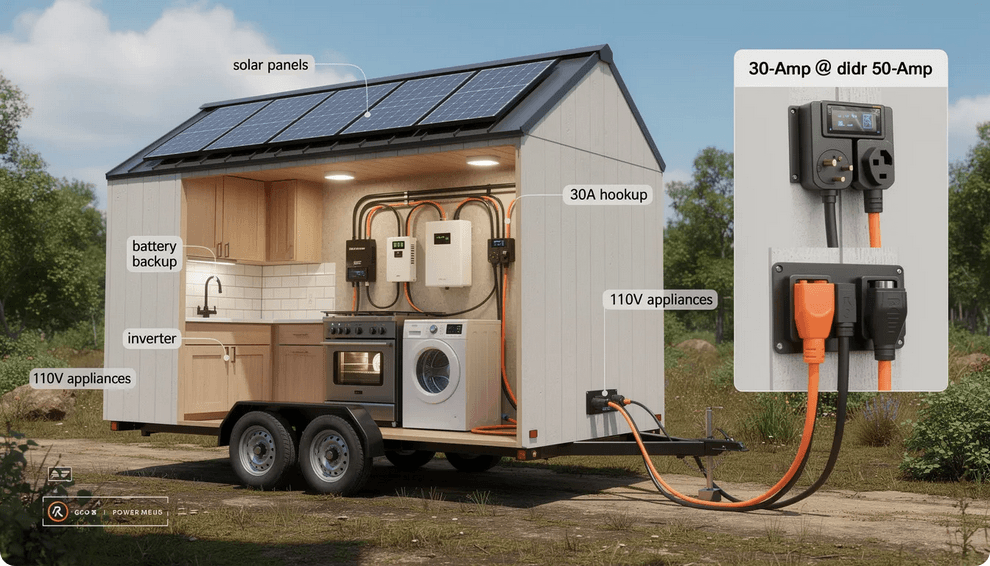
Most tiny houses use a combination of grid power and off grid options like solar panels and wind power. Solar panels installed on the roof are one of the most common ways to generate electricity sustainably. These panels capture solar energy and store it in batteries, providing power even during cloudy days when paired with a battery backup system.
Grid power offers a reliable energy source but can increase utility costs. Connecting to the power grid usually involves plugging your tiny house into a 30-amp or 50-amp power pedestal or a local grid-tied panel. It is crucial to use the correct plug for the appropriate amperage (30-amp or 50-amp service) to ensure safe and reliable power. For temporary or RV-style connections, an extension cord rated for the required amperage is often used to connect to an external power source, such as a main house or RV park hookup.
It’s important to consider the power requirements of larger appliances like clothes dryers, ovens, or water heaters. Many tiny houses avoid 220-volt appliances due to the complexity of hookups and instead use 110-volt alternatives to maintain flexibility in parking and utility connections. Lights are a key electrical component and should be included in your power calculations.
Water Hookups
Water hookups are vital for a functioning tiny house, providing fresh water for drinking, cooking, bathing, and cleaning. If your tiny house is located near city water lines, connecting to the municipal water supply is the simplest option. Use a potable water hose with a pressure regulator to connect to a spigot or the main house’s water system, and install a water filter for purity. Many tiny homes connect to city water and sewer systems for a steady supply of fresh water and waste management. Tiny houses can also be hooked up to existing water systems in backyards, provided the system has the capacity for additional usage.
In remote locations or off grid setups, many owners collect rainwater from the tiny house roof or an additional catchment area as a popular alternative. However, the roof area alone may not provide enough water year-round, so supplementary sources or larger storage tanks may be necessary. Collected rainwater must be filtered and treated before use to ensure safety. Calculating how much water you can collect and store is important to ensure adequate supply for all occupants. Many tiny houses on wheels have water tanks to store fresh and waste water when not connected to a water system. Composting toilets are commonly used to manage black water in off-grid situations.
Potential water sources include private wells, which may require drilling and capacity checks to ensure they can meet your needs. Well water is another off grid option but requires drilling and pump installation. Regardless of the source, water entering a tiny house needs to be under pressure to flow from faucets, which can be achieved through elevated tanks or pumps. Your water system should include a pressure pump to maintain steady water flow through faucets and showers.
Managing Water Usage
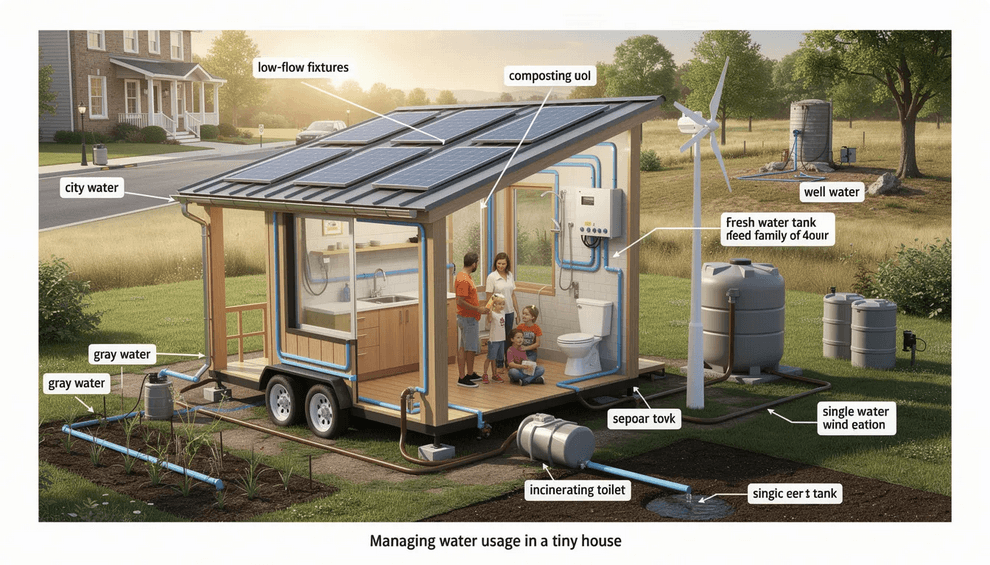
Managing water usage is a crucial aspect of tiny house living, as most tiny houses have limited water storage capacity. Tiny house owners must be mindful of their water consumption to avoid running out of fresh water, especially when relying on off grid options such as collecting rainwater or using a septic system. One of the most common ways to manage water usage in a tiny house is to install low-flow fixtures, such as kitchen sinks and toilets, which can significantly reduce water consumption.
In addition to low-flow fixtures, tiny house owners can also implement other water-saving strategies, such as using a composting toilet or an incinerating toilet, which can reduce waste water production. Gray water systems, which reuse water from sinks, showers, and washing machines for irrigation and flushing toilets, are also a great idea for tiny houses, especially in rural areas where water conservation is essential.
When it comes to fresh water supply, tiny house owners have several options, including connecting to city water, using a well, or collecting rainwater. However, it’s essential to ensure that the water system is properly designed and installed to provide enough water for the household’s needs. For example, a small house with a family of four may require a larger water tank than a single person’s tiny home.
In urban areas, tiny house owners may have access to utility hookups, including water and sewer connections, which can make managing water usage easier. However, in remote locations, tiny house owners may need to rely on off-grid options, such as septic systems and rainwater collection, which require more maintenance and planning.
To reduce utility costs and minimize their environmental impact, many tiny house owners opt for solar power and wind power to generate electricity. Solar panels can be installed on the roof of a tiny house, providing a clean and renewable source of energy. However, it’s essential to consider the power requirements of the household and ensure that the solar system is properly sized to meet those needs.
In terms of waste management, tiny house owners must also consider how to handle black water, gray water, and other waste products. A well-designed septic system or a connection to a city sewer can help manage waste water, while composting toilets and recycling programs can reduce waste production.
Overall, managing water usage in a tiny house requires careful planning, attention to detail, and a commitment to water conservation. By implementing water-saving strategies, using off-grid options, and designing a efficient water system, tiny house owners can enjoy a comfortable and sustainable living space while minimizing their environmental impact.
Sewer and Waste Management
Managing waste water is a critical part of hooking up your tiny house utilities. Waste water includes gray water from sinks and showers and black water from toilets. If city sewer connections are available, hooking up to the municipal sewer system is straightforward and requires a removable connection similar to RV hookups. Connecting to a municipal sewer system typically requires attaching a 3-inch sewer hose to the main waste outlet. Many tiny homes connect to city water and sewer systems for efficient waste management. Connecting directly to municipal sewer systems or septic tanks is often the most maintenance-free option for waste management. Connecting to an existing septic system or municipal sewer line usually requires professional installation to comply with regulations.
In off grid or remote locations, a septic tank system is often installed to handle waste water. Septic tanks separate solids and liquids, allowing waste to decompose safely underground. The ground plays a crucial role in absorbing wastewater from the septic tank, especially in larger chambers. Regular maintenance is necessary to prevent issues.
Alternatively, composting or incinerating toilets offer eco-friendly waste management by reducing or eliminating black water. These systems are popular among tiny house owners aiming for sustainability and are especially useful where septic installation is not feasible.
Gray water can often be disposed of into the ground via a French drain, which filters water through gravel and soil, but local regulations should be checked before installation.
Tiny Houses and Building Codes
Tiny houses are subject to local building codes and regulations, which can vary widely by jurisdiction. Understanding how utilities work in tiny houses is crucial, as integrating power, water, and waste management systems must comply with these codes. These codes may dictate minimum ceiling heights, emergency exits, smoke detectors, and utility hookups. Local municipalities often prohibit permanent, non-grid connections for tiny houses, which impacts zoning and code compliance. Researching and adhering to local building codes is essential to ensure your tiny house is legally habitable and safe.
Some areas are adopting specific standards for tiny homes, such as Appendix Q of the International Residential Code, which addresses tiny house construction requirements. Understanding these regulations early in your planning process can save time and money. Be sure to secure permits for utility installation by contacting your local building department.
Hook Ups and Connections
Hook ups and connections form the backbone of your whole house utility system, ensuring that every part of your tiny house is integrated for complete utility access. For electricity, use properly rated extension cords and connectors that comply with local codes. Water connections should use a food-grade RV white hose, which is standard for clean-tasting water, along with secure fittings to prevent leaks. Sewer connections must be removable and compliant with regulations to maintain the mobility of your tiny house.
The typical cost to connect a tiny house to utilities ranges from $1,000 to over $25,000, depending on your location and the level of whole house independence you desire.
Regular inspection and maintenance of these connections help avoid leaks, electrical hazards, and other problems. Properly designed hook ups ensure safe, efficient, and reliable utility access.
Off Grid Living
For those choosing off grid living, tiny houses can be self-sufficient with systems like solar panels, wind turbines, rainwater collection, and septic or composting toilets. Off grid setups require careful planning to balance power and water needs with available resources. Reliable internet access is also important in remote or off grid locations, with options such as wireless or satellite internet providing connectivity where cable hookups are unavailable.
Solar panels installed on tiny homes capture solar energy and store it in batteries for later use. Using a portable generator or propane for cooking and heating is also an option for off grid tiny houses.
Energy-efficient appliances and water conservation measures are essential to maximize the effectiveness of off grid systems. While off grid living can offer independence and sustainability, it often involves higher upfront costs and ongoing maintenance.
Conclusion
Hooking up a tiny house to utilities involves understanding your location, utility options, and local regulations. Whether you connect to existing city services or create an off grid system, planning your power, water, and waste management carefully ensures a comfortable and functional tiny house living experience. With the right setup, tiny house living can be a rewarding and sustainable lifestyle choice.