
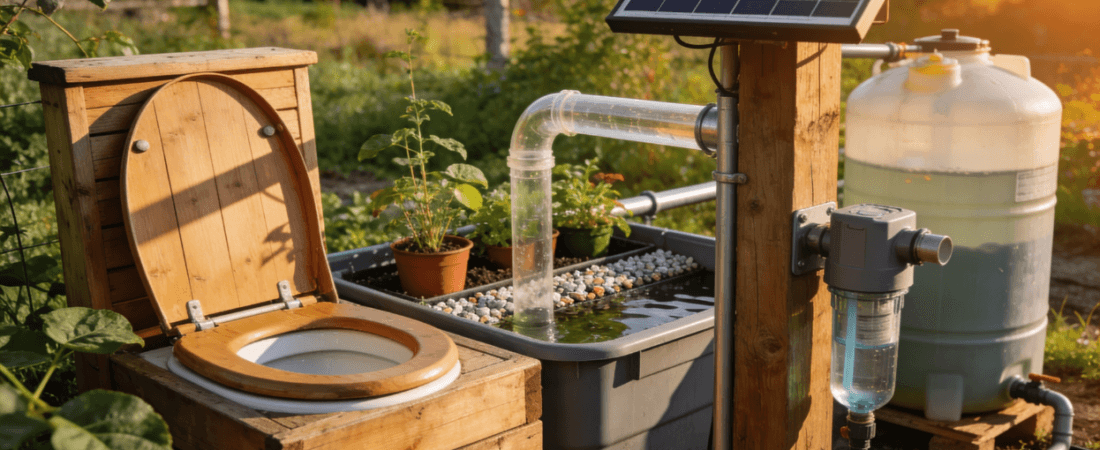
Managing human waste without municipal infrastructure might sound daunting, but thousands of people across tiny homes, cabins, RVs, and homesteads do it every day. This guide is for anyone living off the grid—tiny home dwellers, RV travelers, rural homesteaders, or anyone seeking sustainable sanitation solutions. Choosing the right off-grid sanitation system is crucial for health, comfort, and environmental sustainability. The right sanitation system can be clean, efficient, and surprisingly low-maintenance when matched to your specific situation. This ultimate guide walks you through every practical option available in 2026, from ultra-simple bucket systems to advanced biogas digesters that transform waste into cooking fuel.
Quick Answer: Best Off Grid Sanitation Ideas in 2026
If you’re short on time, here are the most realistic off grid sanitation ideas ranked by practicality and versatility. We’ll explore each in depth throughout this article.
- 12V fan composting toilet (e.g., Nature’s Head, Separett Villa): Ideal for tiny homes, vans, and RVs. Price range: $900–$1,500 USD. Requires minimal electricity (small 12V fan) and zero water. The popular choice for most off grid living situations.
- Bucket-and-sawdust humanure system: Perfect for ultra-budget setups, seasonal cabins, or interim solutions while building. Cost: $50–$200 USD for basic setup. No power or water needed.
- Split-system composting toilet with external drum: Suited for family homesteads with 4+ users. Price range: $2,000–$5,000 USD. Low power, no water, handles higher capacity.
- Electric incinerating toilet (e.g., Cinderella, Incinolet): Best for cold climates, ski chalets, or where you want zero waste handling. Price range: $3,500–$6,000 USD. Requires 1–2 kWh per use.
- Biogas digester toilet (e.g., HomeBiogas-style systems): Excellent for warm-climate homesteads with cooking needs. Price range: $1,500–$3,500 USD. Produces free cooking gas and fertilizer.
- Portable cassette or chemical RV toilet: Good for mobile setups, temporary sites, or rental cabins. Price range: $100–$400 USD. Requires periodic emptying at dump stations.
- Pit latrine or vault toilet: Suitable for very remote locations, hunting camps, or extremely limited budgets. Cost: $100–$500 USD for materials. No power or plumbing required.
Best all-rounders for most people: A modern self-contained composting toilet paired with a basic greywater mulch basin covers 90% of off grid sanitation needs at reasonable cost and effort levels.
- What Does “Off Grid Sanitation” Actually Mean?
- Key Factors When Choosing an Off Grid Sanitation System
- Off Grid Toilet Ideas (Blackwater Solutions)
- Off Grid Greywater Ideas (Sinks, Showers, Laundry)
- Designing a Whole-System Off Grid Sanitation Plan
- Legal, Health, and Environmental Considerations
- Maintenance, Costs, and Long-Term Reliability
- Summary: Matching Off Grid Sanitation Ideas to Your Reality
What Does “Off Grid Sanitation” Actually Mean?
Off-grid toilets are sanitation systems that operate independently of public utilities, such as centralized sewer and piped-in water. Off grid sanitation refers to any system designed to manage human waste and wastewater without relying on municipal sewer connections, city water supplies, or grid electricity. These systems operate independently, making them essential for remote locations where conventional indoor plumbing simply isn’t feasible.
Understanding the types of waste you’ll deal with helps clarify your options:
- Blackwater: Toilet waste containing human feces and urine—the most challenging stream requiring careful treatment
- Greywater: Wastewater from sinks, showers, and laundry—generally easier to process and often suitable for irrigation
- Solid waste: Used toilet paper, hygiene products, and other materials that need proper disposal alongside blackwater
“Off grid” encompasses a wide spectrum of living situations. You might be establishing a permanent rural homestead, converting a van for full-time travel, building a 2026 tiny home on a remote block, exploring eco yurt designs for sustainable and comfortable living, or simply maintaining a seasonal hunting cabin with no utilities. For many people, self-contained tiny homes for modern off-grid living offer an ideal structure to pair with the sanitation options in this guide. Each scenario calls for different approaches to waste management.
The global context underscores why these systems matter: roughly 3.5 billion people worldwide still lack access to safely managed sanitation according to recent WHO and UNICEF assessments. Off grid sanitation ideas aren’t just for lifestyle choices—they’re essential solutions for communities everywhere.
The systems covered in this article range from ultra-low-tech pit latrines costing under $100 to advanced biogas digesters that produce cooking fuel and fertilizer. Later sections will help you match the right system to your climate, local regulations, and budget.
Key Factors When Choosing an Off Grid Sanitation System
Choosing the wrong sanitation system leads to smell problems, groundwater contamination, and costly rework. Getting these core factors right from the start saves tremendous headaches down the track.
- Site and climate: Freezing winters slow composting dramatically, while tropical heat accelerates decomposition but increases insect pressure. Rocky ground makes pit systems difficult, while deep soil offers more options.
- Local regulations and permits: Health department rules vary wildly. Some areas require certified composting toilets meeting NSF/ANSI 41 standards, while others ban them entirely. Septic systems often need permits and inspections.
- Number of users and usage pattern: A solo weekend cabin has completely different needs than a family of four living full-time. Size your system for peak usage, not average.
- Water availability: Rainwater-only sites need dry toilet systems, while properties with bore or creek access can consider low-flush options or greywater-dependent treatment.
- Power availability: No-power situations favor manual systems like buckets and pit latrines. Small solar systems (3–5 kWh/day) can run composting toilet fans and basic pumps. Larger solar arrays or generators open up incinerating toilets and powered treatment systems.
- Maintenance tolerance: Some people embrace hands-on involvement with their waste cycle, while others want minimal interaction. Be honest about your preferences.
Use these factors to filter ideas in the following sections. For example, no-power winters favor urine-diverting compost toilets and insulated pits, while high-sun locations can readily run incinerator toilets or powered aerated systems.
Off Grid Toilet Ideas (Blackwater Solutions)
Common types of off-grid toilets include composting toilets, incinerating toilets, and urine-diverting toilets.
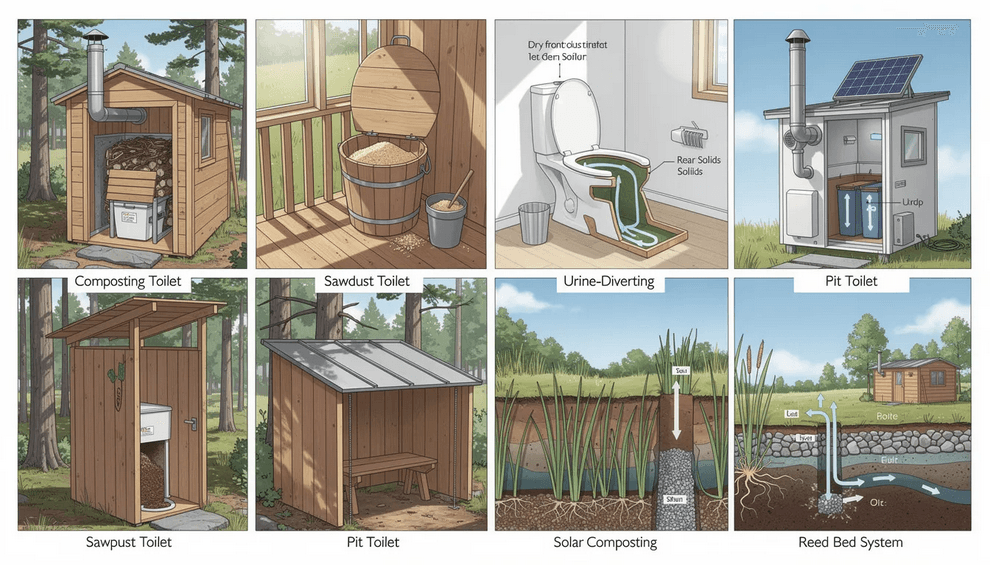
This section focuses specifically on toilet waste solutions. We’ll cover greywater options separately later, since these systems often work best when designed together but understood individually.
The off grid toilet market has matured significantly since the 2010s, offering everything from $50 DIY bucket setups to $6,000 high-tech incinerators, along with a growing range of tiny house septic options for sustainable living. Let’s explore each major category with realistic assessments of costs, maintenance, and ideal use cases.
Composting and Urine-Diverting Toilets
Composting toilets have become the most popular off grid toilet choice for permanent installations, and for good reason. They’re proven, relatively affordable, and produce no blackwater requiring disposal.
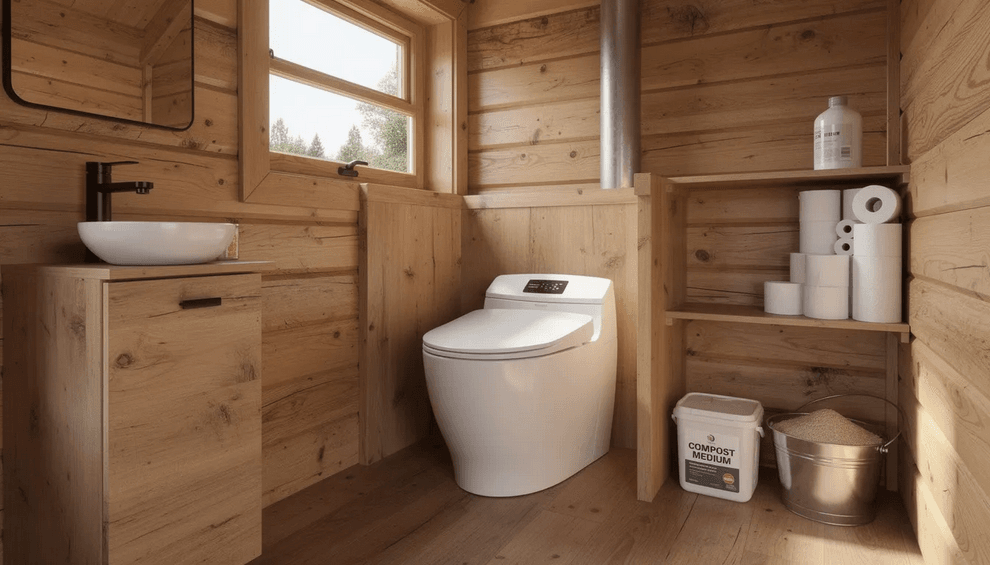
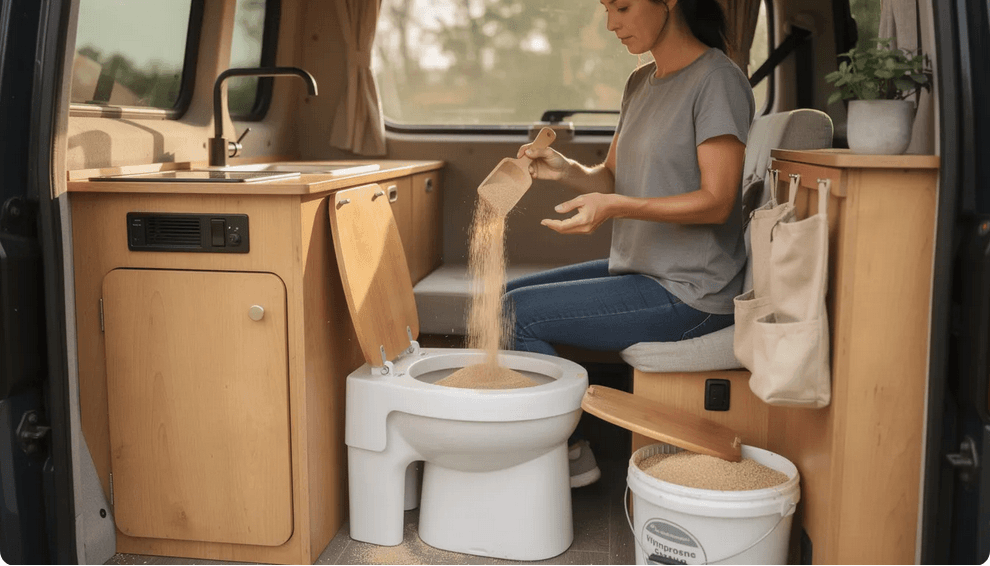
The core concept involves separating solids and liquids to reduce smell and volume. Urine causes most toilet odors when mixed with feces, so keeping them apart dramatically improves the experience. Bulking material like sawdust, coco coir, or wood shavings combined with airflow enables aerobic decomposition that breaks down solid waste into compost.
Two main styles dominate the market:
Self-contained units (Nature’s Head, Separett Villa, Air Head) integrate everything into a single floor-level unit. These became standard in tiny homes and van conversions throughout the 2010s and remain highly efficient for 1–2 users. Expect to empty the solids container every 3–6 weeks for two people using it full-time, while the separate urine bottle needs emptying every few days.
Split systems (Envirolet, Sun-Mar Centrex) place a standard-looking pedestal indoors connected to a larger composting drum beneath the floor or outside. These handle family-sized use loads, processing 6–9 months of waste before requiring attention.
Advantages of composting toilets:
- Little to no water usage—saving 10–20 gallons daily compared to flush toilets
- Very low electricity draw for 12V fans (typically 20–80 watts intermittent)
- Produce usable compost after 1–2 years of safe aging for non-edible plants
- Odour free operation when properly ventilated and maintained
Disadvantages:
- Require regular attention: stirring, adding bulking material, emptying containers
- Need proper ventilation through walls or roof with insect-proofing
- Some municipalities in stricter US or EU regions require certification or prohibit them entirely
Practical example: A two-person off grid household using a Nature’s Head typically adds a cup of coco coir after each solid use, empties the 5-gallon solids container every 4–6 weeks, and empties the urine bottle every 2–3 days. The aged compost goes around fruit trees or ornamental plantings after 12–24 months of curing in a separate bin.
Incinerating Toilets
Incinerating toilets gained popularity in Nordic cabins and tiny houses between 2015–2025, offering a “set and forget” approach that appeals to those who prefer zero waste handling.
How they work: Users sit on a lined bowl, and waste drops into a burn chamber below. Electric or propane burners cycle at high temperatures (1,000–1,400°F), reducing everything to sterile ash. A typical cycle takes 60–90 minutes.
Energy and fuel requirements:
- Electric models consume around 1–2 kWh per cycle, meaning a family of four might use 4–6 kWh daily—a significant load for smaller spaces with limited solar
- LPG models use approximately 0.5 pounds of propane per cycle, adding up over time but avoiding electrical demands
Advantages:
- No water use and no need to handle raw waste directly
- Very compact footprint suitable for smaller spaces
- Minimal smell when installed with proper ventilation and flue
- Excellent for cold climates where composting slows dramatically
Disadvantages:
- High upfront cost: $3,500–$6,000 USD plus installation as of 2026
- Energy-hungry, potentially overwhelming solar setups under 5–7 kWh/day capacity
- All nutrients lost as ash—no compost output for gardens
- Requires electricity or propane access, reducing true grid independence
Best fit: Incinerator toilets excel in seasonal ski chalets, cold-climate cabins with grid-tied power, or situations where convenience outweighs sustainability concerns. They’re generally unsuitable for year-round, low-energy homesteads prioritizing nutrient recovery and minimal external inputs.
Biogas and Anaerobic Toilet Systems
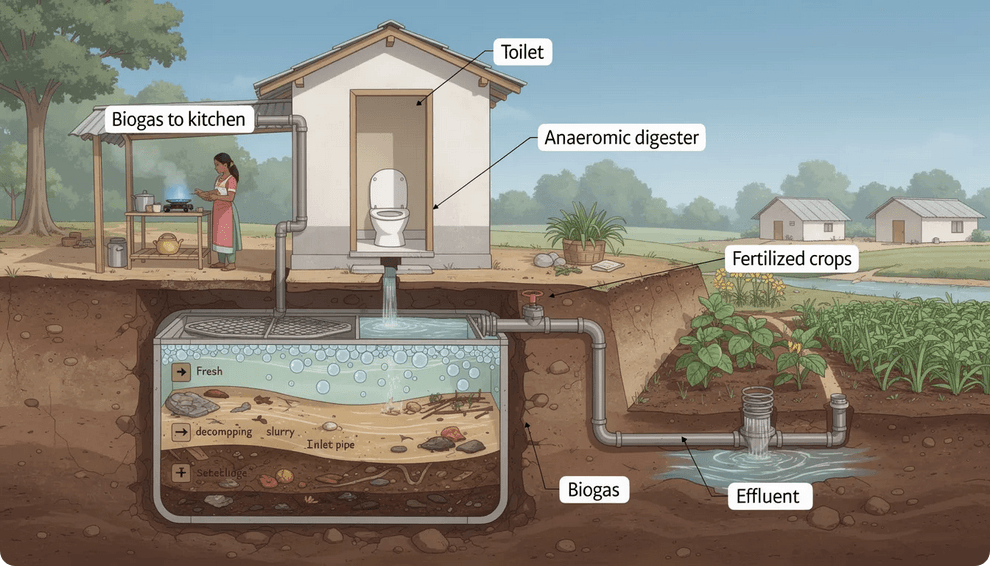
Small household biodigesters have been commercially available since around 2015, and by 2026 they’ve become a realistic option for homesteads in suitable climates. These systems transform waste into cooking gas and liquid fertilizer through anaerobic digestion.
System operation: Toilet waste feeds into a sealed digester tank where oxygen-free bacterial action produces methane-rich biogas (roughly 60% methane) and nutrient-rich liquid effluent. The biogas pipes to a stove, while the fertilizer collects for garden use.
Ideal contexts:
- Warm climates with average temperatures above 15–20°C (59–68°F)
- Households that can also feed kitchen scraps or livestock manure to increase gas production
- Properties with garden space benefiting from free fertilizer
Advantages:
- Produces usable cooking gas, potentially replacing 50–100kg of LPG annually for a family
- Handles toilet and kitchen waste in one integrated system
- Minimal odor when properly installed and vented
- Fertilizer output closes the nutrient cycle
Disadvantages:
- Requires careful installation with proper fall gradients and gas-safe connections
- Less suitable for freezing climates without insulation or heating elements
- Liquid fertilizer needs safe handling and may face local law restrictions
- Larger footprint (typically 4×4 feet for the digester unit)
Concrete example: A HomeBiogas-style unit installs in 2–4 hours, begins producing gas within 24–48 hours at optimal temperatures (68–104°F), and handles 4–6 users comfortably. Initial cost runs $1,500–$3,500 depending on model and accessories, with return on investment typically achieved within 2–3 years through LPG savings.
Ultra Low-Tech Toilets (Bucket, Pit, and Vault)
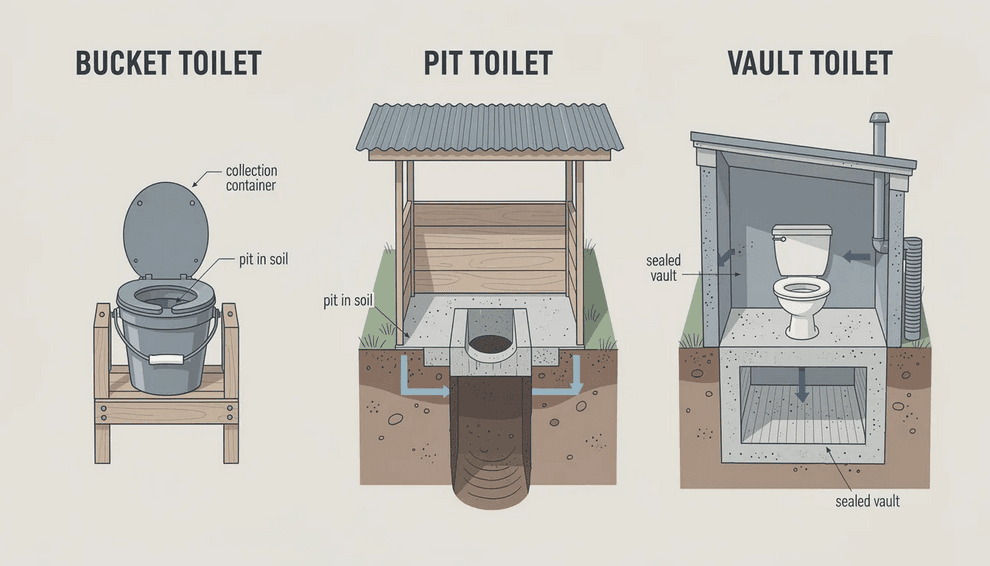
These options represent the lowest-cost, most DIY-friendly sanitation systems—suitable for camps, very remote cabins, or interim setups while building permanent infrastructure.
Humanure-style bucket toilet: A 20-liter bucket sits under a toilet seat. Users cover each deposit with sawdust, wood shavings, or dry leaves. When full, the bucket empties into dedicated compost bins and ages 1–2 years before use on non-food plants. Total setup cost: $50–$200.
Simple pit latrine: A hand-dug pit (typically 1 meter wide, 2–3 meters deep) topped with a concrete, timber, or plastic slab and privacy shelter. Properly sited pits serve for years before needing relocation. Materials cost: $100–$300.
Vault toilet: A sealed or lined pit with removable containers accessible from behind or below, allowing periodic pump-out or container swap. Common in park facilities and larger-scale remote installations.
Critical safety considerations:
- Site pits at least 30 meters from wells, streams, and property boundaries where possible
- Keep tops mounded and protected from floodwater infiltration
- Use fly screens, tight-fitting lids, and covering materials (ash, soil, sawdust) to reduce odor and insects
- Avoid high water table areas where contamination risks increase
Advantages:
- Extremely inexpensive and feasible with basic tools and materials
- No power or plumbing required
- Can be established quickly in emergency or temporary situations
Disadvantages:
- Often prohibited in suburban or regulated rural areas under local regulations
- Risk of groundwater contamination if poorly sited on unsuitable ground
- Basic comfort and aesthetics may not suit long-term living
- Requires physical labor for construction and eventual relocation
Always check local health regulations before constructing pit-based systems. Many jurisdictions require minimum distances from water sources and may mandate specific construction standards.
Off Grid Greywater Ideas (Sinks, Showers, Laundry)
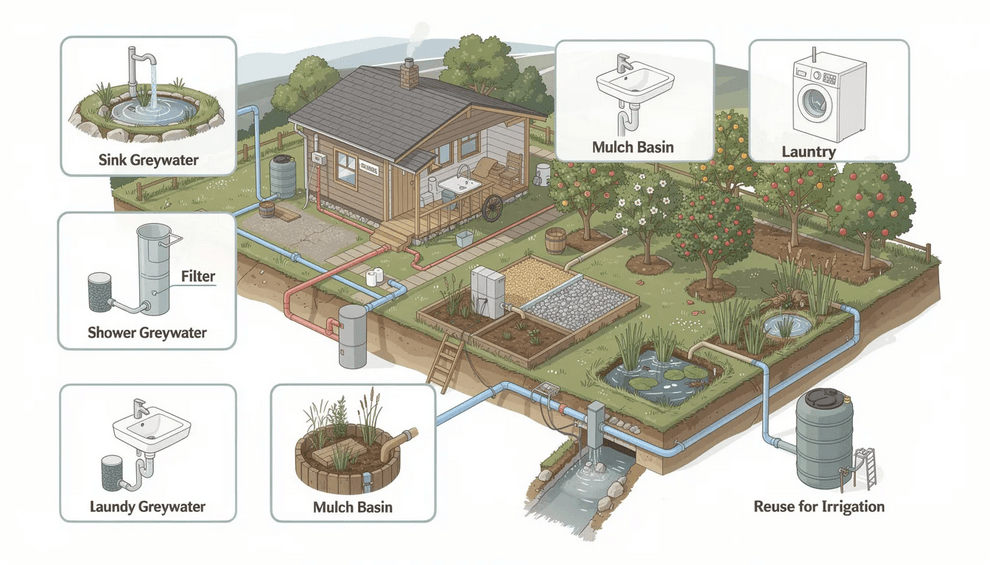
Greywater from sinks, showers, and laundry is generally easier to treat than blackwater, but it still requires management to prevent pollution and maximize reuse potential. A typical off grid household produces 40–80 liters of greywater per person daily.
Components of typical 2026 off grid greywater:
- Kitchen sink (contains food particles and grease)
- Bathroom basin
- Shower or bath
- Laundry machine (can be high-volume with significant soap residues)
Key greywater ideas to consider:
- Simple mulch basin: Single outlet serving one fixture, woodchip-filled depression around a tree
- Branched-drain system: Gravity-fed splitters distributing water to multiple garden zones
- Reed-bed/constructed wetland: Higher treatment level suitable for irrigation reuse
- Subsurface drip irrigation: Treated greywater delivered directly to root zones
- Holding tank with manual irrigation: For strict climates or winter conditions
Critical product choice: Use biodegradable, low-salt, low-boron soaps and detergents to protect soil biology and plants. Conventional products can kill beneficial microbes and damage garden beds.
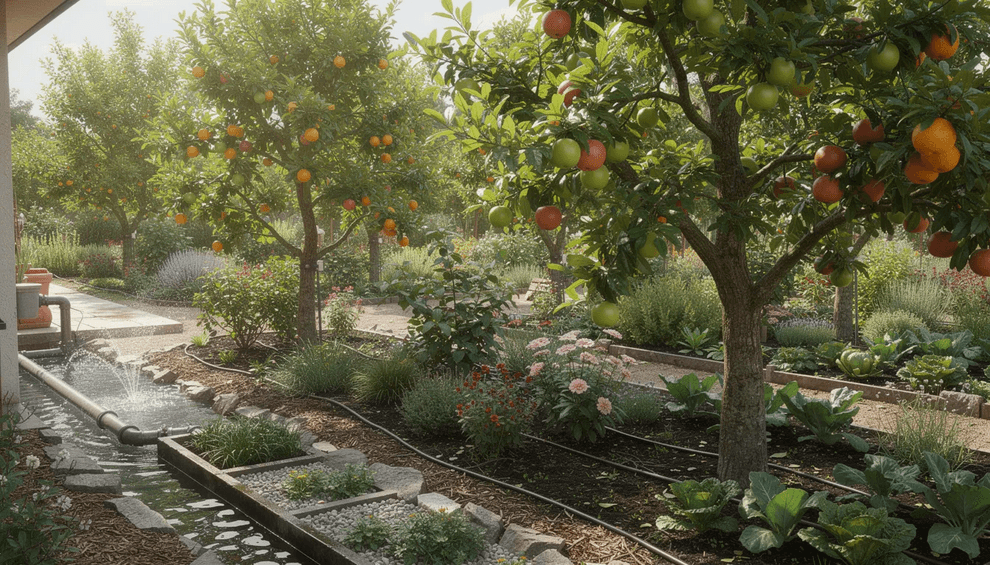
Mulch Basins and Branched Drains
These highly efficient, low-tech systems became standard practice among homesteaders and small cabin dwellers throughout the 2010s–2020s.
Mulch basin design: A greywater pipe drains into a shallow basin (typically 12–18 inches deep) filled with woodchips surrounding a fruit tree or large shrub. Water soaks into soil while mulch filters solids and prevents surface exposure.
Branched drain design: Uses simple splitters (1-to-2 or 1-to-4) to divide flow between several mulch basins. Works entirely by gravity when slopes allow, requiring no pumps or electricity.
Advantages:
- Cheap and easy to build with basic tools: shovels, PVC pipe, and woodchips
- Effective in Mediterranean, temperate, and many subtropical climates
- Provides free irrigation for productive trees and gardens
- Simple maintenance: top up mulch annually, clear any blockages
Disadvantages:
- Can clog if kitchen grease and food scraps aren’t pre-filtered through a strainer
- Less effective in heavy clay soils or where water tables sit high
- May need to rotate basins if soil becomes saturated
Example layout for a 2026 tiny home: A sloping rural block with one bathroom and kitchen sink uses 40mm PVC pipe running downhill to a 1-to-4 splitter. Four mulch basins surround young fruit trees 8–10 meters apart, receiving alternating flows through simple valve caps. Total installation: one weekend, under $300 in materials.
Reed Beds and Constructed Wetlands
Reed beds mimic natural wetland processes to clean greywater thoroughly, producing effluent often suitable for landscape irrigation. These systems gained popularity in eco-builds from the 1990s onward and remain relevant for larger off grid properties.
Key components:
- Lined cell or channel (pond liner or concrete) filled with gravel or sand media
- Planted with reeds, rushes, bulrushes, or other wetland species
- Carefully designed inlet distribution and outlet collection for even flow
Advantages:
- High treatment level, removing 95%+ of biological contaminants
- Can produce water quality suitable for subsurface irrigation
- Attractive landscape feature when well-designed
- Low ongoing maintenance once established
Disadvantages:
- Requires more land area than simple mulch basins
- Needs careful design calculations for proper sizing
- Frost-tolerant plant selection essential in cold climates, with reduced winter performance
- Higher initial installation cost and complexity
Suggested footprint: A 2–4 person off grid home typically needs 6–15 square meters of reed bed area, depending on daily water usage and local climate factors.
Designing a Whole-System Off Grid Sanitation Plan
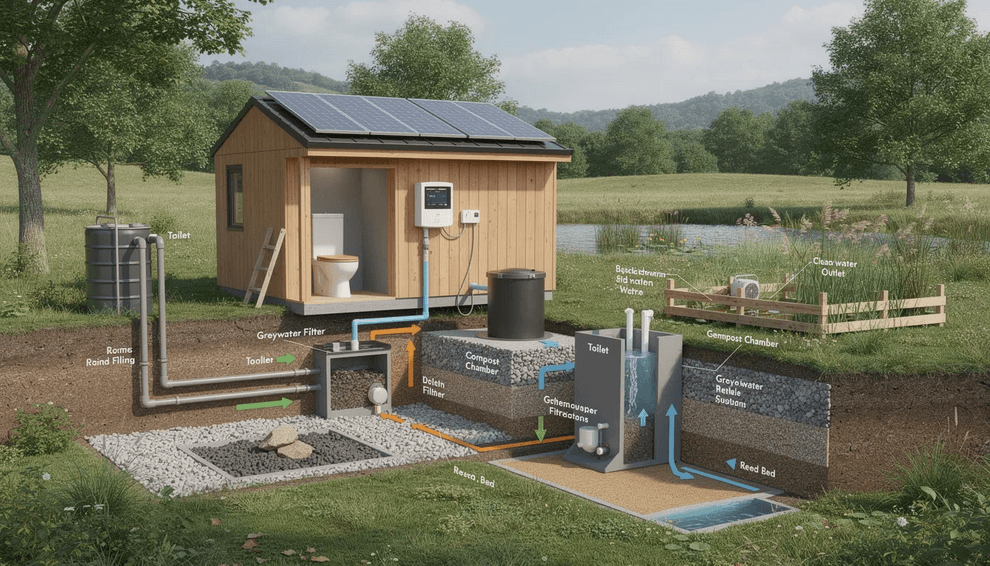
The most successful off grid sanitation approaches treat toilets and greywater as one integrated system rather than isolated components. Planning them together ensures efficient nutrient recovery, prevents cross-contamination, and simplifies daily operation.
Typical profiles and suggested system combinations:
- Solo weekend cabin: Bucket or portable composting toilet + simple mulch basin for sink. Minimal cost, minimal infrastructure.
- 2-person tiny home on wheels with 3–5 kWh/day solar: Urine-diverting composting toilet + small branched-drain greywater feeding 2–3 fruit trees. Compact, efficient, travel-ready.
- Family of four on 1–5 acre homestead: Central composting or biogas toilet system + reed bed treatment + orchard greywater irrigation. Maximizes nutrient recovery and food production.
- Cold-climate chalet with grid power but no sewer: Incinerating toilet (handles winter without decomposition issues) + insulated greywater holding tank with seasonal discharge to reed bed.
Essential planning steps:
- Map your property showing slopes, wells, streams, neighbors, and prevailing winds
- Mark safe distances from water sources (minimum 30 meters) and property lines
- Size systems based on daily water use estimates (typically 40–80 liters per person for careful off grid households)
- Design flow paths: clean water in, waste processed, treated water to productive plants
Think of your property as a cycle: water enters through rain or supply, moves through your household, and exits as treated greywater feeding gardens while composted or incinerated waste returns nutrients to soil or eliminates them entirely.
Legal, Health, and Environmental Considerations
Important disclaimer: Sanitation laws vary dramatically by country, state, province, and even municipality. Requirements that apply in rural Arizona differ completely from those in suburban Victoria or remote British Columbia. Always verify local laws and permit requirements before constructing any sanitation system.
Common 2020s regulatory requirements:
- Permits for septic systems and aerated wastewater treatment systems (AWTS)
- Certification requirements for composting toilets (NSF/ANSI 41 standard common in US)
- Setback distances from wells, waterways, and property boundaries
- Inspection requirements for permanent installations
- Restrictions on greywater use in some urban and suburban zones
Typical off grid pitfalls to avoid:
- Undersized systems that fail under actual usage loads
- Leaking pipes or poorly sited pits contaminating nearby streams
- Illegal dumping of blackwater or chemical toilet contents
- Failing to obtain required permits, creating issues at property sale
Basic health principles:
- Always prevent fecal contamination of drinking water sources
- Use gloves and masks when handling partially decomposed waste
- Allow composted waste to age at least 12–24 months before using on non-food trees
- Never apply fresh humanure to any plants
Environmental best practices:
- Avoid chlorine bleach and harsh cleaners that damage composting biology and greywater systems
- Protect wetlands, rivers, and neighbors’ wells through careful siting
- Use biodegradable products throughout your household
Consider consulting local health inspectors or environmental engineers for larger systems, multi-cabin sites, or any installation where regulations seem unclear.
Maintenance, Costs, and Long-Term Reliability
Low-maintenance sanitation requires good design and realistic expectations from the start—not neglect. Understanding actual maintenance rhythms helps you choose systems that match your lifestyle.
Composting toilet maintenance:
- Empty solids container every 3–6 weeks (2-person household)
- Empty urine bottle every 2–4 days
- Add bulking material after each solid use
- Check and clean ventilation fan monthly
- Inspect seals and screens seasonally
Greywater system maintenance:
- Clear strainers and filters weekly
- Flush distribution lines quarterly
- Top up mulch basins annually
- Trim reed beds and remove dead material seasonally
Incinerating and biogas toilet maintenance:
- Clean burn chamber and remove ash (incinerators) every 40–80 uses
- Check pump seals and gas connections (biogas) monthly
- Inspect venting and exhaust systems quarterly
2026 cost ranges:
- Ultra-low-tech (bucket, pit latrine): $50–$500 USD
- Mid-range composting toilets: $800–$3,000 USD
- Cassette and portable toilets: $100–$400 USD
- Incinerating toilets: $3,500–$6,000 USD plus installation
- Biogas systems with toilet connection: $1,500–$3,500 USD
- Small AWTS systems: $5,000–$15,000 USD including installation
Reliability tips:
- Choose simpler systems if you live far from service technicians
- Keep critical spares on-site: fans, seals, liners, fuses, pump parts
- Document your system layout and shut-off points for future repairs
- Regular monitoring prevents small issues from becoming expensive failures
Real expectations: A well-maintained composting toilet serves reliably for 10–20+ years. Budget $100–$200 annually for bulking materials, replacement parts, and occasional upgrades.
Summary: Matching Off Grid Sanitation Ideas to Your Reality
- There’s no clear winner for all situations—the right system depends on your climate, local regulations, number of users, budget, and how much hands-on involvement you want with waste management.
- Composting toilets remain the popular choice for permanent tiny homes, vans, and homesteads, offering low cost, minimal water usage, and nutrient recovery at manageable effort levels.
- Incinerating toilets suit cold climates and convenience-focused users willing to accept higher energy costs and upfront investment.
- Biogas systems shine in warm climates where cooking fuel production adds significant value alongside sanitation.
- Ultra-low-tech options remain essential for very remote locations, extremely tight budgets, and interim setups during construction phases.
- Greywater treatment completes any system, turning waste into productive irrigation that supports gardens and food production.
Recommended approach:
- Start with a clear plan and legal verification in your jurisdiction
- Pilot simpler, lower-cost ideas before making major investments
- Upgrade over time as your needs, experience, and budget evolve
Modern off grid sanitation in 2026 can be clean, odour free, and genuinely sustainable when thoughtfully designed. The technology has matured, options have multiplied, and thousands of successful installations prove these systems work reliably in real-world conditions. Your first step is mapping your property, checking local requirements, and matching your specific needs to the right combination of solutions.