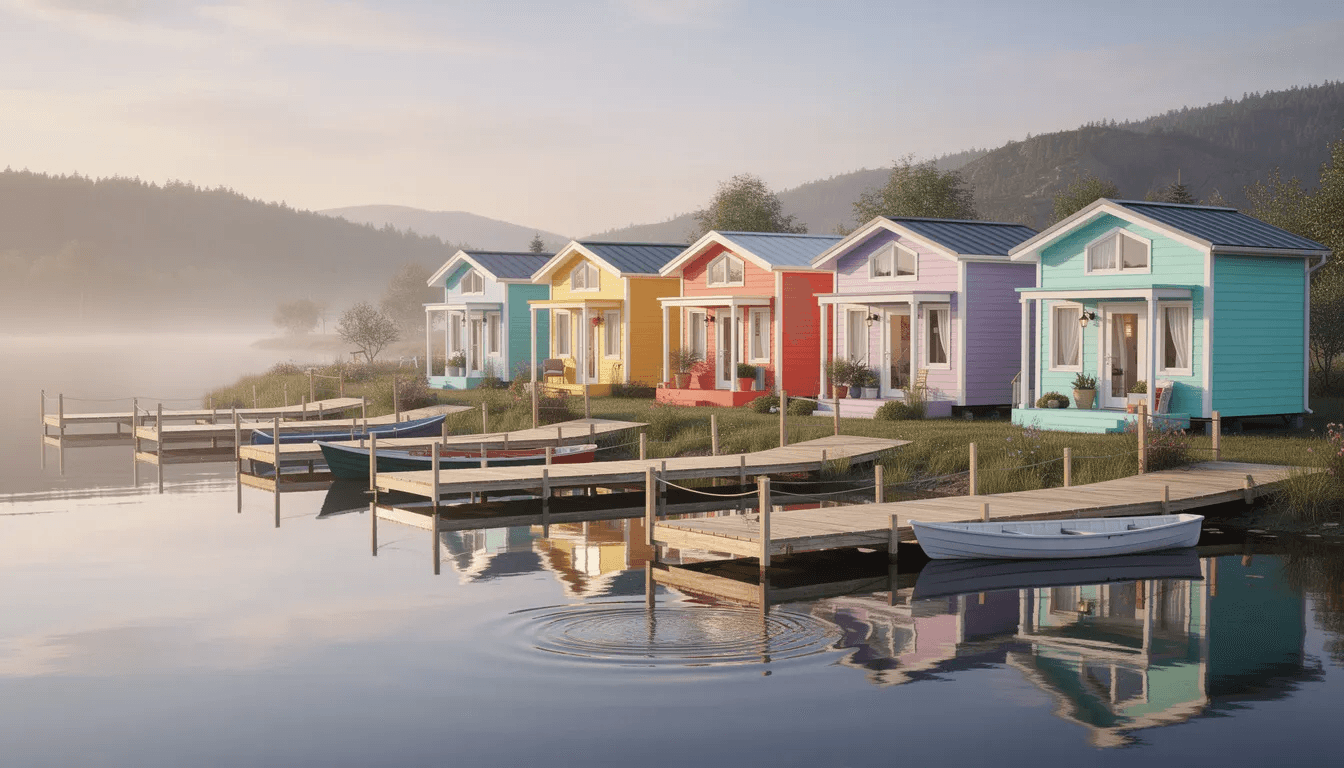
Tucked along the shores of Lake Fairview in Orlando’s College Park neighborhood, the Orlando Lakefront Tiny House Community stands as one of the earliest and most recognized legal tiny house communities in America. What began as a run-down 1950s RV park has transformed into a vibrant neighborhood where colorful, architect-designed tiny homes line the waterfront, offering residents and visitors alike a chance to experience small-footprint living just minutes from Florida’s urban attractions.
The property sits roughly 10 minutes from downtown Orlando and about 30 minutes from Orlando International Airport (MCO), making it accessible for both local residents seeking a lifestyle change and out-of-state travelers curious about the tiny house movement. Since 2011, the community has evolved into a mixed-use destination that welcomes both long-term tiny house owners who rent lots and short-term guests who want to test drive tiny living through nightly or weekly stays.
What this guide covers:
- The history of how a dilapidated RV park became a pioneering tiny house community
- Types of stays available: long-term lot rentals vs. short-term furnished tiny house rentals
- Featured tiny houses like The Venice, The View, and The Swan with floor plan details
- In-home amenities, outdoor activities, and lakefront access
- Real stories from residents who call Orlando Lakefront home
- Location details, nearby attractions, and practical guest policies
- Who this community is best suited for—and who might want to look elsewhere
- History and concept of the community
- Types of stays: long-term lots and short-term tiny house rentals
- Featured tiny houses and floor plan examples
- In-home amenities and connectivity
- Outdoor amenities, lakefront access and activities
- Community life, residents and long-term living
- Location, nearby attractions and neighborhood feel
- Practical details: check-in, policies, pets and stays
- Who Orlando Lakefront Tiny House Community is (and isn’t) for
- How to research current availability, rates and long-term options
History and concept of the community
The Orlando Lakefront Tiny House Community owes its existence to investor Adam Money, who purchased the former Lake Fairview Mobile Home Park around 2011. At the time, the property was in decline—a collection of aging RVs and underutilized lots that had seen better days.
Money’s vision was to gradually transform the space into something new while respecting the existing residents and infrastructure.
- 2011: Adam Money acquires the property, which already had RV zoning, paved lots, and utility pedestals for water, sewer, and electricity
- Gradual transition: Rather than displacing current RV residents, ownership offered vacated lots to tiny house owners as they became available
- Legal framework: The park’s RV zoning allowed tiny homes on wheels to legally park with full hookups—a rare arrangement in Central Florida where most municipalities classify THOWs as RVs and restrict long-term parking
- Current size: Media reports from the late 2010s and early 2020s document approximately 30-35 tiny homes on site, with Tiny House Expedition reporting 23 THOWs and 27 RVs during a 2019 visit
- Design standards: Ownership enforces aesthetic guidelines requiring well-maintained exteriors, though no two tiny homes look alike in style, color, or layout
- Core philosophy: The community prioritizes minimalism, lakefront access, and community connection over traditional homeownership models
Types of stays: long-term lots and short-term tiny house rentals
Orlando Lakefront functions as both a residential tiny home community and a place where curious travelers can experience tiny living without committing to building or buying their own tiny house. Understanding the distinction between these two options helps set expectations before you arrive.
Long-term lot rentals are designed for people who already own—or are building—a tiny house on wheels. Residents bring their THOW (typically 24-32 feet long and under 600 square feet) and rent a lot by the month, often working with top micro house builders focused on quality and affordability to create their homes.
- Monthly lot rent has been reported in the range of $350-$750, depending on the specific lot and time period, with mid-2010s reports citing figures around $500-$550 as a baseline
- Lot rent typically covers hookups for water, sewer, electric connections, trash service, and access to shared amenities like docks and common areas
- Lot rent does not cover your tiny house purchase or build cost, personal insurance, or separately metered utilities
- Prospective long-term residents often pay lot rent to reserve a space while finishing construction of their tiny house off-site, as demand regularly exceeds availability
Short-term rentals offer a turnkey tiny house experience for guests who want to stay a night, a weekend, or a full week.
- Approximately 10 park-owned or managed tiny houses are available for nightly and weekly stays
- Each rental is fully furnished with a kitchen, bathroom, heating and air conditioning, and WiFi
- Bookings are typically made through platforms like Airbnb, Vrbo, Expedia, and Hotels.com, where you can view prices Orlando listings show, current photos, and guest reviews
- Short-term guests get an entire home reservation—no shared interior space with other guests or residents; only outdoor amenities and docks are communal
Featured tiny houses and floor plan examples
No two tiny homes at Orlando Lakefront look the same. Designs range from minimalist single-loft layouts to family-oriented configurations with two sleeping lofts, built-in storage stairs, and small front porches overlooking the lake, reflecting how different tiny house floor plans that work for you and tiny house plans can be tailored to fit specific lifestyles. Typical square footage runs between 240 and 400 square feet, with most units sleeping 2-4 guests comfortably, similar to many of the great tiny homes that redefine small-space living and elegant tiny homes that redefine modern living.
The Venice measures roughly 350 square feet and sleeps up to three people. The living area includes a full-size couch and a fireplace, while a lofted sleeping space sits above the bathroom. Large windows face the lake, and visitors who have stayed for multiple nights report being surprised by how spacious the layout feels despite the compact footprint.
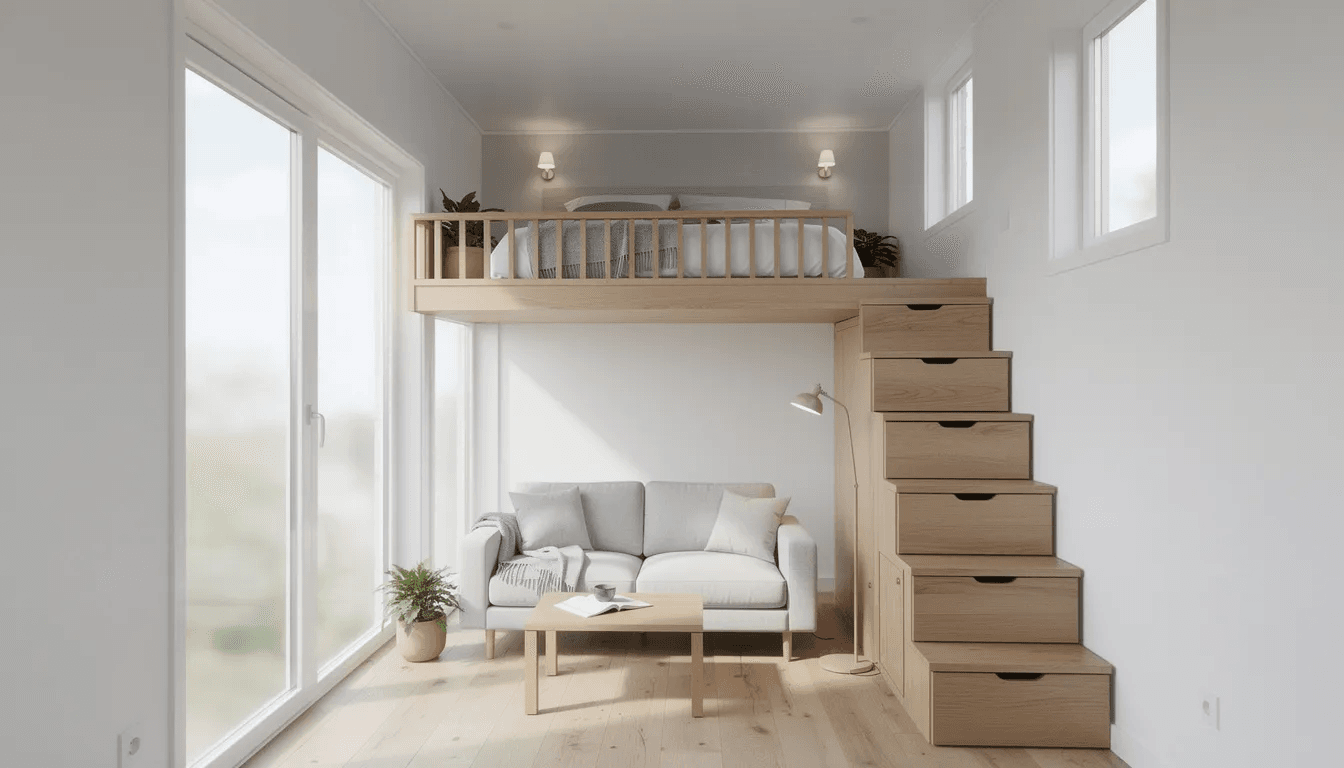
The View offers approximately 400 square feet of lakefront tiny house living. The main living area sits beneath a lofted sleeping space accessible via a staircase packed with hidden storage compartments. A pull-out table integrated into the steps provides dining and workspace. Historical listings have shown starting rates around $70 per night during certain periods in the late 2010s, though actual rates are date-dependent and should be confirmed through current months listings on booking platforms.
The Swan is another roughly 400 square foot lakefront unit featuring two lofts, each large enough for a queen-size bed. The full kitchen includes more counter space than many Orlando city apartments, and the living room comes equipped with a couch, 42-inch flat-screen TV, fireplace, and—depending on the most recent configuration—a wine fridge. This layout demonstrates how clever design can create room for multiple sleeping areas, a functional kitchen, and genuine living space within a few hundred square feet, much like the best examples of tiny house interiors that maximize every square foot and broader guides exploring the world of tiny houses with inspiration and resources.
Other units in the community vary from sun sunday mon retreats with panoramic windows to whimsical, storybook-inspired layouts ideal for solo travelers or couples seeking a quiet tiny house getaway by the lake on the water, similar in spirit to many enchanting magic tiny homes that transform small living spaces.
In-home amenities and connectivity
The tiny houses at Orlando Lakefront are designed as complete small homes rather than rustic cabins, comparable in thoughtfulness to many of the best tiny house designs for modern living and to Scandinavian tiny home designs for modern living that emphasize simplicity and functionality. You can cook full meals, work remotely, and stream movies without sacrificing the comforts you’d expect from a standard vacation rental or apartment.
Kitchen features commonly found in rental units include apartment-size or full refrigerators, stovetops, microwaves, and in some cases ovens or dishwashers. Basic cookware, dishes, and utensils are provided so guests can prepare meals without needing to eat out for every night of their stay.
Bathroom setups typically include flushing toilets connected to the park’s septic system (not composting toilets), stand-up showers, standard sinks, and occasionally a compact washer/dryer combo tucked into a corner. The bathrooms are clean and functional, built for daily life rather than just weekend camping.
Comfort and connectivity highlights:
- Efficient air conditioning and heating systems sized for Florida’s humid climate
- Ceiling fans for air circulation in loft spaces
- Smart TVs (often 40-50 inch) with streaming apps and pay-movie options
- Furnished patios or small decks for outdoor relaxation
- WiFi reported at 500+ Mbps in some listings, suitable for remote work, video calls, and streaming across 6+ people or 10+ devices
- Large windows, French doors, or garage-style roll-up doors that create indoor-outdoor flow and make the compact space feel larger
Outdoor amenities, lakefront access and activities
The community sits on the south shore of Lake Fairview, where rows of colorful tiny houses look out over the water and small docks extend from the shoreline. Mature trees provide shade and privacy between homes while still allowing clear sightlines to the lake from decks and loft windows. The garden-style landscaping throughout the property gives the space a lush, established feel rather than the utilitarian look of a typical RV park.
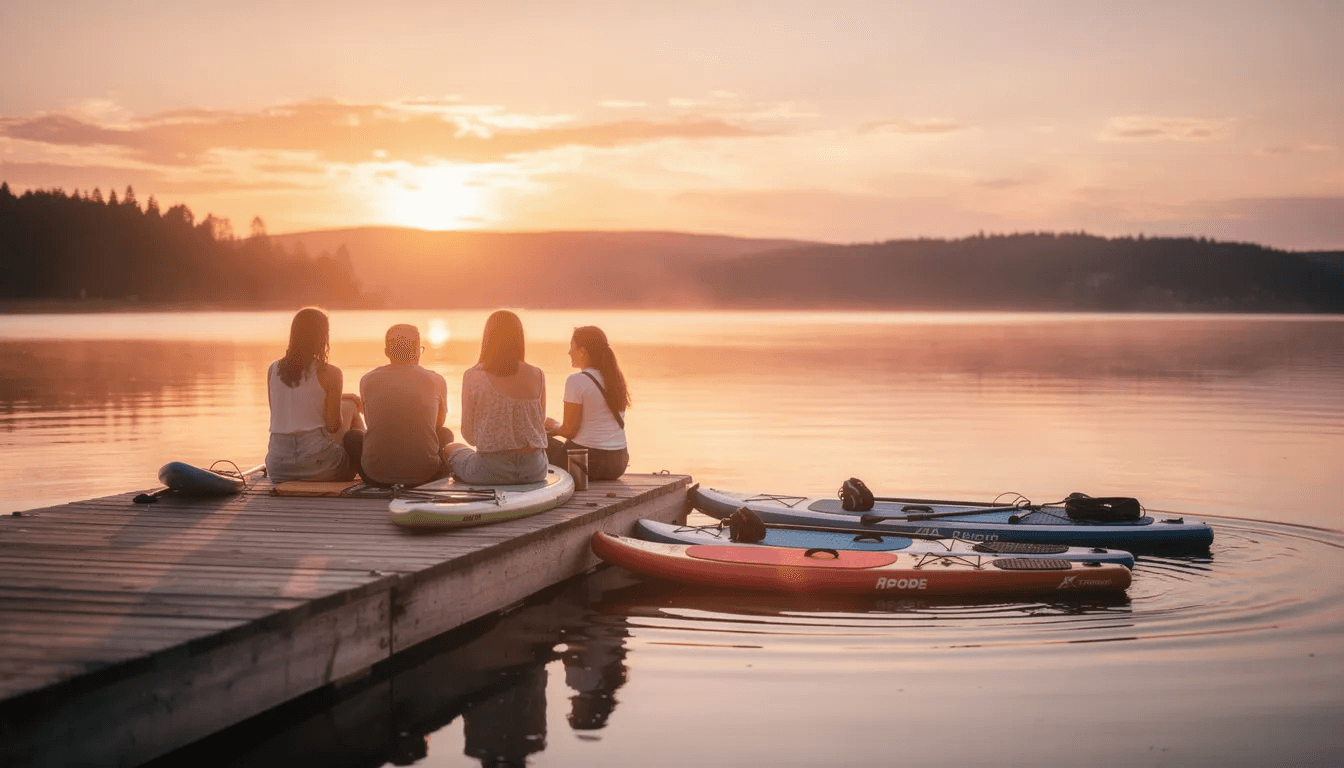
Lake access is one of the biggest draws. Residents and guests can walk directly to the shoreline, where docks accommodate sunbathing, fishing, and launching small watercraft. Complimentary or community-shared equipment often includes paddleboards, canoes, and basic fishing gear that residents have reported using through informal sharing systems—a perk that adds value without extra cost.
Communal outdoor areas include fire pits for evening gatherings, picnic tables scattered throughout the property, and grassy spaces where neighbors meet for potlucks or casual conversation. Ownership has mentioned plans for additions like a volleyball court and upgraded clubhouse in interviews over the years.
The sensory experience here is distinct from typical Florida vacation spots. You’ll hear birds from the lake (a designated bird sanctuary), see sunsets reflected off the water from dock meetups at dusk, and experience a pace of life that feels quieter than the tourist-heavy areas just 30 minutes south. For guests who love nature, fishing, or simply watching the day wind down over the water, these outdoor amenities create the heart of the Orlando Lakefront experience.
Community life, residents and long-term living
Orlando Lakefront is more than a collection of rental units—it’s a functioning neighborhood where permanent and semi-permanent residents have built genuine connections. The mix includes singles, couples, families with children, retirees, and digital nomads, many of whom chose living tiny to simplify finances, reduce possessions, or enjoy waterfront life without leaving Orlando’s orbit—echoing the motivations of many buyers considering a tiny house for sale and whether it’s right for them.
Real-life examples illustrate what long-term residency looks like here. Amanda Burger, a mother living in a 26-foot tiny home with her two children, joined the community in early 2019 after investing about $40,000 in her build. Misty Gilley downsized from a condo into a 240-square-foot tiny house positioned right next door to her mother’s $65,000-$80,000 unit—close enough for daily contact but with separate space for privacy.
Community support becomes especially visible during Florida’s hurricane season. Residents have described neighbors pitching in to secure homes, tie down structures, and check on each other before and after storms pass through. This mutual aid reflects the close-knit feel that develops when you share a small property with a few dozen like-minded people.
Daily life rhythms emerge naturally: neighbors chatting on porches, friends organizing lake outings, kids playing in small shared yard spots, and informal meetups on the docks at sunset. Potlucks happen organically. People learn each other’s names. It’s the kind of neighborhood that used to be common in America but has become increasingly rare in an era of garage-door-to-garage-door suburban anonymity, and it often inspires visitors to explore custom tiny homes for their own small-space living.
The demand for long-term spots underscores the community’s appeal. Prospective residents often pay lot rent to reserve a space while they’re still building their tiny house off-site, sometimes using Home Depot tiny house kits for affordable small-footprint builds, waiting months for availability.
Location, nearby attractions and neighborhood feel
Orlando Lakefront sits on Lake Fairview in the College Park and Fairview Shores area, northwest of downtown Orlando with quick access via Edgewater Drive. The neighborhood has a quieter, tree-lined residential character compared to the tourist corridor near International Drive and the theme parks.
Nearby points of interest:
- Lake Fairview Park: approximately 3 minutes by car
- Edgewater Plaza Shopping Center: around 4 minutes
- Dubsdread Golf Course: roughly 5 minutes
- Kia Center and Camping World Stadium: 10-15 minutes depending on traffic
- Downtown Orlando: about 7-10 minutes
- Orlando International Airport (MCO): approximately 30 minutes
- Walt Disney World Resort: 25-40 minutes depending on which park and traffic
- Universal Orlando Resort: 25-40 minutes
College Park itself offers independent cafes, restaurants, and a vibe that appeals to people who want access to Orlando’s attractions without staying in the thick of tourist traffic. You can drive to the theme parks when you want that experience, then return to a spot where you can hear birds and watch the sun set over the water.
Practical details: check-in, policies, pets and stays
Specific procedures and policies can vary slightly by booking platform and by tiny house, so always confirm details with your chosen host or listing before arrival.
Check-in and check-out:
- Typical check-in windows run from 3:00 PM to 9:00 PM
- Most listings offer contactless or host-greeted check-in with no staffed front desk
- After-hours arrivals should be pre-arranged with the host
- Check-out is usually around 10:00 AM with contactless or express options
Quiet hours and community expectations:
- Quiet hours are generally listed as 10:00 PM to 9:00 AM
- Several resident dogs live on-site, which dog lovers may appreciate but light sleepers should note
- The community includes full-time residents, so respectful noise levels matter
Pet policies:
- Dogs only in most listings, typically capped at 35 lbs
- One-time pet fees run around $80 per stay
- Verified service animals are generally accepted without extra fees
Family considerations:
- Children are welcome, but rollaway beds and cribs are seldom provided
- Loft sleeping areas accessed by steep stairs or ladders may be better suited to older children or adults
- Check specific listings for family-friendly layouts with two lofts and safer stair configurations
Seasonal notes: Some units may have renovation periods or seasonal closures. Always check current availability calendars and recent reviews rather than relying on dates from previous month listings or older articles.
Who Orlando Lakefront Tiny House Community is (and isn’t) for
Tiny house living—whether for a weekend getaway or a year-long commitment—is a specific lifestyle choice that doesn’t suit everyone. Being honest about that helps you decide whether Orlando Lakefront makes sense for your situation and whether you’re better served by other affordable tiny house buildings and designs.
Ideal guests and residents include:
- Travelers curious about the tiny house movement who want to test the lifestyle before committing
- Remote workers who need reliable high-speed WiFi plus a scenic backdrop for focused work
- Minimalist couples seeking a simplified, nature-adjacent place to stay near urban amenities, especially those intrigued by tiny smart homes for efficient living anywhere
- Small families who don’t mind lofts and ladders and want to model simpler living for their children
- Retirees looking for a downsized, waterfront lifestyle without leaving Central Florida
People who may not enjoy it:
- Those who dislike climbing stairs or loft ladders, even when equipped with a well-designed tiny house loft ladder for safety and accessibility
- Guests who expect hotel-style services and daily housekeeping
- Light sleepers who are uncomfortable with community noise or Florida wildlife sounds
- Anyone who feels claustrophobic in compact space
If you’re on the fence, book a 2-3 night stay in one of the rentals like The Venice, The View, or The Swan to experience firsthand some of the most cute tiny house designs for a dream home. Experiencing tiny living firsthand reveals whether the lifestyle feels freeing or frustrating—something no amount of reading can fully answer.
How to research current availability, rates and long-term options
Policies, prices, and the exact mix of tiny houses at Orlando Lakefront can change over time as homes are added, renovated, or sold. Here’s how to get accurate, up-to-date information.
For short-term stays: Search major travel platforms like Airbnb, Vrbo, Expedia, and Hotels.com for “Orlando Lakefront Tiny House Community” to see updated photos, guest reviews, and nightly rates for specific units. You can view prices Orlando listings show for your specific dates, compare different floor plans, and read what recent guests have said about their experience. Pay attention to the photo gallery for each listing to get a sense of layout and condition.
For long-term residency: Contact the community directly via its official website or published phone number to ask about waitlists, application processes, current lot rent, and any design or size guidelines for incoming tiny homes. Waitlists exist because demand exceeds supply, so reaching out early in your planning process makes sense.
For research and due diligence: Read recent news articles, blog posts, and vlogs about living at Orlando Lakefront to get perspectives on community culture and day-to-day realities. Stories from residents like those published by Tiny House Expedition or featured on media sites give you a clearer picture of what to expect than marketing copy alone.
Whether you’re testing the waters with a weekend stay or seriously considering long-term residency, Orlando Lakefront offers a rare chance to experience legal tiny living near a major Florida city. Explore the available units, consider your own needs—budget, family size, mobility, tolerance for compact living—and decide whether this lakefront tiny house community fits your version of a simpler life.