The tiny home movement has taken root across Canada, from coastal BC to Ontario cottage country and the Alberta foothills. Since around 2015, demand for compact dwellings has surged as Canadians seek alternatives to skyrocketing housing costs and embrace a simpler lifestyle. Whether you’re dreaming of a sleek home on wheels parked on rural land or a stylish backyard suite for aging parents, the options have never been more diverse.
Why are so many individuals choosing tiny homes in Canada? The answers come down to affordability, sustainability, and freedom. A well-designed tiny home can cost a fraction of a conventional house while delivering comfort and quality craftsmanship. These compact structures fit on backyards, cottage lots, RV resorts, and rural property—giving owners flexibility that traditional housing simply can’t match. With typical sizes ranging from 200 to 500 square feet, modern tiny homes are engineered for year round living, featuring robust insulation and smart off grid systems that reduce environmental impact.
This guide will walk you through everything you need to discover about tiny home Canada: the main types available (on wheels, park models, modular, and pods), rough price ranges in CAD, key legal considerations, and practical advice for making your vision a reality. Think of it as your first step toward a life with less clutter and more intention.
- Tiny Homes in Canada: Types & Key Features
- Tiny Homes on Wheels in Canada
- Park Model Tiny Homes in Canada
- Modular Tiny Homes and ADUs in Canada
- Backyard Pods and Bunkies Across Canada
- Living Off-Grid and Year-Round in a Canadian Tiny Home
- Zoning, Permits, and Regulations for Tiny Homes in Canada
- How Much Does a Tiny Home Cost in Canada?
- Financing and Insurance for Tiny Homes in Canada
- Designing a Tiny Home for Canadian Lifestyles
- Tiny Homes as Rentals, Cabins, and Income Properties in Canada
- Planning Your Tiny Home Journey in Canada
Tiny Homes in Canada: Types & Key Features
Before you spend time researching builders or scouting land, it helps to understand the main categories of tiny homes common across Canada. Each type serves different purposes and falls under different regulatory frameworks—knowing the distinctions will save you headaches down the road.
The four primary categories are:
- Tiny home on wheels (THOW): Trailer-mounted, fully mobile, often certified under RV standards
- Park model tiny homes: Wider structures placed semi-permanently in resorts or communities
- Modular tiny homes and ADUs: Factory-built, craned to site, designed for permanent dwelling status
- Backyard pods and bunkies: Compact detached structures for offices, guest rooms, or studios
These categories matter because Canadian zoning and building codes treat them differently. A THOW might be classified under CSA Z240 RV standards, while a park model falls under CSA Z241, and a modular dwelling meets CSA A277 requirements for permanent buildings. The code classification affects where you can legally live full-time, what permits you need, and how you finance and insure the structure.
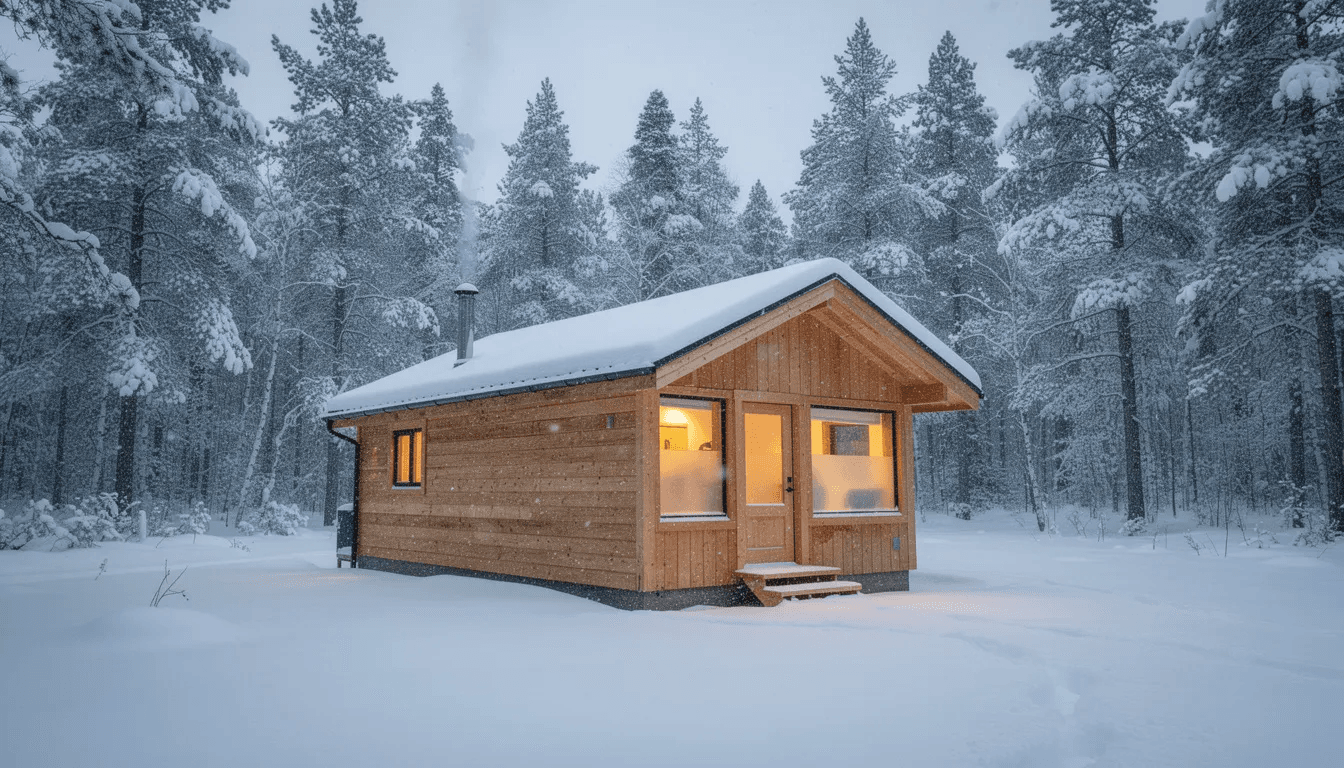
You’ll find THOWs popular in BC ski towns and Alberta off-grid retreats. Park models thrive in Ontario cottage country and Okanagan wine regions. Modular tiny homes are gaining traction as garden suites in Calgary, Ottawa, and Vancouver Island communities. And bunkies have long been a staple of Muskoka and Laurentian lake life. The sections that follow dive deeper into each type, covering use cases from full-time living to seasonal cabins and rental suites, and how minimalist tiny houses support sustainable, low-impact lifestyles.
Tiny Homes on Wheels in Canada
A tiny home on wheels is exactly what it sounds like: a fully functional dwelling built on a trailer chassis, designed for mobility. In the Canadian context, most THOWs measure 8.5 feet wide (the legal towing limit on most highways), range from 20 to 34 feet long, and often carry RV certification for registration and insurance purposes.
These homes appeal to individuals seeking minimalist living without being tied to a single location. Common uses include full-time residence at RV resorts in BC or Ontario, off grid cabins on rural Alberta land, and temporary housing while building a larger primary home. The mobility factor offers a kind of freedom that conventional housing can’t deliver—if your circumstances change, your home can move with you.
Common layouts and features:
- Loft bedrooms accessed by ladder or stairs (though main-floor bedrooms work better for accessibility)
- Galley or L-shaped kitchens with compact appliances
- Combined living and dining space that doubles as a home office
- One or two sleeping areas depending on family needs
Canadian climate considerations:
- Spray-foam insulation rated for cold winters
- Mini-split heat pumps or propane heaters for efficient heating
- Triple-pane windows in colder provinces like Alberta, Manitoba, and northern Ontario
- Insulated water tanks and heated plumbing runs to prevent freezing
Off grid options:
- Solar arrays sized around 2–6 kW depending on energy needs
- 24–48V battery banks for overnight and cloudy-day storage
- Composting or incinerating toilets eliminating the need for sewer hookups
- Large freshwater and greywater tanks (often 50–100+ gallons each)
Price ranges for a custom, fully finished THOW in 2024–2025 typically fall between $120,000 and $220,000+ CAD, depending on the level of finishes, appliances, and off grid systems. High quality materials and detail work push costs toward the upper end, but many owners consider it a worthwhile investment for durability and comfort.
Keep in mind that THOWs require licensed trailers and must comply with provincial weight rules. Some owners tow their homes seasonally; others park them permanently on leased or owned land. The key advantage is zoning flexibility—many municipalities that prohibit tiny homes as primary dwellings still allow RVs on rural property, creating a workaround for those willing to push boundaries.
Pros and cons at a glance:
Pros | Cons |
|---|---|
Mobility and location flexibility | Limited width (8.5 ft) constrains interior space |
Often bypasses minimum dwelling size rules | May face restrictions on full-time occupancy |
Lower property taxes in some cases | Financing can be challenging |
Off grid capability built-in | Requires tow vehicle or delivery service |
Park Model Tiny Homes in Canada
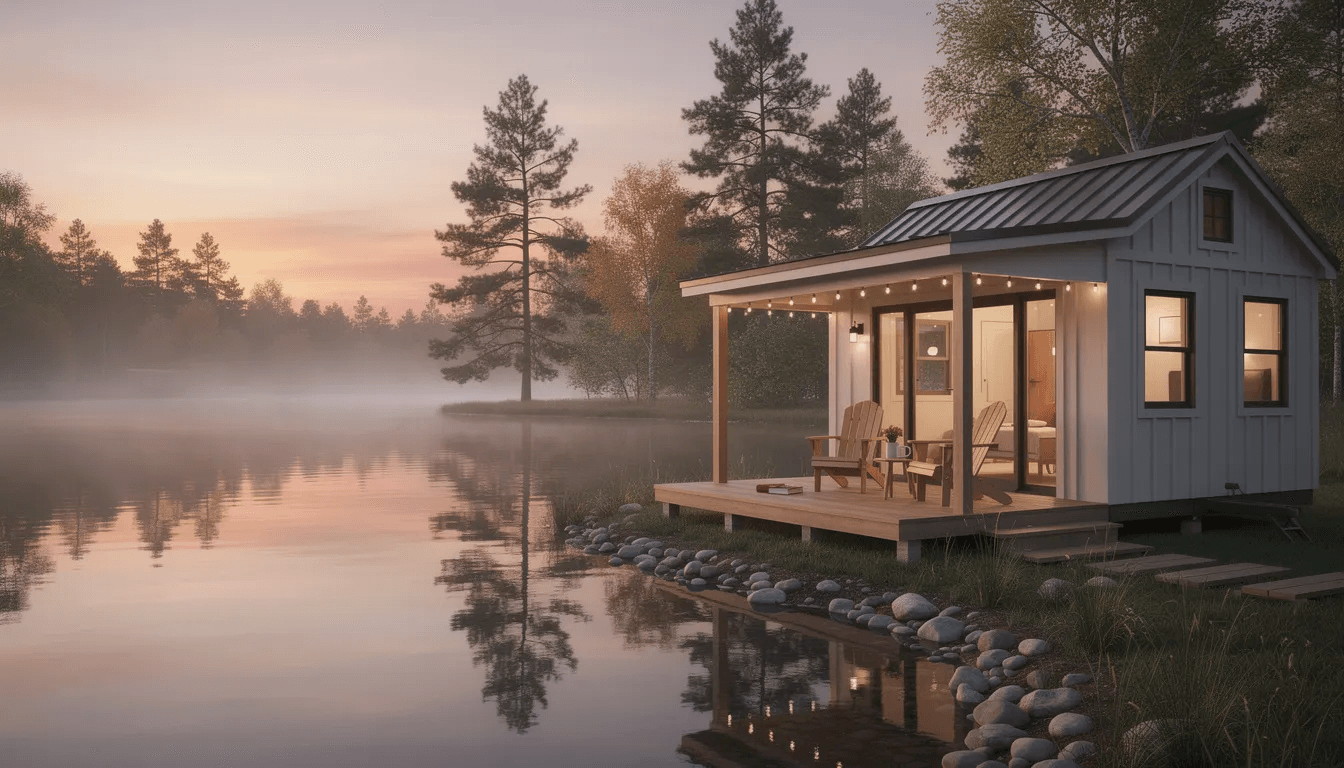
Park model tiny homes offer more living space than THOWs while maintaining a compact footprint. These structures are wider—often up to 14 feet—and sometimes longer, designed for semi-permanent placement in RV resorts, cottage parks, or tiny home communities across Canada.
In Canada, many park models are built to CSA Z241 standards and can be configured for either seasonal or four-season use. With upgraded insulation, robust heating systems, and residential-style finishes, a well-built park model delivers year round comfort comparable to a conventional cottage—without the conventional cottage price tag.
Ideal settings for park models:
- Lakeside resorts in Ontario’s Kawartha or Muskoka regions
- Okanagan wine country parks in BC
- Mountain retreats near Canmore, Revelstoke, or Whistler
- Atlantic coastal communities in Nova Scotia or PEI
Design differences from tiny homes on wheels:
- More interior space, often 400–540 square feet
- Residential-style kitchens with full-size appliances (standard refrigerators, ovens, dishwashers)
- Main-floor bedrooms with proper ceiling heights, plus optional sleeping lofts or bunk rooms
- Larger windows that frame Canadian landscapes beautifully
- Covered porches or decks ideal for cottage-style living
The extra width makes a dramatic difference in how the space feels. A park model can accommodate a comfortable sofa, a dining table for four, and a functional kitchen without the cramped feel that narrower THOWs sometimes produce. For couples or small families looking to downsize from a suburban home or cottage, park models hit a sweet spot between minimalism and livability, especially when you draw inspiration from affordable tiny house designs and tips.
Turnkey pricing for park models in 2024–2025 typically ranges from $160,000 to $260,000+ CAD depending on finishes, roofing materials, and site-specific hookup costs. Many buyers find this comparable to—or less than—the cost of major renovations on an aging cottage, making park models an attractive alternative for those seeking a fresh start with modern, energy-efficient construction.
Modular Tiny Homes and ADUs in Canada
Modular tiny homes represent the most “permanent” category of small dwellings. These factory-built structures are craned or trucked to your site and typically certified under CSA A277, designed to comply with local building codes as permanent dwellings rather than recreational vehicles.
Common Canadian use cases:
- Backyard accessory dwelling units (ADUs) or garden suites for family members in cities like Calgary, Edmonton, Ottawa, and parts of Vancouver Island
- Laneway houses behind existing homes where bylaws allow (e.g., some Vancouver, Victoria, and Toronto neighbourhoods)
- Small primary homes on rural land with permanent foundations
The business case for modular tiny homes is compelling. Adding a backyard suite can generate rental income, house aging parents close to family, or provide a separate space for adult children saving for their own property. In communities facing housing shortages, ADUs represent a smart way to increase density without dramatically altering neighbourhood character.
Typical sizes range from 350 to 800 square feet, including one-bedroom and two-bedroom configurations. These homes are built for year round performance: high-R walls and roofs (often R-30 or higher), HRV or ERV ventilation systems for healthy indoor air, and heat pumps sized for Canadian winters. The result is a comfortable, functional dwelling that meets the same standards as any new-build home, while still offering the personalization and flexibility you see in top custom tiny homes for small-space living.
Installation timeline:
- Factory build: 8–16 weeks depending on complexity
- Site preparation: foundation pouring, trenching for utilities
- Delivery and crane set: often completed in a single day
- Final hookups: electrical, plumbing, HVAC connections
- Inspections and occupancy permit
Rough pricing for modular tiny homes runs from $180,000 to $350,000+ CAD installed, plus site work and permits. Costs vary significantly by province and municipality—urban sites with challenging access or extensive utility trenching will push toward the higher end. But for many homeowners, the ability to add a beautiful, certified dwelling to their property represents both a lifestyle upgrade and a long-term investment.
Backyard Pods and Bunkies Across Canada
If you’re not ready to commit to a full tiny home, backyard pods and bunkies offer an entry-level step into compact structures. These detached buildings typically range from 80 to 250 square feet and serve as home offices, studios, guest rooms, or simple sleeping cabins.
In some Canadian municipalities, small bunkies under certain size thresholds may not require full building permits. For example, Ontario cottage regions often allow structures under 108 square feet without permits, while larger cities have stricter requirements. Always check local rules before purchasing or building—the permit landscape varies dramatically between jurisdictions.
Common uses:
- Home office pods for remote workers in Toronto, Montreal, or Vancouver suburbs
- Guest bunkies beside cottages in Muskoka, the Laurentians, or the Gulf Islands
- Hobby spaces: art studios, yoga rooms, workout areas
- Overflow sleeping space during family gatherings
Design elements focus on simplicity and functionality: large windows for natural light, simple electric baseboard or mini-split heating for three- or four-season use, and optional plumbing if local codes allow. Some pods come fully insulated and wired; others are shell-only, letting owners customize the interior fit-out.
Ballpark pricing ranges from $30,000 to $90,000+ CAD depending on size, level of finish, and whether plumbing is included. At the lower end, you’re looking at basic bunkies with minimal services; at the higher end, crafted studio pods with premium finishes and full electrical systems.
The appeal of pods and bunkies lies in their versatility and quick installation. Many can be delivered and set up in a day or two, transforming an underused corner of your property into productive space. For homeowners testing the waters of small-space living, they’re an ideal starting point and a gateway into the kinds of great tiny homes that redefine small-space living.
Living Off-Grid and Year-Round in a Canadian Tiny Home
Many Canadians pursue tiny homes specifically for off grid or low-impact living, including self-contained tiny homes designed for modern off-grid living. With abundant rural land in provinces like BC, Alberta, Manitoba, and Nova Scotia, the opportunity to disconnect from municipal services—and their associated costs—proves irresistible for those seeking greater self-sufficiency.
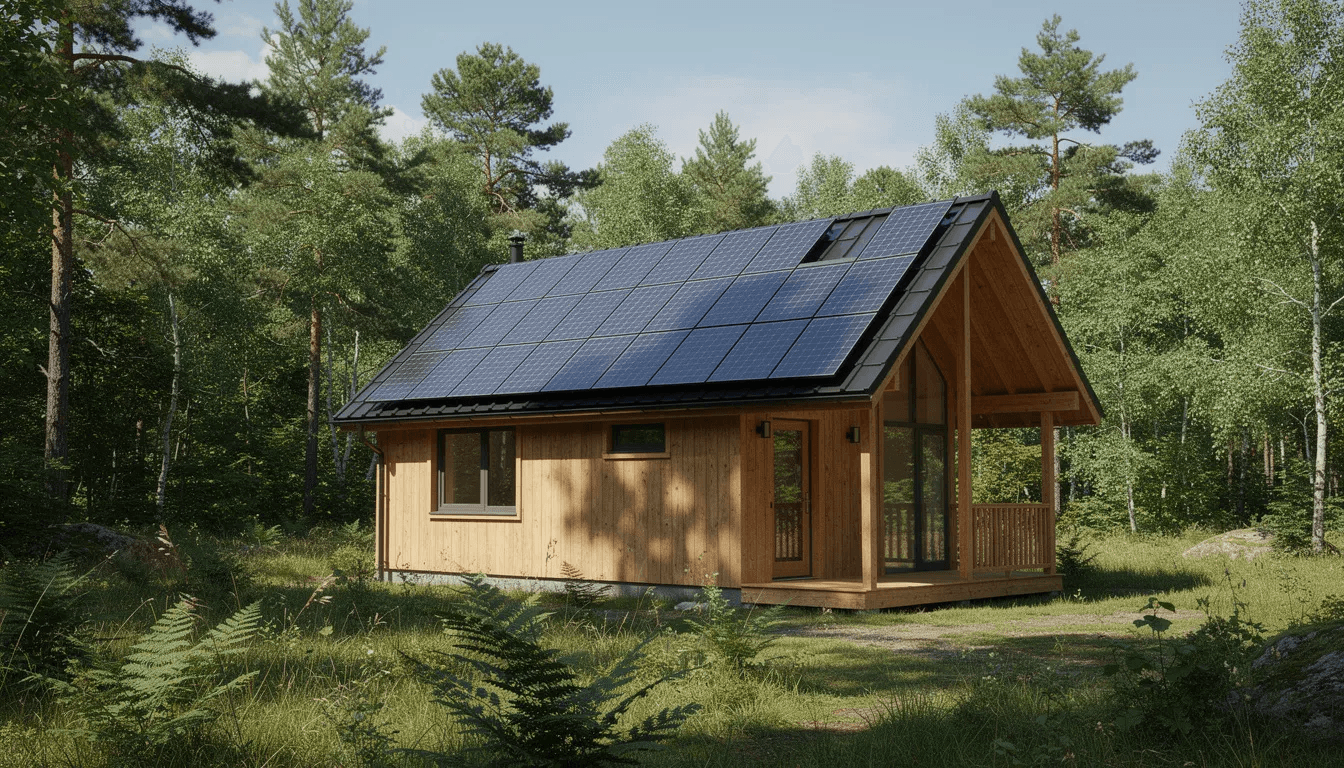
Key off-grid systems:
System | Options | Considerations |
|---|---|---|
Power | Solar PV (2–6 kW), battery banks (24–48V), backup generators | Size for winter loads; Canadian winters mean shorter days and snow coverage |
Water | Wells, rainwater catchment, hauled water with storage tanks | Climate and bylaws affect rainwater harvesting viability |
Waste | Composting toilets, septic systems, advanced treatment units | Provincial health codes dictate minimum requirements |
Heating | Mini-split heat pumps, propane, wood stoves | Redundancy is wise in remote locations |
Winter readiness is non-negotiable for year round Canadian tiny living. R-values should match your climate zone—coastal BC might get away with R-20 walls, while Prairie provinces and northern Ontario demand R-30 or higher. Protected plumbing (heat-traced pipes, insulated tanks) prevents costly freeze damage. Robust heating systems with backup options ensure you’re never caught in a cold snap without heat. |
Example scenarios:
A couple in rural BC lives full-time in a 26-foot off grid tiny home equipped with 4 kW solar, a 10 kWh battery bank, rainwater collection, and a composting toilet. Their monthly utility costs: effectively zero. They spend their time hiking, gardening, and working remotely.
An Ontario family uses a modular tiny home as a four-season cottage, connected to a small septic system and powered by a hybrid solar-generator setup. They visit year round for skiing, fall colours, and summer lake time—without the maintenance burden of a traditional cottage.
Must-haves for off-grid Canadian tiny homes:
- Appropriately sized solar array with battery backup
- Reliable heating system with backup option
- Insulated and protected water system
- Compliant waste management
- Communication backup (satellite internet, cell booster)
Working with licensed Canadian trades ensures your systems meet provincial regulations and operate safely, especially if you’re following a step-by-step approach like those in guides on how to build a tiny house. The grid might be behind you, but proper engineering keeps the environment inside your tiny home comfortable and secure.
Zoning, Permits, and Regulations for Tiny Homes in Canada
Here’s the reality: regulations for tiny homes vary wildly by province and municipality. Before you buy land, commission a build, or place a tiny home anywhere in Canada, you must check local bylaws. This isn’t optional—it’s the foundation of a successful project.
Major regulatory themes to understand:
- Classification matters: Is your tiny home classified as an RV, park model, or dwelling? This determines where you can legally live full-time and what permits you need.
- Minimum dwelling sizes: Some municipal bylaws set minimum floor areas (Ontario’s code baseline is 188 square feet for any dwelling). Modular tiny homes often comply through building code pathways, while THOWs may need to be classified as RVs.
- ADU and garden suite rules: Many cities are expanding allowances for backyard suites, laneway houses, and secondary dwellings. Calgary’s backyard suite policies and Vancouver’s laneway housing program represent this trend.
Typical permit requirements:
- Building permits for foundations and permanent utility hookups
- Development permits or variances where required by zoning
- Utility approvals for water, sewer, and electrical connections
- Occupancy permits before moving in
Common Canadian standards:
Standard | Applies To |
|---|---|
CSA Z240 RV | Tiny homes on wheels classified as recreational vehicles |
CSA Z241 | Park model homes |
CSA Z240 MH | Manufactured homes |
CSA A277 | Factory-built modular dwellings meeting building code |
Some regions offer more flexibility than others. Norfolk County and Grey Valley Township in Ontario don’t impose minimum house sizes, allowing tiny homes under 500 square feet as primary residences. Nova Scotia recently exempted structures under 400 square feet from provincial permitting for seasonal or bunkie-style use. Meanwhile, Squamish prohibits tiny homes in flood-prone zones entirely. |
The takeaway? Work with builders and designers experienced in Canadian tiny homes. They understand local inspection requirements and code compliance, helping you navigate the process without costly surprises.
How Much Does a Tiny Home Cost in Canada?
Let’s talk numbers. Here’s a cost overview in Canadian dollars, reflecting approximately 2024–2025 conditions. These are ranges rather than firm quotes—your final cost depends on many variables.
Typical price ranges:
Type | Price Range (CAD) | Notes |
|---|---|---|
Tiny home on wheels | $120,000–$220,000+ | Higher end includes luxury finishes and full off grid systems |
Park model tiny home | $160,000–$260,000+ | Four-season models with residential appliances |
Modular tiny home / ADU | $180,000–$350,000+ | Installed price; add site work and permits |
Pods and bunkies | $30,000–$90,000+ | Varies by size and included services |
Key cost drivers: |
- Square footage: More space means more materials and labour
- Level of finishes: Basic laminate versus hardwood; standard fixtures versus custom millwork
- Off grid systems: Solar, batteries, and water systems add $15,000–$50,000+
- Winterization: Northern climates require better insulation, triple-pane windows, and robust heating
- Site complexity: Remote access, challenging terrain, and distance from utilities increase costs
Costs buyers often forget:
- Permits and development fees ($2,000–$10,000+)
- Utility connection fees (varies widely by location)
- Decks, skirting, and landscaping
- Delivery and crane charges ($3,000–$15,000+)
- HST/GST depending on province and use classification
Think of your tiny home as a long-term housing investment, not just a recreational purchase, and use tools like a tiny home cost calculator to model different scenarios before you commit. Budgeting realistically from the start—including a 10–15% contingency—sets you up for a smoother build process and a future without financial stress.
Financing and Insurance for Tiny Homes in Canada
Financing and insuring tiny homes in Canada can be more complex than for conventional houses, but options are expanding as the market matures.
Common financing paths:
- Personal loans or lines of credit: Often used for THOWs or park models classified as RVs. Interest rates are typically higher than mortgages, but approval can be faster.
- Mortgage-style financing: Available for modular tiny homes and ADUs that meet building codes and sit on permanent foundations. Requires traditional appraisals and inspections.
- Builder partnerships: Some Canadian tiny home builders work with lenders specializing in alternative housing, streamlining the process for clients.
Insurance basics:
- RV-type policies: Cover tiny homes on wheels and park models registered as recreational units. Premiums are generally reasonable but may have usage restrictions.
- Homeowners or rental property policies: Available for modular tiny homes classified as dwellings on owned land. Requires proof of code compliance and inspections.
- Certification matters: Electrical and plumbing inspections, CSA certifications, and engineered drawings improve insurability and may be required by lenders.
Practical tips:
- Talk early with local banks, credit unions, and insurance brokers who have experience with tiny homes or modular dwellings in your province
- Prepare documents including building specs, certifications, and site plans
- Get multiple quotes—rates vary significantly between insurers
- Consider the long-term: a properly certified tiny home is easier to sell, finance, and insure down the road
The financing and insurance landscape is evolving. As more Canadians embrace tiny living and municipalities update bylaws, expect these processes to become more straightforward. For now, preparation and persistence pay off.
Designing a Tiny Home for Canadian Lifestyles
Canadian tiny homes must balance style, function, and climate. Whether you’re skiing Whistler, canoeing the Boundary Waters, or working remotely from a Muskoka cottage, your space needs to support how you actually live.
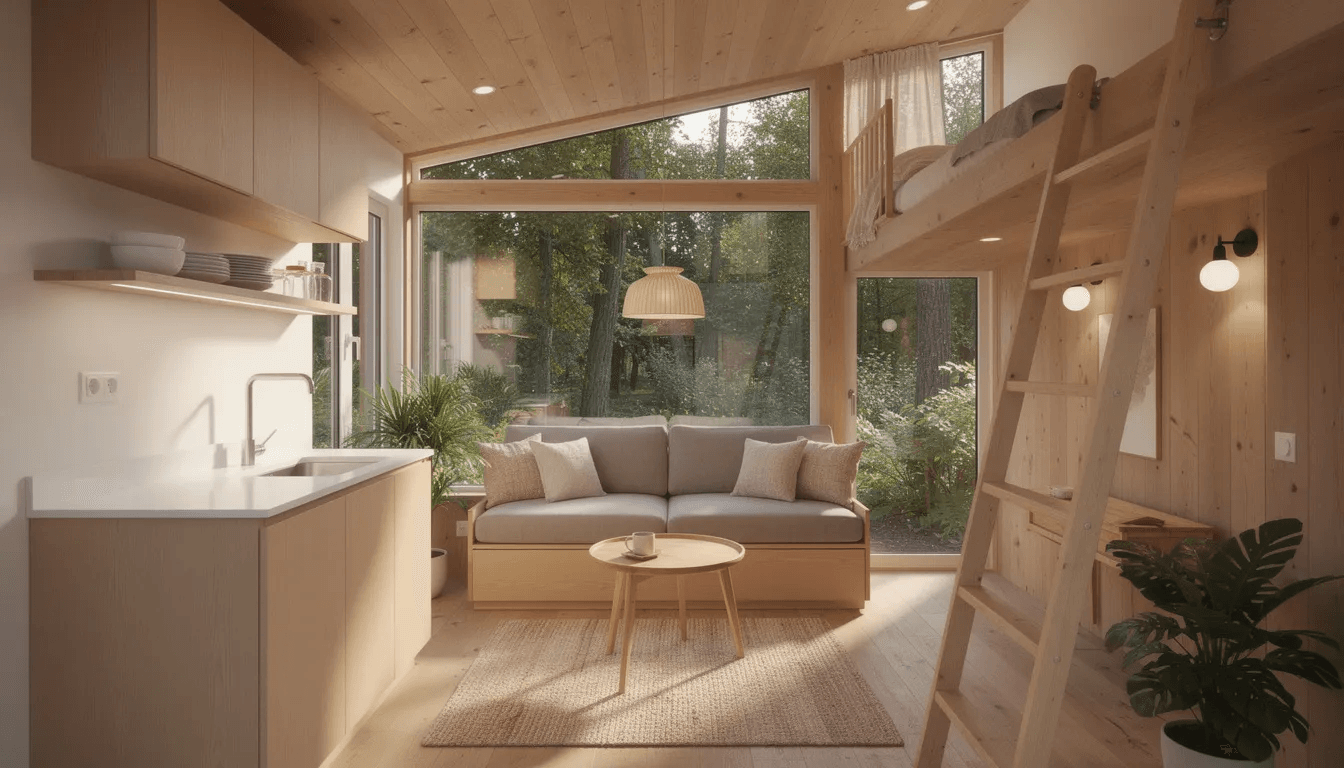
Interior design priorities:
- Smart storage for seasonal gear: Built-in cubbies for skis, snowshoes, and camping supplies; hooks for wet coats and boots; overhead cabinets utilizing vertical space
- Flexible furniture: Sofa beds, fold-down tables, built-in benches with storage, murphy beds in loft-free designs
- Entry/mudroom separation: A clear transition zone for snowy boots and wet gear keeps the main living space clean and comfortable
Popular layouts:
- Open-concept living-kitchen with island or peninsula
- Main-floor bedroom for accessibility (especially valuable for aging in place)
- Sleeping lofts for guests, kids, or additional storage
- Spa-style bathrooms with rain showers, even in compact footprints
Aesthetic trends across Canada:
- Natural wood finishes (cedar, pine, reclaimed barn board)
- Large windows framing forest, lake, or mountain views
- Neutral palettes with warm accents
- Energy-efficient LED lighting with dimmers for ambiance
- Modern appliances scaled for small spaces
Design can adapt to specific provinces. In BC’s Okanagan, expansive glazing captures views and passive solar heat, with proper shading to manage summer warmth. On the Prairies, compact forms minimize heat loss, with smaller but well-placed windows and extra attention to air sealing.
Working with a designer experienced in tiny homes helps you bring your dream to life while avoiding costly mistakes. Every detail matters when space is limited—and getting it right creates a home that feels both beautiful and effortlessly functional.
Tiny Homes as Rentals, Cabins, and Income Properties in Canada
Many Canadians view tiny homes as flexible assets serving both personal enjoyment and income generation. Whether you’re looking to rent a backyard suite or create a vacation rental empire, tiny structures offer compelling possibilities and may start with evaluating tiny houses for sale and whether they’re right for you.
Common income-generating scenarios:
- Backyard rental suites: In cities and university towns where bylaws allow, garden suites and laneway houses provide steady rent income while keeping aging parents or adult children close to family
- Nightly or weekly rentals: Tiny cabins and park models in tourist areas (Vancouver Island, Banff region, PEI coast) command premium rates, especially during peak seasons
- Overflow guest space: Pods and bunkies beside cottages reduce pressure to expand the main building while accommodating visiting friends and extended family
Profitability considerations:
- Zoning must allow short-term rentals (many municipalities restrict or ban them)
- Local demand drives occupancy rates
- Operating costs (cleaning, utilities, platform fees) affect margins
- Seasonal variations can be significant in tourist areas
Design for rentals:
- Durable surfaces that withstand heavy use (waterproof vinyl, quartz counters)
- Easy-to-clean layouts with minimal clutter traps
- Lockable owner storage for personal items
- Guest-friendly features: simple heating controls, clear signage, quality linens
- Outdoor space (deck, fire pit area) that enhances the experience
At a high level, rental income must be declared on your taxes, and eligible expenses (maintenance, utilities, platform fees, depreciation) may be deductible. Consult a tax professional for advice specific to your situation.
The bottom line? Tiny homes can deliver both a wonderful lifestyle and meaningful financial returns. With careful planning and attention to local regulations, they become assets that meet multiple goals simultaneously.
Planning Your Tiny Home Journey in Canada
Ready to move from inspiration to action? Here’s a practical sequence to guide your tiny home journey in Canada.
Step-by-step approach:
- Clarify your goals: Are you creating a full-time home, seasonal cabin, backyard suite, or rental property? Your answer shapes every subsequent decision.
- Check local zoning and utilities: Before falling in love with a specific property, confirm what’s legally allowed. Can you place a THOW? Is there capacity for septic? What permits will you need?
- Choose your tiny home type: Match the structure (THOW, park model, modular, pod) to your goals and regulatory constraints. Don’t fight bylaws—work within them or find a jurisdiction that fits your vision.
- Set a realistic budget: Include the tiny home itself, site preparation, permits, delivery, and a contingency fund. Explore financing early and get insurance quotes.
- Work with experienced Canadian builders: A team that understands local codes, climate requirements, and common pitfalls will deliver better results and fewer headaches.
Timeline expectations:
Phase | Duration |
|---|---|
Design and planning | 2–8 weeks |
Permitting | 4–16 weeks (varies widely) |
Factory build | 8–16 weeks |
Site preparation | 2–6 weeks |
Delivery and installation | 1–3 days |
Final hookups and inspections | 1–4 weeks |
From deposit to move-in, expect several months minimum—often six to twelve months for modular builds in busy seasons, so choosing tiny house plans that truly fit your life upfront can prevent costly redesigns. | |
Patience and preparation are your allies. |
A final word:
Yes, regulations can be challenging. Budgets require discipline. The process demands attention to detail. But thousands of Canadians have successfully made the shift to tiny living, and the rewards—financial security, environmental sustainability, and a simpler life connected to the communities and landscapes you love—are worth the effort.
Your tiny home journey starts with a single step, whether that’s exploring the best tiny house designs for modern living or visiting local builders. Explore the possibilities, test your assumptions, and embrace the freedom that comes with living intentionally. The world of tiny home Canada is waiting—subscribe to builders’ newsletters, visit model homes, and start creating the future you envision.