
Delaware may be one of America’s smallest states, but its tiny house communities are gaining traction fast. With only three counties and a tight housing market, more people are discovering that tiny living offers an affordable path to homeownership and community connection.
Tiny homes typically measure less than 500 square feet, offering a significant reduction in living space compared to traditional homes. This leads to lower living costs and maintenance while encouraging a simpler lifestyle focused on experiences rather than possessions. Delaware is expanding opportunities for tiny house living with several active developments and flexible county-level regulations. This article covers where tiny house communities exist now, how regulations work, and what realistic placement options look like—from the Little Living project in Georgetown to advocacy efforts by Tiny House Communities Delaware.
- Current Legal Landscape for Tiny Houses in Delaware
- Where Do Tiny House Communities Exist in Delaware Today?
- County-by-County Overview: Sussex, Kent, and New Castle
- Types of Tiny Homes and Park Models You’ll See in Delaware
- Placement Options for Tiny Homes and Tiny House Communities
- Affordability and Who Tiny House Communities Serve
- How to Get Started with Tiny House Community Living in Delaware
Current Legal Landscape for Tiny Houses in Delaware
Delaware follows the 2015 International Residential Code (IRC) and Appendix Q for tiny houses under 400 square feet. Delaware’s three counties—New Castle, Kent, and Sussex—permit tiny houses primarily as permanent structures on foundations that comply with IRC Appendix Q. However, each county interprets the rules differently.
Tiny houses on foundations are typically treated as regular dwellings or accessory dwelling units. Meanwhile, tiny houses on wheels (THOWs) and many park models are treated as recreational vehicles. Many THOWs are treated as RVs in Delaware, which restricts long-term stays to licensed campgrounds. Tiny homes are often registered as mobile homes or RVs, which can exempt them from many taxes and fees associated with traditional home ownership.
Park models built to ANSI A119.5 are recognized as recreational vehicles in Delaware. This makes them easier to register and insure but limits permanent residency options. Regulations vary by county regarding tiny houses, with some areas treating them as RVs or manufactured homes. Zoning, minimum square footage, and foundation requirements are controlled at the county and municipal level—whether you’re looking at Georgetown, Milford, Wilmington, Dover, or Newark.
Where Do Tiny House Communities Exist in Delaware Today?
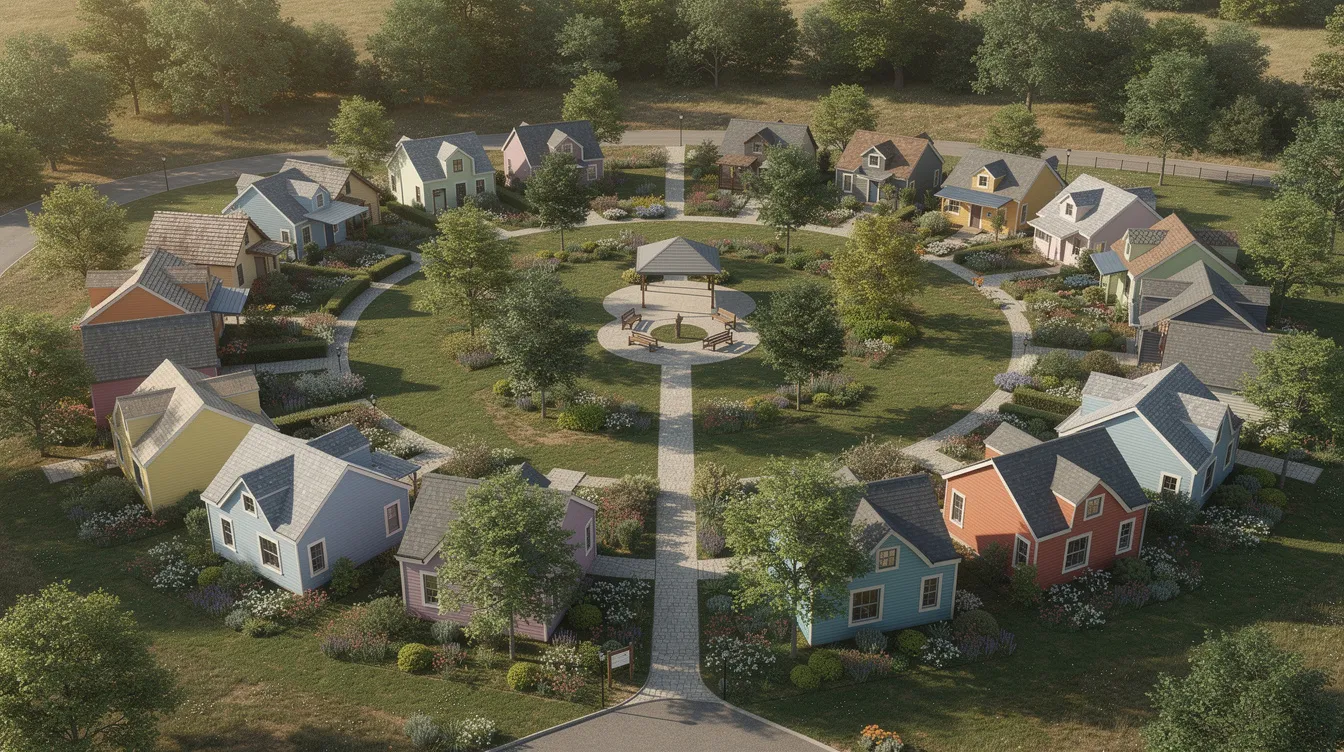
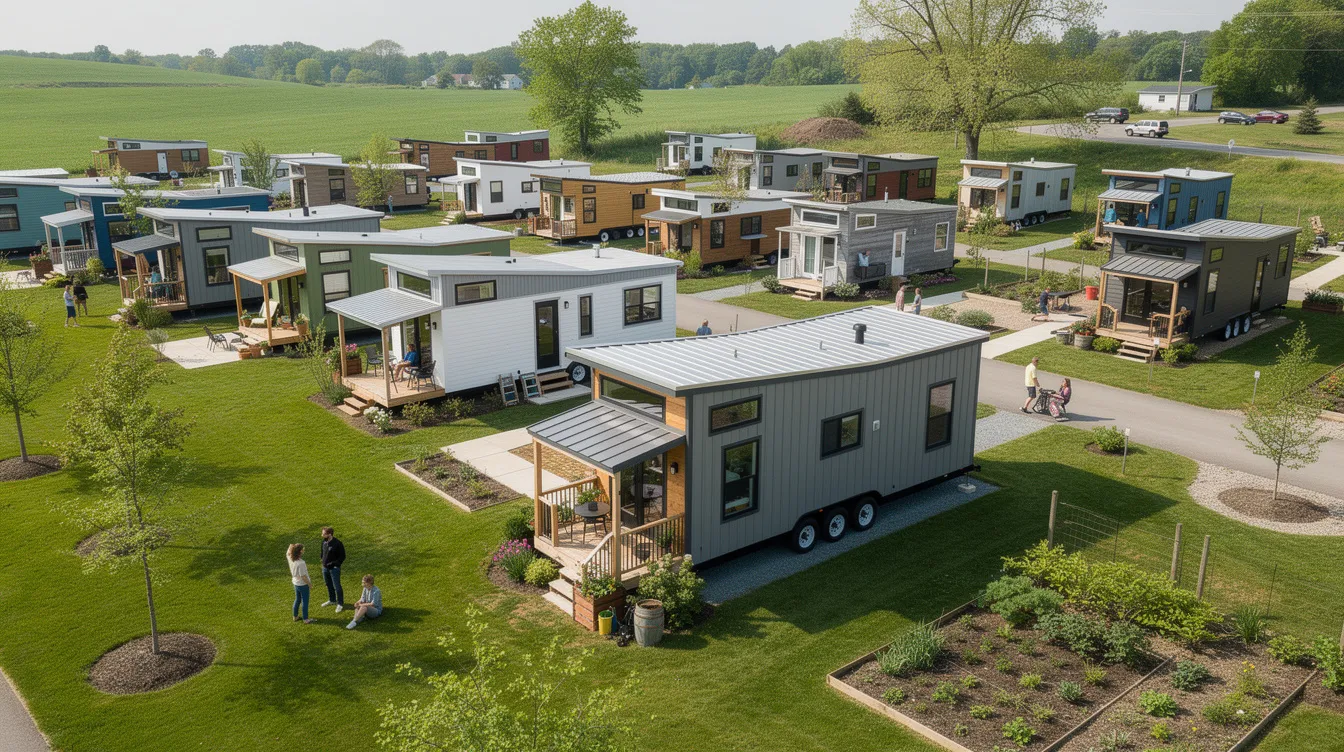
Delaware’s tiny home communities are still emerging, but several concrete projects and advocacy groups already exist. Tiny house communities in Delaware are emerging, particularly in Sussex County and Kent County, where land availability supports grouped setups with shared facilities like gardens and play areas, similar to how DC tiny homes are reshaping urban living in neighboring metropolitan areas.
Spotlight: Little Living’s Georgetown “Little Homes” Community
The Georgetown project in Sussex County stands as Delaware’s flagship tiny house community. It started after a local landowner donated about an acre to build affordable small homes. The Georgetown community is being developed into a 20-home rental community, with plans for additional homes in Milford, targeting working families and individuals earning between 40% and 70% of Delaware’s area median income.
The plan calls for 20 rental homes:
- One bedroom units: approximately $850/month including utilities
- Two bedroom units: approximately $1,000/month including utilities
Each house ranges from 400–680 square feet with two-story layouts. Features include a full kitchen, bath, breakfast nook, living area, and storage space inspired by some of the cutest tiny house design ideas. These feel like real homes—not temporary shelters. The town of Georgetown and DelDOT coordinated approvals, with two units nearly complete. Full community build-out targets mid-2026 occupancy, and interest has been strong with dozens of local prospects already reaching out.
Communities often focus on shared resources and sustainable infrastructure. Georgetown’s design includes a playground, community center, and solar panels to lower energy bills—creating a true village atmosphere.
Advocates: Tiny House Communities Delaware and Regional Efforts
Tiny House Communities Delaware aims to create affordable workforce housing and find solutions to end homelessness, emphasizing the importance of community involvement in these initiatives. Their effort centers on creating safe, code-compliant small and tiny homes in community-style villages rather than isolated units.
They actively seek volunteers, partners, and donors through LinkedIn and Facebook. Similar community-focused efforts are looking to replicate the Sussex County model across Delaware and eventually into neighboring states across the Delmarva region, including areas bordering Pennsylvania.
County-by-County Overview: Sussex, Kent, and New Castle
Each of Delaware’s three counties sets its own zoning framework affecting tiny house communities and placement options. Rural and agricultural zones in Sussex and parts of Kent are generally friendlier to tiny house clusters. Dense suburban New Castle County applies stricter controls.
Sussex County: Beach Towns and Rural Tiny Communities
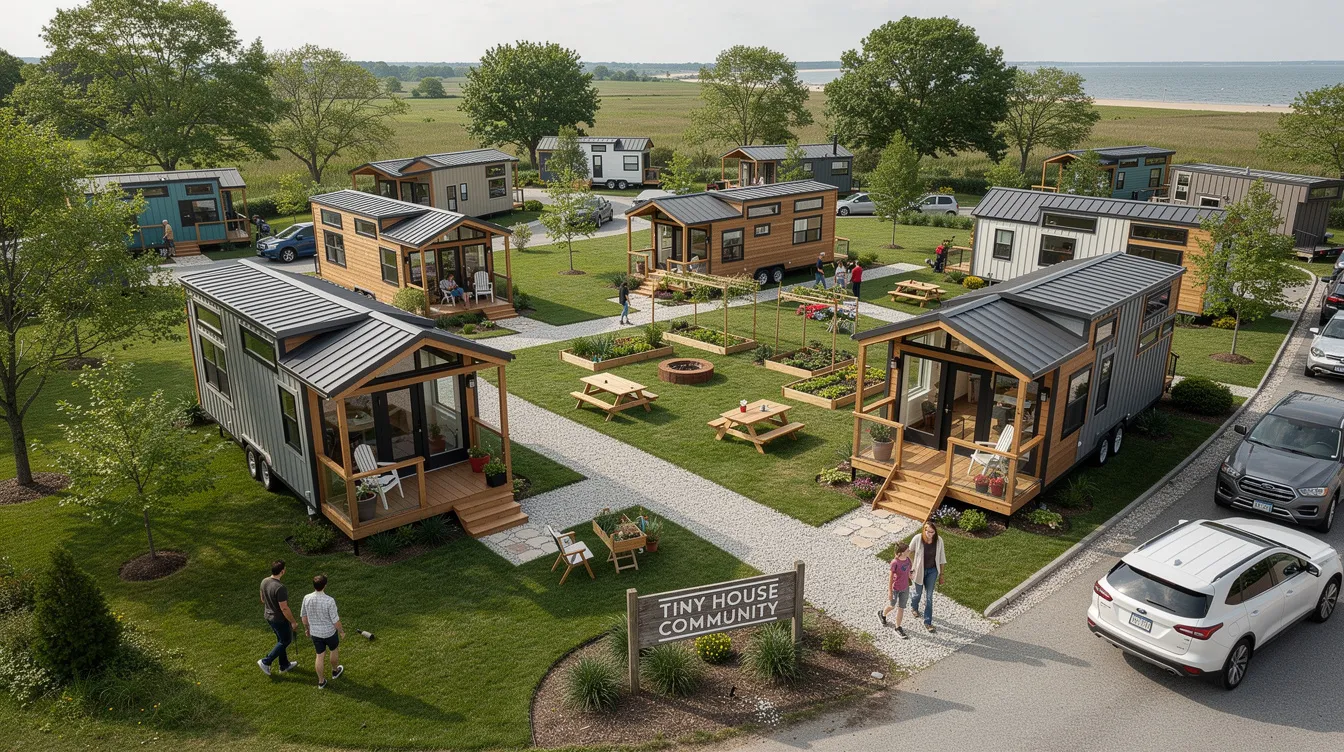
Sussex County offers both beach destinations like Rehoboth Beach and rural areas like Georgetown where tiny house communities are taking shape. Sussex County has recently broadened its allowances for tiny homes, permitting them as accessory dwelling units or main residences in suitable zones, provided they meet building codes. A June 2024 ordinance expanded ADU sizes up to around 1,000 square feet.
THOWs and park model tiny homes are mainly treated as RVs here and typically must be placed in RV parks or campgrounds, particularly along the coast. Zoning regulations restrict standalone tiny houses on residential lots, leading many to seek manufactured home parks or year-round campgrounds. Coastal areas have environmentally sensitive regulations—soil tests, floodplain mapping, and setbacks affect where communities can be built. Sussex currently has the most visible projects and will likely see more as the model proves successful.
Kent County: Dover-Area Cottage Developments
Kent County includes the state capital, Dover, with growing interest in cottage-style developments and workforce housing that take cues from great tiny homes that redefine small-space living. Kent allows tiny houses on permanent foundations meeting IRC and county building codes, with typical minimum sizes around 170 square feet and maximums near 400 square feet under Appendix Q.
THOWs and park models can only be occupied long-term in designated RV parks—not as standalone full-time residences on private land. Dover and surrounding areas are exploring rezoning to enable small cottage clusters near major employers. Interested residents should contact Dover’s planning office to confirm which zoning districts allow ADUs or compact cottage developments.
New Castle County: Urban and Suburban Constraints
New Castle County is Delaware’s most urban area, including Wilmington and Newark, with traditional suburban zoning and higher land costs. In New Castle County, tiny dwellings must rest on foundations and meet size criteria, requiring at least 150 square feet for one occupant plus 100 square feet per additional resident, per the Delaware State Housing Code.
A 2024 ordinance in Castle County reduced minimum lot sizes for detached ADUs from 2 acres to around 0.5 acres. However, THOWs and park model units cannot be used as permanent residences in residential neighborhoods. Any tiny community here would likely be a cluster of compact foundation-built dwellings rather than RV-style villages.
Types of Tiny Homes and Park Models You’ll See in Delaware
Three main types exist: tiny houses on foundations, tiny houses on wheels, and park model RVs. For anyone curious about layouts and lifestyle fit, there’s a wide world of tiny house inspiration and resources. Each has different legal implications in Delaware.
Tiny Houses on Foundations
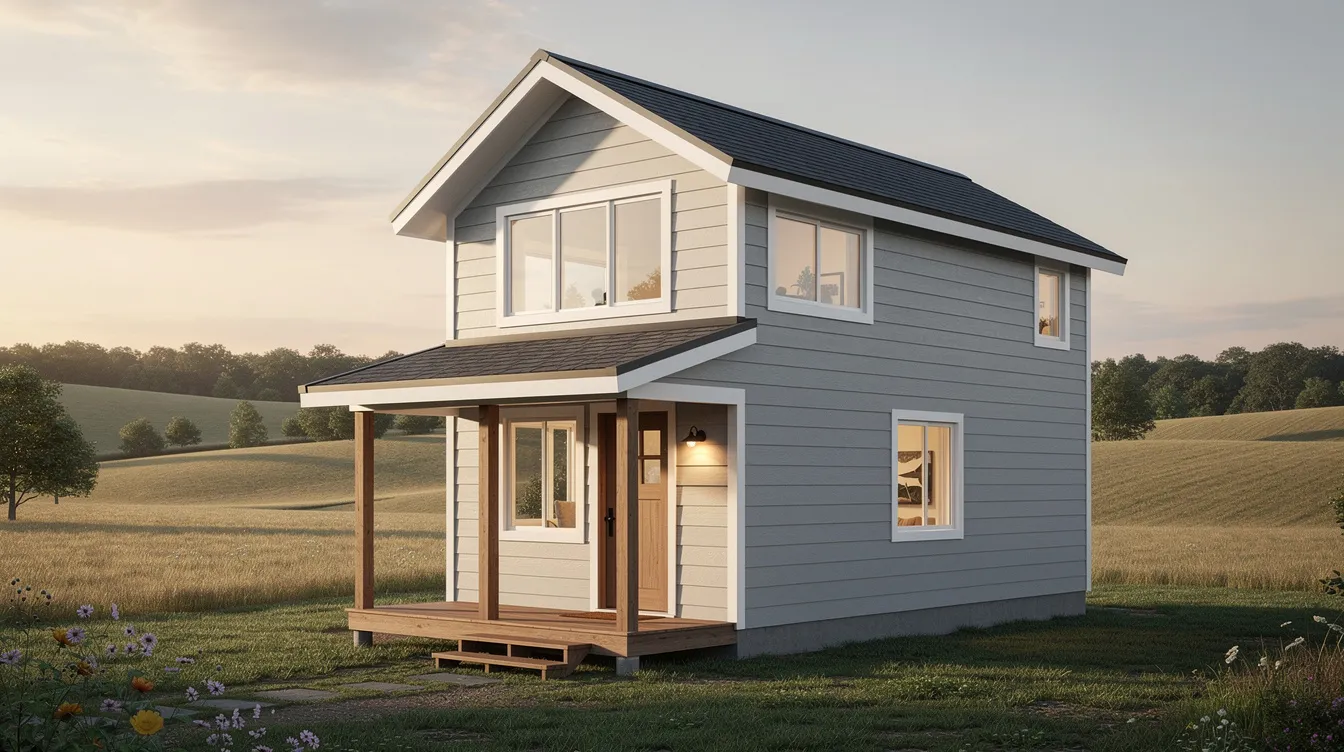
Foundation tiny homes are built directly on a permanent foundation, inspected under local building codes, and often qualify as single-family homes or accessory dwelling units. Little Living’s Georgetown and future Milford sites exemplify this approach, and similar concepts are being delivered by top micro house builders focused on quality and affordability.
Advantages include:
- Easier financing through traditional mortgages
- Clear path to full-time residency
- Potential to appreciate in value like traditional homes
For community builders, foundation tiny homes offer the most straightforward path to creating legal, long-term tiny house communities in Delaware.
Tiny Houses on Wheels (THOWs) and Park Model RVs
THOWs and park models are movable, chassis-based units. Park models are factory-built to ANSI A119.5 and limited to around 399 square feet. Delaware treats both as RVs for registration and insurance. Tiny houses on wheels are generally classified as recreational vehicles and are restricted to RV parks or temporary use, not permanent residency.
Many coastal RV resorts and inland campgrounds in Sussex and Kent allow long seasonal stays, effectively functioning as tiny house communities for part of the year. If you’re interested in this route, verify each park’s rules on length of stay, year-round residency, and utility hookups.
Placement Options for Tiny Homes and Tiny House Communities
Delaware tiny homes can be placed four main ways: on private land, as ADUs in backyards, within RV parks, or as part of purpose-built communities, and selecting tiny house plans that fit your life will help you match layouts to each of these placement options.
Private Land and Backyard ADUs
Placing a tiny home as a primary residence on private land usually means building on a permanent foundation and meeting local minimum size and utility standards. ADUs are becoming more accepted, especially in Sussex for family housing and in New Castle after recent ordinances.
Key steps for homeowners: confirm zoning, check minimum lot size, setbacks, and parking requirements, then apply for permits under IRC/Appendix Q if the house is under 400 square feet.
RV Parks, Campgrounds, and Resort-Style Tiny Communities
Many Delaware campgrounds and RV resorts welcome park model RVs and THOWs as seasonal units. These locations can feel like tiny house communities with shared amenities—pools, clubhouses, laundry, and walking paths. Most parks impose stay limits around 180 days, so they may not suit year-round primary residence use. Ask about winter operations, HOA fees, and short-term rental rules.
Purpose-Built Tiny House and Small Home Neighborhoods
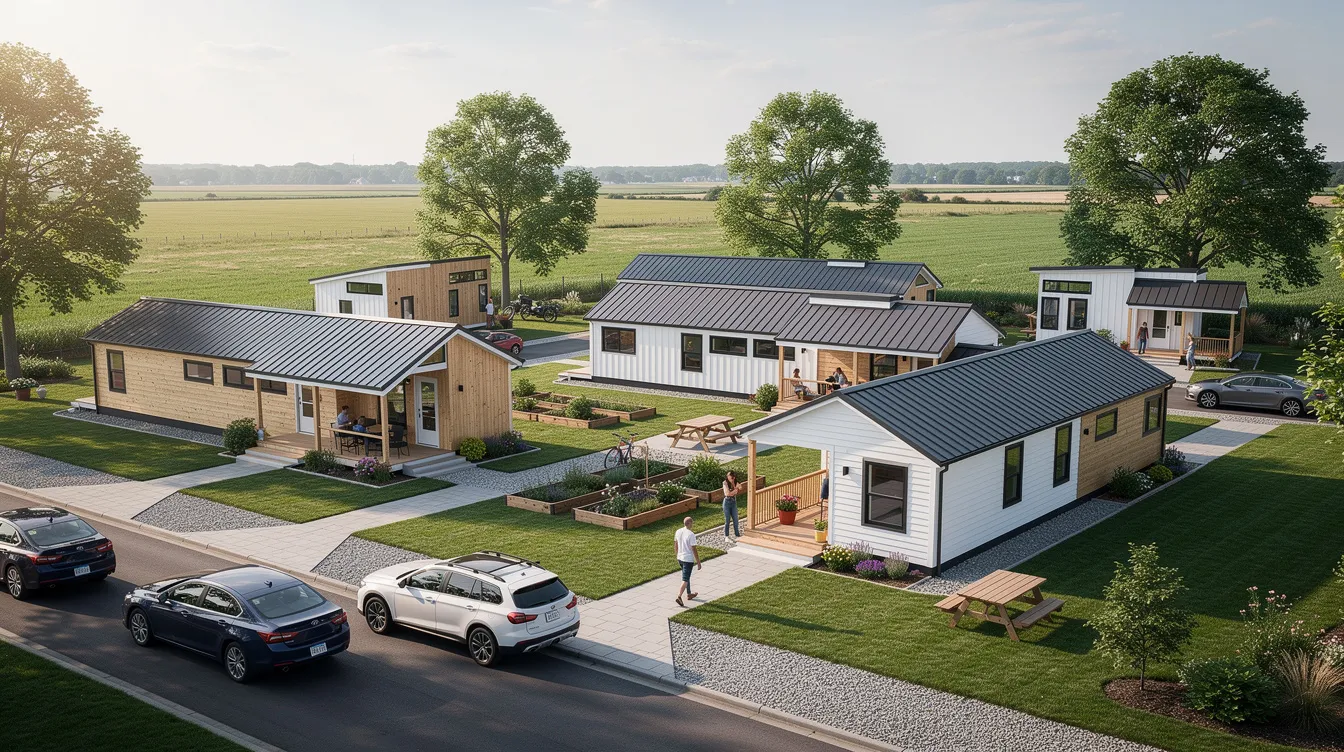
Purpose-built tiny home neighborhoods like Georgetown are designed as clusters of compact dwellings from the ground up. Common features include shared green spaces, community buildings, on-site parking, and solar energy systems. These projects require subdivision approvals and close coordination with county planning. Such communities are most advanced in Sussex County but are being considered as models statewide.
Affordability and Who Tiny House Communities Serve
Delaware’s housing affordability challenges drive interest in tiny home living and compact community concepts. These communities often serve residents earning 40%–70% of area median income, including seniors, disabled veterans, and working families priced out of conventional construction.
Georgetown targets local workers with rents around $850–$1,000 monthly including utilities. Future Milford homes expect sale prices of $85,000–$100,000 with rent-to-own options—far more attainable than standard single-family houses.
Cost Ranges for Tiny Homes in Delaware
Prices for tiny homes in Delaware can range from $30,000 to $200,000 or more, depending on size and layout. For budget-conscious buyers, exploring affordable tiny house designs and tips can help align your project with realistic cost expectations. Tiny house costs fluctuate by dimensions, with sub-200 square foot units starting around $50,000 and up to 400 square feet reaching $120,000, excluding land.
Foundation setups for tiny homes can add 20-30% to the overall cost due to preparation and approval requirements. Delaware has 0% state sales tax and some of the lowest property taxes in the U.S. with an average of 0.56%—a luxury that makes tiny living even more practical here. Factor in ongoing costs like property taxes, park fees, and maintenance when planning your budget.
How to Get Started with Tiny House Community Living in Delaware
First, decide what type of tiny home you want—foundation, THOW, or park model. Then match that choice to legal placement options in Sussex, Kent, or New Castle County. The essential steps: research rules, choose a municipality, secure land or a community spot, design or select a unit, and obtain permits.
Key Steps for Prospective Tiny Home Residents
- Contact the planning or zoning office in your target town or county to hear directly about tiny home, ADU, and park model rules
- Tour existing projects—visit Georgetown as it nears completion to support your decision
- Work with builders familiar with Delaware codes to ensure your home meets IRC/Appendix Q or ANSI standards
- Join local Facebook groups and follow Tiny House Communities Delaware for updates on new community openings
The path to tiny living in Delaware is clearer than ever. With real projects under construction and expanding regulations, now is the time to expect real opportunities. Whether you’re a realtor helping clients find affordable options or a person seeking simpler life, Delaware’s tiny house communities offer a practical, affordable plan forward.